Martha Brown….the woman who inspired Thomas Hardy….

Many of us would have read Thomas Hardy’s Tess of the d’Urbervilles at some point – if not we’ve probably seen a film adaptation – be it the one directed by Roman Polanski or another version…. There is little doubt that we have all heard of Thomas Hardy and his story of a complicated love triangle between Tess Durbeyfield, Angel Clare and Alec d’Urberville….which ends in murder, for which Tess takes the consequences…. A story of a beautiful young woman who kills the man who ruined her life….

img_1238-1
Scene from Tess of the d’Urbervilles – a 1913 American silent drama film – Public Domain
img_1239-1
Thomas Hardy between 1910 & 1915 – Public Domain

Hardy’s Tess of the d’Urbervilles was published in 1891, 35 years after a 16 year old Thomas Hardy witnessed the hanging of convicted murderess Martha Brown, at Dorchester Prison in 1856….

Elizabeth Martha Brown (nee Clark) was born in 1811, to a dairyman, John Clark and mother, Martha…. There is little information available on her early life but she married Bernard Bearn of Powerstock and had two sons who died in infancy….she became a widow in 1851…. Martha met John Brown, some 20 years her junior when they were both working as servants together…. They married – she was an attractive older woman, with beautiful curly hair, looking younger than her years – and she had some money put by – which is perhaps why he married her. They lived in Birdsmoorgate, in the Marshwood Vale, near to Beaminster in Dorset. From the onset it was a turbulent marriage, she was to express regret at marrying him…. Before long she was to suspect him of having an affair with a neighbour, a married woman named Mary Davies….some sources say she actually caught them in bed together…. Understandably they had a row – he stormed out and later came home drunk ~ another arguement ensued…. He lost control and hit her with his whip – this was just too much for Martha, she retaliated and hit him over the head with an axe that they used for chopping coal….

Upon her arrest Martha claimed that a horse had kicked her husband in the head; her story was not believed and a murder charge was brought against her. She came to trial at Dorchester Assizes; a guilty verdict was returned and she was then taken to Dorchester Prison to await execution, which was set for 9 am, Saturday the 9th of August 1856 – just 13 days after the death of her husband….

There was much public sympathy for Martha; the case caused sensationalism in newspapers of the time, sparking debates as to the validity of capital punishment and the treatment of women within the justice system. She was a victim of abuse who had been pushed to the edge….but was caught up in her own lie – that a horse had kicked Brown in the head — meaning that the Home Secretary was to refuse a reprieve; diminished responsibility as a defence did not come into English law until a century later…. Martha admitted her guilt whilst in her prison cell – in her confession she said ~ “I was much enraged, and in an ungovernable passion, on being so abused and struck, I directly seized a hatchet which was lying close to where I sat, and which I had been using to break coal with to keep up the fire and keep his supper warm, and with it I struck him several violent blows on the head. I could not say how many”…. Martha would have been attended by two matrons (female warders) in her prison cell and would have been looked after well; she was also frequently visited by a chaplain, the Reverend D. Clemenston….

Martha’s executioner was to be our old friend William Calcraft ~ Calcraft and his assistant travelled to Dorchester by train the day before to make their preparations. The gallows were erected over the gates of Dorchester Prison the night before….in the place that is today the car park in North Square, Dorchester….img_1240-1

It was a grey drizzling start to the day on Saturday the 9th of August but still a crowd of between three and four thousand gathered to witness the execution; it was quite rare for a woman to hang by this time…. Martha chose to wear a long, close fitting black silk dress ~ she shook hands with the officials at the prison gates and then climbed the first set of steps to the scaffold….a total of 11 steps. Here she was met by Calcraft; he pinioned her arms in front of her and then led her up the remaining 19 steps to the gallows and finally on to the trapdoor. Next he placed a white hood over her head and the noose around her neck…. Calcraft turned and started back down the steps to withdraw the bolts of the trapdoor (this was a time prior to there being a lever) – it was at this point he had to be reminded that he had forgotten to pinion her legs ~ decency always being of the utmost importance in Victorian times…. Calcraft returned and secured her legs ~ she all the while stood poised and with dignity on the trapdoor, with a male warder on either side….

Rain had made the hood covering Martha’s head damp – it clung to her face accentuating her features….and no doubt would have made breathing difficult for her. Her dress would have been moulded to her body – causing her to resemble a statue….

Calcraft descended the steps and pulled the bolts; Martha dropped a foot or two ~ there was a ‘thud’ and for a few seconds she struggled ~ and then lost consciousness. At least she was spared the agonising and humiliating 10 to 20 minutes ordeal that accompanied some of the executions conducted by Calcraft – which he engineered to entertain his audience…. In fact Calcraft was later quoted as saying that he “never saw a criminal die so easily”…. Martha Brown was the last woman to be publicly hanged at Dorchester Prison….

To the 16 year old Thomas Hardy the hanging of Martha was a mesmerising sight. He later wrote “what a fine figure she showed against the sky as she hung in the misty rain, and how the tight black gown set off her shape as she wheeled half round and back”…. Of the hood that covered her head he said “I saw – they had put a cloth over her face – how, as the cloth got wet, her features came through it. That was extraordinary”…. Hardy’s experience of the day was to haunt him all of his life, he was still writing about it in his eighties. He was morbidly fascinated with executions; just two years after the hanging of Martha he was to witness another….that of 19 year old James Seale. He was executed for the murder of Sara Guppy, aged 23, on the 10th of August 1858. Fire had been discovered billowing from Sara’s cottage and she was found inside with her throat slit – the suspicion fell on Seale….

Thomas Hardy wrote some 70 years later after witnessing Martha’s death that he was ashamed to have been at the hanging. In a letter to his friend, Lady Hester Pinney, he stated “my only excuse being that I was but a youth, and had to be in the town at that time for other reasons”….

In his book Tess of the d’Urbervilles Hardy does not describe Tess’s death in detail – instead he describes how onlookers watched as a black flag was raised…. “A few minutes after the hour had struck something moved slowly up the staff, and extended itself upon the breeze. It was a black flag. ‘Justice’ was done”….

Martha Brown would have been buried close to the point of her execution, at the outside walls of the prison precincts. She would have been 1 of 47 buried at Dorchester Prison. The prison closed in 2013, ready to be redeveloped for housing; it was whilst work was being undertaken that human remains were found. The developers wanted to build houses over where the remains lay – but it was actor Julian Fellowes (he of Downton Abbey fame and President of the Hardy Society) who intervened. He wrote to the Bishop of Salisbury urging the Church to take care of the remains buried at the prison. In March 2018 it was ruled that the bodies would be interred in a common grave at nearby Poundbury Cemetery, with a service of Christian committal….

Fellowes actually went as far to say that he would like to see DNA testing carried out to determine Martha Brown’s remains, so that she could be buried in the village churchyard where Thomas Hardy’s heart is interred….


Hardy’s wish was to be buried in his hometown of Stinsford, Dorset….but he was actually laid to rest in Westminster Abbey. As a compromise his heart was buried at Stinsford….but this is another story….
img_1246-2
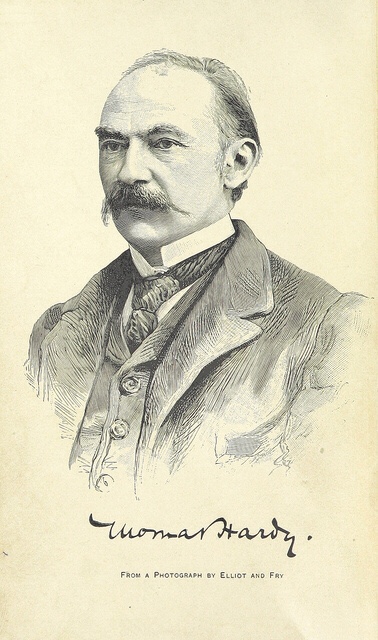
Image: Signed sketch of Thomas Hardy – The British Library via flickr.com

Please…. If you have read this post through to the end then I assume you have found it of interest and I hope you have enjoyed it…. If you have found this via Facebook, a little ‘like’ for Cottage Capers would be very much appreciated…. I’m not trying to sell you anything – I’m simply a blogger trying to establish myself…. Many thanX

You may also enjoy William Calcraft…. 45 years a hangman….

William Calcraft…. 45 years a hangman….

William Calcraft was the longest-serving hangman in British history; there is no firm actual figure of how many executions he conducted over his 45 year career but it was somewhere between 430 and 450. At least 388 of those hangings took place in public and about a further 41 are recorded as having been carried out in private; some 34 of the overall total were of women….

To his family and friends Calcraft was known as either Will or Bill. Apparently he was of a kindly disposition; he loved his wife Louisa, his children and grandchildren ~ he was fond of animals, keeping pets such as rabbits and pigeons…. It is perhaps a little difficult to conjure up an image of such a gentle soul – as it seems far detached from that of his professional life….

img_0886
William Calcraft

Calcraft was born in Baddow, near Chelmsford in Essex on the 11th of October 1800. As a young man he had a few casual jobs, including work as a night watchman for a brewery in Clerkenwell and also as a butler to a gentleman in Greenwich – but his real trade was that of a cobbler, a skill learned from his father. Upon his father’s death Calcraft took over the family business which included a shop premises…. The shop was no longer doing particularly well, times were changing; progress meant machines were being used more and more – not having the capital to invest in such machinery meant the business was unable to compete….until finally it was forced to close. Calcraft was actually quite relieved – as in his own words he ‘detested the drudgery’. During the final months before the closure of the business he had started to sell meat pies in the streets around Newgate Prison to supplement his income. This was something he actually enjoyed, especially the meeting and chatting with people; one particular friendship he struck up was with a John Foxton who happened to be chief hangman at Newgate Prison. Calcraft asked Foxton if he knew of any job vacancies at the prison and was informed that there was one available, a position that had been unfilled for a while due to the fact most people found it of an unpalatable nature as it involved the flogging of juveniles…. However, this certainly did not put Calcraft off, again in his own words he – ‘undertook it with relish’ – and earned a wage of 10 shillings a week for doing so….

Crime amongst children increased sharply at the beginning of the 19th Century due to a rise in urban poverty. People poured in to the cities looking for work, the poverty rose and slums established, causing more squalor. Many children suffered violence in the home, crime was often a way of life…. No schooling meant gangs of youngsters roamed the streets, thieving and pickpocketing….

img_1188
Via Wikimedia – public domain

The whipping and flogging of children was a frequent occurrence until the end of the 1800s. It was often carried out swiftly after sentencing or may have been part of a custodial sentence. By the mid 1800s people were becoming more and more uncomfortable with the punishment; 1862 saw the last public flogging and it was during the 1860s that the whipping of boys at Bow Street Magistrates ceased as their screams upset the public so…. The last hanging of a child took place in 1833 and in 1838 Parkhurst opened as the first juvenile prison….

Foxton died on the 14th of February 1829 and Calcraft was to become chief executioner in his place. He was sworn in as Executioner for the City of London and Middlesex on the 4th of April 1829. However, his first official hangings took place before this date; on the 27th March he was called to an emergency case – the double execution of Thomas Lister and George Wingfield. Calcraft’s wage at this time was set at a guinea a week with a further guinea for every hanging and half a crown per flogging…. He also had an allowance to purchase equipment, such as rope and whips….

It didn’t take Calcraft much time to realise the longer a condemned prisoner took to die the more the watching crowd enjoyed it…. He began to make each execution a performance to entertain his audience…. The gallows method in use when he first took over meant the condemned died typically in 2 or 3 minutes – but by reintroducing the short drop method death could take between 10 to 20 minutes ~ death by slow, agonising strangulation…. To add to the entertainment Calcraft would sometimes swing from the prisoner’s legs or even climb on to their shoulders….

Calcraft’s first year as chief executioner was a very busy one; assisted by Thomas Cheshire he performed some 31 executions. He continued to be busy throughout his long career; so many hangings ~ the details of some stand out more than others….

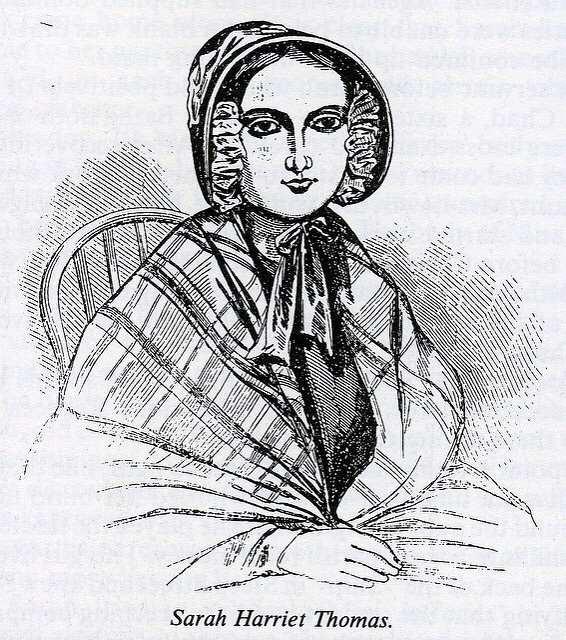
On April 20th 1849 Calcraft publicly hanged 17-year-old Sarah Thomas in Bristol, after she had been convicted of the murder of her mistress, who had cruelly mistreated her. Calcraft was emotionally disturbed by this case due to her youth and good looks….

Later that same year on the 13th of November a rare and unusual case was seen – the double execution of a husband and wife ~ Frederick and Maria Manning ~ for the murder of Maria’s lover Patrick O’Connor, for financial gain; they then buried him under the kitchen floor…. The couple were hanged side by side on the rooftop of Horsemonger Lane Gaol (Surrey’s main prison and place of execution up until its closure in 1878); a crowd of approximately 50,000 turned out to watch the spectacle – amongst them one Charles Dickens….

The last woman to be hanged publicly at Newgate Prison was Catherine Wilson, on the 20th of October 1862. Convicted of being a serial poisoner, Wilson protested her innocence until the end…. She died with no struggle and with great dignity in front of a crowd of nearly 20,000…. An execution that brought an even greater audience was that of a Doctor Edward William Pritchard on the 28th of July 1865. He was hanged in Jail Square, Glasgow for the murder of his wife and mother-in-law – his execution witnessed by an estimated 100,000….

img_1189
Via Wikimedia – public domain

By the 1860s Victorian society was beginning to find public executions distasteful – public opinion was changing. At one time all classes would attend a hanging but the hordes of drunken, jeering onlookers were becoming less tolerable. Crime amongst the spectating crowds was a problem with theft and pickpocketing rife – policing the masses effectively was an impossible task…. Instances of people being crushed by those wanting a better view were not unheard of….and then there was the danger that public executions would make martyrs of those condemned of crimes of a more political nature….

The 23rd of November 1867 saw the triple hanging of the Manchester Martyrs – three fenians (early IRA) had murdered a policeman in Manchester. William O’Mara Allen, Micheal Larkin and Micheal O’Brien (alias Gould) were all publicly hanged together outside Salford Prison (Calcraft received £30 for his work) ~ a monument to the three still stands in Ireland today….

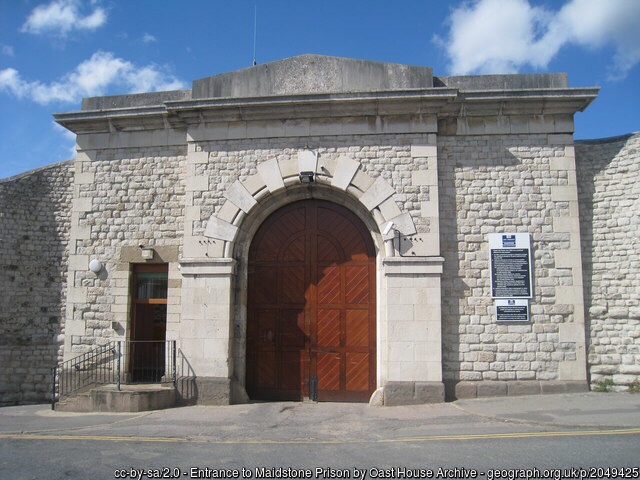
Public execution was abolished by a Tory government with the passing in Parliament of the Capital Punishment (Amendment) Act 29th May 1868. Calcraft was to perform the last public execution of a woman, Francis Kidder, Frances Kidder ~ the last British woman to be publicly hanged…. at Maidstone Prison in April 1868; he also conducted the last ever public execution – that of Michael Barrett, a fenian, on the 26th of May 1868 at Newgate – after his conviction of causing an explosion in Clerkenwell, killing seven people….

The first private execution took place on the 13th of August 1868 – that of 18-year-old Thomas Wells at Maidstone Prison, for the murder of a Mr. Walsh, who was the station master at Dover’s Priory Station where Wells worked as a porter. His execution would have been a different experience to those who had gone before him…. He was spared the public circus – only the necessary officials would have been in attendance; the governor, under sheriffs, chaplain, a few prison officers, the executioner (Calcraft) and a representative of the Press. The only somber indication that an execution had just taken place being a black flag raised outside of the prison…. By making executions private a whole new regulated system came about, Calcraft had to adjust to a more humane procedure ~ gone were his antics and the use of the short drop method he had favoured….

During Calcraft’s 45 year role as executioner there were times when his competence was called into question…. Perhaps one of the lowest points in his career came around midway, in 1856 – with the bungled public hanging of William Bousfield….

Opposition to the death penalty was beginning to cause unrest amongst certain groups – Calcraft himself became a target when he received a death threat before Bousfield’s execution; a letter advised him to buy a helmet to wear whilst carrying out the hanging – as the intention was to shoot him….

It appears that William Bousfield was a bit of a ‘no hoper’, weak and unable to hold down a permanent job. In an attempt to provide him with steady employment Bousfield’s father-in-law gave his daughter Sarah and her new husband a shop as a wedding gift, a way to provide them with a regular income…. However, it soon came to be that Sarah was doing all the work; with the pressure of her being the main bread-winner, money being tight and three small children to look after it was inevitable that home life was going to become intolerably stressful…. Exasperated Sarah’s father offered Bousfield money to leave the family for good, by emigrating to America….something his son-in-law declined to do….

On the night of the 3rd of February 1856 matters obviously came to a head… Bousfield stabbed his 28-year-old wife in the neck with a chisel at their home – 4, Portland Street, St. James, Westminster. He also stabbed his children to death; Anne (6 years old), Eliza (4 years old) and John William (just 8 months)…. It was some considerable time later, just after 7am the following day, that he walked into Bow Street Police Station and confessed to what he had done. It was PC Alfred Fudge who attended the scene and discovered the true horror of the crime – the walls were sprayed with blood….the bodies of Bousfield’s family lay where he had butchered them….

Bousfield’s trial was held at the Old Bailey on March the 6th 1856, presided over by Mr. Justice Wightman – a plea of ‘not guilty’ was entered on the grounds of insanity. However, the jury were not swayed and took just a few minutes to return a guilty verdict; as the death sentence was passed Bousfield nearly collapsed and had to be assisted from the dock….

During the time in Newgate Prison leading up to his execution, which was set for Monday 31st March, Bousfield portrayed a pathetic figure, claiming to have no recollection of the events of that terrible night – declaring it all a bad dream…. On the Saturday prior to his execution he attempted suicide in his cell by throwing himself on to the fire; his neckerchief caught light and as a result his face and neck were severely burned….img_0887

On the morning of the 31st a 7.30am Sheriffs Messrs Kennedy and Rose, along with the undersheriffs arrived at the prison. At 7.45am, accompanied by the governor and Reverend Davis, they went to the condemned cell – Bousfield was sitting in a chair, being supported by a prison officer at either side…. Calcraft arrived a few minutes before 8am and pinioned the prisoner’s arms…. It soon became obvious that Bousfield was unable to stand – the only option was for him to be carried. So, one man took his legs, another lifted him under the armpits and he was dragged off, his burns swathed in bandages, to the gallows – where some 5,000 had gathered to watch the execution. However, upon reaching the steps of the scaffold another problem arose – how to get him up there…. It was at this point that a high-backed chair was fetched from the governor’s office ~ Bousfield was restrained upon it and then four prison officers carried him up and placed the chair on to the trap door….

Throughout the whole proceedings Calcraft appeared nervous and on edge – no doubt worried due to the death threat he had earlier received. As soon as the chair was in place he quickly placed the cap on the prisoner’s head, adjusted the noose, secured the rope to the chain and without giving any warning or signal ran down the steps of the scaffold releasing the bolt of the trap door on his way…. The chair dropped through the hole – but as it did so, Bousfield – who had been unable to even stand up to this point – suddenly found the strength to throw his arms and legs wide and managed to find a position to stop himself from falling through…. Prison officers climbed back on to the scaffold and attempted to push the man’s legs down; meanwhile, whilst all this was going on, Calcraft was still running away….insisting that Bousfield was already dead. Somehow the prisoner managed to maintain his position – all the while the crowd was jeering and yelling; the sheriffs and officials were horrified as to what they were witnessing….

It was Reverend Davis who finally managed to locate and persuade Calcraft to return and finish the job; which he obliged in doing by going beneath the scaffold and pulling on Bousfield’s legs….only for once again the prisoner to succeed in getting a foothold on the edge of the trap door opening….

Finally, after a fourth attempt they managed to successfully get Bousfield’s legs down…. In a severe struggle lasting for nearly 10 minutes Bousfield eventually died…. This was probably Calcraft’s most botched execution….

Calcraft retired in 1874 on a pension of 25 shillings per week from the City of London. Towards the end of his life he questioned himself as to whether he was ‘truly a bad lot’…. Although he knew he brought pain and suffering to those about to die at his hands he justified it by the entertainment he had brought to others, who in his opinion had little joy and pleasure in their own lives….

Calcraft died five years after his retirement, in December 1879. His final resting place is now in an overgrown cemetery in North London. I will leave you to make up your own mind as to whether this is indeed a fitting memorial to the man….

img_1187
Image credit: Alan Denney via flickr.com

You may also enjoy Time to meet the Hangman….

Please…. If you have read this post through to the end – then I assume you have found it of interest and I hope you have enjoyed it…. If you have found this via Facebook, a little ‘like’ for the Cottage Capers’ page would be very much appreciated & will ensure you see future posts…. I’m not trying to sell you anything – I am simply a blogger trying to establish myself…. Many thanX….


Frances Kidder ~ the last British woman to be publicly hanged….

On the 29th of May 1868 Parliament passed the Capital Punishment Within Prisons Bill – ending the hanging of convicted criminals in public view…. The last public execution in Britain was that of Michael Barrett at Newgate on the 26th of May 1868.

img_0885

The previous month saw the last public hanging of a woman, one Frances Kidder, aged 25 years old, at Maidstone Prison on the 2nd of April….

It was a case that divided the British public – the Mayor of Hythe and others petitioned to have her sentence commuted…. Some newspapers reported her story with sympathy – whereas, there were others who saw her as an evil woman who got her just desserts….

Frances was born in 1843 to John Turner, an agricultural labourer and his wife, Frances (nee Drury), in New Romney, Kent. In 1861 the young Frances went to work as a house servant for John English (a bookmaker and newsagent) and his family, in Folkestone. In 1865 she met and married William Kidder, a green grocer….maybe it was a marriage of necessity rather than for love, as Frances had his child before the wedding took place – she gave birth to a daughter, Emma…. William also had two other illegitimate children from a previous relationship (a detail it appears he may have neglected to inform Frances of) with an Eliza Staple, a house servant. Eliza died in 1863; the younger of the two children was sent to live with relatives but the elder sibling, Louisa, aged around 10 went to live with her father and his new wife in Hythe, Kent. By all accounts Louisa was quite a lively child and things were on a rocky footing from the onset of the relationship between the little girl and her step-mother…. Frances was very cruel to the child – she beat her frequently with what ever implement came to hand; she forced her to wear rags, often starved her and even made her sleep in the cellar on a pile of old sacks no matter what the weather…. Children being mistreated in Victorian times was a common occurrence – but in this instance the treatment was so bad that next door neighbour, William Henniker, reported the abuse. As a result the police charged Frances with cruelty and she received a fine. Louisa was sent to live with a guardian – unfortunately her father did not keep up with the maintenance payments for her and the child was returned to William and Frances – and the cruelty began again….

William had a business, dealing in potatoes – Frances helped her husband with his work. In July 1867 there was an accident; a horse bolted and Frances was thrown from a cart….possibly sustaining brain damage. In the words of her husband “she was in a fit for about four hours and she has been strange in the head ever since”….

The following month, on August the 24th Frances went to visit her parents for a few days, in New Romney, taking her own daughter Emma and Louisa with her. It was whilst passing the time of day with her parents’ next door neighbour, a Mrs. Evans, that she apparently revealed how much she detested Louisa and that she had no intention of returning home with her ~ “I mean to get rid of that bitch Kidder’s child. I hate the sight of her as she always making mischief. I do not like other people’s bastards”. Frances often referred to her husband’s daughter as ‘his bastard’….

img_0889
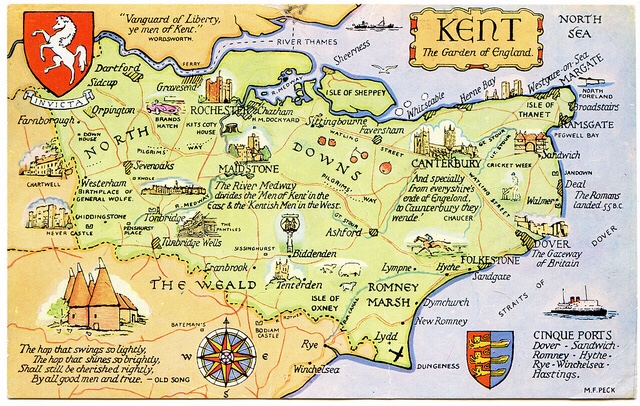
Postcard map of Kent – image Alwyn Ladell via flickr.com

On the Sunday morning of their visit Frances claimed she was feeling unwell and was not up to the planned walk with her parents…. She told them she would rather stay at home with the children. As soon as her mother and father had departed she suggested to the girls that they visit a fair in nearby New Romney….and so the trio set off – on foot. It was when they came to a point known as Cobb’s Bridge – a passing over a small stream of water – that the event happened. Frances forced Louisa into the water, she held her face downwards, drowning her in less than a foot of water…..

Meanwhile, Frances’ parents had arrived home to an empty house – at the same time William arrived to collect his wife and daughters…. Concerned William and his father-in-law decided to go and look for them. Frances returned whilst they were out and took the opportunity to rush to her room to change her clothes….

Returning to the house William and Frances’ father immediately realised something was wrong and that Louisa was missing. Her father then discovered the wet muddy clothes that Frances had discarded; she refused to say what had happened…. Due to the previous history of cruelty and Frances’ current state of mind her husband and father decided it was necessary to go to the police…. They returned with a Constable Aspinall, who arrested Frances on suspicion of murder….

When questioned Frances claimed Louisa had fallen into the stream after being frightened by some horses near to the bridge. A search was organised – by now it was dark; Constable Aspinall reported: “It was a clear star lit night and we were furnished with lamps. There was a heavy dew on the grass. Someone noticed something white in the ditch. I threw my light in that direction, it was the body. She was lying on her back, her head was under the water”….

Louisa’s body was taken to the ‘Ship Inn’ to await an inquest. Frances was charged with her murder and taken before the magistrates where she was remanded in custody; the following day she was taken to Maidstone Prison. During the journey she suffered several fits and they had to stop at Ashford Police Station until the seizures had subsided….

Once at Maidstone Prison Frances remained on remand for six months; William did not visit his wife at all in that time – rumours began to circulate that he had begun a new relationship – with Frances’ younger sister….

Frances came to trial on the 12th of March 1868; it was presided over by Mr. Justice Byles – and Court appointed barrister, Mr. Channell acted as her defence. The prosecution raised the cases of her former abuse and cruelty towards Louisa and her previous threats to kill the child…. Among the witnesses against were her own mother, father and sisters. Another witness claimed to have heard a muffled sound at the time but was unable to determine whether it was laughing or crying – but it sounded like a child…. The doctor who had examined Louisa’s body confirmed sh had drowned but saw no signs of violence having occurred. The barrister made little reference to the fact Frances had received head injuries during her work accident the month before Louisa’s death – injuries that could have affected her personality. He did however, suggest that the witness statements had been exaggerated….

Frances herself maintained her story that Louisa had fallen into the water throughout the trial…. “Some horses came along and frightened us. We panicked and my little Louisa fell into the river and drowned”….

On summing up Mr. Justice Byles instructed the jury that if they had any misgivings as to the circumstantial evidence provided to them, they must give Frances the benefit of the doubt. The jury had no such doubts – the trial had taken 6 hours – a guilty verdict came back within 12 minutes…. As the death sentence was passed Frances remained calm and was able to walk from the dock unaided….

Frances was returned to Maidstone Prison to await her execution. It was in the condemned cell that she confessed to a Reverend Fraser (who had been teaching her in religion during her time on remand). William visited his wife twice during this period; on both occasions they argued about his relationship with her sister, which he had finally admitted to. She was also visited by her parents and her daughter, Emma. As the day of the execution drew nearer, Frances became more and more hysterical….

On Thursday the 2nd of April 1868, at just before 12 noon, the appointed hangman – William Calcraft – the under sheriff of the county, the prison chaplain and a number of prison officers came to the cell.

img_0886
William Calcraft

Calcraft pinioned Frances with a strap pinning her arms to her body at elbow level; her hands were tied at the wrists. She was led out across the prison courtyard to the main gate….the doors swung open to reveal the gallows that had been erected just outside – in County Road….

img_0885

Frances had to be helped up the steps to the platform; she then had to be held on the trap doors by two prison officers whilst Calcraft made the final preparations. The whole time Frances prayed intently – her last words were “Lord Jesus forgive me”…. Calcraft released the trap and Frances dropped approximately 18 inches; she then struggled for 2 or 3 minutes in the agony of strangulation. Only her top half was visible to the well-behaved crowd of some 2,000 people who had gathered to watch – a large number of them women. Frances’ body was left hanging for an hour before being removed and buried in an unmarked prison grave….

There were those in the crowd who came to witness the execution of what was in their eyes an evil stepmother who had murdered an innocent child in cold blood. There were others who thought she had been misrepresented – and the injuries she had sustained in her accident should have been taken into consideration…. Then there were the ones who were angry about the way William had treated his wife – fathering illegitimate children and replacing her with her sister so quickly…. (reports say an effigy of him was burned in Hythe after the execution)…. But for whatever reason they chose to attend all of them must have been united in sadness over the death of little Louisa….

Please…. If you have read this post through to the end ~ then I assume you found it of interest and I hope you’ve enjoyed it…. If you have found this via Facebook, a little ‘like’ for the Cottage Capers page would be very much appreciated ~ I’m not trying to sell you anything, I’m just simply a blogger trying to establish myself…. Many thanX….

You may also enjoy The Man they could not hang….

The Man they could not hang….

John Henry George Lee, also known as John ‘Babbacombe’ Lee or simply as ‘the man they could not hang’ – was born on the 14th of August 1864, in the Devonshire village of Abbotskerswell – and upon leaving school went to work for Miss Emma Keyes, at her home ‘The Glen’, in Babbacombe, a seaside hamlet near to Torquay. Shortly after he joined the Royal Navy – but was discharged for an injury he sustained some three years later….he returned to Torquay and took up a position as footman for a Colonel Brownlow. However, in 1883 Lee was convicted of stealing £20 worth of silverware from his employer and spent 6 months in Exeter Prison doing hard labour….

img_0262

On his release 19-year-old Lee was fortunate enough to be given work again by his original employer, Emma Keyse; the elderly spinster obviously thought he deserved a second chance and already had his half-sister Elizabeth Harris in her employment, working as a cook. Miss Keyse was a wealthy, respected woman – who had been Maid of Honour to Queen Victoria (who had actually spent a night at the Babbacombe house). It seems Miss Keyse was not a lady to tolerate slovenliness – it was common knowledge she’d had reason to reprimand Lee as she was dissatisfied with his work and as a result had reduced his wages….not something that would have particularly pleased him….

It was during the early hours of the 15th of November 1884 that a female servant found Emma Keyse on the floor of the Pantry; she had been severely beaten and her throat had been cut. In an attempt to dispose of the evidence the perpetrator had saturated the body with oil and it was surrounded by burning paper – presumably with the intention of burning the house down….

img_0263
‘Torquay, Babbacombe Bay, from the Inn’ National Science and Media Museum via Foter.com / No known copyright restrictions Original image URL: https://flickr.com/photos/nationalmediamuseum/8448461592/

Immediately the finger of accusation was pointed at Lee and he was promptly arrested. He had supposedly been the only man in the house at the time, he had a criminal record and he had a motive – having had his wages cut…. He also had an unexplained wound on his arm – claiming this had happened when he broke a window to let out smoke from the fire….and it was his knife that had been used to cut the victim’s throat…. All pretty damning evidence – even if circumstantial….

Lee was meant to be represented in Court by a Reginald Gwynne Templar – a young solicitor acquaintance of Emma Keyse. This in itself is a little odd – what also seems rather strange is the eagerness Templar had to take on the case…. However, two days before Lee’s trial was due to begin Templar was taken ill, an illness he never recovered from. Templar died in December 1886 from Paralysis of the Insane – a polite way of saying Syphilis. Speculation is that he was the lover of Elizabeth Harris (Lee’s half-sister); Elizabeth was pregnant at the time, the father of her child ‘unknown’…. Lee claimed Templar was also present in the house on the night of the murder….

Templar’s younger brother Charles, Liberal MP for St. Ives, took over the role of representation in Court for Lee – despite it being only circumstantial evidence it took the jury just 40 minutes to return a ‘guilty’ verdict….Lee was sentenced to hang…. After sentence was passed Lee was questioned as to his calmness, to which he replied….

“The reason I am so calm is that I trust in the Lord and he knows I am innocent”….

Lee’s execution date was set for February 23rd 1885 at Exeter Prison. It was to be the first time the scaffold was to be used in this location – it had been moved from an old prison hospital building that was due to be demolished and had been re-erected…. After 1868 hangings were no longer public but took place inside prisons. The ‘long-drop’ method was used at the time, taking into consideration the person’s height, weight and the muscular build of the neck to calculate the length of rope needed to prevent decapitation….

On the morning of Saturday 21st of February, Prison Governor Edwin Cowan ordered that the scaffold apparatus be ‘thoroughly overhauled, cleaned and tested by the engineer officer and a warden carpenter’…. During the afternoon the apparatus was tested again by the artisan warden and the appointed executioner, in this case a James Berry. The executioner, after testing the equipment twice, verbally reported back to the Governor that he was satisfied all was in working order…. The execution was to take place on the following Monday at 8am….img_0264

Lee was led on to the scaffold, his hands already bound; his legs were then strapped just above the ankles, a hood placed over his head, the noose put around his neck and then adjusted…. James Berry then stepped back and pulled the lever to release the trap doors for Lee to fall through….only it did not happen…. The doors only dropped about quarter of an inch…. The executioner and prison officials stamped on the boards – but nothing budged…. The noose and hood were removed from Lee and he was carried to an adjacent cell….

Berry and the prison officials inspected the apparatus to find out what was wrong – speculating that because it was wet weather the damp had made the wood swell…. A carpenter planed some of the edges and the equipment was tested – this time with a prison officer representing the prisoner by holding on to the rope – everything appeared to be in working order…. Lee was brought back in, the Reverend John Pitkin, Prison Chaplain, once more read the prayers and the process was repeated….once again the trap doors refused to open….

Chief Constable for Devon, Gerald de Courcy Hamilton was present that day….he described how Lee was then subjected to a third attempt (possibly even a fourth – although this was disputed at the time)…. It was the prison’s Medical Officer who intervened, ordering for Lee to be removed to a cell….saying the officials could carry on practicing with a sack of flour, they were not going to experiment on this man any longer….img_0266

The Governor postponed the execution and the Home Secretary, Sir William Harcourt, was informed….who commuted Lee’s sentence to life imprisonment – his view being that it would be inhuman to put the man through all that again. An investigation was launched to discover the reason for the equipment malfunction….

The trap door of the scaffold had two halves and two sets of hinges….the ones at the outer edges of the door allow the halves to swing downwards. Another hinge was situated along the entire length where the halves met in the middle and were secured by draw bolts – when the lever was pulled these were released. In this instance the scaffold had not been re-erected correctly; the end of the long central hinge was resting on about an eighth of an inch of the draw bolt….combined with Lee’s weight pressing down, the doors were prevented from opening to the pit below….

The Home Office report prompted an inquiry into how all future executions were to be conducted and a redesign of the gallows to stop it from ever happening again….

John Lee continued to protest his innocence….in 1907 – after 22 years of imprisonment – he was released…. For a while he became a minor celebrity, giving talks on his experience…. A silent film was made relating the story. Lee married a local woman called Jessie and he became a father….but then deserted his family to take off with another woman, Adelina Gibbs – a barmaid in the public house he was working in at the time. In February 1911 they set sail from Southampton bound for New York to begin a new life in the United States…. Lee died of a heart attack, March 19th 1945 in Milwaukee, Wisconsin, aged 80…. It could be said it is a miracle he didn’t have a heart attack on that fateful day in February 1885…. Perhaps it was Divine Intervention – there was talk that Reginald Templar had confessed to the murder of Emma Keyse on his death-bed….