On this day in history : 16th December 1914 – German warships attack the seaside resort of Scarborough; Hartlepool and Whitby are also targeted…. 137 people, mostly civilians, are killed….
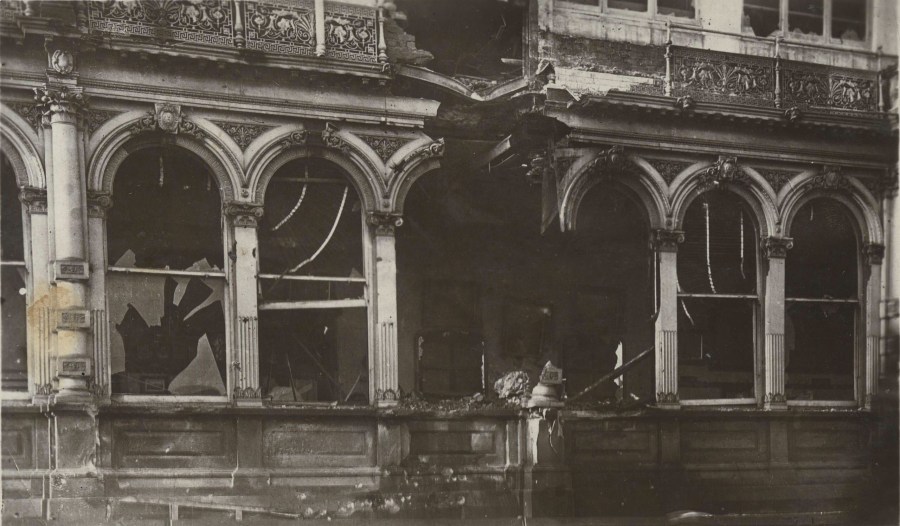
Damage to the Grand Hotel, Scarborough – Public domain
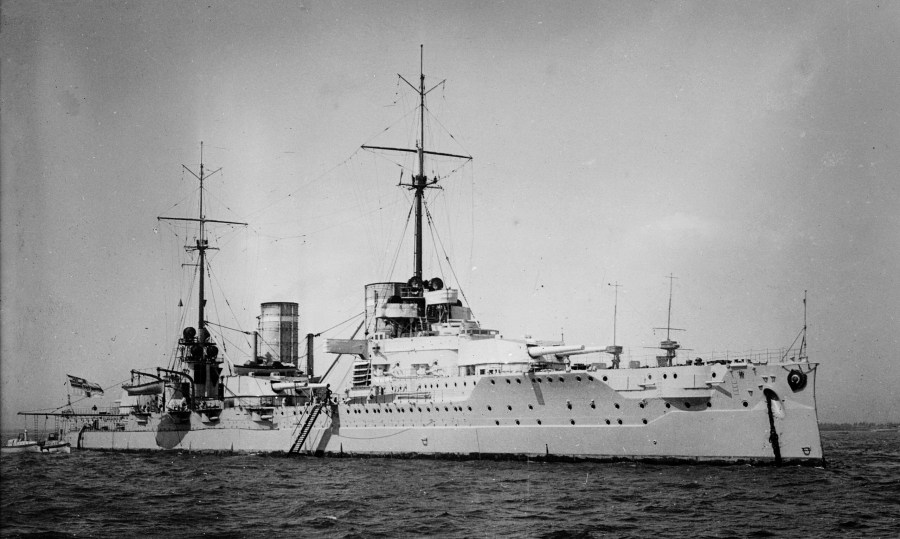
The bombardment of Scarborough began at 8am and lasted for half an hour…. Two German battleships, Von den Tann and Derfflinger, fired 500 shells – hitting the town and castle…. The townsfolk thought it must herald the start of the German invasion….
SMS Von der Tann – Public domainSMS Derfflinger – Public domain
The medieval castle was seriously damaged, as were the 18th century barracks, which were shelled repeatedly…. It seems the Germans had mistaken Scarborough for a major military port – whereas in fact the barracks had not been occupied by troops for many years…. In all 17 people were killed in the attack, hundreds were injured and many had their homes destroyed….
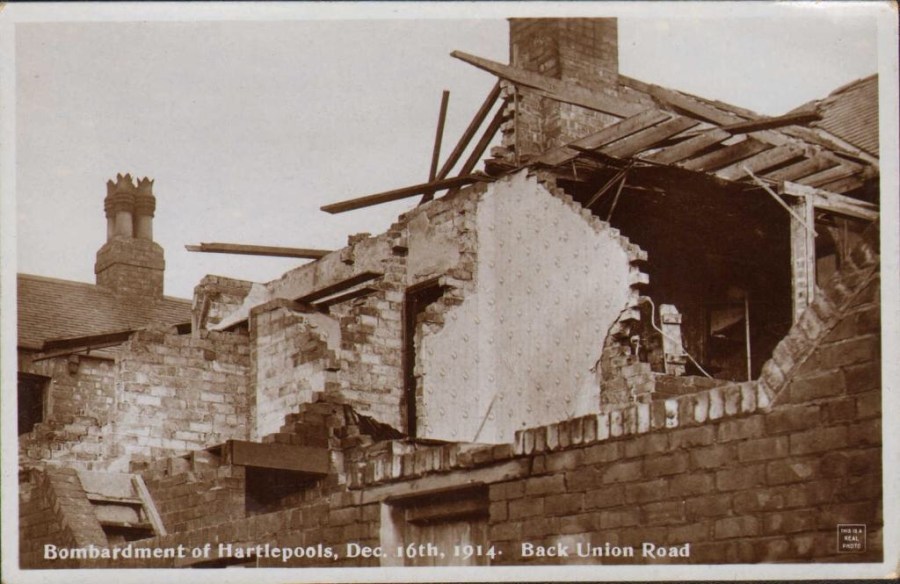
At 8.30am the two ships left, headed north and shelled Whitby…. At the same time another German naval force attacked Hartlepool…. These attacks caused even more death and destruction than what had already occurred in Scarborough…. Hartlepool with its extensive civilian dockyards and factories received some 1,150 shells – hitting steelworks, gasworks, railways, 7 churches and over 300 homes…. In total 86 civilians were killed and 424 more wounded…. In addition 14 soldiers were injured and 7 lost their lives…. It also saw the first death in 200 years of a British soldier from enemy action on British soil when 29-year-old Private Theophilus Jones of the Durham Light Infantry was killed….
Ruins of a church in Whitby – Public domainDamaged house, Hartlepool – Public domain
The raids had an enormous effect on the British public and prompted the propaganda campaign Remember Scarborough…. It also caused an outcry from other nations – neutral America cited – ‘This is not warfare, this is murder’….
On this day in history : 27th October 1917 – The death of Arthur Rhys-Davids – flying ace of the First World War and the victor of one of the most famous dog fights of the War….
Portrait of Lieutenant Arthur Rhys-Davids – From the collections of the Imperial War Museums – Public domain
As soon as he had finished his schooling Arthur deferred his entry to Oxford University and joined the Royal Flying Corps…. He first reported for duty on the 28th of August 1916 as a 2nd Lieutenant in the Royal Flying Corps Special Reserve in Oxford and began his training…. He was then to join 56 Squadron at London Colney….
At the beginning of April 1917 the Squadron flew to France and were to based at Vert Galand…. Arthur was to get his first taste of aerial combat on the 7th of May…. He was to encounter a German pilot far more experienced than he was; despite being shot down he lived to tell the tale…. Others were not so lucky; it was a disastrous day for the Squadron, only five aircraft returned to Vert Galand….
Royal AircraftFactory S.E.5 – the type of aircraft Rhys-Davids would have flown – Public domain
On the 23rd of May Arthur scored his first victory – shooting down an Albatross D.111 fighter…. The following day he had three more victories – in just one hour…. And on the 25th he succeeded in bringing down another aircraft – with five victories to his name Arthur was now a flying ace…. On the 25th of June 1917 he learned that he had been awarded the Military Cross….
During an evening flying patrol on the 23rd of September 1917 several members of 56 Squadron, including Arthur, encountered German flying ace Werner Voss…. Credited with 48 victories Voss was much feared but also much admired…. Only at this stage Arthur and his comrades were unaware of who it was they had come across….
The six aircraft of Arthur’s patrol had become involved in a dog fight involving large numbers of aircraft from both sides – when suddenly Voss appeared amidst them…. “The German triplane was in the middle of our formation, and its handling was wonderful to behold. The pilot seemed to be firing at us all simultaneously, and although I got behind him a second time, I could hardly stay there for a second. His movements were so quick and uncertain”…. ~ James McCudden – (one of the most highly decorated airmen in British history and who was flying in the same patrol as Arthur that particular evening…. McCudden was eventually killed in action on the 9th of July 1918)….
The German made no attempt to escape and the six British pilots were now engaged in a ferocious battle with him…. Voss fired and hit McCudden in the wing, then forced two more of the British aircraft out of the fight with hits to their engines…. More British and German planes joined in but still Voss in his Fokker triplane managed to evade them…. Eventually he made a flat turn and Arthur saw an opportunity and managed to get on his tail…. Arthur fired and the Fokker dived towards German lines with the young British pilot still behind him…. But then Voss made an error…. Arthur made a turn away – and the German, mis-reading the situation, turned with him – bringing his aircraft back into Arthur’s firing line – who let him have it full pelt, taking the Fokker down….
When the patrol returned to base it was still unknown to them who the mystery pilot was…. When the Germans announced that their ace pilot Werner Voss was missing in action jubilation broke out in the ranks of 56 Squadron, with showers of congratulations for Arthur….who was later to say…. “If only I could have brought him down alive”….
Werner Voss – a card from the private collection by Scinke, Berlin 1917 – PD-US
On the 27th of October 1917 Arthur was promoted to Lieutenant, backdated to the 1st of September…. Later that same day he took off on a routine patrol and was last seen chasing after a group of German Albatross fighters…. It was just a month after his 20th birthday – he was never found….
Parr had joined the 4th Battalion of the Middlesex Regiment in 1912, after lying about his age; he claimed to be the required age of 18 whereas in truth he was only 14…. He was trained to be a reconnaissance cyclist – a scout riding ahead of the marching battalion on a bicycle to check the way ahead for enemy activity….
In August 1914 the 4th Middlesex was one of the first British Army units to be mobilised and sent to Northern France…. 1,100 men left Southampton destined for Boulogne-sur-Mer – just as the Germans were advancing into Belgium….
On the 21st of August Private Parr and another cyclist were despatched to the village of Obourg, just over the border into Belgium…. Their mission was to pinpoint the exact location of the German troops…. Nobody knows for sure exactly what happened next…. It is believed that Parr and his companion came across a German patrol engaged in a similar task to that of their own…. Whilst his companion returned to report to the commanding officer of the Middlesex Regiment Parr remained behind to try and head off the enemy patrol…. It was thought he died in an exchange of rifle fire with the Germans….
However, later research carried out in 2014 unearthed the possibility that Parr was actually killed by friendly fire…. Whatever the circumstances, British troops almost immediately retreated from the area and Parr’s body was left behind…. His grave was later found in a battle graveyard, where he was most likely buried by the Germans…. He now lies in St. Symphorien Military Cemetery, south east of Mons – in a grave that faces that of George Edwin Ellison, thought to be the last British soldier to be killed in World War One…. The age on Parr’s headstone reads as ‘20’ – not the 17 he really was….
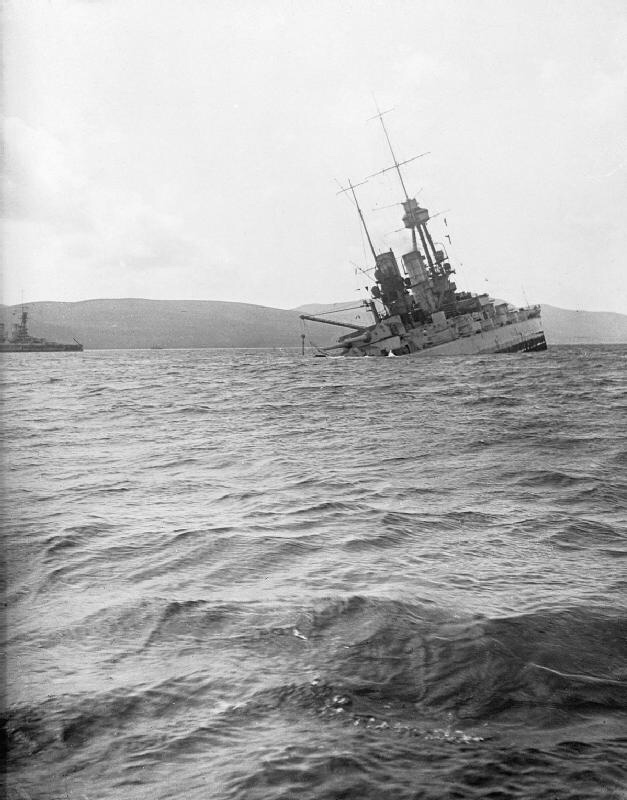
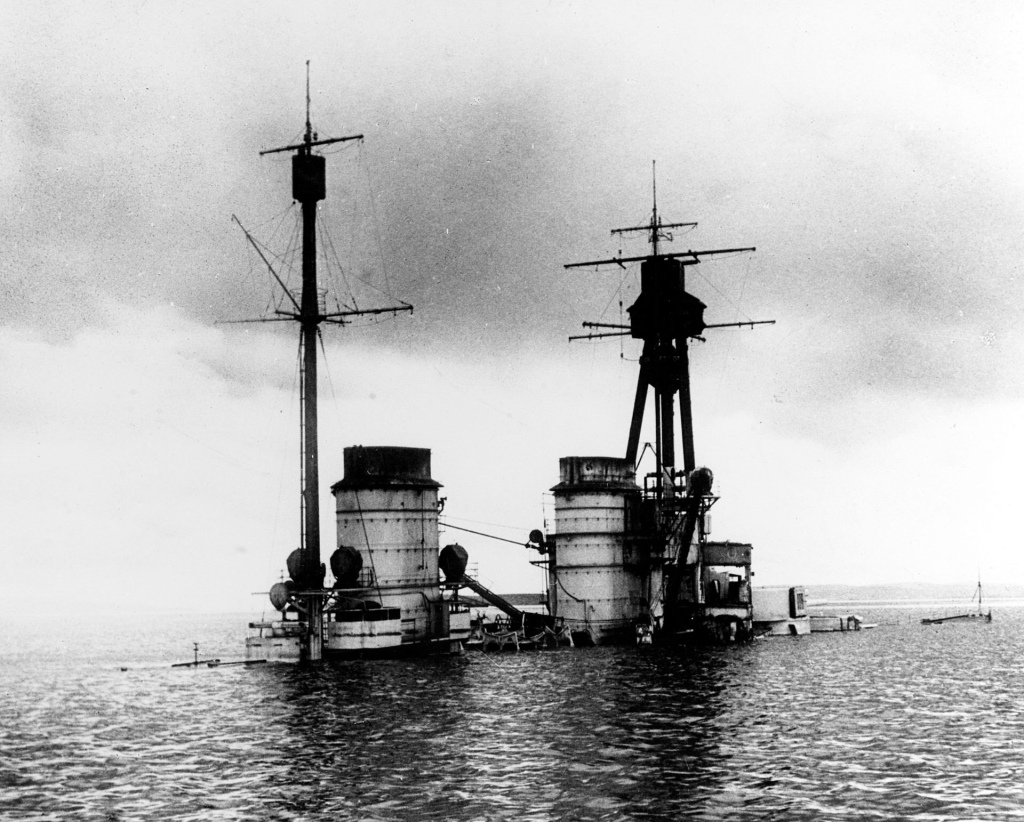
On this day in history : 21st June 1919 – In the biggest act of self-destruction in military history German sailors scuttle 74 of their own warships at Scapa Flow in the Orkney Islands….
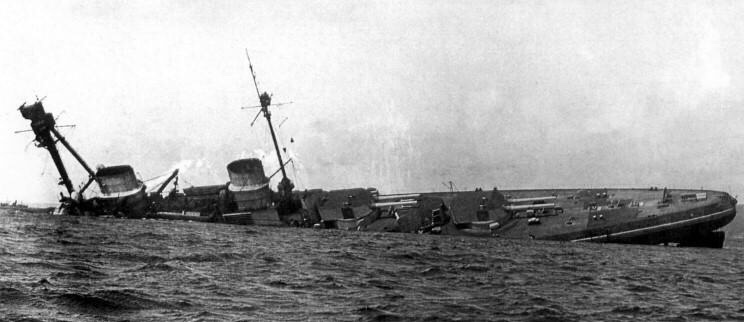
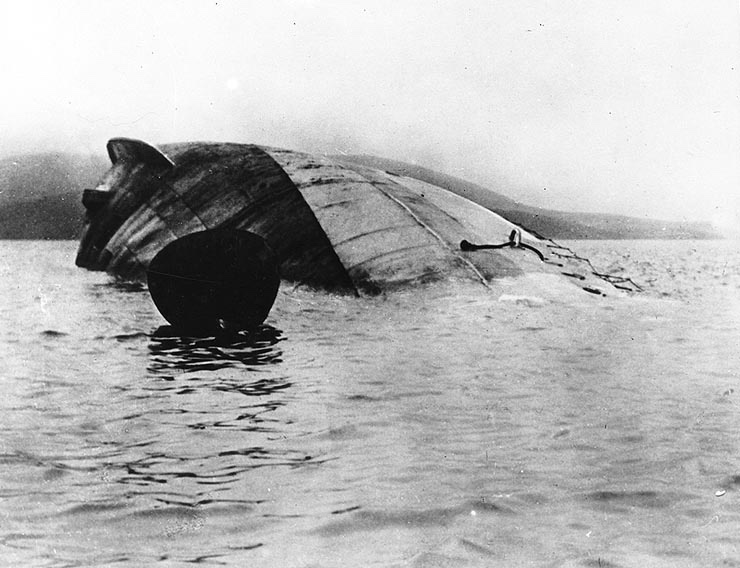
SMS Derfflinger capsizes – C.W.Burrows – Public domain
One of the terms of the November 1918 armistice, which brought World War 1 to an end, was the handing over of the German naval fleet to the Allies…. The details of the surrender of the fleet were worked out between Admiral Sir David Beatty on behalf of the Allies and German Rear-Admiral Hugo Meurer – along with other senior naval officers….
On the 21st of November 1918 seventy German battleships, cruisers and destroyers, under the command of Rear-Admiral Ludwig Von Reuter, arrived at the Firth of Forth, off the Scottish coast…. They were escorted to Rosyth, to the north-west of Edinburgh, where they anchored…. The order was given for all German flags to be lowered….
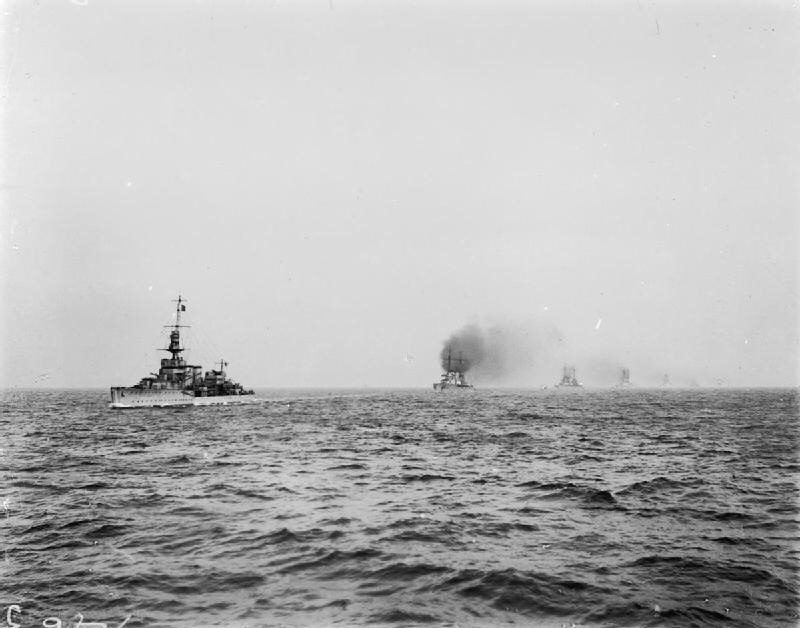
HMS Cardiff leading German fleet into Firth of Forth – Royal Navy official photographer – from the collections of the Imperial War Museums – Public domain
At this point the Allies had not yet decided what to do with the German fleet…. The French and Italians were hoping to get their hands on a few to replenish their own depleted fleets – whereas the British and Americans favoured destroying the lot…. In the meantime the fleet was moved to Scapa Flow where it would be held until a decision had been made…. Over the following few weeks four more ships arrived, now making a totally of seventy-four, along with 20,000 German sailors…. Gradually these were returned to Germany – leaving just skeleton crews to man the vessels…. The Germans were forbidden to leave their ships – food and provisions were sent from Germany on a fortnightly basis…. For months the men were kept like this whilst the negotiations continued – they were bored, restless and undoubtedly mutinous….
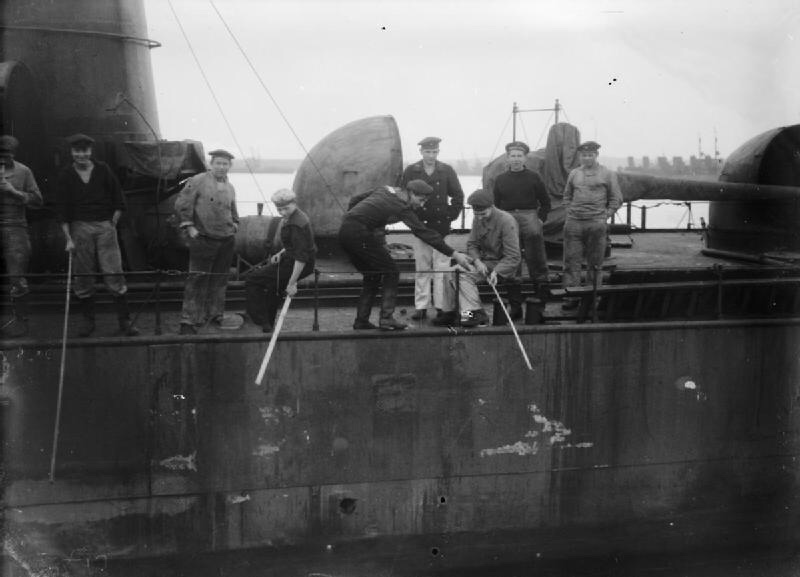
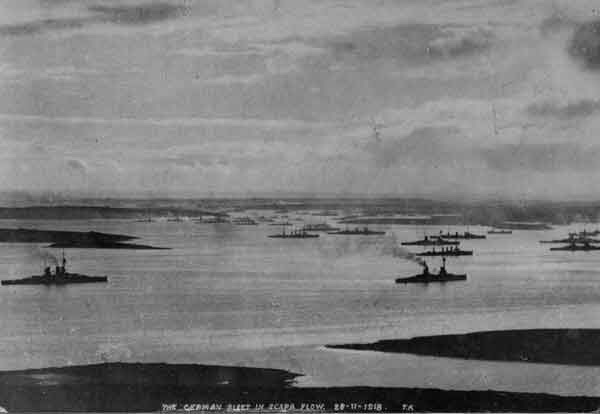
German sailors fishing over the side of a destroyer – Royal Navy official photographer – from the collections of the Imperial War Museums – Public domainScapa Flow, November 1918 – Royal Navy – Public domain
Eventually the talks in Versailles broke down…. Britain began to make plans to destroy the fleet, with a date being set for the 23rd of June 1919…. Somehow Von Reuter learned of this and began to put his own plan into action….
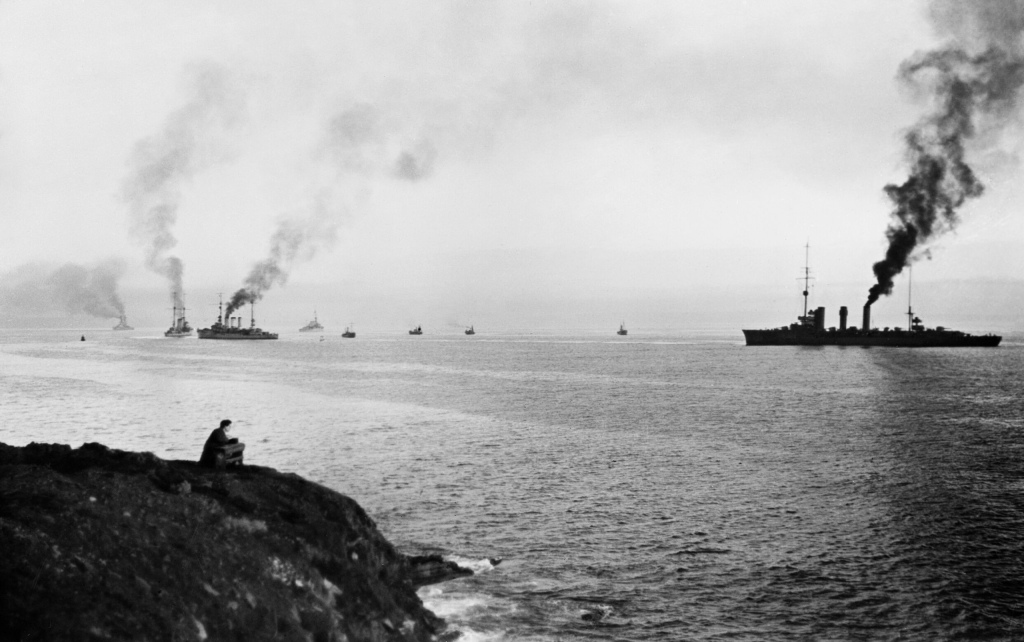
Emden, Frankfurt and Bremse entering the Scapa Flow – Royal Navy official photographer – from the collections of the Imperial War Museums – Public domain
The 21st of June dawned a perfect Summer’s day – and the British fleet had decided to take advantage of the good weather and had left the harbour early to go out on exercise – leaving just a minimal guard behind to oversee the German fleet…. Technically the ships still legally belonged to the Germans, as they had not officially surrendered them – this explains why there was no physical Ally presence onboard….
At 10.30am Von Reuter set the wheels in motion to prevent the British from seizing the ships…. He had already managed to get messages to the commanding officers of all the other ships and as his flagship ‘Emden’ sent out the obscure message “Paragraph eleven, confirm”, using searchlights and semaphore, they knew it was their signal to scuttle….
SMS Bayern sinking – Royal Navy official photographer – from the collections of the Imperial War Museums – Public domain
The crews hoisted their German flags, opened water tight doors, the seacocks, portholes, hatches and torpedo tubes – and smashed pipes, deliberately flooding the ships…. It was done so that each vessel flooded from one side, causing it to capsize – it took the British a couple of hours to realise what was happening….
Hindenburg – Royal Navy official photographer – from the collections of the Imperial War Museums – Public domainSeydlitz on her side – Copyright free use
The Germans left the sinking ships in their lifeboats – while at the same time the British boarded some of them to try and prevent the scuttling…. They towed some to shallow water to beach them – skirmishes broke out between the opposing sides….9 Germans were killed and a further 16 wounded….
In all 52 of the 74 ships sank….the rest stayed afloat or were beached…. The islanders helped themselves to anything worth having…. Any surviving ships were then divided up among the Allies….
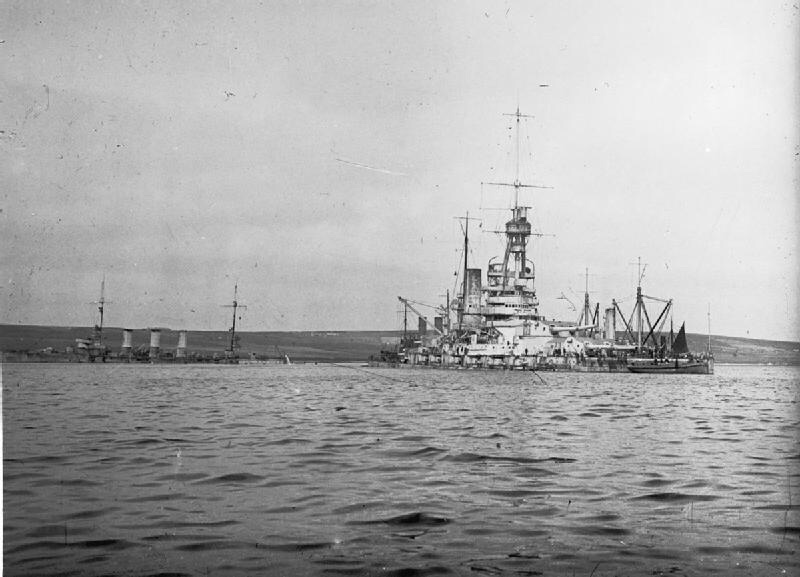
Salvage work on Baden – Royal Navy official photographer – from the collections of the Imperial War Museums – Public domain
As for the sunk ships, some of them still remain there…. In the 1920s salvage attempts were made…. British scrap metal dealer Ernest Cox had managed to salvage over 30 by the early 1930s – he became known as ‘the man who bought a navy’….
On this day in history : 7th May 1915 – A German U-boat sinks RMS Lusitania killing 1,198 people – 128 of which are US citizens and turns the American public against the German Empire….
Lusitania in 1907 – Public domain
The Lusitania had been launched on the 7th of June 1906 and was designed to carry passengers transatlantic…. At the time she was the largest ship in the world, measuring 787 feet (240m) and weighing approximately 31,550 tons…. She was especially noted for her speed…. A month after her maiden voyage, which began on the 7th of September 1907, she was awarded the Blue Riband for the fastest Atlantic crossing, averaging at 24 knots….
Lusitania was coming to the end of her 202nd Atlantic crossing and was headed to Liverpool from New York…. On board the British ocean liner, which was part of the Cunard Shipping Line, were 1,959 passengers and crew….
The ship was running parallel to Ireland’s south coast when at 2.10pm she crossed in front of a German U-boat…. Lusitania’s captain, William Thomas Turner, had been warned by the British Admiralty to avoid the south coast of Ireland because of submarine activity – but he chose to ignore the warnings…. Commanding Officer of the U-boat, Walter Schweitzer, gave the order to fire a torpedo – which at 2.12pm struck the Lusitania on the starboard bow…. The initial impact explosion was quickly followed by a second much larger explosion, quite possibly the ship’s boilers….
English drawing of Lusitania being torpedoed – Public domain
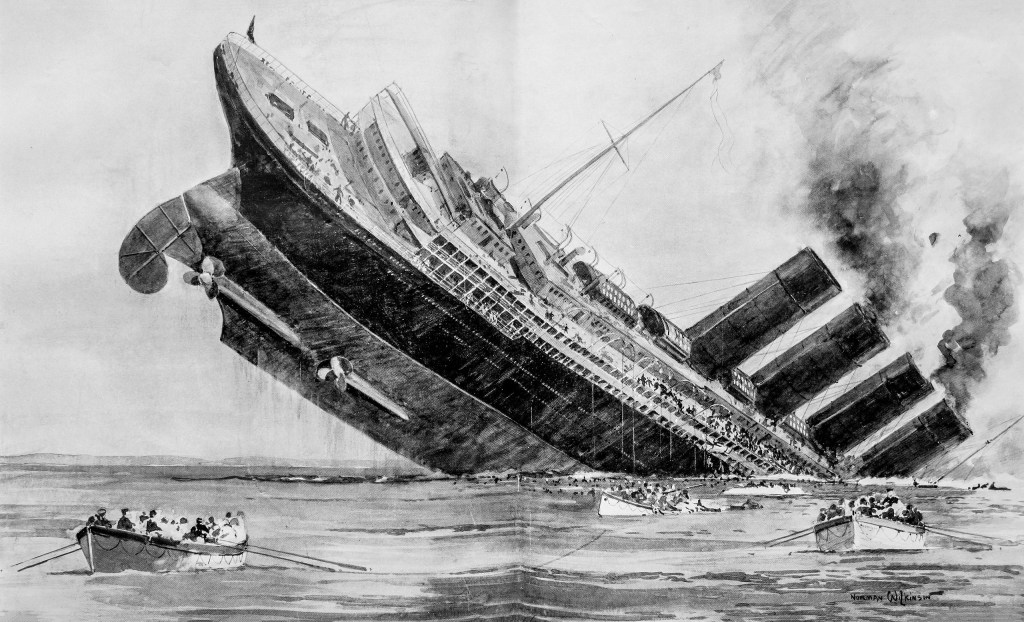
The crew rushed to launch the lifeboats but because of the ship’s list it was all but impossible – only 6 out of the 48 lifeboats were successfully launched…. Within 20 minutes the Lusitania had sunk….
Illustration of the sinking by Norman Wilkinson – Public domain
News of the Lusitania’s sinking soon reached around the world, causing an international outcry – especially in Britain and across the British Empire…. Most of the casualties onboard were British or Canadian but included were 128 Americans…. In 1914 President Woodrow Wilson had declared US neutrality – it took another two years before the States entered the War but the sinking of the Lusitania played a significant part in turning American public opinion against Germany….
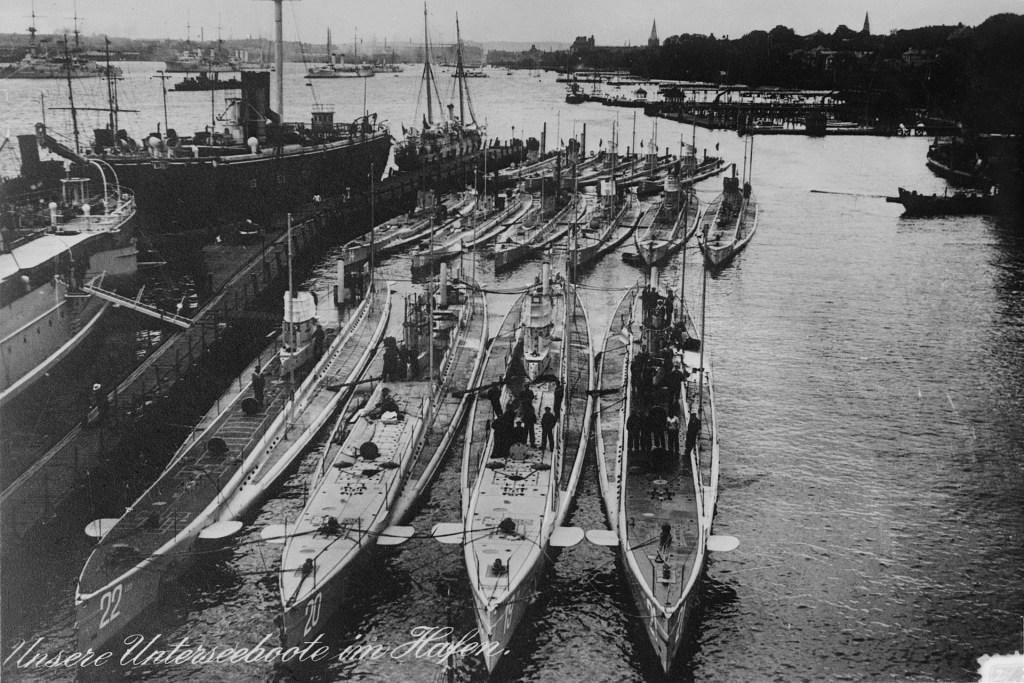
U-20 (second from left) – the submarine responsible for the sinking of Lusitania – Public domain
The Germans justified the attack as necessary as the Lusitania had been carrying 173 tons of rifle ammunition and shells…. Nevertheless Germany apologised to the US and said there would be no more unrestricted submarine warfare…. However, just a few months later, in November 1915, an Italian liner was sunk by a U-boat, killing over 270 people, including more than 25 Americans….







 Cottage Capers
