On this day in history….13th October 1904

On this day in history : 13th October 1904 – The birth of actor and radio presenter Wilfred Pickles – a proud Yorkshire man and the first newsreader to speak on the BBC with a regional accent….

Wilfred Pickles in 1950 – Fair use

Pickles was born and grew up in Halifax – and when his family moved to Southport, Lancashire in 1929 he, now a young man, went with them…. He was to join an amateur dramatic society and here he was to meet Mabel Cecelia Myerscough; they were to marry on the 20th of September 1930 and went on to have one child….

It was during the 1920s that Pickles made his first professional appearance as an actor, at the Theatre Royal in Halifax, as an extra in a production of Julius Caesar…. He was to go on to become a radio celebrity after joining the BBC in 1927…. He was chosen by the BBC as an announcer for their Northern Regional Radio Service during World War 2 – the thinking behind this being that his regional accent would make it harder for the Nazis to impersonate BBC broadcasters….

Pickles made his West End debut in 1946 – and his acting career developed to include films and television…. Also in 1946 he became the host of radio show Have A Go, which ran until 1967…. This hugely popular show, which also featured his wife, brought familiar catchphrases, such as ‘How do, how are yer?’, ‘What’s on the table, Mabel?’, ‘Give him the money Barney’ and ‘Are yer courting?’…. By sharing their innermost secrets contestants could earn £1.19s.11d…. Over 20 million listeners tuned in each week….

In 1948 a children’s board game, called Ask Pickles, was released that was based on the format of the show…. In May 1954 the hit radio show became a TV show, with the same name – Ask Pickles…. It ran until 1956…. Pickles starred in his first TV sitcom Caxton’s Tales (along with Mabel) in 1958….

Pickles was not unique in his family for becoming famous…. He was the uncle of actresses Vivian Pickles and Christina Pickles and great uncle to Carolyn Pickles…. He was also uncle to colourful and outspoken Judge, James Pickles….

Pickles was awarded with a CBE for services to broadcasting in 1950…. He died in Brighton on the 27th of March 1978 and is buried with Mabel in Southern Cemetery, Manchester….
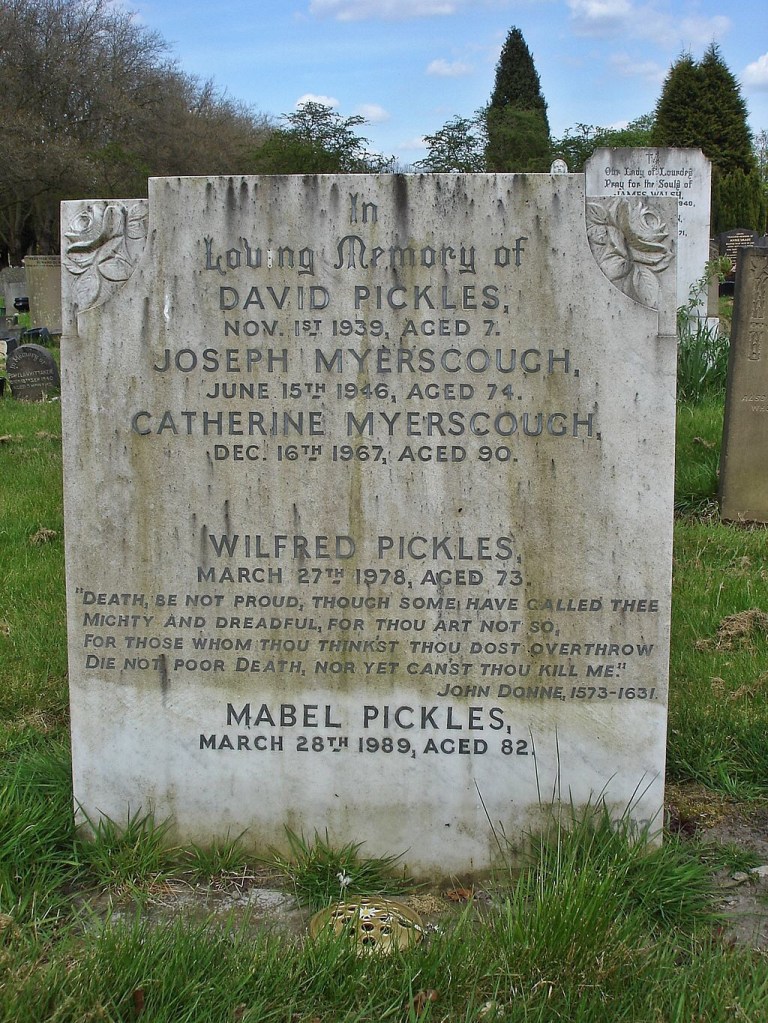
Image credit : Plucas58 -own work CC BY-SA 4.0

On this day in history….12th October 1216

On this day in history : 12th October 1216 – Bad King John loses his Crown Jewels in an attempted crossing of the Wash in East Anglia….

King John hunting – Public domain

King John has always had a reputation in the history books as being evil and incompetent…. 1216 – a year after the Magna Carta and the country was in a state of Revolt and King John had never been so unpopular; he had lost most of England’s land in France, had been excommunicated and had been forced to sign the Magna Carta….

An original version of the Magna Carta – Public domain

He was travelling from Spalding in Lincolnshire to Kings Lynn (then called Bishops Lynn) in Norfolk….and to avoid the rebel held area of East Anglia it was decided they should cut across the marshy area of the Wash…. As it was the King did not make the journey himself as he was taken ill with dysentery – but he sent his baggage train on ahead of him…. Some 3,000 of his entourage carried with them the Kingdom’s valuables, which included the Crown Jewels….

The tide was out on the Wash; the conditions were wet and muddy on the causeway – and the wagons moved too slowly…. Disaster was inevitable – the wagons sank in the mud and were engulfed…. The King’s men tugged at the horses but to no avail – and the tide was now coming in…. Soon everything was covered – and lost…. The Crown Jewels were never found – and as for King John – he died of his illness a week later….

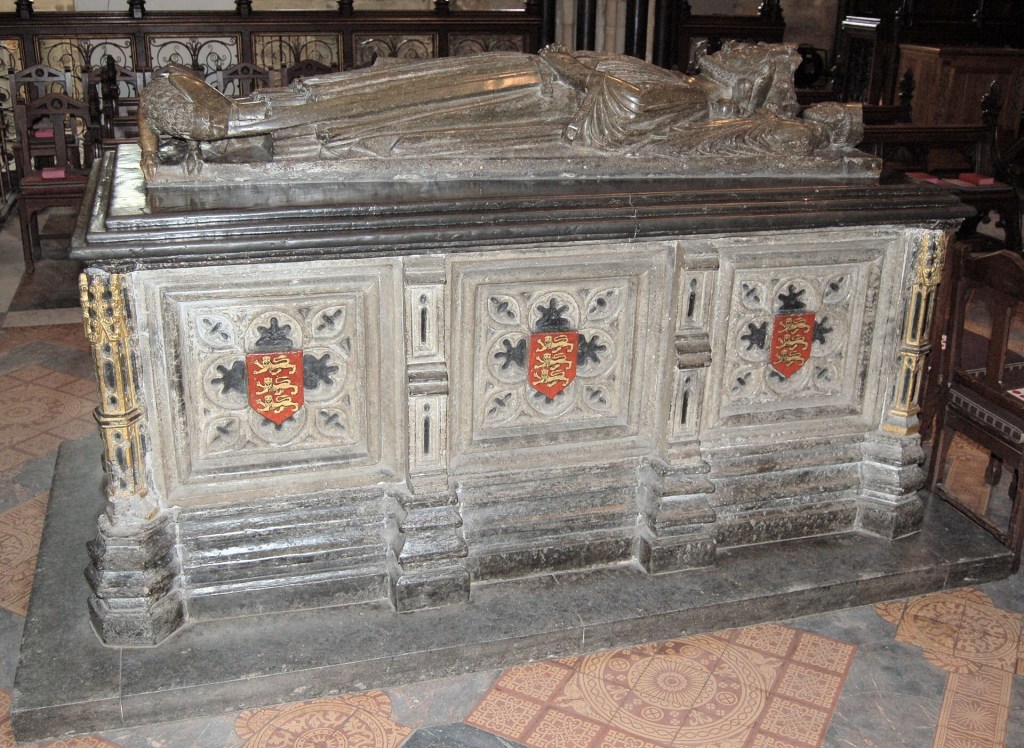
King John’s tomb, Worcester Cathedral – Image : Greenshed at English Wikipedia – Public domain

On this day in history….11th October 1821

On this day in history : 11th October 1821 – The birth of English philanthropist and businessman Sir George Williams – who founded the Young Men’s Christian Association (YMCA)….

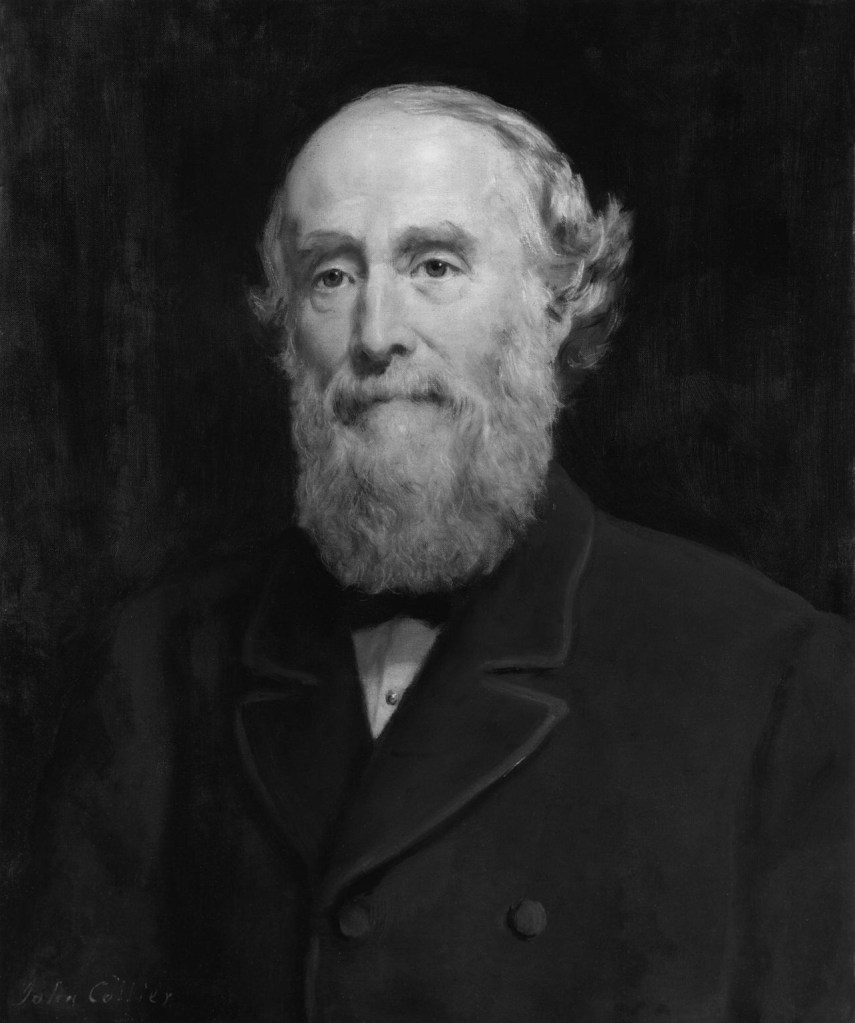
Sir George Williams by John Collier

Williams was born on a farm in Dulverton, Somerset – the youngest of the seven sons of Amos Williams and Elizabeth Vickery…. He attended school in Tiverton until the age of 13 and then began to work on the family farm….

In 1837 he became the apprentice of draper Henry William Holmes in Bridgewater…. It was also around this time that he converted from Anglicanism to Congregationalism, becoming an involved member of the Zion Congregational Church….

In 1841 Williams moved to London and began working at the drapers store Hitchcock and Rogers – and in 1844, at the age of just 22, he had become a department manager….

As a young man himself Williams was appalled by the terrible living conditions of the many young working men drawn to the city by the Industrial Revolution…. He was concerned that there were few healthy activities for them to occupy themselves – many spent all of their free time in the taverns and brothels…. He gathered together eleven of his friends, all fellow young drapers and on the 6th of June 1844 the first meeting was held that led to the founding of the YMCA…. Its purpose : ‘To improve the spiritual condition of young men engaged in the drapery, embroidery and other trades’….

Between 1844 and 1849 the YMCA began to address other concerns of young, working city men…. Public lectures and classes were held and reading rooms were established…. By 1845 the organisation began to spread from London to other areas of the country…. In 1873 its first holiday centre opened on the Isle of Wight…. By 1879 it had reached the United States…. What started as a simple Bible study and prayer meeting group for young men now serves more than 65 million people in 120 countries….

World Alliance of YMCAs logo emblem 1881 – Fair use

As for Williams – he didn’t do too badly for himself…. In 1853 he married the daughter of the owner of Hitchcock and Rogers, Helen Jane Maunder Hitchcock and they had seven children…. He became a partner in the drapers and when his father-in-law died he became the sole owner…. In 1894 he received a Knighthood from Queen Victoria – and when he died in 1905 he was buried in St. Paul’s Cathedral….

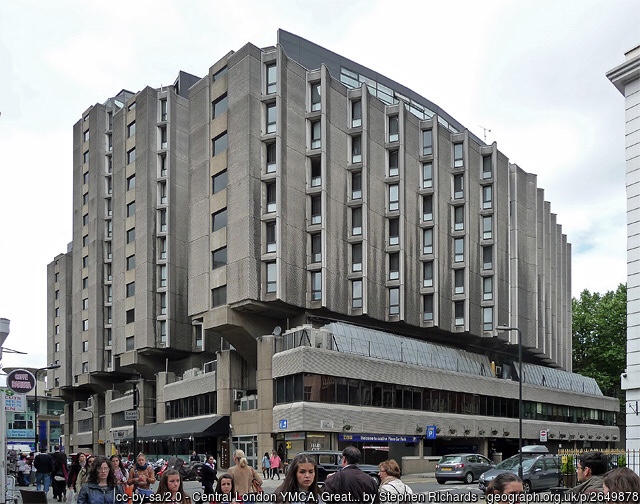
Central London YMCA, Great Russell Street

On this day in history….10th October 1928

On this day in history : 10th October 1928 – The Tyne Bridge, linking Newcastle-upon-Tyne and Gateshead in North East England, is opened by King George V….

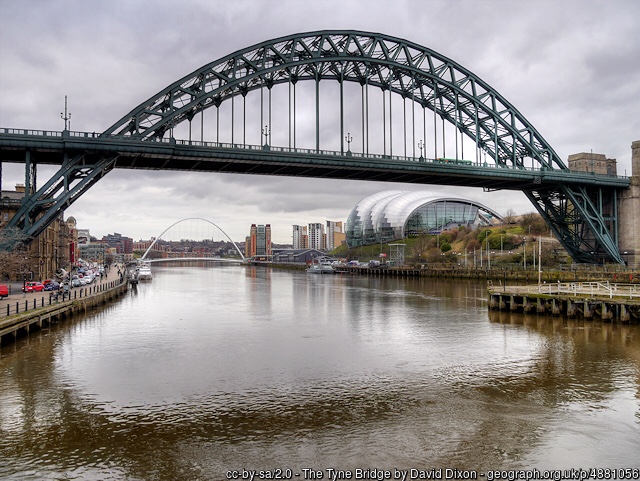
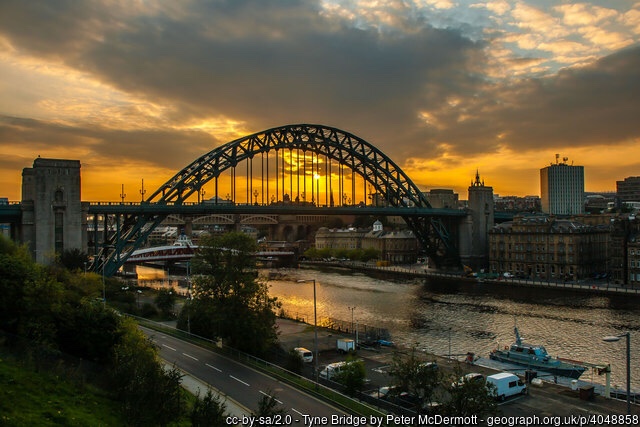
Out of the seven bridges, that cross the River Tyne in the area that is known as the ‘NewcastleGateshead Quayside’, the Tyne Bridge is the most recognisable and iconic….

The bridge was designed by engineering firm Mott, Hay and Anderson and building contractors Dorman Long began work on it in August 1925…. Dorman Long included in its team the first female member of the Institution of Civil Engineers, Dorothy Buchanan…. She was to go on to also be involved with the construction of Lambeth Bridge in London and the Sydney Harbour Bridge….

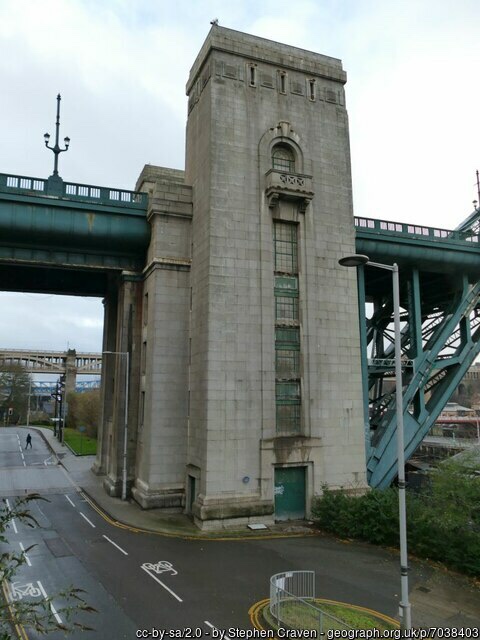
The bridge’s Cornish granite towers (also known as the pylons) were designed by Robert Burns Dick, a local architect – and were originally intended to be used as warehousing space over five storeys…. However, work inside them was not completed and so they have never been used for this purpose…. Lifts for passengers and goods were also installed but are no longer in use…. The towers are annually opened to the public as part of Heritage Open Days (which take place in September)….

The South Tower

At the time of its construction the Tyne Bridge was the World’s longest single span bridge with the largest steel arch…. The bridge’s length totals 1,276ft (389m), with an arch span of 531ft (161.8m) – it has a height of 194ft (59m) and a width of 56ft (17.8m)…. Some 777,124 rivets hold it all together….

The bridge was painted in a special green paint manufactured by J.Dampney, Tonbridge, Tingate Co. of Gateshead and work was finally completed on the 25th of February 1928…. During construction there was one fatality, that of a scaffolder from South Shields by the name of Nathaniel Collins….

The Tyne Bridge was officially opened on the 10th of October 1928 by King George V and Queen Mary – who travelled across it in their Ascot Landau carriage, making them the first ever to use the roadway…. 20,000 schoolchildren attended the ceremony and the speech given by the King was recorded by Movietone News….

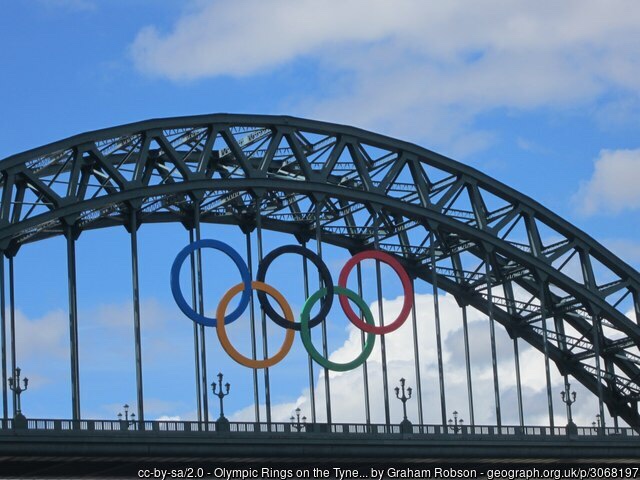
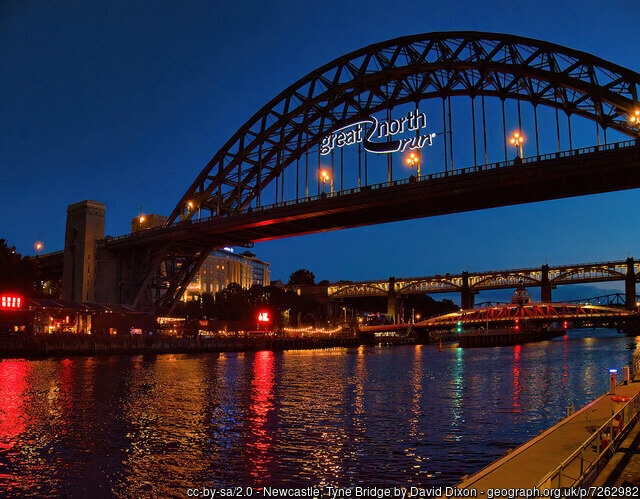
The Tyne Bridge has become part of the region’s culture…. Each year 52,000 runners cross it as part of the Great North Run…. In 2012 giant Olympic Rings were erected on the bridge for Newcastle’s hosting of the Olympic football tournament – and also for the Olympic torch relay which saw Bear Grylls zip-wire his way down from the top of the arch to Gateshead quayside…. The bridge features as a prominent part of many celebrations and events held in Newcastle and the surrounding areas…. In August 2018 it was made Grade II listed by Historic England and in June 2022 it was announced the bridge would be refurbished involving improvements to the structure and a full repaint….

On this day in history….9th October 1799

On this day in history : 9th October 1799 – The sinking of HMS Lutine…. Later its bell is salvaged and presented to shipping insurers Lloyds of London – where it is rung to mark the loss of a ship – or indeed the safe return….

A frigate similar to HMS Lutine – Public domain

Lutine was a French frigate and was launched in 1779…. As one of the sixteen ships handed over to Britain on the 18th of December 1793, following the end of the Siege of Toulon, it was then to serve in the Royal Navy….

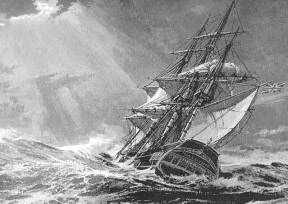
Carrying a cargo of gold Lutine sank in a violent storm at Vlieland, in the West Frisian Islands off the cost of the northern Netherlands…. All but one of the 240 onboard perished….

HMS Lutine in distress – Unknown author – Public domain

The shifting sandbanks of the region were always going to make it nigh on impossible to conduct a truly successful salvage operation – most of the cargo has never been recovered…. It is estimated around £1.2m (the equivalent in today’s terms being £119m) in bullion and coins went down with the ship – an exact figure cannot be determined as a later fire at Lloyd’s destroyed all records…. The gold had been destined to provide the banks in Hamburg with funds to try and prevent a stock market crash….

The gold was insured by Lloyds of London, who paid the claim out in full – which meant the lost cargo now belonged to them…. On the 29th of October 1799 instructions were issued to attempt to recover the gold and in December 1799 salvage operations began…. With the shifting sands the ship was rapidly filling with silt…. Over the years various salvage attempts have yielded small recoveries but only amounting to a fraction of what lies down there….

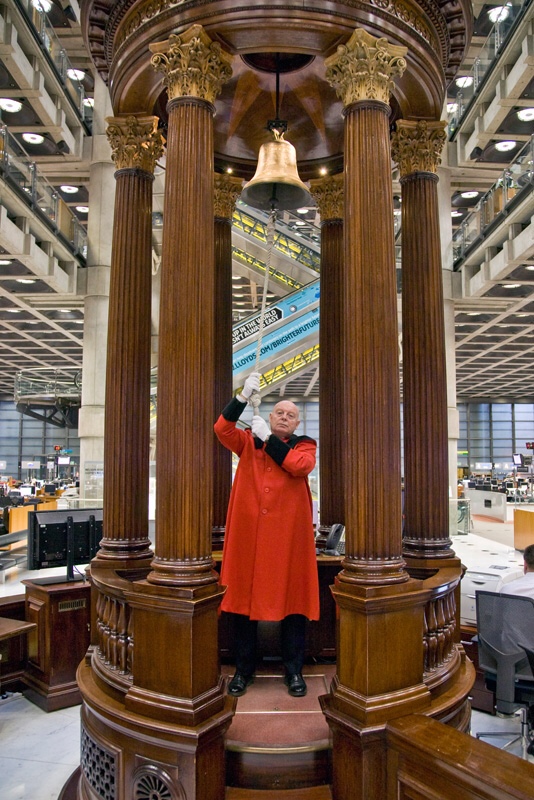
The ship’s bell was recovered on the 17th of July 1858 – it was found tangled in chains between the rudder and ship’s wheel…. It weighs 106lb and is 18in in diameter – engraved upon it is ‘ST. JEAN – 1779’ – nobody knows why this name does not correspond to the Lutine…. The bell was installed in The Royal Exchange in 1859, hanging from the rostrum in the underwriting room at Lloyds…. It was rung every time news of an overdue ship was received; one toll for a loss and two for a safe arrival into port…. The last time it was rung for a ship’s loss was in 1979 – and the return of an overdue ship in 1989…. The bell has developed a crack and so ‘ringing the news’ for shipping has now ceased…. Nowadays it only tolls for the passing of a member of the Royal family – as it was for when Princess Diana died and the death of the Queen Mother…. And of course, most recently on the 15th of September 2022 – when a single ring of the bell marked the death of Her Majesty Queen Elizabeth II and then finished with two rings to acclaim the new King Charles III….

Lloyds of London Image Portfolio Feb2011

When Lloyds moved in 1929 the Lutine Bell was installed in the new premises in Leadenhall Street and then in 1958 it was relocated to Lloyds’ headquarters in Lime Street…. Since 1986 it has been situated in the most recent Lime Street headquarters….