On this day in history….19th September 1997

On this day in history : 19th September 1997 – An Intercity 125 passenger train collides with a freight train at Southall – 7 people are killed and a further 139 are injured….
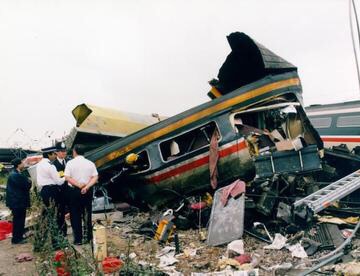
Fair use

The accident happened with no warning at around 1.20pm near to Southall Station….

The 10.32am Great Western Train’s Intercity 125 high speed eight carriage passenger train was returning from Swansea to Paddington…. The driver, Larry Harrison, had joined the train at Cardiff – relieving the first driver, who said he had found a fault with the Automatic Warning System (AWS)…. As a precaution he had disabled the system…. A trial version of a more advanced Automatic Train Protection (ATP) was also installed on the train – but this was switched off…. The ATP was designed to prevent a train from passing through a red light…. Neither driver alerted Signal Control or Railtrack – had they of done so extra precautionary signalling could have been undertaken….

Approaching Southall at 125mph Harrison passed two warning signals – a double yellow and then a single yellow – without slowing the train down…. He only reacted when he saw the red signal – by immediately applying the emergency brakes…. He then saw about a mile ahead the Hanson Class 59 locomotive 59101 – noticing it was at an odd angle he suddenly realised it was crossing his path….
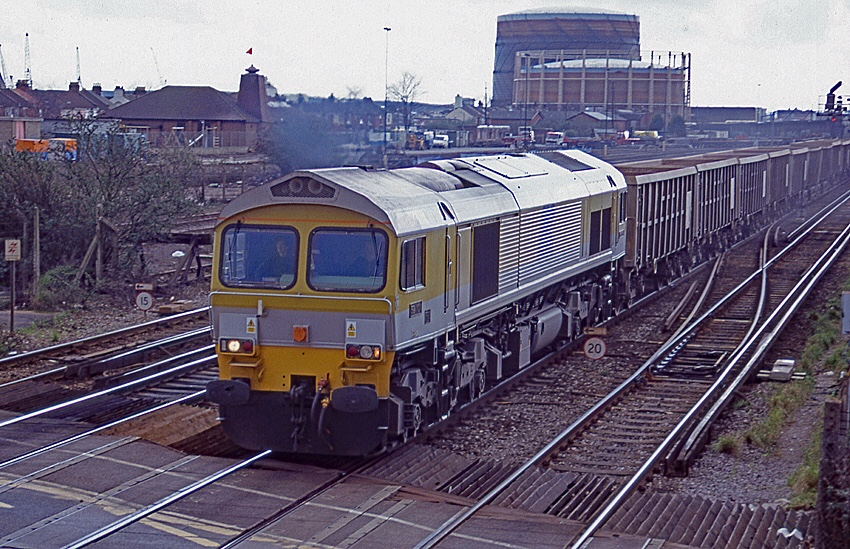
Hanson Class 59 Locomotive 59101 in Southampton 1999 – Image credit : Murgatroyd49 – own work CC BY-SA 4.0

The freight train, which was towing 20 empty wagons, had been instructed to move on to the main line at Southall East Junction so it could finish its journey into the yard on the south side…. The approaching passenger train was still travelling at 80mph at the time of impact with the freight train….the driver of which, Alan Bricker, attempted to accelerate out of the way…. But the front end of the Intercity Express hit one of the 22 ton hopper wagons; two seconds later a passenger carriage collided with another wagon…. The now severed brake pipes of the freight train caused the rear hoppers to stop – the passenger train was still travelling at 60mph…. The passenger carriage turned over – two people were killed after falling through the windows…. As another hopper wagon was struck it lifted into the air and another passenger carriage slid beneath it, flattening it…. The rest of the still moving train behind then collided with it, bending the structure…. There were five more casualties in this carriage – in all seven people died, six at the scene and one later in hospital….

View of aftermath from a passing train – Image credit : Ben Brooksbank CC BY-SA 2.0

It transpired that the driver of the passenger train had not seen the yellow warning signs – as he had been busy putting his stuff away in his bag at the time…. Had the AWS of been working he would have received an audible warning…. Manslaughter charges were brought against him but were dropped in July 1999…. The accident inquiry found the primary cause was his failure to respond to the first two warning signals alerting him to the freight train ahead…. Out of the two safety systems onboard, one was faulty and Harrison had not been trained how to use the ATM….
On this day in history….18th September 1949

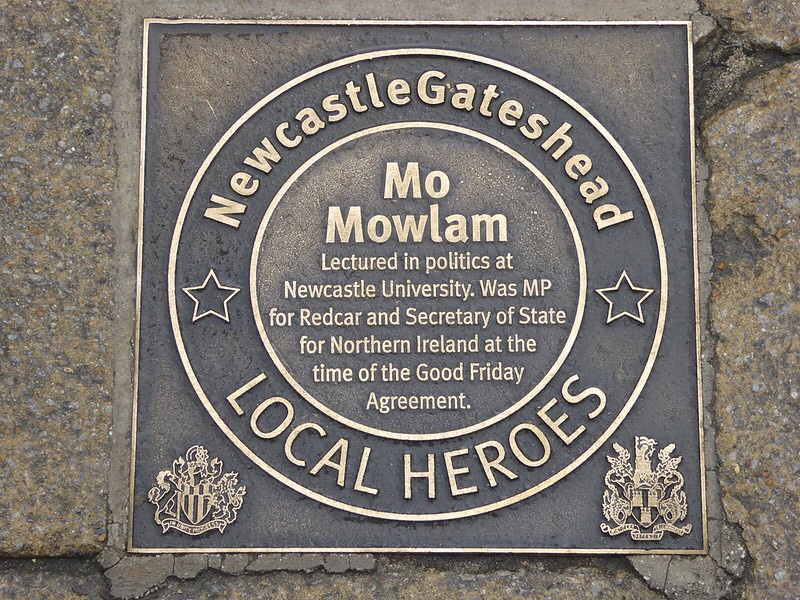
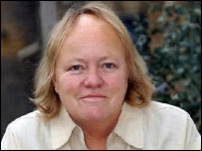
On this day in history : 18th September 1949 – The birth of Labour MP and former Secretary of State for Northern Ireland Mo Mowlam, who was seen as one of the most popular of the New Labour politicians….

Mo Mowlam – Fair use

Born Majorie Mowlam in Watford, Mo was to grow up in Coventry, West Midlands…. She was the second of the three children of Frank and Tina Mowlam; her father was Coventry’s assistant postmaster and her mother worked as a telephonist to help make ends meet….

Mo passed her 11 Plus examination and attended Coundon Court Comprehensive School in Coventry…. She considered becoming a doctor but also developed an interest in politics at an early age…. She went on to Trevelyan College, Durham, where she studied Sociology and Anthropology…. It was whilst at college that she joined the Labour Party, working as a research centre for Tony Benn….

Following her graduation in 1973 Mo travelled to the United States – here she studied at the University of Iowa and gained a PhD in Political Science…. For a short while she lectured in Politics in Wisconsin and then Florida, before returning to the UK to lecture at the University of Newcastle-upon-Tyne….

Mo was elected Labour MP for Redcar, North Yorkshire in 1987 and remained in this seat until 2001…. In 1992 she joined the Shadow Cabinet under John Smith, the then opposition leader…. In 1994 she helped with Tony Blair’s campaign to become Prime Minister, who made her Shadow Secretary of State for Northern Ireland….

In 1995, at the age of 46, Mo married artist Jon Norton, an ex-merchant banker; she became step-mother to his two children…. It was just before the general election of May 1997 that Mo was diagnosed with a benign brain tumour…. After undergoing extensive radio therapy and steroid treatment she lost her hair and gained weight – but she refused to let this interfere with her work – she became known to many as ‘Brave Mo’….

Mo Mowlam (centre) October 1997 – Image credit : plainsense CC BY-SA 3.0

After Labour had won the election Mo was appointed Secretary of State for Northern Ireland – her task being to find a peaceful solution to the ongoing troubles in Northern Ireland…. She even took the unprecedented step of talking to Loyalist prisoners in the Maze Prison, a potentially dangerous risk – but one that paid off – she was instrumental in the signing of the Good Friday Agreement in 1998….

After a government reshuffle in October 1999 she became Minister for the Cabinet Office and Chancellor of the Duchy of Lancaster…. She was later to turn down the job of Health Secretary and became a cabinet office minister instead – this lower position may have been as a result of her deteriorating health…. She headed the government’s anti-drugs campaign but not without causing controversy after admitting having used cannabis in her student days….

On the 4th of September 2000 Mo announced her plans to retire and she relinquished her seat at the 2001 general election…. She was to become critical of the government’s policies on a number of issues afterwards but especially on the invasion of Iraq…. She took part in anti-war protests alongside Ken Livingstone, Tony Benn, Tariq Ali, Vanessa Redgrave and Bianca Jagger….

Her retirement from politics did not see her idle…. She set up a charity – ‘MoMo Helps’ – supporting the parents and carers of disabled children – and those completing rehab after drug addiction…. She also became an agony aunt for men’s publication ‘Zoo’…. In January 2003 she was the subject of TV show ‘This is Your Life’….

On the 3rd of August 2005 the announcement came that Mo was seriously ill in King’s College Hospital…. According to her husband she had fallen on the 30th of July and received head injuries and had not regained consciousness…. Mo had stipulated in her Will that she did not wish to be resuscitated…. On the 12th of August she was moved to Pilgrims Hospice in Canterbury, where she died on the 19th of August…. In January 2010 it was revealed by the doctor who had treated her that the tumour she had was in fact malignant – and this had been the cause of her death…. She had not wanted it to become common knowledge and had kept it even from her work colleagues….

Image credit : morebyless via Flickr

On this day in history….17th September 1985

On this day in history : 17th September 1985 – The death of Welsh fashion designer and businesswoman Laura Ashley, at the age of 60….

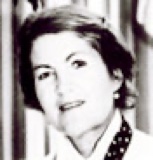
Laura Ashley 1960s – Unknown photographer

Laura had just celebrated her 60th birthday when she fell down the stairs at her daughter’s home in the West Midlands…. Suffering a brain haemorrhage she died ten days later in hospital in Coventry….

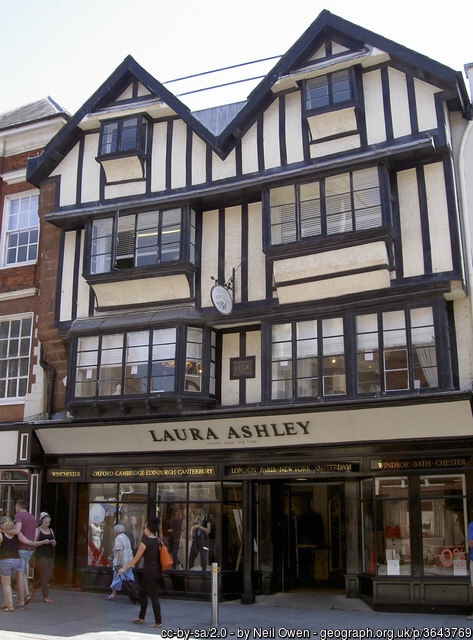
Laura Ashley store, Exeter

She had been born Laura Mountney on the 7th of September 1925 at her grandmother’s house in Dowlais, Merthyr Tydfil, Wales…. She attended school in Merthyr Tydfil until 1932 and then was sent to Elmwood School in Croydon…. However, at the age of 13 and with the outbreak of WW2 she was evacuated back to Wales….

On leaving school at the age of 16 Laura joined the Women’s Royal Naval Service…. She met Bernard Ashley and they were married in 1949 and went on to have four children….

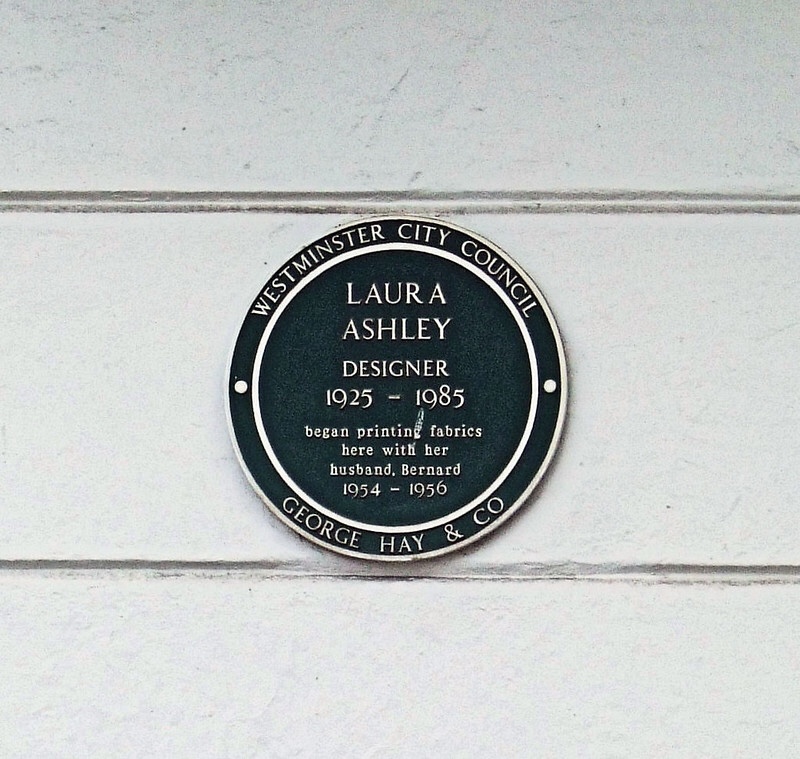
It was while working as a secretary for the National Federation of Women’s Institutes in London that Laura became involved with a quilting project…. It rekindled her love of the needle-crafts she had learned with her grandmother…. She began to design napkins, table mats, tea towels and headscarves…. Then after being inspired by an exhibition of traditional handicrafts at the Victoria and Albert Museum she began to design fabrics…. Bernard printed her designs on a machine he made himself in their flat in Pimlico…. In 1953 they began to print Victorian style headscarves which became hugely successful – so Bernard left his job in the City to work with her full time…. The company was originally called Ashley-Mountney – but Bernard persuaded her to rename it Laura Ashley….

Image credit : Jim Linwood via Flickr

The family moved to Kent in 1955 and then to Wales in 1960…. The first shop opened in Machynlleth, Montgomeryshire in 1961, selling its own produce plus locally produced products such as honey…. Laura worked all hours making stock and introduced fashion lines such as smock shirts…. The family lived in the flat above the shop….

Central Machynlleth, where the first Laura Ashley shop was opened (look closely at the blue building on the left of the picture, opposite the clock tower – this is the location of the shop and where Laura lived with her family in the flat above) – Image credit : Celuici – own work – CC BY-SA 4.0

And so the business grew and became more and more popular – until it became an iconic brand…. Two months after her death Laura Ashley Holdings was floated – and was 34 times over-subscribed….

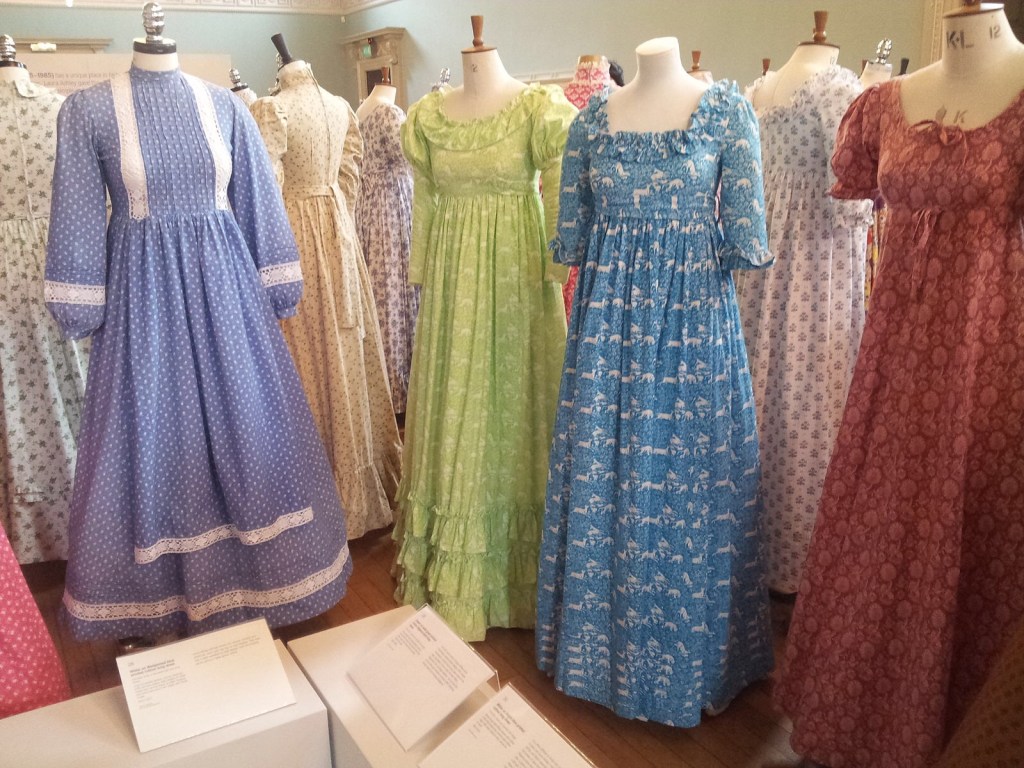
1970s Laura Ashley dresses – Image credit Mabalu – own work – CC BY-SA 4.0

On this day in history….15th September 1966

On this day in history : 15th September 1966 – The launch of HMS Resolution, Britain’s first nuclear ballistic missile submarine, at Barrow-in-Furness….and is attended by the Queen Mother….

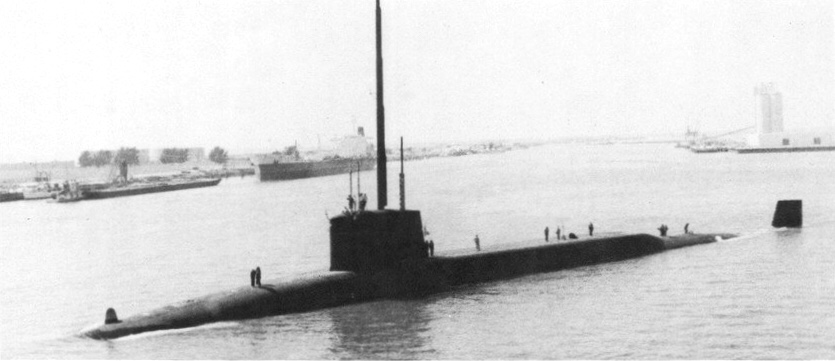
HMS Resolution, 1977 – Public domain

It had been decided that Britain would have 4 Polaris submarines to carry the latest A-3 missiles…. The submarines were to be designed and built in Britain but the weapon systems, with the exclusion of the warheads, were to be purchased from the United States…. The warheads themselves would be manufactured in the UK…. The programme was authorised in February 1963 – and the Polaris submarine programme was then to take some 500,000 man-hours to complete…. A full scale wooden mockup model was built – to help determine where all the equipment should go and also to aid the placement of all the pipes and cables…. It was even possible for the crew to train on it….

The formal purchase order for Resolution was placed in May 1963, at a cost of £40.2m…. The 130m (425ft) long submarine was built by Vickers Armstrong – and her keel was laid down on the 26th of February 1964 by Director General Ships Sir Alfred Sims….

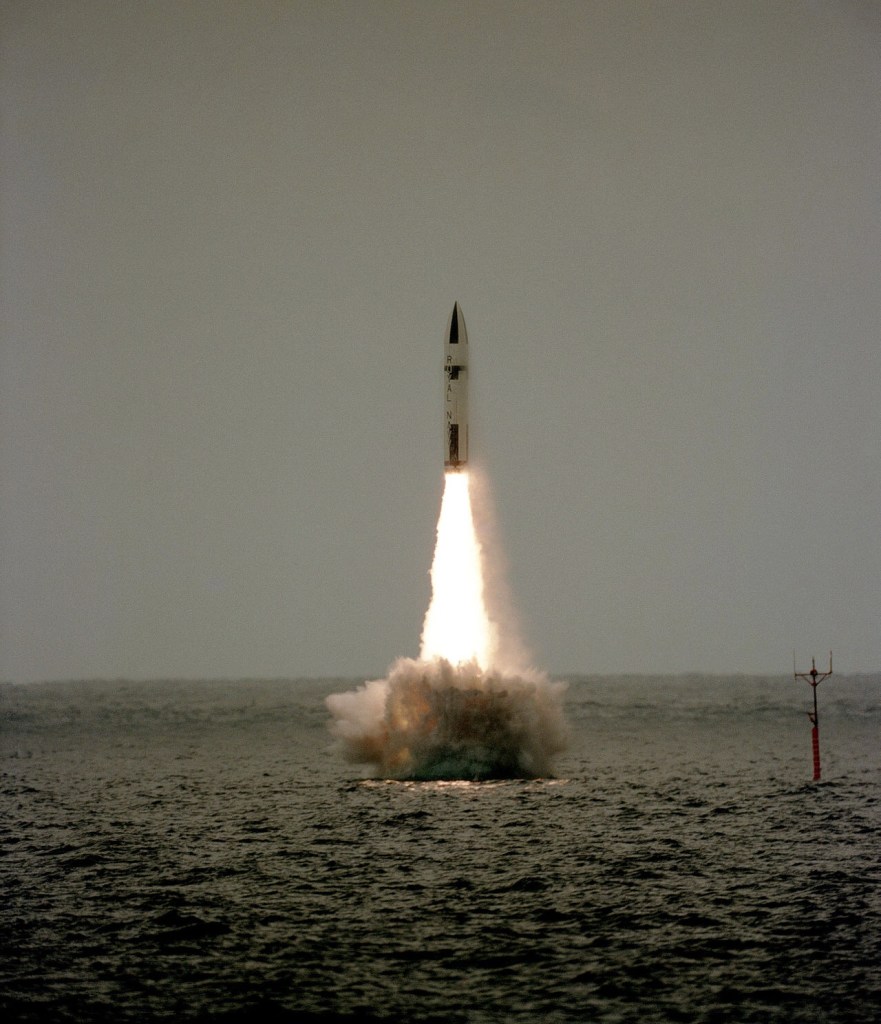
Resolution was commissioned on the 2nd of October 1967…. She underwent extensive trials which included the firing of the first Polaris missile on the 15th of February 1968 – followed by a second on the 3rd of April…. Her surface speed was 37km/h and when submerged 48km/h…. Her first patrol began on the 15th of June 1968 – she was soon joined by her sister ships Repulse, Renown and Revenge…. An order for a fifth submarine was placed but this was later cancelled….

Polaris missile launch from Resolution, 1983 – Public domain

The first Trident submarine was completed in 1992 and gradually the Resolution class of submarines were withdrawn from service…. After 61 patrols, the longest being 108 days, Resolution was de-commissioned on the 22nd of October 1994 and laid up at Rosyth Dockyard….

On this day in history….14th September 1910

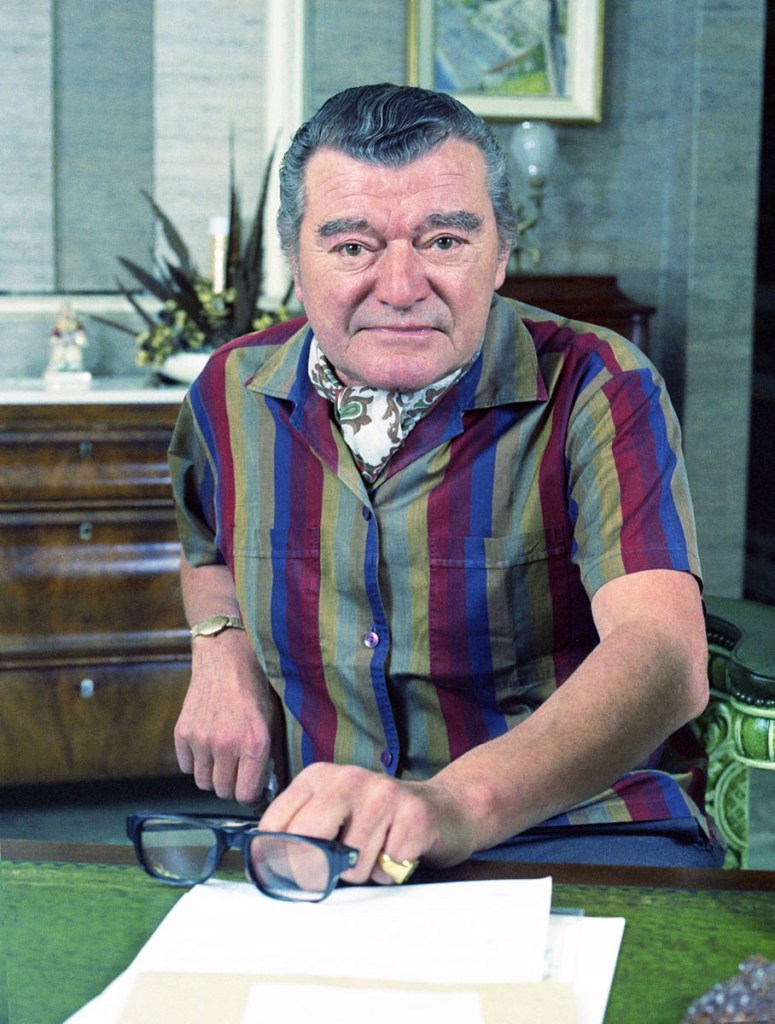
On this day in history : 14th September 1910 – The birth of actor Jack Hawkins – who appeared in films such as Lawrence of Arabia, Zulu and The Bridge on the River Kwai…. He was voted No 1 star of the British Box Office in 1954….

Jack Hawkins – Image credit : Allan Warren – own work – CC BY-SA 3.0

Hawkins was one of Britain’s best known and popular film actors of the 1950s…. He was born in Wood Green (now Haringey) London and at around the age of 10 he joined the local operatic society…. He made his stage debut in Gilbert and Sullivan’s Patience with the society…. Encouraged by his parents he then enrolled in the Italia Conti Academy…. His London stage debut came at the age of 11, as the Elf King in the pantomime Where the Rainbow Ends, alongside a young Noel Coward….

During the 1930s Hawkins built on his stage career, having made his Broadway debut at 18 in Journey’s End…. He had also begun to venture into film, making a number of quota quickies; at the time there was a requirement for British cinemas to show a percentage of British films in an aim to revive a flagging British film industry…. In 1932 Hawkins was to marry actress Jessica Tandy, they had a daughter in 1934 but divorced in 1940….

World War 2 saw Hawkins join the Royal Welch Fusiliers as an officer – he was to become Colonel in the Entertainments National Service Association (ENSA)…. Then after being demobilised in 1946 he resumed his acting career, meeting actress Doreen Lawrence, whom he married in 1947…. They were to have three children, two sons and a daughter….

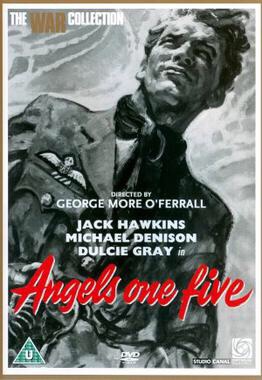
True stardom arrived for Hawkins in the 1950s – after the release in quick succession of three successful films:- Angels One Five (1951), The Planter’s Wife (1952) and The Malayan Emergency (1952)…. In these films Hawkins played strong authoritative characters who at the same time showed a sympathetic side…. These characters were different to the ones he usually portrayed – but the roles suited him…. His next film, The Cruel Sea (1953), in which he played a naval officer, was the most successful film of that year….

Fair use

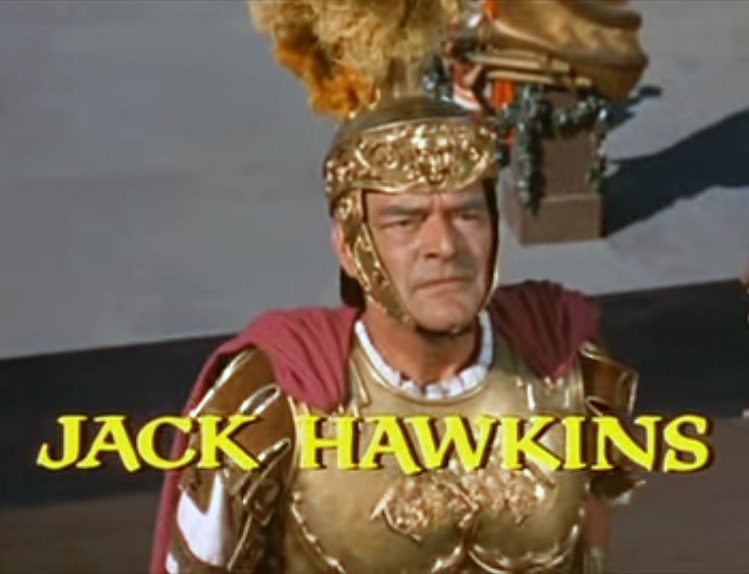
He received his first offer from Hollywood in 1955, as the part of a Pharaoh in Land of the Pharaohs…. He then returned to the UK, made a few minor films – and then landed one of the main parts in The Bridge on the River Kwai, alongside Alec Guinness and William Holden in 1957…. He was awarded a CBE for his services to drama in 1958 and continued on to star in successful films such as Ben-Hur in 1959 and League of Gentlemen, 1960….

Ben-Hur trailer – Public domain

Hawkins was a star at the top of his game – but he had a vice…. He was an extremely heavy smoker, going through three packs a day…. In the late 1950s he began to experience problems with his voice…. This was unknown to the public at the time – but explains why he took more or less any work that came his way…. For a star of his calibre he took on some surprisingly minor roles – his concern being that if his voice went, then so did his income…. He reduced the amount of cigarettes he was smoking, from 60 to 5 a day and took voice coaching lessons….

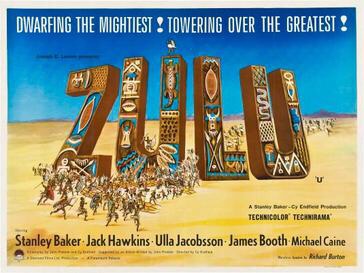
He still managed to land some good roles in big films such as Lawrence of Arabia in 1962, in which he played General Allenby…. Then Zulu, in 1964, he was cast in the supporting role, as a priest who was none too brave – his days of the macho lead were over….

Fair use

In December 1965 Hawkins was diagnosed with throat cancer and in January 1966 his larynx was removed…. Amazingly his acting career continued, his voice being dubbed – although the dialogue was kept to a minimum…. Stubbornly he continued to smoke….

In May 1973 he underwent experimental surgery for an artificial voicebox…. However the following month he began haemorrhaging and was admitted to hospital…. A second haemorrhage occurred and Hawkins died on the 18th of July 1973….

A memorial service was held on the 14th of September 1973 on what would have been his 63rd birthday, at St Martin-in-the-Fields, London…. The address was read by Kenneth More and the lesson by Richard Attenborough….

Jack Hawkins – Image credit : Allan Warren – own work – CC BY-SA 3.0