The restoration and living in of an English country cottage
Author: cottagecapers
Hi, I'm Hazel....
I write purely for pleasure; I love to delve in history, customs, traditions and nature....or whatever else grabs my attention at the time....
I am in no way an expert on what I choose to write about - I simply love to find out about things.... Whilst I always endeavour to get the facts right - occasionally I may get things wrong.... I guess you could call this my disclaimer....
I hope you enjoy reading my blog posts.... If so please give me a follow on Twitter or sign up via email for future posts.... If you are on Facebook Cottage Capers has a page with lots of ‘mini blogs’ and snippets.... It’s where we ‘like-minded’ folk can interact.... Hope to meet you again soon....
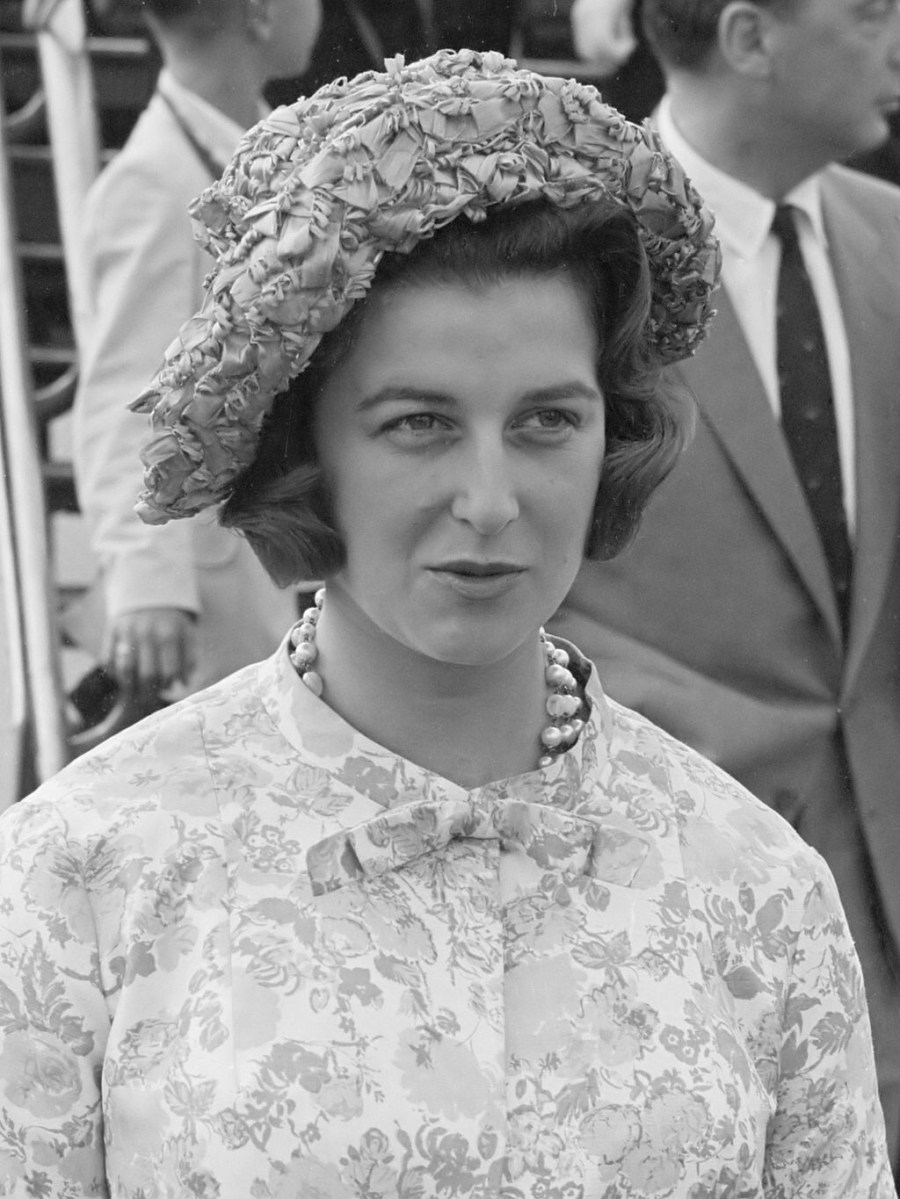
On this day in history : 29th February 1964 – Princess Alexandra, cousin to Queen Elizabeth II, gives birth to a son – believed to be the first ever Royal baby to be born on February the 29th….
Princess Alexandra, June 1961 – Photo credit : Harry Pot – National Archief (Netherlands) CC BY-SA 3.0nl
Princess Alexandra gave birth at home in Richmond, Surrey; her husband, Angus Ogilvy, was with her and her mother, Princess Marina, was also at the house…. The 9lb 6oz baby boy was born at 12.15am and was a week overdue…. He was named James Robert Bruce and later christened in the chapel at Buckingham Palace…. Two years later he was to be joined by a sister, Marina….
Princess Alexandra’s baby was the first of four royal babies to be born within a matter of weeks of each other…. The Queen’s fourth child, Prince Edward, was born on the 10th of March….and her sister, Princess Margaret, had a daughter, Lady Sarah Armstrong-Jones, on the 1st of May…. Finally the Duchess of Kent had her second baby, Lady Helen Windsor, on the 28th of April….
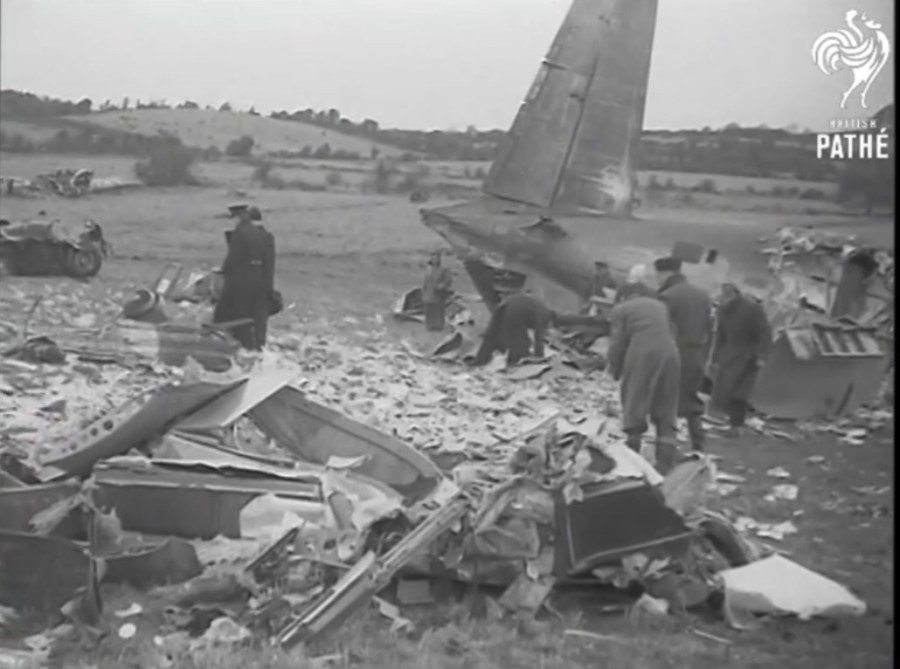
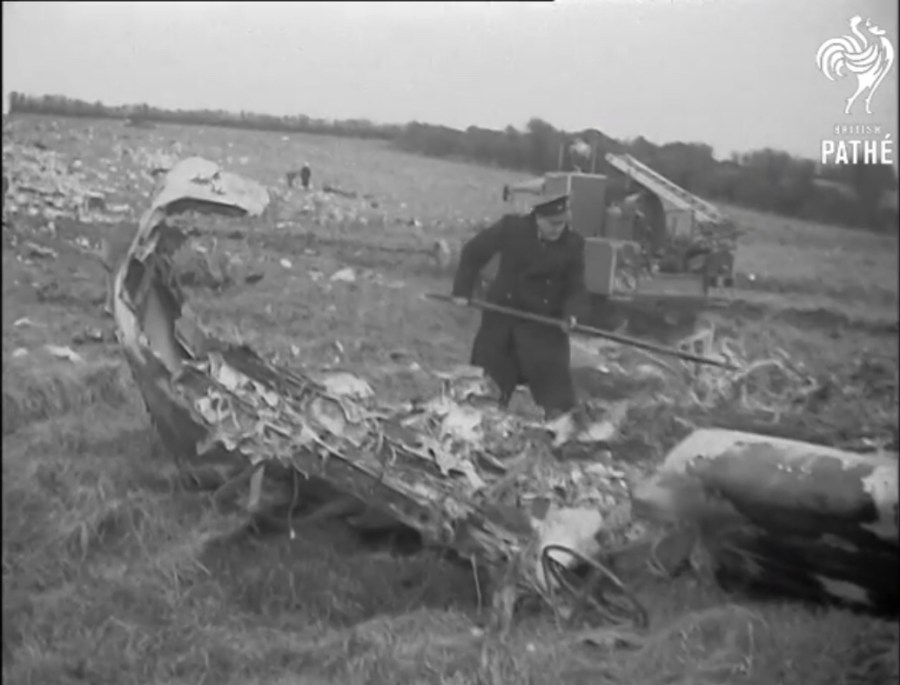
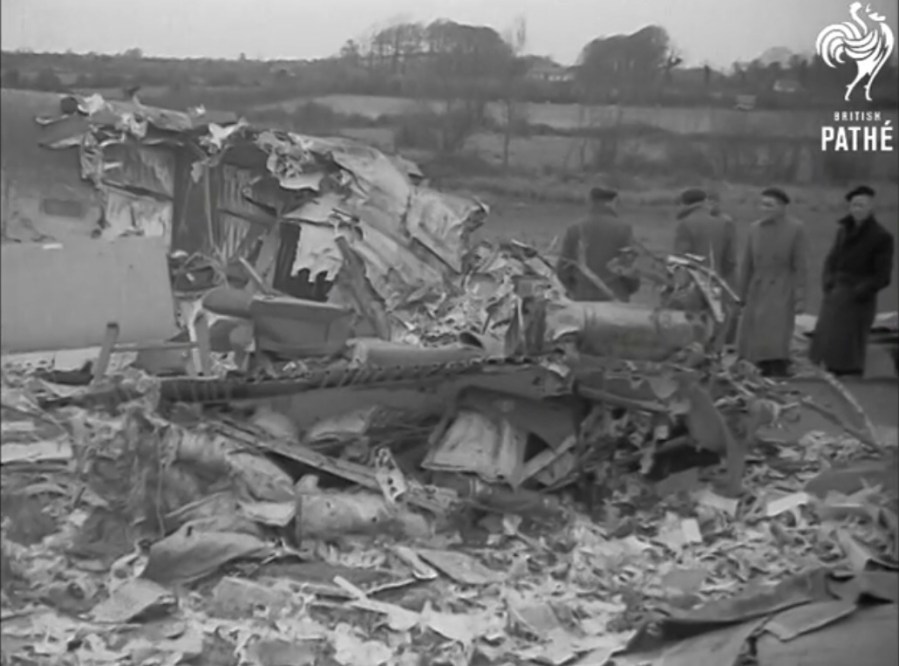
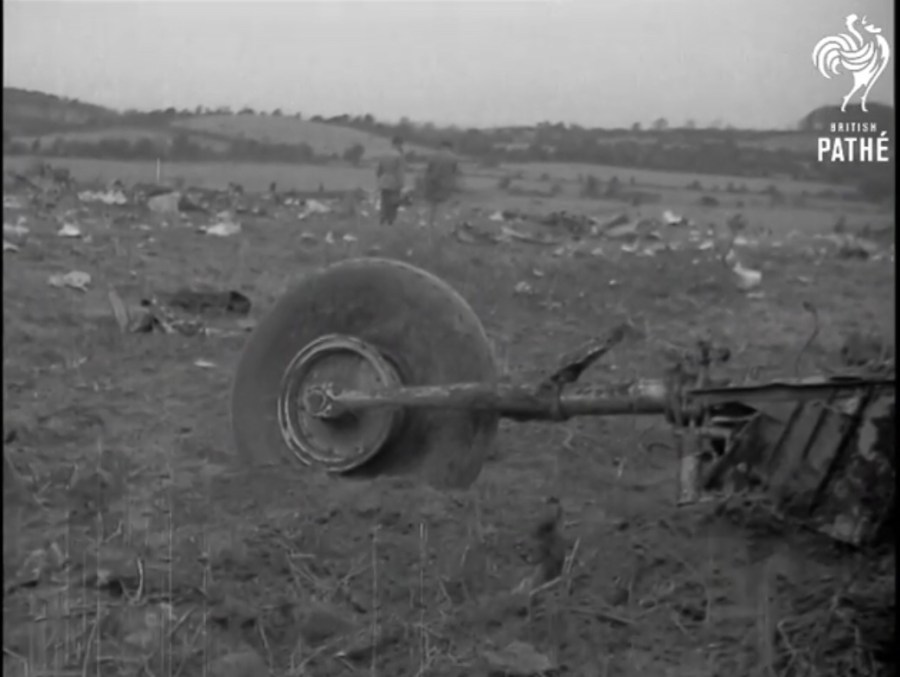
On this day in history : 26th February 1960 – An Alitalia DC-7 bound for New York crashes into a cemetery in Shannon, Ireland, shortly after take-off – killing 34 out of the 52 people onboard….
Italian airline Alitalia flight AZ618 4-engine propellor Douglas DC-7C was on route from Rome to New York and had stopped at Shannon for an unscheduled refuelling stop…. Shannon International Airport, in County Clare between Ennis and Limerick, was at the time a major refuelling stop for transatlantic flights….
After a brief stop of 45 minutes or so the aircraft took off to continue its journey at 1.34am, on a cold but clear Friday morning…. There had been no contact from the ‘plane and it seemed all was well – but about a mile from the airport the DC-7 crashed…. It struck the old graveyard situated beside the ruins of the 10th century Clanloghan Parish Church…. Its port wing-tip hit the wall of the cemetery, damaging some of the headstones on the south eastern side…. Some of the traditional family graves would still have been in use…. The aircraft then ploughed on, ending up in a nearby field before exploding and disintegrating…. After its refuelling stop the DC-7 was laden with some 7,000 gallons of fuel….the explosion was heard 17 miles away….
Thankfully the ‘plane was not full but out of the 52 onboard 11 of the 12 crew and 23 of the 40 passengers were killed….the other 18 were seriously injured…. The surviving cabin crew member had been seated at the rear of the aircraft…. Wreckage was scattered over a large area – bodies were found up to a mile away….
The aircraft had failed to gain enough height to clear the hill top…. At the official crash investigation no clear treason could be found as to the cause…. It could only be assumed that the DC-7, which had made its maiden flight in 1958, had rapidly lost height whilst making a steep turn to the left….
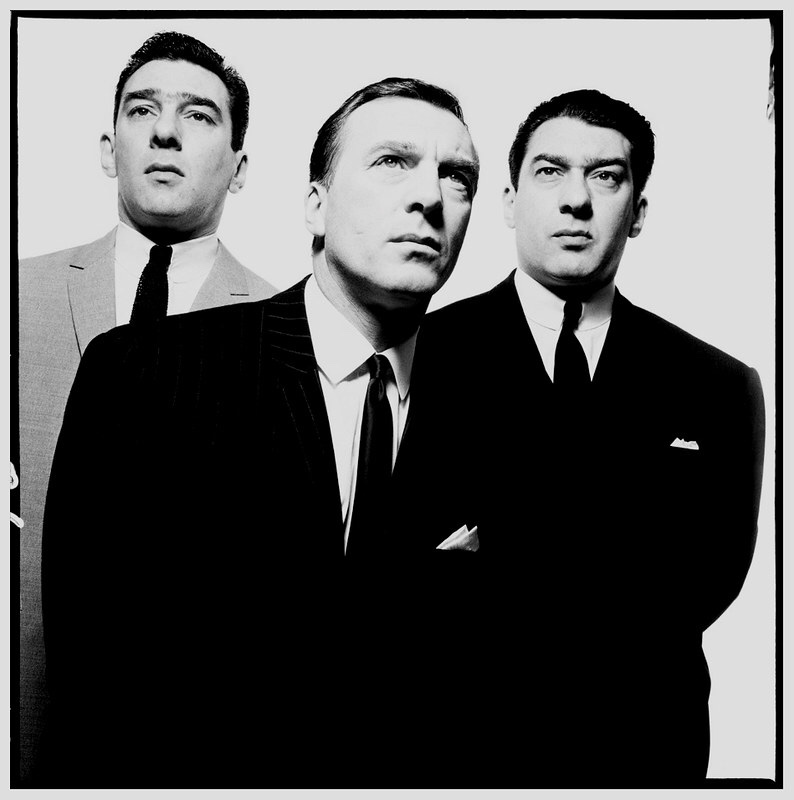
On this day in history : 7th January 1965 – The Kray twins are remanded in custody after being charged with running a protection racket in London….
The Kray twins, 1965 – taken by David Bailey (Reggie on the left, Ronnie forefront) – Fair use
The case revolved around a Soho nightclub owned by Hew McGowan, the son of a wealthy baronet, who had bought the club – ‘The Hideaway’, in Gerrard Street, in 1964….
McGowan claimed the 31-year-old identical twins, Ronnie and Reggie, had offered to supply two doormen for the club for a percentage of the takings…. However, it was said that it was in fact McGowan, knowing that the Krays were wanting to increase their influence in the West End, who offered them 20% of the venture…. When McGowan reneged on the deal it did not take much time before the Kray twins began to ‘demand money with menace’…. McGowan went to the police….
The Hideaway – Fair use
The twins were arrested at the Glenrae Hotel, on the Seven Sisters Road, North London – where they were listed as being company directors…. They were taken into custody and then refused bail, even though they offered sureties of £18,000…. They were remanded at Brixton Prison until their trial date, which was set for March….
The Krays’ defence argued that the twins had only become involved with the club to help secure investment for a future project in Nigeria – it had nothing to do with ‘protection’…. The jury were unable to come to an agreement and a re-trial was ordered…. After three trials the Kray twins were acquitted, along with a third accused man, Edward Smith, a free-lance writer….
Within a month the twins had bought and taken control of the Hideaway, changing its name to ‘El Morocco’…. They threw a huge party at the nightclub to celebrate….
On the 8th of May 1968 Ronnie and Reggie Kray were arrested again, to face numerous charges, including murder…. After being convicted in March 1969 they were sentenced to life imprisonment….
The Kray twins with their older brother Charlie, 1965 – Image: Kristine via Flickr
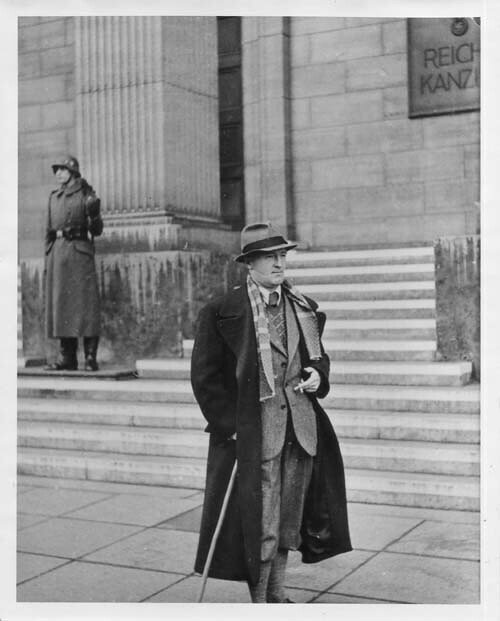
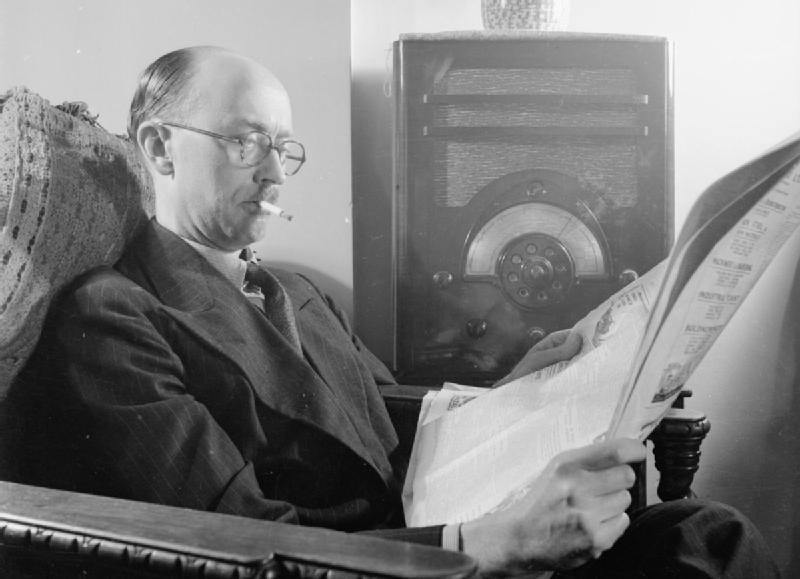
On this day in history : 3rd January 1946 – The execution for treason of William Joyce – the Nazi propaganda broadcaster, known to the British public as ‘Lord Haw-Haw’….
Photograph of Joyce taken some time between 1939 & 45 – No known copyright restrictions – Archives of the Law Society via Flickr
‘Haw-Haw’ was a term first coined by Jonah Barrington of the Daily Express…. It actually referred to a number of announcers, with their exaggerated English accents, broadcasting during WW2 to the United Kingdom from the German radio station ‘Reichssender’, in Hamburg…. However, in time the name was to become primarily associated with Joyce….
Broadcasts would always start with “Germany calling, Germany calling”…. The aim was to attempt to break the morale and spirit of the British people – along with that of the allied troops…. Inaccurate reports of the sinking of ships and the shooting down of aircraft…. Urging the British to surrender – attacking the government and the British way of life…. Of course, most people knew it was propaganda – but at a time of heavy censorship it was often used as a way to try and find out information as to what may have become of a missing loved one…. Whilst not illegal to listen to the broadcasts it was discouraged – despite this some 18 million people in Britain are believed to have listened on occasion….
From the collections of the Imperial War Museums
So, how did the likes of Joyce come to be working for the Germans during the war? To understand this it is necessary to learn more about the background of the man….
William Brooke Joyce was born on the 24th of April 1906, in Brooklyn, New York…. He was the son of immigrants – his father was Irish and his mother Anglo-Irish…. When Joyce was 3-years-old the family returned to live in Galway, Ireland….
In 1921, during the Irish War of Independence, Joyce was recruited as a courier by Captain Keating of British Army Intelligence, in the fight against the IRA…. After an attempted assassination on him Joyce was taken to England for his safety…. He was recruited into the Worcester Regiment – but soon discharged after it was discovered he was underage….
Joyce remained in England and finished his education at Kings College School, Wimbledon…. He then studied at Birkbeck College – part of the University of London – graduating with a first-class honours in English…. After being turned down for a position with the Foreign Office he took a job as a teacher….
He began to take a keen interest in Fascism…. It was on the 22nd of October 1924, whilst attending a meeting for Jack Lazarus, Conservative candidate for North Lambeth, that Joyce was attacked by Communists…. He received a deep razor slash across his right cheek, leaving him with a prominent scar from his ear lobe to his jaw….
Joyce took a paid job in the British Union of Fascists (BUF), under Sir Oswald Mosley – and in 1934 he was made Director of Propaganda…. It was after being sacked by Mosley in 1937 that he joined a splinter group, the National Socialist League…. On learning that the British authorities intended to arrest him Joyce fled with his wife in August 1939 to Germany – just before the outbreak of WW2…. He became a naturalised German citizen in 1940 and managed to get a job at the Rundfunkhaus (the German equivalent of Broadcasting House)…. Here he made radio announcements and wrote scripts – but he was to go on to become the best-known of the propaganda broadcasters….
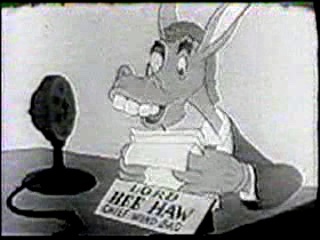
Still frame from 1943 – Allied propaganda cartoon – ‘Tokio Jokio’ – depicting Joyce as Lord Haw-Haw – ‘Lord Hee-Haw, Chief Windbag’
His final broadcast was made on the 30th of April 1945, during the Battle of Berlin…. He finished the broadcast with “Heil Hitler and farewell” – the following day Radio Hamburg was seized by the British – but Joyce had managed to make his escape….
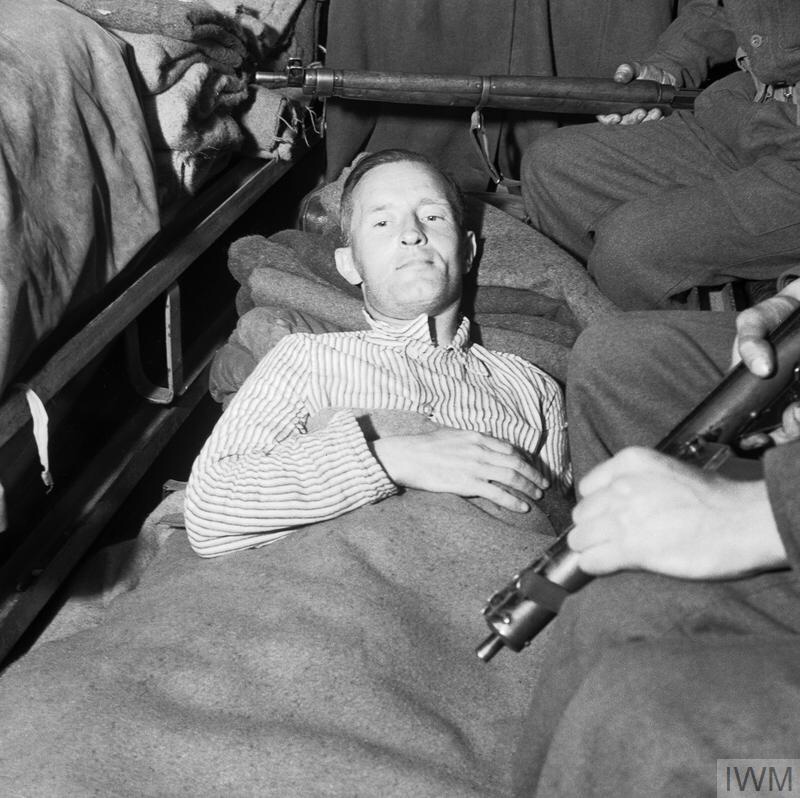
Nearly a month later, on the 28th of May, Joyce was captured at the German/Danish border by British intelligence officers…. During his arrest he was shot through the buttocks – as he had gone to his pocket to produce his false passport but the officers had believed him to be armed….
THE CAPTURE OF WILLIAM JOYCE, GERMANY, 1945 (BU 6910) William Joyce lies in an ambulance under armed guard before being taken from British 2nd Army Headquarters to hospital. He had been shot in the thigh at the time of his arrest. Copyright: � IWM. Original Source: http://www.iwm.org.uk/collections/item/object/205192927
Initially it was thought that due to his American nationality Joyce would have to be acquitted – it was reasoned that he could not be convicted of treason against a country that was not his own…. However, at his trial it was successfully argued that since he had obtained a British passport, by not revealing his true nationality, he had in fact had allegiance to the King and country whilst the passport was valid – and this happened to be the period of time during which he was working for Germany…. Joyce was convicted and sentenced to death on the 19th of September 1945….
The sentence was upheld on the 1st of November 1945 after an appeal – and he was executed at Wandsworth Prison on the 3rd of January 1946 by hangman Albert Pierrepoint…. As he went to the gallows Joyce was unrepentant – as he fell the pressure from the drop split the old scar on his face wide open….
Joyce was buried in an unmarked grave within the prison walls but – after a long campaign by his daughter – in 1979 his body was reinterred in Galway, Ireland….
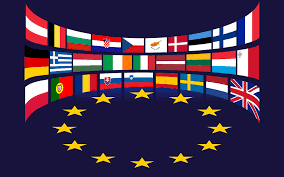
On this day in history : 1st November 1993 – The Maastricht Treaty (officially known as the Treaty of European Union) comes into force….
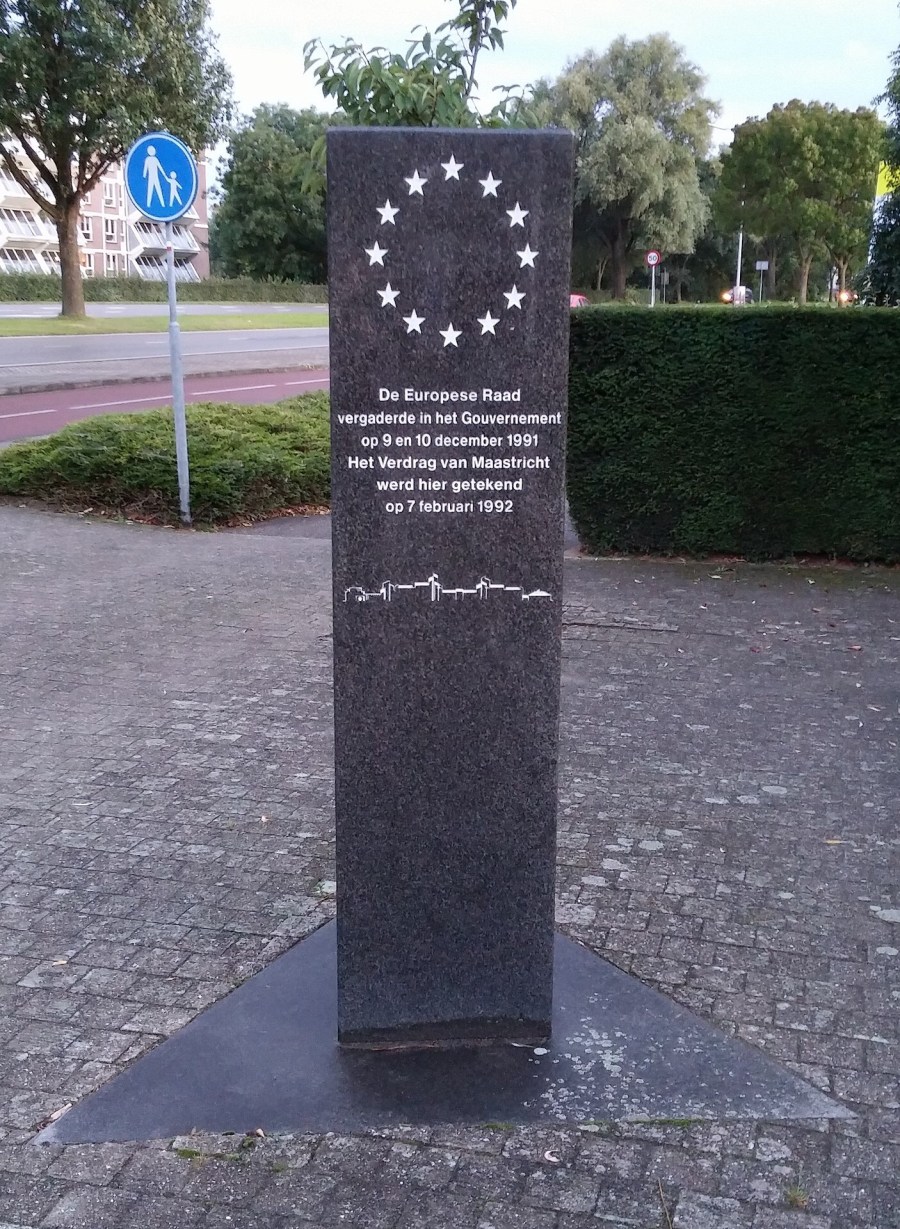
Memorial situated in front of the Limburg Province government building, Maastricht, Netherlands – commemorating the signing of the Treaty – Image credit : Dozura CC BY-SA 4.0
The Treaty marked the beginning of a new stage in the creation of a closer union amongst European countries…. After being involved in two world wars, in the first half of the 20th century, Europe needed a way to secure peace and facilitate economic development…. In the 1950s the European Community (EC) was established; three organisations were set up – the European Coal and Steel Community (ECSC), the European Atomic Energy Community (EAEC) and the European Economic Community (EEC)…. Six nations came together to sign the Treaty of Paris in 1951 to establish the Community;- France, Belgium, The Netherlands, Italy, Luxembourg and West Germany….
The Maastricht Treaty was signed on the 7th of February 1992 reforming the structure of the EC…. The Treaty was signed by 12 countries, the original 6 plus Spain, Portugal, Greece, Denmark, Ireland and Great Britain….and was the first step in the commitment to strengthen the bond within Europe, by integrating and uniting member states…. It granted EU citizenship to everyone with a citizenship of a member state – allowing free movement between states and the entitlement to run for local European Parliament elections, in whichever country of the EU they reside in, regardless of nationality….
It meant a closer co-operation between the police and judiciary of the member states, creating a unified security policy and covering matters such as the environment and social policy…. It also laid the foundations for the formation of the single currency (the Euro) and establishment of the European Central Bank as a central banking system….
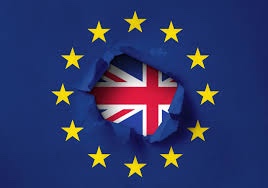
The Maastricht Treaty has been amended by other treaties….but since it first came into force a further 16 countries have joined the EU…. And as we all know….one country has now become the first member to leave….



 Cottage Capers