Hey! That’s not a weed….that’s lunch….

“What is a weed? A plant whose virtues have not been discovered….”
– Ralph Waldo Emerson 1878

With the arrival of the good weather it dawned on me there really was no excuse now, time to get outside and do some serious jungle clearance in the garden…. That’s how I found myself on my knees for three hours, pulling out ‘weeds’…. When my aching back could take no more, I hauled myself to my feet and stood back to survey my handiwork and was quite disgruntled that it really looked no different to when I had first started…. The only evidence I had to show for all my hard toil was a bucket full of wilting, sad-looking, unwanted vegetation. With a sigh, I plucked out a piece of limp greenery and inspected it…. There was something vaguely familiar about it, or maybe a similarity to something else…. After a moment of pondering, it ‘clicked’ – it reminded me of spinach. Naturally, I had to go and investigate – what was this little plant and could I eat it….?

My ‘spinach’ lookalike turned out to be Lambs Quarters; and indeed is a relative of spinach and perfectly edible…. This got me wondering to what other culinary delights might be lurking in the garden…. I was in for quite a surprise….

Lamb’s Quarters: A single plant can produce up to 75,000 seeds, as a result this makes Lamb’s Quarters one of our most common garden ‘weeds’. It was initially thought to be native to Europe but evidence has been found that even American Blackfoot Indians used it in the 16th Century. There is obviously a good reason for the widespread existence of this abundant little plant; Lamb’s Quarters are excellent at restoring healthy nutrients to the soil. They are also capable of providing us with plenty of healthy nutrients too; they are a good source of vitamins A and C and contain calcium, phosphorus and some thiamin, riboflavin, niacin and iron. The leaves, shoots and flowers are all edible (as are the seeds but not to be consumed in excess as too many can be toxic). Lamb’s Quarters can be eaten raw in salads but sparingly as they contain some oxalic acid – but once cooked, this is removed. Cook as you would spinach, preferably by steaming; add to soups, stews, casseroles, egg dishes – in fact it can be used as a replacement in any dish requiring spinach, as it is in effect ‘wild spinach’. It can be preserved for winter by drying or freezing…. Pick young leaves to enjoy the mild, spinachy taste….

Lamb’s Quarters Pesto :
3 handfuls Lamb’s Quarters leaves
1 handful grated parmesan cheese
1 handful pine nuts
2 chopped cloves garlic
2 tablespoons lemon juice
1/2 cup olive oil
salt and pepper, to taste

Place all ingredients in to a blender and blend until combined and smooth.
Store in the fridge in a glass jar for up to a week (or freeze for up to 6 months)….

——————–

weed 4
Photo credit: Skvalderkal Isfugl via Foter.com / CC BY-NC-SA Original image URL: https://www.flickr.com/photos/erikjorgensen/132779367/

Ground Elder : Yes, that stuff! The bane of many a gardener; this invasive ‘pest’ of a plant was first recorded in Britain in 1578 but was most likely introduced by the Romans as a herb. It is also known as Bishop’s Weed, probably because it was once commonly used by monks. Another name given to it is ‘Gout Weed’; in old folk-medicine it was a treatment for gout…. Also handy to know, is that a poultice made of the leaves is a good remedy for insect bites, burns and minor wounds….

In the Middle Ages it was cultivated as a food crop as it was one of the first edible greens to emerge in the spring. It is best harvested between February and June (before the flowers appear) and can prove to be very versatile…. Eat raw in salads, dress it with olive oil, lemon juice and a twist of black pepper….or put it in a sandwich. When cooking it can be treated like spinach; pop it in a pan with a large knob of salted butter, cover and cook until soft – serve once again with black pepper. Ground Elder can be added to soups, stews, casseroles, omelettes, quiches and pies…. There are countless ways of consuming this ‘fiend’ of the garden….

——————–

Purslane : This half-hardy ‘weed’ was once to be seen growing in the beds of gardens in the Middle Ages, as it was thought to ward off evil spirits! Nowadays, we know it is good for us in other ways; it is high in vitamins A, C and E and is also a source of Omega 3 Fatty Acids. With its salty, lemony, sour, spinach like flavour, it is a lively addition to salads and sandwiches, with a satisfying slight ‘crunch’ to the leaves…. Again it can be cooked as you would spinach, it can be added to soups and stews – and is great in a stir-fry…. In French cookery it is used with equal amounts of sorrel to make the classic ‘Bonne Femme Soup’. As a more simple alternative, try a quick and easy….

Purslane and Potato Soup :
250g chopped Purslane
250g peeled, diced potatoes
50g butter
1 litre vegetable stock
3 tablespoons single cream
seasoning, to taste

Sauté Purslane in butter; add stock and potatoes. Simmer until potatoes are tender.
Add seasoning. Puree soup mixture in a blender; stir through cream.
Serve garnished with fresh Purslane….

——————–

Chickweed : Oh, how can we possibly call this one a weed? It is a gift from Mother Nature, herself…. This highly nutritious plant is available nearly all year round and was once thought of as a valuable food source during the winter months…. Packed with vitamins C, B6, B12, D and A, it also contains magnesium, phosphorus, copper, flavonoid (rutlin), iron, zinc, calcium and beta-carotene….but don’t be deceived, despite all that it has a mild flavour, almost like iceberg lettuce. Therefore, it makes an ideal salad base and is great in a sandwich. It can be cooked but chop it up finely, as it can become a little ‘stringy’. Put it in soups and stews, add it to quiches, pies and omelettes – pile it on your pizza….

However, the benefits this wondrous little ‘super food’ offers don’t stop there! It has many medicinal properties too. It can help with circulation and stomach disorders and as an aid for rheumatic and respiratory conditions (especially those where there is a lot of mucous present). It is also known for its skin soothing effects, making a good emollient or can be administered via poultices, compresses or baths. It can be used to treat ulcers, boils and abscesses; it will alleviate bites, stings and blisters – even nappy rash! It is thought to help with eczema and psoriasis symptoms…. I must admit, I now have so much respect for the humble Chickweed….

———–

Nettles : Those horrible, pain inflicting plants we’ve all been stung by at one time or another….but they’re only trying to protect themselves and the precious cargo of young wildlife they offer a home to; namely the caterpillars of some of our most beautiful butterflies….

If you are brave enough to attempt to prepare them for culinary use, they provide an excellent source of vitamin C and minerals – particularly calcium, potassium, silicon and iron. They were once used to ‘revitalise’ the body after the winter period and are believed to help with arthritic conditions and eczema. Some herbalists use them to treat hay fever and skin allergies….

Never, ever, attempt to eat them raw – for obvious reasons…. Use the young leaves and cook like spinach (older leaves are high in calcium oxalate).  Add to soups and stews….steep in boiling water to make nettle herbal tea…. Of course, you can always take the sting out of them by turning them into beer or wine….

The Cornish use them in the production of Cornish Yarg; a handmade, semi-hard cheese that has a creamy taste.

weed 11
Photo credit: Cornish Yarg – cheese wrapped in nettles. Much better than it sounds! gingerbeardman via Foter.com / CC BY-NC-ND Original image URL: https://www.flickr.com/photos/emsef/6779738962/

After pressing, the cheese is wrapped in nettle leaves, in a decorative manner; this then attracts natural moulds which occur in varying colours. The mould helps with the ripening process and gives the cheese a subtle, ‘mushroomy’ flavour….

——————–

Dandelions : Admittedly, this is one ‘weed’ that, to a certain extent, gets a ‘stay of execution’ in our garden – as the family bunnies love them…. Rich in pollen and nectar, this hardy perennial is also very attractive to insects, including bees…. So, another good reason to leave them put. However, they certainly have their uses in our kitchens too….

The young leaves are good in salads but older leaves are best blanched to reduce their bitterness; they can also be used in stir-fries…. Dandelions are a good source of potassium….

The roots can be used to make herbal ‘coffee’…. At the end of the plant’s second season, lift the roots, wash well, chop and dry…. They can then be ground to make ‘coffee’. Another, more familiar drink, made from the fermented roots, is Dandelion and Burdock; now marketed as a soft fizzy drink, it was once sold as a health drink during Victorian times….

The dandelion flower can also be used to make a very pleasing wine…. This personally brings back childhood memories for me…. Many a happy hour was spent helping my Dad pick dandelions for his homemade wine….

Dandelions are well-known to help with liver and kidney ailments as they have a diuretic effect on the urinary system; they may help to reduce fluid retention and help the body to get rid of toxins. They are good for gallbladder complains and are an effective laxative….

Another name dandelions are known by; ‘piss en lit’ – yes, seriously – when translated from the French it means ‘wet the bed’….

——————–

Clover : A member of the pea family, clover is high in protein, beta carotene, vitamins B and C. When picking the flowers, choose fresh blooms that have no signs of browning on them. Rinse well in cool water and blot dry with kitchen paper….

Toss the whole heads in to a salad, or dust with flour and pan fry for a tasty nibble…. Alternatively, they can be frozen into an ice-cube and make a pretty addition to a cold drink….

The flowers are known to help with eczema and psoriasis; also if used as an infusion or syrup, they can alleviate coughs and bronchitis. Clinical studies suggest they can aid in menopausal symptoms due to compounds called isoflavines found in both the flowers and leaves; these isoflavines possess mild oestrogenic properties….

To make red clover tea – pick 3 or 4 fresh flowers; remove stems and place in an infuser (if you have one) – if not, straining will be required…. Pour over boiling water and allow to steep for at least 5 minutes…. To make a refreshing version, add a couple of mint leaves with the clover blooms….

——————–

weed 17
Photo credit: 3572 daisy field crabchick via Foter.com / CC BY Original image URL: https://www.flickr.com/photos/crabchick/5809581141/

Ox Eye Daisies : Not really a ‘weed’ as such, rather a very pretty wild flower – but if left unchecked in the garden they can soon get out of control…. So, waste not want not….

Ox Eye Daisies are tasty when eaten raw, add flowers and buds to salads…. Alternatively they can be fried in tempura batter (rather like you would a courgette flower); makes a great savoury when paired with chilli or sesame seeds – or for those with a sweet tooth….dust with icing sugar after frying….

Ox Eye daisy buds can also be pickled like capers….

Put in to a saucepan….

500ml white wine vinegar
1 teaspoon each of salt, peppercorns and mace
2 chopped garlic cloves

Bring to the boil and simmer for 10 minutes.
Remove from heat and allow to cool for at least an hour….
Meanwhile, fill two 1/4 litres preserving jars with Ox Eye daisy buds,
then press down so the jars are 3/4 full….
Once cool, strain the vinegar mixture through a sieve to remove solid ingredients
and pour liquid in to jars until full.
Cap and keep for a few weeks to mature….

Or, how about using Ox Eye daisy leaves as an accompaniment to a curry….

150ml coconut milk
150g natural yoghurt
Juice of half a lime
20g Ox Eye daisy leaves

Chop the leaves finely. Put yoghurt, coconut milk and lime juice into a bowl and mix.
Add leaves and stir through to combine thoroughly….
Allow to stand at room temperature for 10 minutes….serve with your curry….

Finally, we come to dessert…. Now, here’s one that really did surprise me…. I had no idea this could be eaten…. (and I am actually quite thankful we don’t have this particular one in the garden)….

——————–

weed 21
Photo credit: Japanischer Staudenknoterich (Fallopia japonica) blumenbiene via Foter.com / CC BY Original image URL: https://www.flickr.com/photos/blumenbiene/6805839518/

Japanese Knotweed : One of the most invasive plants around and extremely difficult to eradicate….laws exist as to the means of its correct disposal…. Knotweed grows approximately 3 foot a month and its roots can go down to a whopping 10 foot! It was first introduced to Britain in about 1825 as a garden plant and has since become a thorough nuisance…. It is spread via the roots; just a tiny piece, the size of a postage stamp, is enough to produce a whole  new plant. If you are going to use it for culinary purposes it is strongly advisable to burn any unused material – as nobody wants to be responsible for inadvertently spreading this highly invasive plant….

Knotweed can be eaten raw but it is best cooked. It has a lemony, tart, crispy, rhubarb-like taste and can be used in just about any recipe that calls for rhubarb….

The best time to pick it is mid April to May; the stems have to be gathered whilst they are still tender i.e. before  they become hard and woody. Ideally, the shoots should be between 6 to 8 inches in length….

Knotweed is an excellent source of vitamins A and C, it also has zinc, potassium, phosphorus and manganese. It is suggested it can help treat and prevent Lyme’s disease…. It also contains resveratrol – the substance found in grape skins, that is known to protect against heart attacks…. In fact, beer or wine can be made from Knotweed (personally, I think I’ll stick to a decent glass of red)…. It is also possible to make a tea; the Japanese call it ‘Itadori tea’…. Simmer shoots for 20 minutes, strain, add sugar to taste and serve chilled….

Knotweed and Date Crumble

20 lengths Knotweed, cut into 5cm chunks
A good handful or two of chopped dates
4 tablespoons orange juice
110g butter
225g plain flour (sifted)
110g light brown soft sugar

Make crumble by rubbing flour into butter until it resembles breadcrumbs.
Stir through sugar….
Place Knotweed and dates into an oven proof dish, pour over orange juice.
Cover with foil and bake at 180°C for 10 minutes.
Remove foil, cover mixture evenly with crumble and bake for a further 20 minutes,
until golden….
Serve with custard or cream….

Sounds yum, doesn’t it….? In all honesty though, it would take an awful lot of crumble to eradicate one Knotweed plant….probably best to get it disposed of properly….

weed 18
Photo credit: Controlled Waste Peter O’Connor aka anemoneprojectors via Foter.com / CC BY-SA Original image URL: https://www.flickr.com/photos/anemoneprojectors/9740824919/

——————–

So, there we have it…. Next time I’m working in the garden, I will think of it as ‘maintenance foraging’ as opposed to ‘weeding’….although I’m not quite sure if I’m ready to cross that bag of rocket off the weekly shopping list yet….

Of course, it goes without saying….if you do decide to take advantage of Nature’s free veggies….be both 100% certain they come from a totally weed-killer free environment and that they have been correctly identified…. Also, as a lot of these plants are used in herbal medicines it is strongly advised not to participate if pregnant or breast-feeding…. Far better to be on the safe side….

“There was a young farmer of Leeds,
Who swallowed six packets of seeds,
It soon came to pass
He was covered in grass,
And couldn’t sit down for the weeds….”
Limerick – Anon.


A stitch in time….

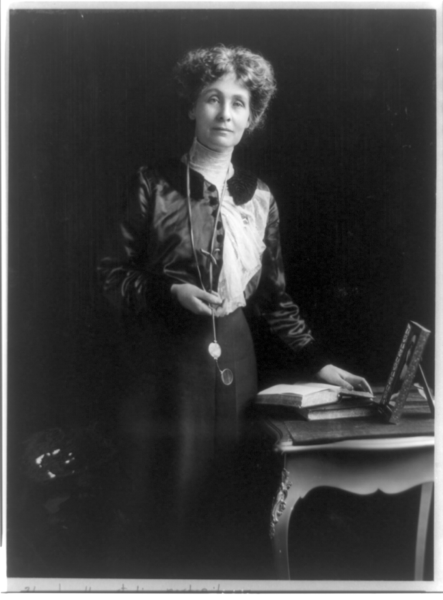
“We have to free half of the human race, the women, so that they can help to free the other half” – Emmeline Pankhurst

suff 3
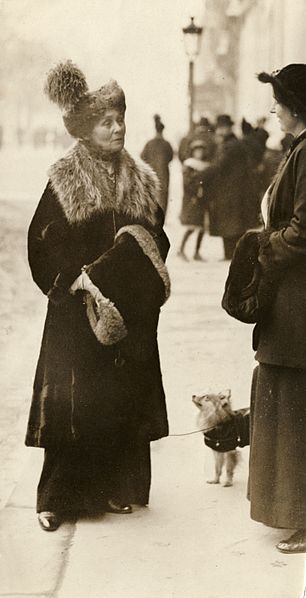
Emmeline (Goulden) Pankhurst circa 1913 Public domain https://commons.wikimedia.org/wiki/File%3AEmmeline_Pankhurst_1.png

June the 8th is fast approaching – the day the British public go to the polls…. Being a woman of middling years, this is something I have done on numerous occasions in the past…. I recall the very first time I exercised my right to vote; I was in my late teens, I stopped off at the village hall on my way to work, I felt so very grown-up. That time and every subsequent time since, that I have pencilled my ‘X’ into the appropriate box, I have had no doubt as to which Party I wished to vote for; it has always been perfectly clear in my mind – until now…. For the first time in my life, I am questioning – to the point I have even asked myself whether I should bother to vote at all….

************************

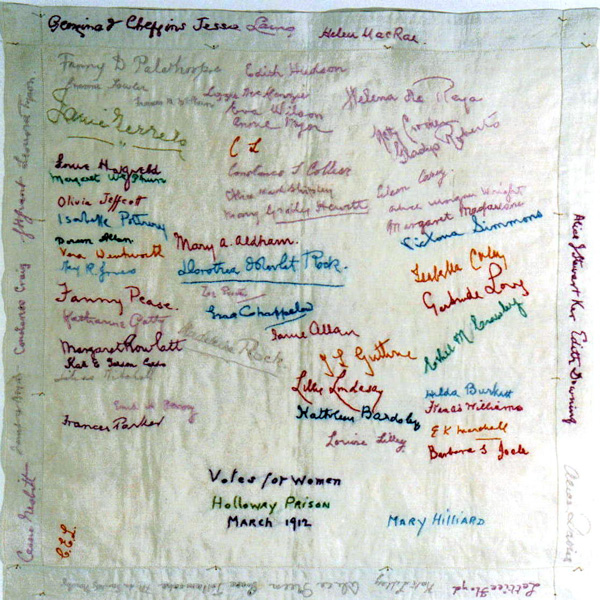
A couple of years ago, John and I visited the Priest House at West Hoathly in West Sussex; a traditional Wealdon hall house, situated on the edge of Ashdown Forest, it is a museum filled with some of the most amazing artifacts from life gone by. One particular item really caught my eye – a framed handkerchief covered with signatures. On closer inspection it became evident that each signature had been painstakingly embroidered. The delicate piece of linen is known as ‘The Suffragette Handkerchief’ and bears 66 signatures and 2 sets of initials; I was fascinated and bought myself a pamphlet explaining its history and meaning…. Last week, whilst doing a spot of spring cleaning, I came across this pamphlet….it seemed poignant that I should unearth it at this particular point in time…. The signatures are those of a group of women that were being held in Holloway Prison in 1912 – when the Women’s Suffrage Movement was at its peak….

suff 17
The Suffragette Handkerchief Image courtesy of http://www.hoathlyhub.info/PriestHouse/

After the industrial revolution many women were in the position of being in full-time employment. Although actively contributing to the Country’s workforce they had no voice in the running of the Nation – no representation in Parliament and indeed, were not even allowed to vote. Organised campaigns for women’s suffrage started to materialise in 1866 and by 1888 women were permitted to vote in many council elections – but that was as far as it went…. In 1867, Liberal MP, John Stuart Mill proposed an amendment to give women the vote on the same terms as those of men…. It was rejected by 194 to 73 – and so the ‘Cause’ gained momentum….by the end of the 19th Century the focus of women’s equality became that of their right to vote….

The National Union of Women’s Suffrage Societies (NUWSS), known as the ‘Suffragists’ (not to be confused with suffragettes) was founded in 1897. It was a merger of two groups that had both split up in 1888; the National Central Society for Women’s Suffrage and the Central Committee, National Society for Women’s Suffrage. The aim of the NUWSS was to lobby and obtain the vote for women through democratic, legal and peaceful means…. Its members were middle class and working class women, working together, alongside each other….and it wasn’t only confined to women, many men also actively campaigned for the Cause…. By 1914 it had over 100,000 members and 500 branches countrywide….

In 1903 the Women’s Social Political Union (WSPU) was founded by six women in Manchester. Dissatisfied with the results being achieved by the NUWSS, this new group decided more militant tactics were needed. The women  only group, under the leadership of Emmeline Pankhurst and her daughter, Christabel, fought for social reforms and became known as the ‘Suffragettes’….adopting the slogan “Deeds, not words”….

suff 1
Emmeline Pankhurst being arrested at King’s Gate in May 1914 Author unknown – public domain https://commons.wikimedia.org/wiki/File%3AEmmeline_Pankhurst_Arrested_1914.jpg

In November 1911, demonstrations in London saw the arrest of 223 women, after a spree of window breakages of government buildings in Whitehall and at shops in the Strand. March 1912 saw an even bigger demonstration, a second wave of window smashing in London, organised by the WSPU, meant a further 200 plus women were arrested. The leaders of the WSPU, including Emmeline Pankhurst, were sentenced to nine months in prison; other women received sentences averaging two months – many for refusing to pay fines levied in Court….

suff 16
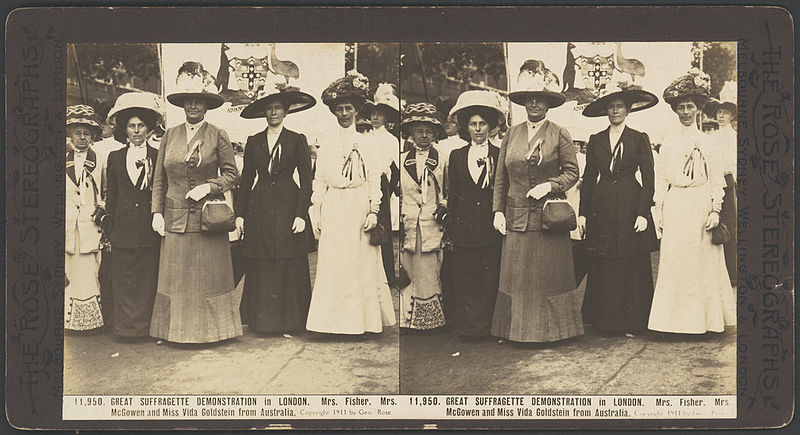
Great suffragette demonstration in London – Mrs. Andrew Fisher, Mrs. McGowan and Miss Vida Goldstein from Australia 1911 https://commons.wikimedia.org/wiki/File%3AGreat_suffragette_demonstration_in_London
suff 12
Postcard of a suffragette procession of 1911. Printed by H Searjent of Ladbroke Grove, London 1911 https://commons.wikimedia.org/wiki/File%3ASuffragette_procession_1911.jpg

Soon, Holloway became full, so women were sent to other prisons in places such as Birmingham and Aylesbury. Overcrowding meant the conditions in the prisons were even poorer than usual. Denied the status of political prisoners and so not receiving the certain privileges that such were entitled to, many of the women resorted to going on hunger strike as a protest….

suff 4
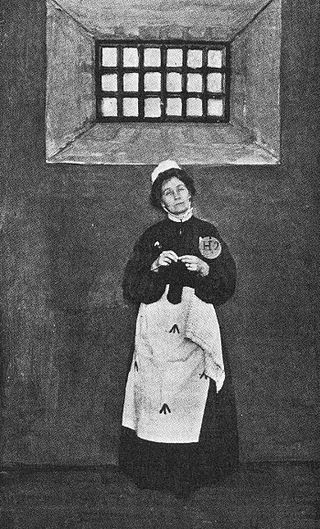
Emmeline Pankhurst in prison dress circa 1911 public domain https://commons.wikimedia.org/wiki/File%3AEmmeline_Pankhurst_in_prison.jpg

The pamphlet I found whilst spring cleaning recites the story of how this particular group of women happened to be in Holloway at the time and the author had researched the women whose names appear on the handkerchief. They came from all over the Country and from all walks of life. After reading through the explanation and the information collected on each woman, it inspired me to find out a bit more about women’s suffrage closer to home….

suff 8
Anti Suffrage Postcard c.1910 TWL/2004/1011/55 LSE Library CC / no restrictions https://www.flickr.com/photos/lselibrary/22754363186/

Here in Surrey, the Movement appears to have become active in the 1870s. The first recorded meeting was held in Guildford during January 1871. Farnham had a branch of the NUWSS from 1908 and by 1909 the Godalming branch had been established. Godalming’s president was Mrs. Mary Watts, the widow of the artist G.F.Watts. Her secretary, Theodora Powell, went on to co-found the Guildford branch in 1910, (Cranleigh also got its own branch in this same year). Connected to the Godalming branch was a New Zealander by the name of Noeline Baker, who befriended famous garden designer, Gertrude Jekyll (who lived just outside of Godalming). Jekyll became a member of the NUWSS and designed banners for both the Godalming and Guildford branches….

The Church in Surrey provided sympathisers to the Cause. One clergyman in particular, involved in the League for Women’s Suffrage, was a Reverend Algernon Creed, vicar of Ewshot, near Farnham. This particular piece of information struck a chord with me; I spent my teenage years in Ewshot, living in a house opposite the church…. I got married in that church, my son was christened there and it is where we said ‘good-bye’ to my father after he passed away. A humble church in a small Surrey village, I had no idea such an advocate for women’s equality had once been such an important part of it….

By 1913 all areas of the Country had representation in organisations promoting the suffrage cause. Surrey saw its fair share of militant activism; one method was to sabotage male dominated organisations, golf courses and cricket grounds were popular choices. Sometimes more extreme measures were attempted, for example a bomb left at Haslemere Station (which failed to ignite)….

Many suffragettes had homes in the Surrey Hills, amongst them Emmeline and Frederick Pethick-Lawrence, who helped lead the WSPU. Their home, ‘The Mascot’, in South Holmwood, became the place where many women released from prison after being on hunger strike, went to recuperate….

suff 14
Emmeline Pethick-Lawrence, Jennie Baines, Flora Drummond and Frederick Pethick-Lawrence c.1906-1910 https://www.flickr.com/photos/lselibrary/22545429328/

Peaslake, a village in the Surrey Hills, was home to a surprisingly large number of activists, it was described in 1912 as being “rather a nest of suffragettes”….

Hilda Brackenbury and her daughters Georgina and Marie also opened their home, ‘Brackenside’, in Peaslake, to women recovering from hunger strike….including Emmeline Pankhurst herself. In fact, it was a Peaslake resident, Marion Wallace Dunlop – an artist, sculptor and illustrator – who initiated the very first hunger strike….

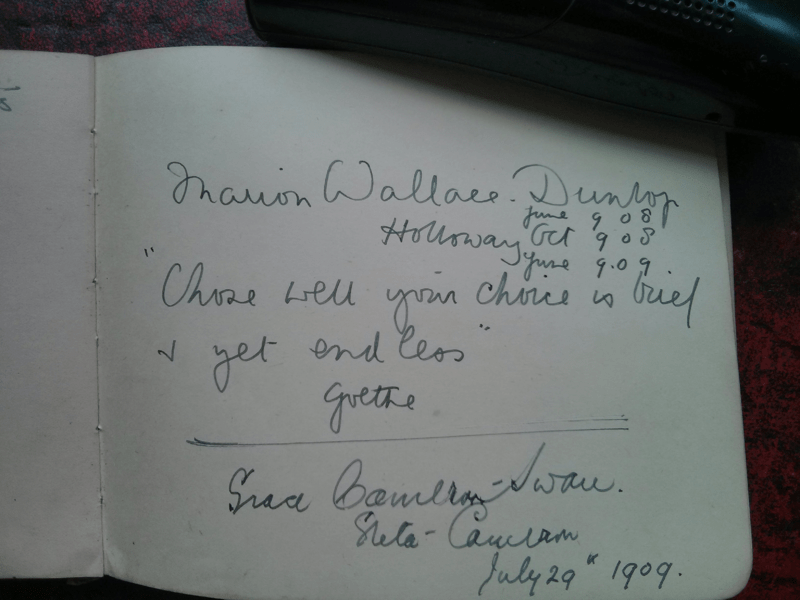
Marion Wallace Dunlop, a member of the WSPU, was imprisoned for printing an extract from the bill of rights on the walls of St. Stephen’s Hall at the House of Commons. On the 5th July, 1909, she went on hunger strike, refusing all food as a protest that her rights as a political prisoner were not recognised. She claimed her actions were “….a matter of principle, not only for my own sake but for the sake of others who may come after me….refusing all food until this matter is settled to my satisfaction….” After three days of fasting….she was released….

suff 11
Entry in Mabel Capper’s scrapbook by Marion Wallace Dunlop June 1909 https://commons.wikimedia.org/wiki/File%3AMarion_Wallace_Dunlop_WSPU_prisoners_scrapbook_entry.png
suff 10
Memories of Winson Green Gaol – Mabel Cappers WSPU prisoner’s scrapbook – Forcible feeding illustration 18 September 1909 https://commons.wikimedia.org/wiki/File%3AForcible_feeding_illustration_from_WSPU_prisoners_scrapbook.png

Force feeding was a brutal procedure. The woman was either tied to a chair, which was then tipped back or she was held down on a bed. A rubber tube was then forced up the nose or down the throat, into the stomach. If administered via the mouth, a ‘gag’ was used, occasionally made of wood but more often steel. The steel option was particularly painful as it was pushed into the mouth to force open the teeth and then a screw was turned to open the jaws wide…. Sometimes the rubber tube would be accidentally forced into the windpipe, causing food to enter the lungs, thus endangering life…. Which ever method was used, damage to the nose or throat was pretty much inevitable….

suff 15
Force feeding – A suffragette on hunger strike being forcibly fed with a nasal tube. Source: The Suffragette by Sylvia Pankhurst circa 1911 https://common.wikimedia.org/wiki/File%3AForcefeeding.jpg

Some women had to endure being force-fed more than 200 times…. Two such women were Grace Roe and Kitty Marion….

Grace Roe joined the WSPU after hearing Emmeline Pethick-Lawrence speak in October 1908. Grace was arrested for the first time after a demonstration held at the House of Commons on June 29th, 1909. She was appointed organiser of the East Anglia WSPU in 1910 and then in 1912 Emmeline Pankhurst made her deputy of the WSPU in London, under Annie Kenney. After Kenney’s arrest and imprisonment for ‘incitement to riot’ in April 1913, Grace became leader of the WSPU in London….

suff 13
Emmeline Pankhurst talking to Grace Roe, c.1912 – France https://www.flickr.com/photos/lselibrary/22937693496/
suff 2
Christabel Pankhurst (left) and Annie Kenney circa 1911 Source: The Suffragette by Sylvia Pankhurst Public domain https://commons.wikimedia.org/wiki/File%3AChristabel_Pankhurst_and_Annie_Kenney.jpg

Katherina Schafer was born in Westphalia, Germany in 1871. Her mother died when she was just two years old, her father remarried but lost his second wife when Katherina was only six; both women died of TB. Katherina’s father was very strict and by all accounts had an uncontrollable temper…. In 1886 the young Katherina moved to England to join her sister, Dora. She learnt English, changed her name to Kitty Marion and became an actress, enjoying a successful although modest career. In 1908 she joined the WSPU, moved to Hartfield, East Sussex and became an active member of the Brighton branch….

In June 1908 Kitty was arrested at a demonstration at the House of Commons. In July 1909 she was arrested once again; this time she was imprisoned. She immediately went on hunger strike which resulted in her being force-fed. In retaliation and protest she barricaded herself in her cell and set light to her mattress….

In November 1911, she was once again sent to prison, with a sentence of 21 days to be served in Holloway, she went on hunger strike yet again…. It has been calculated that Kitty endured some 232 force feedings during the times she spent on hunger strike in prison….

This account by Kitty Marion, from 1913, has been edited by Christabel Pankhurst. The excerpt is taken from ‘The Suffragette’ – the official weekly newspaper of the WSPU….

….”I was lying on my bed, and I immediately turned to the wall, but they wheeled the bed out into the middle of the room, and tried to get me into position for feeding. I struggled violently, but they sat on my legs and I was fed with the nasal tube. I was so exhausted at the end of the feeding that a wardress was left with me for some time”….

The following account is that of E.Sylvia Pankhurst (daughter of Emmeline). The excerpt is as published in McClure’s magazine, August 1913 pp 87-93…. Please be advised, it is quite graphic….

….”I struggled as hard as I could, but they were six and each one of them much bigger and stronger than I. They soon had me on the bed and firmly held down by the shoulders, the arms, the knees and the ankles.

Then the doctors came stealing in behind. Some one seized me by the head and thrust a sheet under my chin. I felt a man’s hands trying to force my mouth open. I set my teeth and tightened my lips over them with all my strength. My breath was coming so quickly that I felt as if I should suffocate. I felt his fingers trying to press my lips a part, -getting inside,- and I felt them and a steel gag running around my gums and feeling for gaps in my teeth.

I felt I should go mad; I felt like a poor wild thing caught in a steel trap. I was tugging at my head to get it free. There were two of them holding it. There were two of them wrenching at my mouth. My breath was coming faster and with a sort of low scream that was getting louder. I heard them talking : “Here is a gap”.

“No, here is a better one – this long gap here”.

Then I felt a steel instrument pressing against my gums, cutting into the flesh, forcing its way in. Then it gradually prised my jaws a part as they turned a screw. It felt like having my teeth drawn; but I resisted – I resisted. I held my poor bleeding gums down on the steel with all my strength. Soon they were trying to force the india-rubber tube down my throat.

I was struggling wildly, trying to tighten the muscles and to keep my throat closed up. They got the tube down, I suppose, though I was unconscious of anything but a mad revolt of struggling, for at last I heard them say, “That’s all”; and I vomited as the tube came up.

They left me on the bed exhausted, gasping for breath and sobbing convulsively. The same thing happened in the evening; but I was too tired to fight so long.

Day after day, morning and evening, came the same struggle. My mouth got more and more hurt; my gums, where they prised them open, were always bleeding, and other parts of my mouth got pinched and bruised.

Often I had a wild longing to scream, and after they had gone I used to cry terribly with uncontrollable noisy sobs; and sometimes I heard myself, as if it were some one else, saying things over and over again in a strange, high voice.

Sometimes – but not often; I was generally too much agitated by then – I felt the tube go right down into the stomach. It was a sickening sensation. Once, when the tube had seemed to hurt my chest as it was being withdrawn, there was a sense of oppression there all the evening after, and as I was going to bed I fainted twice. My shoulders and back ached very much during the night after the first day’s forcible feeding and often afterwards.
But infinately worse than any pain was the sense of degradation, the sense that the very fight that one made against the repeated outrage was shattering one’s nerves and breaking down one’s self control”….                  – E.Sylvia Pankhurst

The act of force feeding was highly controversial, causing a public outcry. In 1913 the government looked to other ways of dealing with the hunger strike issue and introduced the Temporary Discharge for Ill-Health Act, which became known as the Cat and Mouse Act. This in itself could be regarded almost as cruel as the force feeding itself…. It allowed the release of a hunger striker in order for her to recuperate and regain her health…. Once recovered, she would then be re-arrested and made to complete her sentence….

Between 1900 and the start of World War 1 approximately 1,000 people were imprisoned for crimes relating to suffrage. Most were sent to prison for refusing to pay fines imposed by the Courts as punishment….

The subject of women’s suffrage was debated in the House of Commons 18 times between 1870 and 1904. Many suffrage societies suspended their activities at the beginning of WW1. Two million women took up and worked in roles traditionally fulfilled by men; this was to become a key factor in women finally obtaining the vote….

suff 5
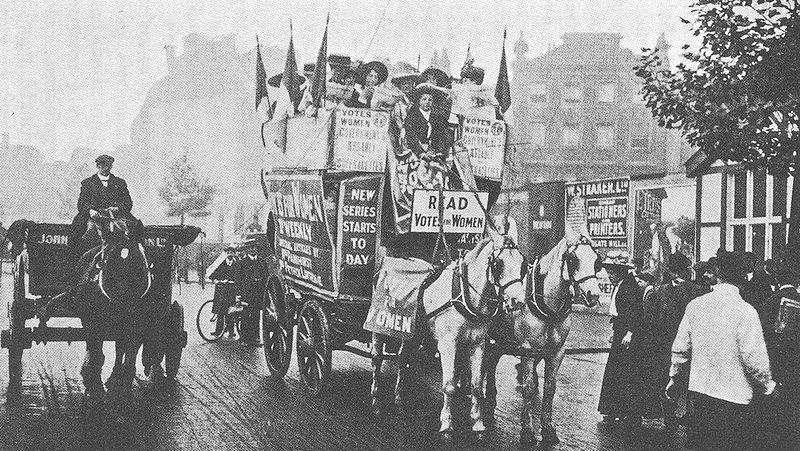
Members of the Women’s Social and Political Union campaigning for women’s suffrage in Kingsway circa 1911 Public domain https://commons.wikimedia.org/wiki/File%3AWSPU_in_Kingsway.jpg

In February 1918, the Representation of the People Act was passed awarding the vote to women aged 30 or over, if they were a householder or the wife of one. This excluded the majority of working class women and fell well short of the original aims of the suffrage campaign….

In November 1918 the Parliament (Qualification of Women) Act was passed, allowing women to stand for Parliament. The first ever elected female MP was Constance Markievicz for Sinn Fein but she did not ever take her seat. In 1919, Lady Nancy Astor became the first female MP to sit in the House of Commons….

On the 14th December, 1918, 8.5 million women were eligible to vote in a general election for the first time. It wasn’t until 1928 with the Representation of the People (Equal Franchise) Act that women were given the same equal voting rights as men: the general election of May 1929 saw 15 million women with the right to vote….

So, with all that in mind, I for one have been reminded why I have always felt it my duty as a woman to vote; in recognition of our sisters who fought so hard to secure it for us. Far be it for me to preach to anyone but I hope it’s given you food for thought, girls….as it has for me…. This Country may be facing difficult times and some of us may be having problems deciding which way to vote or whether to even bother….but don’t you think we owe it to these women to do so….? I’m glad I came across that pamphlet….

suff 9
British suffragette with a poster, giving out newspapers Ch. Chusseau-Flaviens https://flickr.com/photos/george_eastman_house/2678367136/in/set-72157606224254056/

A magnificent ‘7’….

So, after an almost six-week wait, they’re finally here! This year’s cygnets arrived on Saturday 6th May…. Lady’s patience – sitting on her nest – has been rewarded with seven gorgeous, fluffy, grey bundles of joy….

The first two days were, as in previous years, spent on the nesting pond; swimming lessons began in earnest on Sunday….

P1000465
Swimming lessons…

Monday, the new family made its way down to the pond by us and I was given the customary formal introduction. This is the fourth time this privilege has been bestowed upon me and I found it no less surreal this year than in previous ones – it truly is an honour….

Mum and Dad stayed for about fifteen minutes to introduce their new family and then took the young brood back to the water, where they remained until the following morning….

751

Now the worry begins….Mr. Fox is never far away. Last year was disastrous; out of the five cygnets that hatched, only one survived, Mr. Fox claiming four in one morning, when they were only a few days old…. How? Well, because for some reason only be-known to themselves, every year Mum and Dad enjoy taking their youngsters on hiking expeditions around the village. On this particular occasion they somehow managed to leave one of their offspring behind on the pond…. Ironically, this is the one that survived….

Aware that the grass on the common is especially long at this time of year and provides good coverage for a sly, awaiting fox, a path has been cut between the two ponds… The idea being to provide the swan family with a safer route as they to-and-fro…. You would think Mum and Dad would be grateful, wouldn’t you? No, what they’ve actually done defines the term ‘bird-brain’! They have taken all seven babies on a marathon hike to another pond within the village; a walk that involves negotiating steep banks, ditches and a main road! Thankfully, the whole family made it to the other pond safely but now, if true to form, they will return and have to repeat the whole hazardous journey…. Why do they do this? We have no idea, there is no rhyme or reason to why they should expose their young family to so much danger…. I can only assume they are bursting with pride and want to show their new brood off….

Putting the urge  to wander aside, our two are generally excellent parents, protecting and defending their babies diligently….

The female mute swan (Cygnus olor) lays between 4 and 10 eggs which she will then incubate for approximately 36 days, (sometimes with the male’s help – but not in the case of our pair). Cygnets hatch between May and July and then remain with their parents for an average of seven months. When they are between three to four months old they usually begin to learn to fly…. (I say ‘usually’, as this pair are somewhat neglectful at teaching this particular skill). It is also about this time that the cygnets begin to gain their white feathers; once they are predominately white, Mum and Dad will begin to chase them off…. Of course, there is no exact timetable, things vary from family to family; in fact, last year’s cygnet remained with his parents until he was almost nine months old….

For a pair of mute swans who have a tendency to produce ‘Polish’ swans amongst their brood, things may be very different again, from the normal up-bringing….

Polish swans were first imported to London around 1800, from the Polish coast of the Baltic Sea. Poulterers were convinced they had discovered a brand new species of swan and even gave it the name ‘Cygnus immutabillis’ – meaning ‘changeless swan’. However, they are not a different species but a mutation of the familiar mute swan. Instead of the smokey, grey colour we associate with new cygnets, those of the Polish swan hatch pure white and have pinky-grey legs and feet rather than the usual dark grey. They are not (as sometimes perceived) albino, as there is pigmentation present in the eyes – they are, in fact, a colour variant….

seven 1
Photo credit: Mute Swan Cygnet (Cygnus olor) ajmatthehiddenhouse via Foter.com / CC BY-NC Original image URL: https://www.flickr.com/photos/tonymorris/5827865156/

What causes this, is a pigment deficiency in a gene of the sex chromosomes. Female birds have two different sex chromosomes (ZW), whereas males have two of the same type (ZZ). Sometimes the female inherits one that is melanin deficient; this will make her a Polish swan. A male swan born to the same parents will be normal, unless he has two mutated forms of the gene. If a Polish and ‘normal’ swan breed their cygnets will be a mixture of normal and Polish – of either sex….

Early records of the morph can be traced back to the 17th Century. In some Eastern European countries, Polish swans can make up to 20% of the population; in Western Europe it is typically just 1%. Here in Britain there are reports of them in Kent, Essex, Suffolk and Norfolk….

Obviously it is difficult to tell at first glance if an adult mute swan is Polish; the giveaway is the pinky-grey colouring of the feet and legs. The cygnets are far more obvious, being pure white when they hatch…. This can be a distinct disadvantage to the Polish cygnet – there have been cases of the parents drowning them…. Generally there is a higher mortality rate amongst Polish swans…. instead of moulting into the usual brown feathers of the normal cygnet, the Polish will gain its white plumage immediately; this could result in the parents chasing it off long before it is ready to leave the protection and safety of the family unit….

seven 2
Photo credit: Schwanekinder dolorix via Foter.com / CC BY-NC-SA Original image URL: https://www.flickr.com/photos/7684055@N08/2512796007/

There is an indication that those who do survive will breed earlier than their counterparts…. In the wild, male swans pair off later than their female siblings. Females usually find a mate in their second year and will often breed in their third. Young males are not normally strong enough to defend a territory until they are three or four years old….and do not gain their full, mature adult appearance until this time.  Indeed, I for one have been caught out by this…. I was convinced our very own Dad swan was a female in the beginning, when he was in fact a juvenile male….he still gets called ‘Penelope’ from time to time….

So, now our new arrivals begin their journey to adulthood…. I am pleased to report that whilst writing this the family has arrived back from its jaunt – and all are safe and well. Hopefully, they have got the wanderlust out of their systems for the time being and we can all settle down  and get on with the feeding regime….


Strew thy floor with herbs….

After a month of having a poorly rabbit living in the bathroom I have got used to constantly clearing up a trail of straw and hay that seems to find its way around the rest of the house…. In days gone by that would have been perfectly normal in this old place; in fact, the floors would have been totally covered with the stuff….

When we first took possession of this cottage, one of our first jobs was to take up the brick floors of the bathroom and what is now the dining room. The brick was prone to drawing up moisture and so constant damp floors were an issue.  That said, even that – in its time – must have been an improvement on what was there before….plain, simple compacted mud. Yes, we often joke about living in a place with mud floors, this old cottage had literally just that….

The kitchen has old Victorian flagstones (unfortunately they are un-aesthetically pleasing – so now provide a base for wooden laminate flooring) but this floor too would once have been plain mud….

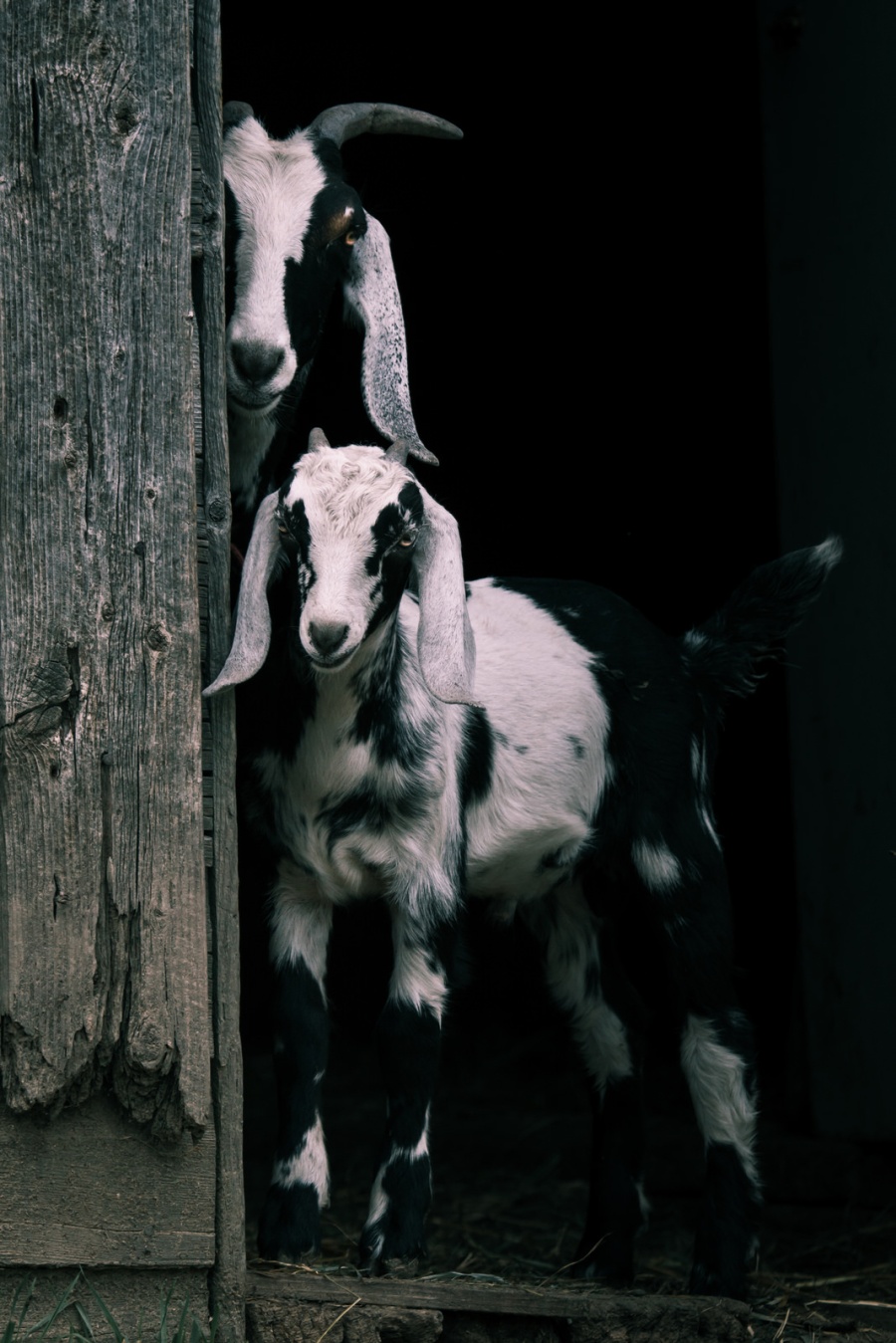
Grander abodes may have had stone floors – but mud or stone, neither offered much in the way of home comfort when left bare…. So, to overcome this, the floors would have been covered with reeds, rushes or straw. This made a soft ‘carpet-like’ covering, providing a little warmth and helping with cleanliness by soaking up spillages (and worse)….as in days gone by it wasn’t unusual for the inhabitants to share their dwelling with their most valuable assets….their livestock. Of course, cows, sheep, goats, pigs and chickens are difficult to house train….

strew 1
Photo credit: Shy Goats Daveography.ca via Foter.com / CC BY-NC-SA Original image URL: https://www.flickr.com/photos/raptortheangel/14685132727/

As if the smell of ‘eau de goat’ constantly lingering in the air wasn’t bad enough – the people probably didn’t smell much better either, as folk did not tend to bath much in the Middle Ages….

Then there were the other uninvited household inhabitants to be considered; rats, mice and other scampering rodents….and with these creatures came fleas, lice and ticks; the straw covering the floors and providing the stuffing for mattresses….an absolute haven for them….

Some households may have replaced the straw or reeds on a fairly frequent basis but the majority would have only changed them a couple of times a year, some may have not bothered at all…. Quite possibly a new layer would just have been added as required, the bottom, rotting layers staying in place for years….

In a previous blog I talked about how nose gays were used by people to overcome unpleasant odours – that was not the only way powerful smelling herbs were used to mask rancid, disagreeable whiffs….

All areas of the home, kitchens, dining halls, sleeping areas would have had herbs strewn amongst the floor covering. They would have been put amongst the straw of bedding and scattered across tabletops….any where they could release their sweet aromas….

When scattered on the floor the herbs would be crushed underfoot when walked upon; some herbs were chosen for their scent, others because they acted as a deterrent to insects, such as fleas….

The best strewing herbs according to Thomas Tusser’s “Five Hundred Good Points of Husbandry” (1573) were:- Bassel (basil), Bawlme (lemon balm), Camamel (chamomile), Costemary (costmary), Cowsleps and Paggles (cowslips), Daisies of all sorts, Sweet Fennel, Germander, Hysop (hyssop), Lavender, Lavender Spike, Lavender Cotton (santolina), Marjoram, Mawdelin, Penny Ryall (pennyroyal), Roses of all kinds, Red Myntes, Sage, Tansy, Violets and Winter Savery….

Many other herbs may have been included; mint, thyme, rosemary, meadowsweet, wormwood, rue, sweet woodruff…. Pennyroyal was used particularly as a flea or tick repellent and meadowsweet was a fond favourite of Queen Elizabeth I…. Part of the purpose of the Mediaeval and Elizabethan garden was to grow herbs for strewing….

Of course, it wasn’t just private abodes that had mud or stone floors, just about all buildings did, including churches. Church pews did not arrive until the 1400s; in fact, our very own church, St. Mary and All Saints, here in Dunsfold, is reputed to have the very first pews in the Country. Before seating was available those attending Services had to stand, kneeling when required to pray…. Only the rich could afford cushions, so it is not hard to imagine the discomfort such floors caused to the knees….

Once again the floors would have been strewn with rushes and herbs….making things a little more comfortable and at the same time disguising nasty odours from the unwashed bodies of the congregation packing the church, or perhaps those of the deceased buried under the church floor…!

Each year, typically in the late summer, the old, rotten rushes were cleared out ready to be replaced. It didn’t take long for the process to become an annual Parish event…. It became an excuse for villages across the Land to celebrate and party when the church’s rushes were replaced; a celebration with revelry, feasting, drinking and Morris dancing….

The rushes were taken to the church in carts, in what was to evolve into Rush Bearing Processions. The rush-cart would be decorated with garlands of flowers (which were then used to decorate the inside of the church) and often silver plate items, borrowed from those in the community fortunate enough to own some….and then the cart would have been pulled along by a team of men….

The processions became competitive, with each village trying to ‘out-do’ the next…. Competition was intense, to who had the biggest and best cart…. Possibly due to the large quantities of ale consumed, sometimes brawls broke out between opposing teams…. It was not unusual for church ministers to refuse entry into their churches of rowdy rush-bearers….

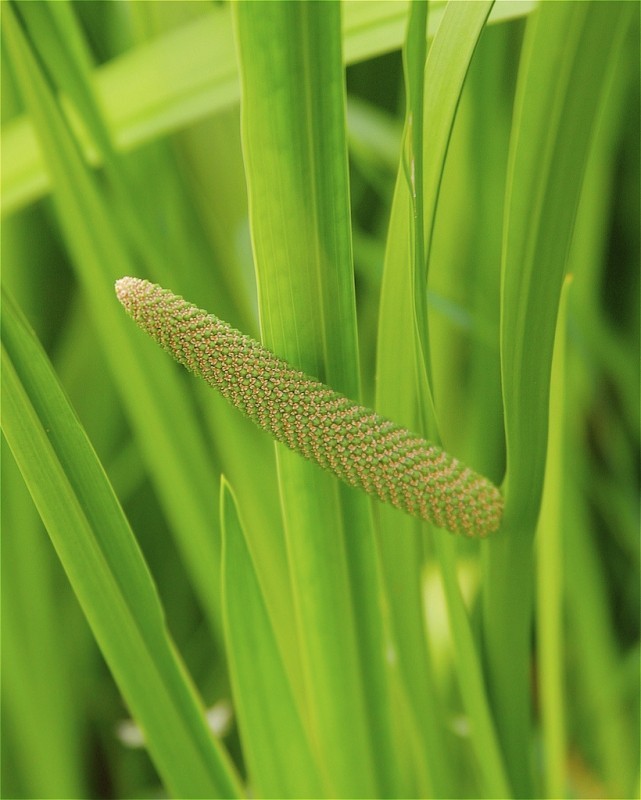
Sweet flag, a strongly aromatic perennial plant, was introduced to Britain during the 1500s and became the centre-piece of rush-bearing ceremonies. A versatile material, with medicinal and culinary uses, it was also used on some English cottages as thatching….

strew 7
Photo credit: Sweet Flag milesizz via Foter.com / CC BY-NC-ND Original image URL: https://www.flickr.com/photos/8583446@N05/3690603555/

Each church tended to allocate one day in the calendar for the ceremony. By the 16th Century, the bells were rung and ale, wine and cake were provided for the rush-bearers. Each church has a patron saint allocated to it at the time of consecration; an annual feast (wake) was held on the nearest Sunday to the official feast day of the allocated saint. By the 18th Century the rush-bearing ceremony usually formed part of the church’s feast day….

Rush strewing in churches died out in the early 1800s, as floors became flag-stoned…. Records show that one of the last was the church in Saddleworth, North Yorkshire, its floors were covered until 1826. Nowadays, certain areas, mainly confined to the North West areas of Cheshire and Lancashire, (although a small part of West Yorkshire participates too), have revived the tradition. Processions attract large crowds of spectators; the carts are highly decorated, with teams of men pulling them, whilst the ladies ride on top…. Who knows, perhaps it will become a celebration which spreads to the rest of the Country….let’s face it, nothing’s changed in that respect….any excuse to party….

The tradition of the little girl at a wedding, preceding the bride with a basket of petals and herbs comes from herb strewing…. Herbal weddings are becoming increasingly popular. Very often newly wed couples are showered with natural confetti, either fresh or dried. Many people like to make their own, maybe blending certain flowers and herbs to convey a personal message, they may incorporate: lavender – for luck and devotion, rose petals – for love, marjoram – for joy and happiness, chamomile – for patience and sage – to wish a long life….

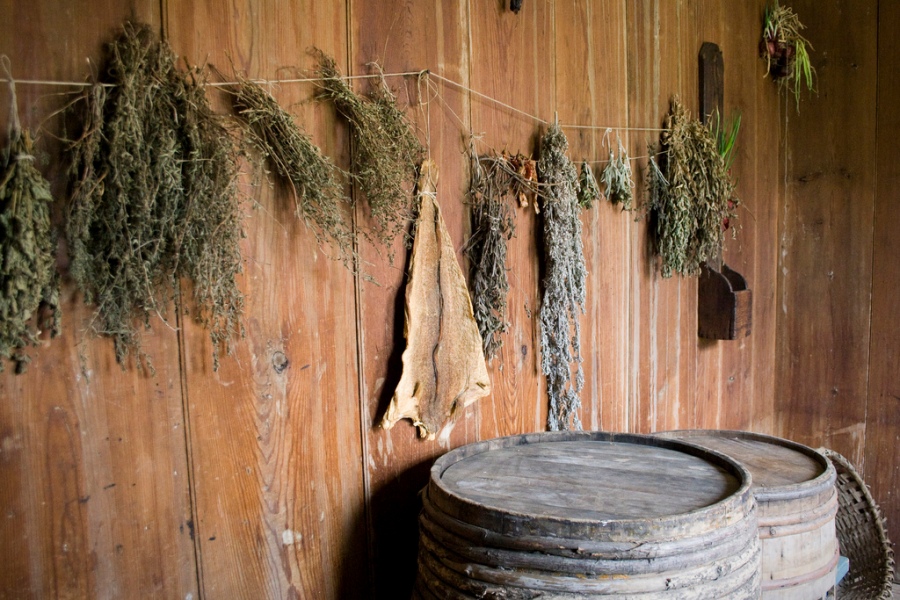
To gather herbs for strewing in the home, they need to be picked in dry weather and it is best to hang them upside down in bunches to dry….

strew 15
Photo credit: Dried Herbs Caitlinator via Foter.com / CC BY Original image URL: https://www.flickr.com/photos/caitlinator/4534924413/

To make a herb powder for use in the home:

1 cup borax : 1/2 cup salt : 1/2 cup powdered mint : 1/2 cup powdered rosemary : 1/2 cup powdered mug wort : 1/2 cup dried lavender

Herbs can be ground in a coffee grinder or spice mill (kept solely for the purpose) to make powder

Mix dry ingredients together – add 12 drops of essential oil of choice…. Sprinkle on rugs and carpets; leave overnight and vacuum in the morning….

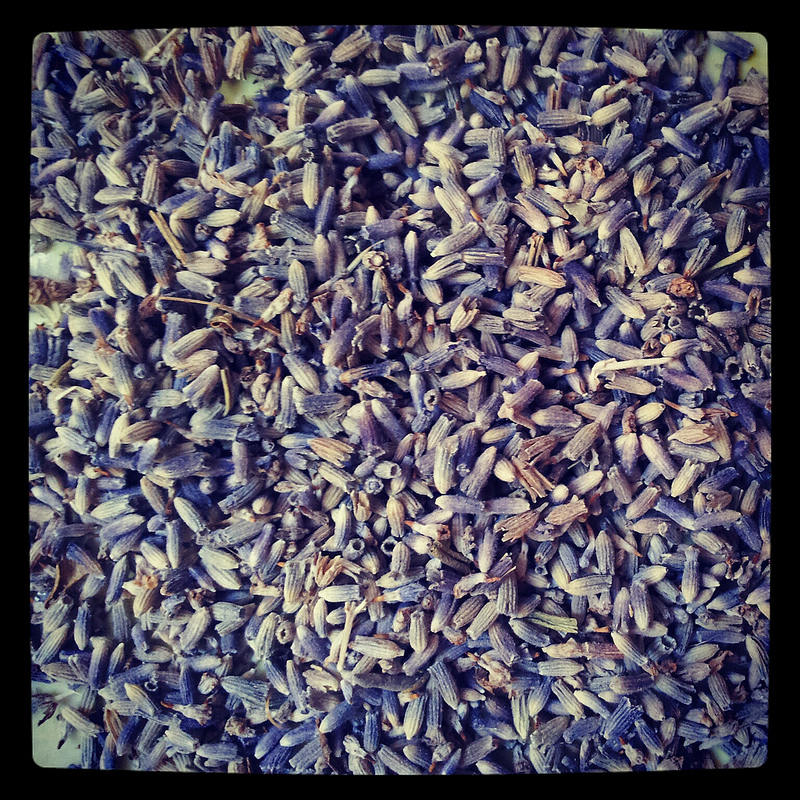
Another easy tip: sprinkle lavender under rugs and doormats, to keep rooms smelling sweet – the scent is released when the lavender is crushed when the rug/mat is walked upon….

Happy strewing….

strew 16
Photo credit: A pile of dried lavender herb fotografeleen via Foter.com / CC BY-SA Original image URL: https://www.flickr.com/photos/fotografeleen/7839750708/


Merry month of May….

May Day – a time to celebrate the coming of summer – a time of joy, hope and love – a time to have some fun…. So, let’s go and crown the May Queen, grab some Morris men and do a turn around the maypole….

may 7
Photo credit: Beltane Shadowgate via Foter.com / CC BY Original image URL: https://www.flickr.com/photos/shadowgate/5711544065/

Where did all this malarkey come from? May Day originates from the Pagan festival of Beltane, which falls exactly six months after November 1st (Pagan New Year) and half way between the spring equinox and summer solstice; it is the peak of spring, a time of abounding fertility…. Beltane is the anglicised name for the Gaelic May Day; it comes from the Celtic god ‘Bel’ (meaning the bright one) and ‘teine’, the Gaelic word for fire. Put together Beltane translates as ‘Bright Fire’. As it is a fire festival, traditionally bonfires are lit to honour the sun and to ask the god Bel to ensure a good harvest….

The earliest May Day celebrations can be traced back to the Romans; young people celebrated the arrival of spring by performing dances dedicated to Flora, the goddess of spring….

In the Pagan festival the Maiden goddess is a manifestation of Flora. The Oak King, also known as Jack-in-the-Green or simply the Green Man, falls in love with her and wins her hand…. They are the May King and Queen, symbols of the sacred marriage, the union of Earth and the sky (Heiros Gamos) – re-enacted in May Day celebrations by the Lord and Lady of the May….

As Beltane is a special time in the Pagan calendar it is a popular time for Pagan weddings; traditionally a union that lasts for a year and a day. At the end of this period the couple can either re-new their vows or go their separate ways without hard feeling. Today Pagan couples choose their own time period, very often it is for life…. Ceremonies are unique to each individual couple, involving the exchange of vows and tokens, such as rings. It also always entails ‘Hand-fasting’. This is when the hands of the couple are bound together using a cord or ribbon, in a figure of eight motion and then unbound again. The binding represents the coming together, the unbinding that they do so of their own free will. This is where we get the saying ‘to tie the knot’ when referring to marriage….

may 10
Photo credit: Hand Fasting Symroe via Foter.com / CC BY-NC-SA Original image URL: https://www.flickr.com/photos/symroe/4768615300/

Another term we use when referring to a wedding is ‘jumping the broomstick’. In times gone by, if a couple could not afford or did not want to get married in Church, they would literally jump over a broomstick laid on the ground. This symbolised crossing over a threshold from one life to another – by doing so they would have been accepted in the community as husband and wife…. There are those who still choose to make a commitment to each other in this way today….

may 11
Photo credit: woodland-blessing-jumping-the-broom mookychicks via Foter.com / CC BY-NC-ND Original image URL: https://www.flickr.com/photos/98260052@N03/21869884023/

The Green Man is a character who appears in many of the May Day celebrations and traditions we know today – in fact there is many a public house across the Land that bears the name…. During the 16th and 17th Centuries, people would make garlands and wreaths for the May King and Queen – things became competitive, the garlands became more and more elaborate….in time the leaves of the Green Man completely engulfed him….

may 5
Photo credit: Jack in the Green Festival Hastings dcanprice via Foter.com / CC BY-SA Original image URL: https://www.flickr.com/photos/132952433@N02/17334297696/

The colours associated with Beltane are:- red – for strength, passion and vitality; white – for cleansing, purity and to get rid of negativity; green – for growth and fertility. Beltane also has its connected sacred trees:-

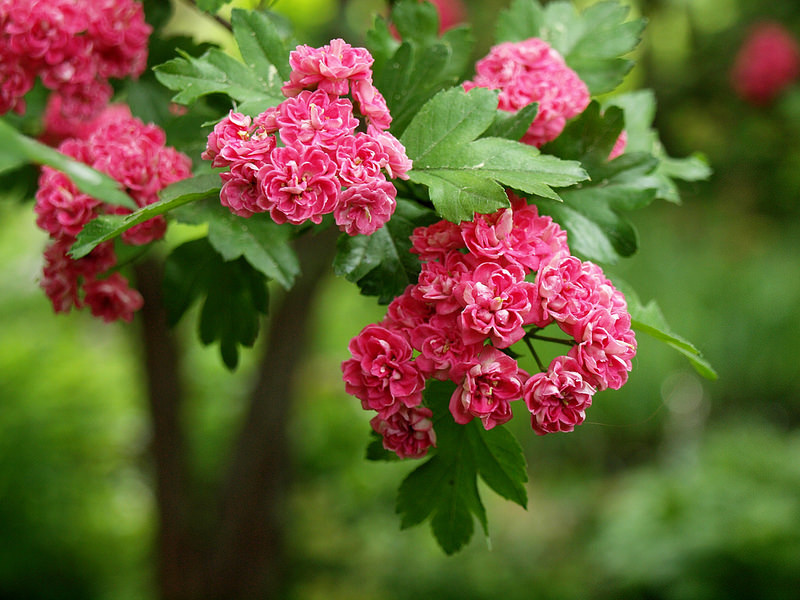
Hawthorn: the tree that bears the may blossom. Traditionally Beltane commenced when the  hawthorn bloomed; it is the symbol of sexuality and fertility. May blossom would have been used to decorate the home at Beltane – but at no other time, as it was then considered unlucky….

Rowan: representing protection and healing. Branches would have been put over the doors of houses and barns to protect from faeries as they awoke from their winter sleep. People wore sprigs of rowan for personal protection….

Birch: seen as a feminine tree; it is among the first to have leaves in the spring. Traditionally it is used to make besom brushes (this is where we get the term ‘a new broom sweeps clean’). Eostre, the Celtic goddess of spring, is associated with birch – wreaths of it given by lovers as gifts to each other….the traditional wood for the maypole is birch….

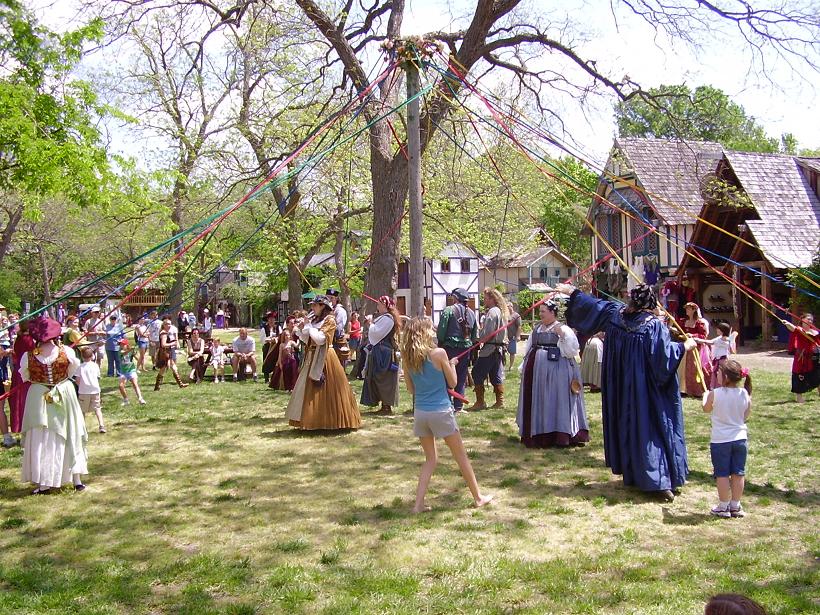
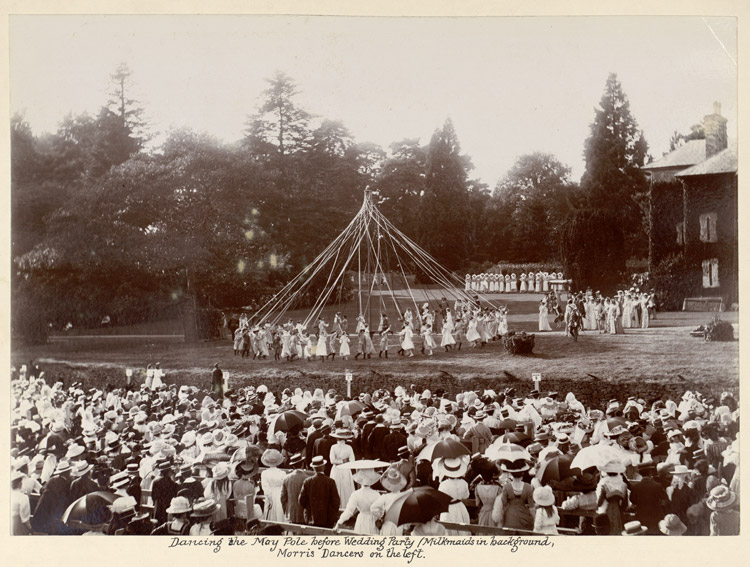
The maypole is a phallic symbol – representing the power of the god. The traditional ring of flowers (which should ideally be may blossom) represents the goddess…. Originally the pole was decorated with garlands of flowers and leaves and dancers simply circled it in time to music, provided by pipe, tabor and fiddle – nowadays often accompanied by an accordion. Ribbons were added at a later time; the weaving of ribbons stands for the ‘spiral of life’. The dancing weaves and creates a complex pattern with the colourful ribbons – the dance is then reversed to undo it….

may 6
Photo credit: may pole Photos by Zoe via Foter.com / CC BY-NC-ND Original image URL: https://www.flickr.com/photos/photosbyzoe/3508801228/

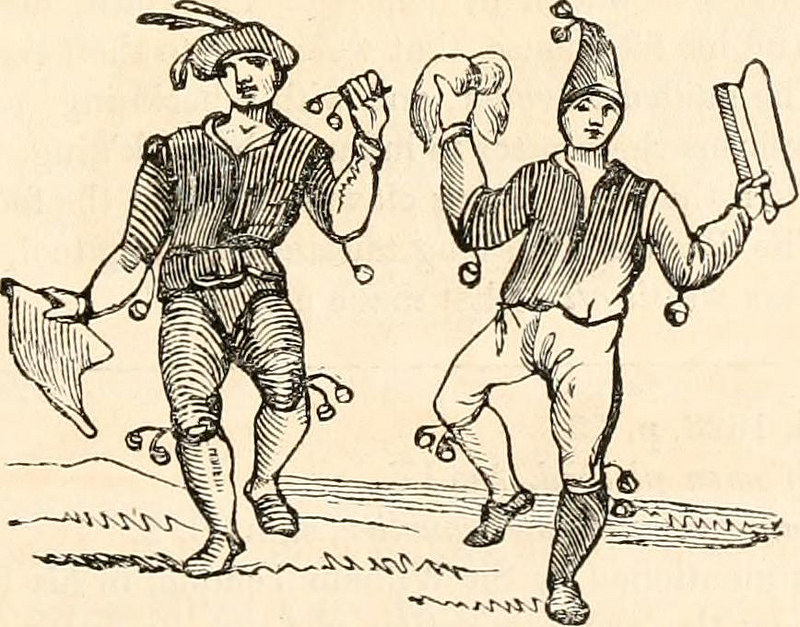
Very often the festivities around the maypole were led by Morris dancers. The Morris Dance is a form of English folk dance that has undergone some 500 years of evolution. Possibly the name comes from the French ‘morisque’ meaning a dance. It became ‘morisch’ in Flemish (who influenced many European customs). Eventually it became known as ‘moryssh’ in English and finally ‘morris’. The earliest record of Morris dancing in England is May 1448. In the beginning it was a dance performed just by one or two people and was popular in the Royal courts – the dancers would wear elaborate, fancy costumes….

may 19
Photo credit: Image from page 634 of “Illustrations of Shakespeare and of ancient manners : with dissertations on the clowns and fools of Shakespeare ; on the collection of popular tales entitled Gesta Romanorum, and on the English Morris dance” (1839) Internet Archive Book Images via Foter.com / No known copyright restrictions Original image URL: https://www.flickr.com/photos/internetarchivebookimages/14765685362/

By the 16th Century Morris dancing had become part of many religious festivals. In Mediaeval and Renaissance England the Church brewed wassail and other ales, which were sold at occasions such as weddings, christenings and wakes and at Whitsun…. It was a method of fund-raising for the Church…. As time went on, Morris dancing became associated with other village celebrations such as fetes and May Day…. It was particularly popular in Tudor times….

Many May Day celebrations were banned by the Church in the 16th Century due to their Pagan origins; although some Roman Catholics continued to celebrate May 1st with the ‘May Crowning’ of the Blessed Virgin Mary. The ban incited riots; 14 men were hanged as a result and a further 400 were pardoned by King Henry VIII….

may 20
Photo credit: May Crowning at St. Gertrude’s Lawrence OP via Foter.com / CC BY-NC-ND Original image URL: https://www.flickr.com/photos/paullew/14107194936/

May Day, which has always been associated with fun, revelry and fertility, disappeared once again during the civil war, when Oliver Cromwell’s Puritans took control of much of the Country in 1645. Cromwell banned maypoles, describing them as ‘heathenish’….

may 4
Photo credit: May Pole ericwg via Foter.com / CC BY-SA Original image URL: https://www.flickr.com/photos/ericwg/16767907/

At the Battle of Worcester in 1651, Cromwell defeated King Charles II, who fled to Europe to spend the next nine years in exile. Cromwell ruled Britain like a Puritan dictator. After his death in 1658, the monarchy was restored and Charles was invited back. He was reinstated in 1660 – known as the ‘Merry Monarch’ he was determined to bring back the fun; to show a return of the good times he had a giant 40ft maypole erected in the Strand, London….

Morris dancing had also been actively discouraged under Cromwell’s Puritan rule but it too made a hearty return under Charles…. By the mid 1700s it had become practised by common folk. The fancy clothes disappeared, ordinary attire was worn, decorated with flowers and ribbons….

May Day celebrations went into decline during the Victorian era…. The Victorians disapproved of bawdy behaviour; the Green Man died out altogether. The traditional Lord and Lady of the May who had boisterously presided over festivities were replaced by the more demure May Queen…. Morris dancing was considered to be old-fashioned, as new forms of entertainment had come along – although some villages still kept it going….

may 21
Photo credit: The May Queen 1886 Thiophene_Guy via Foter.com / CC BY-NC-SA Original image URL: https://www.flickr.com/photos/7726011@N07/7514274860/

Nowadays, many towns and villages have May Day celebrations of their own. Many continue to have a May Queen, some even have a Jack-of-the-Green, (the Green Man having been revived in Whitstable, Kent, in 1976) and maypole dancing. The village greens of Welford-on-Avon and Dunchurch in Warwickshire have permanently erected poles. Barwick in Yorkshire boasts the largest maypole in Britain at 30m high! Of course, Morris dancers are still here to entertain us….nowadays we are familiar with their bright costumes, the bell pads on their shins, wielding their sticks, swords and handkerchiefs, whilst performing their noisy, rhythmic, choreographed dances….

may 18

Photo credit: Morris Men’s Jump the_steve_cox via Foter.com / CC BY-ND Original image URL: https://www.flickr.com/photos/photowannabe/1571528274/

The Labour Government introduced May Day as an official holiday in 1978; the first Monday in May is now a bank holiday….

Back in the early days of this particular house, the Mediaeval May Day was dedicated to Robin Hood; plays would have been performed all over Britain to celebrate spring. Things have changed considerably since then but this village still has its May Day fete….now, all we need is some decent weather….  Hang on though, this is a British bank holiday we’re talking about….decent weather – pah!!

Please…. If you have read this post through to the end then I assume you have found it of interest and I hope you’ve enjoyed it…. If you have found this via Facebook, a little ‘like’ for the Cottage Capers’ page would be very much appreciated – a like and a follow would be even better…. I’m not trying to sell you anything – I’m simply a blogger trying to establish myself…. Many thanX….

may 16
Photo credit: Dancing the May Pole before Wedding Party / Milkmaids in background, Morris Dancers on left LIGC~NLW via Foter.com / No know copyright restrictions Original image URL: https://www.flickr.com/photos/llgc/4541056352/
may 1
Photo credit: Hawthorn Axiraa – back very soon via Foter.com / CC BY-NC-ND Original image URL: https://www.flickr.com/photos/46785534@N06/14249923649/