Standing at the cross roads….

Ever found yourself at a cross-roads wondering which way to go? That’s where I am right now – hypothetically of course….

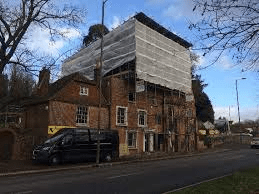
In 2008, I took a room in an antiques centre, located in a former mill. It is a rambling, quirky, centuries-old building – home to some 70 dealers, a real Aladdin’s cave, brimming with all manner of antiquities.

xroads 14
Photo credit: getsurrey.co.uk

I filled my room to the rafters with all sorts of vintage and antique goodies; china, linen, collectables, paintings, small items of furniture…. As far as I was concerned I was indulging my passion and earning a living at the same time….

It was November 2015, I was at home alone, working on some pieces for the Mill, with the radio on for company – when there was a news flash….a local antiques centre was on fire…. I knew instantly it was us….

I was incredibly lucky, my room was completely unscathed; unlike many of my fellow dealers who lost their entire stock, if not to the fire itself but through smoke and water damage. It was heart breaking….

What followed was a frantic few days of packing boxes and shifting furniture to clear the building. Being November, daylight hours were restricted, there was no electricity, it was cold, damp, with the smell of smoke thick in the air – safety measures required hard hats to be worn…. Still, resolve and morale remained high – we were all convinced we would be back in and trading again come Summer….

That was 18 months ago – due to complicated insurance issues work has not yet begun to repair the damaged building; meanwhile, my stock is in storage – waiting….
xroads 13
Photo credit: farnhamherald.com

I love the Mill, I find it hard to imagine trading from anywhere else. I have viewed another centre and I have dabbled at selling on-line….but I soon discovered that wasn’t for me…. So, up to this point I have simply chosen to ‘wait it out’. However, since it is now painfully apparent nothing is going to be resolved in the near future, decisions have to be made….

I could look for an alternative venue, continue to wait or dispose of my stock through auction and consider a new career challenge…. at least I have choices. Being a woman in the 21st Century I am free to make my own decisions, which is probably more than could be said for the womenfolk who have lived in this house before me….especially those in its very early days….

When this house was first built in the mid to late 1300s, life would have been ruled by feudal obligations. Possibly this cottage would have been the home of a lesser yeoman or more affluent villien and his family; it is not grand by any means but it is well constructed and in its time would have been quite substantial. Life for a yeoman or villien’s wife would have been tough….

Most people in Mediaeval Europe and Britain lived in small rural communities and made their living from the land. In some respects the life of a peasant woman was less restricted in the confines of her class than those in aristocracy. Generally, women had little control over the direction their lives took them in. Society in the  Middle Ages was heavily influenced by the Bible….women were deemed inferior to men, morally weaker and likely to tempt men into sin….all this stemming from Eve. Women were conditioned to remain silent, letting their menfolk make decisions on their behalf. Fathers arranged marriages for their daughters, who were usually married off as teenagers and then became responsible for managing their new home, whether a castle or a hovel….

xroads 7
Photo credit: Medieval Village, WA Tuzen via Foter.com / CC BY-ND Original image URL: https://www.flickr.com/photos/tuzen/14551399513/

A peasant woman’s day may have typically started at 3am. She would have been expected to work in the fields alongside her husband; ploughing, sowing, harvesting, haymaking….

xroads 1
Photo credit: Image from page 273 of “Mediaeval and modern history” (1905) Internet Archive Book Images via Foter.com / No known copyright restrictions Original image URL: https://www.flickr.com/photos/internetarchivebookimages/14758267726/

There may have been livestock to raise – lambing in the Spring, shearing mid-June. Poultry needed tending (nearly always a woman’s job)….and of course, she also needed to manage the household chores too. There would have been cheese, butter and bread to make, food to be preserved ready for the Winter, the vegetable plot would have needed maintaining – growing vegetables for the family’s pottage…. A certain amount of time would have been spent foraging for nuts, mushrooms, berries and fruit…. Floors had to be swept and straw replaced, rush lights needed to be made. She would have sewed new clothes for the family, washed and mended when necessary…. Then she would have to have found time for her spinning and quite possibly weaving too…. Unless living as a free-woman and hence excused, she would also have been expected to help with the harvest of her lord as well as that of her own family’s land…. On top of all that, she probably had a tribe of children to bring up….

xroads 2
Photo credit: Image taken from page 267 of ‘English Wayfaring Life in the Middle Ages-XIV.Century… Translated from the French by Lucy T.Smith…Illustrated’ The British Library via Foter.com / No known copyright restrictions Original image URL: https://www.flickr.com/photos/britishlibrary/11199869396/

Knowledge of a trade could have made a girl a good marriage prospect, especially if it happened to be one that could be run from home, such as weaving, brewing or baking. Extra income for the household was always welcome….

xroads 4
Photo credit: “Middle Ages” spinner P Torrodellas via Foter.com / CC BY-NC Original image URL: https://www.flickr.com/photos/ptorrodellas/143041021/

Cottage industries were small businesses where people produced their own goods and sold them either from home or by ‘hawking’ them in the streets, possibly using a mobile cart. A small business would have been eligible to join a guild, an association of artisans or merchants. Most small businesses were owned and registered with the guild by a man – his wife, daughters, sisters and mother were his ‘workforce’. Women connected to a family business would have been allowed to join the guild via their fathers or husbands. By learning the family trade, very often a woman would have been permitted to continue the business in the event of her father or husband’s death. Sometimes, although it was the man of the house registered as the owner, it could be the woman who ran the entire business….

xroads 8
Photo credit: Medieval tincaster hans s via Foter.com / CC BY-ND Original image URL: https://www.flickr.com/photos/archeon/7481668890/

Even if a woman was a member of a guild, generally she was still very restricted. For example, a pastry maker was only permitted to carry one box of biscuits at a time in order to sell from….and of course, women were paid less than their menfolk even if they were doing the same job. Many widows inherited property and businesses and were able to carry on and run them very successfully, sometimes they became very financially well-off; if this were the case it was often not in her best interest to remarry…. Some widows ran the financial side of their deceased husband’s business but would have had employees to carry out the work….

After the black death new opportunities arose for women wishing to prosper. Due to a shortage in the skilled workforce a woman with a trade could rent premises, take on apprentices and run a business; she could even write a will to determine what would happen to it in the event of her death…. Married women could choose to trade separately from their husbands, they were known as ‘femme soles’. In order for a woman to do so, she had to make a public declaration of her sole status and to be able to trade her application had to be approved and granted. Those in urban areas may have become shop or inn keepers. London’s population halved after the plague, opportunity was everywhere for women. In the early 15th Century one third of brewers paying dues to the Brewers Company were women, some were single, some married, some widowed. However, there is little evidence of women being in public office, where they may have had authority over men….and as the population recovered and increased women faded back into the background, once again it became a man’s World….

Many women had multiple jobs to help make ends meet….very often she would have had her children in tow; as soon as they were old enough they would have been expected to help out….

Some women may have held the position of a domestic servant to a wealthier family. There were other employment options as well of course, prostitution was one…. Although frowned upon by the Roman Catholic Church and regarded as a sin, it was tolerated to a degree as the belief was that it helped curb rape and sodomy; towns and cities had designated areas where prostitutes could ply their trade…. Midwifery was solely a female occupation; although English universities barred female medical practitioners, midwives delivered babies and attended to other women’s health matters, as men were terrified of childbirth…. Midwives had no formal training as such, they relied purely on experience….

Childbirth in the Middle Ages was an extremely risky business, both for mother and infant; in fact childbirth was the greatest hazard a Mediaeval woman faced…. If a woman survived her childbearing years she was likely to outlive her husband. There was no real medical help available if problems arose, no procedures or techniques when dealing with breech births. If the pelvic opening was too small for the baby’s head nothing could be done; Caesarean sections were only performed if either mother or child had died and were carried out without anesthetic….

Any mother will tell you giving birth is no picnic but when we consider the horrors that childbirth in the Middle Ages often entailed, it is hardly surprising to learn that many women found the thought of becoming a nun a more attractive prospect than becoming a mother…. Nearly 10% of women in Mediaeval England and France never married in the traditional sense – many opted to marry the Church instead. Indeed it had its benefits….it gave the opportunity to gain an education; many writers, artists, educators, healers and botanists gained their knowledge through the Church….

xroads 3
Photo credit: Image from page 207 of “The story of the middle ages; an elementary history for sixth and seventh grades” (1912) Internet Archive Book Images via Foter.com / No known copyright restrictions Original image URL: https://www.flickr.com/photos/internetarchivebookimages/14797864713/

Although women were restricted in what was essentially a World run by men, there is little doubt that without the sheer gutsiness of our Mediaeval sisters, the World at that particular time would have come to a grinding halt…. There is that familiar saying: ‘behind every successful man stands a strong woman’….which appears to have its origins in the 1940s – but I wonder if it was inspired by women of the Middle Ages….

I, for one, am thankful I am a woman of now, rather than then…. I can make my own decisions, follow the career path of my choosing – my destiny is not determined by my husband’s trade…. Good job really, I can’t imagine myself wielding a chainsaw….


Are you superstitious….?

It was whilst foraging in the garden the other day, looking for wild strawberry leaves to tempt a poorly rabbit that I am caring for, that I came across a white spider…. My instinctive reaction was to recoil in horror – not because I have any fear of spiders, they don’t usually bother me – but because of something my mother always says….

spider 2

I don’t think I have ever actually seen a pure white spider before…. I have come across some very pale ones which I thought to be white but this little fella was unmistakable….

A bit of detective work (good old Google) meant I was able to identify the arachnid as a crab spider (misumena vatia). Apparently, it is quite a common chap here in the South of England and can often be found between April and September. Usually they prefer yellow or white flowers, which are good camouflage, so they can pounce on unsuspecting flies and bugs, trapping them in their crab-like front legs. The interesting thing about these particular crab spiders, is their ability to change colour to match their surroundings. This can take a few days but they are able to appear white, yellow or green….

So, now you are probably wondering what all the fuss was about…. Why my horror at finding what is fundamentally a harmless little creature just minding its own business? Well, ever since I can remember my mum has always told me that to come across a white spider means a death is soon to occur, either within the family or someone closely connected to it….

Being of a superstitious nature, it wasn’t just the identification of this small soul I was Googling, I wanted to see if I could find any reference to the old wives tale…. I discovered all kinds of beliefs surrounding our eight legged friends; money spiders bringing wealth, how seeing a spider weave its web in the morning is a bad omen, killing a spider means extreme bad luck and having cobwebs in the house is seen as lucky – but nowhere could I find anything about the impending doom and gloom a white spider is supposed to bring….in fact all my searching revealed quite the opposite. To find a pure white spider is a sign that changes for the better are due to arrive and an increase in wealth could well be in store….

So, where did Mum’s belief stem from? When I asked her, she told me it was something her granny always used to say…. This got me thinking about how such tales and folklores vary from region to region and from family to family. Superstitions are often a family ‘thing’, passed from generation to generation, it gives a sense of belonging. Most of these beliefs involve luck, whether the bringing of good fortune or keeping misfortune at bay…. Many require some kind of ritual; an action we repeat which is symbolic – to give us security and comfort…. A vast majority of the superstitions we know today can be traced back to the Middle Ages or even before….

During Mediaeval times, the World was both a wondrous and terrifying place; due to the lack of scientific understanding, general illiteracy and yet a need for an explanation of the unknown, people turned to other sources for answers – namely magic, evil spirits, witches and demons…. The World became obsessed with witchcraft, it is estimated some 200,000 people were executed after being accused of practising it…. I have already touched on some of the ways people protected their homes from witches in a previous blog (Within these walls…) – but there are so many other superstitions and their associated customs and rituals that also originate from this time….

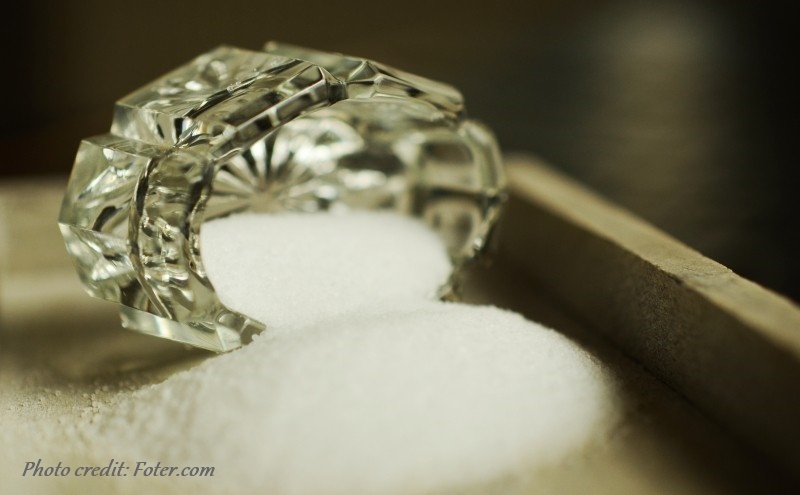
Throwing spilt salt over the left shoulder is something I for one have done on occasion but never really knowing why. Back in the Middle Ages, salt was an extremely expensive commodity, certainly not to be wasted. Rather than just discard spoiled salt, why not try to get some use from it….by chucking it over the shoulder, into the eyes of any evil spirit that might just happen to be lurking behind….

spider 4

Keeping evil out of the house was a priority. Placing rosemary by the door was thought to deter the likes of witches; growing ivy on outside walls was also meant to protect a property. An iron horseshoe above the door made a witch hesitate before entering a building. It had to be the correct way up to prevent the luck from escaping and it had to have come off of the horse naturally rather than being purposely removed….

Sometimes evil spirits could sneak into the home unnoticed – they could hide in things brought indoors, such as between the leaves of certain vegetables, like cabbages and lettuces. Do you cut a cross into the bottom of your Brussel sprouts whilst preparing them for the pot? Contrary to belief, doing so doesn’t help them to cook any better – it comes from an old belief that tiny demons hide inside them. If these demons happen to be swallowed, they can enter the body….

spider 8

Occasionally accidents happen, such as the breaking of a mirror. In the Middle Ages it was commonly believed that the reflected image was actually the soul of the person looking into the mirror; so if it were to break, it meant the fracturing of the soul…. To counteract the predicted forthcoming ill-luck, it was necessary to wait for seven hours before clearing up the broken shards and then disposal required burying them outside, under the light of the moon….

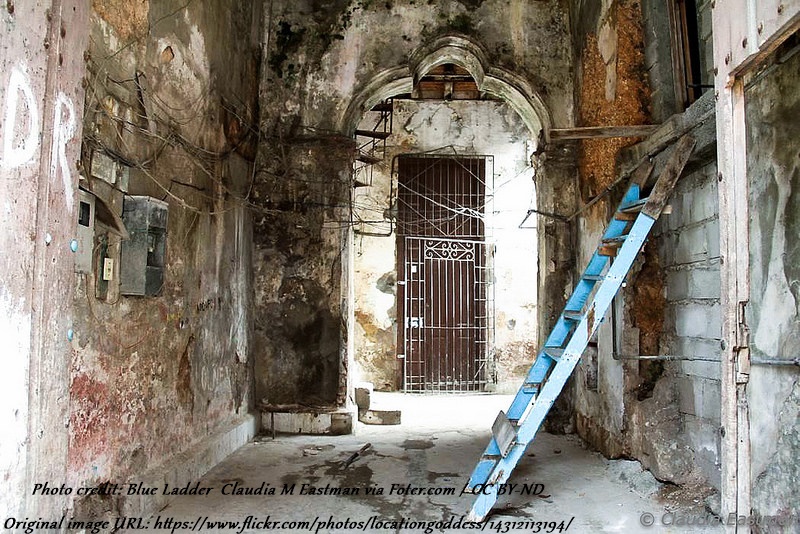
Great pains were taken to avoid tempting ill-fate, something we often do unconsciously today. How many times have you stepped off the pavement in order to divert from walking under a ladder? When a ladder is in position, for example leaning against a wall, it forms the shape of a triangle. The triangle is the sign of the Holy Trinity; it was once thought to be seriously unlucky to break the triangle by walking through it….

spider 9

Thirteen, for some, is an extremely unpopular number. The number of people at the Last Supper equalled thirteen, the thirteenth guest being Judas – he who betrayed Jesus. The Crucifixion occurred on a Friday – thus explaining the superstitions surrounding Friday the 13th…. For centuries people avoided having thirteen diners around the table….in fact having thirteen at a gathering could warrant being accused of witchcraft….

The term ‘bless you’ comes from times of the plague. It was at this time that people began to cover their mouths and noses when sneezing, to stop the spread of germs. Saying ‘bless you’ was thought to stop the Devil from entering the body during the sneeze….

Of course, there were lots of ways to entice good luck, many of which have stayed with us. Crossed fingers for instance, making the sign of the cross, to protect from bad luck and evil spirits – we all do it when willing something positive to happen…. (or perhaps when making a promise we don’t intend to keep)…!  Touching wood is another; this comes from the old belief that sacred trees, oak, ash and hawthorn, had spirits that protected from evil and demons….

spider 10

Tossing a coin into a wishing well stems from the idea that certain wells and pools were the home to water spirits – coins were thrown in as offerings….hoping a wish would come true…. Of course, nowadays many a charity may benefit from our wishful thinking….

spider 11

Then there are occasions that require good luck blessing rituals….such as weddings. Bridal clothes were considered to be especially luck – there was once a time when a bride could expect to have the clothes she wore physically ripped from her….gradually, the focus moved on to the  garter, which represented sexuality and fertility. Batchelors would fight to obtain the garter as the belief was that he who gained it would be delivered of a beautiful, fertile wife….

spider 12
Photo credit: acme via Foter.com / CC BY  Original image URL: https://www.flickr.com/photos/acme/5926093323/


Cutting the wedding cake was a ritual born of the belief that if a bride did not cut the first slice then the marriage would be childless….

spider 13
Photo credit: Image from page 425 of “Frolics at Fairmount” (1910) Internet Archive Book Images via Foter.com / No known copyright restrictions Original image URL: https://www.flickr.com/photos/internetarchivebookimages/14755803805/

Still today, we follow so many wedding traditions that have been with us for centuries. The same can be said for so many other areas of our lives, all those little quirks that have stayed with us…. So, whatever superstitions you observe, be it black cats, avoiding the cracks in the pavement, not putting you umbrella up indoors, saying ‘white rabbit’ on the first day of a new month or looking for four-leaf clover…. Be lucky X ….

Oh look! I’ve just spotted a pair of magpies outside….

spider 14


Now….where did the Easter bunny get all those eggs from….?

Well, I for one am feeling quite proud of myself – there’s a whole stash of Easter eggs hidden at the bottom of the wardrobe, ready for this coming weekend – and they’ve been there for a whole week! Temptation has been resisted….

Come on, be honest….who’s already dipped in – safe in the knowledge they can easily be replaced next time a visit to the supermarket is required? Let’s face it, Easter eggs are so readily available and affordable these days, (many supermarkets regard them as lost leaders)….but this wasn’t always the case….

Early chocolate Easter eggs were an extravagant gift given by wealthier members of Victorian society – the mass commercialised eggs we know now didn’t appear until the 1950s….

eggs 18

To understand our love affair with chocolate we perhaps need to go back to its origins….it was certainly in a very different format to what we are familiar with today….

eggs 5

It was some 3,000 years ago, when Aztecs living in what is now present day Mexico, started to cultivate cacao plants, found growing in the tropical rainforests of Central America. The Aztecs were actually attempting to produce a form of beer; the cacao beans were fermented, roasted and ground – they were then mixed with water, honey, vanilla, chilli and other spices to make a hot, frothy, alcoholic chocolate drink – which was believed to have spiritual powers….

As the Aztecs began to dominate Mesoamerica in the 14th Century, they took their craving for cacao with them. So precious became the beans that they actually formed a currency; in the 1500s a hen could be purchased for 100 beans….

eggs 11

It was during the 1500s that the Spaniards set off to the Americas for the purpose of trading with the Aztecs for their silver and gold – but on returning home to Spain, they also carried with them the sacred chocolate drink. Cacao became a rare and precious commodity, a symbol of wealth and power, enjoyed mainly in the Spanish Royal Courts. The Spaniards sweetened the beverage with sugar and added cinnamon for flavour to suit their own palates; they managed to keep their chocolatey indulgence a secret for nearly a century. It was when the daughter of Spanish King Phillip III married French King Louis XIII, taking her love of chocolate with her, that France became privy to the secret – but soon it spread to other European Royal households too….

Such was the demand, that plantations were established in the equatorial regions to grow cacao and sugar. Disastrously, native Aztec workers were wiped out by diseases brought over by the Europeans; it was then African slaves were imported to work the plantations….

Chocolate remained a luxury only to be enjoyed by the aristocracy until 1828; which is when a Dutch chemist, by the name of Coenraad Johannes van Houten, invented the cocoa press. The press enabled the fatty cocoa butter to be squeezed from the roasted cacao beans, leaving behind dry ‘cakes’ which could then be ground – to give cocoa powder. This powder could then be mixed with liquids and other ingredients to make an edible chocolate….

It was J S Fry of Bristol that made the UK’s first chocolate bar in 1847. Early chocolate contained 50% fat, making it hard to digest. Starch and other ingredients were added to make it taste better but it was still bitter and had a gritty consistency….

It is probably the French and Germans who can be attributed for producing the very first chocolate Easter eggs, in the early 1800s. They would have been solid, as this first chocolate would have been too difficult to mould….

Eggs have always been associated with Easter, being symbolic with fertility, rebirth and the beginning; the Church adopted the egg to represent the Resurrection. With the rise of Christianity, many existing Pagan customs were adopted; eggs had long been used in Spring celebrations, with their connection to new life….

The ancient Greeks, Romans, Persians and Egyptians all dyed eggs as part of their festivities, a tradition that was set to continue, right up until today. In the Middle Ages chicken, duck and goose eggs were all dyed and painted; the Victorians had cardboard eggs that were sometimes covered with satin and decorated, whilst Carl Fabergé made the famous jewelled creations for the Russian Tsar and Tsarina….

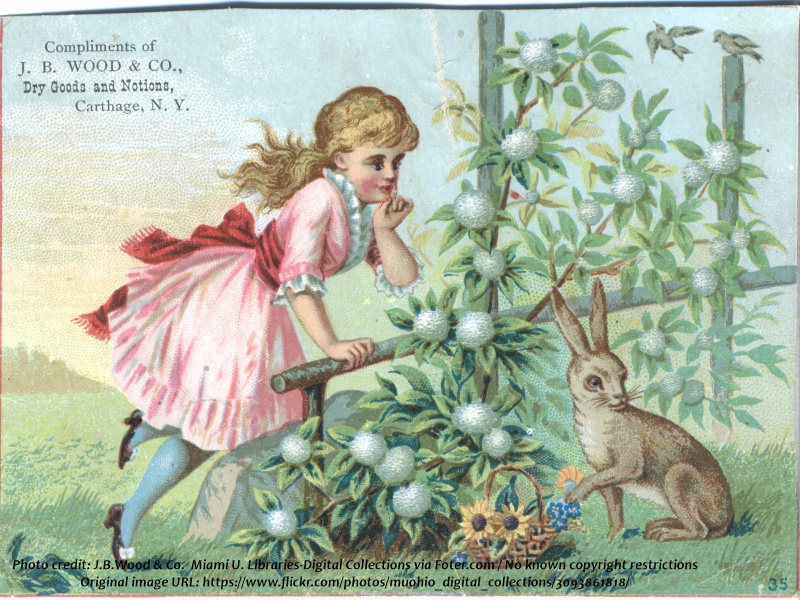
The Easter bunny was also popularised in the 19th Century, once again probably stemming from Pagan origins; Eostre, the goddess of fertility, was often depicted as a bunny. Children were (and many still are) led to believe that the Easter bunny decorated the eggs and hid them for the traditional Easter egg hunt.  Some countries have their own variations of the ‘bunny’ – in Switzerland it is a cuckoo and in parts of Germany a fox, that has responsibility for Easter egg duties….

eggs 15

Early Easter eggs would have been highly decorated to suit Victorian tastes; adorned with large marzipan flowers and elaborate piped icing techniques, these frivolous gifts were just for the rich….

eggs 21

In 1866, the Birmingham chocolate makers Cadbury, imported a brand new type of cocoa press, enabling a method of halving the fat content of the chocolate; making it better tasting and smoother – so it could be more easily moulded. In 1873, Frys produced the first moulded chocolate eggs at their Union Street factory in Bristol. Cadbury followed two years later and soon others copied. Business began to boom and the custom spread to the USA. It was in 1879 that Rodolphe Lindt invented a conching machine that enabled a chocolate with a luxurious, velvety texture to be made. By 1893 Cadbury had nineteen different patents (a lot for those days) – their first eggs were filled with sugared almonds; the chocolate confectionery business was coming on in leaps and bounds. Further advancements in techniques heralded the introduction of milk chocolate; 1905 saw the arrival of Cadbury’s Diary Milk chocolate bar and with it the first milk chocolate eggs…. Frys and Cadburys merged in 1919….

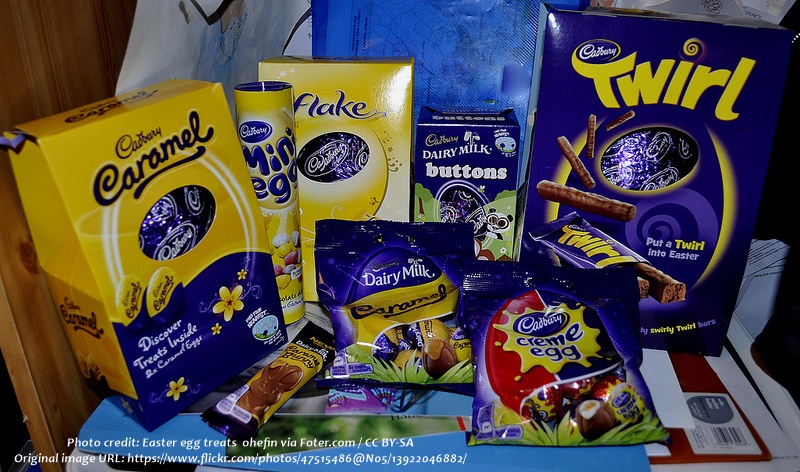
Rationing of chocolate during World War 2 meant it was the 1950s before Cadbury introduced eggs aimed at children. At this point in time chocolate eggs were still an expensive luxury and a child would have been lucky to receive one. Since then the market has exploded, now most kids can expect to receive several eggs….

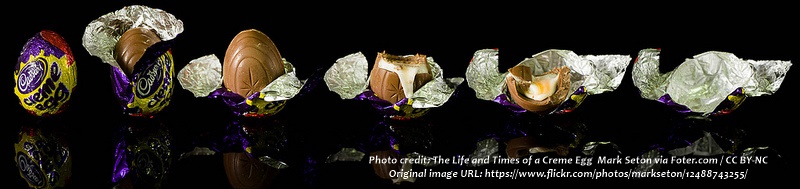
I must admit, I have always been partial to a Cadbury’s Creme egg….but did you know it was launched in 1963 as Fry’s Creme egg? Clever chap, that Mr Fry….I wonder what he would have thought of the chocolate market today…? Worldwide, we spend over £60 billion annually on the sweet confectionery….

eggs 14

Happy Easter and I do hope the Easter bunny hops down your way….

Please…. If you have read this post through to the end – then I assume you have found it of interest and I hope you’ve enjoyed it…. If you have found this via Facebook, a little ‘like’ for the Cottage Capers’ page would be very much appreciated – a like and a follow would be even better…. I’m not trying to sell you anything – I’m simply a blogger trying to establish myself…. Many thanX….

eggs 3

eggs 7

Some bunny loves you….

We British are a nation of animal lovers and I know we are not alone…. The World over, millions of furry, feathered and scaled companions share our lives…. Some might even secretly admit they love their animals more than they do their nearest and dearest…. The loss of a beloved pet can be devastating….

At the moment I am caring for a very poorly bunny, that is currently residing in the bathroom. This house resembles a barnyard, straw and hay litters the floor, not to mention the odd bit of rabbit poo…. Housework has gone by the wayside this last week, as nursing duties have completely taken over….

After cats and dogs, rabbits are the third most popular pet in Britain, there are an estimated 1.2 million kept in the UK, three of which live right here….

Our bunny keeping days started about nine years ago, with the arrival of a lionhead-lop,  brother and sister pair, Daisy and Cookie. They immediately became a much-loved part of the family and when Daisy unexpectedly passed away, we were all heartbroken, as was Cookie. Not being able to bear seeing him lonely, I adopted a pair of French-lop sisters from a local rescue centre, (admittedly without the blessing of he who must not be obeyed – my other half that is)….

Now, Cookie has a fabulous pad – a large, purpose-built, outside run, connected to his deluxe hutch by a twelve-foot tunnel in the form of heavy-duty land drainage pipe…. It’s a brilliant set-up and Cookie loves it…. So much so, he refused to share it with the two new arrivals – obviously he wasn’t as lonely as I first thought…. I was not exactly popular with my significant other, we now had two more bodies to house…..

IMG_1700
The Cookie ‘Monster’….

Luckily for me, John was off to France for a few days…. The morning of his departure my partner in crime (my mum) and I rushed down to the nearest pet store and bought the biggest flat-packed hutch we could find….(a pre-built one wouldn’t fit in the car – and it was needed in a hurry). Mum and I then spent the next few hours, in the pouring rain, exercising the full extent of our limited DIY skills. Actually, we were quite proud of the results; OK, there were a couple of bits we could only get to fit by putting them back to front – but the overall result did resemble a rabbit hutch and it was certainly fit for purpose….

To keep things simple I decided to keep the girls’ existing names, Angel and Cuddles. They certainly looked the part, Angel mainly white and angelic looking, Cuddles a cuddly black bundle of fur; it was just a shame their characters didn’t match! I have never known two such in-aptly named creatures, whoever originally christened them could not have got it more wrong…. Angel is actually a little devil, she is incredibly naughty (but in the most loveable way)….and Cuddles was anything but cuddly; it took months of hard work to even get to the stage of being able to pick her up. During one episode she physically had me by the throat to show her disapproval at being handled…. With patience and perseverance though, I finally gained her trust, five years on and her name now suits her….

IMG_1708
A little devil called Angel….

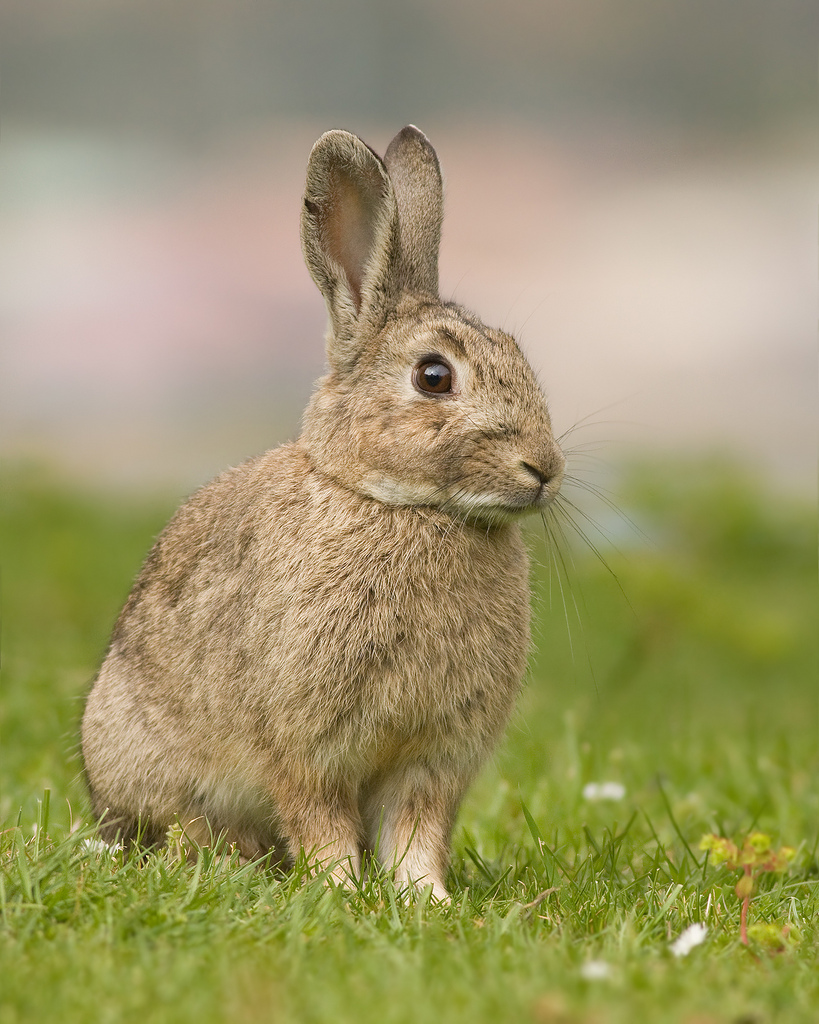
There are over sixty recognised breeds of domestic rabbit in Europe and the United States….all descending from the European rabbit (Oryctolagus cuniculus). They evolved some 4,000 years ago on the Iberian Peninsula. The Romans arrived in Spain around 200BC and began to farm the native rabbits for their meat and fur. It is believed bunnies were first domesticated in the Champagne region of France, by monks who kept them in cages as a regular food source. They were introduced to Britain during the 12th Century, chiefly for their meat, although there are suggestions wealthy women of the gentry may have kept them as pets. The term ‘pet’ came about towards the end of the Mediaeval Era, it comes from the word ‘petty’, as in small….

bunny 1
Photo credit: European Rabbit JJ Harrison via Foter.com / CC BY-SA Original image URL: https://www.flickr.com/photos/26601890@N06/4145557448/

Up until the 19th Century, rabbits were kept mainly for their fur and meat. It was the Victorians that developed a passion for thoroughbred rabbits; selective breeding across different parts of Europe had begun to give us established breeds. The Flemish Giant can be traced back to the 16th Century – and a tiny French bunny, ‘Lapin du Nicard’, weighing just 1.5kg, from the 18th Century is thought to be the fore-runner of all the dwarf breeds. The English-lop, also from the 18th Century, is believed to be the ancestor of all lops…. Keeping rabbits became particularly popular amongst the middle classes of Victorian society….

bunny 5
Photo credit: Pexels.com

During the two World Wars, both the British and American governments encouraged people to keep rabbits as a food source….after the Second World War bunnies continued to be kept but now more as family pets. Bunnies are seen as the ideal ‘starter’ pet for children. There is a kind of sentiment about them, they have long been associated with babies and young children…. The 1970s saw a surge in rabbit ownership thanks to the book and film, Watership Down…. Since then, over the years, attitude towards rabbit welfare has changed….from their health – with regular vaccinations and check-ups….to greater social interaction with their humans….

Rabbits have oodles of personality; each one has its own unique character. If you can get over their tendency to chew everything and the fact that they love to dig, a bunny can be a rewarding companion. They are surprisingly intelligent, not something many of us appreciate until experiencing them. Rabbits can be trained, for example to use a litter tray; some can even be taught to follow commands using reward based training. Most have a playful nature, they love toys, which should be encouraged, especially if they are a lone rabbit – boredom can make them grumpy and destructive….

bunny 9
Photo credit: gehat via Foter.com / CC BY-NC Original image URL: https://www.fickrcom/photos/gehat/448621058/

Rabbits are highly social and territorial. Even a rabbit that has been used to living as one of a pair can be difficult to bond with a new buddy, as we found out with Cookie. Neutering is advisable, apart from the obvious of preventing two bunnies from becoming two dozen, it curbs aggression and helps ease the urge to lunge, box, spray and mount….

As with any pet, rabbits have certain requirements in order to maintain their good health…. A complex digestive system means a healthy diet is essential. The first droppings produced are called Caecotropus and are re-ingested by the rabbit. A diet of good hay, fresh greens and a quality rabbit food are vital to keep the gut moving. If no pellets are passed after a twelve-hour period, medical attention may be necessary…. Rabbits need to gnaw as their front teeth grow at a rate of 3mm per week! Also, their claws need regular clipping; in the wild rabbits keep their nails trimmed by digging but not many of us want our lawns dug up…. Claws that get too long can become ingrowing causing a lot of discomfort and pain and may even require surgery….

Teeth also need regular monitoring, molar spurs and incisor overgrowth can cause problems…. All this is beginning to sound expensive isn’t it? Brits will spend an average of £6.5K on a rabbit in its lifetime, (I do hope John doesn’t read this – times that by 3 and it makes a tidy sum)!! The day-to-day costs are self-explanatory; the initial outlay for a hutch/run, feeding paraphernalia etc. and then ongoing food and bedding…. A rabbit that is unfortunate enough to have health issues can be both a financial commitment and time-consuming. Rabbits are susceptible  to certain diseases; Myxomatosis is the one we all immediately think of….and Rabbit Viral Haemorrhagic Disease is another – both can be vaccinated against on an annual basis….

Then there is the one I had never heard of until recently….Encephalitozoon cuniculi….and this is the one my little girl, Cuddles is currently suffering from…. It is caused by a parasite that can be contracted from grazing on grass that has been infected by the urine of a rabbit carrying the disease. The parasite infects the nervous system; many rabbits who have it show no symptoms but occasionally it manifests itself in a severe form – as it has with poor Cuddles. Last Friday it was doubtful if she would make it through the weekend – she was completely unable to stay upright, continuously flopping on to her side, her whole body contorted with a twisted, deformed appearance…. Luckily, we have a fabulous vet who decided it was worth throwing everything at her, to give her the best chance. So began the regime of administering medicine twice a day – antibiotics and treatment for the E.cuniculi – which, much to the disgust of an indignant bunny, has to be syringed directly into the mouth. This is not the easiest of tasks, especially with Cuddles – it takes two of us, one to hold her down, the other to administer…. To start with this was a rather stressful procedure for all concerned but I think we’ve got it down to a fine art now….

Very slowly Cuddles has responded to the treatment – she still falls regularly on to her side and is unable to get herself up again – but she is eating and drinking with a hearty appetite. The treatment has to be given continuously and will last for about a month. A visit to the vet yesterday morning advised that we should know in the next week whether she will recover sufficiently to have any quality of life….
So, it looks as if we are going to have a bunny living in the bathroom for a while longer yet…. I had better get used to straw and rabbit droppings littering the place – something tells me this old house has probably seen all that before, only the droppings would have been a little more substantial than that of a rabbit….

Cuddles needs constant monitoring, it has taken life over considerably….but she’s worth it! Only time will tell if she is going to make a recovery…. Fingers crossed X

IMG_1682
Get better soon little Cuddles…..


Let the Mute Swans have a voice….

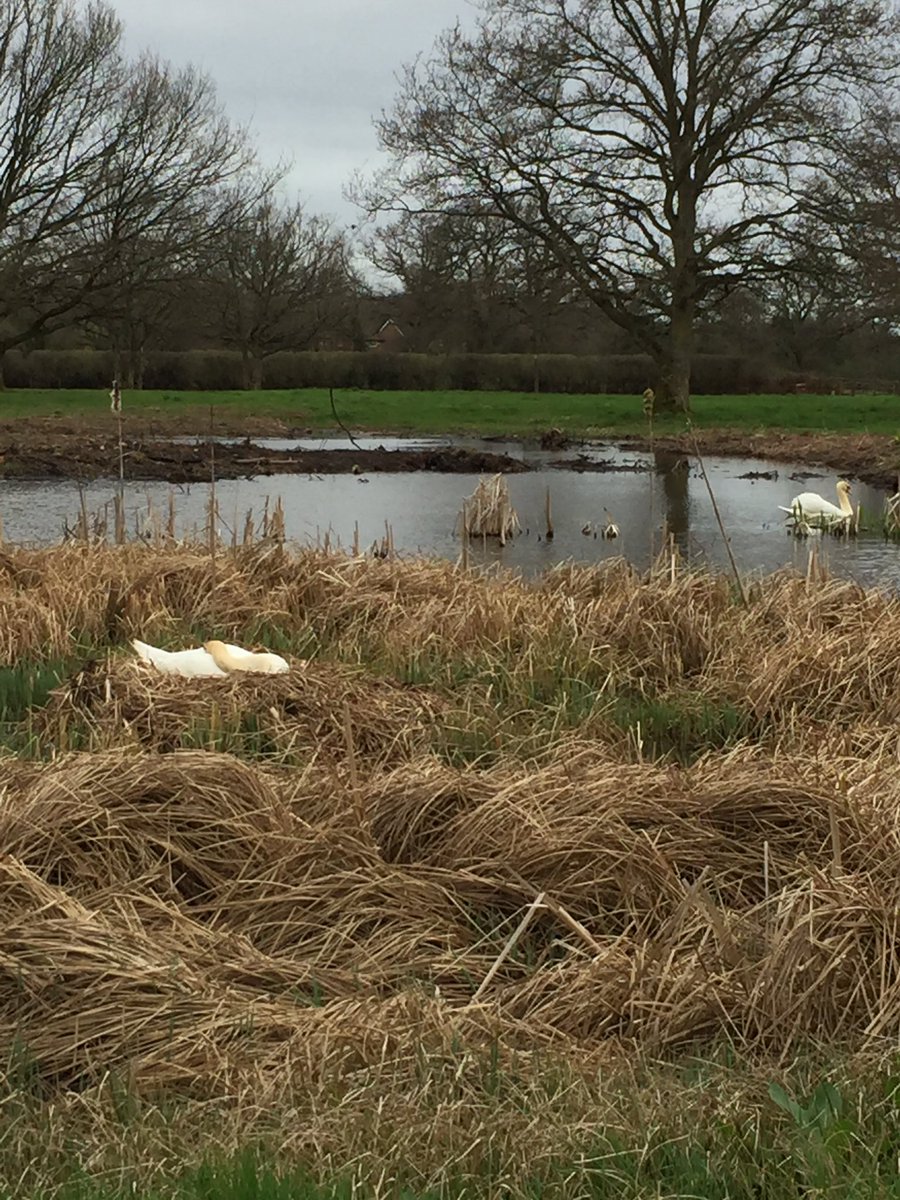
It’s that time of year again, our female swan is now resident on the nest, whilst her spouse vehemently guards her – (well, until meal time arrives, then as usual he appears at the backdoor – all this defending business makes for hungry work, don’t you know)…?

Lady-nest

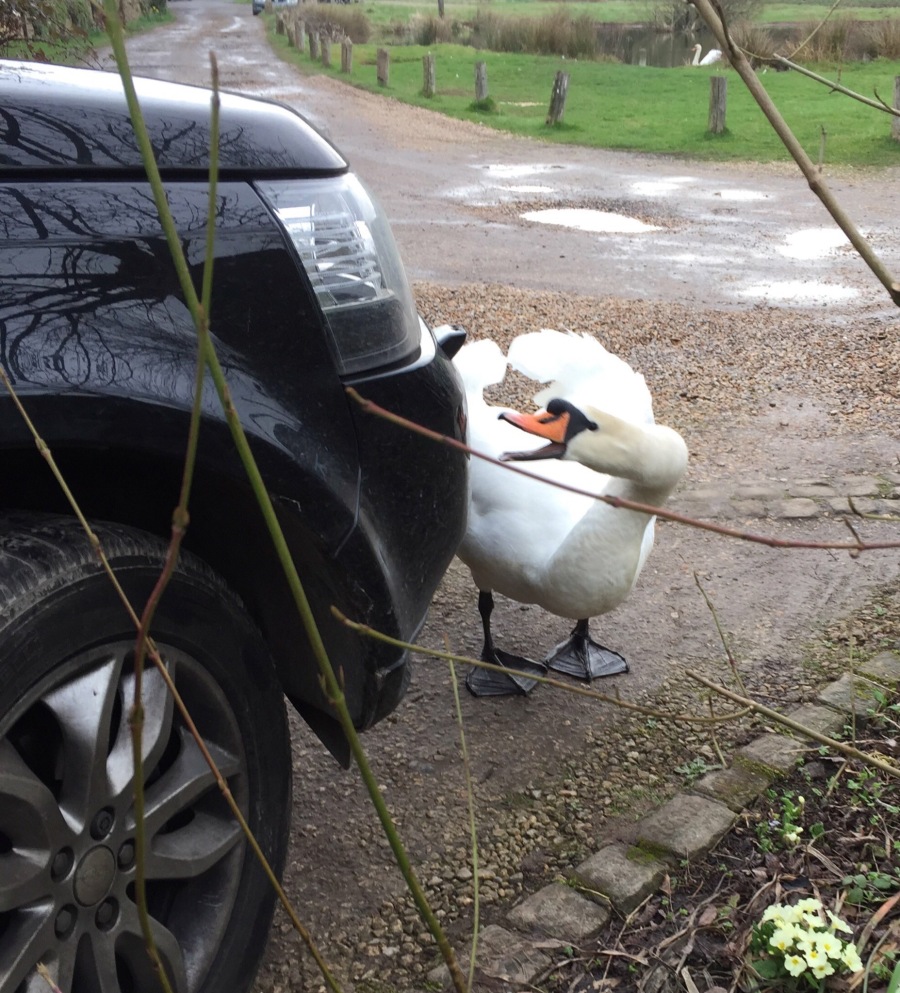
During the breeding season Floppy turns into the Devil Swan….ten times more grumpy than usual. To make a quick trip across the track to a neighbour’s house takes careful planning and negotiation; timing is of the essence – it’s best to wait until he’s not around at all, if possible…. Wheels are a particular bug-bear of his, he can’t resist having a go at any passing vehicle; I have seen him launch himself at full pelt in order to get at the milkman’s truck…. As for the poor lady who delivers the newspapers, with her pull along trolley….he just cant help himself….

IMG_1488
Floppy showing his dislike of my car….

It’s common knowledge that breeding swans become more aggressive than usual; they are just doing their job, protecting their territory, nest and then once they arrive, their cygnets. There is no denying that a swan in full defensive mode is very imposing – one of Britain’s heaviest birds, at up to 15kg (33lbs) and with a wing span that can reach up to 2.4m (7.9ft), no wonder some people find them terrifying when confronted. Swans don’t attack just for the fun of it though (unless their name is Floppy)…. Generally, if you back away they will retreat, they may attempt to take a bite if you really overstep the mark…. A wing swipe can hurt but unless it’s to a young child or someone frail or elderly, the breaking of arms and legs is a misconception…. It was a myth put about by swan owners in the Middle Ages to stop poaching, when swans were considered a delicacy for the Royal dinner table….a myth that remained long after swan was taken off the menu. Out of the thousands of swans resident in Britain, to hear of a human being ferociously attacked by a swan is the rarest of occurrences….

mute 2
Photo credit: Mute Swan Mick E. Talbot via Foter.com / CC BY-NC-SA Original image URL: https://www.flickr.com/photos/micks-wildlife-macros/5639133028/

The Crown claimed ownership on Britain’s mute swan population in the 12th Century, which is how the Queen now owns the majority of these majestic white birds….

It has been suggested that the mute swan, Cygnus Olor, was first introduced to Britain by the Romans, although remains have been found in East Anglia dating back to some 6,000 years ago. Naturally found in Africa, Asia, China, Europe and the Mediterranean area as well as the UK, the mute swan is adaptable to its surroundings. It can be found in coastal regions, on rivers and at estuaries, on ponds and lakes, grazing on flooded grasslands, in marshland and wetlands…. It has also been introduced to New Zealand, Australia, South Africa and North America…. Its diet consists mainly of aquatic plants, snails and it will graze on grass. If semi-tame, it will happily feed on grain and lettuce. Although swans enjoy bread it is not advisable to throw it into the water for them as it does pollute and poison the water….

Thanks to conservation efforts here in the UK the swan is now at ‘least concern’ level on the conservation status. During the 1980s the population was in rapid decline, especially on the River Thames. Numbers had begun to fall in the 60s, the main culprit – lead fishing weights. Since the ban of lead weights in the 80s and with the help of a series of mild winters, the mute swan population has recovered and is now back to the levels seen in the 1950s. Swans have few natural predators; foxes will take cygnets (as our pair found out the hard way last year). The biggest dangers to swans are pollution, discarded fishing tackle, overhead power cables, harsh winters (ponds freezing over, lack of food) and mankind….unfortunately, often through acts of vandalism….

Mute swans are protected under the Wildlife and Countryside Act of 1981 – the Act also covers eggs and nests. It is an offence to take or possess an egg and nests are protected whilst being built or used….

Occasionally swans get bad press. Most dog walkers are responsible, they keep their pets on leads when around swans, as they would around any wildlife or livestock…. However, you do hear of the occasional incident. Quite frankly, if a dog owner doesn’t have enough common- sense….well, I’d best not go there….

Sometimes a swan behaving badly makes the news; such as the apt named ‘Psycho Swan’ that terrorised members of a model boat club that regularly use a Suffolk lake…. In July 2016 the swan was responsible for the destruction of several model boats, much to the fury of the boats owners…. The ‘errant’ swan was the proud dad of four cygnets and was obviously taking his duties very seriously….no more needs to be said….

P1000429
Floppy attending to his parental duties….

As the swan population increases the relationship between swans, farmers and those with fish interests can sometimes become stretched…. Natural food is at its scarcest between late Winter and early Spring – complaints from farmers about foraging swans have increased. Damage to crops, especially winter cereals and oilseed rape are rising, not just from being eaten but also from being trampled on and the ground being compacted. Some farmers plant decoy crops to try to tempt the plundering swans away from the main crop….others resort to bird scarers….

Another area where swans are falling out of favour is with the river management authorities. Studies have been conducted by DEFRA on rivers; for example the Rivers Itchen and Test (Hampshire) and the Kennet and Lower Avon (Wiltshire and Berkshire) and the adjacent agricultural land. Results showed that groups of swans only used part of the river, so damage remained localised. The plant community was the main sufferer, typically water crowfoot, a favourite food source for grazing swans; this effects conservation and angling value. Moving groups of swans away from more sensitive areas may help to manage the impact of their grazing; fencing off areas does not appear to work, suspended tape to deter the birds might help – but this is a pricey option. There is no conclusive answer – however, non-lethal methods do have to be found. At least as a result of the studies, authorities are beginning to understand the impacts on the chalk river eco-system and hopefully a practical, effective solution will be found….

British swans can perhaps thank their lucky stars that as current legislation stands, they are fully protected under the Wildlife and Countryside Act…. Which is more than can be said for their American cousins….

The mute swan first arrived in the States in the late 1800s – brought over from Europe to decorate the ornamental ponds and lakes of wealthy landowners. Quickly numbers increased and feral colonies formed….

The majority of American people see the mute swan as a creature of beauty….but there are those who view it as an invasive species that destroys the natural habitats of ducks, geese and America’s own trumpeter swan. They believe wetland eco-systems are put under threat and water is polluted with their faeces. They also cite the swan as dangerous, attacking children and the vulnerable….

mute 3
Trumpeter Swan SeeMidTN.com (aka Brent) via Foter.com / CC BY-NC Original image URL: https://www.flickr.com/photos/brent_nashville/6825761442/

An incident that occurred in April 2012 did nothing to help the mute swan’s defence…. An angry swan was blamed for the death of a kayaker on a Chicago pond…. Anthony Hensley was working for a company that used swans to deter geese from its property. Hensley was using a kayak to check on the birds when a swan swam aggressively at him, causing him to tip out of the canoe. Being fully clothed, his sodden clothing made it difficult for him to swim to shore and the swan continued to attack him – tragically he drowned…. He was not wearing a life jacket….

Many states in the US see culling as the only way to manage the increasing mute swan population. Michigan plans to reduce its numbers from 15,000 to 2,000 by 2030; due to the belief damage is being caused to the wetland eco-system. Hunting groups are in support of this proposal; birds they choose to hunt, such as the ring-necked pheasant, could live in the areas vacated by the swans. People have been instructed not to take injured swans needing attention to wildlife centres and existing birds receiving care are expected to be handed over. This has caused an outcry from many people….

In Ohio, the killing of mute swans and the addling of their eggs (coating with oil to prevent them from hatching) has been done discreetly, to avoid a public outburst….

Perhaps one of the most emotive cases is that of New York State. In December 2013 the Department of Environmental Conservation Division of Fish, Wildlife and Marine Resources (DEC), released a draft management plan which proposed the complete elimination of all 2,200 mute swans in New York State by 2025. Slaughter was to be carried out by either shooting or the rounding up and catching of groups to be gassed; nests and eggs were also to be destroyed….and all at the tax payer’s expense…. There was public outrage….

A revised management plan was then produced, proposing that numbers would be reduced from 2,200 to 800. Swans in parks would be allowed to live, only wild swans were to be eradicated, along with their eggs and nests. Landowners could apply for permits but would have to prevent their birds from being able to leave the private land. The State sought permission from private landowners and local county governments to kill swans on their land….

The DEC claimed to sympathise with and understand the public’s view and affection for swans but at the same time stated sentiment could not take precedence and also apportioned some of the blame to the rise in the swan population to people feeding the birds…. The DEC’s concerns included that the ‘invasive’ species was threatening the wetland eco-system and natural habitat of the native trumpeter swan, as the mute eats up to 8lbs of aquatic vegetation per day (the trumpeter eats up to 20lbs)….and that the mute swan poses a danger to children. One of its main high-lighted concerns was that of swans being a hazard to aviation – after the 2009 Hudson incident….

On the 15th of January 2009, US Airways Flight 1549 took off from La Guardia Airport, New York, bound for North Carolina. Three minutes after take off the Airbus A320 struck a migratory flock of Canada geese – sucking many of the birds into the ‘plane’s engines. To avoid disaster the pilots successfully ditched the aircraft into the Hudson River, off midtown Manhattan. All 155 people aboard were rescued with very little serious injury….the incident became known as the ‘Miracle on the Hudson’. As a ‘precaution’, thousands of Canada geese living in the vicinity of New York’s airports were rounded up….and gassed. Bear in mind it was a migratory flock (proven by DNA analysis) that collided with the Airbus and not local geese….

mute 4
Photo credit: New York District Responds to U.S. Airways Flight 1549 Crash in the Hudson River USACE NY via Foter.com / CC BY Original image URL: https://www.flickr.com/photos/newyorkdistrict-usace/3748885467/

The revised plan for the management of the mute swan by the DEC still fell well short of public approval. In November 2016 a two-year moratorium was announced, signed into law by Governor Andrew Cuomo. The DEC now has to demonstrate mute swans have caused actual damage to the environment and to other natural animal species with fully documented scientific evidence. Also, each area with swan populations is to have two public hearings; and any future proposed management plans must give priority to non-lethal techniques….

So, for now, New York City’s population of mute swans is currently benefitting from a two-year stay of execution…. at the end of this period, the eyes of the World will be upon them….

swan ferry