On this day in history….16th September 1915

On this day in history : 16th September 1915 – Britain’s first Women’s Institute is opened in Llanfairpwllgwyngyllgogerychwyrndrobllllantysiliogogogoch, Anglesey, Wales….

img_3849
Women’s Institute building in Llanfairpwll, dating from 1915 – the oldest in Britain. Photo credit : Robin Drayton CC BY-SA 2.0

Since that time the W.I. has grown to become the UK’s largest women’s voluntary organisation with over 6,300 branches and more than 212,000 members….

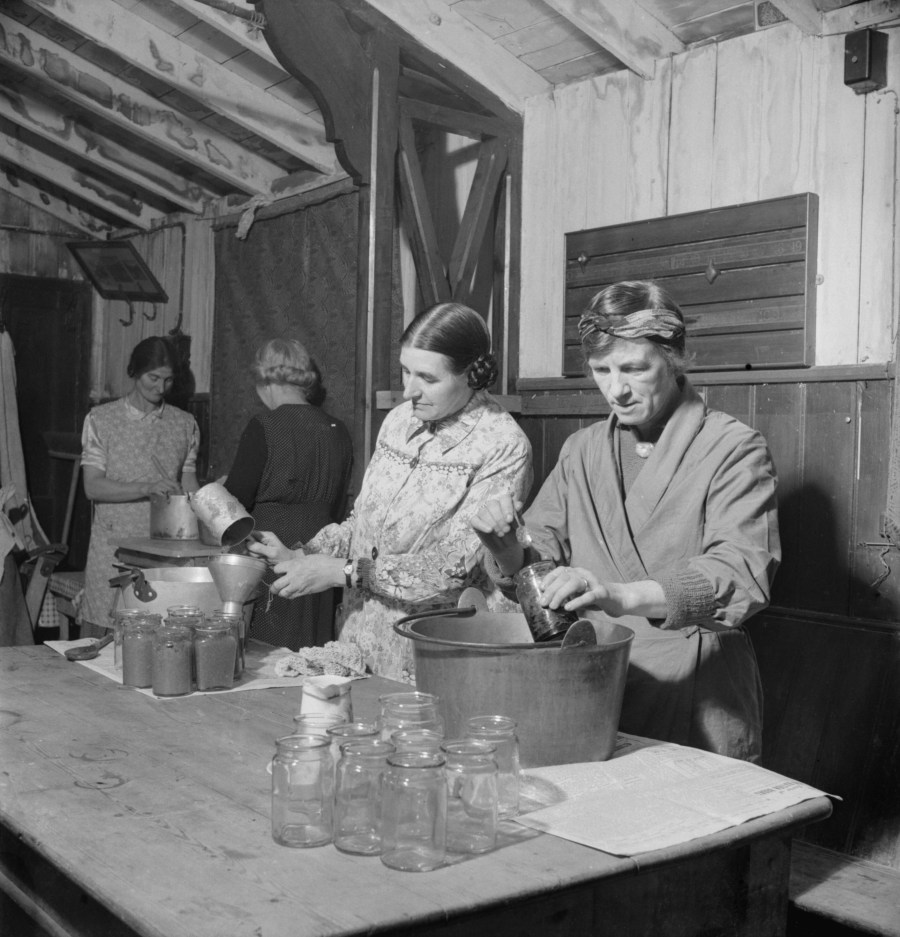
Originally the W.I. was established to teach and encourage rural women to grow and preserve food to help feed the nation during the war years…. Women got together to share their skills – something that is still a very important part of the organisation today….

img_3851
Meiford W.I. making jam as part of the Ministry of Food fruit preserving scheme, in 1941 – National Library of Wales – Public domain

It was during the 1920s that many W.I.s formed choirs…. An amateur musician from Shropshire, W.H.Leslie, acted as an advisor to the formed music committee…. He then asked his friend Sir Walford Davies, who was a composer, conductor, musician and advisor to the BBC, to write an arrangement of ‘Jerusalem’ especially for the W.I. choirs…. The song was deemed as an appropriate choice to encourage women to actively take a role in public life….because of its association with the fight for women’s rights and the Suffrage movement….

img_3850
W.I. stall, Cirencester, 1933 – no known copyright restrictions
img_3852
Women’s Institute members bottle jam in Rowney Green, Worcestershire, 1943 – From the collections of the Imperial War Museums

On this day in history….15th September 1960

On this day in history : 15th September 1960 – Traffic wardens take to the streets of London for the very first time….

Forty wardens, dressed in their official looking uniforms and with the power to issue fines of £2 to illegally parked motorists, set off to hunt for those flouting the law….

img_3847
Image via Pinterest

The very first ticket was issued to a Dr. Thomas Creighton, who happened to be attending an emergency call at a West End hotel for a heart attack victim…. Public outcry meant the doctor was spared the fine – but on this first day over-zealous wardens gave tickets to ambulances, hearses and apparently even rabbit hutches!

Nowadays, in the Borough of Westminster, where those very first forty wardens pounded the streets, two hundred attendants now patrol….

img_3848
Image via Public Domain Pictures

On this day in history….14th September 1951

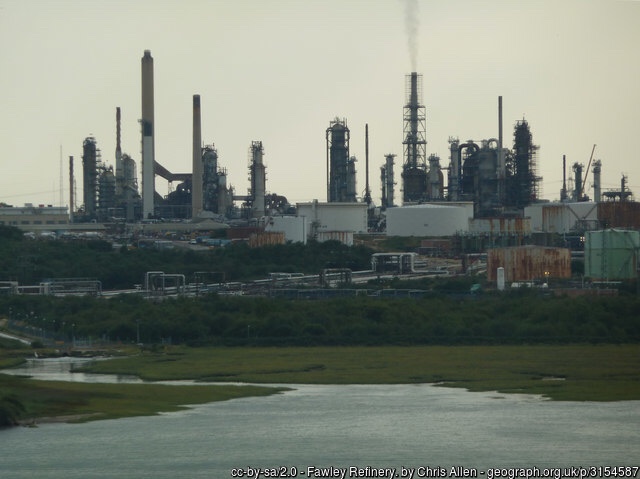
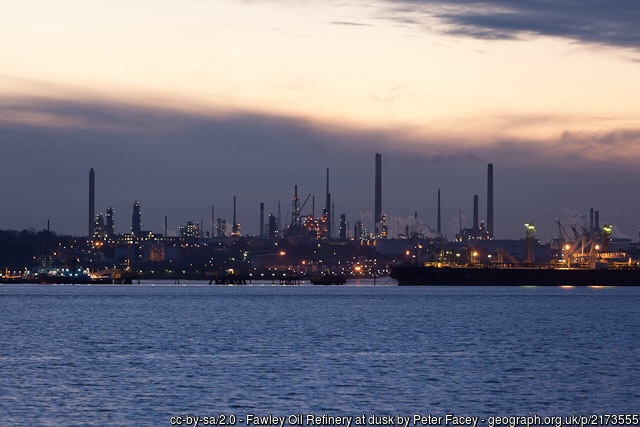
On this day in history : 14th September 1951 – Fawley Oil Refinery, on Southampton Water, is opened by Prime Minister Clement Attlee….img_3846

Fawley was then the largest oil refinery in Europe, capable of processing 5.5 million gallons of oil per day…. It could produce 1.5 million gallons of petrol – a third of the Country’s daily requirement at that time….img_3845

The opening ceremony was a momentous occasion, with a lavish luncheon held afterwards for 5,000 guests….the largest lunch party ever to have been held in Britain up until that time….img_3844

On this day in history….13th September 1902

On this day in history : 13th September 1902 – Burglar Harry Jackson is the first man to be convicted in Britain using fingerprint evidence….

img_3842

The 41-year-old labourer had broken into a property in Denmark Hill, London and had stolen a set of billiard balls…. The investigating officer noticed a set of fingerprints on the newly painted windowsill – and had called in the newly-formed Metropolitan Police Fingerprint Bureau…. On searching their files they came across Jackson’s prints – as he had recently served a prison term for another burglary…. He was arrested, tried at the Old Bailey and sentenced to 7 years imprisonment….

Whilst fingerprinting became recognised as a valuable forensic tool in the identification of criminals, there were those in the beginning who disapproved…. A letter to The Times, signed by ‘A Disgusted Magistrate’ said “Scotland Yard, once known as the World’s finest police organisation, will be the laughing stock of Europe if it insists on trying to trace criminals by odd ridges on their skins”….

Fingerprint livescan.Birmingham central custody suite.
Fingerprint livescan. Birmingham central custody suite – West Midlands Police – CC BY SA 2.0

On this day in history….12th September 1878

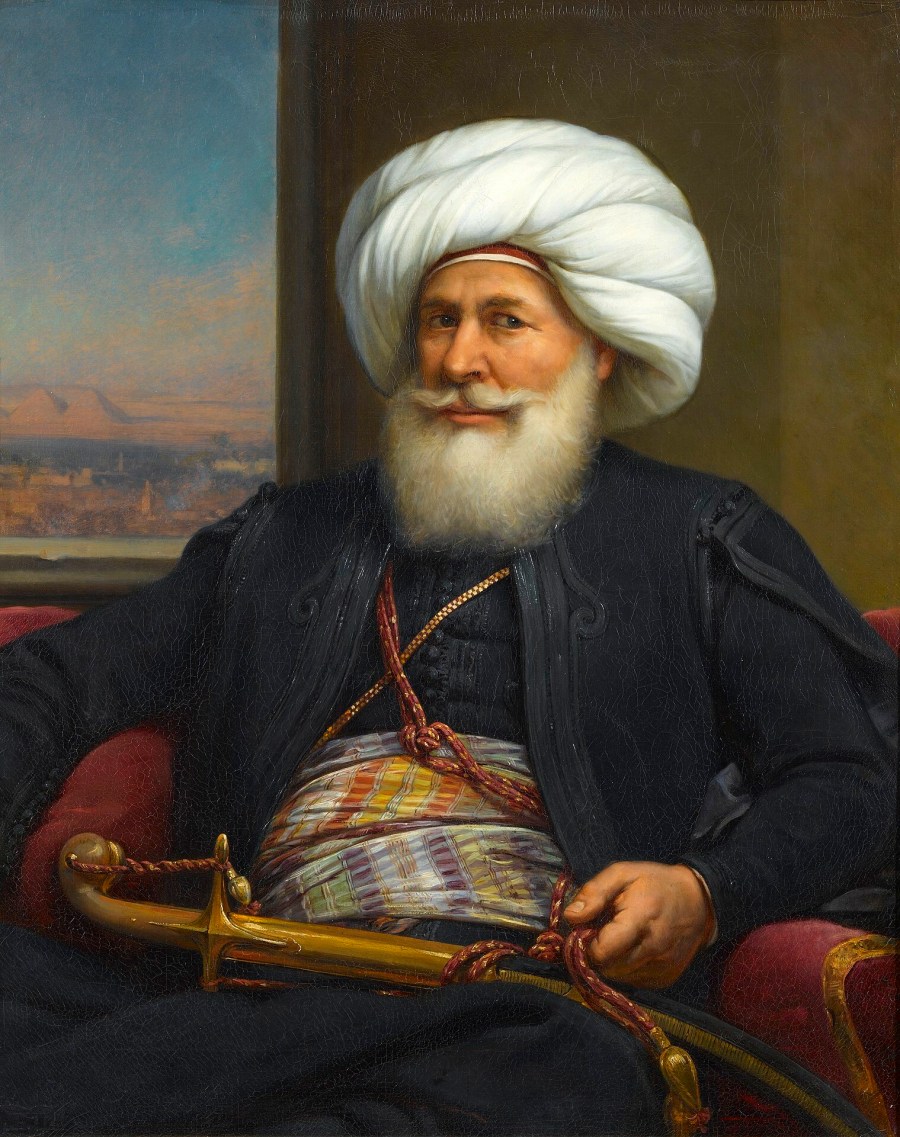
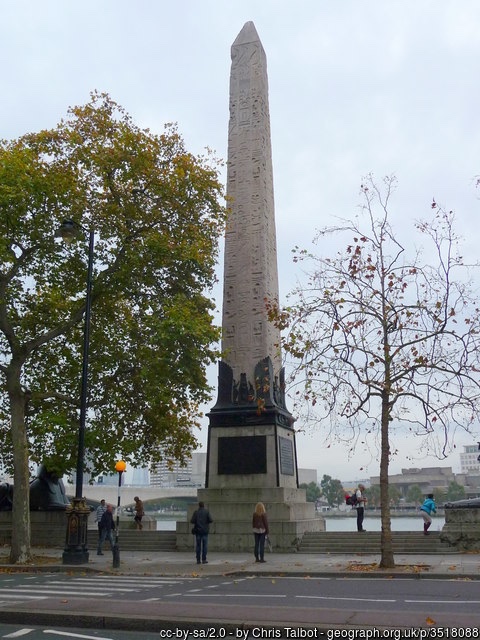
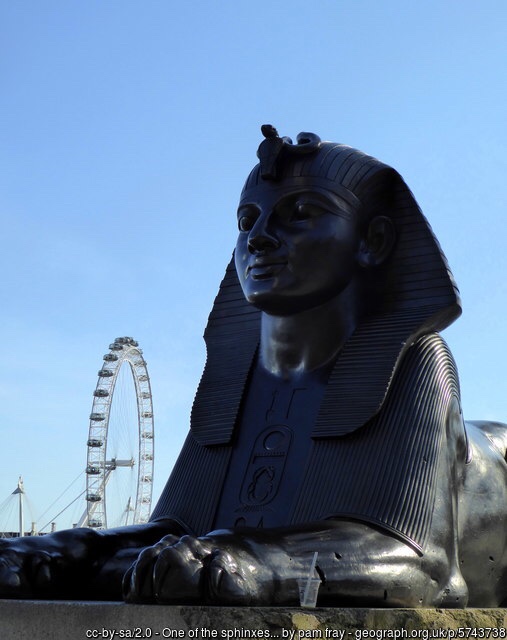
On this day in history : 12th September 1878 – Cleopatra’s Needle is erected in the City of Westminster, London…. It had originally been presented to the UK by the ruler of Egypt and Sudan in 1819….

img_3837
An 1840 portrait of Muhammad Ali Pasha, leader of Egypt and Sudan – by Auguste Couder – Public domain

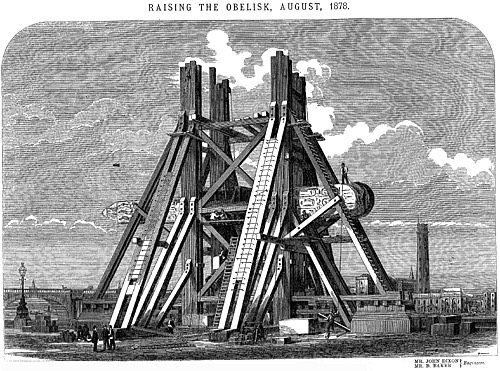
The red granite obelisk, which is over 2,000 years old, had been given to Britain to commemorate the victories of Lord Nelson (Battle of the Nile, 1798) and Sir Ralph Abercrombie (Battle of Alexandra, 1801) – but it had taken until 1877 to arrange for its transportation to Britain…. Standing at 69 feet high and weighing 224 tons this was no easy task; a special floating ‘pontoon’ had to be designed so it could be towed to London….

img_3839
Encasing Cleopatra’s Needle for shipment to London – Flickr’s The Commons
img_3838
London’s Needle being erected – Public domain

Cleopatra’s Needle is one of three similarly named obelisks; its counterparts can be found in Paris and New York…. London’s Needle is flanked by two bronze reproduction sphinxes, designed by English architect George John Villiamy…. Concealed in the pedestal, on which the obelisk stands, is a time capsule….contained within are items such as:- a portrait of Queen Victoria, a map of London, copies of newspapers, a set of British coins, a box of cigars, children’s toys, a box of hairpins and a dozen photographs of the most attractive women of the day….

img_3840img_3841