On this day in history….29th June 1905

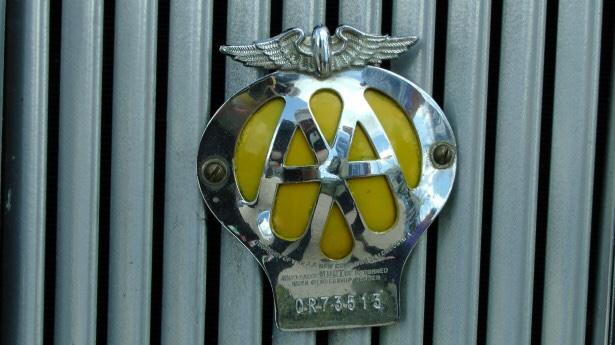
On this day in history : 29th June 1905 – A group of disgruntled motorists set up The Automobile Association to warn drivers of speed traps after continuing police harassment….img_3467
In 1903 a speed limit of 20mph had been brought in – and the police set about enforcing this with much vigour….it could be argued to the point of persecution…. Three officers, two of whom were in plain clothes, would position themselves a furlong apart along a section of road…. They would usually hide in bushes but were in sight of one another…. The first officer would use a white handkerchief to signal an approaching car; the second would use a stopwatch to time the motorist over a furlong…. The third uniformed officer would then halt the motorist if an offence had been committed….which was just 2mph over the speed limited…. Fines were harsh, usually £5, which was an average month’s wage at the time – the alternative was four weeks in prison…. The teams of police officers earned the name ‘Hedge-hogs’ among early drivers….

London motor dealer Charles Jarrett decided enough was enough…. He began to organise patrols of cyclists, who were good at judging speed…. They would carry a red flag and patrolling the London to Brighton road would warn speeding motorists of police traps that lay ahead….

OLYMPUS DIGITAL CAMERA
A former AA BSA patrol bike from 1951 – Public domain

In June 1905 Jarrett, along with fellow motorists Walter Gibbons, Ludwig Schlentheim and Alfred Harris formed ‘The Motorists’ Mutual Asscociation’ – to patrol the main roads near to London…. Scouts would seek out traps and flag down any motorists seen to be doing more than 20mph…. A motorcyclist and three pedal cyclists were engaged to cover the Brighton road as far as Crawley – and another group patrolled from Crawley to Purley….

img_3465
Photo credit : Spudgun67 on Wikimedia Commons

Many of these first scouts were Fleet Street news boys, using their own bicycles…. As at first the patrols only operated at the weekends the young men, all being physically fit due to their jobs of delivering newspapers, viewed the venture as a bit of weekend fun….

A month later the Association changed its name to The Automobile Association….and it continued to grow…. By 1906 the AA had erected thousands of roadside signs warning of possible hazards….and by 1926 it had installed some 6,500 direction signs and 15,000 village name signs…. It did this until the early 1930s, when local authorities took over the responsibility….

img_3464
AA distance post

The first AA handbook listing all nationwide agents and places to get vehicles repaired was issued in 1908….

On this day in history….28th June 1830

On this day in history : 28th June 1830 – Constable Joseph Grantham is the first policeman in Britain to be murdered – when he goes to the aid of a woman involved in a fight between two drunken men….

The Metropolitan Police Force had launched on the 29th of September 1829; Constable No.169 Joseph Grantham had joined S-Division on the 10th of February 1830…. On the night of Monday 28th of June he was called to Skinner Street, Smiths-Place in Somers Town to deal with a domestic disturbance…. 31-year-old Grantham had become the father of twins that very day….

img_3460
Image credit : Leonard Bentley via Flickr

On arriving at the address the constable found two drunken Irishmen quarrelling….one of them had been beating his wife…. Grantham intervened and threatened to handcuff one of the men, a Michael Duggan – who did not take lightly to this threat…. In the scuffle that followed PC Grantham was knocked to the ground….and Duggan delivered a swift kick which struck Grantham’s right temple….

The constable was carried to a surgeon’s shop in Judd Street – but pronounced dead on arrival…. He was then moved to the Boot Public House in Cromer Street to await a coroner’s inquest…. Duggan was arrested and taken to a nearby police station – it transpired his real name was actually Michael Galvin and he had just completed an apprenticeship to a bricklayer….

He appeared before Magistrate Mr Griffith at Marylebone Police Station and was committed for trial on the charge of murder…. However, a post-mortem examination on Grantham concluded death had occurred through an apoplexy brought on by the ‘exertion and excitement of the moment’…. Galvin’s charge was changed to the lesser charge of assault….

img_3458
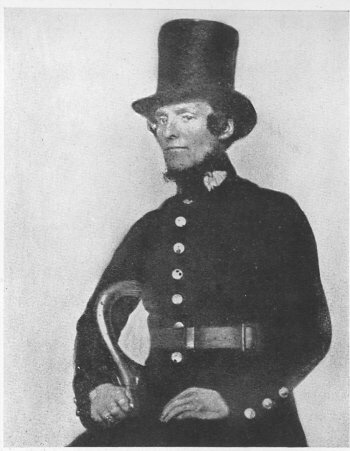
1850s ‘Peeler’ – Public domain

On Saturday the 10th of July he was brought before the Middlesex Sessions charged with assaulting two police officers, Constable Grantham and Constable Bennett…. The Jury returned a guilty verdict on both counts…. Sentence was passed; six months imprisonment for the assault on Grantham and a further six weeks for that on Bennett…. You could say he got away with murder….

img_3457

On this day in history….27th June 1899

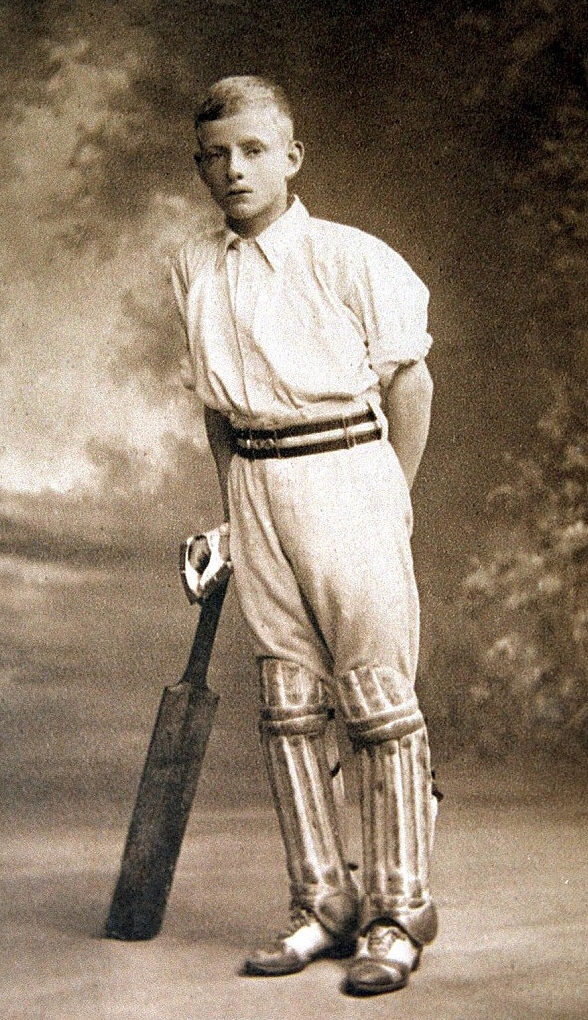
On this day in history : 27th June 1899 – At the age of thirteen A.E.J. Collins achieves the highest-ever (of the time) recorded cricket score…. Over four afternoons he scores 628 not out….

img_3437
Collins – 1899 Postcard – Public domain

Arthur Edward Jeune Collins was born in India but educated in Britain…. In September 1897 he joined Clarke’s House at Clifton College, which had an excellent reputation for sport…. He played half-back for the rugby XV and for the cricket XI team…. In 1901 he won a bronze medal for boxing at a public schools tournament in Aldershot….

img_3438
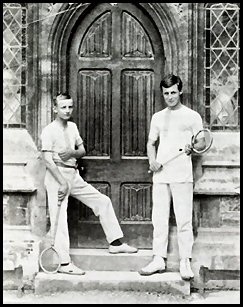
Collins, on the left, with R.P. Keigwin at Clifton College, school racquets team, 1902 – Public domain

But it was in 1899 that he was to score the then highest ever recorded cricket score…. It was a junior school house match between Clarke’s House and North Town House – an annual event….

Matches were always played to the end; there was not a time frame, it took as long as it took…. Play commenced on Thursday the 22nd of June….Collins won the toss for Clarke’s House and chose to bat first…. He hit his first stroke at around 3.30pm and by close of play at 6pm had scored 200 runs….

Play resumed on the Friday and by 5.30pm Collins had broken the existing world record of 485 runs…. By the end of the day he had scored 509….and there was now considerable interest from the public and media…. At Monday lunchtime play continued once more and Collins reached 598 runs…. On Tuesday the 27th the school extended the hours of play to try and finish the game….and Collins eventually ended on 628 runs…. The match was finally concluded on Wednesday the 28th of June with a Clarke House win by an innings and 688 runs….

img_3439
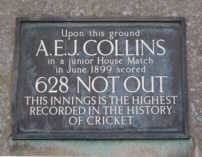
Plaque at Clifton College, installed 1962 – Image: Brookie CC BY-SA 3.0

Collins held the word record until January 2016 – when it was beaten by Pranav Dhanawade, a fifteen year old Indian boy who scored 1,009 not out from 327 balls….

As for Collins, despite his achievement he was never to play First Class Cricket….he chose an army career instead…. He married Ethel Slater in 1914 and was sent to France at the outbreak of World War I…. Collins was killed in action on the 11th of November 1914 at the First Battle of Ypres, Belgium….

On this day in history….26th June 1817

On this day in history : 26th June 1817 – The birth in West Yorkshire of painter and poet Branwell Brontë – only son of the Brontë family and brother to writers Charlotte, Emily and Anne….

img_3430
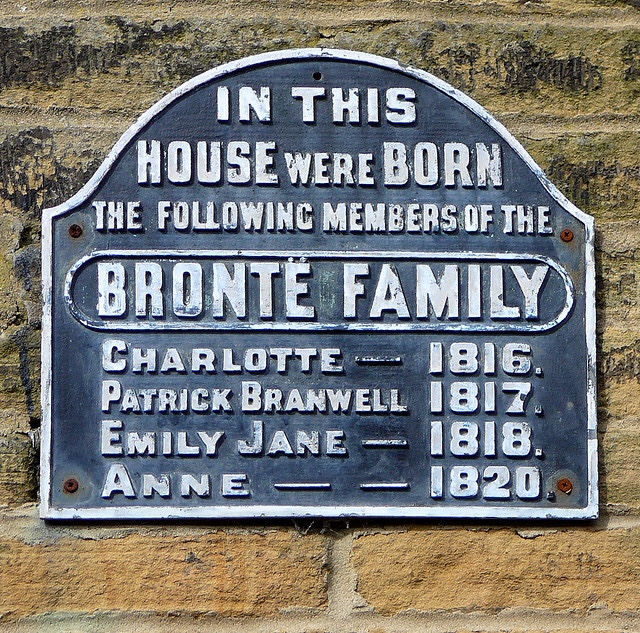
Bronte Birthplace Plaque – Tim Green via Flickr

Born in Thornton, near to Bradford, Patrick Branwell Brontë – known as Branwell – was the fourth of six children…. He was just 4-years-old when his mother died in 1821 – and his aunt Elizabeth Branwell moved in to look after the children…. He was then to be deeply affected when his two eldest sisters, Maria and Elizabeth, were to die from TB shortly before his eighth birthday…. The four remaining Brontë children were to become very close….

Branwell, always on the small side for his age and with flaming red hair, was quick-witted and a bit of a show-off in public…. His father decided to educate him at home and taught him in the classics – whilst his sisters were sent away to boarding school….

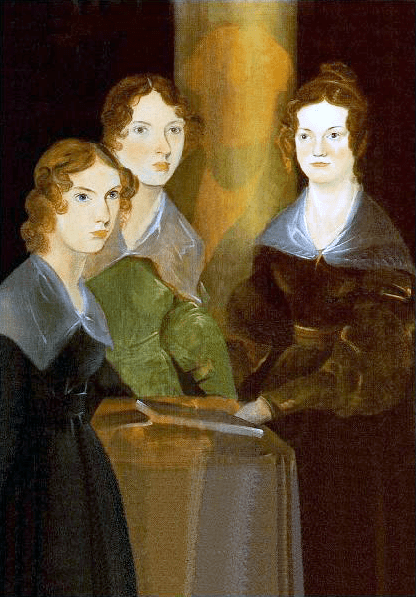
In 1829 the children’s father hired the services of John Bradley, a local artist of some repute, to teach his children to draw…. It was possibly then that Branwell began to aspire to become a portrait painter…. In 1834 he painted a portrait of his sisters and himself – only to paint out his own image as he was dissatisfied with it…. The portrait now hangs in the National Portrait Gallery and is recognised as one of the best known images of the sisters….

img_3427
Branwell Bronte – Public domain

Branwell rented a studio in Bradford in 1838 and set himself up as a professional portrait painter…. Only he made a lot of friends in the artistic community and spent too much time in the pub and failed to make a living as an artist! In 1840 he took employment as tutor to the children of a wealthy family – but was sacked within a year…. Then for the next six months he worked as a clerk but again lost his job, over a discrepancy with the accounts….

img_3428
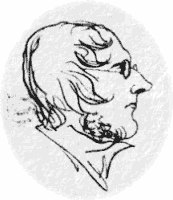
Branwell Bronte, self portrait, 1840 – Public domain

At the beginning of 1843 his sister Anne managed to secure him a job as a tutor – but once again, in 1845, he was sacked – seemingly after having an affair with his employer’s wife…. Returning to the family home in disgrace he fell into self-pity and soon became an alcoholic and addicted to opium…. Branwell died on the 24th of September 1848, possibly from TB….

img_3429
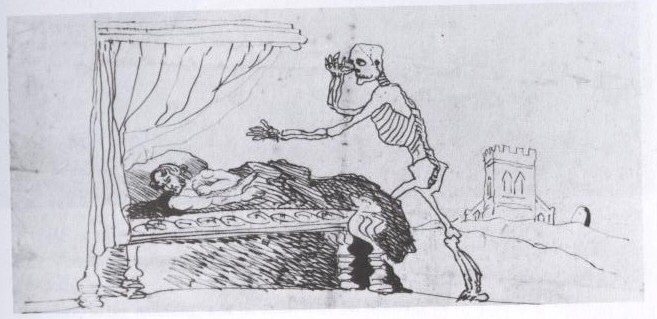
Self caricature of Branwell in bed waiting to die, 1847 – Patrick Branwell Bronte – Public domain

ë

On this day in history….25th June 1912

On this day in history : 25th June 1912 – Prime Minister Herbert Asquith comes under attack in the Commons over the force-feeding of suffragettes….George Lansbury is suspended from Parliament for his outburst….

George Lansbury was Labour MP for Bow and Bromley; he was a peace activist, opposed to the Boer War and World War I…. He was also a staunch supporter of Women’s Suffrage….

img_3426
The Right Honourable George Lansbury MP – Bassano Limited – Public domain

The Women’s Social and Political Union (WSPU) had engaged in an active campaign and many had been imprisoned for acts such as smashing windows and refusing to pay fines…. Soon Holloway was full and women were sent further afield, to prisons such as Aylesbury and Birmingham and overcrowding meant conditions were even poorer than usual…. Denied the status of political prisoners and so not receiving the certain privileges that such were entitled to, many of the women resorted to going on hunger-strike in protest…. The authorities responded with forcible feeding….

Force-feeding was a brutal procedure…. The woman was either tied to a chair, which was then tipped back, or she was tied down on to a bed…. A rubber tube was then forced up her nose or down her throat, into the stomach…. If administered via the mouth, a ‘gag’ was used, occasionally made of wood but more often steel…. The steel option was particularly painful as it was pushed into the mouth to force open the teeth and then a screw was turned to open the jaws wide…. Sometimes the rubber tube would be accidentally forced into the windpipe, causing food to enter the lungs, thus endangering life…. Which ever method was used, damage to the nose or throat was pretty much inevitable…. Some women had to endure being force-fed more than two hundred times….

suff 15
Force feeding – A suffragette on hunger strike being forcibly fed with a nasal tube. Source: The Suffragette by Sylvia Pankhurst circa 1911 https://common.wikimedia.org/wiki/File%3AForcefeeding.jpg

On the 25th of June 1912 George Lansbury well and truly lost his temper in the House of Commons…. Prime Minister Asquith, in replying to an appeal to release the suffragettes, had stated if the women gave the undertaking not to repeat their offences – meaning give up the cause – then they would be released…. Lansbury shouted “You know the women cannot give such an undertaking! It is ridiculous to ask them to give an undertaking!”….

Shouts of “Order! Order!” Rang out around the Commons…. But Lansbury continued with his tirade; white with fury he advanced to the front bench – shaking his fist in the face of Asquith and other ministers…. With his face just inches from that of the Prime Minister’s he screamed “Why, you’re beneath contempt. You call yourself a gentleman, and you forcibly feed and murder women in this fashion. You ought to be driven out of office”…. He carried on ranting despite MPs shouting their disapproval and the Speaker ordering him to leave…. Lansbury shouted at Asquith “You will go down to history as a man who tortured innocent women”….

Eventually the Speaker regained control, telling Lansbury if he didn’t leave of his own accord then he would be forcibly removed…. His fellow Labour colleagues persuaded him to leave….he was temporarily suspended from Parliament….

Lansbury got little support from other Labour MPs in his fight for Women’s Suffrage – he dismissed theses colleagues as “a weak, flabby lot”…. Later in the same year he resigned his post to fight a by-election in Bow and Bromley for Women’s Suffrage…. He lost to his Conservative opponent – who’s campaign slogan was ‘No Petticoat Government’….

In 1913 Lansbury addressed a WSPU rally at the Albert Hall ~ “Let them burn and destroy property and do anything they will, and for every leader that is taken away, let a dozen step forward in their place”….

suff 9
British suffragette with a poster, giving out newspapers Ch. Chusseau-Flaviens https://flickr.com/photos/george_eastman_house/2678367136/in/set-72157606224254056/

Charged and convicted with incitement Lansbury received a three month prison sentence….he immediately went on hunger-strike….