On this day in history….27th August 1995

On this day in history : 27th August 1995 – The death of cartoonist Giles – famous for his cartoons in British newspaper The Daily Express and for the annuals found in so many of the nation’s Christmas stockings each year….

Fair use

Ronald ‘Carl’ Giles was born in Islington, London on the 29th of September 1916…. His friends thought he looked like the actor Boris Karloff and so this earned him the nickname ‘Karlo’ which later became shortened to ‘Carl’….

Giles was the son of Albert Giles, a tobacconist and his mother was the daughter of a Norfolk farmer – he spent most of his childhood summer holidays on the farm…. After leaving school at 14, with no formal art training, he went on to work as an office boy for Superads – an advertising agency…. He was to progress up the ladder to become a junior animator of cartoons….

From 1935 he was to work for Alexander Korda, who was one of the main animators for the first full length British colour cartoon film with sound – The Fox Hunt…. He then went on to join Roland Davies in Ipswich, who was setting up an animation studio….

After the death of his brother in 1937 Giles returned to London and started working for the left wing weekly publication Reynolds News, where he produced, amongst others, the cartoon strip Young Ernie…. He was to come to the notice of John Gordon, editor of the Sunday Express, who in 1943 offered Giles a job on the Daily Express and Sunday Express…. At a temptingly much higher salary it was an offer Giles could not refuse – and so he left Reynolds News to work for the Express Group – his first publication appearing in the Sunday Express on the 3rd of October 1943…. Giles was later to say that he felt some guilt – as his political allegiances lay more with the views of Reynolds News….he did not like the Express’s politics…. However, the money was better than good….by 1955 he was earning the equivalent of around £200K a year in today’s terms, for producing three cartoons a week….

Giles had been declared unfit for war service as he was deaf in one ear and blind in one eye following a motorcycle accident…. So instead during World War 2 he made animated short films for the Ministry of Information…. He also served for a time as a war correspondent to the Coldstream Guards, who liberated Bergen-Belsen…. He was to interview Josef Kramer, the camp commandant, who turned out to be a fan of Giles’s…. Kramer was later hanged for his war crimes….
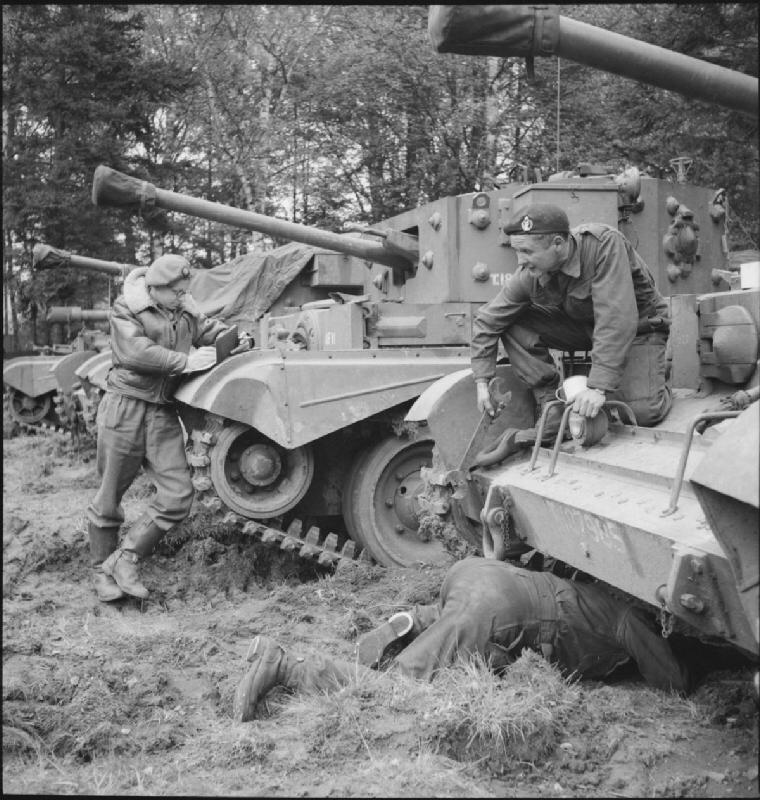
Giles sketches whilst leaning on the front of a tank, whilst his comrades work on the vehicles – From the collections of the Imperial War Museums

In 1942 he married his first cousin Sylvia Joan Clarke…. They were to be married for over fifty years but had no children…. They made their home at Witnesham, near to Ipswich, Suffolk – and here they spent the rest of their lives….

Among Giles’s many thousands of fans were members of the royal family; a request often came from the Palace for originals of his work…. In 1959 he was awarded with an OBE….

The characters we usually associate with his work include the matriarch ‘Grandma’ and ‘Chalkie’, the school teacher – who was modelled on one of his own former schoolmasters…. These characters and others of the extended Giles family first appeared as a published cartoon on the 5th of August 1945…. Many of his cartoons made reference to, or even quoted the headlines of the current news stories of the day….

The first Giles Annual appeared in 1946 and the series still runs today…. Giles left the Daily Express in 1989 but continued at the Sunday Express until 1991…. In the last decade of his life he was plagued by ill health…. His sight loss was increasing and he was becoming more and more deaf….In 1990, due to poor circulation, he had both of his legs amputated…. Then on Christmas Day 1994 his wife died…. Giles was never to get over her death – eight months later, on the 27th of August 1995, he passed away in Ipswich Hospital…. He was aged 78….
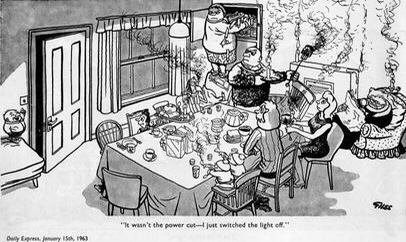
The Giles Family ‘Powercut’ – published January 15th 1963 – Fair use

On this day in history….5th August 1860

On this day in history : 5th August 1860 – The birth of English artist Louis Wain – who is known to us mainly for his drawings of comical anthropomorphic cats….

Marketing – Image credit : Aussie mobs via Flickr

Wain was born in Clerkenwell, London, to a French mother, Felicia Marie and an English father, William Matthew Wain, a textile merchant…. Wain had a troubled childhood; having been born with a cleft lip on the advice of doctors he did not start school until he was ten years old…. Then, once he had started, he found it hard to settle and would often play truant – and took to wandering around London…. However, despite this he did manage to get into the London School of Art and after finishing his studies stayed on to teach for a while….

When Wain was aged 20 his father died and it fell on his shoulders to support his mother and five sisters…. He became a freelance artist, specialising in the countryside and animals…. He carried out work for ‘The Illustrated Sporting and Dramatic News’ and then in 1886 began working for ‘The Illustrated London News’….

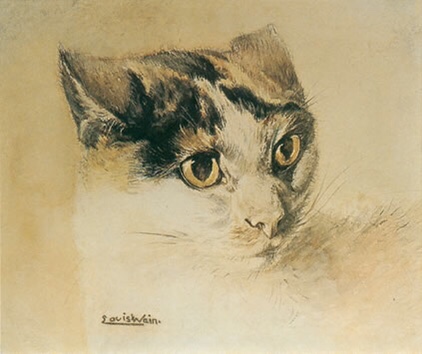
Early work by Louis Wain – Public domain

At the age of 23 Wain married Emily Richardson, governess to his sisters and ten years older than him…. Shortly after Emily became ill with breast cancer – and it was during this time that Peter came into their lives…. Peter was a tiny black and white scrap of a kitten that they rescued – this was at a time when cats were seldom kept as pets….but the kitten brought so much comfort to Emily…. To amuse her and raise her spirits Wain would draw sketches of Peter….delighted Emily encouraged him to publish them…. Emily died in 1887, so did not live long enough to see him do this…. However, in the Autumn of 1886, Wain had been commissioned to illustrate ‘Madame Tabby’s Establishment’ by Caroline Hughes, under the pen name of Kari…. Emily would have loved seeing Peter depicted in the book….

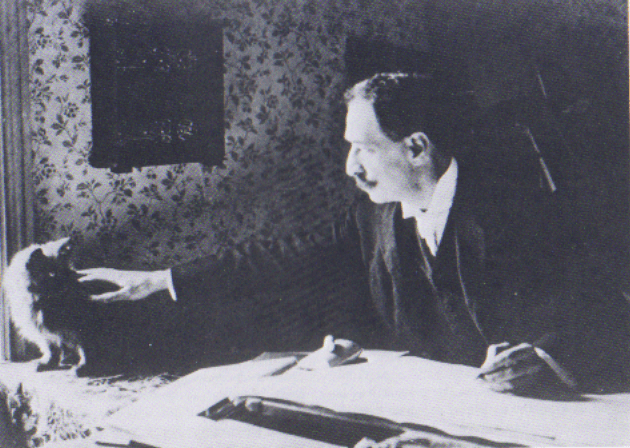
Louis Wain 1890 – Public domain

Wain’s first anthropomorphised cats picture that was published appeared in a Christmas edition of ‘The Illustrated London News’ and was entitled ‘A Kittens Christmas Party’….

A Kittens Christmas Party from the Illustrated London News

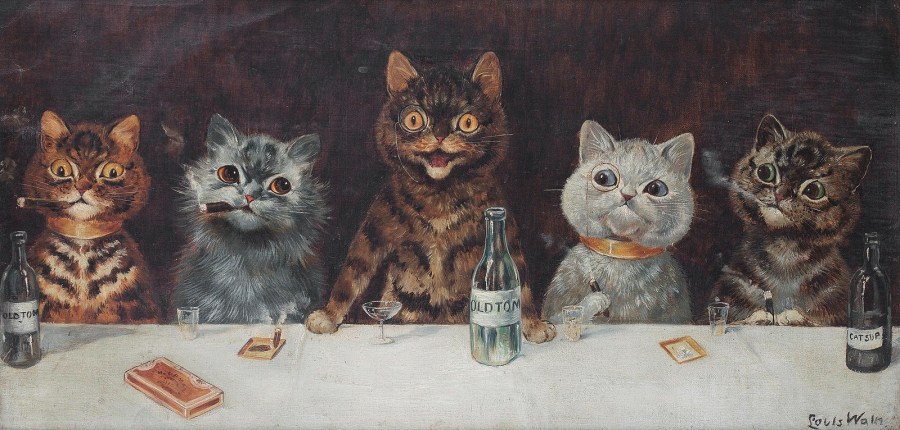
At this stage his cats remained on all fours and had yet to gain the humanisation of his later drawings…. As time progressed his cats began to walk upright and have more human facial expressions – and indulged in human pursuits: playing golf, drinking tea, gong to the opera, smoking…. Humanising animals was a popular trait during Victorian times and continued into the Edwardian era…. For the following 30 years Wain was a prolific artist, producing over 600 illustrations a year…. His work appeared in journals and magazines, he illustrated over 100 children’s books and between 1901-1915 even had an annual of his own….

Despite his success Wain experienced continuous financial difficulties…. He was still supporting his mother and sisters, none of whom had married – and his youngest sister had been declared as mentally insane…. Not being a businessman Wain was easily persuaded to invest into non-starter money making schemes – he was easily taken in…. He would also invariably sell his work without retaining copyright….

Later in his life Wain began to display symptoms of mental illness himself…. His last job was producing a cartoon strip for the ‘New York Journal-American’ between 1907-1910…. By the beginning of WW1 his work had begun to become less popular and by the 1920s he found himself in poverty…. His mental health continued to deteriorate and sometimes his behaviour could be erratic or even violent…. In 1924 he was committed to the pauper ward of London’s Springfield Mental Hospital…. He still continued to draw cats but they became more and more abstract…. Some think this was on account of schizophrenia, or maybe dementia, or even Asperger’s Syndrome…. Little was understood about mental illness back then, the tendency being to commit to an asylum…. Of course, there is also always the possibility that Wain was simply experimenting with a new style of psychedelic work….

Wain spent the last 15 years of his life in institutions…. At first it was not common knowledge what had happened to him and then in 1925 it became widely publicised…. An appeal was launched to raise funds to help him – with personal interventions from Prime Minister Ramsay MacDonald and author H.G.Wells…. £2,300 was raised and Wain was moved to Bethlem Royal Hospital, which provided a much better quality of care…. Then in 1930 he was moved again, to Napsbury Hospital, St. Albans, Hertfordshire – which had gardens he could enjoy – and had a large family of cats….

Wain died on the 4th of July 1939 and was buried with his father at St. Mary’s Roman Catholic Cemetery, Kensall Green, London….

H.G.Wells once said of him…. “He has made the cat his own…. He invented a cat style, a cat society, a whole cat world…. English cats that do not look and live like Louis Wain cats are ashamed of themselves”….

Louis Wain 1903 – Public domain
Public domain
Public domain

On this day in history….11th June 1776

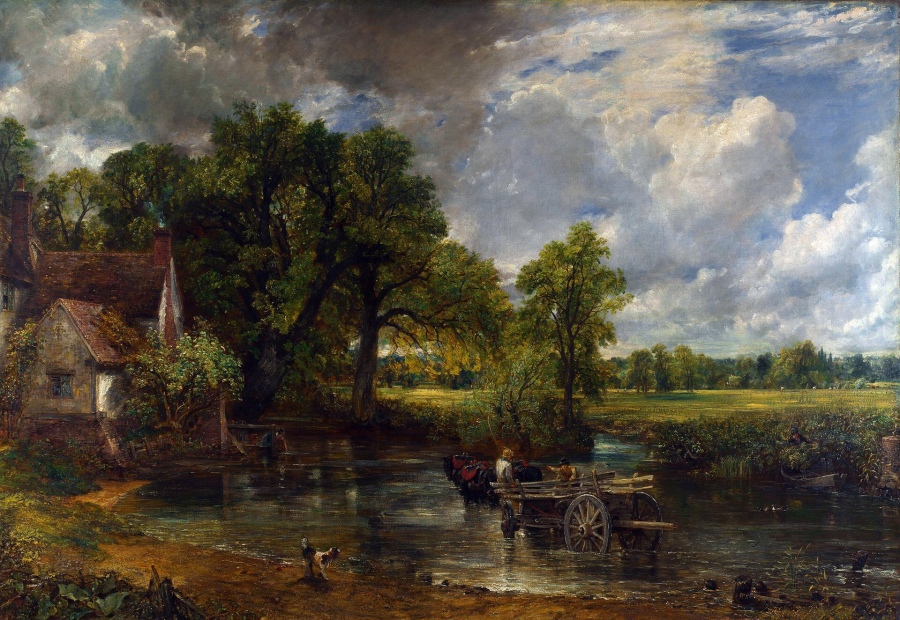
On this day in history : 11th June 1776 – The birth of English landscape artist John Constable – who’s most famous paintings include ‘The Hay Wain’, ‘Wivenhoe Park’ and ‘Dedham Vale’….

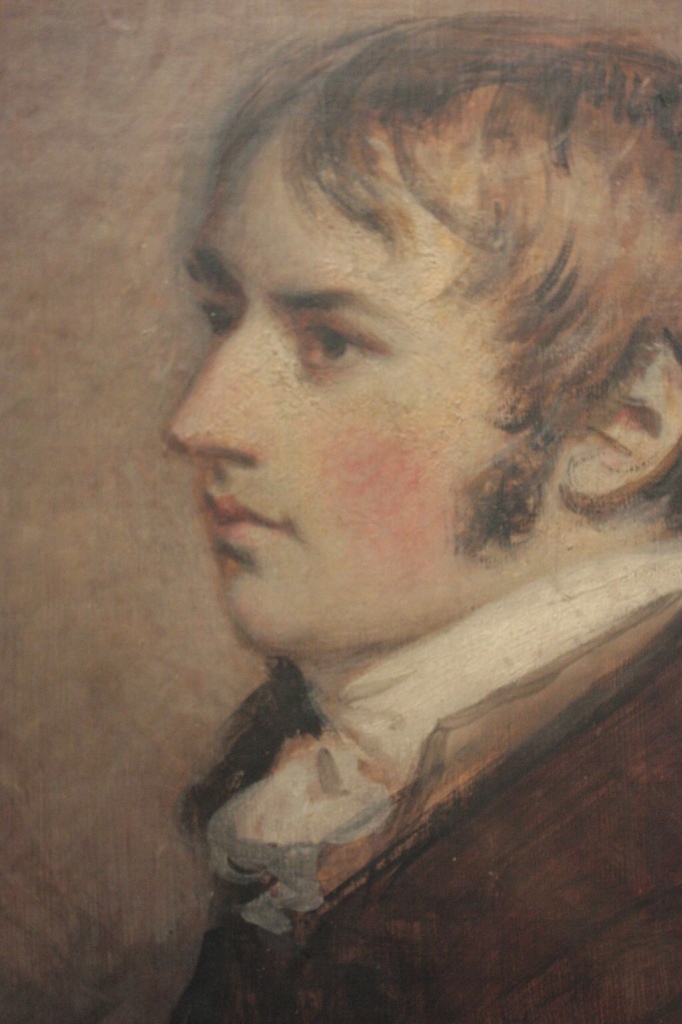
John Constable by Daniel Gardner, 1796 – Image credit : Stephencdickson, own work – CC BY-SA 4.0

Constable was born in the village of East Bergholt, on the River Stour in Suffolk…. His father, Golding Constable, was a wealthy corn merchant and mill owner, with a modest-sized ship that he used to transport corn to London…. John Constable was the fourth child and second eldest son – and was expected to take over the family business as his older brother had a learning disability…. After finishing his schooling, firstly at boarding school in Lavenham and then day school in Dedham, Constable joined the business….

From an early age Constable had a gift for sketching and showed a keen interest in nature and the countryside around him…. His natural talent was encouraged under the guidance of local amateur artist John Dunthorne…. He was further inspired when he met another amateur artist, Sir George Beaumont, who was also a collector of paintings by the Old Masters….

Constable persuaded his father to allow him to study at the Royal Academy Schools and he enrolled in 1799…. His work was first exhibited at the Royal Academy in 1802…. With his career now on a different path it was Constable’s younger brother who was to take over the family business….

In 1816, at the age of 40, Constable married Maria Bicknell…. The marriage was very much against the wishes of her father as Maria was a TB sufferer…. The couple lived in Hampstead as it was thought to be healthier than central London – and they also made frequent trips to Brighton so she could benefit from the sea air…. They were to have seven children….

Maria Bicknell by John Constable, 1816 : Tate Britain – Public domain

When painting Constable was always at his happiest when he was in locations known to him, especially the areas around the villages of Suffolk – East Bergholt, Dedham, Stratford St. Mary and Langham were all favourite haunts…. “I should paint my own places best”…. He also painted in Hampstead, Brighton and Salisbury – where he visited frequently on account of being good friends with the nephew of the Bishop of Salisbury….

Dedham Vale – John Constable : Victoria and Albert Museum – Public domain
Wivenhoe Park – John Constable : National Gallery of Art, Washington – Public domain

Maria died in 1828, after giving birth to their seventh child…. Constable was devastated…. The following year he was finally elected to a full membership of the Royal Academy…. His rival, William Turner, had achieved this honour much earlier in life, whilst in his 20s…. Constable gained little recognition for his work in Britain until after his death – he only sold twenty paintings in his lifetime in his own country…. He fared much better in France where in 1824 ‘The Hay Wain’ won a gold medal at The Salon, Paris…. Constable was to greatly influence the French Romantic artists…. However, he declined to travel to promote his work…. “I would much rather be a poor man in England than a rich man abroad”….

The Hay Wain : National Gallery, London – Public domain

He died on the 31st of March 1837, of what is thought to be heart failure…. He was buried with Maria in Hampstead….

Constable’s tomb – St John-at-Hampstead – Image credit : Stephencdickson CC BY-SA 4.0

On this day in history….25th April 1931

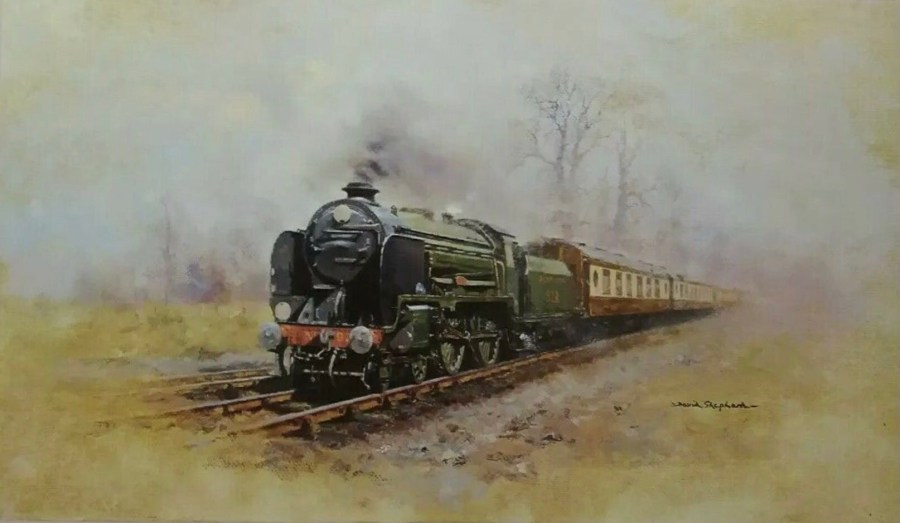
On this day in history : 25th April 1931 – The birth of English artist, author and conservationist David Shepherd – known for his paintings of wildlife, aviation and steam locomotives – and his wildlife foundation….

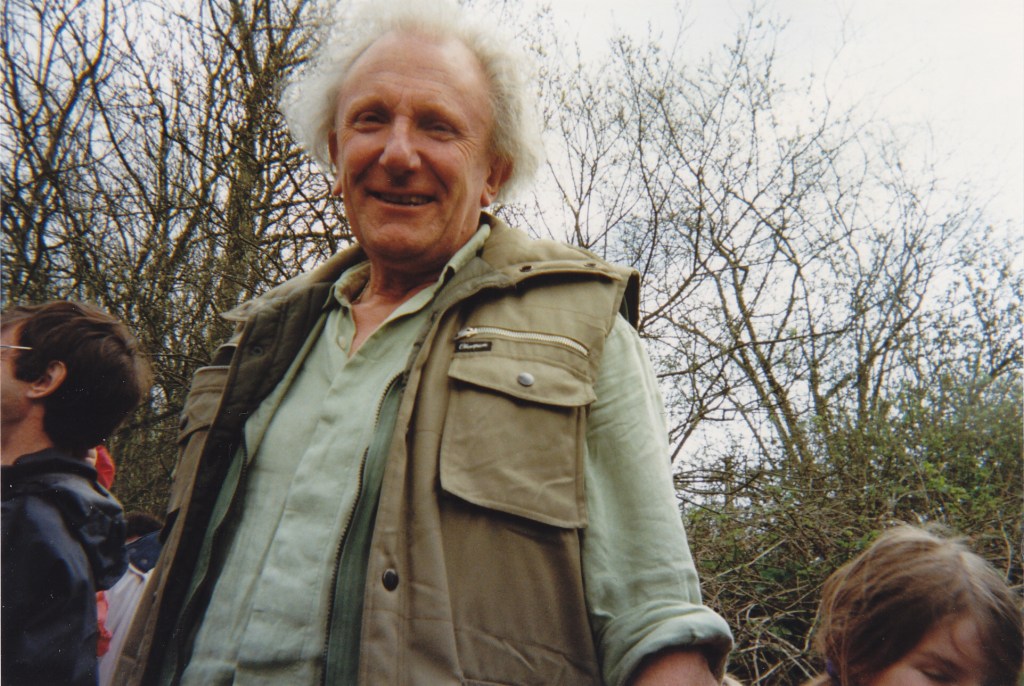
David Shepherd mid 1990s – Image credit : NotFromUtrecht – own work – CC BY-SA 3.0

David was born in Hendon, London and spent much of his childhood in Totteridge, North London before boarding at the Stowe School in Buckinghamshire…. At the age of eight he won a painting competition in the children’s publication ‘Nursery World’….

He left school in 1949 and travelled to Kenya with hopes of realising a career as a game warden – only to be rejected…. On returning to England he was to face rejection once again – this time when he applied to the Slade School of Fine Art – part of the University College of London – he was told that he had ‘no talent whatsoever’! However, not everybody agreed with this opinion – as David was taken under the wing of and taught by artist Robin Goodwin – a member of the Royal Society of Marine Artists and a lecturer at the Slade School….

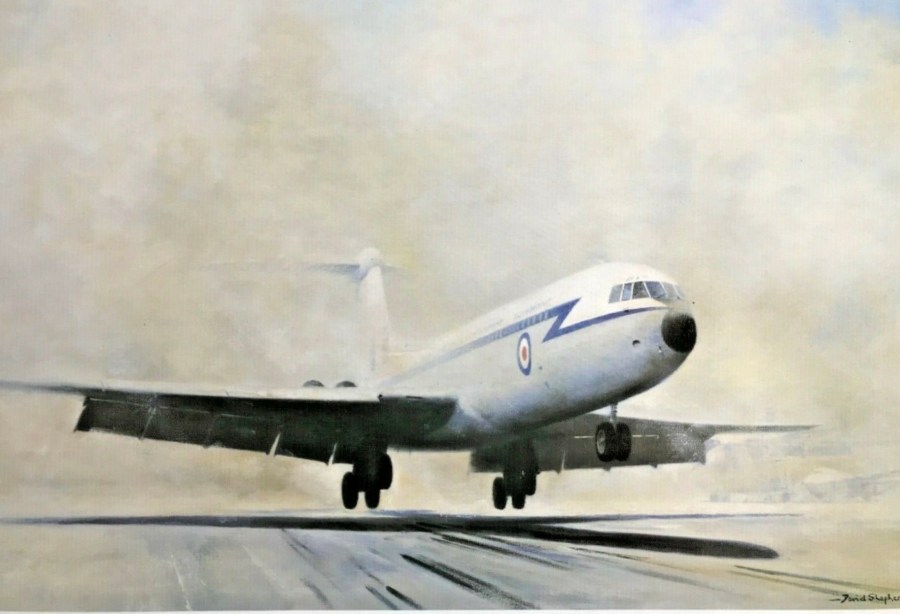
David started his art career as an aviation artist – working for the armed services he was given the chance to travel the world…. It was whilst in Kenya in 1960 that he was commissioned by the RAF to produce his first wildlife painting – a rhinoceros on a runway…. It was to prove to be a turning point in his career as an artist….

Whilst in Tanzania and during an excursion into the African bush David came across a harrowing sight – a waterhole that had become poisoned – some 255 zebra lay dead around it…. The experience inspired him to become involved with conservation – and becoming a some what outspoken campaigner…. He always felt it to be his duty to help those animals endangered by human society – elephants, tigers, rhino and so many more – the creatures that gave him so much success as an artist…. He received an Honoury Degree in Fine Arts from the Pratt Institute, New York, in 1971….

David Shepherd, 2014 – Photo credit : Meg Ghyll via Flickr

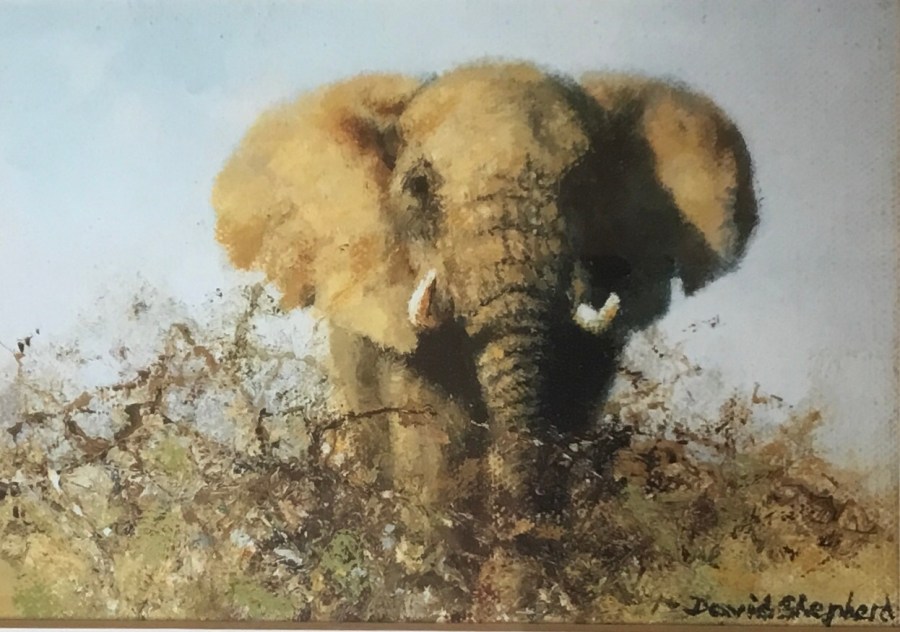
His first major fund raising success was for Indria Gandhi’s ‘Operation Tiger’ in 1973 – when his painting ‘Tiger Fire’ raised £127K – over £1.4 million in today’s terms…. One of his most famous paintings is ‘Tiger in the Sun’ from 1977…. He is also well-known for his paintings of elephants – especially ‘The Ivory is Theirs’ and ‘Wise Old Elephant’…. Over the years his paintings have raised vast amounts for conservation projects…. In 1979 he was awarded with an OBE….

In 1984 David set up ‘The David Shepherd Wildlife Foundation’…. With his own efforts and those of supporters and artists from all around the world the Foundation has raised and donated in grants well in excess of £10 million to wildlife survival projects in Africa and Asia….

In 2011 he launched the campaign ‘Tiger Time’ – to save tigers in the wild, receiving much celebrity support including from Sir Paul McCartney, Joanna Lumley, Stephen Fry and Ricky Gervais…. In 2012 David was awarded the Conservation Award in the Wetnose Animal Aid Awards and in 2016 he received the Animal Hero Lifetime Achievement Award…. He was a Member of Honour of the WWF….

Aside from his work as a conservationist in wildlife he was also a steam enthusiast and owned a collection of steam locomotives…. He did much in the conservation of our steam heritage and was involved in the founding of the East Somerset Railway – and also served as President of the ‘Railway Ramblers’….

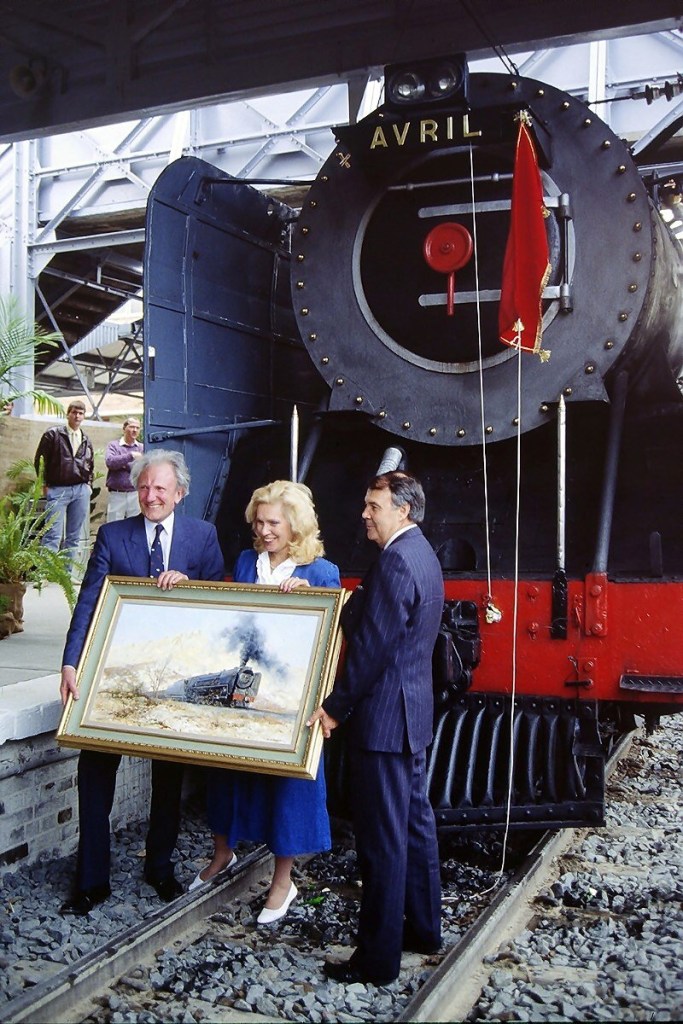
David Shepherd with wife, Avril, 1991 – Image credit : H.G. Graser – own work – CC BY-SA 3.0

David died in hospital on the 19th of September 2017 after a long battle with Parkinson’s disease…. He left behind his wife Avril, four daughters, his grand children and great grand children – all of whom share his passion and continue his work….

On this day in history….17th March 1846

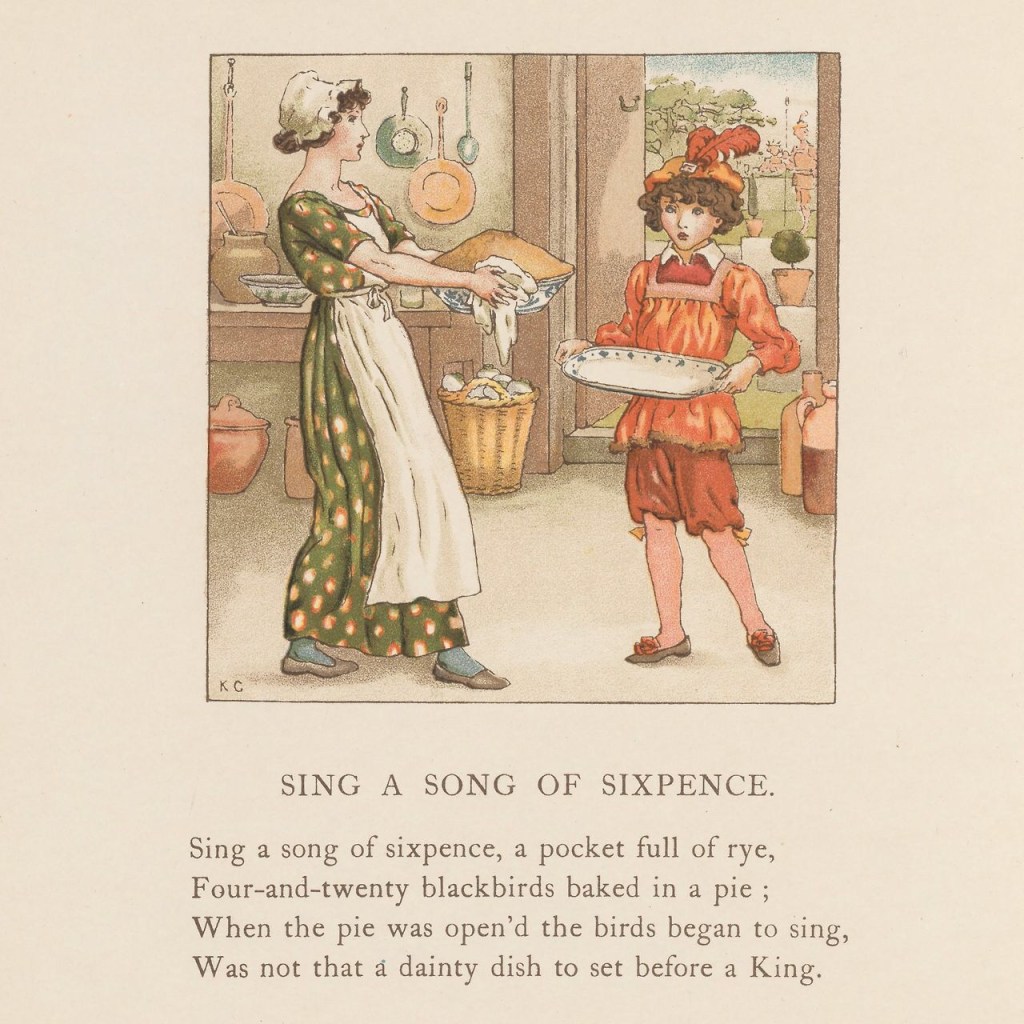
On this day in history : 17th March 1846 – The birth of Kate Greenaway – the artist and writer known for her illustrations in children’s books….

Kate Greenaway – Public domain

Kate was born Catherine Greenaway in Horton, London, the second of four children…. Her father, John, was a woodblock printer and engraver and her mother, Elizabeth, a seamstress…. They were a working class family – John also supported his mother and sisters, so very often it could be hard financially….but both he and Elizabeth were determined to give their children a good childhood….

The family moved around quite a lot but Kate spent a substantial part of her childhood in a farmhouse in Rolleston, Nottinghamshire – for her this felt like her real home and where she would often return to as an adult…. She studied at various places and at the age of 12 began nightly art classes at Finsbury School…. She was to go on to study at the Royal Female School of Art, which was part of what is now the Royal College of Art in London….

She began to exhibit her drawings in 1868 and her first published work was in magazines for children, such as ‘Little Folks’…. She also worked at illustrating greetings cards to contribute towards the family’s income….

In 1879 her first successful book was published – ‘Under the Window; Pictures and Rhymes for Children’…. It was to become a best seller, over 100,000 copies were sold…. In 1880 it was followed with her illustrations in ‘The Birthday Book’, ‘Mother Goose’ in 1881 and ‘Little Ann’ in 1883…. She was to go on to illustrate over 150 books – only two were both written and illustrated by Kate, her first ‘Under the Window’ and later ‘Marigold Garden’ (or ‘The Language of Flowers’) in 1895….

Marigold Garden – Public domain

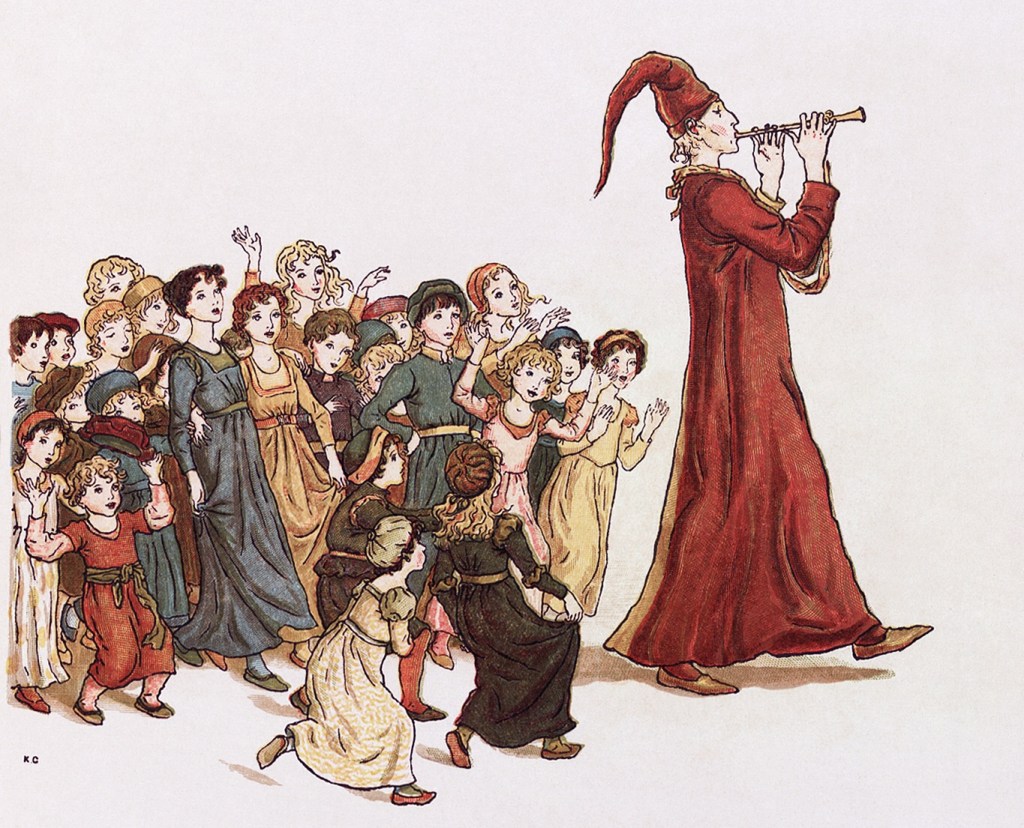
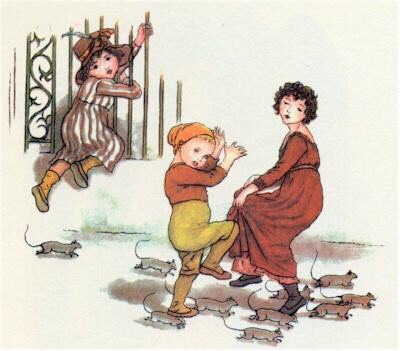
She brought many well-known stories to life, such as Robert Browning’s ‘The Pied Piper of Hamelin’…. Leading art critics around the world praised her work….

Her own favourite books as a child may have influenced her – Sleeping Beauty, Cinderella, Beauty and the Beast and illustrated editions of Shakespeare…. In her own illustrations she always dressed her children in the Regency fashions of the late 18th Century….smock frocks and skeleton suits for the boys and high-waisted pinafores and dresses with mobcaps and straw bonnets for the girls…. A style which was to catch on….Liberty of London created children’s clothes by adapting her drawings….

Polly from ‘The Queen of the Pirate Isle’ – by Bret Harte – Public domain

In 1890 Kate was elected to the Royal Institute of Painters in Watercolours; she exhibited at the Fine Art Society in 1891, 1894, 1898 and was exhibited posthumously again in 1902…. From 1883-1897 she published Kate Greenaway’s Almanacs…. Kate died of breast cancer at the age of 55 on the 6th of November 1901…. She was buried in Hampstead Cemetery, London….

May Day – Public domain

The Kate Greenaway Medal was established in 1955 in her honour…. It is awarded annually by the Chartered Institute of Library and Information Professionals in the UK to a chosen illustrator of children’s books….

Public domain