On this day in history….21st April 1959

On this day in history : 21st April 1959 – Dame Margot Fonteyn, the world-famous English ballerina, is jailed for 24 hours in Panama while police look for her husband who is accused of plotting a coup….

img_2999
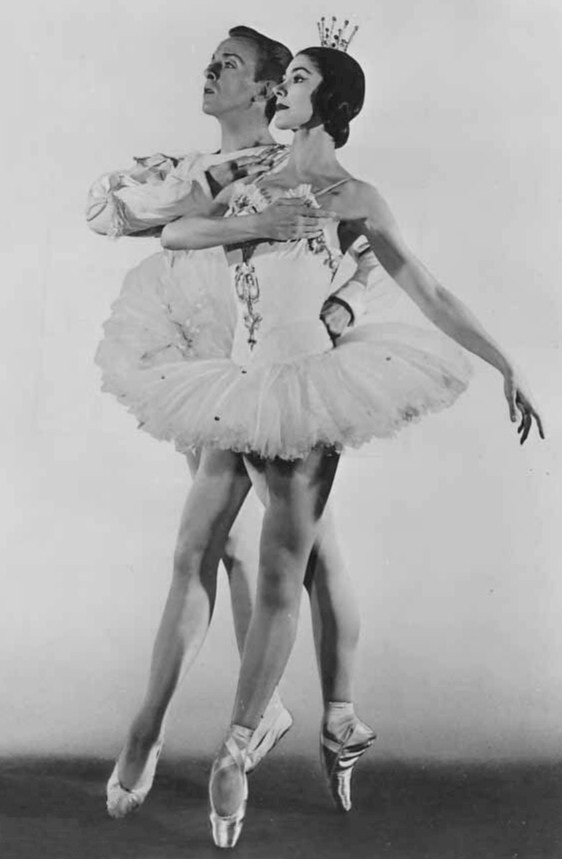
Fonteyn and Helpmann, The Sleeping Beauty, Sadler’s Wells 1950 U.S. tour – Sol. Hurok / Sadler’s Wells Ballet – Public domain

Fonteyn had married Dr. Robert Arias, the son of a former Panamanian President in February 1955…. His family opposed the strict regime of the then President, Ernesto de la Guardia….

Whilst on holiday in Panama Arias and Fonteyn had set out on a supposed fishing trip onboard their luxury yacht ‘Nola’….only Arias was to strangely ‘disappear’…. When Fonteyn returned to port at Balboa Harbour, Panama City she claimed to have no knowledge of her husband’s whereabouts…. and then found herself being arrested…. She was detained in prison by the Panamanian National Guard – but it turned out she wasn’t as innocent as it seems….

img_3002
Prima Ballerina, Dame Margot Fonteyn – Kristine via Flickr

On learning of her arrest British Ambassador to Panama, Sir Ian Henderson, rushed to the prison to try and see her – but was initially denied access…. Eventually at 9pm that evening he was granted permission…. It appeared she had been very well looked after – having been allocated a ‘suite’ usually reserved for political prisoners, even being provided with fresh flowers….and she was only too keen to tell him what she and Arias had been up to….

Her husband had been planning a coup against the President of Panama involving 125 rebel fighters…. During a trip to Cuba in January 1959 she and Arias had met with Fidel Castro who had promised to help by providing men and arms….

The ‘fishing trip’ onboard ‘Nola’ had really been in order to collect weapons which had been concealed within a buoy – only the couple had been witnessed by some fishermen who reported them…. It was therefore decided that Arias should disappear….and that night he ‘jumped ship’, making his escape on a shrimp vessel named ‘Elaine’…. Fonteyn then used ‘Nola’ as a decoy to divert the attention away from her husband whilst he made his getaway…. She then turned up at the port realising she had to risk the consequences….

Sir Ian Henderson managed to secure her release and she was flown to New York….from there she returned to London…. Arias took refuge in the Brazilian Embassy and in June 1959 the couple were reunited in Rio de Janeiro….

img_3001
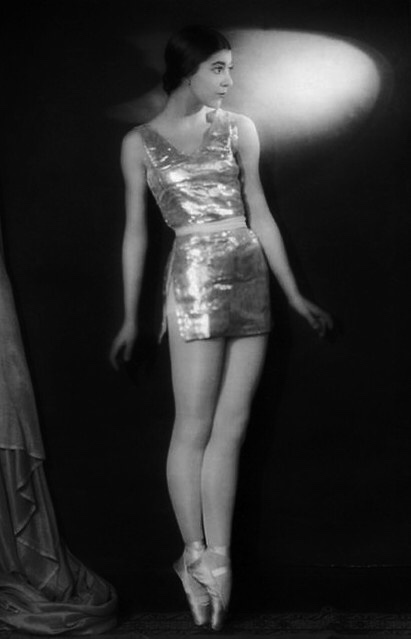
Dame Margot Fonteyn in the 1960s – Hurok Concerts (U.S.) – Public domain

On this day in history….20th April 1964

On this day in history : 20th April 1964 – BBC2 television is launched – only things don’t go quite to plan – as a fire breaks out at Battersea Power Station causing a major power cut….

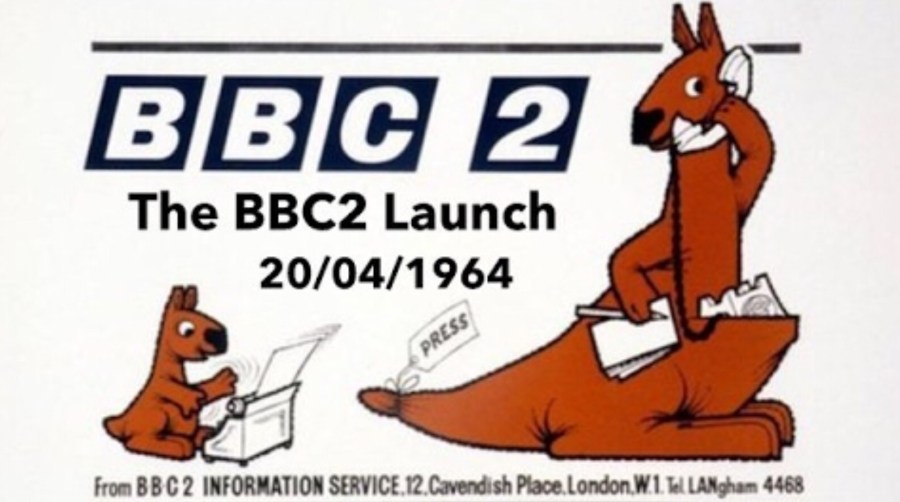
Much publicity had surrounded the coming launch of Britain’s third TV channel – the two kangaroo mascots used to herald its arrival ~ ‘Hullabaloo’ the mother kangaroo and her joey ‘Custard’ ~ were a familiar sight….img_2998

And a right hullabaloo it was too…. The evening had been planned to start at 7.20pm with a news bullet-in and then continue with a programme schedule of music and comedy – including a special of ‘The Alberts’, a performance of ‘Kiss me, Kate’ and was to be rounded off with a celebratory firework display from Southend Pier….

However, just over half an hour before the launch was set to air a fire broke out at Battersea Power Station…. At the same time a 60,000 volt cable carrying electricity from the Midlands to the south of England developed a fault in Buckinghamshire – the result being a total blackout in the west of London and much of the city centre….

As it happened, news anchorman Gerald Priestland, who was to deliver the opening news bullet-in, was not broadcasting from Television Centre…. Instead he was in the north London studios at Alexandra Palace – which still had power…. Amidst the mayhem and chaos he bravely soldiered on – over the next couple of hours TV screens across the land displayed the words ‘Will Start Shortly’ – broken intermittently with news bullet-ins…. Eventually at 9.30pm the evening’s schedule was abandoned….

Power was restored for the channel to launch properly the following day…. At 11am the first complete programme to air was ‘Play School’….


On this day in history….19th April 1824

On this day in history : 19th April 1824 – Leading figure of the Romantic Movement, Lord Byron, dies from a fever whilst assisting the Greeks in their fight for independence from the Turks….

George Gordon Byron was born in Aberdeen in 1788; at the age of 10 he inherited his great uncle’s title and became 6th Baron Byron….or ‘Lord Byron’….

img_2994
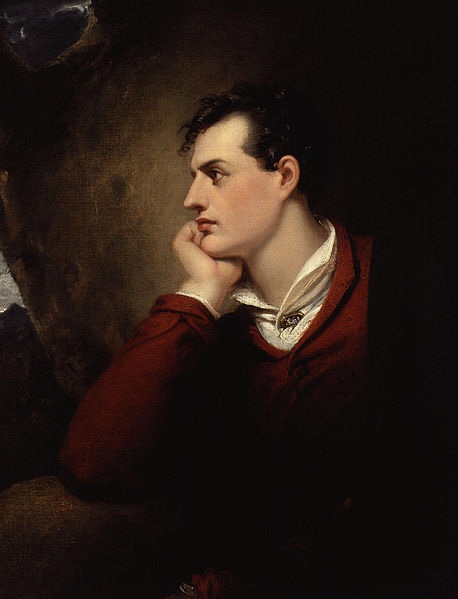
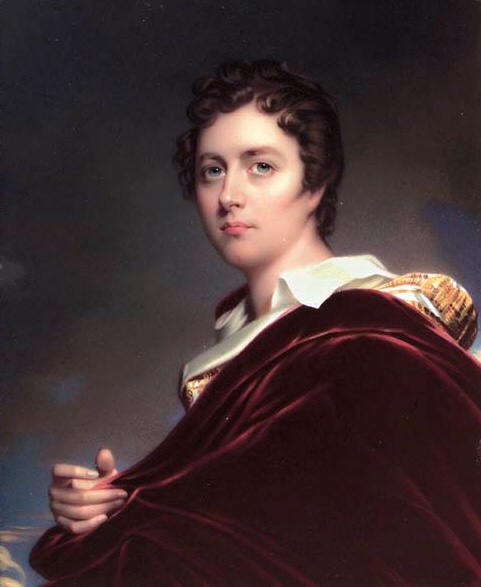
George Gordon Byron, 6th Baron Byron by Richard Westall – Public domain

After attending Harrow and then Trinity College, Cambridge he was to embark on what can be described as a flamboyant life journey…. The great poet, peer and politician was renowned for his often scandalous behaviour….he ran up enormous debt and had countless affairs with both men and women…. Married twice (for money rather than love) he had one legitimate child – and at least two illegitimate…. His very name coined a word – ‘Byronic’ – meaning romantic, arrogant, dark and cynical….

By all accounts he was a beautiful man – something he was obviously aware of, even to the point of vanity – he apparently wore curlers in his hair whilst he slept! His beauty no doubt detracted from his limp – due to a deformed foot he had from birth….

img_2996
Lord Byron by Henry Pierce Bone – Public domain

His life was full of exotic travel – and adventure…. At the age of 36 he found himself in Messolonghi, Greece, training troops – even though he had little military experience himself…. He was there to help the Greeks gain independence – a cause he also helped to fund….

img_2995
Lord Byron in Albanian dress by Thomas Phillips – Public domain

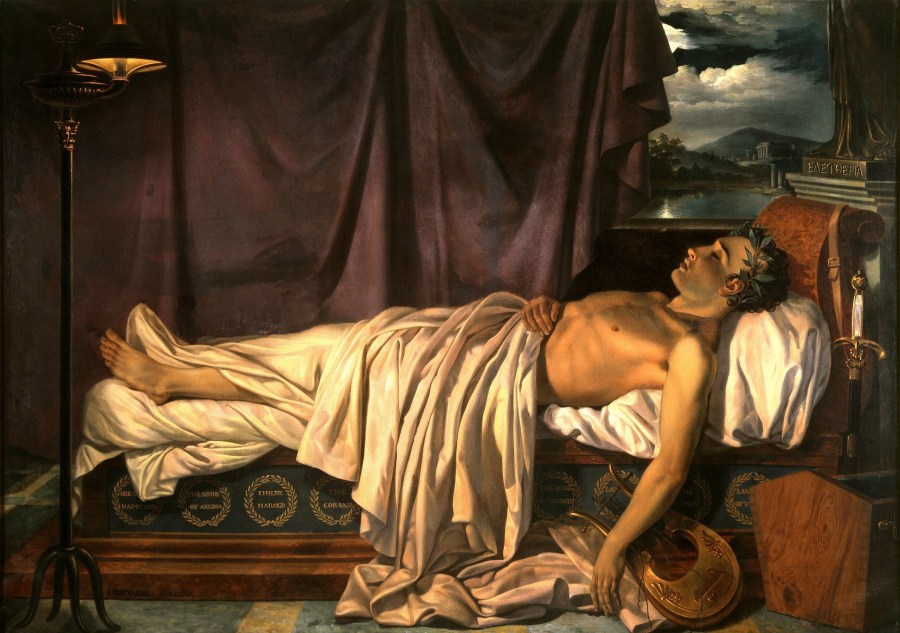
In the February of 1824 he had become ill; possibly he had contracted malaria…. The ‘cure’ for many ailments at the time involved bloodletting; this in itself would have left him weak…. Although he recovered enough to travel to Messolonghi on his arrival he caught a heavy cold – once again bleeding was carried out…. Of course the equipment would not have been sterilised and it is believed this may have led to sepsis….which in turn led to a fit of fever – from which he died….

img_2997
Lord Byron On His Deathbed, by Joseph Denis Odevaere c.1826 – Public domain

His body was embalmed and returned to England, accompanied by his faithful man-servant ‘Tita’…. Some say the Greeks wanted to keep a little part of him with them and so his heart remained in Messolonghi…. To the people of Greece Byron had become a national hero – after his death he was mourned by both the Greeks and British alike…. The Greek version of his name,’Vyron’, is still a popular choice of name for boys in Greece today – and a suburb in Athens, ‘Vyronas’, is named for him….

The intention had been for him to be buried in Westminster Abbey – but the Church authorities refused to allow this…. He lay in State in London and huge crowds visited…. Lord Byron was finally laid to rest in the Church of St. Mary Magdalene, Hucknall in Nottinghamshire – a slab of marble given by the King of Greece placed over his grave…. His legitimate daughter, Ada Lovelace, was later buried beside him….

On this day in history….18th April 1949

On this day in history : 18th April 1949 – 440,000 British Boy Scouts take part in the first ‘Bob-a-Job’ week to raise money for the Scout Association and for charity….

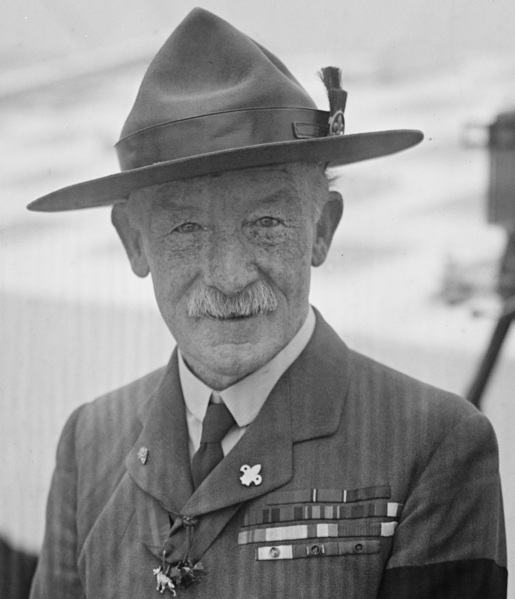
The idea had originally been introduced in 1914 by the Scout Association’s founder Lord Robert Baden-Powell as ‘Good Turn Day’…. It was a way of encouraging youngsters to lend a hand in the community….

img_2991
Lord Robert Baden-Powell – Library of Congress Prints and Photographs division – Public domain

In 1949 it became officially known as ‘Scout Job Week’ – but soon earned the nickname ‘Bob-a-Job’ on account of the expected shilling – or ‘bob’ – that would be popped into the fund-raising envelope on completion of the chore….

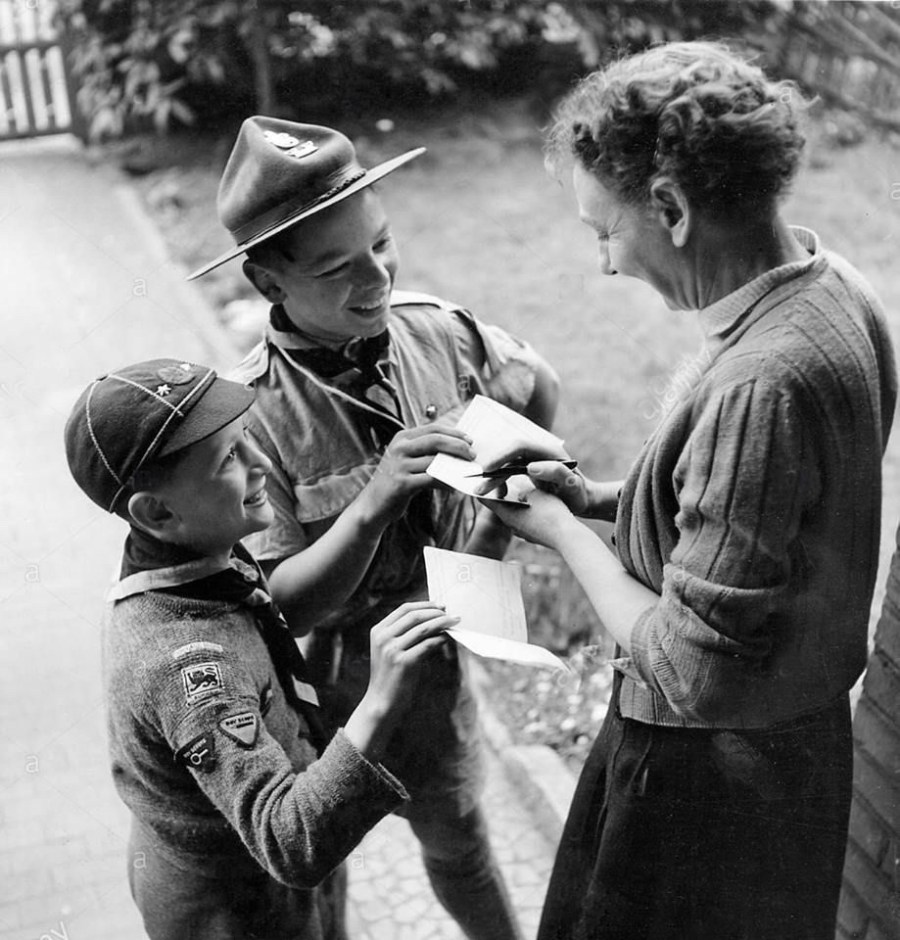
Unsupervised, young scouts would knock on the doors of their neighbourhood and ask if there were any odd jobs to be done…. They would wash cars, walk dogs, weed gardens, mow lawns, wash windows or clean shoes….. Some even became involved in cleaning jumbo jets at Heathrow Airport – or polishing the silverware at 10, Downing Street….

img_2992
Bob-a-Job week, London, 1969 – via Pinterest

Bob-a-Job week traditionally took place around Easter time – as a way of keeping children occupied during the holidays…. The money raised would be split between the scouting headquarters and regional divisions….being used to provide equipment and to fund camping trips…. By the 1980s it was bringing in £100K per year, a valuable source of income for the Association…. However, during the 1990s the scheme was scrapped amid fears of health and safety and child protection….

Twenty years on it was reintroduced, albeit in a revamped format…. Now the scouts – boys and girls – work in organised, fully supervised groups on larger projects within the community….and collect donations and sponsorship for their efforts….

img_2993
Via Pinterest

On this day in history….17th April 1951

On this day in history : 17th April 1951 – The Peak District is officially confirmed as the United Kingdom’s first designated National Park after decades of campaigning by the public….img_2918

It was during the 1880s that Member of Parliament James Bryce started the campaign for public access to the countryside. His first Freedom to Roam Bill failed – but the ball had started to roll…. The 1900s saw a growing appreciation for the outdoors, with people wanting to escape the towns and cities to take advantage of the country air…. The arrival of the motor car and improvements in public transport making the countryside far more accessible to all….

In 1931 a government inquiry recommended the formation of an authority to select designated areas…. Only no further steps were taken….causing major public discontentment, resulting in a mass trespass in 1932…. Scores of walkers exercised their ‘right to walk’ in the Peak District – only to be opposed by the gamekeepers of wealthy landowners. Occasionally things got heated and came to blows; five trespassers found themselves being imprisoned….

In 1936 the SCNP – Standing Committee for National Parks – was set up….a voluntary organisation to lobby government. The result was the establishment of the Principle for National Parks….as part of Labour’s post-war reconstruction a White Paper was produced in 1945. Finally in 1949 the National Parks and Access to the Countryside Act was passed – an Act to establish National Parks to preserve and enhance their natural beauty and provide recreational opportunities for the public….

Nowadays we have a total of 15 National Parks in the United Kingdom; 10 in England, 3 in Wales and 2 in Scotland…. Each is looked after by its own authority – with the aim to conserve and enhance natural beauty, wildlife and cultural heritage – and to promote understanding and enjoyment of the area’s special qualities….

The Peak District with its historic houses, rugged rocky moorlands and limestone valleys creating breathtaking views was the original Park designated in 1951….

Also in 1951 came…. Dartmoor with its open moorlands, medieval villages and wild ponies….

….The Lake District – home to deep glacial lakes, high fells, rural villages – and is now a World Heritage Site….

….And Snowdonia – where the highest mountain in Wales is found…. With its wooded valleys, coastline of sandy beaches and historic villages Snowdonia was the first National Park in Wales….

1952 saw Wales gain another Park – when the Pembrokeshire Coast, with its golden beaches, volcanic headlands and limestone cliffs, was designated…. It is also known for its 300km coastal path and marine wildlife….

In the same year the North York Moors were made into a National Park; wide open moorland with high hills, deep dales, bubbling streams and beautiful coastline….

The Yorkshire Dales were added to the list in 1954; old stone villages and dry stone walls, rolling hills – and the Three Peaks….Pen-y-Ghent, Whernside and Ingleborough….

Exmoor National Park was also established in 1954 – with its rolling hills, moorlands, dramatic coastline and wild ponies….

Northumberland with its heather covered Cheviot Hills and Hadrian’s Wall was designated in 1956 – and is Europe’s largest area of protected night sky….

The last National Park to be designated in this decade was the third of the Parks in Wales – the Brecon Beacons in 1957…. Situated in South Wales with four mountain ranges and rolling hills it is again an International Dark Sky reserve….

In 1976 the Norfolk Broads in East Anglia, which had not originally been named as a National Park but had been recognised as having the same status, adopted the name…. Over 200km of navigable waterways and the habitat of some of Britain’s rarest wildlife….

In 1987 the UK’s largest National Park was designated….the Cairngorms in Scotland. Britain’s highest mountain range and the natural habitat of red squirrels, pine martens and golden eagles….

Scotland’s second National Park, Loch Lomond and the Trossachs was established in 2002…. Mountain ranges, forests, lochs – and the location of the largest lake in the British Isles….

The New Forest was given National Park status in 2005…. Wild heathlands, ancient woodlands, roaming sheep, cattle and of course, ponies….

Finally, the last area to be designated a National Park – the South Downs in 2010. Our newest Park, with its dramatic white cliffs, rolling hills, beautiful villages and rare wildlife, stretches across the South of England….

You cannot deny – this is a beautiful land we live in….