On this day in history….7th March 1876

On this day in history – 7th March 1876 – Scottish-born inventor Alexander Graham Bell patents the telephone….

img_2524
An early telephone transmitter invented by Alexander Graham Bell around 1876. An improvement over Bell’s ‘gallows’ type instrument of 1875, it was Bell’s first device that could transmit intelligible speech – Public domain

Bell had worked with his father in London, who had developed a system to teach deaf people to speak. He in turn was most likely influenced by his own father, who had studied elocution and speech impediments…. It was an area that affected the Bell family in many ways….Bell’s own mother was almost totally deaf….

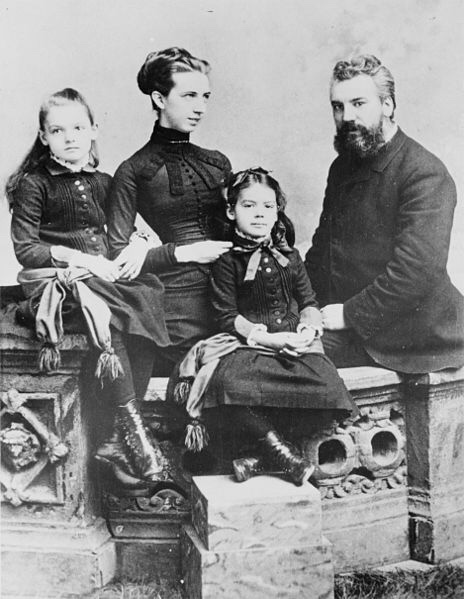
The Bells moved to the United States – Boston, Massachusetts – during the 1870s…. At first Bell worked as a teacher at the Pemberton Avenue School for the Deaf….it was here he met his wife, Mabel Hubbard – she was one of his students….
img_2522
Alexander Graham Bell and his family – Public domain

Bell began to explore the idea of transmitting speech over wires…. The downside of the telegraph system being the final message still had to be physically delivered after it had arrived at the receiving telegraph office…. With the help of electrician Thomas A. Watson, a prototype telephone was developed, which used electrical current and sound waves….

Unbeknown to Bell somebody else was working on a similar system….Elisha Gray had kept his work secret – Bell found out on the 11th February 1876, a Friday, that Gray intended to apply for a patent – and rushed to get the documentation completed for his own…. Both men applied for a patent on Monday the 14th of February….Bell’s solicitor obviously managed to file the paperwork first – records show his application was the 5th received at the Patent Office that day….whereas Gray’s was the 39th. Bell was granted US Patent No. 174,465 Improvement on Telegraphy on the 7th of March – Gray was left disappointed….

Three days later Bell made his first telephone call…. “Mr Watson….come here, I want you”…. Bell later wrote in his journal “To my delight he came and declared that he had heard and understood what I had said”….

img_2525
Watson in his later years, holding Bell’s original telephone – Public domain

There has long been controversy as to whether Bell ‘stole’ the patent…. It is indeed unusual for a patent to be issued before a device is fully working…. Three others all claimed to have invented the telephone first – Elisha Gray, Thomas Edison and Antonio Meucci – and said they had working devices…. There were more than 600 patent lawsuits brought against Bell – but each time the courts ruled in his favour….

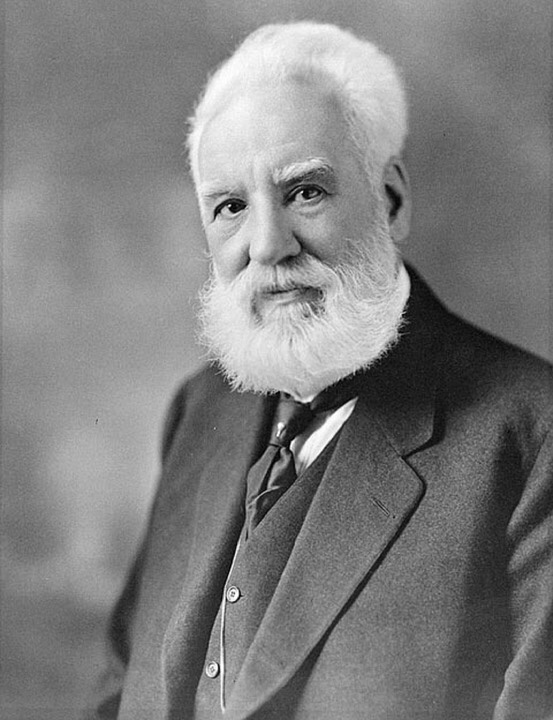
Bell was never particularly interested in the commercial side of things – he was a scientist and inventor…. Among his other inventions were metal detectors, the Hydrofoil and Tetrahedral Kite…. His work also consisted of designs for aircraft, including helicopters…. Ironically he considered the telephone an intrusion….and refused to have one in his office….
img_2521
Public domain

On this day in history….6th March 1917

On this day in history : 6th March 1917 – The birth of Francis Alick Howard – who was better known to us as comedian and comic actor Frankie Howerd….

The son of a soldier, Howerd was born in York – and was educated at Shooter’s Hill Grammar School, London…. His first stage appearance was at the age of 13…. However, after failing to get into RADA a career in serious acting was not to be…. It was whilst serving in the army during WWII that he began to entertain….and it was also at this time that he changed his name to Howerd – apparently ‘just to be different’….

He began his professional entertainment career in 1946, in the touring show ‘For the Fun of It’…. He made his radio debut in December of the same year and his first screen role was in the film ‘The Runaway Bus’ in 1954, in which he starred opposite Petula Clark….

img_2519
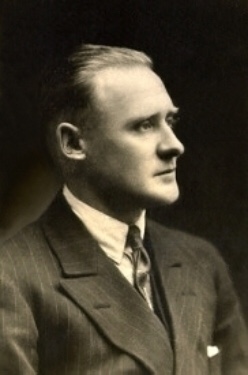
Portrait by Allan Warren 1978 – CC BY-SA 3.0

With a mixture of jokes, impressions, comical songs and monologues Howerd hosted his own series of TV shows in the 1950s…. Known for his risqué double entendres he came across as a larger than life figure – however, this couldn’t be further from the truth in reality….

Howerd suffered from acute stage fright – (his close friend Cilla Black once said of him – ‘that it made him physically ill’)…. He was a painfully shy man, lacking in self confidence and prone to severe depression…. He was also terrified of his sexuality becoming common knowledge…. At a time when homosexuality between men was illegal (until 1967 in England and Wales and 1981 in Scotland) it would have ruined his career….

He met his partner, Dennis Heymer – 12 years his junior – in 1958. Heymer also became his manager and helped him to revive his flagging career during the 1960s…. The couple were together for over 30 years – until Howerd’s death on the 19th of April 1992, after suffering heart failure due to a respiratory illness…. Always their relationship remained discreet outside of their immediate circle…. Howerd is buried at St. Gregory’s Church, Weare, Somerset – Heymer, who died in May 2009, is buried close by….

img_2520
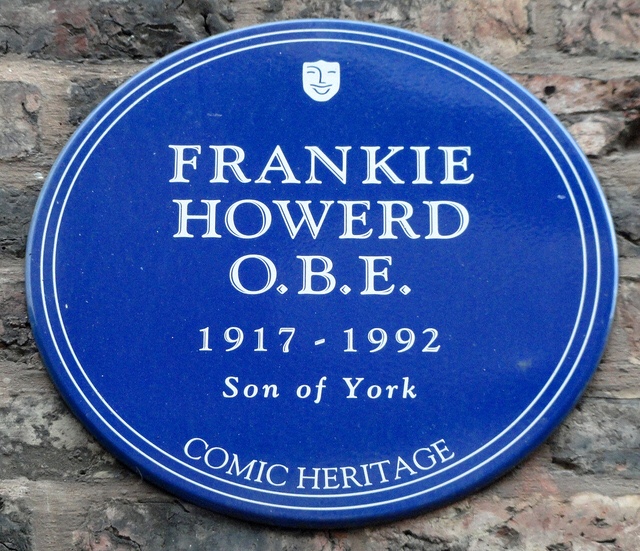
Frankie Howerd Blue Plaque, York – Image credit: Peter Hughes via Flickr

On this day in history….5th March 1936

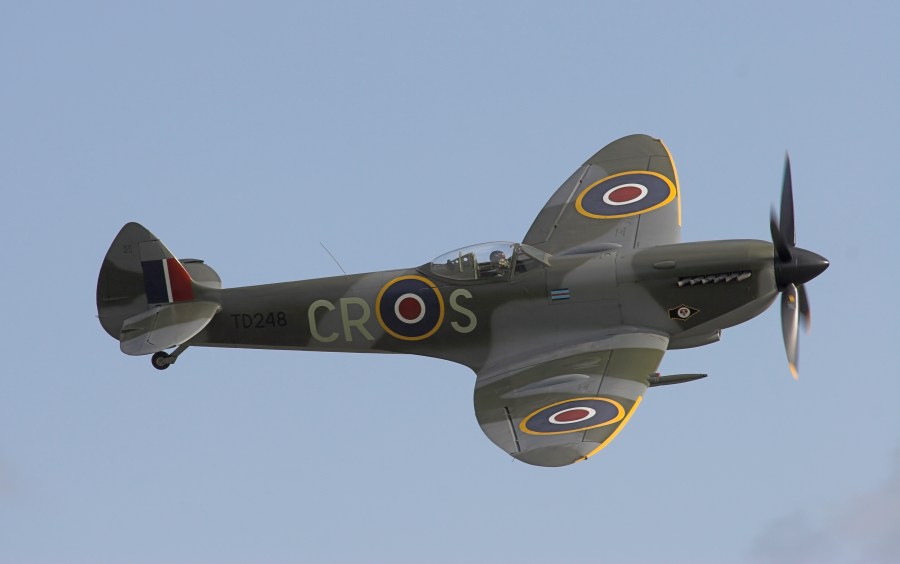
On this day in history : 5th March 1936 – Iconic British fighter plane of the Battle of Britain, the ‘Spitfire’, makes its first test flight from Eastleigh Aerodrome, Hampshire….

The Spitfire was the creation of Reginald J Mitchell – who had been asked by Sir Robert McLean, Chairman of Vickers-Armstrongs, to design a fast and manoeuvrable fighter aircraft…. The intention being to replace the outdated models which were then currently in service with the Royal Air Force….

img_2518
R.J. Mitchell – Public domain

Piloted by Captain Joseph ‘Mutt’ Summers, Vickers-Armstrongs Chief Test Pilot, Type 300 K5054, powered by a Rolls-Royce Merlin engine took off from Eastleigh Aerodrome (now Southampton Airport)…. On landing after the 8 minute flight Summers told the ground crew “I don’t want anything touched”….

img_2514
Supermarine Spitfire Prototype K5054 Replica

Three months later the Air Ministry put in an order for 310 Spitfires – an order worth £1.25 million…. The aircraft went into service with the RAF in 1938…. It was the only British fighter plane to be in continuous production before, during and after WWII. It remained in service until 1954 – the last ones being used for photo reconnaissance work….

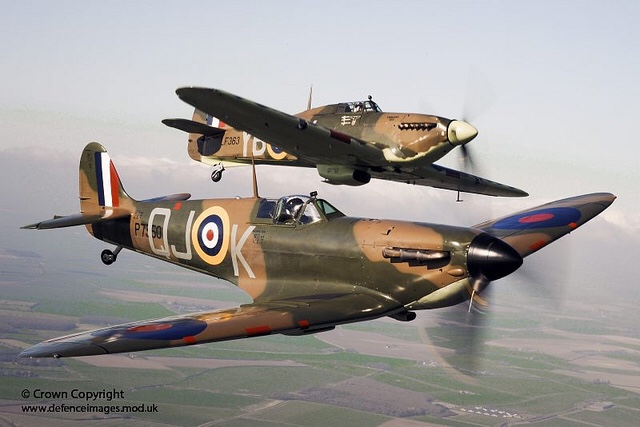
Spitfire P7350, flies alongside Hurricane LF363.
Spitfire P7350 (front) flies alongside Hurricane LF363 (back). P7350 (Mk IIa) is the oldest airworthy Spitfire in the world and the only Spitfire still flying to have actually fought in the Battle of Britain. LF363 (Mk IIC) was the last Hurricane to enter service with the RAF. The aircraft currently wears the colours of Hurricane Mk 1 P3878 ‘YB-W’, the aircraft of Flying Officer Harold Bird-Wilson of No 17 Sqn during the Battle of Britain. This image is available for non-commercial, high resolution download at http://www.defenceimages.mod.uk subject to terms and conditions. Search for image number 45151794.jpg —————————————————————————- Photographer: SAC Neil Chapman Image 45151794.jpg from http://www.defenceimages.mod.uk

‘Spitfire’ – an old English word meaning of strong and fiery character…. Mitchell was less than impressed with the name chosen for his aircraft…. He is reputed to have said “just the sort of bloody silly name they would think of”…. Mitchell died in 1937 – he was never to know how successful the aircraft would become…. As for the prototype K5054 it crashed at Farnborough in 1939….killing the pilot. It was scrapped instead of being repaired….

img_2516
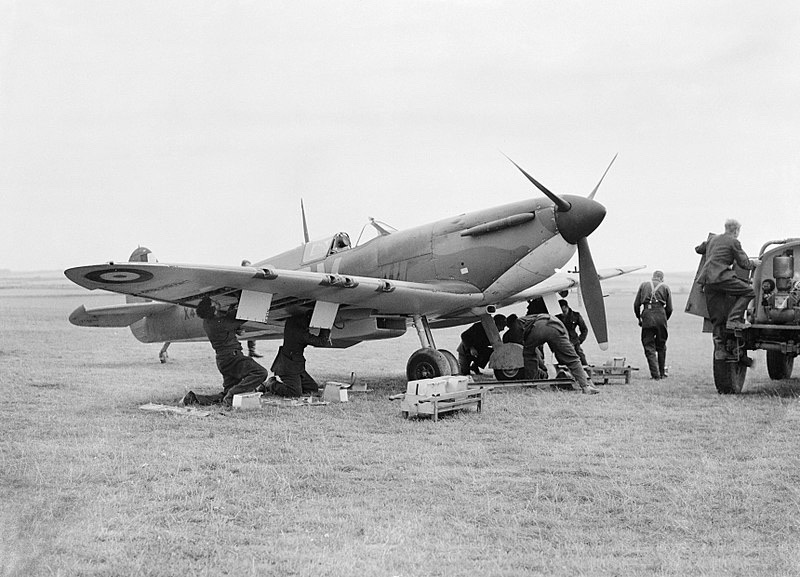
A Supermarine Spitfire Mk1 of No.19 Squadron RAF being re-armed between sorties of Fowlmere, near Duxford, September 1940. From the collections of the Imperial War Museums – Photo CH 1367
img_2515
Supermarine Spitfire Mk XVI Photo credit : Chowells via Wikipedia CC BY-SA 2.5

On this day in history….3rd March 1982

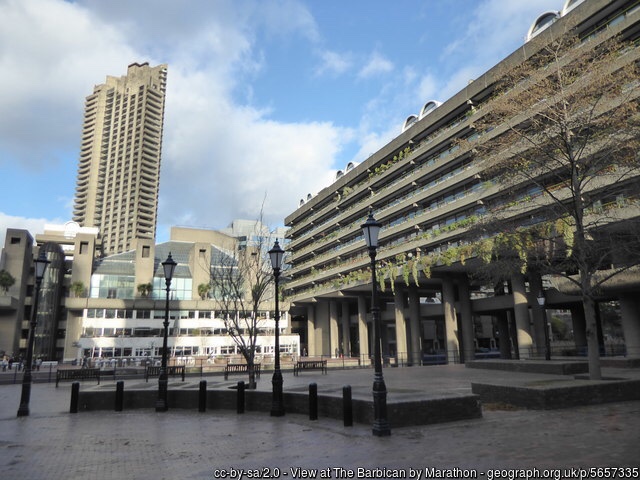
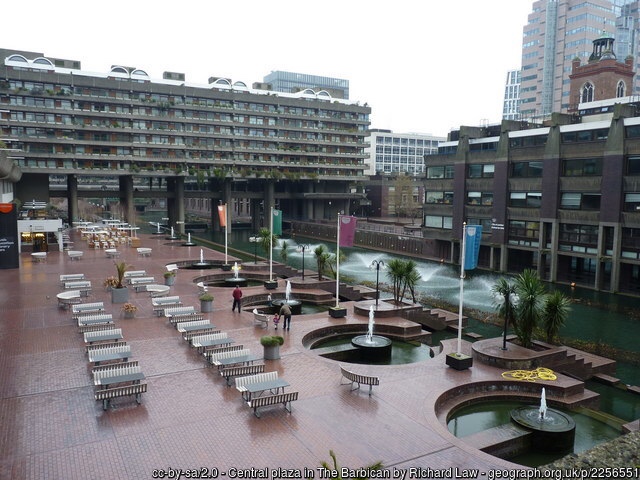
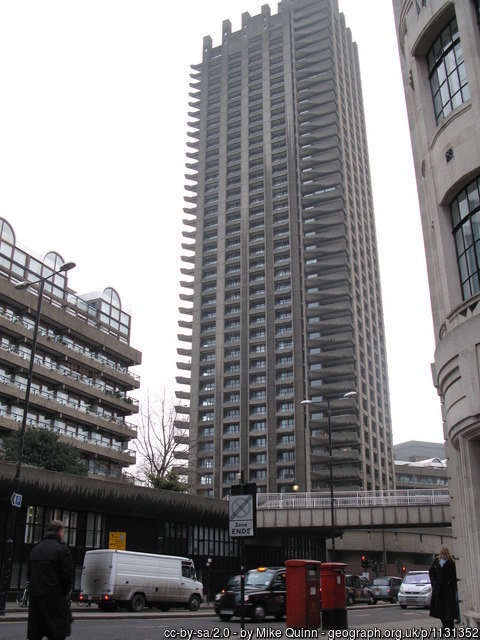
On this day in history : 3rd March 1982 – The opening of the Barbican Centre in London, by Her Majesty the Queen Elizabeth II…. It is Western Europe’s largest arts centre ….

img_2507

‘Barbican’ was the name of one of the streets in a busy commercial part of the Cripplegate ward…. At the end of the 19th Century it was the centre of London’s rag trade – bustling with fabric and leather merchants, furriers, glove makers and milliners….

It was during the Blitz that the area was to become completely destroyed…. On the 29th of December 1940 it was flattened by German bombers….fire swept through the warehouses…. By the end of World War II only a few buildings remained….one of which, although badly damaged, was the Church of St. Giles’ Cripplegate….

After the war plans were made to rebuild the stricken area – The Town and Country Planning Act 1947 gave local authorities the power to buy up large areas of land for redevelopment….

img_2509

In 1955 the first proposals for the Barbican Centre were submitted to the Corporation of London – the regeneration of five and a half acres of land in Cripplegate…. Four years later a design by architects Chamberlain, Powell & Bon was accepted…. The following year the Royal Shakespeare Company and the London Symphony Orchestra became involved in the planning as the centre was to become their new home….

Construction began in 1971 – with a proposed cost of £17m and an estimated six-year completion time…. It was finally finished in 1982 and had cost £153m to build…. With a concert hall to accommodate 2,000 people, 2 theatres, a cinema, library, conference centre and several galleries it was to become the largest cultural centre for the arts in Western Europe. By its 20th anniversary the Barbican had received more than 27 million visitors. It is a leading venue for classical music – and was home to the Royal Shakespeare Company until May 2001….

On unveiling the commemorative plaque when opening the centre in 1982 the Queen remarked – “What has been created here must be one of the wonders of the modern world”….

In 2003 a survey commissioned by the advertising agency Grey London named the Barbican as London’s ugliest building….

img_2508

On this day in history….2nd March 1882

On this day in history : 2nd March 1882 – Scotsman Roderick Maclean attempts to assassinate Queen Victoria as she waits to board her train at Windsor railway station….

img_2503
Photograph by Alexander Bassano 1882. Public domain

Queen Victoria had just walked across the platform to the waiting carriage with her daughter, Princess Beatrice and other members of her court, when a shot rang out…. Roderick Maclean had stepped from a crowd of cheering onlookers, raised a gun and fired…. Before he could do so again the crowd, including a group of Eton schoolboys who hit him with umbrellas, managed to overcome him…. Maclean was then arrested by a Superintendent Hayes….

img_2506
Queen Victoria with Princess Beatrice. Public domain via Wikimedia

Maclean had not been quite right in the head since a childhood accident. His father was the proprietor of  ‘Fun’ magazine – a rival to ‘Punch’ – and so the family would have been comfortable and Roderick Maclean depended upon them financially…. When his parents died he had no means of an income and had to rely on handouts from his three brothers and sister….

As time passed by this help became less frequent, which frustrated Maclean – as a republican he directed his anger at the Monarchy…. He took to wandering from town to town and was becoming more and more like a tramp….

Maclean was also a ‘would-be’ poet and he sent some of his verse to Queen Victoria – but was angered by the response he received from the Palace….his work was returned to him accompanied by a curt note from a lady-in-waiting…. This appears to have finally tipped him over the edge…. Maclean sold his meagre possessions, bought himself a cheap and cheerful revolver….and then walked to Windsor….

In fact Maclean had already been certified as insane two years previously in June 1880….and had spent some time in a lunatic asylum. He had complained of headaches and thought that everybody in England was plotting against him…. He even had a problem with the colour blue and thought people who wore it did so to deliberately provoke him…. He had also sent some disturbing letters to his sister Caroline, in which he discussed murder….

Maclean went on trial in Reading on April the 20th 1882 on the charge of high treason….a crime then punishable by death…. However he was found ‘not guilty but insane’ – the jury took just five minutes to deliver their verdict…. Roderick Maclean spent the rest of his days in Broadmoor Asylum….he died of apoplexy in 1921….

img_2505
Asylum for Criminal Lunatics, Broadmoor. Image credit : Wellcome Collection CC BY