Blog

On this day in history….25th July 1909

On this day in history : 25th July 1909 – Frenchman Louis Bleriot becomes the first to successfully fly across the English Channel – worrying the British, who fear they could now be vulnerable to an air attack….

Louis Bleriot – Public domain

Bleriot was an aviator, engineer and inventor…. It was he who invented the first practical car headlamps and he was to become a successful businessman enabling him to devote money and time to his love of experimental flying…. Following a series of experiments with towed gliders he built a succession of powered aircraft…. It was in his Bleriot XI, a mono plane with a 25 horsepower engine, that he crossed the English Channel from Calais to Dover….in a journey that took him just 32 minutes…. It also won him £1,000 in a prize given by the Daily Mail….

Starting the engine, 25th July 1909 – Public domain

He had taken off at sunrise, on the first clear day for several, as high winds had been raging for the past week or so…. He flew across the Channel without the aid of a compass, following three boats who appeared to be heading for port…. On arriving he landed near to Dover Castle – a heavy landing that shattered a blade of the propellor and damaged the under carriage…. The aircraft was never to fly again; however, it was repaired and put on display in Selfridges before being taken back to France to go on show outside the offices of French newspaper ‘Le Matin’…. It then permanently went on display at the Musee de Arts et Metiers in Paris….
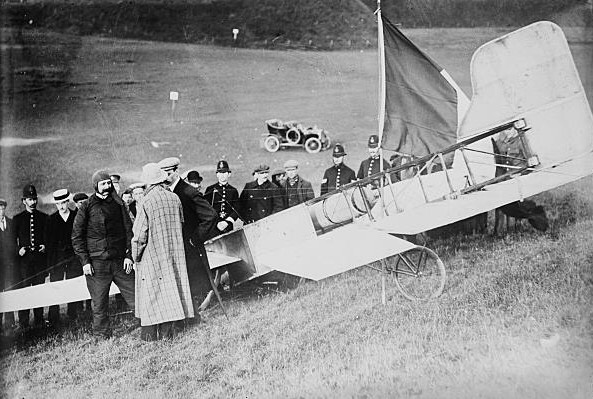
Shortly after arrival at Dover – Public domain

Just hours after his historic flight Bleriot travelled to London and was greeted by crowds of cheering Londoners…. On returning to France 100,000 of his own countrymen were there to welcome him….

As a result of his achievement Bleriot was able to sell his Bleriot XI model to the French army – and to several other countries…. The aircraft first saw combat action during the Italio-Turkish war….
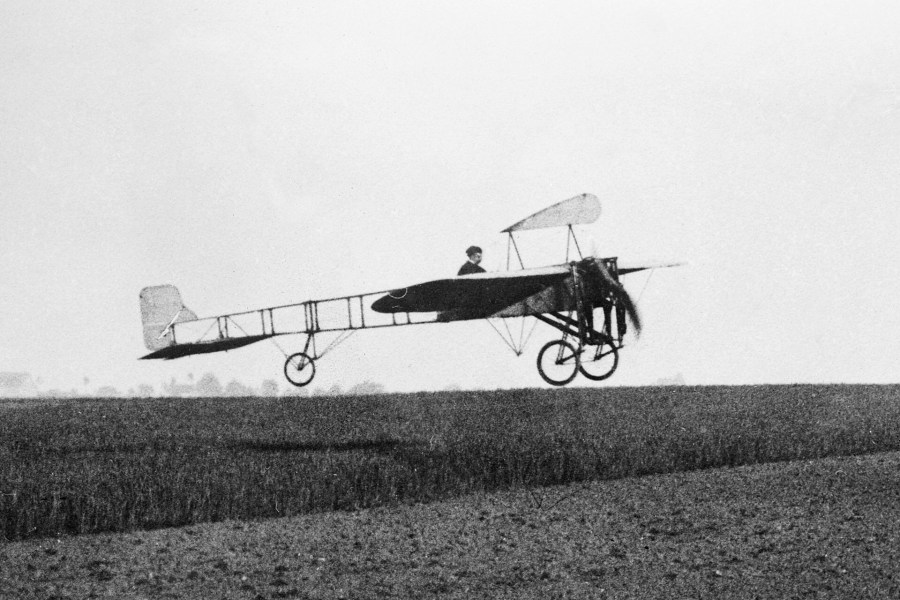
Bleriot XI (1909) – Public domain

Following Bleriot’s flight Britain realised just how accessible it had become…. The Daily Mail said “Great Britain is no longer an island”…. Another flight pioneer of the time commented “Britain must seek another form of defence besides ships”…. The Channel crossing inspired Claude Grahame-White to become involved in powered flight…. He was to go on to found the London Aerodrome – which would later become RAF Hendon….
On this day in history….24th July 1867

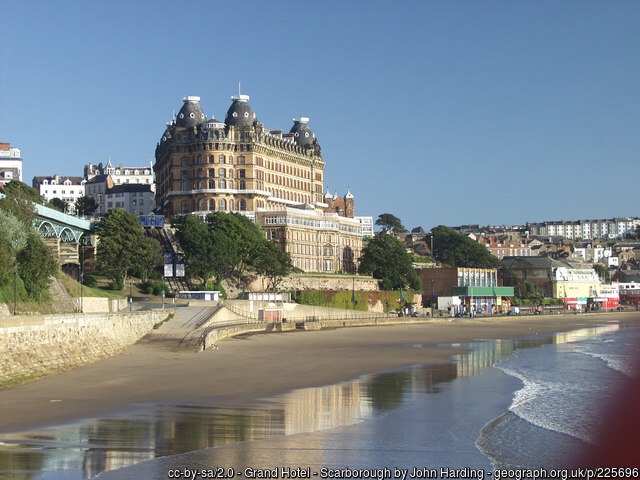
On this day in history….24th July 1867 – The opening of the Grand Hotel in Scarborough…. As well as being the largest hotel in Europe, at the time, it was also the largest brick structure….

OLYMPUS DIGITAL CAMERA

Scarborough, North Yorkshire….with its splendid sandy beaches – it is often described as the ‘gem of the North’…. It is the largest seaside resort on the Yorkshire coast and attracts thousands of visitors every year….

The town began to become popular in the early 17th century, when natural mineral waters were discovered in the area…. It was believed the waters had medicinal and healing benefits and so a spa house was built and Scarborough became recognised as a spa town…. As time went by the resort developed and became one of the first seaside holiday towns….

In the early 1860s a group of businessmen saw an opening for a luxurious hotel – and so the concept of the Grand was born….and in 1863 building work began…. Funding the project was an issue, which is why the £100,000 plus project took four years to complete….

Designed by architect Cuthbert Broderick from Hull, known for his design of Leeds Town Hall, the hotel was built in an unusual ‘V’ shape – to honour Queen Victoria…. It was also designed around the theme of ‘Time’…. It has 4 towers to represent the seasons, 12 floors for the months of the year and 52 chimneys for the weeks…. Originally it had 365 bedrooms – but following later renovation work this number was reduced to 280….

The Grand Hotel became quite the place to stay in Victorian Scarborough…. It was full of modern, luxurious amenities of the time – the bath taps even had an option of running sea water so as Victorian guests could benefit from the supposed health properties if they so chose….

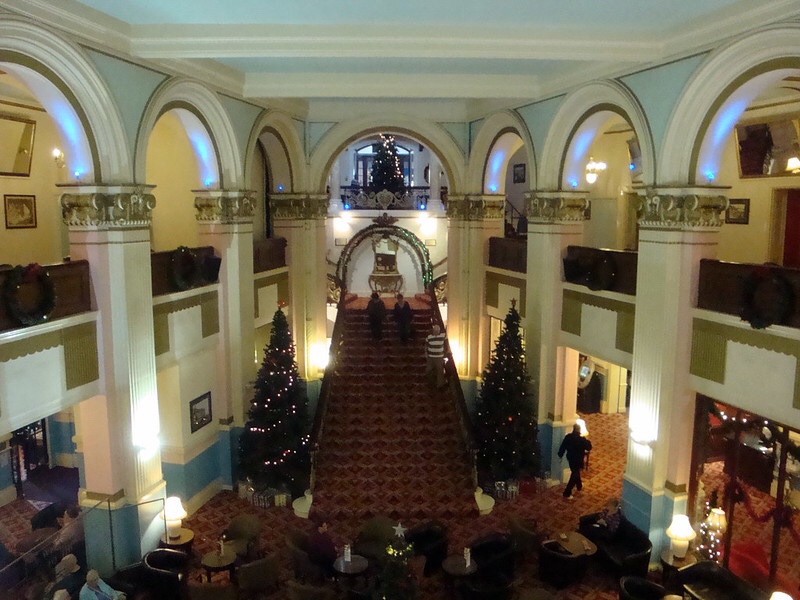
Interior of The Grand – Image credit : Roy via Flickr

In December 1914 the hotel was badly damaged by a German naval bombardment on the towns of Scarborough and Whitby – the Grand Hotel was hit at least 30 times…. The severe damage plunged the hotel into extreme financial difficulties….ownership changed hands twice in short succession…. Standards became more relaxed but despite this the hotel pulled through and continued to attract wealthy customers, such as the Prince of Wales, later to become King Edward VIII and several influential politicians, such as Winston Churchill….

During World War Two it was used to station RAF servicemen…. The 4 towers housed anti-aircraft guns and the building became a base for trainee cadets…. The advantage being that the hotel could be defended against a repeat performance of the bombardment experienced in World War One…. Following the War a renovation costing £100,000 was necessary to get the Grand back to its former glory….

In more recent years the hotel served as a base for the SAS during the Iranian Embassy Siege of 1980…. In 2017 the Grade II listed building was named by Historic Britain as one of the top 10 places to tell the story of England and its impact on the world….

On this day in history….23rd July 1940

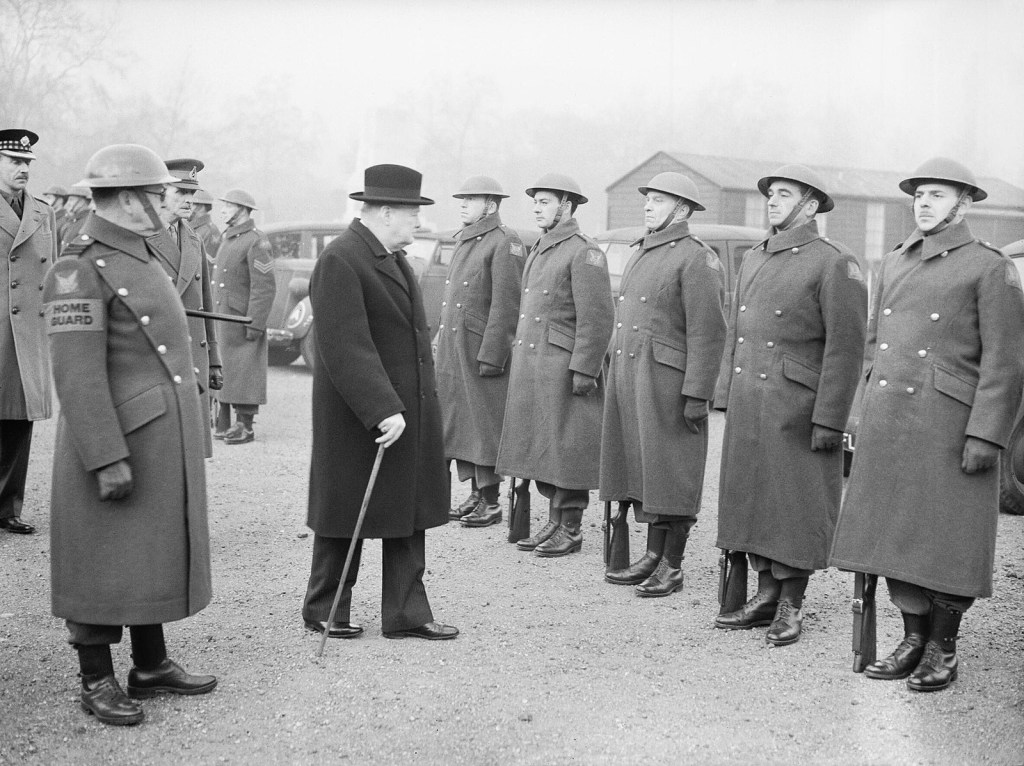
On this day in history : 23rd July 1940 – Winston Churchill changes the name of the Local Defence Volunteers to the Home Guard….

From the collections of the Imperial War Museums

The LDV had been set up in May 1940; Anthony Eden, the Secretary of State for War, called for men between the ages of 17 and 65 to sign up for the new force…. Very often they were in fact men above and below this age, or those deemed unfit for active service…. In the beginning it was very much a ‘make-do’ organisation, with improvised uniforms and weapons….

However, it evolved into a well-equipped and trained army of some 1.7 million men – not only ready for a possible invasion but also involved with bomb disposal and manning coastal artillery and anti-aircraft guns….

The Home Guard was stood down on the 23d of December 1944 – during its existence 1,206 men lost their lives through serving it….

From the collections of the Imperial War Museums

On this day in history….22nd July 1946

On this day in history : 22nd July 1946 – Due to continuous rainfall Britain’s wheat crop is ruined and as a result the government introduces bread rationing….

The measure had been announced by the Food Minister in the House of Commons the previous day…. It came as a blow to the morale of the British people; all throughout World War Two bread was the one staple food item that had avoided being rationed…. Winston Churchill commented on the announcement as “One of the gravest I have ever heard of in time of peace”…. He demanded that figures of stocks and movements of cereals should be produced by Clement Attlee’s Labour Government, to justify these “extreme measures”….

The average daily allowance for an adult was just 9oz and this was to include bread, flour, cakes, scones and biscuits…. To compensate the meat ration was increased by 2ds worth per week…. This highly unpopular measure was to last for two years before finally coming to an end on the 24th of July 1948…. Historians now generally agree that the practice was unnecessary and ineffective….

On this day in history….21st July 1897

On this day in history : 21st July 1897 – The grand opening of the Tate Gallery, in the City of Westminster, London – by the Prince of Wales (the future King Edward VII)….

The gallery was built on the former site of Millbank Prison, which had been the departure point of convicts being transported to Australia…. It had been demolished in 1890….

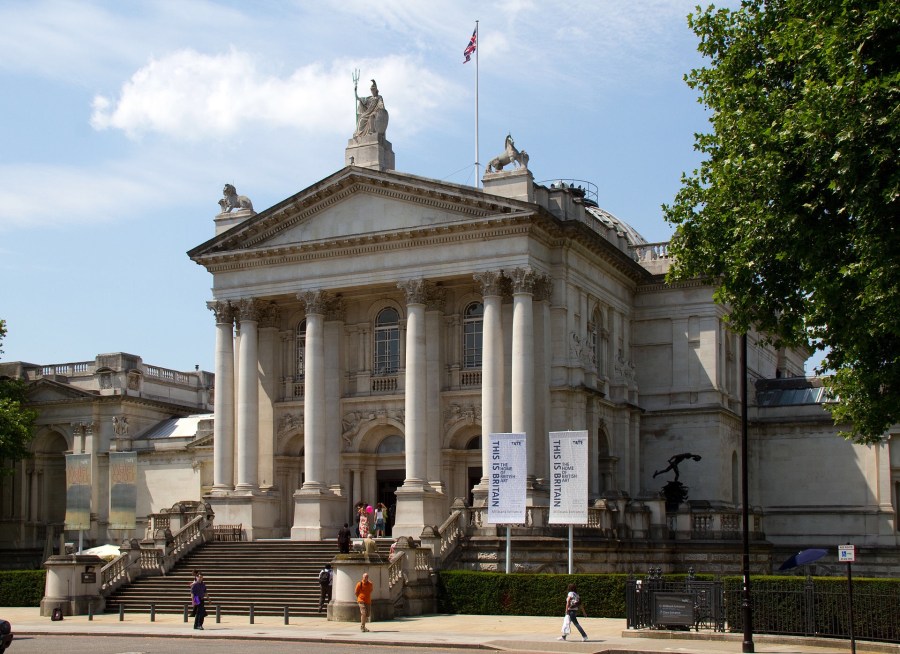
The architect for the new gallery was Sidney R.J. Smith and construction began in 1893…. The building we see today is still very much like it was when it was first built….with its grand entrance, central dome and statue of Britannia with a lion and a unicorn….

Image credit : Tony Hisgett CC BY 2.0

The gallery was officially opened as the National Gallery of British Art – but from the onset people referred to it as the Tate Gallery, after its founder and benefactor, Sir Henry Tate…. The sugar magnate had also donated 65 paintings and 2 sculptures, forming the founding collection of the gallery…. In 1932 it became officially known as the Tate Gallery….