Blog

On this day in history….6th June 1896

On this day in history : 6th June 1896 – The birth of Henry Allingham – the WW1 veteran who was to become a supercentenarian and officially the longest-lived man ever from the United Kingdom….

Henry as an infant, 1890s – Public domain

Henry was born in Clapton, London and he was only 14 months old when his father died from TB…. His mother, Amy Jane – a laundress – returned to live with her parents and brother and so Henry spent his early childhood living in Walthamstow…. His mother remarried in 1905 and the family settled in Clapham…. On leaving school Henry found employment at St. Bartholomew’s Hospital as a trainee surgical instrument maker – but it wasn’t work that inspired him and so he found a job with a company specialising in building car bodywork….

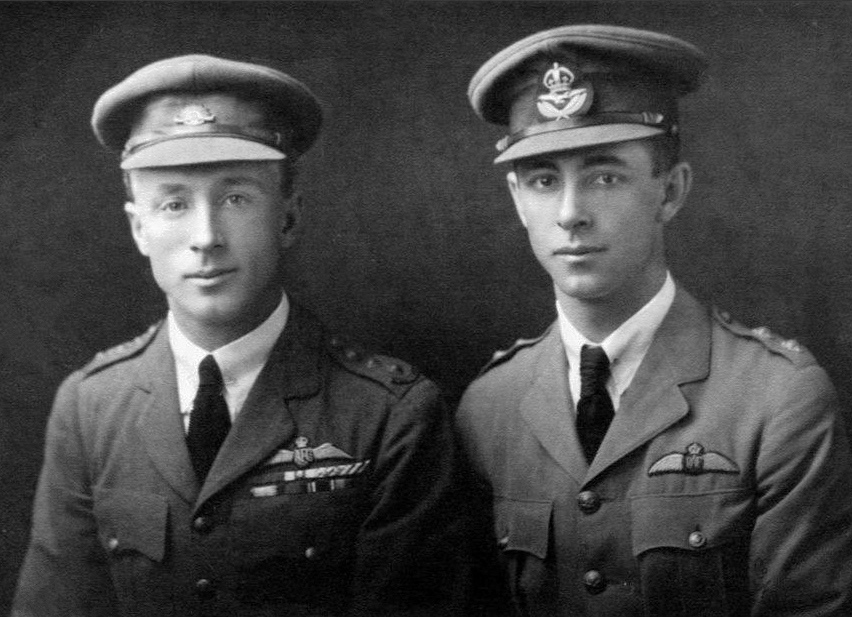
When World War Once broke out Henry was keen to join up immediately but by then his mother was ill…. She died in 1915 and it was after this that he joined the Royal Naval Air Service…. After training he was posted to Great Yarmouth, where he carried out aircraft maintenance – before finding himself in Norfolk, involved with anti-submarine patrols…. Eventually, in September 1917, he was sent to the Western Front to join No.12 Squadron RNAS and in the November was posted to the aircraft depot at Dunkirk – where he spent the remainder of the War….

Henry in RNAS uniform, 1916 – Public domain

He met Dorothy Carr in 1918, in Great Yarmouth and they were married in Romford later that same year…. They were to have two daughters, Betty in 1920 followed by Jean in 1923…. Henry was formally discharged to the RAF Reserve in 1919….

After the War Henry returned to his engineering work in the car industry – working for companies such as Thorns Car Body Makers and Vickers General Motors – before ending up at Ford, in their recently opened Dagenham plant…. He remained at Ford until his retirement in 1961 and then he and Dorothy moved to Eastbourne on the South Coast – where Dorothy died in 1971 of lymphatic leukaemia….

In October 2003, at the age of 107, Henry helped launched the Royal British Legion Poppy Appeal…. In August 2004 he joined three other WW1 veterans for a ceremony at the Cenotaph in Whitehall to commemorate the 90th anniversary of Britain entering the War – by now Henry was the last surviving member of the RNAS…. He also attended the Remembrance Sunday Parade the following year….

He was awarded the Freedom of Eastbourne in April 2006 – the town where he managed to live at home by himself until the following month…. He was still in generally good health but his eyesight was failing – and so in May 2006, a month before his 110th birthday, he moved into a care home near Brighton for blind ex-service personnel run by Blind Veterans UK….

Despite his eyesight Henry made some 60 public appearances over the next year…. In November 2007 he became the longest-lived member of the British Armed Forces and the longest-lived WW1 veteran…. Then on the 19th of June 2009 he officially became the oldest living man in the world…. He was the first British man to reach the verified age of 113…. He put his longevity down to “cigarettes, whisky and wild, wild women – and a good sense of humour”….

Henry died in his sleep at his care home on the 18th of July 2009….

Henry Allingham, 2006 – Public domain

On this day in history….5th June 1916

On this day in history : 5th June 1916 – Whilst on its way to Russia, carrying Lord Kitchener on a diplomatic mission, HMS Hampshire hits a mine off of the Orkney Islands…. 737 lives are lost, including that of Lord Kitchener….

HMS Hampshire – Public domain

HMS Hampshire had been ordered to carry Kitchener from Scapa Flow to Russia – where he was to meet with Tsar Nicholas II for face to face talks about munitions shortages….

Due to gale force winds Admiral Sir John Jellicoe altered the route that Hampshire had been due to take – despite there having been reports of U-boat sightings in the area….

Just after 7.30pm, in a force 9 gale, the ship struck a mine – which had been laid a week before approximately one and a half miles off of mainland Orkney, by U-boat U75, commanded by Kurt Beitzen…. Within 20 minutes HMS Hampshire had sunk….

Kitchener was last seen standing on the quarterdeck – his body was never recovered…. All 10 of his entourage perished – altogether 737 lost their lives, only 12 members of the crew survived….

Portrait of Field-Marshal Horatio Herbert Kitchener – Public domain

The shock was felt all over the British Empire…. Many wondered how on earth the war could be won without Kitchener…. King George V wrote in his diary “It is indeed a heavy blow to me and a great loss to the nation and the allies” …. He ordered that all army officers were to wear black armbands for a week….

On this day in history….4th June 1967

On this day in history : 4th June 1967 – The Stockport air disaster occurs – when British Midlands flight G-ALHG crashes in Hopes Carr, killing 72 passengers and crew….

The aircraft involved, seen at Liverpool in February 1965 – Image credit : Ken Fielding via Flickr

The aircraft had been chartered by Arrowsmith Holidays Ltd and was carrying 5 members of crew and 79 holidaymakers home to Manchester Airport from Palma, Majorca…. The flight had left the Spanish island at 5am….

As the plane came into land at Manchester the first attempt had to be aborted as the pilot was unable to line up with the runway centreline and so called an overshoot…. Then as the aircraft circled around to try for a second time engines numbers 3 and 4 cut out as the plane reached over Stockport…. The aircraft crashed at 10.09am in the small open area of Hopes Carr, near to Stockport town centre…. Despite it being a heavily populated area thankfully there were no casualties on the ground….

Members of the public and the police managed to pull 12 people from the wreckage – but within a few minutes the mangled plane was engulfed in flames, killing all of those trapped inside who had survived the impact….

Being a Sunday the majority of people were not at work…. It is estimated some 10,000 turned up to view the scene – which hampered the rescue services…. 72 people out of the 84 onboard had been killed – Captain Henry Marlow survived but suffered amnesia…. An investigation concluded the engines had cut out due to fuel starvation, resulting in a loss of power and making the aircraft impossible to control…. Four months later it emerged that five days prior to the crash it had been noted that the aircraft was experiencing fuel problems….

Another contributing factor to the crash may have been pilot fatigue – as Captain Marlow had been on duty for some 13 hours, which was perfectly within the legal guidelines at the time…. He had already made a couple of minor errors during the flight before misjudging the first attempted landing – but it does have to be said he did at least have the foresight to divert over Hopes Carr hence avoiding residential areas….

Memorials at crash site – Image credit Zzztriple2000 – CC BY 3.0

On this day in history….3rd June 1978

On this day in history : 3rd June 1978 – The Guinness Book of Records officially becomes the most stolen book from British libraries – the second most commonly stolen book is The Bible….

Books on sex and witchcraft are also popular amongst the thieves…. In a 1996 poll the top books missing were ‘The Joy of Sex’ and ‘The Prophecies of Nostradamus’….

Rare books and documents are obvious targets for professional thieves – it is a problem that has become so epidemic that in 2015 librarians and lawyers held a conference in Euston to discuss the issue and to try and find a solution…. With tens and thousands of historic books having gone missing from heritage libraries worldwide – it was obvious library security had to change…. Most libraries had a good idea of the value of their books – but not always the content between the covers – and thieves were getting more sneaky….

An American thief used razor blades to extract pages from valuable books…. He stole 97 maps from six libraries in the US and Britain – being caught in the British Library in 2005…. Another wily thief smuggled rare volumes out hidden under his jacket – he was jailed for three and a half years in 2010 after stealing £40K worth from the Royal Horticultural Society….

Inside the British Library – Image credit : Jynto – CC BY-SA 3.0

It’s not always those trying to make a dishonest profit who are guilty of book snatching…. A wealthy Iranian millionaire businessman was jailed for four years after he spent eight years, between 1997 and 2005, cutting out pages from some 150 rare books to add to his own private collection…. He caused an estimated £1m worth of damage to books, some dating back to the 16th century, belonging to the British Libaray and the Bodleian Library, Oxford….

Of course the Internet has provided book thieves with a whole new marketplace – and so the crime continues…. Between October 2017 and August 2018 some 7,000 books stolen from the library of the University of Edinburgh and other similar institutions were sold online for approximately £40K by an entrepreneurial book thief…. He also earned himself a two year prison sentence….

On this day in history….2nd June 1840

On this day in history : 2nd June 1840 – The birth of English novelist and poet Thomas Hardy – who brought us classics such as ‘Far From the Madding Crowd’, ‘The Mayor of Casterbridge’ and ‘Tess of the d’Urbervilles’….

Thomas Hardy between 1910-1915 – Public domain

Hardy was born in Upper Bockhampton (now Higher Bockhampton) in the parish of Stinsford, near Dorchester…. His father was a stonemason and builder – and his mother, being educated, was his teacher at home until he went to school at the age of 8…. He attended Mr Last’s Academy for Young Gentlemen until he was 16 – he learned Latin and showed promising potential but the family did not have the means for him to go to university…. Instead he became an architect’s apprentice….

Hardy’s birthplace at Higher Bockhampton – Image credit : Martinevans123 – own work – Public domain

Hardy moved to London in 1862 and enrolled at King’s College…. He then joined the architecture practice of Arthur Bloomfield and became involved mainly with the restoration of churches…. However, he found it hard to settle in London – he became all too aware of class division in the city and felt himself to be socially inferior…. It led to him developing an interest in social reform…. By 1867 he’d had enough of London and returned to Dorset, to live in Weymouth…. It was at this time that he began to concentrate on his writing – although for his first novel ‘The Poor Man and the Lady’ he was unable to find a publisher…. After being advised by his friend, the poet and novelist George Meredith, that his book was too political Hardy destroyed the manuscript…. His next two novels, ‘Desperate Remedies’ (1871) and ‘Under the Greenwood Tree’ (1872) were published anonymously…. His 1873 novel ‘A Pair of Blue Eyes’ was inspired by his courtship of his future wife….

Hardy met Emma Gifford whilst working on the restoration of the parish church of St Juliot in Cornwall during 1870…. It was to be a long courtship, they eventually married in Paddington, London on the 17th of September 1874…. Being unable to have children may have put a strain on the marriage – it is known that they did not get along together very well…. Her delusions of superiority would not have helped matters much either – Emma regarded herself as being above her husband socially and it appears did little to hide her feelings….

In 1885 they moved into ‘Max Gate’ – a house which Hardy had designed himself and was built by his brother…. Emma became involved with the Suffragist movement and she and Hardy began to lead separate lives, to the point of becoming estranged…. In 1912 she died – and despite their differences Hardy was devastated…. Nevertheless, just two years later he married Florence Emily Dugdale, his secretary and nearly forty years his junior…. Florence was also a writer in her own right, as the author of children’s stories….

Florence Hardy, 1915 – Public domain

Hardy’s own writing career was now beyond established…. ‘Far From the Madding Crowd’ had been written in 1874, ‘The Mayor of Casterbridge’ in 1886 followed by ‘Woodlanders’ in 1887…. ‘Tess of the d’Urbervilles’ was met with controversy in 1891 and was initially refused publication – Victorian society was scandalised that a fallen woman could be viewed in a sympathetic light…. ‘Jude the Obscure’, published in 1895 was even more controversial – due to the way it dealt with religion, marriage and sex….

In December 1927 Hardy developed pleurisy – he died at home on the 11th of January 1928…. His funeral was held on the 16th of January at Westminster Abbey…. He had always expressed his wish to be buried with his first wife, Emma…. However, it was insisted upon that he be interred at Poets’ Corner within Westminster Abbey…. Therefore a compromise was reached…. Hardy’s ashes were indeed interred in the Abbey – but his heart was buried with Emma at Stinsford….

Max Gate is now owned by the National Trust – as is his birthplace at Bockhampton….

Max Gate, 2015 – Image credit DeFacto – own work – CC BY-SA 4.0