On this day in history : 7th October 1920 – Women are granted the right for full admission and to become members of Oxford University….
Image credit : Lawrence OP via flickr
From the late 1870s women had been allowed to attend lectures, take the same examinations as men and gain honours…. However, they were unable to receive the degrees that they would have been entitled to had they of been men…. Between 1904 and 1907 some women travelled to Dublin – the university there being more relaxed and willing to award degrees to women – and they became known as ‘Steamboat Ladies’….
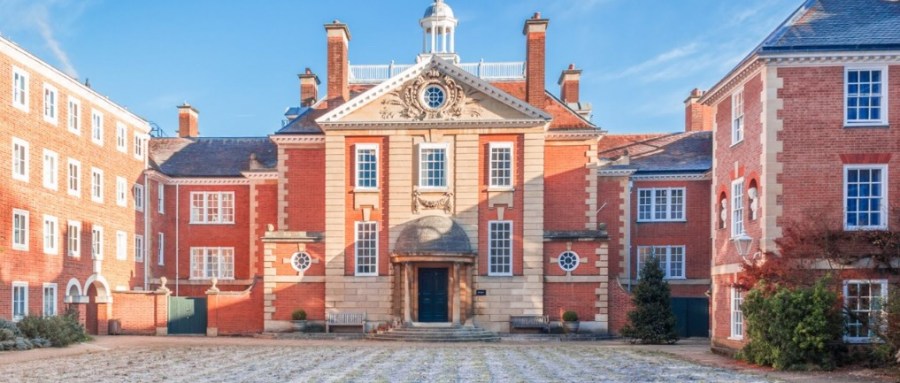
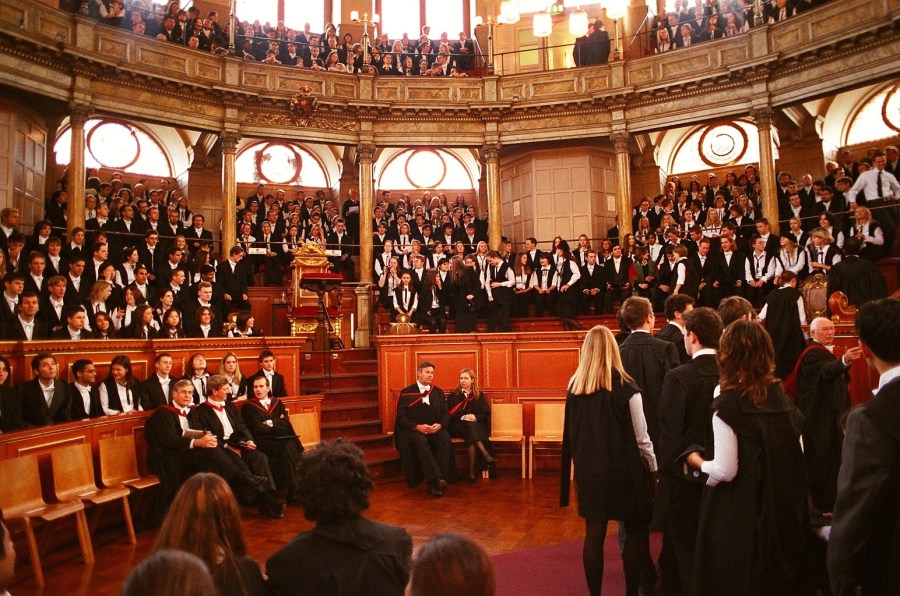
By 1920 four women’s colleges had been established;- Lady Margaret Hall, St. Hugh’s, Somerville and St. Hilda’s…. Women who had previously gained honours were able to return to ‘matriculate’ – go through the formal admission ceremony to the university – and then have the degree they were now entitled to awarded to them in another formal ceremony….At the very first of these ceremonies more than forty women attended….
Lady Margaret Hall – Herbi1922 CC BY-SA 4.0
It wasn’t totally equal rights immediately though…. A quota limiting how many women could enrol at any one time was not abolished until 1957…. The colleges remained single-sex until the 1970s – the last single-sex college, St. Benet’s Hall, finally opened its doors to women in 2015….
Students arriving for a matriculation ceremony at Oxford – Toby Ord CC BY-SA 2.5
On this day in history : 6th October 1968 – The first three places in the United States Grand Prix are taken by British drivers – Jackie Stewart, Graham Hill and John Surtees….
Jackie Stewart – Matra Ford : Jim Culp via Flickr
The 108 lap Formula One race was held at Watkins Glen Grand Prix Race Course, New York and was watched by a crowd of 93,000…. It was a dry and overcast day, Jackie Stewart started the race in his Matra MS10-Cosworth second on the grid…. He had been unable to defend his potential pole position as his car had suffered a broken sub-axle during the second practice day…. To the surprise of everybody pole position went to rising American Indy star Mario Andretti in his Lotus 49B-Ford – who pipped Jackie by seven one-hundredths of a second…. It was also his first ever Grand Prix start….
Mario Andretti, 1978 – Suyk, Koen/Anefo/neg. stroken CC BY-SA 3.0 nl
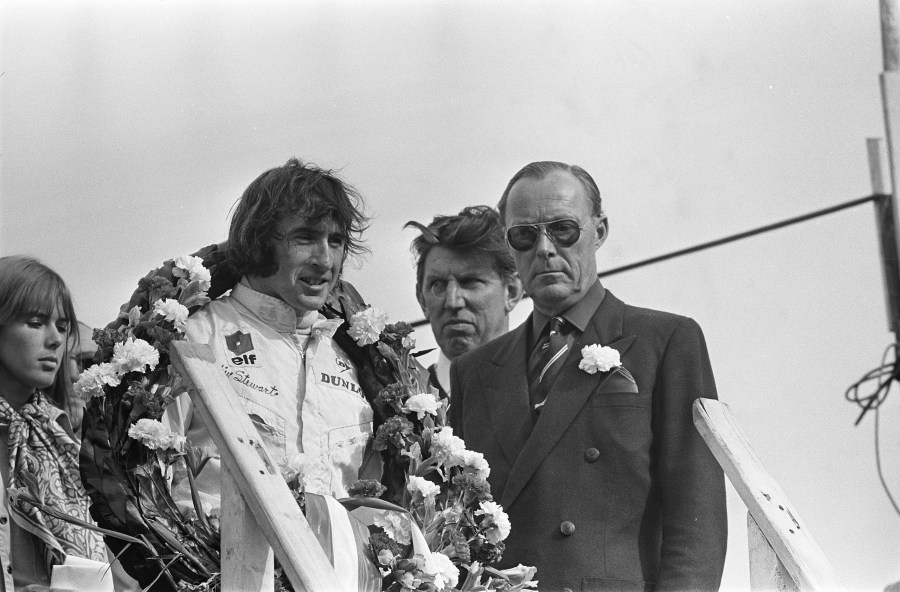
Jackie Stewart provided the fastest lap of the race, at 1 minute 5.22 seconds – and went on to win, with Graham Hill for Lotus second and John Surtees in his Honda third….
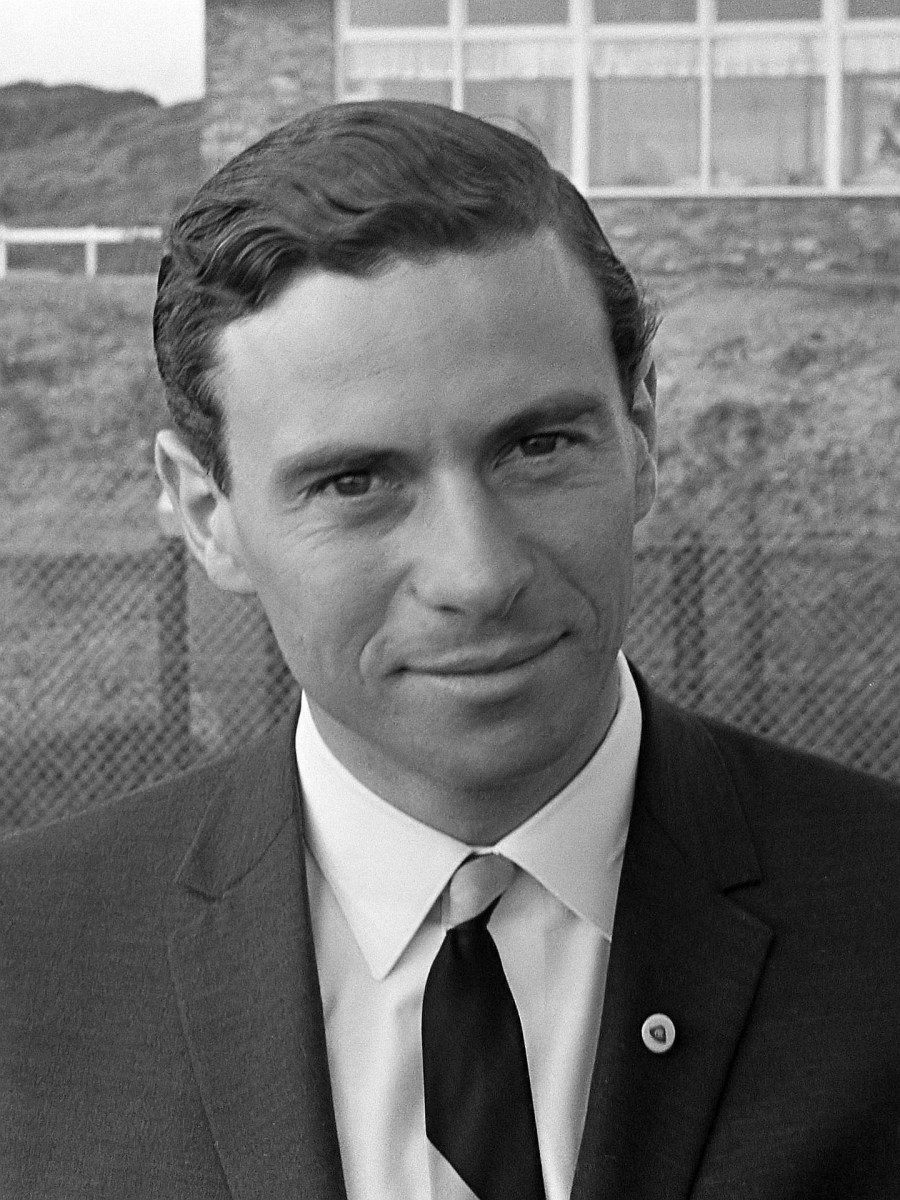
Jackie Stewart, 1969 -Anefo CCOGraham Hill, 1971 – Anefo CCOJohn Surtees, 1964 – Public domain
It must have been both a joyous yet bitter-sweet occasion for Jackie…. Earlier in the year he had lost his friend and role model – fellow Scot Jimmy Clark…. Jimmy had been racing in a Formula 2 race in wet conditions at Hockenheim, Germany in his Lotus 48 – when in the fifth lap of the first heat his car skidded off the track and hit trees…. Suffering a broken neck and skull fracture Jimmy died on the way to hospital…. The cause of the accident was never conclusively identified although it was likely due to a deflating rear tyre….
On this day in history : 5th October 1930 – A British airship crashes on a hillside near Beauvais, Northern France, killing 46 of the 54 people onboard immediately – a further 2 die in hospital later….
Wreckage of R101 – Public domain
The R101 had departed Cardington in Bedfordshire on the evening of October the 4th, bound for Karachi…. The planned route was to take it over London, Paris and Toulouse, before crossing the coast near to Narbonne, in Southern France…. Among the passengers onboard were several dignitaries including:- Lord Thomson, Secretary of State for Air – Sir Sefton Brancker, Director of Civil Aviation – and Squadron Leader William Palstra, RAAF Air Liaison Officer to the British Air Ministry….
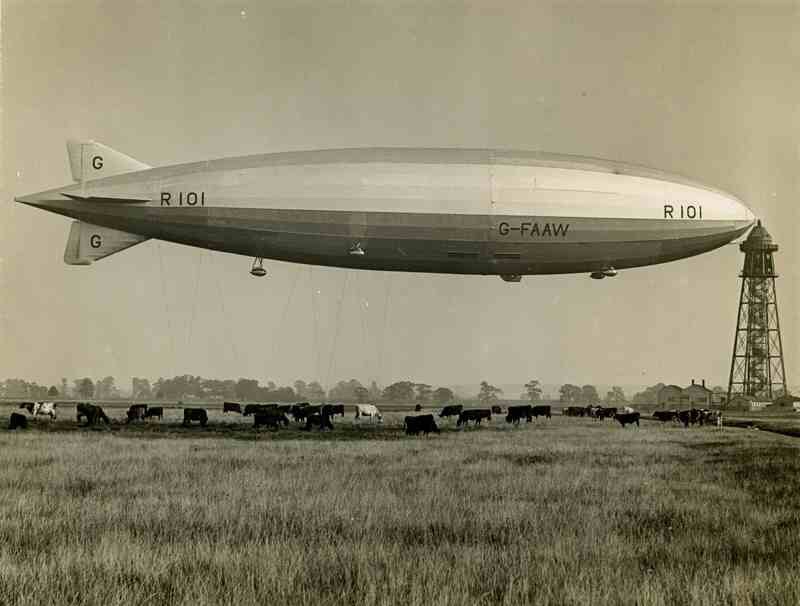
R101 in flight – Victor A. Chapman c1929 – from a collection owned by SkyeWaye CC BY-SA 3.0
The R101 was an experimental government funded project, controlled by the Air Ministry – an attempt to compete with the German Graf Zeppelin…. Despite being in design and development stage political powers insisted it should serve as a commercial vessel from the onset; teething and design problems were never fixed – too much valuable test-flight time was sacrificed to give VIPs pleasure trips instead…. The flight to India was insufficiently prepared for; the fabric covering of the airship was deteriorating and needed replacing…. Too much fuel was onboard (despite a planned re-fuelling stop on the way) and there was too much cargo…. Lord Thomson himself was taking several crates of silverware, china and Champagne – and even a carpet….
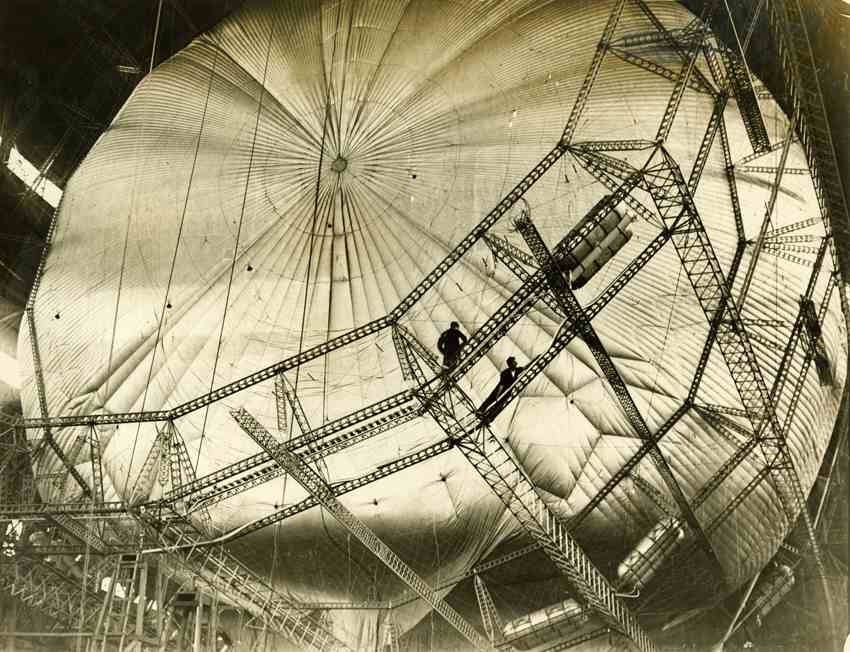
R101 under construction – no restrictions
On the day of departure the weather forecast had been generally favourable, predicting winds of up to 30mph over Northern France but improving further south…. Early into the journey the duty engineer reported an oil pressure problem – after a discussion with the chief engineer it was decided nothing was wrong with the engine, a faulty gauge was likely to blame – so it was accordingly replaced and the journey continued…. By now the weather had deteriorated; it was raining heavily and a revised weather forecast now predicted winds over Northern and Central France to reach 50mph…. A new course was set, sending the R101 over Orly – but the estimated wind speed and direction was inaccurate and sent the airship east of its intended course….
Moored at Cardington – no restrictions
The R101 went into a steep dive – emergency ballast was released and slowly the airship recovered…. A second dive prompted orders for speed to be reduced – the airship was flying at full speed on all engines, something it had never done before…. But before the engineer could respond the R101 hit the ground, at the edge of a wood near to Allone, a village south west of Beauvais….The impact speed was relatively low, approximately 13mph – and would have been survivable had the airship not been inflated with hydrogen – a highly flammable gas…. The R101 caught alight immediately – the resulting fire was an inferno…. Britain never operated a rigid airship again….
On this day in history : 4th October 1911 – The first escalators to be installed on London Underground are unveiled to the public at Earls Court Station….
Image via Pinterest
Supplied by the Otis Elevator Company, the pair of moving staircases connected the Piccadilly Line and District/Circle lines…. One escalator was only able to carry passengers upwards, whereas the second was capable of being put into reverse, in case the other broke down….
Apparently London Underground hired a one-legged man to ride up and down the escalators all the first day – to show the public how safe they were…. However, in the first week 9 dresses were torn, 1 finger was pinched and a man fell off his crutches…. But with the addition of a guard rail the safely issues were quickly resolved….
Initially the moving staircases were on a month’s trial but proved to be so popular that they were kept…. So successful were they in fact, that between 1911 and 1915 a further 22 escalators were installed on London’s underground system…. Nowadays there are over 400 of them….
London Underground Escalator – Image credit : Stockholm Transport Museum via Flickr
On this day in history : 3rd October 1283 – Dafydd ap Gruffydd, Prince of Wales, is the first nobleman in Britain to be hanged, drawn and quartered….
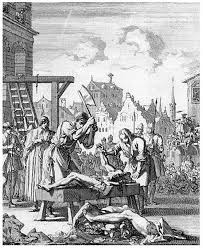
The execution of Dafydd ap Gruffydd – image via Facebook
As the last independent Welsh Kingdom falls and the English gain control of the country, Dafydd is the first person known to be tried on the charge of ‘high treason’…. The orders of King Edward I were that the death was to be slow and agonising….
Dafydd was dragged through the streets of Shrewsbury, attached to a horse’s tail…. He was then hanged, cut down and revived….disembowelled – his entrails burned before him and finally his body was cut into quarters….
Geoffrey of Shrewsbury was the executioner – for which he was paid 20 shillings….











 Cottage Capers