On this day in history: 1st May 1759 – English potter and entrepreneur Josiah Wedgwood founds the Wedgwood pottery company – quickly becoming one of the leading manufacturers of Staffordshire pottery….
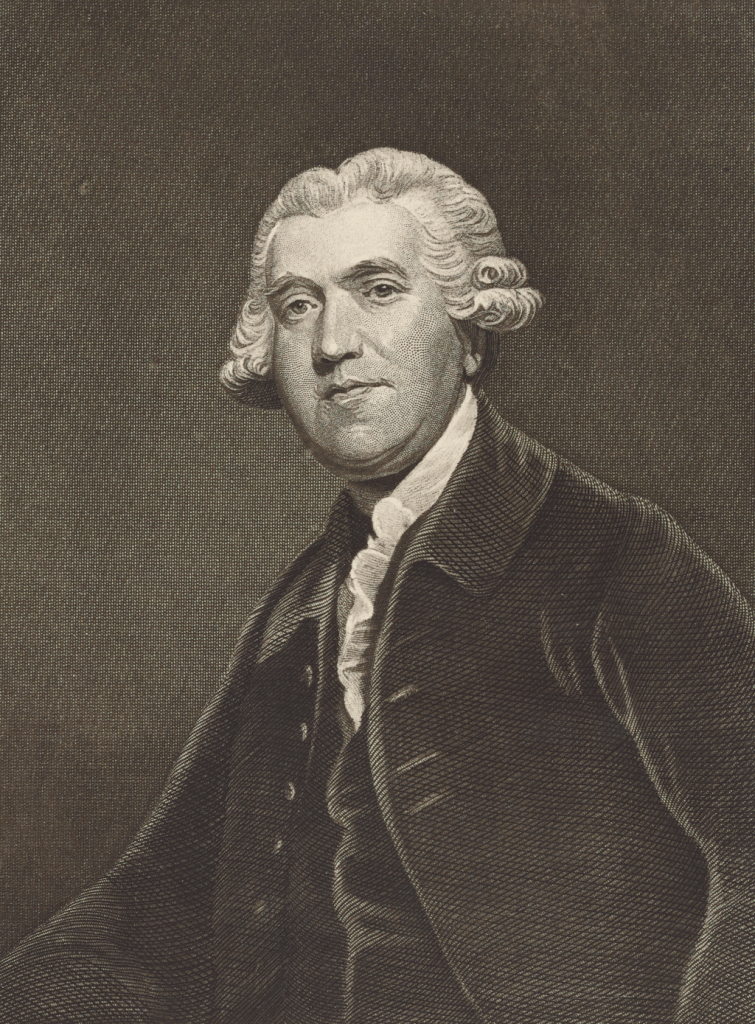
Josiah Wedgwood by Joseph Priestley – Public domain
Josiah, often described as ‘the Father of English Potters’, was born in 1730 the youngest of eleven children, in Burslem, Staffordshire – the heart of English pottery country…. He served an apprenticeship under his brother Thomas – but after suffering smallpox he was left with an extremely weak knee, making it nigh-on impossible for him to operate a potter’s wheel effectively…. Matters were not helped when his brother denied him a partnership in the business….
Undeterred, at the age of 29 Josiah set up his own business, initially renting the Ivy House works, Burslem, from his cousins John and Thomas Wedgwood…. He began to experiment in different techniques with clay….
In 1762 he met Thomas Bentley, a Liverpool merchant who had travelled extensively across the continent and had a vast knowledge of classical and Renaissance art…. A partnership was formed, one that would last until Bentley’s death in 1780….
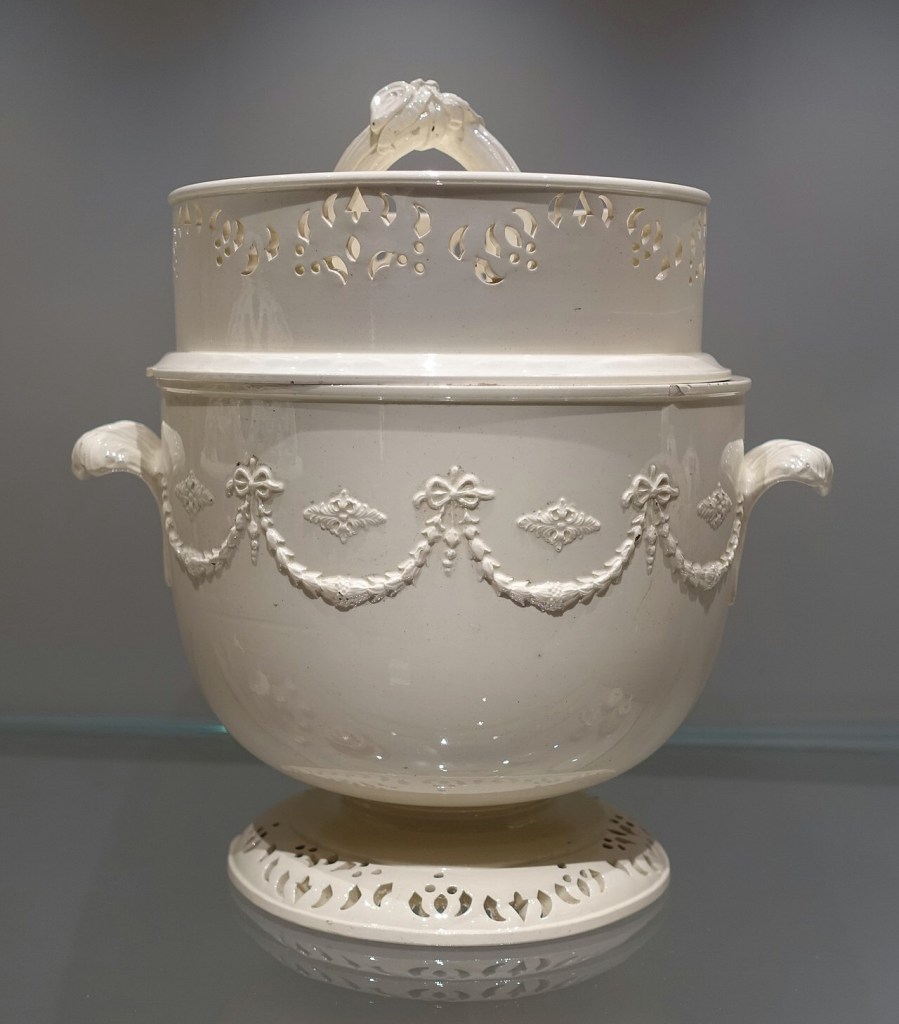
Wedgwood ice bucket circa 1770 Queen’s Ware – Daderot own work – Public domain
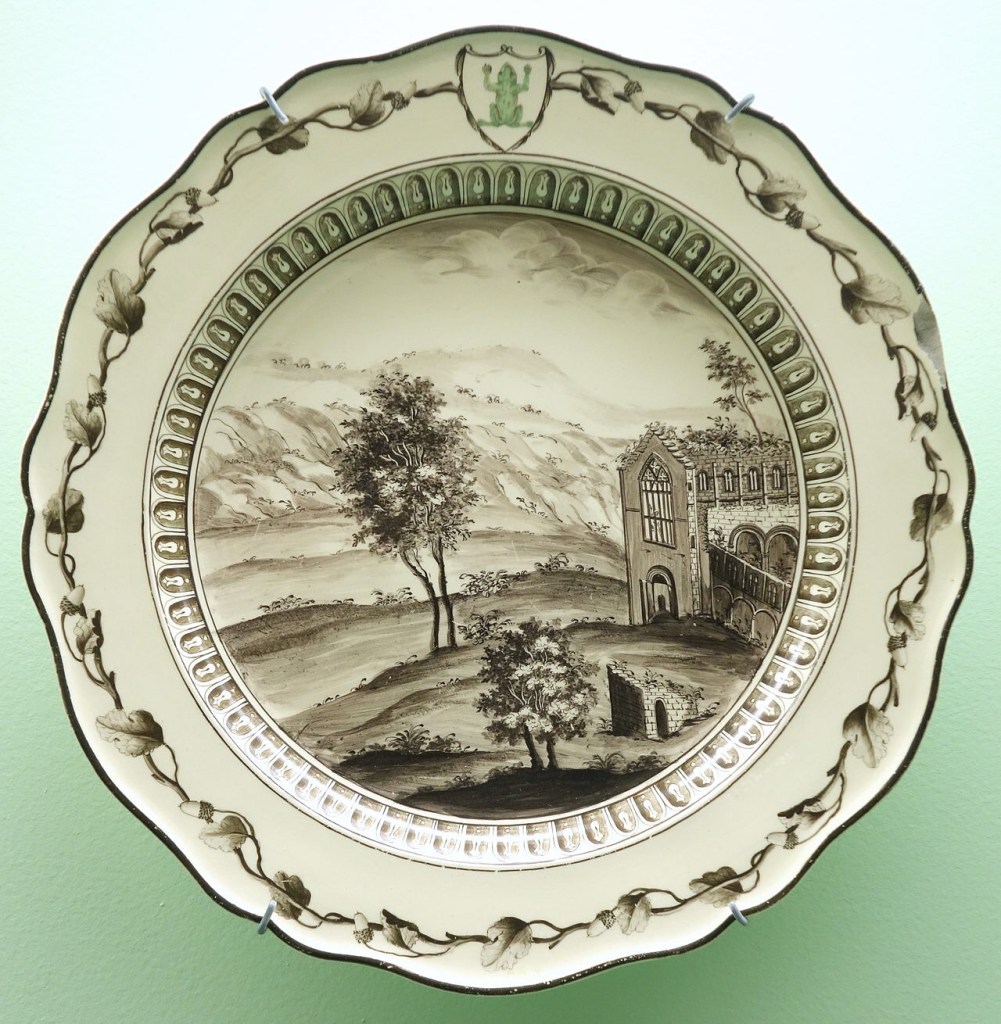
It was also in 1762 that Josiah was called on to produce a tea and coffee service for Queen Charlotte – the wife of King George III…. She permitted him to call this new cream coloured fine china he had produced ‘Queen’s Ware’…. A few years later the Empress Catherine the Great of Russia commissioned 50 place settings comprising of 952 pieces – all hand-painted with English scenery…. Wedgwood would go on to grace the tables of royalty and heads of state across the world….
Plate from service for Catherine II of Russia – Public domain
Josiah purchased the Ridge House Estate, 350 acres of land with a factory upon it…. This led to the opening in 1769 of the new Wedgwood factory at Etruria near Stoke-on-Trent…. Attached to the factory was a village which provided homes for the workers and their families – it was ensured that they had a good standard of living….
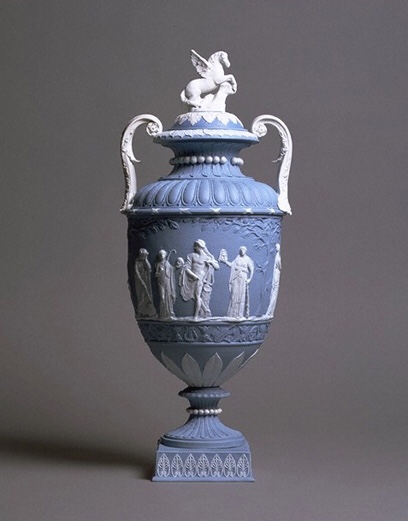
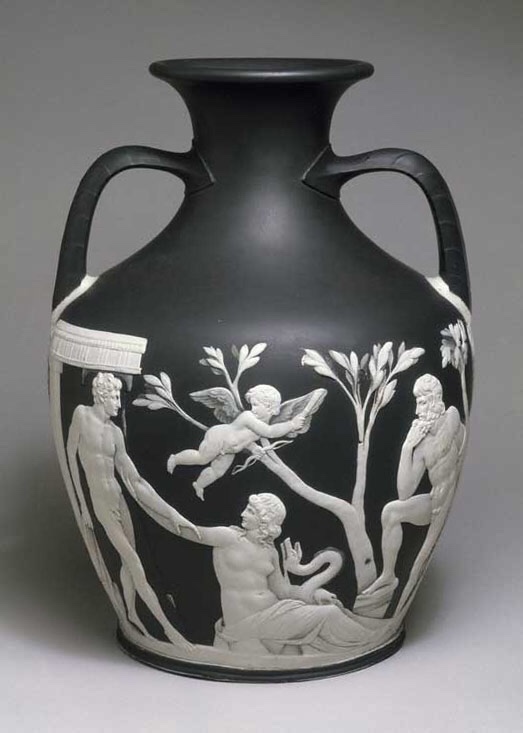
Another of Josiah’s well-known inventions is Jasperware…. After years of experimentation with Barium Sulphate the unglazed vitreous stoneware appeared in 1774…. It is instantly recognisable, with its delicate, moulded, relief-work set on a background of blue, green, yellow, lilac, black or white….
Jasperware vase – Victoria and Albert Museum – CC BY-SA 3.0
Black Jasperware – GFDL
Josiah made everyday pottery into an art form…. In 1783 he was elected to The Royal Society….
After Bentley’s death Josiah was to go into another successful partnership, this time with his friend Erasmus Darwin…. The two families were to become even more entwined when Erasmus Darwin’s son married Josiah’s daughter – and they became parents to none other than evolution theorist Charles Darwin….
Josiah died in 1795; management of the business passed to company partners Josiah II (his son) and Thomas Byerley….
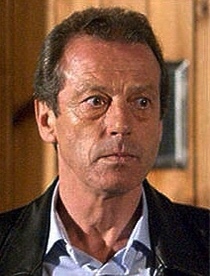
On this day in history : 30th April 1947 – The birth of English actor Leslie Grantham; who amongst his varied acting roles was to play ‘Dirty Den’ in the BBC1 soap opera ‘EastEnders’….
Grantham as ‘Den Watts’ – Fair use
Leslie Michael Grantham was born in Camberwell, South London and in 1965, at the age of 18, he joined the Army – enlisting with the Royal Fusiliers…. He was soon to be sent to Germany but the young Grantham found himself in the situation of being unable to cope financially and he quickly fell into debt…. In desperation he resorted to crime….
It was on the 3rd of December 1966 that things were to go so catastrophically wrong – resulting in a man losing his lie…. Felix Reese was a taxi driver and Grantham attempted to rob him at gunpoint…. A struggle occurred and the gun went off; Reese sustained a gunshot to the head…. Grantham was arrested and charged with murder – he claimed he did not know the gun was loaded….
Grantham came to trial in April 1967 and was convicted of murder, receiving a sentence of life imprisonment…. However, because the sentence was greater than two years it could not be served in Germany and he was transferred to a British prison – Leyhill Prison in Gloucestershire…. He was also dishonourably discharged from the Army….
After serving ten years Grantham was released in 1977…. Whilst in prison he had become involved in amateur dramatics, performing in plays for other inmates…. One of his fellow prisoners was disgraced Labour politician T. Dan Smith, who was serving time for corruption charges…. He spotted that Grantham had a natural flair for acting and encouraged him to pursue it…. Encouragement also came from the actress Louise Jameson, known for roles such as ‘Leela’ in Dr Who, ‘Susan Young’ in Bergerac, ‘Rosa de Marco’ in EastEnders, ‘Blanche Simmons’ in Tenko and for Emmerdale fans she plays the part of ‘Mary’…. Louise Jameson and Grantham were to become good friends….
Upon his release from prison the encouragement Grantham had received from his friends led him to enrol in the Webber Douglas Academy of Dramatic Art…. It was at stage school in 1977 that Grantham was to meet his wife, Jane Laurie…. The couple were married for 31 years before divorcing in 2013…. They had three sons, Spike, Jake and Daniel…. Daniel plays the part of ‘Reggie Jackson’ in the BBC’s Call the Midwife….
Grantham’s TV debut came in 1982 when he played the character ‘Boollie’ in Jake’s End, a production for BBC2’s Playhouse…. A number of minor roles followed; he played ‘Frank’ in the short-lived sitcom Goodnight and God Bless, ‘Davros’ in Dr Who and the part of a signals sergeant in the series The Jewel in the Crown….
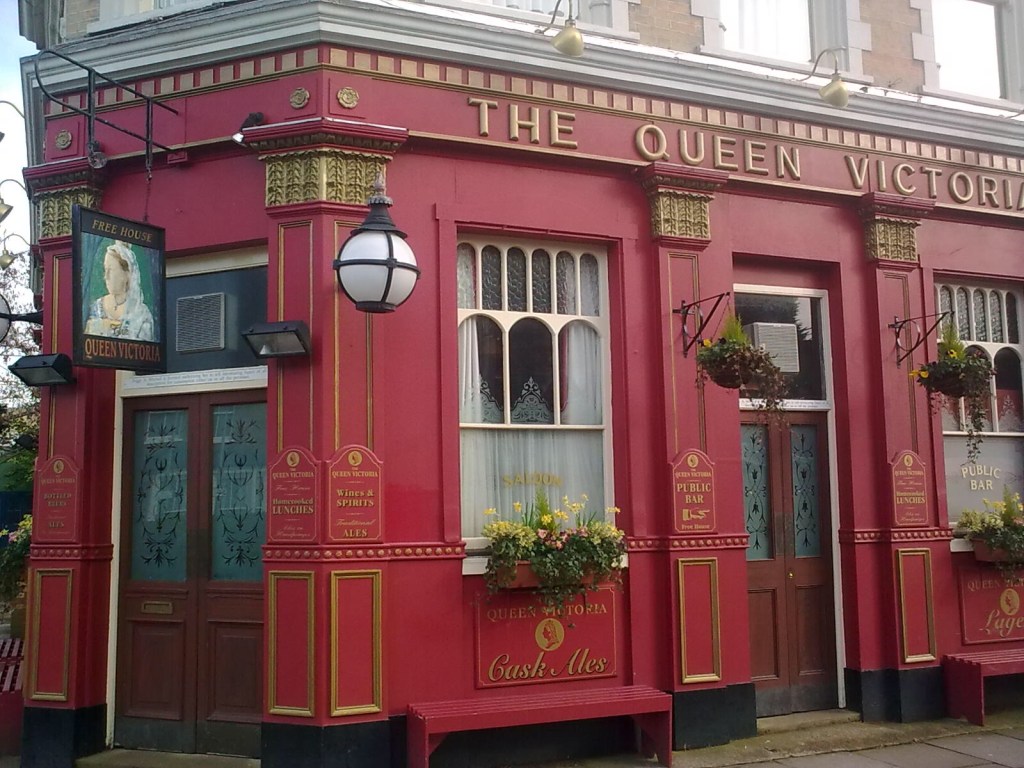
Then in 1984 Grantham’s big break came, when he auditioned for the BBC’s new soap opera EastEnders…. The original audition was for the role of market trader ‘Pete Beale’ (former husband of ‘Kathy Beale’ and father of ‘Ian Beale’)…. Grantham was not offered the part of Pete – but he was offered the part of ‘Den Watts’, landlord of the Queen Victoria public house…. His long suffering, alcoholic, onscreen wife ‘Angie’ was played by Anita Dobson…. Grantham’s character soon got the name ‘Dirty Den’, which was well-deserved with his long string of extramarital affairs…. One of the most memorable storylines being when he fathered the child of 16-year-old ‘Michelle Fowler’ (played by Susan Tully) who was the best friend of his own adopted daughter ‘Sharon’ (played by Letitia Dean)….
On Christmas Day 1986 some 30 million viewers (then more than half of the British population) watched ‘Den’ serve ‘Angie’ with divorce papers – delivering them with the words…. “Happy Christmas, Ange”….
Fair use
During 1988 his character began to be seen less of…. ‘Den’ had sold the pub and fewer main storylines were to come his way…. Grantham announced his intention to leave EastEnders, giving the producers of the soap a major headache – as Anita Dobson was also about to leave and they could not afford to lose two main characters in one go…. Therefore, intense advanced filming took place, enabling Grantham to move on in the autumn of 1988 – but leaving behind enough footage for his presence onscreen to continue into 1989….
The continuing plot of the soap saw ‘Den’ become involved with a criminal gang – imaginatively called ‘The Firm’…. The story unfolded over the summer of 1988…. ‘Den’ had to disappear from Albert Square after falling out with ‘The Firm’ – but was to ‘feel the heavy hand of the law’, landing him on remand in prison…. ‘The Firm’ ambushed the vehicle taking ‘Den’ to Court but somehow he managed to escape both the gang and the police…. But then, on the towpath beside the canal, he met his ‘demise’…. All we saw was a bunch of daffodils concealing a gun – and then with a splash ‘Dirty Den’ was gone…. No body was to be found – until a year later when a decomposed corpse turned up in the canal and it was presumed to be ‘Den’….
Fair use
We all thought ‘Dirty Den’ was finally pushing up daisies – but behind the scenes the BBC were trying to persuade Grantham to return to EastEnders…. In the meantime he had undertaken various other roles, such as Danny Kane in the TV crime series The Paradise Club (1989-90)…. He had a part in The Detectives in 1993 and produced and starred in the sci-fi mini series The Uninvited…. He co-hosted the game show Fort Boyard with Melinda Messenger from 1998-2001 and in 2000 co-starred with Anita Dobson in the two-part The Stretch on Sky One….
Then on the 29th of September 2003 – “Hello Princess”…. ‘Dirty Den’ had returned to Albert Square, walking into the E20 nightclub – now owned by his daughter ‘Sharon’…. It turned out he hadn’t died in the shooting but had survived and fled to Spain, aided by his mistress ‘Jan’…. The twists and turns of life on Albert Square continued, including ‘Den’ trying to get the Queen Vic pub back in December 2004 – which was now run by ‘Sam Mitchell’ – sister of ‘Phil’ and ‘Grant’…. Don’t mess with the ‘Mitchells’!
Photo credit : Matt Pearson – Flickr CC BY 2.0
It was in May 2004 that in real life Grantham became embroiled in a sex scandal, resulting in his three attempts at suicide…. It was confirmed that this time ‘Den’ would be leaving EastEnders for good…. On the 18th of February 2005 16.2 million viewers watched his second wife ‘Chrissie’ hit him over the head with a doorstop during a fight…. Grantham was bitter about EastEnders and spoke out against it – claiming it to be untrue to real life….
Fair use
After EastEnders Grantham appeared on stage in the Jeffrey Archer play Beyond Reasonable Doubt – and he also appeared in pantomime…. He appeared in a couple of episodes of ITV’s The Bill and did some film work…. In 2010 he played ‘Ebenezer Scrooge’ in A Christmas Carol at the Lincoln Theatre Royal….
Grantham was to play the part of ‘John’ in The English Neighbour – a series on Bulgarian TV – and Bulgaria was now where he had made his home…. In June 2018 he returned to England for treatment for lung cancer…. He died on the 15th of June 2018 at the age of 71….
On this day in history : 29th April 1956 – The death of Harold Bride, the Junior Wireless Officer who survived the ill-fated maiden voyage of RMS Titanic….
Harold Bride, April 1912 – Public domain
Harold Sydney Bride was born in Nunhead, London on the 11th of January 1890, the youngest of five children…. On deciding he wanted to be a wireless operator he trained with Marconi, completing his training in July 1911…. His first sea assignment was onboard the American transatlantic liner SS Haverford…. He had further postings on the Beaverford, LaFrance, the Lusitania and the Anslem, before in 1912 joining the crew of RMS Titanic as Junior Wireless Officer, assisting Jack Phillips….
The Titanic left Southampton bound for New York on the 10th of April….The wireless room was situated on the Boat Deck and amongst the operators’ duties was to send personal messages on behalf of the passengers…. Another crucial duty was to receive iceberg warnings from other ships….
RMS Titanic departing Southampton, 10th April 1912 – Public domain
On the evening of the 14th of April Bride was grabbing a few hours sleep before he was due to take over from Phillips at midnight…. The pair were trying to clear a backlog of messages to be sent for passengers – as the radio had not been working properly earlier….
The Titanic struck an iceberg at 11.40pm…. Bride woke and rushed to find out what had happened…. Phillips told him they had struck something and Bride hurried to finish his preparations to go on duty…. Shortly afterwards Captain Smith appeared and asked the two wireless operators to be on standby to send out a distress signal…. Just after midnight he reappeared, giving them the ship’s position and ordering them to request help….
Phillips sent out the distress call and Bride acted as messenger to keep the Captain informed as to which ships may come to the now sinking Titanic’s aid…. The closest ship was RMS Carpathia – unfortunately it did not arrive until after the Titanic had gone down….
Phillips and Bride remained at their post sending out SOS signals…. By now Bride was wearing a life jacket, Phillips was still to put his on…. The Captain came in to tell them that their duty was done and that they were relieved…. Bride went to fetch some personal belongings – whilst Phillips continued to work…. When Bride returned he discovered another crew member attempting to steal Phillips’ life jacket – he managed to grab hold of the man and Phillips rose and knocked the crew member out…. By now water was flooding into the wireless room….
Bride began to help launch one of the two remaining lifeboats – only it was to be washed off the deck inside down….with Bride beneath it…. Somehow he managed to swim out and climb on to the upturned boat…. He and 15 other men managed to cling on until they were taken into other lifeboats and eventually RMS Carpathia…
Although badly injured Bride was able to help Harold Cottom, Carpathia’s wireless operator, send out scores of messages from other Titanic survivors…. Bride had badly sprained one of his feet, the other was severely frost bitten – he had to be carried from the Carpathia – but was greeted by Guglielmo Marconi himself…. He received $1,000 from the New York Times for his exclusive story – and later gave evidence at the inquest….
Bride being carried up ramp of ship – Public domain
Bride went on to marry Lucy Downie in April 1920 and they had three children…. He continued to be a Marconi wireless operator and in World War 1 served as an operator onboard the steamship ‘Mona’s Isle’…. In 1922 he retired from service, settled in Glasgow and worked as a salesman…. He died aged 66 of lung cancer….
On this day in history : 28th April 1923 – The opening of the British Empire Exhibition Stadium – later to become known as Wembley Stadium, one of England’s main venues for sporting and entertainment events….
Wembley Stadium with its Twin Towers – Image credit : Merv Payne CC BY-SA 2.0
In 1920 it was decided to hold a major exhibition in London in order to promote trade throughout the whole of the British Empire…. Land was earmarked at Wembley Park pleasure gardens for an exhibition centre and a grand event was planned for 1924…. An organising committee was established with the Prince of Wales as President – who was keen to see a great national sports ground included – the ears of the Football Association pricked up….
£750k was raised, including a £175k contribution from the government and work began in 1922 with the first turf being cut by King George V…. Contractors Sir Robert McAlpine & Sons worked to a design by Sir John Simpson & Maxwell Anton, which was to include the Twin Towers – two domed towers which were to become the Stadium’s trademark landmark…. The construction took just 300 days, being completed by April 1923…. As a safety check 1,000 men sat, stood and marched on the stands, which were designed to accommodate 30,000 seated spectators whilst a further 100,000 could be housed standing….
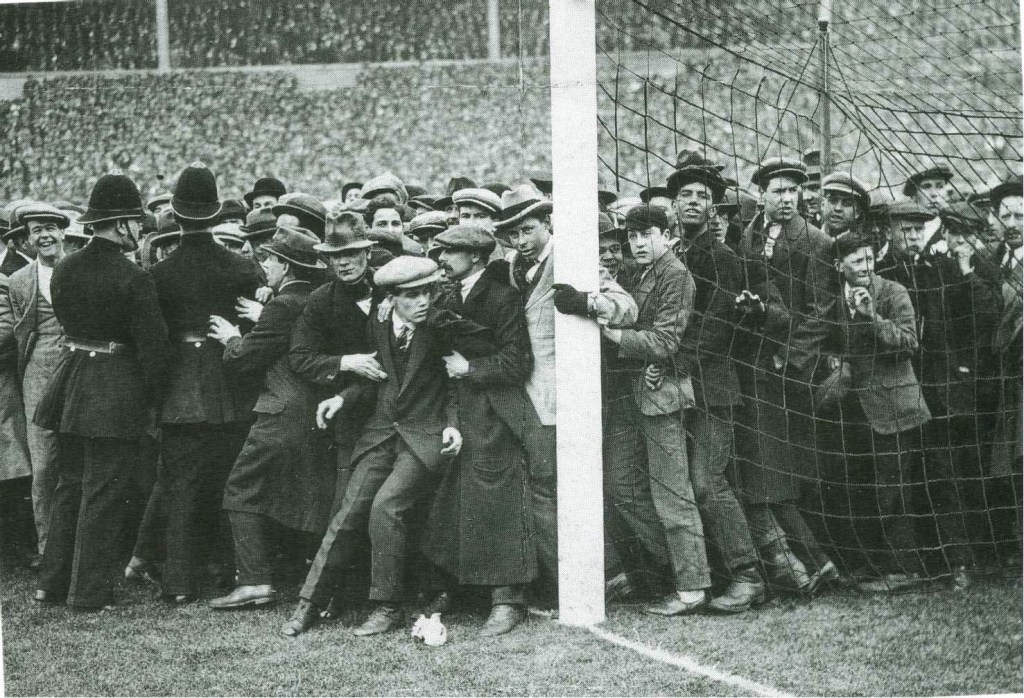
Three days after the Stadium’s completion, on the 20th of April 1923, the FA Cup Final was held…. The event had received worldwide publicity – bringing fame to the Stadium, long before its main purpose, the planned British Empire Exhibition, had even taken place…. The official spectator capacity for the football match was 127,000 but more than 300,000 descended on the Stadium….
Crowds at the edge of the pitch – Public domain
Crowds spilled on to the pitch and it looked as if the match was going to have to be cancelled…. The day was saved by mounted police constable George Scorey and his trusty white horse, Billy – who between them managed to clear the pitch…. The final score was Bolton 2 West Ham 0 – in a match that became known as ‘The White Horse Final’….
Billy the White Horse and Police Constable George Scorey – Public domain
The official opening by King George V of the Empire Exhibition Stadium took place on the 23rd of April 1924…. It was to be the first time ever the King was heard on the radio…. Over 27 million visitors attended the exhibition over its duration….
In August 1927 the Stadium was bought by Arthur Elvin and it became a successful greyhound racing venue…. He also arranged for it to become the stadium used for the annual F.A. & Rugby League Challenge Cup – and 1928 saw the addition of motorcycle speedway….
The 1930s saw improvements to the terraces and seating facilities….and in 1948 the Stadium was loaned free of charge to allow the London Olympic Games to use it…. In 1963 a glass roof was added – and this was also the first year a European Cup Final was played there, when Milan beat Benfica 2-1…. Since then many large events have been held, from concerts to football matches, including the 1966 World Cup….and that final – England 4 West Germany 2….
The Queen presents the World Cup trophy to Bobby Moore, 1966
In 1996 the spectator capacity was reduced to 76,000 and converted to all seating…. The last football match to be played was an international which saw England beaten by Germany 1-0…. In 2002 demolition began to make way for a new stadium – with the famous Twin Towers coming down in February 2003 – to be replaced by the now iconic arch in May 2004….
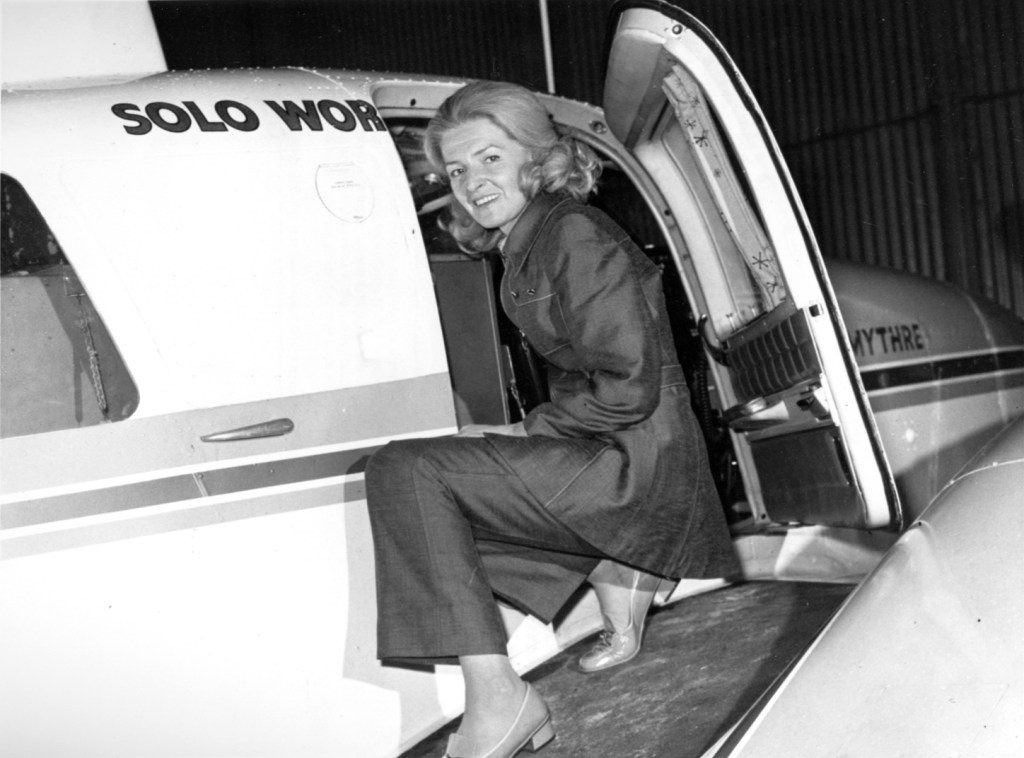
On this day in history : 27th April 1922 – The birth of aviator Sheila Scott – who broke over 100 aviation records and was the first British pilot to fly solo around the world….
Sheila Scott – Public domain
Sheila Christine Hopkins was born in Worcester and she had a troubled childhood…. She attended the Alice Ottley School, a prestigious school that has seen pupils such as Barbara Cartland and Vanessa Redgrave…. But Sheila was not to do well at the school and was nearly expelled on several occasions….
During World War 2 she was to serve as a nurse at the Haslar Royal Naval Hospital – and then between 1945-1959 she was to pursue a career as an actress and model…. Using the name Sheila Scott she had small roles in theatre, films and TV…. She married Rupert Bellamy in 1945 but it was to be a short-lived marriage, ending in 1950….
Sheila learned to fly at Thruxton Aerodrome, near to Andover, Hampshire in 1958…. Her first aircraft was a Thruxton Jackaroo – a converted de Havilland Tiger Moth – which she bought from the RAF…. She owned this plane until 1964 and won several races with it…. To pay for her flying she worked as a demonstrator for Cessna and Piper….
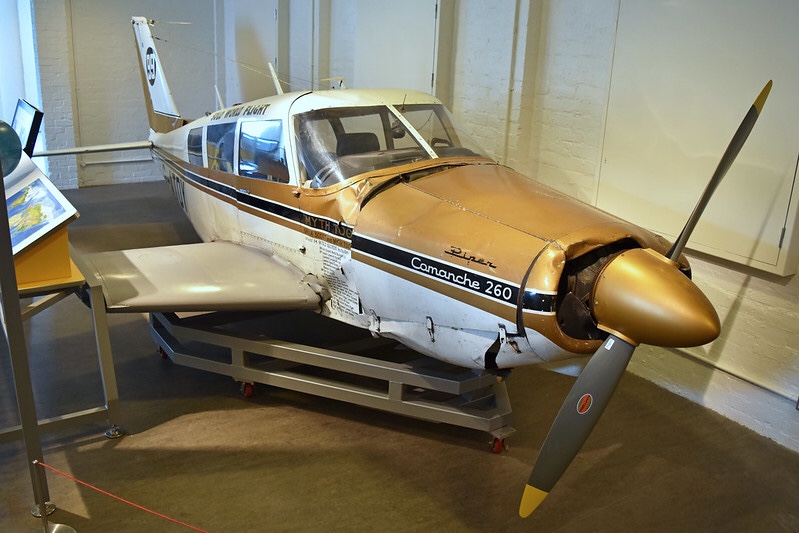
In April 1966 she bought her Piper Comanche, which she named ‘Myth Too’ – it was the aircraft in which she set almost 90 of her records…. In 1967 she set the world record for flying between London and Cape Town and also in the same year the record for crossing the North Atlantic Ocean…. In 1969 the South Atlantic – and then in 1971 flying from Equator to Equator over the North Pole…. Sheila was the first to fly over the North Pole in a light aircraft….
The Comanche ‘Myth Too’ (which was damaged after Sheila owned it) – Image credit : Alan Wilson via Flickr
Her first solo around the world flight began on the 18th of May 1966, from Heathrow…. 34 days later, after flying some 31,000 miles and 189 hours of flying time, on the 20th of June 1966 she arrived back…. She was to repeat the trip again 1969-70…. In 1971 she bought her Piper-Aztec in which she completed her third solo around the world trip…. Unfortunately this aircraft was destroyed in 1972 whilst at the Piper factory in Lock Haven, Pennsylvania, after a severe flood caused by Hurricane Agnes….
Sheila was to win several awards…. She received a Herman International Aviation Trophy for setting a new light aircraft speed record of 28,633 miles solo in 33 days and 3 minutes in 1967…. She won the Brabazon of Tara Award in 1965, 1967 and 1968, the Britannia Trophy of the Royal Aero Club of Britain 1968 and the Royal Aero Club Gold Medal in 1971…. In 1968 she was awarded an OBE….
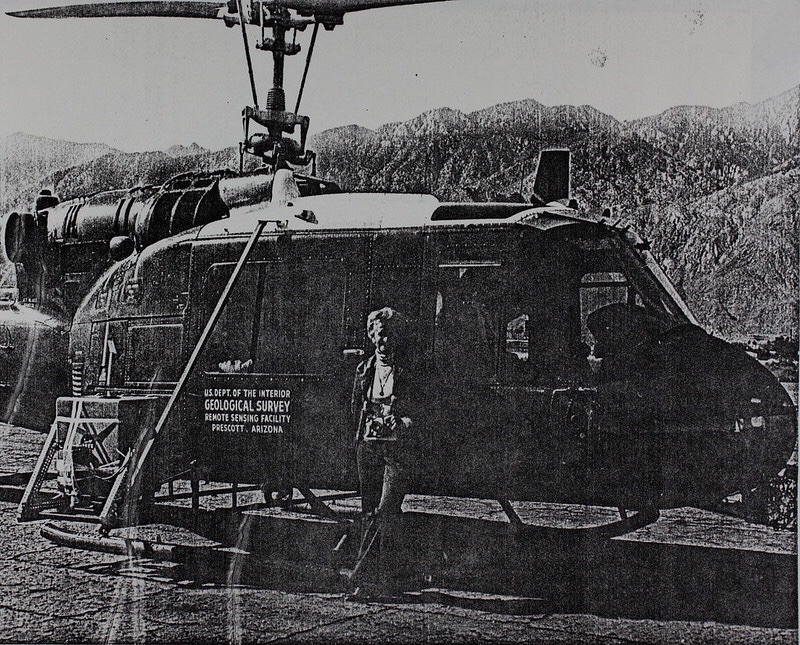
She wrote two books:- ‘I Must Fly’ (1968) and ‘On Top of the World’ (1973)…. She founded the British branch of the ‘Ninety-Nines’ an international organisation providing support, networking, mentoring and scholarship for female pilots – which was originally created by Amelia Earhart in 1929…. She was also a member of the ‘International Association of Licensed Women Pilots’ and the ‘Whirly-Girls International’ – a non-profit making educational organisation to help women advance in helicopter aviation….
Image credit : SDASM Archives via Flickr
After having achieved so much in her lifetime it is sad to think Sheila’s life ended in poverty, living in a bedsit in Pimlico, Central London…. She died of cancer at the Royal Marsden Hospital on the 20th of October 1988, aged 66….