Blog

On this day in history….12th June 1889

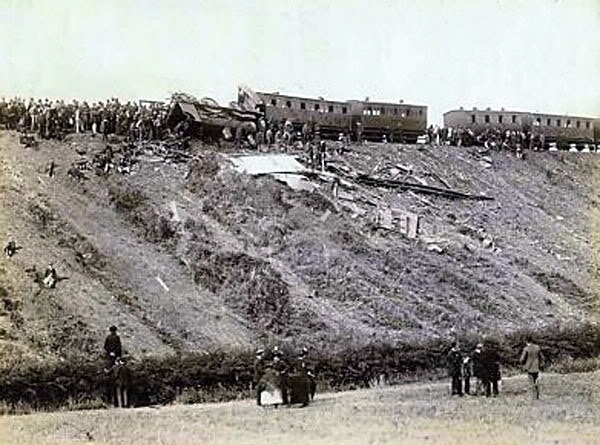
On this day in history : 12th June 1889 – 89 people are killed and over 170 are injured in the Armagh rail disaster, in Northern Ireland – nearly a third are children…. It remains Ireland’s worse ever rail disaster….
img_3362
Public domain – photographer unknown

Each year the Armagh Abbey Street Methodist Church would hold a Sunday School excursion to Warrenpoint, a resort town on the northern shore of Carlingford Lough, about an hours train journey away…. The traditional day trip was extremely popular and open to all; lots of different religions:- Catholics, Church of England, Presbyterian and Methodists – of all classes joined in….

This particular year the demand for places was especially high and a special train with extra carriages was laid on…. Accompanied by the band of the Royal Irish Fusiliers around 940 passengers boarded the train – the doors were locked behind them to prevent non-ticket holders from boarding….and the train departed at 10.15am….

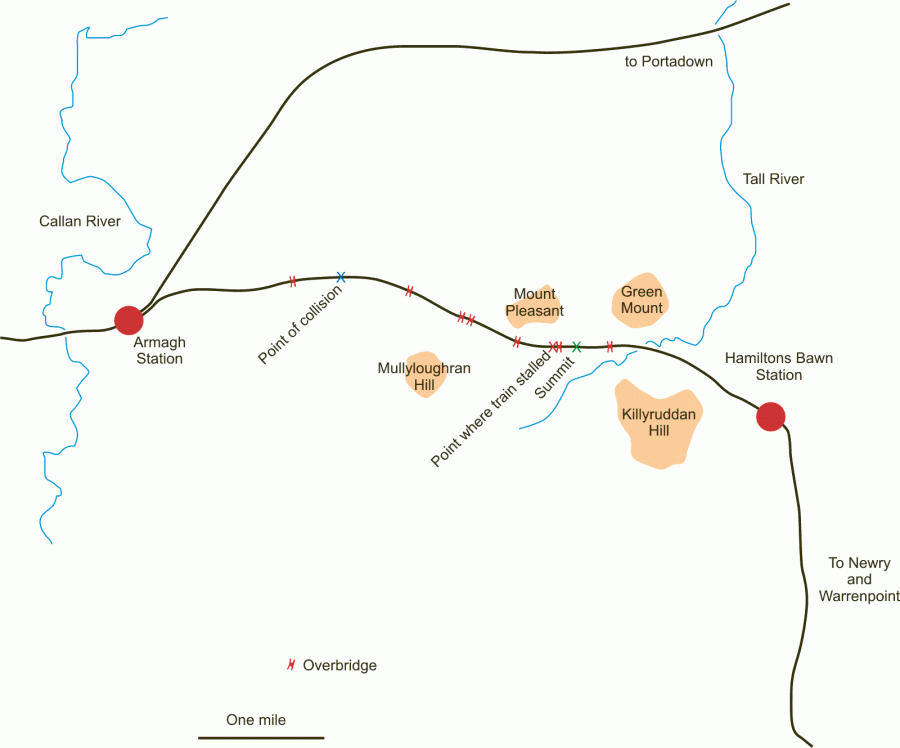
Three miles out of the city they ran into problems; the train tried to pull up the Armagh Bank, a gradient of 1.75…. The weight of the train, some 186 tons not including the engine, was too much – and on reaching Derry’s Crossing, almost at the top, the train stalled…. Realising it would be impossible to restart with that much weight it was decided to decouple the front four carriages and take them on to Hamiltons Bawn – and then return for the remaining eight….
img_3361
Map of the Railway between Armagh and Hamiltons Bawn – Image credit: Afterbrunel (talk) (uploads) – Public domain

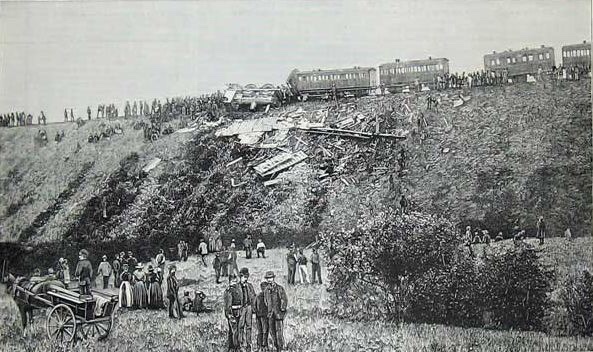
The handbrake was applied in the guard’s carriage at the rear – but as an added precaution large stones were placed behind the wheels of the waiting carriages…. However, the stones could not hold the weight and were crushed as the carriages began to roll back…. The runaway train gathered speed and finally crashed into the 10.35 – a powerful engine with a light load – at about 40mph…. There was little damage to the 10.35 but the last three carriages of the Sunday School special and their occupants were obliterated…. 64 were declared dead at the scene and over the following days this number rose…. The names of those who died are recorded in Abbey Street Methodist Church….
img_3360
Illustrated London News, June 22, 1889 – Public domain
img_3363
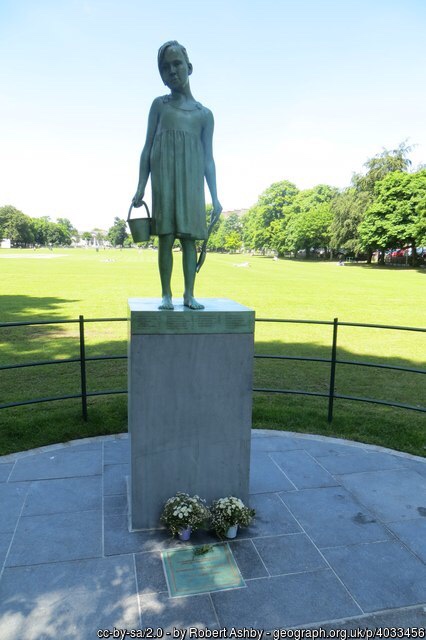
Recently installed memorial in The Mall, Armagh – commemorating the Armagh railway disaster

On this day in history….11th June 1959

On this day in history : 11th June 1959 – The Hovercraft, an invention by Christopher Cockerell, is officially launched in the Solent – marking a new era in transport….img_3356

Cockerell, a boat builder from Lowestoft, had begun working on the design in the mid-1950s…. He had originally been trying to come up with a way of making boats go faster by reducing friction…. His initial ideas came from experimenting with coffee and cat food tins and a hairdryer….

His design was referred to as a ‘man-made flying saucer’….and it was described as ‘a cross between an aircraft, a boat and a land vehicle’…. Being propelled along on a cushion of air created by an on-board fan made it hover just above the surface of water or land….img_3355

Cockerell approached the Government for backing – but his design was immediately placed on the ‘Top Secret List’ – as its potential was seen for military use…. This meant Cockerell was unable to develop his idea commercially…. Finally, in 1959 he managed to get his design de-classified and he formed the Hovercraft Development Company Ltd – and managed to secure a grant of £100,000 from the National Research Development Company to develop his project….

img_3359
Cockerell in 1976 – Image credit: Polygoon-Profilti (producent) / Nederlands Instituut voor Beeld en Geluid (beheender) CC BY-SA 3.0 nl

An experimental model, 29ft long and 24ft wide, known as ‘SRN-1’ was built at Saunders-Roe at Cowes on the Isle of Wight…. The Duke of Edinburgh visited Saunders-Roe and persuaded the chief test pilot to let him take over the controls…. The Duke flew the craft so hard he had to be asked to slow down…. Later an inspection revealed damage to the bow due to the excessive speed….it was never repaired and became referred to as the ‘Royal Dent’….

SRN-1 was launched officially in the Solent on the 11th of June 1959….and at the same time Saunders-Roe announced another prototype ten times the size was planned…. The hope was that one day Hovercraft would be able to cross the Channel in just 20 minutes….

img_3358
SRN-4 Hovercraft (Mountbatten class) – Andrew Berridge CC BY-SA 2.5

Within weeks, on the 26th of July, a crossing had been made of the English Channel…. Since then over 80 million people and 12 million cars have been carried across by Hovercraft…. The service stopped in 2000 due to competition from the Channel Tunnel and the ferry companies…. However a service still operates from Portsmouth to Ryde on the Isle of Wight….img_3357

On this day in history….10th June 1977

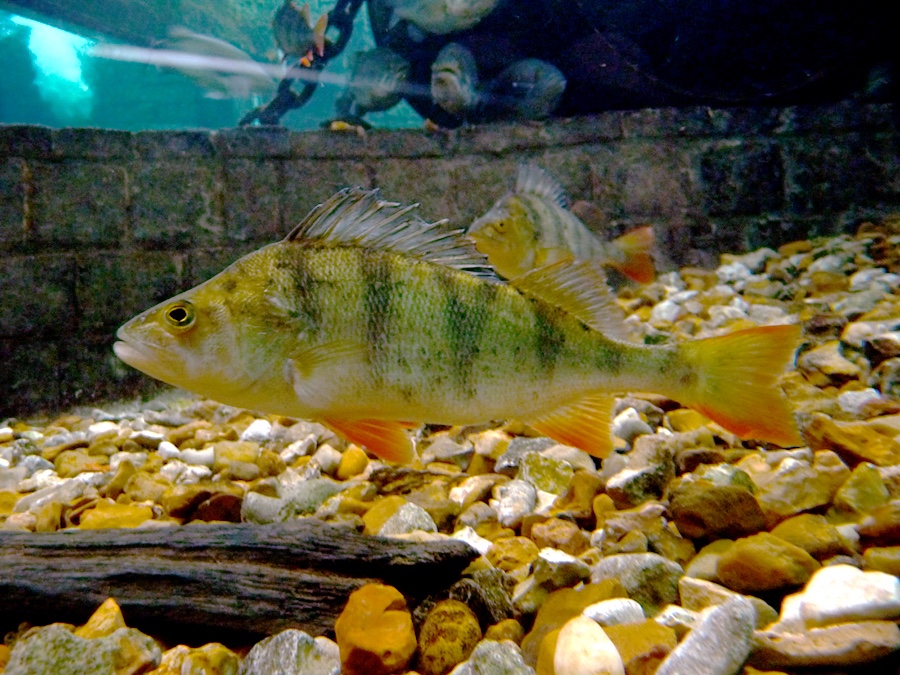
On this day in history : 10th June 1977 – After two years on the rampage in a Kent pond a rogue perch nicknamed ‘Mini-Jaws’ is finally caught – having apparently devoured 3,000 goldfish….

img_3351
Perch – Perca fluviatilis – Image credit: Citron CC BY-SA 3.0

61-year-old Alf Leggatt, a former trawler skipper, owned a lake in which he bred goldfish, in the village of Ickham near to Canterbury…. Somehow a perch (Latin name Perca fluviatilis) had found its way into the pond; generally perch live in small groups as adults and are found in running water…. If given half a chance they will eat goldfish and this particular one must have thought he had died and gone to Heaven as goldfish were on the menu every day…. He managed to munch his way through 2,000 of them….

Alf tried to net him but without success; others tried with net and line but they too were unsuccessful….and eventually the Army were called in…. But the wily fish managed to outwit five soldiers with a machine gun and a quantity of explosives….

Next big-game hunter Lt. Col. Blashford-Snell had a go…. He simply upped the explosives to create a bigger bang – but was confident enough of his success to say ‘that must have done the trick’…. Alf restocked with another 800 goldfish – but Mini-Jaws was still at large….and hungry….

img_3353

Eventually it took two Southern Water Board engineers in a rowing boat, armed with a fishing net and a 240v stun-rod to get the better of the errant perch…. The shocked fish, along with most of its intended prey, lay stunned on the surface and poor old Mini-Jaws was plucked from the water….

Mr Leggatt said he was delighted that the fish had been caught – but had also gained a lot of respect for him…. Mini-Jaws weighed just 1lb (0.45kg) – and one of his captors expressed doubt as to whether a perch that size could have eaten 3,000 gold fish in that time span….and wondered if perhaps the herons had helped….img_3354

On this day in history….9th June 1873

On this day in history : 9th June 1873 – After only being open to the public for 16 days Alexandra Palace in London is destroyed by fire…. Less than two years later a new Palace opens….

img_3347

The ‘Palace of the people’ had been an idea conceived in 1859 by Owen Jones, an English-born Welsh architect…. Designed to compliment South London’s Crystal Palace it was to provide the Victorians with a place of recreation, entertainment and education….

Alexandra Palace was built by Kelk and Lucas (who also built the Royal Albert Hall around the same time) – and many of the building materials used were recycled from the 1862 International Exhibition building in South Kensington, after it was demolished…. In 1871 work started on the Edgware, Highgate and London Railway to connect the site to Highgate Station…. Both Palace and railway were completed in 1873….

The grand opening took place on the 24th of May 1873, Queen Victoria’s 54th birthday….with concerts, recitals and fireworks…. In its first couple of weeks over 120,000 people were to visit….but then sixteen days after it opened disaster struck…. A fire in the dome quickly caught hold and all that was left standing were the outer walls…. Three members of staff lost their lives – and a loan exhibition of some 4,700 pieces of historic English pottery and porcelain was destroyed….

img_3349
Original Alexandra Palace on fire in 1873 – Illustrated London News – PD-US

However, the Victorians were never ones to hang around…. Within two years, on the 1st of May 1875, a new Palace opened…. Covering 7.5 acres, the new Palace and surrounding Park boasted many features….centred around the Great Hall with its new Henry Willis organ – one of the largest in Europe at the time…. As well as the Hall a museum, lecture hall, library, banqueting room, a large theatre and art galleries were all included…. The grounds held a Japanese village, boating lake, nine-hole pitch and put golf course – and even the Alexandra Palace Racecourse….London’s only racecourse from 1868 until its closure in 1970….

img_3350
Rebuilt Palace in 1875 – Illustrated London News PD-US

Of course the Ally Pally continues to be a leading venue for arts, sport and entertainment….but not without having to be largely rebuilt once again after being ravaged by fire…. In 1980 much of the building was destroyed when a fire broke out under the Henry Willis organ….

img_3348
Image: John Bointon CC BY-SA 2.0

On this day in history….8th June 793

On this day in history : 8th June 793 – The beginning of the Scandinavian invasion of England, when Vikings raid the monastery of Lindisfarne off the coast of Northumbria….

img_3341
Lindisfarne Abbey – and St Mary’s – Russ Hamer CC BY-SA 3.0

Although cited as the beginning of the Viking Age, which saw a reign of terror which was to last the next 200 years, Lindisfarne was not the first raid…. Previously in 789 three longships had arrived at Portland, Dorset….and on being sent to fetch the ‘Northmen’ to the West Saxon Court the King’s reeve had been killed by the strangers…. Evidently coming in peace had never been their intention – but the raid at Lindisfarne, also known as ‘Holy Island’ had entirely different connotations – being the ‘very place where the Christian religion began in our nation’….

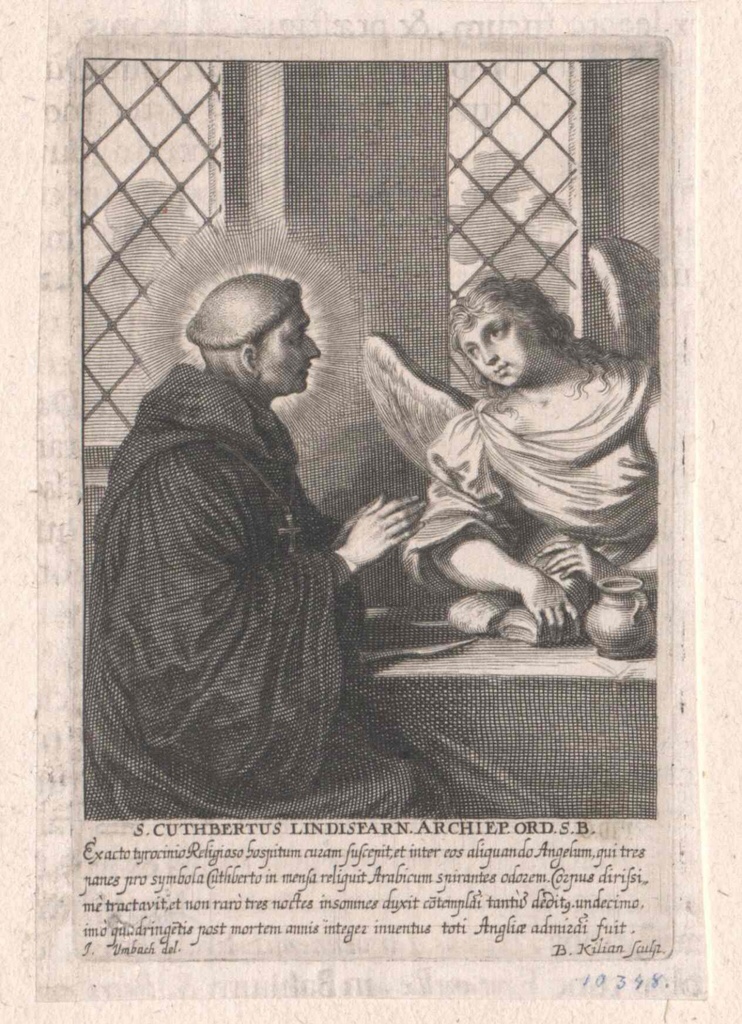
A monastery was founded at Lindisfarne around 634 by Irish monk Saint Aidan…. It became the Christian heartland where monks from the Irish community of Iona settled…. It was where Northumberland’s patron Saint Cuthbert was monk, abbot and then Bishop of Lindisfarne…. Where he died and was buried in 687 and his body revered as a saint – (his remains were later moved to Durham Cathedral)….

Cuthbert von Lindisfarne, Heiliger
Saint Cuthbert – image PICRYL

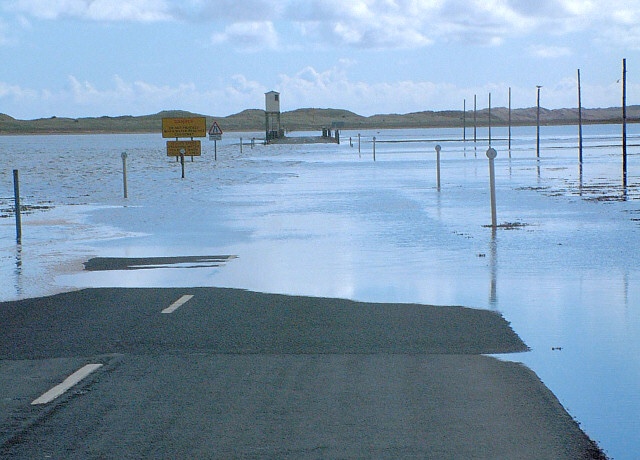
Lindisfarne lies in the North Sea, two miles off the Northumbrian coast – it is part of the county of Northumbria and is linked to the mainland by a causeway at low tide…. At the time it would have been wild, undefended and exposed….and totally unprepared for what was to come….

img_3340
The causeway flooding (with refuge box in distance) – Gary Rogers CC BY-SA 2.0

It has long been debated as to why the Vikings originally invaded England…. Possibly poor harvests in their own land had driven them further afield – but more likely they came to plunder to satisfy their own greed…. They could cross the North Sea in their longships in a matter of a couple of days to make a raid…. The attack on Lindisfarne was just the start of a long and terrifying plunderous campaign….the monks were either killed or taken as slaves and the monastery’s treasures carried away to the awaiting Viking ships….img_3345

The news reached Alcuin, a Northumbrian scholar living in a Frankish kingdom where he was tutor to King Charlemagne’s children…. He recorded “The heathens poured out the blood of saints around the altar, and trampled on the bodies of saints in the temple of God, like dung in the street”….

Worried that this was a message of wrath from Divine Powers he wrote to Higbald, Bishop of Lindisfarne…. He questioned why God had allowed such a thing to happen in “a place more sacred than any in Britain”….and advised Higbald to examine his conscience…. “Is this the outcome of the sins of those who live there?”…. Was he referring to the murder of the Northumbrian king in 788 by a group of conspirators led by Sicga? – Who then in 793 ‘perished by his own hand’….but then had been carried to the Holy Island for burial – just six weeks before the Vikings struck….

Despite the attack at Lindisfarne a Christian community managed to survive…. Raids became more and more frequent – and by 850 Viking armies were over-wintering in the northern parts of England…. By 870 the invasion and conquering of Anglo-Saxon kingdoms had begun in earnest….