Blog

On this day in history….5th January 1941

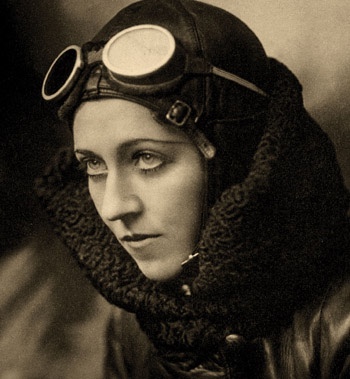
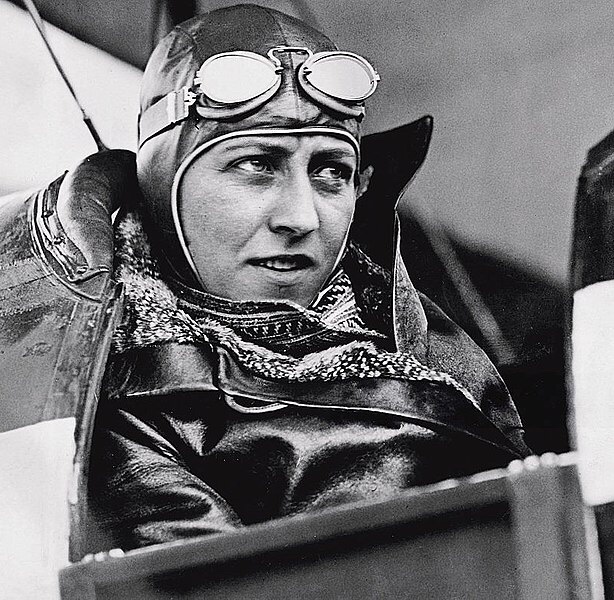
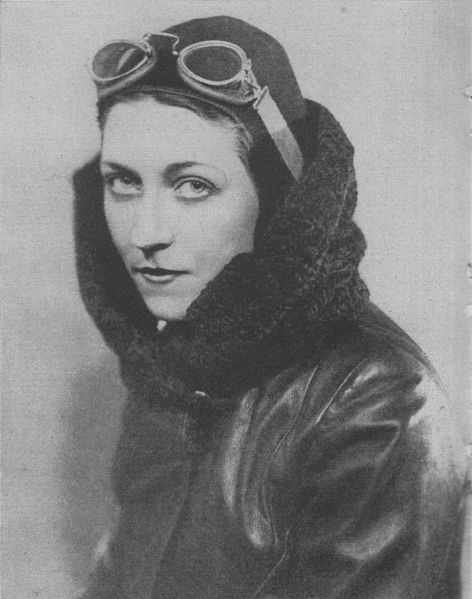
On this day in history : 5th January 1941 – The death of English record-breaking aviator Amy Johnson CBE – who is killed whilst delivering an RAF aircraft from Prestwick to RAF Kidlington in Oxfordshire, via Blackpool….
img_2078

Amy was the first woman to fly solo from England to Australia – a journey that took 19 days…. She was also the first woman to fly from London to Moscow in under a day, completing the 1,760 mile trip in approximately 21 hours…. In her time she held World records for the fastest flights from Britain to India, Britain to South Africa and Britain to Japan….


It was in 1940, during World War 2, that she joined the newly formed Air Transport Auxiliary, transporting RAF aircraft between airfields all over Britain….and it wasn’t long before she rose to the rank of First Officer….

On the 5th of January 1941 Amy was delivering an Airspeed Oxford aircraft to RAF Kidlington, near to Oxford….the weather conditions were atrocious, with freezing fog and heavy snow…. It was a journey that should have taken ninety minutes – but four hours later Amy’s plane was seen to ditch into the water of the Thames Estuary, on the Kent coast, near to Herne Bay….

An eye-witness, who was on board a Destroyer escorting a convoy, said he saw the plane was in trouble – with the engines cutting out and restarting. He also said the aircraft had hit the sea between the Destroyer and HMS Haslemere, which was nearby…. As it made contact with the sea the plane skidded along the surface for a bit and then began to sink. The door opened and the pilot jumped out – just as the plane sank, creating a turbulence, so the pilot was lost from sight…. He then witnessed a man jumping from HMS Haslemere with a rope tied around his waist….

At least some of this does tie-in with the official account of what happened…. Possibly Amy’s plane ran out of fuel, after she had become lost in the fog…. The crew of HMS Haslemere, a small converted ferry being used as an escort vessel, apparently spotted Amy’s parachute as she bailed from the aircraft….and they mounted a rescue mission. The story goes that Amy called out for help and a rope was thrown to her but she was unable to grasp it…. HMS Haslemere’s Commanding Officer, Lt Cmdr Walter Fletcher, with a rope attached to him, dived in to save her – but she had disappeared beneath the surface – and he had to be pulled back on board…. Amy’s body was never found – and Lt Cmdr Fletcher died a few days later from hyperthermia…. He was awarded the Albert Medal for his bravery posthumously….
img_2082

However, Amy’s death has always remained shrouded in mystery….and it is a possibility there may have been a ‘cover-up’….

One theory, however an unlikely one, is that her plane was shot down by ‘friendly fire’…. In 1999 a former member of the 58th (Kent) Heavy Anti-Aircraft Regiment claimed that an aircraft had been contacted by radio and the pilot asked to identify themselves…. Twice the wrong identification code (which was changed on a daily basis) was given…. Sixteen rounds of shells were fired and the plane crashed into the Thames Estuary…. Initially they believed they had shot down an enemy aircraft – and it was only the next day when they learned of Amy’s plight did they realise what they may have done…. Officers ordered them to keep quiet…. Experts believe this theory to be implausible – given the distance the guns were from the aircraft that Amy was flying….

In 2016 another version of what happened on board HMS Haslemere emerged….via the son of a naval reservist who had been serving as part of the crew at the time…. The ship had hit a sandbank during the rescue mission and had been put into reverse to free it…. The reservist sailor saw that Amy was getting too close to the stern and so he shouted to the Bridge to cut the engines…. An angry retort came back from one of the officers ~ “Don’t you tell me what to do!”…. A few moments later Amy was dragged beneath the boat….and was sucked into the blades of the propellers….

Of course this claim can never be verified – the reservist and his crew-mates were not called to give evidence at the enquiry….and no inquest was ever held in to Amy’s death as her body was never recovered…. Amy was 37-years-old – such a short life – but she achieved so much….and was much-loved by the British public….
img_2081

On this day in history….4th January 1813

On this day in British history : 4th January 1813 – The birth of Sir Isaac Pitman – who developed the first major shorthand system…. At one time, Pitman shorthand was the most used system in the entire English-speaking world….

Image credit: The Pitman Collection, University of Bath

Nowadays Teeline is the most commonly used system – taking just a few months to learn as opposed to the typical year that Pitman takes…. There are those who believe that shorthand is becoming obsolete – there has been a steady decline in numbers of people taking shorthand courses over the last decade – in this digital age audio memos are cited as being one of the main reasons for its decline. However, others argue that shorthand still has its place; it is an invaluable tool in business and for students when taking notes, it is also still used in the Courtroom and among journalists….

Pitman popularised shorthand at a time when the Press and business were advancing at a rate that made it a commercial necessity….

Pitman Shorthand – Image : Public domain

Sir Isaac Pitman’s motto in life was “time saved is life gained’…. Born in Trowbridge, Wiltshire he was educated at the local grammar school. After a spell as a clerk in a textile mill he became an English teacher – and started teaching in Lincolnshire….

In 1835 he married Mary, a widow and twenty years his senior – and they moved to Gloucestershire. Pitman was dismissed by the authorities from the public education system when he became a Swedenborgian – a religious movement based upon the writings of scientist, theologist and Swedish Lutheran, Emanuel Swedenborg (1688-1772)…. In 1837 Pitman became teetotal and a vegetarian in 1838….two practices he attributed for his excellent health throughout life – and his ability to work exceptionally long hours…. The Pitmans moved to Bath in 1839 and he opened a small private school….

Pitman was a great advocate of ‘the spelling reform for the English language’…. Modern spelling started to develop from about AD 1350 onwards – and so many influences meant many variations in spelling. The aim of the reform being to create more consistency….

At around the same time Pitman learned Samuel Taylor’s shorthand system – and became interested in creating his own system, using sound. In his phonetic system symbols do not represent letters but sounds – resulting in a quick way to write down information. He published his first pamphlet ‘Sound-Hand’ in 1837….

Pitman Shorthand Consonants – Image credit Xanthoxyl – own work CC BY-SA-3.0

By 1843 his publishing business had become successful enough for him to give up teaching. In 1844 he published ‘Phonotypy’ – which was to become his major publication on the spelling reform….and in 1845 the first version of the ‘English Phonotypic Alphabet’ was published….

Pitman’s wife died in 1857 but he remarried in 1861, this time to a woman eight years younger than himself, Isabella Masters…. Then in 1886 he went into partnership with his sons, Alfred and Ernest and together they formed Isaac Pitman & Sons…. It was to become one of the World’s leading educational publishers – having offices in London, Bath, New York, Toronto, Melbourne, Tokyo and Johannesburg….

Sir Isaac Pitman received his knighthood in 1894….he died in 1897….

Image credit: T via Flickr

On this day in history….2nd January 1971

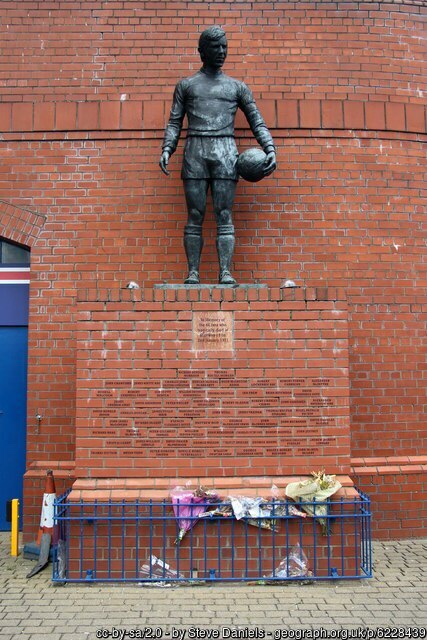
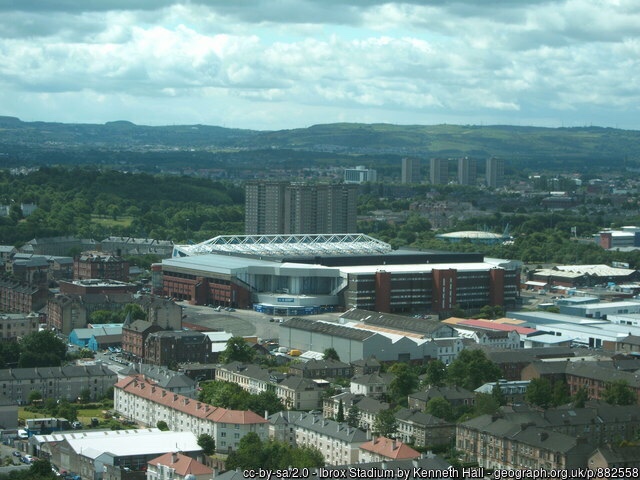
On this day in history : 2nd January 1971 – Disaster strikes at Ibrox Park at the end of an ‘Old Firm’ football match between the two Glaswegian giants – Rangers v Celtic…. Sixty-six spectators are crushed to death and over 200 are injured….

The match had looked as if it were going to be a 0-0 draw….when in the 89th minute Celtic scored – only for Rangers to equalise with only a few seconds of the game remaining…. The 80,000 strong crowd went wild….only tragedy was about to happen on the East terrace, at the Rangers end of the stadium….

As the massive crowd surged to exit the ground some fans stumbled on the steep steps of stairway 13…. Others around them, not realising what was happening, still moved forwards – and a crush developed….the steel barriers on the stairway crumpled and gave way….

Sixty-six people lost their lives – 31 of which were teenagers….five school friends from Fife, 4 of whom lived on the same street, were among them…. One woman, Margaret Ferguson, aged 18 died…. The youngest victim was Nigel Pickup, from Liverpool….he was just 9-years-old…. Over 200 further people were injured….

At the official inquiry, which followed the disaster, it was concluded that someone – possibly a child being carried on his father’s shoulders – fell…..causing a chain reaction….

This was the worse football disaster in British football history until the Hillsborough disaster in 1989…. However, it was not the only catastrophe to have happened at Ibrox Park (now Ibrox Stadium)…. Ten years previously two had died and 44 were injured on the very same stairway…. In 1902 old wooden terraces gave way under the weight of too many spectators….25 died and 587 were injured….

The 1971 incident prompted the UK government to look into safety at sports venues…. As for the Ibrox ground – it underwent a huge redevelopment program taking three years to complete…. Three quarters of the spectating area was replaced by all-seated stands….

In the immediate aftermath of the Ibrox disaster supporters on both sides were united in grief….and now every year those who lost their lives are remembered….

On this day in history….1st January 1839

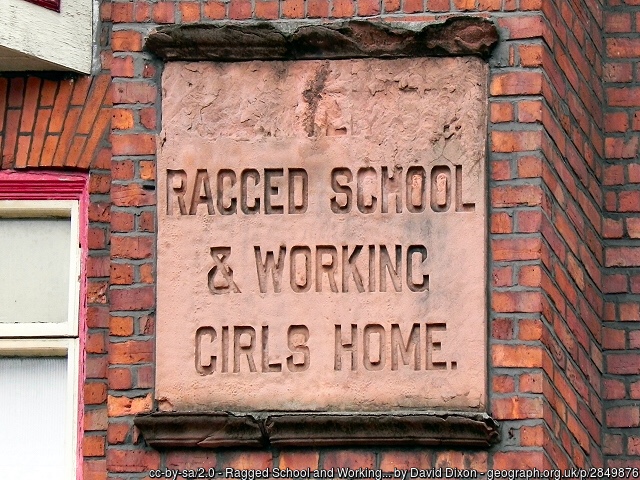
On this day in history : 1st January 1839 – The death of John Pounds – shoemaker, altruistic teacher – and the man originally responsible for the concept of the ‘Ragged Schools’….

John Pounds was born on the 17th of June 1766 and when he was 12-years-old his father arranged for him to enter into an apprenticeship as a shipwright at the Portsmouth Dockyard…. It was when he was 15 that Pounds was to have a life changing accident – he fell into a dry dock injuring his thigh and leaving him severely crippled…. Unable to continue working at the dockyard he became a shoemaker and was able to open a small shop on St Mary Street, Portsmouth – where he was to become known as ‘the Crippled Cobbler”….

It was in 1818 that he began to teach the poverty stricken children of Portsmouth – it is thought this may have come about after he had begun to educate his young disabled nephew out of concern for his welfare…. Pounds would scour the streets and quays of Portsmouth looking for homeless children – he would often take with him food, such as baked potatoes, to entice them…. He would then take them back to his shop where he would teach them the basics of reading, writing, and arithmetic…. He gave them religious instruction and lessons in skills such as carpentry, shoe making, cooking, clothes mending and toy making…. All for no fee – and sometimes there were up to forty children in his class at one time….

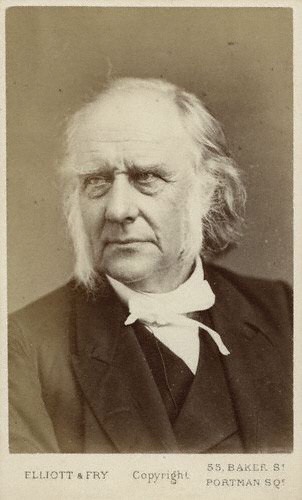
The inspiration behind the concept of Ragged Schools is often credited to the Reverend Thomas Guthrie. He had first come across the idea whilst acting as Parish Minister for St. John’s Church in Edinburgh in 1841 – when he had seen a picture of John Pounds in Fife…. He was inspired by Pounds’ work with the children. In his publication “Plea for Ragged Schools”, which he wrote to raise awareness and enlist public support for the cause in March 1847, he proclaimed John Pounds as the originator of the idea…. He wrote….

….”My first interest in the cause of Ragged Schools was awakened by a picture I saw in Anstruther, on the shores of the Firth of Forth, It represented a cobbler’s room; he was there himself, spectacles on nose, old shoe between his knees, the massive forehead and firm mouth indicating great determination of character; and Fromm between his bushy eyebrows benevolence gleamed out on a group of poor children, some sitting, some standing, but all at their lessons around him”…. (Quoted in Montague 1904)….

img_2034

Guthrie opened his own ‘Edinburgh Original Ragged School’ in April 1847 – he is considered a core leader of the Ragged School Movement – although he was not the first to open such a school in Scotland….

NPG Ax18283,Thomas Guthrie,by Elliott & Fry

The Reverend Thomas Guthrie – early 1870s

In 1841 Sheriff Watson became frustrated by the amount of youngsters being brought before him in his Aberdeen Court Room for petty crimes…. Rather than keep sending them to prison he decided to make it compulsory for them to attend school. Initially he tried to incorporate them into ordinary day schools but teachers objected, not wanting these dirty, ragged, poor children in their classrooms…. Sheriff Watson established a school especially for these children; three meals a day were provided and lessons given in reading, writing, arithmetic and geology…. Children were taught trades such as shoe making and printing….with the hope of giving them a future…. At first the school was just for boys – but in 1843 a girls’ school was set up and in 1845 the two schools integrated…. It did not take long for the idea to spread to Dundee and to other parts of Scotland….

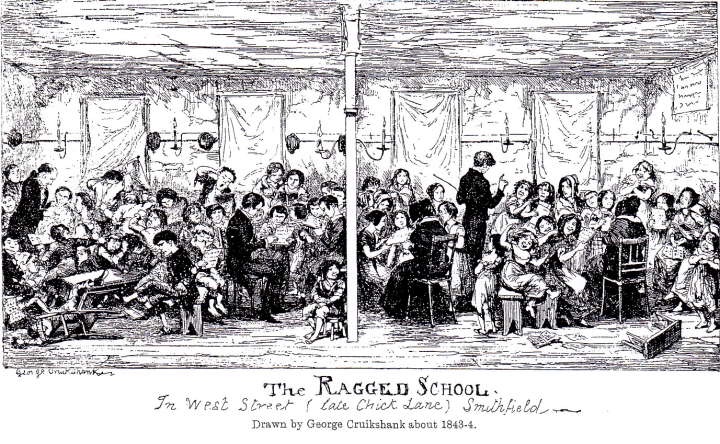
Around the same time, in 1841, a Ragged School began in Clerkenwell, London…. It has to be said that various organisations lay claim to having been first to offer free education…. Indeed back in the 1780s Sunday Schools began to emerge….often Christian but not always, they were to provide education for children who were otherwise working during the week….Thomas Cranfield, a tailor and former soldier, had gained his own education at a Sunday School in Hackney…. In 1798 Cranfield established a day school close to London Bridge, giving free education to London’s poor children…. By the time of his death in 1838 nineteen such schools had been set up across London, providing educations days, evenings and on Sundays….

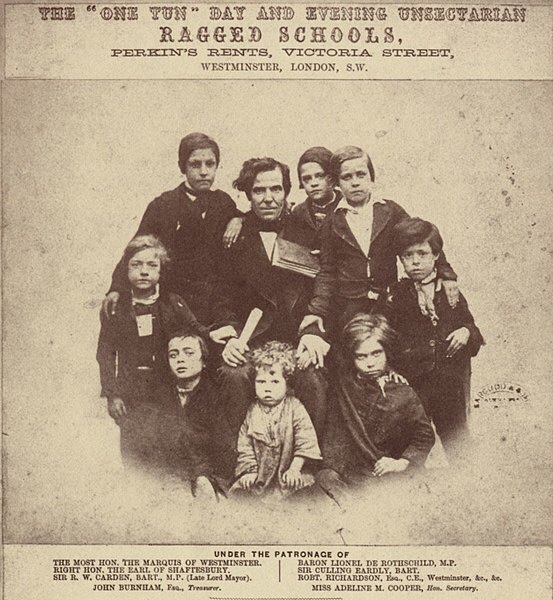
The term ‘Ragged School’ seems to have been first used by the London City Mission in 1840…. The Mission had been set up in 1835 to help the poor in London…. It ran soup kitchens, penny banks, helped provide clothing and education – using paid missionaries and agents…. Ragged School became the name commonly given to any independent school set up on a charitable basis…. By 1844 the London City Mission was responsible to looking after at least twenty Ragged Schools…. It became apparent a way was needed to bring together and organise all of the independent free schools that had been established….

img_2028

In April 1844 a committee was formed….to look at welfare needs in the community….and most importantly, educational needs of the children. The committee comprised of Mr Locke – a woollen draper, Mr Moulton – who dealt in second hand tools, Mr Morrison – a City missionary and a Mr Starey…. On the 11th of April 1844 the Ragged Schools Union was formed….

At this gathering they resolved “to give performance regularity, and vigour to existing Ragged Schools, and to promote the formation of new ones throughout the metropolis, it is advisable to call a meeting of superintendents, teachers and others interested in these schools for this purpose”….

img_2029

There was much support for the cause; from the wealthy, who could contribute financially (it became quite ‘fashionable’ to do so)….to famous names who helped promote it…. Charles Dickens was one such….he had visited the Field Lane Ragged School in London – it is said to be one of his inspirations for ‘A Christmas Carol’….

Later the Ragged Schools Union became known as the Shaftesbury Society…. The 7th Earl ofShaftesbury became chairman of the RSU and remained so for nearly forty years….in this time some 300,000 children benefitted from free education…. In 1844 the RSU began with 200 teachers….by 1851 it had 1600…. By 1867 there were 226 Sunday Ragged Schools, 204 day schools and 207 evening schools….providing free education for approximately 26,000 children….

img_2033

In 1870 the Education Act was passed….over the next few coming years some 350 of the schools established by the Ragged Schools Union were absorbed into the new Board schools….

img_2038

On this day in history….31st December 1695

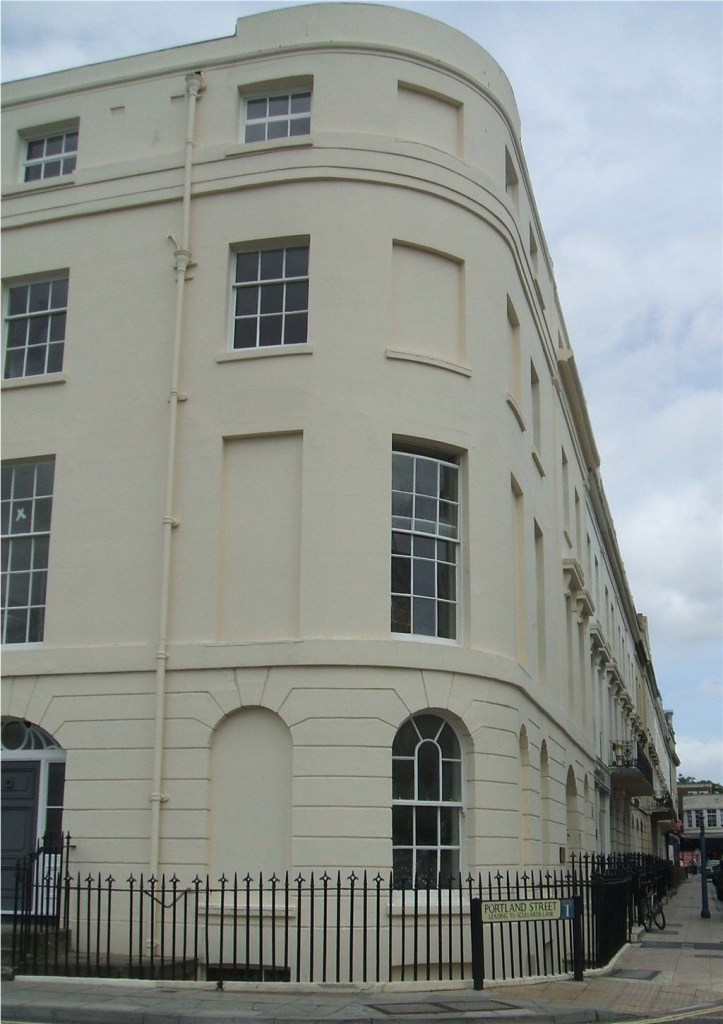
On this day in history : 31st December 1695 – King William III imposes the window tax in Britain – resulting in many windows in houses being bricked up….

Property in Portland Street, Southampton with blocked up windows due to the window tax – Image : Whilesteps – own work CC BY-SA 3.0

At the time the idea of income tax was a controversial matter; many people opposed it, seeing it as an intrusion into their privacy and private matters – they saw it as a threat to personal liberty…. So under William III a window tax was introduced – designed to relate to the wealth of an individual based on the size of property they owned…. The new tax was brought in to offset losses caused by the practice of clipping coinage…. Coins were then made of pure silver and gold – and their edges would frequently be clipped or shaved to obtain fragments to melt down…. Bars would then be produced to either sell to jewellers or to make counterfeit coins…. It was a common practice and would undermine the currency of a country….

King William III – Portrait by Godfrey Kneller – Public domain

The introduction of the window tax came in two parts…. A two shilling flat rate was imposed on every house and then a variable rate of tax applied for every window over the number of ten…. Ten to twenty windows were levied at four shillings each and for properties with more than twenty windows these were levied at eight shillings…. The union of England and Scotland saw both countries’ taxes harmonised – the top rate of twenty windows was also used for houses with more than thirty windows, creating a ceiling level…. Between 1747 and 1808 the tax was raised six times and by 1808 the lowest band became applicable for properties with six or more windows – however, this was raised to eight in 1825…. The window tax was easy enough to apply as the windows could be counted from outside….

House in Brentford – Image credit : Maxwell Hamilton via Flickr

However, as early as 1718 a decline in the revenue brought in by the tax was becoming noticeable as windows were being blocked up – and new houses were being built with fewer windows…. Campaigners argued that the tax was a tax on health, light and air – and an unfair and unequal tax with the burden falling on the middle and upper classes…. Finally the window tax was repealed on the 24th of July 1851 – it was replaced by a tax on inhabited houses…. Income tax had already been introduced in 1842….