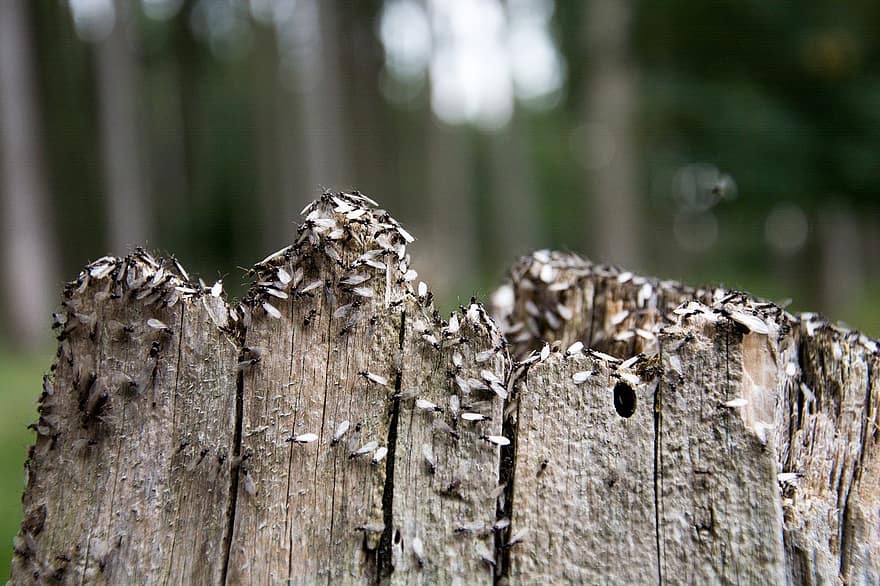
On this day in history : 7th August 1935 : A plague of flying ants descends on London – authorities claim it to be the worst attack of pestilence in a quarter of a century….
Image credit : Ozzy Delaney via Flickr
The insects got into houses, crawled into pantries, heaped up on doorsteps and even stopped a tennis tournament….
‘Flying Ant Day’ is the day when the queen ants emerge from the nest to embark on their nuptial flight…. As the queen flies she emits pheromones to attract males…. They follow her and she flies away forcing them to chase her – meaning only the strongest get to mate with her…. She mates with several during the flight, storing the sperm in her abdomen, enough to last her lifetime and uses it to fertilise millions of eggs…. Once landed she will form a new colony….
This usually happens during July or August…. The weather is a key factor to determine when – heat and high humidity is needed…. Species and habitat are also factors….
The ants are mostly harmless, some have been known to bite but this is a rarity in the UK…. It may be unpleasant but it only lasts for a few hours – and is good for the environment…. The ants help to aerate the ground – and provide food for the birds….
On this day in history : 6th August 1976 – Harold Wilson’s Labour Government passes the Drought Act to tackle the ongoing drought in the United Kingdom….
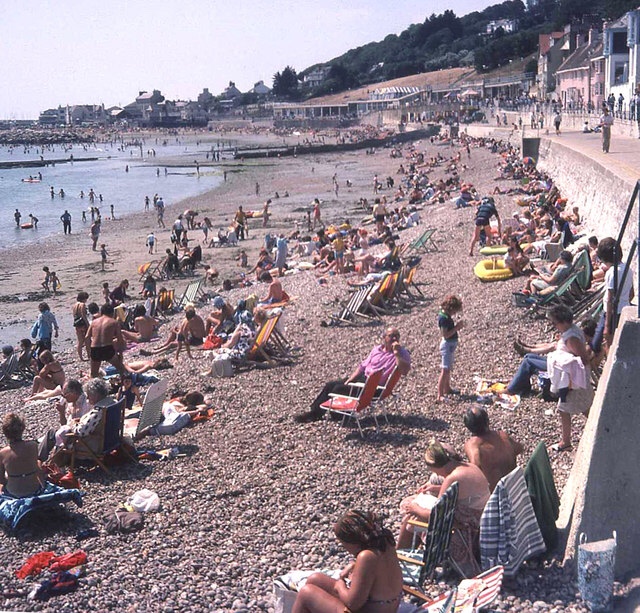
Lyme Regis Beach, Dorset August 1976 – Image credit : Trevor Rickard CC BY-SA 2.0
Many of us will remember the summer of 1976 only too well…. The parched gardens, cracked land, dry reservoirs and the standpipes…. The melting roads, overheated cars – even Big Ben broke down…. The crops that failed in the fields, the trees that died through lack of water and the heath fires that killed so much wildlife…. Fish died in the rivers and birds died due to the stagnant waters…. Warmth loving insects thrived, such as the Dutch Elm beetle, causing the demise of yet more trees…. Large numbers of aphids and greenfly in turn attracted swarms of ladybirds….
The years of 1971-75 had seen the lowest rainfall in any 5 year period since the 1850s…. Then between May 1975 – August 1976 it had been the driest since records began in 1717…. In the winter of 1974-75 the jet stream shifted north of the Hebrides where it stayed for most of 1975-76 before moving up close to Iceland, which is about as far north as it can go…. The jet stream determines our weather and as a result the whole of Western Europe was affected by drought….
The summer of 1975 had been warm and dry with lots of sunshine and was followed by a drier and milder than normal winter…. By the spring of 1976 reservoirs were only half full and still rain failed to appear…. By the beginning of July it was becoming obvious that water was going to have to be rationed…. Slogans such as ‘Save Water, Bath With A Friend’ began to be bandied around….
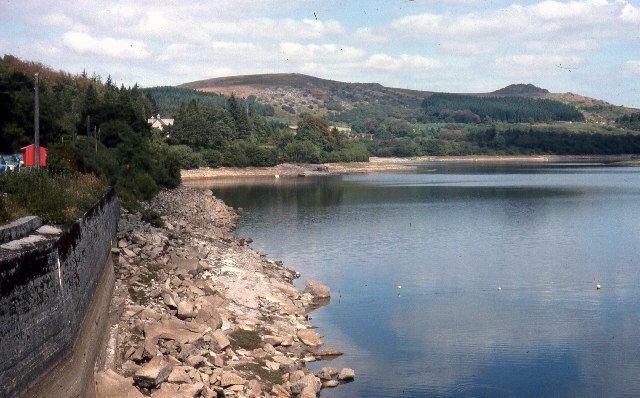
Burrator Reservoir, Devon July 1976 – Image credit : Crispin Purdye CC BY-SA 2.0
On the 3rd of July 1976 the Emergency Powers bill was announced and this was followed by the Drought Act on the 6th of August…. Hosepipes were banned and ‘Serious Emergency Powers’ enabled the authorities to reduce or even turn off domestic and industrial water supplies…. Generally this was not necessary – but in South East Wales, where the Brecon reservoirs had dried up, mains water was switched off for 17 hours per day…. By the end of August London had just 90 days worth of water left….
This was followed by an Autumn so wet that the potatoes rotted in the fields…. Global warming was not a phrase familiar to us back then….
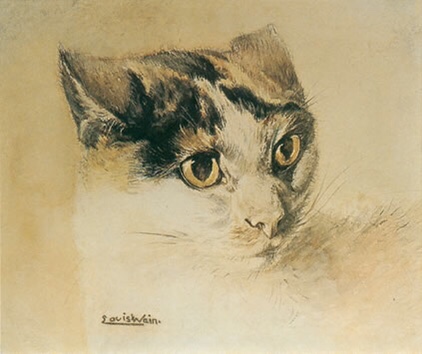
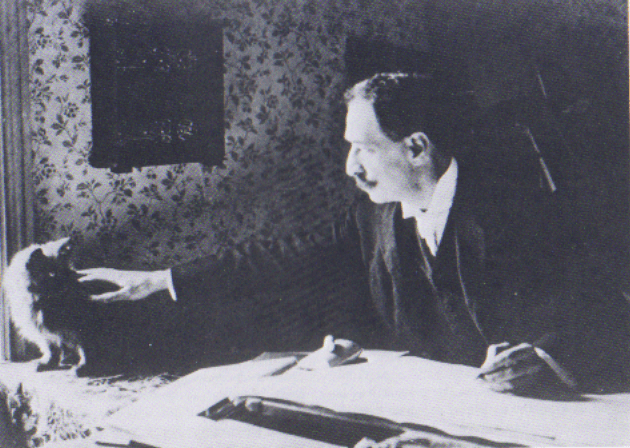
On this day in history : 5th August 1860 – The birth of English artist Louis Wain – who is known to us mainly for his drawings of comical anthropomorphic cats….
Marketing – Image credit : Aussie mobs via Flickr
Wain was born in Clerkenwell, London, to a French mother, Felicia Marie and an English father, William Matthew Wain, a textile merchant…. Wain had a troubled childhood; having been born with a cleft lip on the advice of doctors he did not start school until he was ten years old…. Then, once he had started, he found it hard to settle and would often play truant – and took to wandering around London…. However, despite this he did manage to get into the London School of Art and after finishing his studies stayed on to teach for a while….
When Wain was aged 20 his father died and it fell on his shoulders to support his mother and five sisters…. He became a freelance artist, specialising in the countryside and animals…. He carried out work for ‘The Illustrated Sporting and Dramatic News’ and then in 1886 began working for ‘The Illustrated London News’….
Early work by Louis Wain – Public domain
At the age of 23 Wain married Emily Richardson, governess to his sisters and ten years older than him…. Shortly after Emily became ill with breast cancer – and it was during this time that Peter came into their lives…. Peter was a tiny black and white scrap of a kitten that they rescued – this was at a time when cats were seldom kept as pets….but the kitten brought so much comfort to Emily…. To amuse her and raise her spirits Wain would draw sketches of Peter….delighted Emily encouraged him to publish them…. Emily died in 1887, so did not live long enough to see him do this…. However, in the Autumn of 1886, Wain had been commissioned to illustrate ‘Madame Tabby’s Establishment’ by Caroline Hughes, under the pen name of Kari…. Emily would have loved seeing Peter depicted in the book….
Louis Wain 1890 – Public domain
Wain’s first anthropomorphised cats picture that was published appeared in a Christmas edition of ‘The Illustrated London News’ and was entitled ‘A Kittens Christmas Party’….
A Kittens Christmas Party from the Illustrated London News
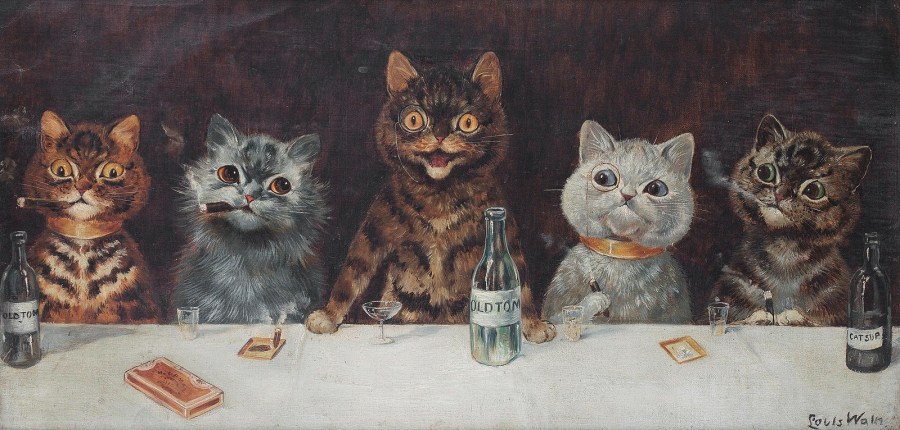
At this stage his cats remained on all fours and had yet to gain the humanisation of his later drawings…. As time progressed his cats began to walk upright and have more human facial expressions – and indulged in human pursuits: playing golf, drinking tea, gong to the opera, smoking…. Humanising animals was a popular trait during Victorian times and continued into the Edwardian era…. For the following 30 years Wain was a prolific artist, producing over 600 illustrations a year…. His work appeared in journals and magazines, he illustrated over 100 children’s books and between 1901-1915 even had an annual of his own….
The Bachelor Party – Public domainImage credit : emmeffe6 via FlickrFrom Tinker Tailor – Image credit : Will via FlickrA Bolt from the Blue – Image credit : Aussie mobs via Flickr
Despite his success Wain experienced continuous financial difficulties…. He was still supporting his mother and sisters, none of whom had married – and his youngest sister had been declared as mentally insane…. Not being a businessman Wain was easily persuaded to invest into non-starter money making schemes – he was easily taken in…. He would also invariably sell his work without retaining copyright….
Later in his life Wain began to display symptoms of mental illness himself…. His last job was producing a cartoon strip for the ‘New York Journal-American’ between 1907-1910…. By the beginning of WW1 his work had begun to become less popular and by the 1920s he found himself in poverty…. His mental health continued to deteriorate and sometimes his behaviour could be erratic or even violent…. In 1924 he was committed to the pauper ward of London’s Springfield Mental Hospital…. He still continued to draw cats but they became more and more abstract…. Some think this was on account of schizophrenia, or maybe dementia, or even Asperger’s Syndrome…. Little was understood about mental illness back then, the tendency being to commit to an asylum…. Of course, there is also always the possibility that Wain was simply experimenting with a new style of psychedelic work….
Wain spent the last 15 years of his life in institutions…. At first it was not common knowledge what had happened to him and then in 1925 it became widely publicised…. An appeal was launched to raise funds to help him – with personal interventions from Prime Minister Ramsay MacDonald and author H.G.Wells…. £2,300 was raised and Wain was moved to Bethlem Royal Hospital, which provided a much better quality of care…. Then in 1930 he was moved again, to Napsbury Hospital, St. Albans, Hertfordshire – which had gardens he could enjoy – and had a large family of cats….
Wain died on the 4th of July 1939 and was buried with his father at St. Mary’s Roman Catholic Cemetery, Kensall Green, London….
H.G.Wells once said of him…. “He has made the cat his own…. He invented a cat style, a cat society, a whole cat world…. English cats that do not look and live like Louis Wain cats are ashamed of themselves”….
Louis Wain 1903 – Public domainPublic domainPublic domain
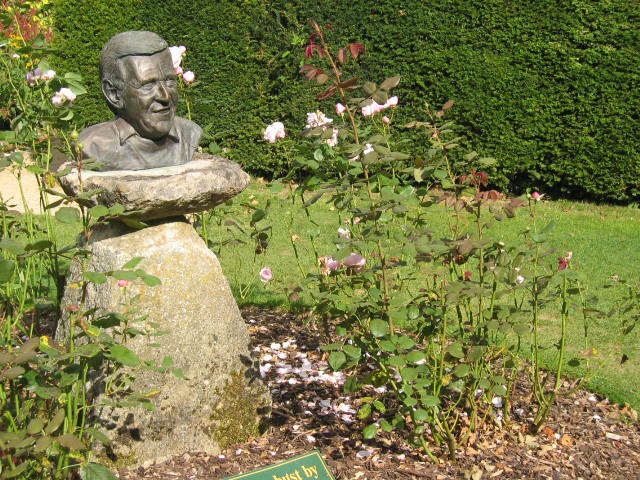
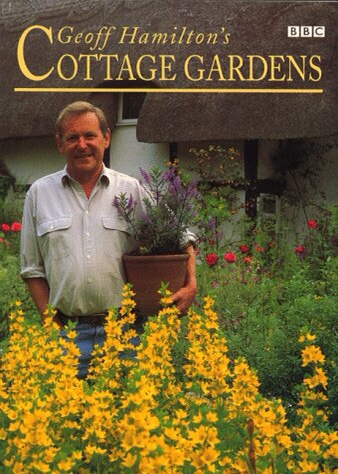
On this day in history : 4th August 1996 – The death of English gardener, author and television host Geoff Hamilton – best known as presenter of the BBC’s ‘Gardener’s World’ during the 1980s and 1990s….
Bust of Geoff Hamilton at Barnsdale Gardens – Image credit : IXIA – Public domain
Geoff was the older, by just a few minutes, of twins born in Stepney, East London, on the 15th of August 1936…. The family moved to Broxbourne in Hertfordshire’s Lea Valley, when he and his brother Tony were two years old…. Geoff began to become interested in plants and gardening whilst helping in the family garden – and during his school holidays he worked at his local nursery….
On finishing his schooling Geoff went to the Writtle Agricultural College in Chelmsford and graduated in 1959 with a distinction…. He became a nurseryman and then a self-employed landscape gardener – before opening his own garden centre near to Kettering, Northamptonshire…. He transformed what was a dilapidated nursery into a thriving garden centre….
In 1970 Geoff began writing for the ‘Garden News’ and in 1975 took over as editor of ‘Practical Gardening Magazine’…. It was his personal crusade to promote the rewarding pleasure of gardening….
His television career started in 1970 when he began to present ‘Gardening Diary’ for Anglia TV…. This was to lead to guest appearances on BBC’s ‘Gardener’s World’…. Geoff was a natural in front of the camera and in 1979 he was to become the show’s regular presenter….
However, the original site for ‘Gardener’s World’ did not provide enough challenge and inspiration for him – or give him the ability to experiment…. In 1983 he found a Victorian farmhouse nearby which had 5 acres of land – and so he bought it and made it his family home…. Within 2 years ‘Gardener’s World’ had become established in Geoff’s own garden at Barnsdale in Rutland….
Geoff also created several other gardening series: ‘The Cottage Garden’, ‘The Paradise Garden’ and ‘The Ornamental Cottage Garden’…. He also wrote books to support his TV work…. He particularly advocated peat-free and chemical-free organic gardening – and was voted Gardener of the Millennium by readers of ‘Amateur Gardening Magazine’…. Geoff earned himself the reputation of being the ‘People’s Gardener’….
In 1995 he was to suffer a heart attack – and then in August 1996, whilst on a charity bicycle ride near to Merthyr Tydfil in Wales, he suffered a further fatal heart attack…. He was buried in St. Peter of St. Paul Churchyard in Exton, Rutland….
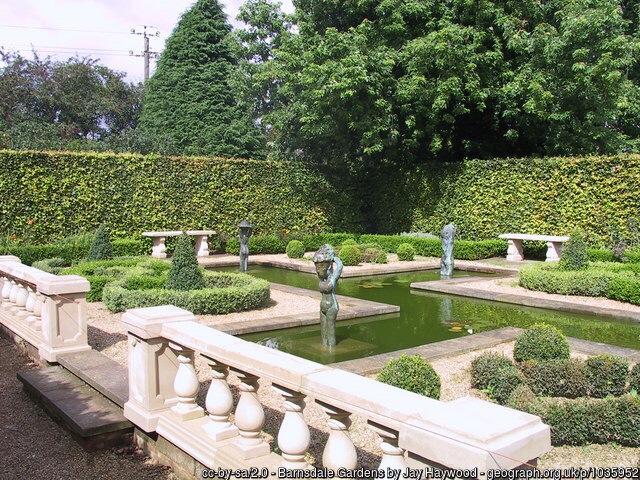
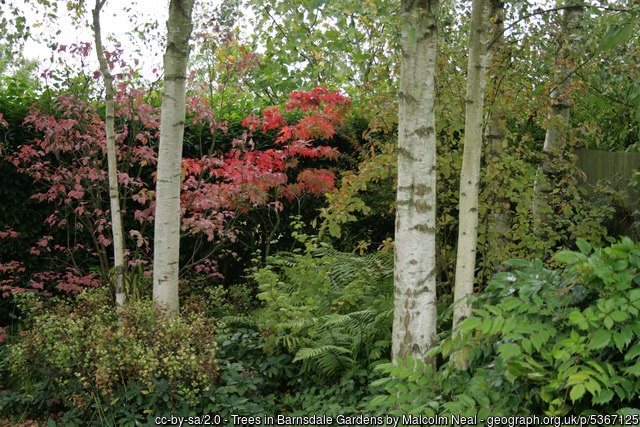
A charity was set up in his memory, supporting students of his former college….and his garden at Barnsdale, over 8 acres of some 38 themed gardens, opened to the public…. Geoff had passed on his experience and knowledge to his three sons, Stephen, Nicolas and Christopher…. It was Nicolas who came to oversee his late father’s gardens….
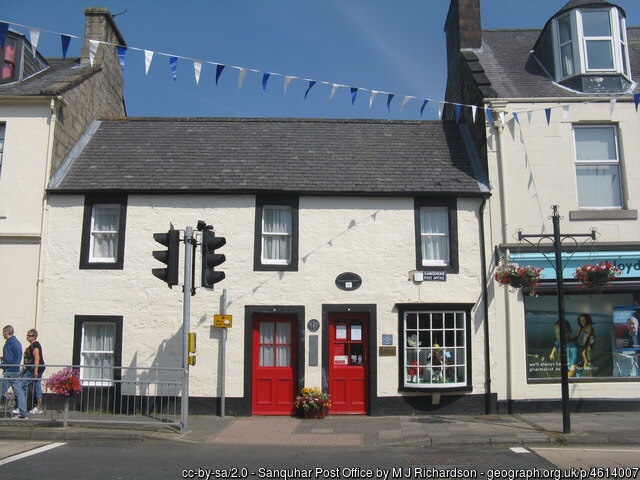
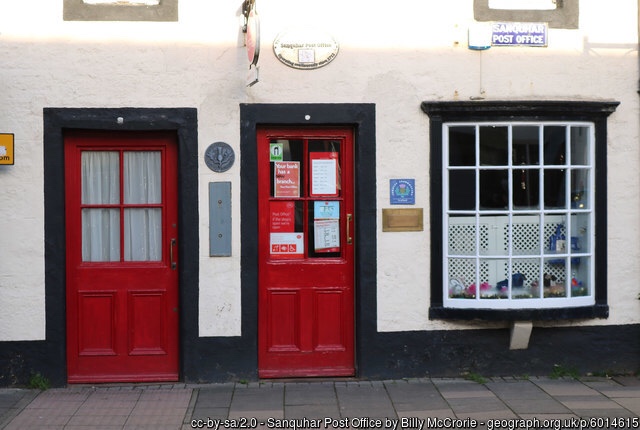
On this day in history : 3rd August 1971 – The oldest post office in the world, at Sanquhar in Dumfries and Galloway, which has been in service since 1712, becomes a listed building….
The post office, which is recognised by the Guinness Book of Records, pre-dates the second oldest in the world – located in Stockholm, Sweden – by 8 years…. It was first used by the aristocracy to deliver messages across the border between Scotland and England, by mail delivery riders on horseback…. Since that time it has been in continuous service and has had 16 postmasters and mistresses…. For much of the 20th century it was run by one family….
Nowadays, as well as providing an essential lifeline for the 2,000 or so local people of Sanquhar, it is a tourist attraction…. It is popular with stamp collectors who look to having their letters hand franked with the postmark of the post office….








 Cottage Capers