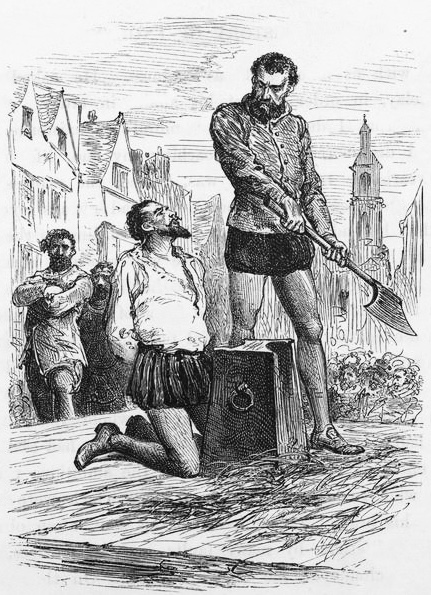
On this day in history : 29th October 1618 – Sir Walter Raleigh, adventurer, explorer, celebrated soldier, writer and courtier, is beheaded for allegedly conspiring against King James I….
Sir Walter Raleigh – Public domain
It was in 1580 that Raleigh, as a successful and rather handsome young soldier, caught the eye of Queen Elizabeth I – and he quickly became one of her favourite courtiers…. She bestowed upon him a knighthood and gave him properties and power….
Then in 1592 Raleigh secretly married one of Elizabeth’s maids of honour…. The Queen was beside herself with jealousy and rage and had Raleigh and his now pregnant new wife imprisoned in the Tower of London….
Once released from the Tower Raleigh set about worming his way back into Elizabeth’s affections…. It is reputedly he who introduced the potato and tobacco to Britain, although it is often disputed as to whether he actually did…. It was, however, he who was responsible for making smoking fashionable at Court….
Raleigh was to fall from grace again when King James I came to the throne…. James heard on the grapevine that Raleigh was involved in a plot to overthrow him and so had him imprisoned for treason…. He was tried, found guilty and sentenced to death…. However, good fortune was on his side, his life was spared but he spent the next thirteen years in the Tower of London….
Raleigh’s cell in the Tower of London – Image credit : Kjetil Bjornsrud – own work – CC BY 2.5
Upon his release he once again clawed his way back into favour….and was permitted to lead an expedition to find the mythical El Dorado – a land supposedly filled with gold…. Needless to say it was a quest unable to be fulfilled – so instead Raleigh and his men attacked a Spanish settlement, totally going against Royal orders…. Naturally Spain was furious and demanded that King James do something about Raleigh…. James was more than happy to oblige – he reinstated the death sentence that Raleigh had managed to dodge before…. And so, on the 29th of October 1618 Raleigh succumbed to the executioner’s axe….
He was executed in the Old Palace Yard of the Palace of Westminster…. He said to the executioner “Let us dispatch…. At this hour my ague comes to me. I would not have my enemies think I quaked from fear”…. His last words were…. “Strike, man, strike”….
Illustration circa 1860 from The Popular History of England – Public domain
On this day in history : 27th October 1917 – The death of Arthur Rhys-Davids – flying ace of the First World War and the victor of one of the most famous dog fights of the War….
Portrait of Lieutenant Arthur Rhys-Davids – From the collections of the Imperial War Museums – Public domain
As soon as he had finished his schooling Arthur deferred his entry to Oxford University and joined the Royal Flying Corps…. He first reported for duty on the 28th of August 1916 as a 2nd Lieutenant in the Royal Flying Corps Special Reserve in Oxford and began his training…. He was then to join 56 Squadron at London Colney….
At the beginning of April 1917 the Squadron flew to France and were to based at Vert Galand…. Arthur was to get his first taste of aerial combat on the 7th of May…. He was to encounter a German pilot far more experienced than he was; despite being shot down he lived to tell the tale…. Others were not so lucky; it was a disastrous day for the Squadron, only five aircraft returned to Vert Galand….
Royal AircraftFactory S.E.5 – the type of aircraft Rhys-Davids would have flown – Public domain
On the 23rd of May Arthur scored his first victory – shooting down an Albatross D.111 fighter…. The following day he had three more victories – in just one hour…. And on the 25th he succeeded in bringing down another aircraft – with five victories to his name Arthur was now a flying ace…. On the 25th of June 1917 he learned that he had been awarded the Military Cross….
During an evening flying patrol on the 23rd of September 1917 several members of 56 Squadron, including Arthur, encountered German flying ace Werner Voss…. Credited with 48 victories Voss was much feared but also much admired…. Only at this stage Arthur and his comrades were unaware of who it was they had come across….
The six aircraft of Arthur’s patrol had become involved in a dog fight involving large numbers of aircraft from both sides – when suddenly Voss appeared amidst them…. “The German triplane was in the middle of our formation, and its handling was wonderful to behold. The pilot seemed to be firing at us all simultaneously, and although I got behind him a second time, I could hardly stay there for a second. His movements were so quick and uncertain”…. ~ James McCudden – (one of the most highly decorated airmen in British history and who was flying in the same patrol as Arthur that particular evening…. McCudden was eventually killed in action on the 9th of July 1918)….
The German made no attempt to escape and the six British pilots were now engaged in a ferocious battle with him…. Voss fired and hit McCudden in the wing, then forced two more of the British aircraft out of the fight with hits to their engines…. More British and German planes joined in but still Voss in his Fokker triplane managed to evade them…. Eventually he made a flat turn and Arthur saw an opportunity and managed to get on his tail…. Arthur fired and the Fokker dived towards German lines with the young British pilot still behind him…. But then Voss made an error…. Arthur made a turn away – and the German, mis-reading the situation, turned with him – bringing his aircraft back into Arthur’s firing line – who let him have it full pelt, taking the Fokker down….
When the patrol returned to base it was still unknown to them who the mystery pilot was…. When the Germans announced that their ace pilot Werner Voss was missing in action jubilation broke out in the ranks of 56 Squadron, with showers of congratulations for Arthur….who was later to say…. “If only I could have brought him down alive”….
Werner Voss – a card from the private collection by Scinke, Berlin 1917 – PD-US
On the 27th of October 1917 Arthur was promoted to Lieutenant, backdated to the 1st of September…. Later that same day he took off on a routine patrol and was last seen chasing after a group of German Albatross fighters…. It was just a month after his 20th birthday – he was never found….
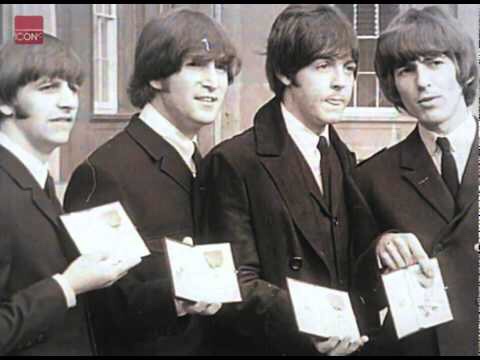
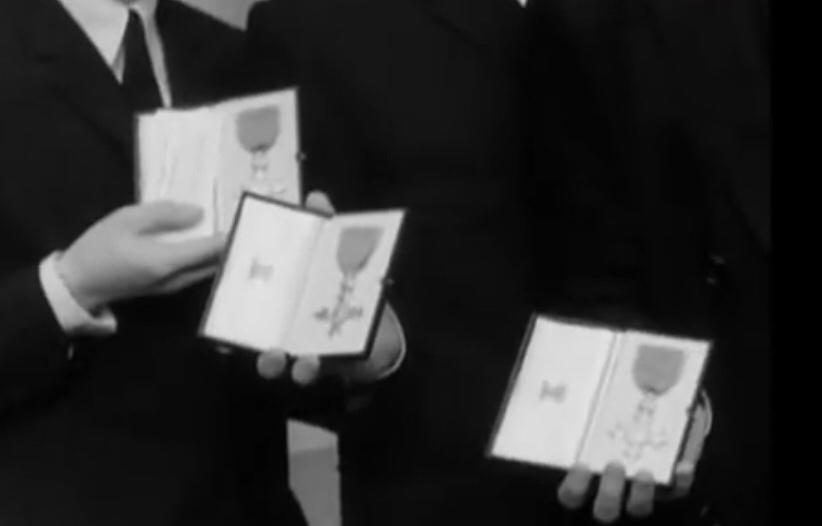
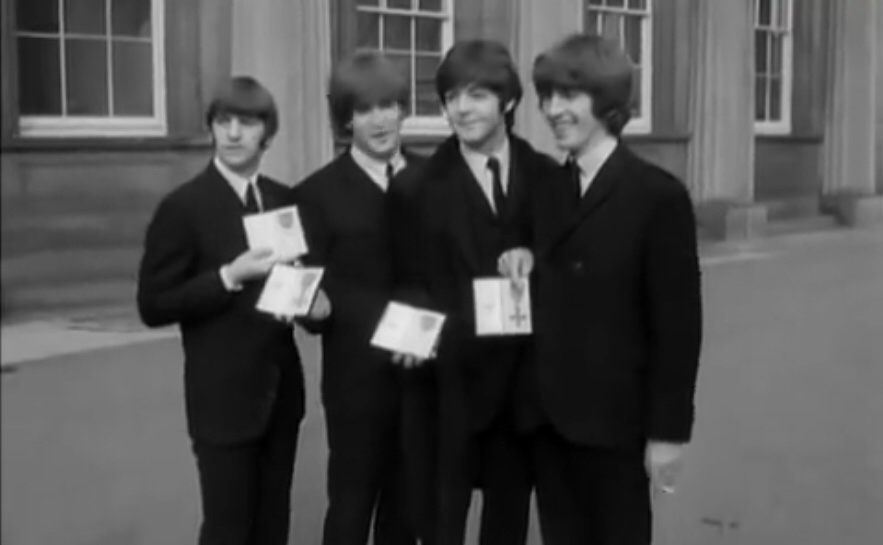
On this day in history : 26th October 1965 – The Beatles visit Buckingham Palace to be awarded with their MBE medals by Her Majesty the Queen….
The band had been notified four months before that they were to be the recipients of the Member of the Most Excellent Order of the British Empire award, when their names had appeared on the Queen’s Birthday Honours list in the previous June….
There were those who did not agree with the decision to honour the Beatles – rock and roll music was still rather distasteful to some…. A few previously decorated individuals even returned their medals in disgust and protest….
However, honoured they were – as Britain’s greatest musical ambassadors…. They received their awards that day alongside 185 other people…. They were taken to one side before the ceremony and coached in the protocol for meeting the Queen…. The boys were so nervous, even popping to the loo for a calming smoke before the proceedings…. But all went smoothly – they even shared a joke or two with Her Majesty….
Ironically, four years later, just as there had been those who returned their medals in protest at the Beatles being honoured, John Lennon was to do the same with his…. “Your Majesty, I am returning my MBE as a protest against Britain’s involvement in the Nigeria-Biafra thing, against our support of America in Vietnam and against ‘Cold Turkey’ slipping down the charts. With love, John Lennon”….
In 2009 his medal was discovered lying in a vault in St. James’ Palace….
On this day in history : 25th October 2004 – The world of radio and music is left shocked and in mourning following the sudden death of DJ, record producer and journalist John Peel….
John Peel – Public domain
Revered in the broadcasting and music industry John had been the longest serving of the original Radio disc jockeys…. He had died at the age of 65 of a heart attack with his wife, Sheila, at his side, while on a working holiday in Cuzco, Peru…. The death of this broadcasting legend was to hit so many, not least those at Radio 1, the BBC station to which he had devoted so much of his working life….
John Robert Parker Ravenscroft was born on the 30th of August 1939 in a nursing home on the Wirral, Liverpool and he grew up in the Cheshire village of Burton…. His father was a successful cotton merchant; John had a middle-classed upbringing and attended boarding school….
From an early age he loved to listen to the radio, the likes of Radio Luxembourg and American Forces Radio; he was also an avid collector of records…. He completed his National Service in 1959, then worked in a Rochdale mill for a while before travelling to the United States in 1960, where he had a variety of jobs…. One of these was at ‘KLIF’ – a Dallas radio station – being a ‘fellow’ Liverpudlian he became their official Beatles correspondent…. It was also during this time in the States that John got married for the first time; although his wife returned to England with him it was to be a short-lived marriage, ending in divorce….
John returned to the UK in 1967 and began to work for the pirate radio station Radio London…. He hosted a late night programme that became called The Perfumed Garden – playing music emerging from the hippie scene of California, blues, folk and psychedelic rock…. He adopted the name ‘John Peel’ at the suggestion of a work colleague at the station – and his distinctive radio voice began to become recognisable to many – as it would to so many more over the years to come….
Pirate radio station Radio London’s transmitter ship the MV Galaxy – Fair use
Radio London closed on the 14th of August 1967 and Radio 1, in an embryonic state, launched – with its first programme, hosted by Tony Blackburn, going out an air at 7am on Saturday the 30th of September 1967…. John’s first programme for the new station was called Top Gear…. The BBC were at a bit of a loss at how to sail such a modern ‘ship’…. They were still at the time airing a mixture of recorded music and live studio orchestra…. With Radio 1 being conceived through the popularity of stations such as Radio London and Radio Caroline they needed a few ‘pirates’ onboard to show them how it was done….
John was to go on to host Night Ride – a programme of words and music, featuring guests…. His personal friend Marc Bolan appeared on it, as did The Byrds, John Lennon and Yoko Ono – to name but a few…. After 18 months the show ended – the BBC still hadn’t quite caught up with how society was moving and the bosses did not approve of the unpredictability of a real-life show…. But John’s characteristic broadcasting style had been unleashed, with a formula of live music, chat and records that would stay with him….
Then along came punk…. The BBC boffins were keen to exclude any undesirable music genre – and punk in their eyes represented the most unpalatable of the unsavoury…. But with John’s keenness for new music they had voiced their concerns too late, as he had in fact been playing little else…. He was the saviour of many an unsigned act – helping to launch thousands of careers by giving them airplay…. He was the first to introduce The Ramones, The Sex Pistols, The Smiths, Roxy Music, Rod Stewart and Blur – the list is almost endless…. There are so many bands and artists we would never have heard of if it hadn’t been for John Peel….
He could often be seen presenting BBC One’s Top of the Pops – and he also broadcasted on the BBC’s World Service…. His independent overseas work included broadcasting in Holland, Germany, Austria and Finland….
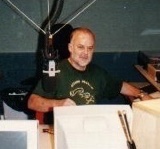
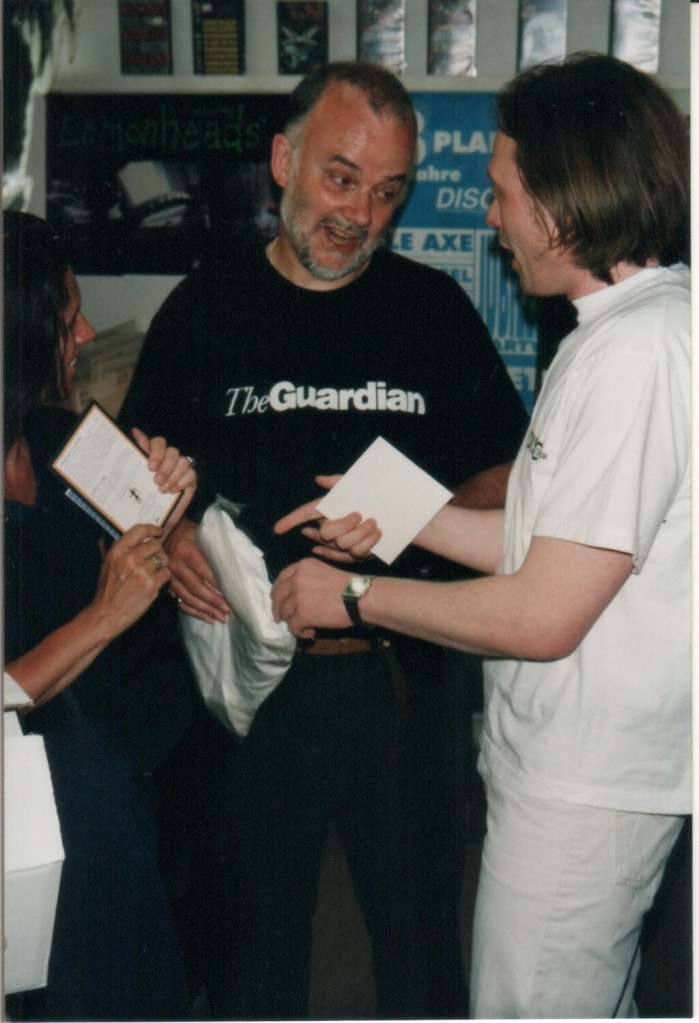
John Peel in a record shop in Bochum, Germany – Image credit : Zetkin – own work CC BY SA 3.0
On the 31st of August 1974 John married Sheila…. He had been working on a television show when he spotted her in the audience…. Feeling a little shy he had a note delivered to her; three years later they had bought a country home in Great Finborough near to Stowmarket, in Suffolk…. They went on to have four children, William, Danda, Tom and Flossie…. Tom now has his own radio shows on the BBC….
Suffolk was a good retreat for John – an escape from the busy city life of London…. He came to realise he did not care much for the hustle and bustle…. Becoming involved in his local community in Suffolk he began to run a youth group….
John’s studio at his home – Image credit : Arno Matthias – own work – Public domain
In 1998 John was awarded with an OBE for his services to broadcasting…. Although he was diagnosed with diabetes at the age of 61 it looked as if the new approaching millennium was going to be rosy for him…. He was still at the top of his game and as popular as ever…. He had just become a grandad and after a trip to New Zealand had caught the travel bug…. He began doing some work for the Daily Telegraph as a musical travel writer….
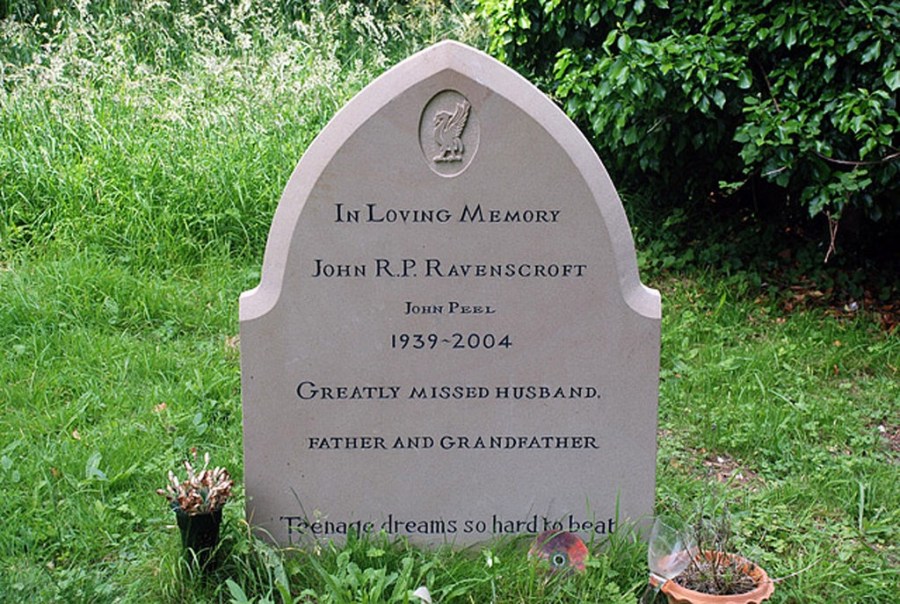
And so it came to be that whilst on his travels he was to suffer a fatal heart attack…. Over a thousand people attended his funeral, tributes poured in from across the globe…. Radio had lost one of its heroes…. When his death was announced on Radio 1 it was followed by his favourite song, Teenage Kicks by the Undertones….
On this day in history : 24th October 1983 – Dennis Nilsen, a civil servant from North London, goes on trial at the Old Bailey – accused of six murders and two attempted murders….
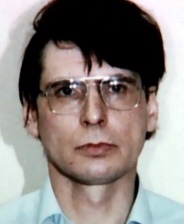
Mug shot of Nilsen – Full Sutton Prison – Fair use
37-year-old Nilsen had been arrested after human remains were found in a blocked drain at his home in Muswell Hill…. The tenants at the flats had complained to the landlord about the drains smelling – it was a plumber who made the grisly discovery….
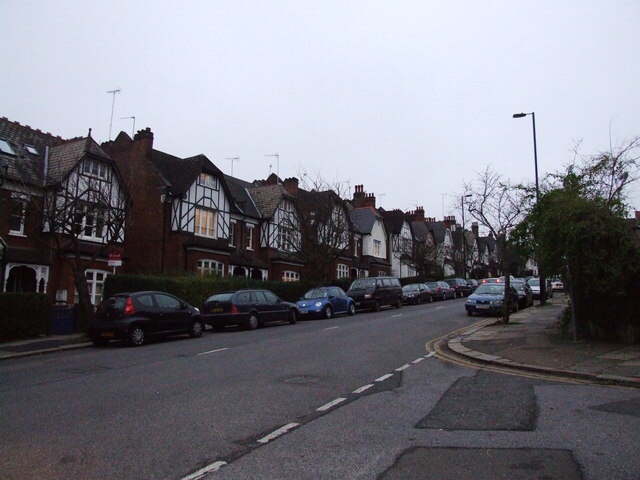
Cranley Gardens, Muswell Hill – where Nilsen occupied an attic flat – Image credit : Chris Whippet CC BY-SA 2.0
After a search of Nilsen’s flat the remains of three bodies were found; the bones from at least eight others were discovered at his former home in Cricklewood, Northwest London…. Nilsen admitted to further murders, telling police he had killed fifteen or sixteen….
Nilsen would meet his victims in pubs; they were always male – some were homeless, some were homosexual and some were prostitutes…. He would invite them back to his flat for a drink – and would then strangle them using a tie or electrical cable…. He would usually spend the night lying in bed beside the corpse and would invariably have, or attempt to have, sex with it….
He disposed of the bodies in a variety of ways…. He hid them under floorboards, in a wardrobe, in suitcases and even under the sink…. Having spent eleven years in the Army he had learned butchery skills in the Catering Corps…. He cut up many of his victims, burying limbs in the garden – or burning body parts on a bonfire…. He even flushed remains down the toilet….
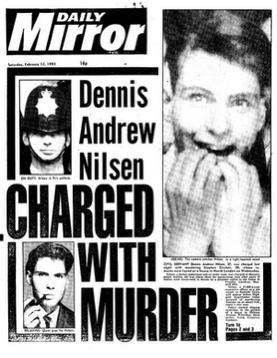
Fair use
When Nilsen came to trial he pleaded not guilty to all charges, citing diminished responsibility due to a mental defect…. The jury retired on the 3rd of November to deliberate but were unable to reach a unanimous verdict…. The next day the judge agreed to accept a majority verdict and at 4.25pm on the 4th of November a guilty verdict was delivered an all six counts of murder…. Nielsen was sentenced to life in prison and it was ordered that he should not be eligible for parole for 25 years….
During his time in prison Nilsen wrote his autobiography History of the Drowning Man – but this was denied publication…. On the 12th of May 2018 he died of a pulmonary embolism (a blockage in an artery of the lungs)….






 Cottage Capers