On this day in history….4th January 1967

On this day in history : 4th January 1967 – Donald Campbell is killed whilst attempting to break his own world water speed record – in his jet powered boat, the Bluebird K7….

img_5348
Donald Campbell – fair use

It was a cold crisp day, ice surrounded Coniston Water, which is the fifth largest lake in the Lake District; at five miles long it has depths of up to 184 feet deep…. For the previous nine weeks Campbell’s attempt at breaking his water speed record had been hampered by bad weather and engine troubles…. Bluebird, a 12-year-old hydroplane, had been refitted with a lighter, more powerful Bristol Orpheus engine, from a Folland Gnat aircraft….

img_5349
Bluebird K7, on display at Goodwood Motor Racing Circuit in 1960 – Sheppane at English Wikipedia CC BY-SA 3.0

This particular January morning the waters of Coniston were smooth and Bluebird was launched at 8.45am – it entered the measured one kilometre run at 8.46am…. The first run southbound recorded an average speed of 297mph over the kilometre…. Campbell needed to do 303mph on the return run to achieve the 300mph average to beat his record…. The accident happened 200yds from the end of the second run….

Travelling at some 300mph Bluebird’s nose lifted; the boat then flipped over backwards and somersaulted 50 feet into the air – then fell nose first towards the lake…. Shrouded by a dense curtain of water Bluebird disappeared beneath the surface….

img_5351
Coniston Water from Holme Fell – Mick Knapton CC BY-SA 3.0

Attempts were made by divers to recover Campbell’s body from the 120ft deep water – but to no avail…. Although the wreckage of the boat was found recovery was called off…. Campbell’s teddy bear mascot, Mr Whoppit, was found floating amongst the debris, as was his pilot’s helmet….

img_5352
Mr Whoppit in the cockpit at Lake Eyre, 1964 – Fair use

Recovery finally took place between October 2000, when the first sections of Bluebird were raised and May 2001, when Campbell’s remains were recovered…. He was buried in Coniston Cemetery on the 12th of September 2001…. Had he of been successful in his water speed attempt it would have been his eighth world record – four of which had been set on Coniston Water….

img_5350
Campbell’s gravestone in Coniston – Image courtesy : Thruxton – own work – CC BY-SA 3.0

On this day in history….3rd January 1911

On this day in history : 3rd January 1911 – The Siege of Sidney Street takes place….a gun battle is waged on the streets of London as two Latvian anarchists hold out in an East End tenement for several hours – against over 200 armed police and a detachment of soldiers….

img_2059

The drama had begun to unfold three weeks previously, on the 16th of December 1910. A gang of Latvian revolutionaries had attempted to rob a jeweller’s shop in Houndsditch. The gang, calling itself ‘Leesma’, meaning ‘flame’, consisted of approximately thirteen people, including two women….their purpose was to commit robberies to raise money to help fund fellow activists in Latvia and Russia, who supported Lenin and the Bolshevik Movement….

The gang had rented rooms in a building annexing the back of the jeweller’s shop….the plan was to break through the common wall between the two adjoining properties. They chose to carry out their planned robbery on a Friday night….but being a predominantly Jewish neighbourhood – and Friday being the Jewish Sabbath – it was a particularly quiet time. Alerted by the noise the gang were making whilst attempting the robbery local residents called the police….

Eight unarmed police officers arrived, three sergeants and five Constables….the gang opened fire on them. Three policemen were killed and two were injured – the gang then made their escape…. One Latvian was injured – having been shot accidentally by another member of the gang. He was carried away by his friends but later died from his injuries – and was found dead in his lodgings the following morning….

The police immediately mounted a search and by the end of December had most of the gang in custody…. They then received a tip-off that two members, Fritz Svaars and William Sokolow, were hiding at 100 Sidney Street, which is located at the heart of Stepney. A room at the address was being rented by Betsy Gershan, the girlfriend of Sokolow. Being the East End of London the area was very overpopulated and the property itself overcrowded….fourteen people were registered at the address, two families with young children….

At midday on the 2nd of January two horse-drawn vehicles arrived in Sidney Street; concealed inside were armed policemen – and the building was placed under observation….

During the early hours of the 3rd of January a long snaking line of over 200 policemen made their way to 100 Sidney Street. Some were armed – but their weapons, such as revolvers, shotguns and tube guns, were old and antiquated. The men had not been briefed as to the nature of the task at hand – but they knew it was dangerous, as married men had been excluded from the operation….

img_2063

By dawn all was in place and the police were ready to take action. Somehow they managed to evacuate 100 Sidney Street and the surrounding properties without alerting Svaars and Sokolow, who were on the second floor…. The pair were Continue reading “On this day in history….3rd January 1911”

On this day in history….2nd January 1727

On this day in history : 2nd January 1727 – The birth of James Wolfe – the British general who was fundamental in the capture of Quebec from the French….

img_5337
James Wolfe – Attributed to Joseph Highmore – Public domain

James Wolfe was born in Westerham, Kent…. The eldest son of Lieutenant-General Edward Wolfe, James was born to a military career and joined the army at the age of 14….

After catching the eye of the Duke of Cumberland at the Battle of Dettingen in 1743, during the War of Austrian Succession, Wolfe was to quickly rise through the ranks…. By the age of 23 he had been made lieutenant-colonel of the 20th Regiment of Foot….

img_5338
Battle of Dettingen – John Wootton – Public domain

He fought in the Jacobite rising and was then to return to the Continent in January 1747, after the French had taken advantage during the absence of British troops and had made advances into the Austrian Netherlands, capturing Brussels…. A narrow victory at Lauffield for the French then meant the capture of Maastricht…. Both sides were poised for further battles but an armistice was called and the fighting stopped…. However, Wolfe had received a severe injury – but had been given official commendation for his services to his country…. In 1748 he returned to England….

img_5339
Jacobite rising – David Morier – Public domain

Next he was to spend several years in the Scottish garrison – where he was made a major, assuming command of the 20th Regiment, based at Stirling….

Wolfe was then to take part in the Seven Years War, distinguishing himself, especially during the assault on Rochefort in 1757 (which ended in having to be aborted)…. He then skilfully commanded a brigade at the siege of Louisbourg in 1758….

Wolfe had famously trained his troops in a unique method of volley fire….a method soon adopted by all of the British army…. After his service as brigade commander at the capture of Louisbourg, which was considered to be the gateway to the St. Lawrence River – and North America – he came to the attention of William Pitt the Elder….

At the age of 32 Wolfe was made major-general in command of the Quebec Expedition in 1759…. Quebec, then the capital of New France – the French colony in North America – was seen by Pitt as the way forward in the war with France…. Wolfe was sent to capture Quebec….

Many thought Wolfe was not up to the job – because he had been suffering from ill-health…. Wolfe led his troops, made up of English, Scots and colonial soldiers, to besiege Quebec – a siege that was to last three months…. Several frustrating unsuccessful raid attempts were made throughout the summer – and then Wolfe learned of a convoy of small boats heading to deliver food and supplies to the besieged city…. He decided to seize the opportunity and planned a night time raid….

The plan was to pass the city in their own small boats – to gain access to the Plains of Abraham – a large plateau above the city…. At just gone 4am on the 13th of September 1759 they set off and were successful in slipping past the sentries on guard….and reached the cliffs, which they then managed to scale to arrive at the plateau…. From here they planned to attack….

img_5340
Map of Quebec City – the Plains of Abraham are located to the left – Public domain

The French were caught unawares….they had believed the cliffs were impenetrable…. By the time they arrived at the Plains of Abraham, at just before 10am, the British were ready for them…. When the advancing enemy troops were just 40 yards away the British let off just two rounds of their special volley fire – the French fled – and the battle was won…. But not without heavy casualties on both sides….many were killed or wounded…. Wolfe himself was fatally wounded…. On hearing that the French had fled he said “Now, God be praised, I will die in peace”…. Those were to be his last words….

James Wolfe was to become the most celebrated military hero of the 18th century….

img_5341
‘The Death of General Wolfe’ – Benjamin West – Public domain

On this day in history….1st January 1752

On this day in history : 1st January 1752 – The Catholic Church adopts the 1st of January as the beginning of the New Year – instead of the 25th of March….

It was with the fall of Rome and the spread of Christianity throughout Europe that the 25th of March came to be recognised as the start of the year…. The existing New Year was seen as a Pagan festival – and was not to be observed….

img_5331
Head of Janus, Vatican Museum, Rome – Loudon dodd – own work CC BY-SA 3.0

The Romans had a god – ‘Janus’ – who had two faces….one looking backwards and the other one looking forwards…. Janus was known as the god of gateways and Julius Caesar thought him a good choice to represent the New Year – looking back on the old year – and ahead to the new…. So, the first day of January – the namesake of Janus – became the official start of the new year…. Many a drunken Roman orgy was held in celebration….

img_5334
Roman Orgy in the Time of Caesars, 1872 – Henryk Siemiradzki – Public domain

With the arrival of the Christian Church came no tolerance for such heathen goings-on…. The New Year was changed to the 25th of March – the date upon which the Virgin Mary learned that she was to become the mother of Jesus…. In the eyes of those who spread the message of Christianity this was a far more fitting way of acknowledging a new year….

However, problems arose – as the Julian calendar does not align with the solar year…. To add to the confusion some chose to use Christmas Day, or even Easter Sunday, as the start of the year…. Chaos reigned – but everybody continued to bumble along the best they could…. Eventually it was Pope Gregory XIII who decided that enough was enough….. Being fed up with having to juggle the dates of important annual Christian festivals – (by 1582 a difference of 10 days had occurred between the alignment of the Julian and solar calendars) – Gregory decided to devise the Gregorian calendar….

img_5332
Pope Gregory XIII – Public domain

Most countries quickly adopted the new calendar…. England, Ireland and the British colonies eventually adopted it in 1752…. Scotland, being ahead of the game, had already made January 1st the start of their new year in 1622….

img_5333
Detail of the tomb of Pope Gregory XIII celebrating the introduction of the Gregorian calendar – Photo: Rsuessbr – own work CC BY-SA 3.0

For a long while there were some European countries who kept the Julian calendar….and indeed, even today, the Eastern Orthodox Church still follows it….

img_5335
One of the first printed editions of the new calendar – Aloysius Lilius – Public domain

On this day in history….31st December 1892

On this day in history : 31st December 1892 – The first hostel for homeless men, Rowton House in Vauxhall, London opens….

It was the brainchild of Tory Peer and philanthropist Montagu William Lowry-Corry (1838-1903) – otherwise known as Lord Rowton – who put £30,000 of his own money into the venture….a considerable amount in the day – equating to over £3.5 million in today’s terms….

img_5298
Montagu William Lowry-Corry – Public domain

Lord Rowton had been Private Secretary to Disraeli and had helped to set up the Guinness Trust in 1890 – helping homeless people in London and Dublin…. He had inspected common lodging houses in the East End of London on behalf of the Trust and was appalled by what he saw…. It was then he made the decision to open the hostel on Bond Street (now Bondway) in Vauxhall….

img_5300
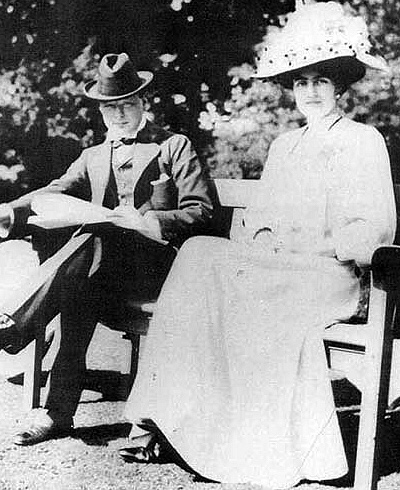
Lord Rowton (pictured right) with Benjamin Disraeli – Leslie Ward – Public domain

His was a completely new concept in helping down-and-out or low paid working men…. The aim was to provide decent, cheap accommodation, that was far superior to the squalid lodging houses which were the only alternative at the time….

“Lord Rowton’s Lodging House” ~ the Poor Man’s Club, where he finds a Comfortable Home, Good Food and Wholesome Recreation ~

The accommodation comprised of 470 bedded cubicles; each man would be supplied with clean sheets and had the use of facilities to wash and dry his clothes…. In the bathrooms there was an ample supply of hot water….and each wash basin had above it a hook for him to hang his hat and coat – so he could keep an eye on them…. There was a large dining room and a library….all for the price of 6d (sixpence) a night….

Rowton affectionately referred to his venture as ‘the Beehive’…. He even had one of the beds installed in his own home – so he could try it out….

On the first night of opening only 77 out of the 470 cubicles was occupied…. However, news spread quickly – in the first year 140,105 beds were let – and the hostel returned a profit…. Such was its success that Vauxhall became the first of six such establishments across London….

It wasn’t all plain sailing from the start though…. In the early days there was a high turn over of staff – and it was hard to maintain a constant, smooth running establishment…. In the first few weeks every book in the library had disappeared – so lockable bookcases had to be introduced and a paid librarian employed…. During the first fire drill it emerged all of the copper fittings on the hosepipes had been stolen…. It was also decided that soap was going to have to be charged for as such huge quantities were being ‘used’…. Eventually a superintendent was employed – a former sergeant major – who soon had things in order….

Nowadays Rowton House is occupied by the Centrepoint Vauxhall Hostel…. The Centrepoint Charity provides accommodation and support for homeless people aged between 16 and 25 years-of-age…. Before she died Princess Diana was its patron – her son Prince William has been patron since 2005….it was his first patronage….

img_5299
Rowton House, Bondway, Vauxhall