On this day in history….4th June 1913

On this day in history : 4th June 1913 – Militant suffragette Emily Wilding Davison runs out in front of King George V’s horse at the Epsom Derby…. She dies of her injuries a few days later….

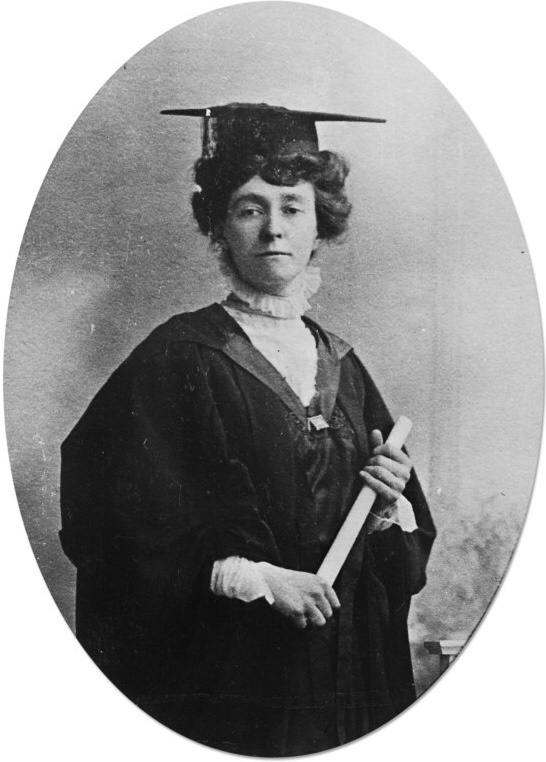
Emily was born on the 11th of October 1872 at Blackheath, London…. She won a scholarship to the Royal Holloway College, where she studied literature….she then continued on to Oxford University – but would have been unable to obtain a degree as it was not permissible for women to do so at the time…. She went on to become a teacher….
img_3287
Emily Davison in 1908 – Public domain

In 1906 Emily joined the Women’s Social and Political Union (WSPU), which had been founded by Emmeline Pankhurst…. Three years later Emily had given up her job and was working full-time for the Cause…. Her activities saw her imprisoned several times and by 1911 she was becoming more militant….

She had certainly proved that she was prepared to die for the Movement…. In 1912 she was jailed for ten months after setting fire to post boxes in London…. Whilst in prison she went on hunger-strike and in response to force-feeding threw herself from a balcony….

“I did it deliberately, and with all my power, because I felt that by nothing but the sacrifice of human life would the nation be brought to realise the horrible torture our women face. If I had succeeded I am sure that forcible feeding could not in all conscience have been resorted to again”….
img_3293
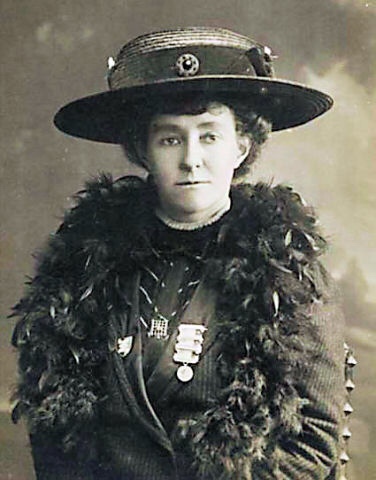
Emily Davison – Public domain

Thousands of people had attended the Epsom Derby….King George V and Queen Mary were amongst them…. One of the King’s horses, ‘Anmer’, was running in the Derby and they were there to watch…. Ridden by Herbert Jones, jockey and horse were easy to spot – sporting the King’s colours of purple, scarlet and gold….

Epsom racecourse has two long straights with a sweeping curve at one end – rather like a horseshoe in shape…. The bend where the curve turns to the home-straight is called ‘Tottenham Corner’….and this is where Emily had positioned herself….

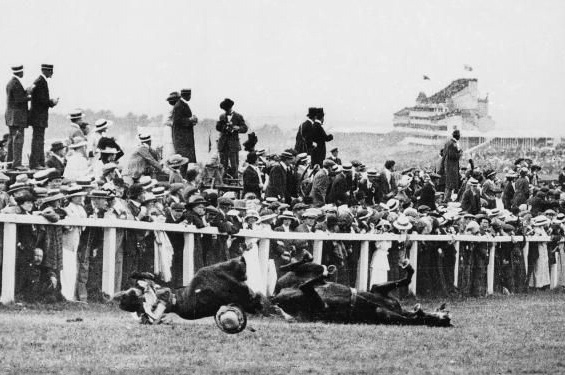
As the horses came around the corner with Anmer third from last, Emily – holding the purple, white and green flag of the Suffragette Movement – ducked under the guard rail and stepped into the path of the King’s horse and reached for the reins…. Anmer, who would have been travelling at around 35mph, crashed into her and fell…. Jones was thrown and knocked unconscious, the horse partially rolled on to him….but Anmer regained his feet and finished the race alone….
img_3292
Image: Arthur Barrett – Public domain

Both Emily and Herbert Jones were rushed to Epsom Cottage Hospital…. Jones suffered broken ribs, bruising and concussion…. Emily was operated on but died of her injuries four days later….

img_3291
Emily Wilding Davison under the King’s horse, 1913 – LSE Library via flickr – no known copyright restrictions

At the inquest the verdict was given:-

“That Miss Emily Wilding Davison died of a fracture of the base of the skull, caused by being accidentally knocked down by a horse through wilfully rushing on to the racecourse at Epsom Downs during the progress of the race for the Derby; death was due to misadventure”….

img_3290-1
Emily Davison towards the end of her life – Public domain

It is not known if Emily had pre-planned her actions – she had not discussed her intention with anyone…. She had another two flags upon her person….and in her handbag was a return train ticket and an invitation to a suffragette function that evening…. Perhaps it was a spur of the moment decision – or it has been suggested that she intended to fix her flag to Anmer….

img_3288
The return ticket found in Emily’s handbag – public domain

The King recorded in his diary that it was ‘a most regrettable and scandalous meeting’; Queen Mary in hers called Emily a ‘horrid woman’….

Jockey Herbert Jones never truly got over the incident – but was physically well enough to ride Anmer at Ascot racecourse two weeks later….

img_3289
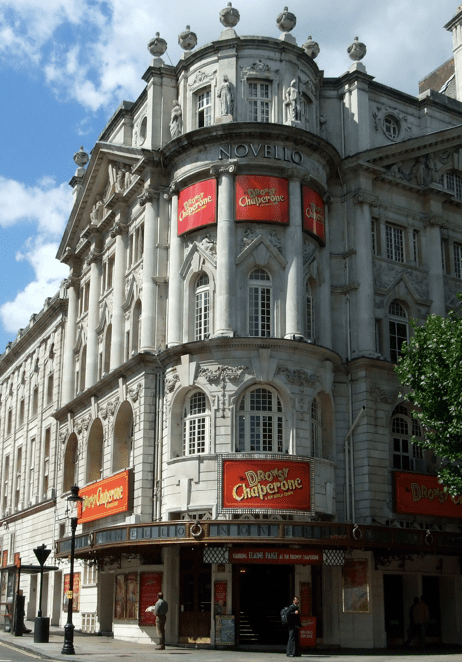
Public domain

On this day in history….3rd June 1971

On this day in history : 3rd June 1971 – The premier in London’s West End of the longest-running comedy in history ~ “No Sex Please, We’re British”….starring Michael Crawford….

Written by Alastair Foot and Anthony Marriott and directed by Allan Davis the farcical play opened at the West End’s Strand Theatre….

img_3284
Strand Theatre (2007) – Turquoisefish CC By 3.0

The plot centred around Bank Manager Peter Hunter and his new wife, Frances, who live in a flat above the bank…. Frances sends away for some Scandinavian glass – but when it arrives it turns out to be not glass at all….but Scandinavian pornography…. A flood of photographs, books and films begins to arrive and the couple, along with the bank’s chief cashier, Brian Runnicles, desperately try to find a way to get rid of it…. Matters are complicated by Peter’s interfering mother, his boss, a bank inspector and a police superintendent….

The part of Brian Runnicles was at first played by Michael Crawford and later by David Jason…. Crawford used the character of Runnicles for his persona of Frank Spencer in “Some Mother’s Do ‘Ave ‘Em”…. He was offered the part of Frank after the success of “No Sex Please, We’re British” but had not been the first choice for the hit sit-com…. the part had been offered to Ronnie Barker and then Norman Wisdom – but both had turned it down…. However, it has to be said Michael Crawford made Frank Spencer his own….

img_3285
Michael Crawford in Sydney, 2012 – Eva Rinaldi CC BY-SA 2.0

The character of Frances Hunter in “No Sex Please, We’re British” was initially played by Belinda Carroll…. The comedy ran until 1987, playing at full houses at three West End theatres:- The Strand, The Garrick and The Duchess, giving a total of 6,761 performances…. However, it did not enjoy the same level of success in America, closing after only sixteen performances on Broadway in 1973….

Also in 1973 a film version starring Ronnie Corbett as Brian was released with with changes to names, script and elements of the plot….

On this day in history….2nd June 1850

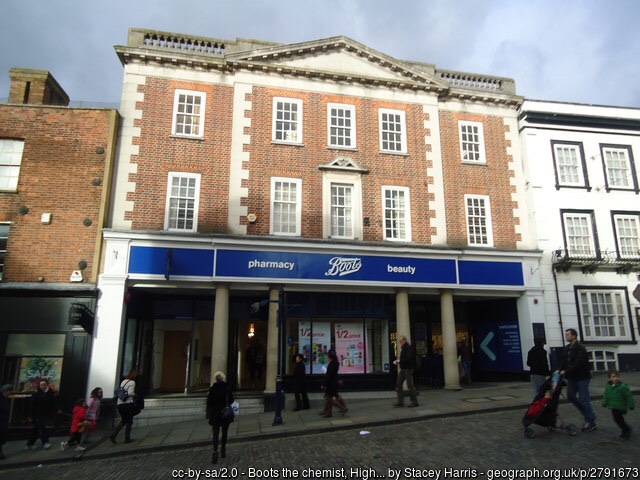
On this day in history : 2nd June 1850 – The birth of Jesse Boot – who transformed the business his father had founded into a national retailer – Boots – ‘Chemist to the Nation’….img_3281

John Boot had started out by making and selling herbal remedies from recipes his mother had taught him…. He opened his first shop in 1849 at Goose Gate, Nottingham and it was to become the roots of the Boots empire….

img_3279
16-22 Goose Gate – Photo credit: Alan Murray-Rust CC BY-SA 2.0

He married Marry Wills and they had two children, Jesse and Jane…. Having suffered ill-health for most of his life John Boot died in 1860 – leaving his wife and 10-year-old Jesse to run the business, which they did as M & J Boot, Herbalists…. Jesse and his sister would go and collect herbs from the countryside….and as he got older he took on a larger role within the business until when in 1877 he took over….

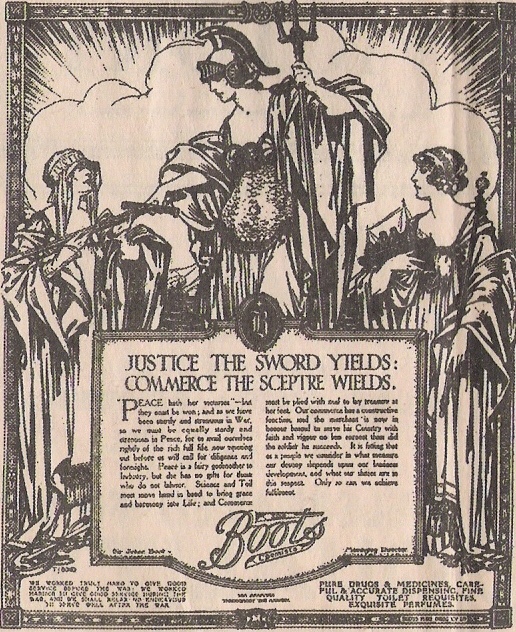
Jesse wanted to make medicines available and affordable to all….and once he took over he began to put his big ideas into practice…. He started to buy ingredients in bulk…. On one occasion he bought a ton of Epsom salt – and it took the family a whole weekend to package it up and fill the shop window…. Advertised at a penny a pound – or seven pounds for sixpence – Jessie was ridiculed by his competitors, who all sold Epsom salt for a penny an ounce, they said he would soon go out of business…. In response he took out a large advertising campaign in the local Press and doubled his sales in a month….img_3278

The business became incorporated as Boot & Co. Ltd in 1883 and then Boots Pure Drug Company in 1888…. Jesse married Florence in 1885 and their son, John, was born in 1889…. His flagship store at Pelham Street, Nottingham opened in 1892…. Between them Jesse and Florence continued to grow the business – and began selling other associated products…. Florence concentrated on developing stationery lines and gift ideas – and she established Boots Booklovers Libraries…. She also took particular interest in the welfare of their staff….img_3277

By 1896 Jesse owned 60 shops in 28 towns – offering prescriptions, which doctors had previously had to make up themselves…. Jesse often worked up to 16 hours a day but having no chemist training himself employed qualified staff….

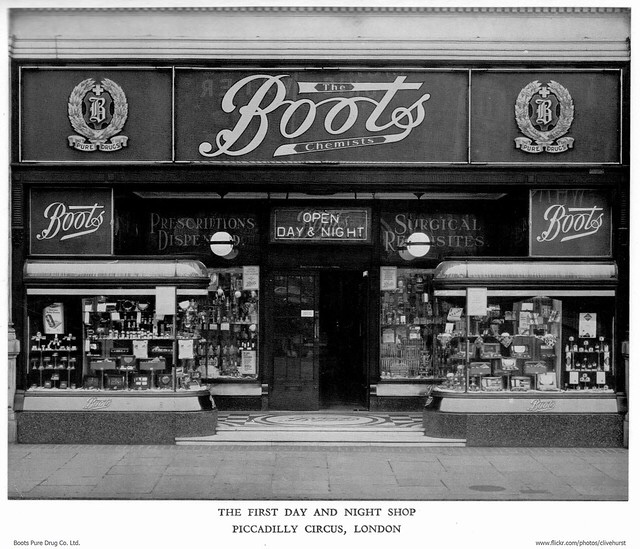
Jesse received a knighthood for his achievements in 1909…. By the beginning of World War 1 he had more than 560 branches and in 1917 was made a baronet….

img_3280
Piccadilly Circus, London – Image credit: Clive Hurst via flickr

By the time he was 70 Jesse was almost crippled with rheumatism….and in 1920 he sold his controlling share of the business to the United Drug Company of America, in a deal worth over £2m…. The Company employed some 1,500 staff by this time…. Despite his illness Jesse continued to work and in 1929 was made 1st Baron Trent…. He died two years later in 1931….

Jesse’s son had taken over as chairman of the Company in 1926 and upon his father’s death had inherited his title…. In the 1930s North America suffered a severe economic depression and in 1933 John made a successful bid to buy the Company back…. Shortly after Boots opened its 1,000th store….

img_3276
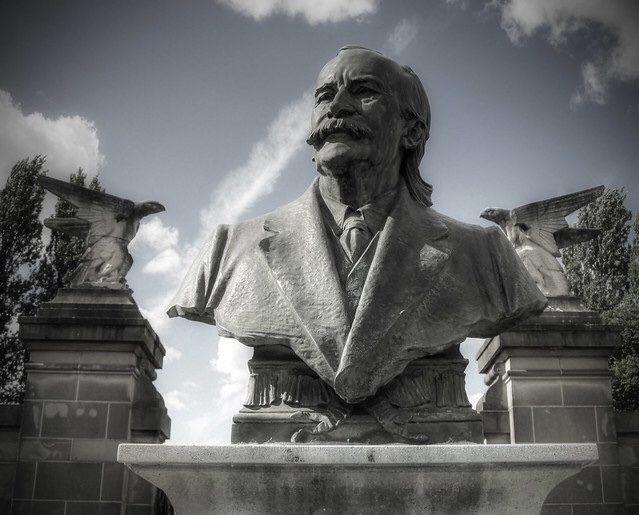
Bust of Jesse Boot, Nottingham – Photo credit : Addy Clarke via Flickr

On this day in history….1st June 1985

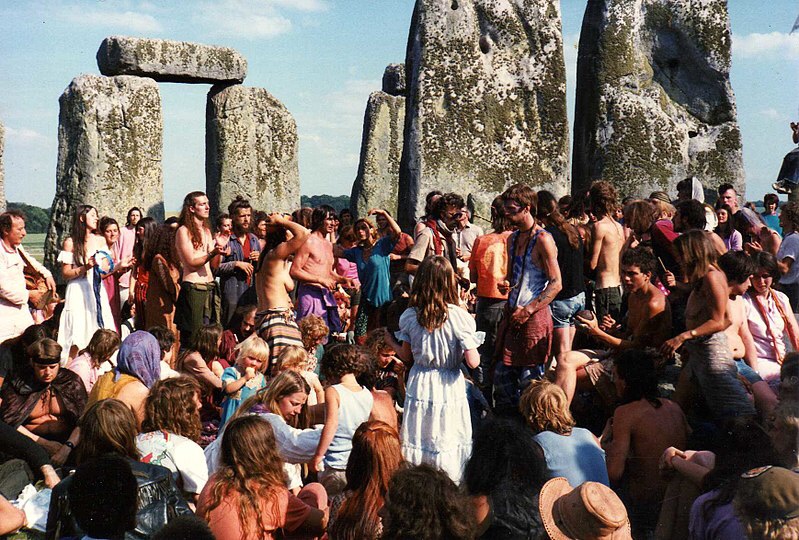
On this day in history : 1st June 1985 – The ‘Battle of the Beanfield’ takes place, near to Stonehenge…. More than 500 arrests are made as travellers attempt to reach the stones to hold an illegal festival….

The Stonehenge Free Festival ran from 1974 to 1984 – it is estimated attendance had grown to about 100,000 annually…. In 1984 the Department of the Environment passed the management of Stonehenge to English Heritage – and because of damage incurred to the stone circle and its surrounding area a High Court injunction was imposed to prevent the 1985 festival from taking place….

img_3274
Stonehenge Free Festival 1984 – Salix aiba at en.wikipedia CC BY-SA 3.0

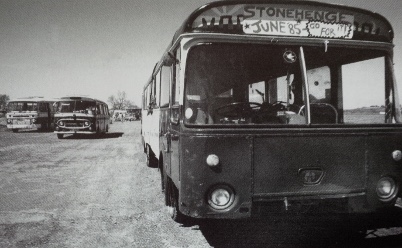
The New Age Traveller culture had developed in the 1970s as an alternative lifestyle…. Some 140 vehicles, mostly buses and vans converted to living space and accommodating around 600 travellers, had spent the night at Savernake Forest…. The following morning they had set off in convoy for Stonehenge – and managed to avoid a first roadblock on the A303 by diverting down a side road…. However, 7 miles from their destination they encountered a second roadblock; 500 police officers, council vehicles and 15 tons of gravel dumped on the road barred their way….

img_3273
Photo credit : Alan Lodge – fair use

What actually happened next is somewhat disputed…. The police claimed their vehicles were rammed; stones, lumps of wood and even petrol bombs were hurled…. Whereas those in the convoy described how they were ambushed; the windows of their vehicles smashed, they were beaten with truncheons and women were dragged along by their hair….

Some 200 fled into a nearby field, many were women and young children…. The police told of how a stand-off commenced…. Through negotiation some of the travellers left peacefully around 4 hours later…. However, at around 7pm a second police attack took place as some travellers tried to escape by driving across the fields…. It is claimed the police threw truncheons, shields, stones and even fire extinguishers to try and prevent them….

img_3272
Photo credit : Tim Malyon – fair use

This was the first test of English Heritage’s ban on Midsummer festivals at Stonehenge…. Around 1,300 police from 6 different forces took part…. In total 537 arrests were made and 24 people needed hospital treatment; 16 travellers and 8 police officers…. A carnage of damaged vehicles and fires were left behind….

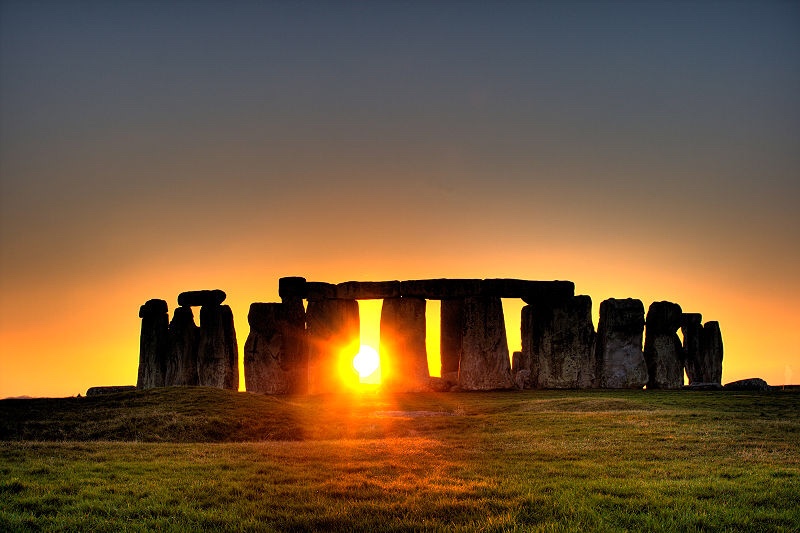
Two years later a Wiltshire police sergeant was found guilty of causing actual bodily harm…. In February 1991 Winchester Crown Court awarded £24,000 to 24 travellers who had sued the police for wrongful arrest and damage to property…. The police were cleared of wrongful arrest….and the £24,000 awarded was swallowed up by the legal bill of the travellers, as legal costs had not been awarded…. In 2000 English Heritage lifted the ban that had been imposed on festivals at Stonehenge…. Druids and revellers now enjoy limited access….

img_3275
Photo credit : Simon.Wakefield via flickr

On this day in history….31st May 1838

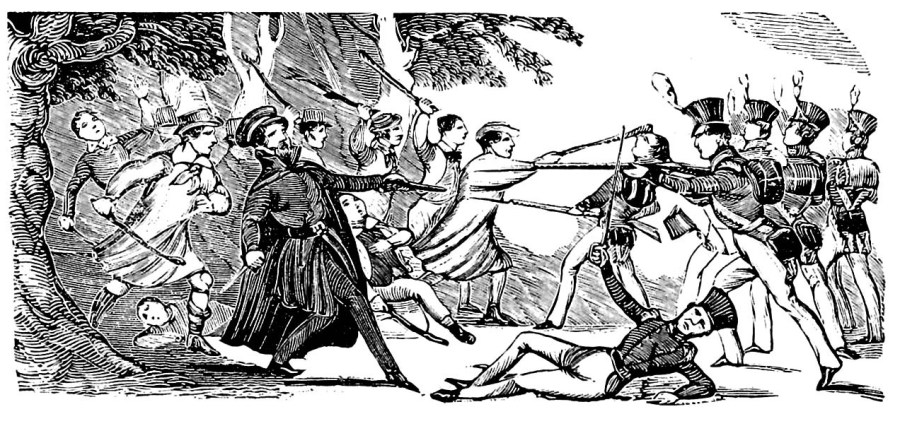
On this day day in history : 31st May 1838 – The Battle of Bossenden Wood takes place between a group of agricultural labourers and armed soldiers…. It is the last battle to be fought on English soil….

img_3265
Scene at Bossenden Wood drawn by an eyewitness – Public domain

Self-proclaimed Sir William Courtenay was a Cornish wine merchant; his real name was John Nichols Tom – and he was born in 1799 to inn-keeper parents…. Tom received a good education in which he stayed until he was 18 and then he was apprenticed to a solicitor…. Deciding Law was not for him he left after 3 years and tried his hand as an inn-keeper…. Later he went to work as a clerk for a wine merchants and when the owners retired took over the business…. He married Catherine in 1821….and everything in life should have been rosy – only this was not how it was to work out….

img_3266
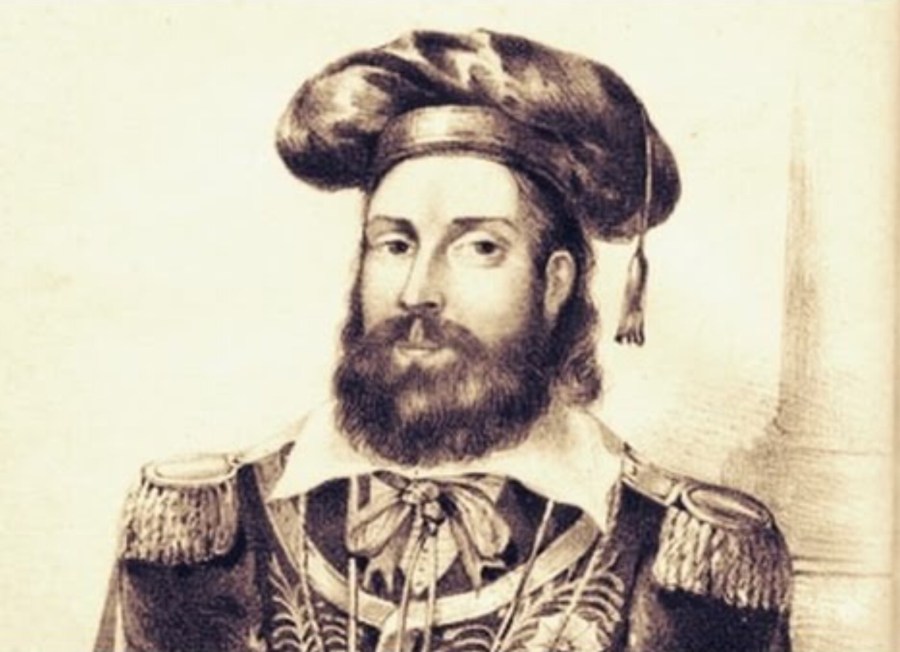
Courtenay – public domain

When Tom was in his late twenties his mother was sent to a lunatic asylum – where she died…. Around the same time, in 1828, the premises of his wine merchants business was destroyed by fire…. In 1831 Tom had a mental breakdown, for which he received treatment…. Believing himself sufficiently recovered he left Truro with a consignment of malt, bound for Liverpool…. From there he wrote to his wife; he travelled to Birmingham and wrote again that he was going to France – that was the last she heard from him….

In September of the following year Tom turned up in Canterbury, dressed in flamboyant finery, with long flowing red hair and beard…. He called himself ‘Sir William Percy Honeywood Courtenay, Knight of Malta, heir to the Earl of Devon and the Kentish estates of Sir Edward Hales’…. Most people realised he was an imposter – but he was an amusing larger-than-life figure and soon became very popular in Canterbury…. Having being persuaded by local dignitaries and politicians to stand for parliament, in the December 1832 General Election, he gave some colourful speeches – and actually gained respectable results, even if not enough to get him into government….

In March 1833 Tom found himself on the wrong side of the Law…. He gave evidence in the defence of some smugglers from Faversham; they got off – but Tom was charged with perjury…. He was found guilty and sentenced to 3 months imprisonment and 7 years transportation….

News reached Cornwall of the goings on of this man who called himself Sir William Courtenay – and Catherine travelled to Kent to find out if this was indeed her missing husband…. Tom denied knowing her – but she managed to convince the authorities and told them of his mental breakdown…. After being examined by two doctors Tom was declared of being ‘not in sound mind’ and was admitted to Barming Heath Asylum in October 1833…. He was the perfect patient….and 4 years later Queen Victoria granted him a pardon – on condition he returned to his family in Cornwall….

img_3267
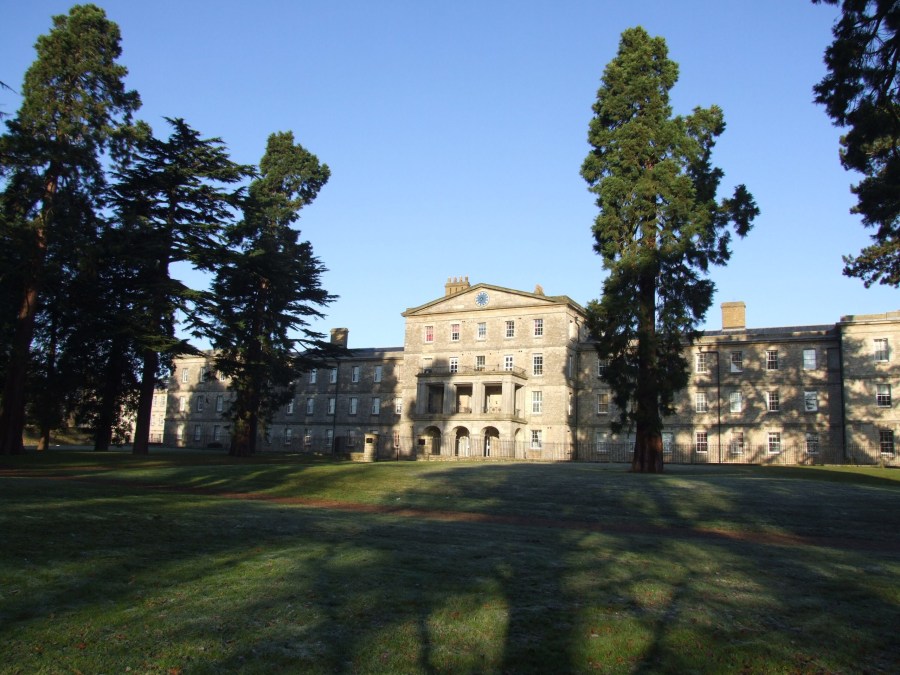
Barming Heath Asylum – now St. Andrew’s House, Oakwood Hospital…. Coutenay would have been one of the first patients admitted when it opened in 1833…. Image : Moriarti01 CC BY-SA 3.0

But of course, he didn’t…. instead he spent the next few months wandering through eastern Kent rousing agricultural workers, small holders and artisans…. A New Poor Law had recently been introduced; all unemployed, able-bodied men were required to enter the workhouse…. Tom promised a better life….inciting them to rise-up against low pay, lack of work and poor conditions…. Gradually he built up a band around him….and together they roamed through the Kent countryside and drummed up support….

Wealthy landowners began to get agitated and on the 31st of May 1838 a warrant was issued for Tom’s arrest…. The local constable of Boughton-under-Blean, his assistant and brother, Nicholas Mears were despatched to find him…. Tom and his followers were staying at Bossenden Farm, near to to the village of Hernhill and when the constable’s party arrived Tom shot Nicholas Mears dead…. The constable and his assistant beat a hasty retreat – and a detachment of the 45th Infantry was called out from their barracks in Canterbury…. Under the command of Major Armstrong, 100 men and 3 junior officers tracked Tom and his 30 or 40 followers to a clearing in Bossenden Wood…. Tom and one other carried guns….the others were armed only with sticks….

img_3269
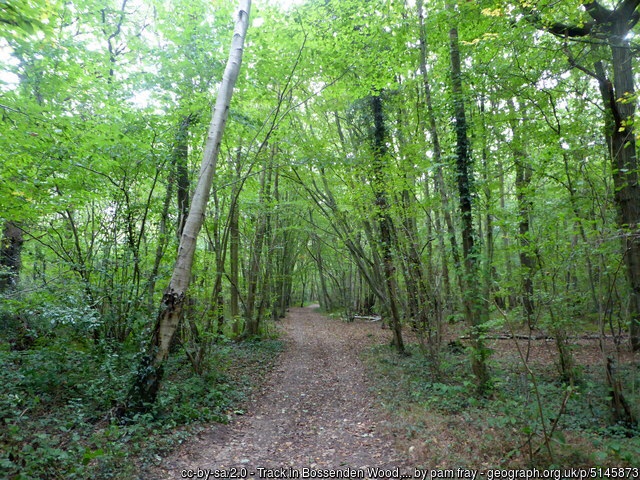
Bossenden Wood

As the soldiers advanced Tom shot dead Lieutenant Bennet, one of the junior officers…. A battle commenced, that lasted for around 10 minutes…. Tom and 8 of his men were killed….and a young special constable helping the soldiers was caught in the crossfire and died…. One soldier got slightly injured by a stick….

img_3268
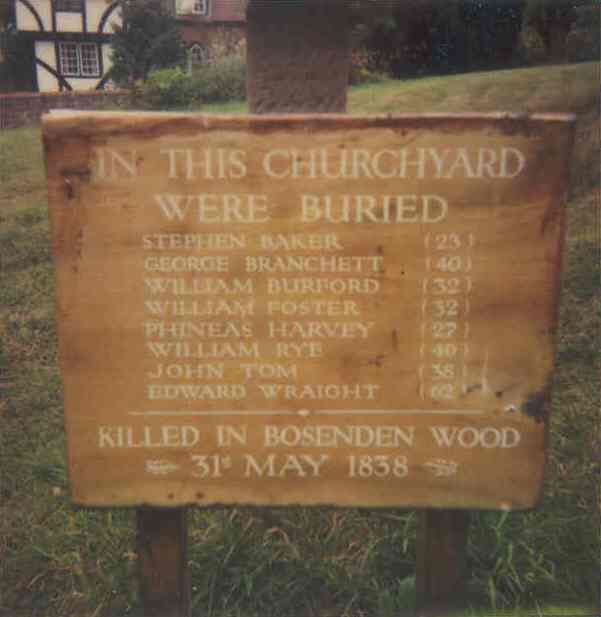
Commemorative plaque, Hernhill Churchyard CC-BY-SA- 3.0

Over the following days most of Tom’s men who had managed to escape were rounded up….including 2 women…. They were all tried for murder and were either transported or imprisoned….

img_3270
John Nichols Tom – image via Youtube