On this day in history : 15th January 1867 – Ice covering the boating lake at Regent’s Park gives way…. Hundreds of skaters are plunged into the icy water – 40 people lose their lives….
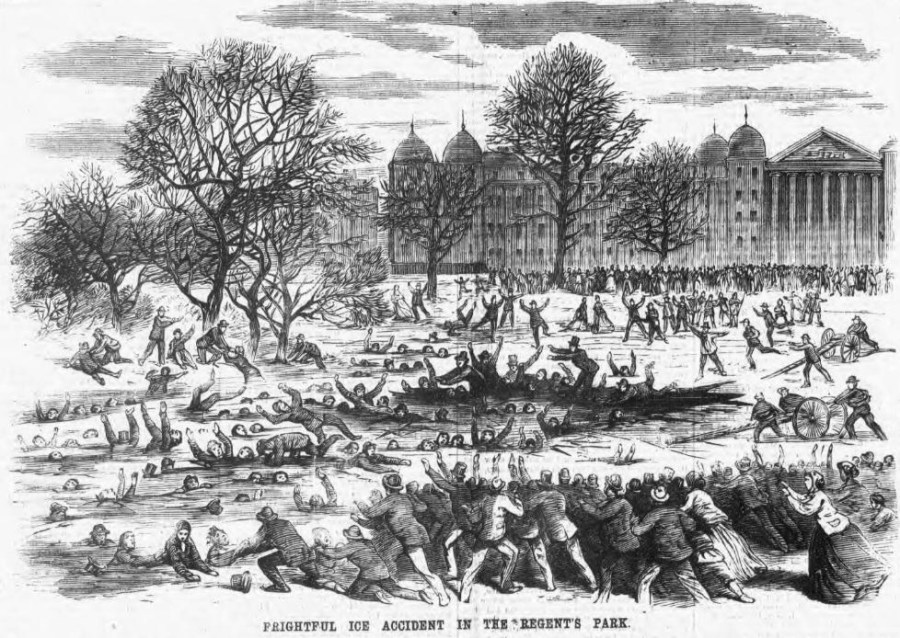
Illustrated Police News – 19 January 1867
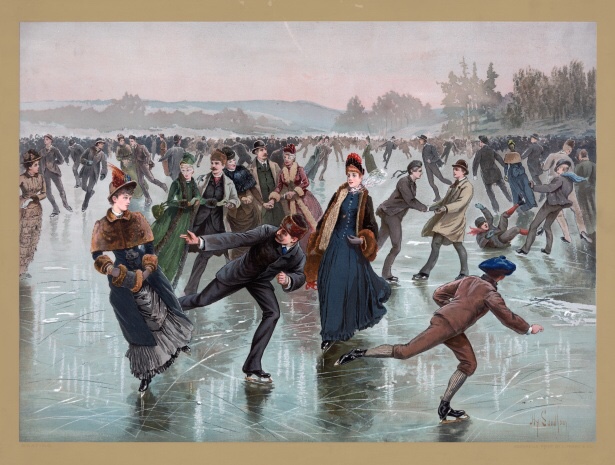
Ice skating was an extremely popular leisure activity during Victorian times – frozen ponds and lakes were often advertised in newspapers…. Up to 300 people were enjoying themselves on the ice in Regent’s Park this particular afternoon – skating, sliding, playing games of ice-hockey….
At around 4.15 the ice suddenly gave way with no warning – breaking into thousands of pieces…. Between 100-200 people were plunged into 12 foot of icy water – the weight of their heavy Victorian clothing dragging them down…. Boats were hurriedly launched to try and rescue those floundering in the water….passers-by reached out with branches broken from trees….
Illustrated London News – 26 January 1867
Those who lost their lives came from all walks of life, from gentry to the very poor…. Most were young men but there were also women and children among them…. 29-year-old James Griffin was on the ice selling oranges to the skaters – and another, John Bryon, was selling hot roasted chestnuts…. It took over a week to recover all of the bodies, fishermen from Kew were used to drag their nets along the bottom of the lake….
There was much debate at the later inquest, as to the cause of the accident…. Some blamed Skating Club members acting as stewards (known as ‘Icemen’) for breaking the ice around the edges to prevent access to the island…. They in turn blamed the ice-hockey players, people who had been jumping on the ice and even the sun for melting it…. Park keepers also came under scrutiny – as it was thought they may have broken the ice out of concern for the large collection of exotic water fowl housed on the lake…. But in truth the skaters themselves were chiefly to blame for their own misfortune….
Penny Illustrated Paper – 26 January 1867
The previous day 21 people had fallen through the ice – thankfully all had been rescued…. An overnight dusting of snow had covered the cracks so they were not visible…. Despite prominent signs being displayed, warning of the danger of thin ice, such was the enthusiasm to have fun that the signs were ignored….
As a precaution to prevent such a tragedy from happening again the lake was drained and the depth reduced to 4 or 5 foot with soil and concrete…. However, the public were slow to learn – years later a similar incident was to happen….only this time because of the depth none of the 100 or so who fell in received anything more than a very cold bath….
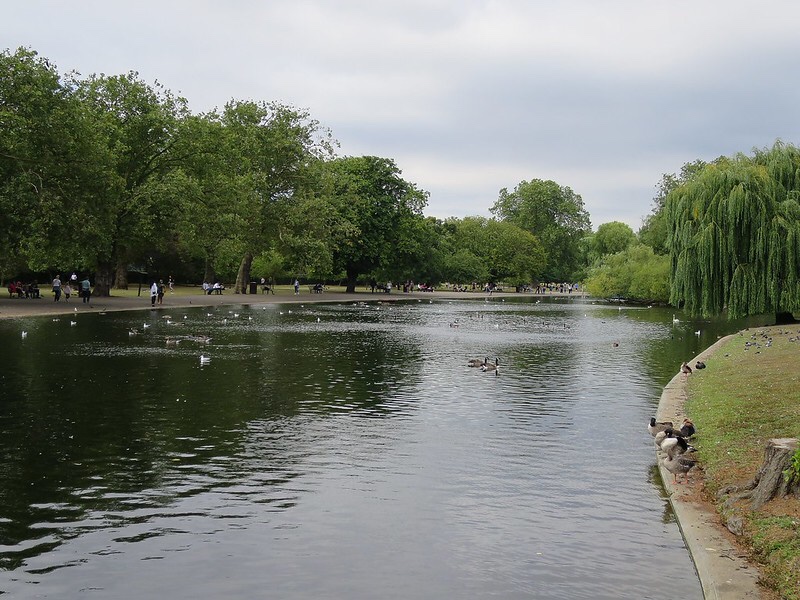
Regent’s Park Boating Lake – Alan Stanton via Flickr
On this day in history : 14th January 1886 – The birth, in Maidenhead, Berkshire, of Hugh Lofting – the English author and poet who created Dr. Dolittle….
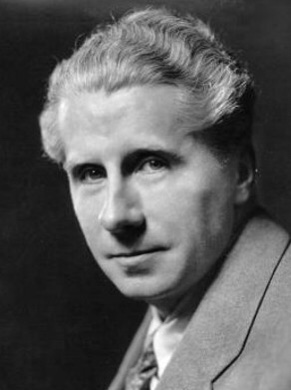
Hugh Lofting – Fair use
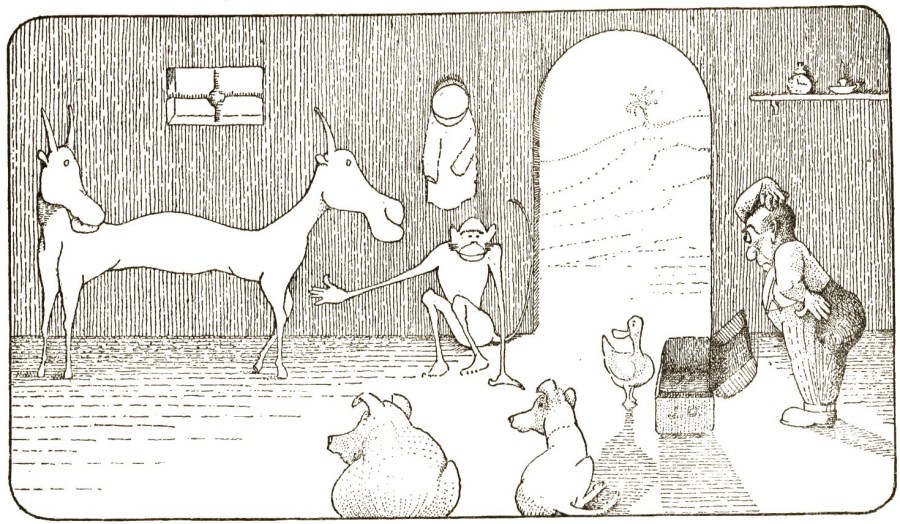
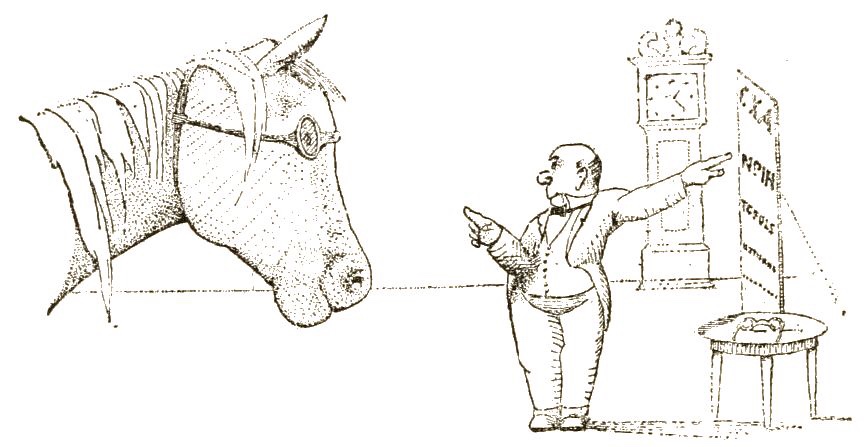
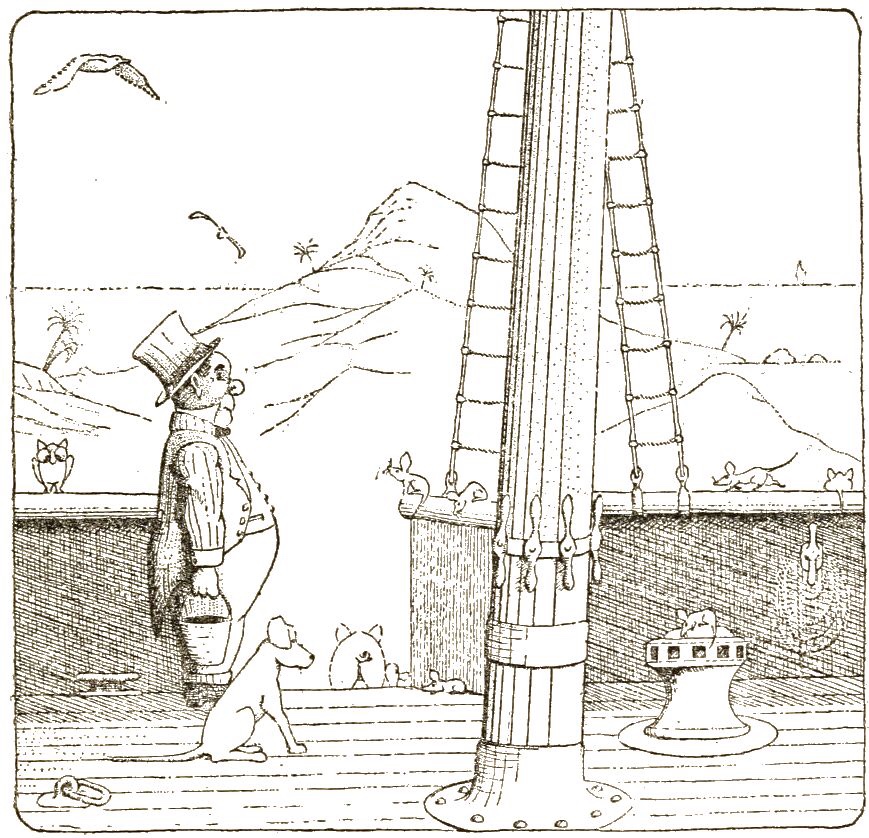
Most of us grew up reading the Dr. Dolittle books – the tales of Dr. John Dolittle, the Victorian doctor who could converse with animals…. Polynesia the parrot, Chee-Chee the monkey, Gub-Gub the pig, Dab-Dab the duck, Too-Too the owl, Jip the dog and Whitey the mouse…. Then there is the Pushmi-Pullyu – a cross between a gazelle and a unicorn, with a head at each end, so it could talk and eat at the same time without seeming rude….
Hugh Lofting never set out to be a writer…. He studied civil engineering overseas, at the Massachusetts Institute of Technology before returning home to enlist in the Irish Guards to serve in World War 1….
From the trenches Lofting wrote letters home to his children…. Not wanting to write about the horrors of war he created characters and stories – which were later to become the foundation of his Dr. Dolittle tales….
In 1919 Lofting was seriously wounded – it was after this that he moved his family to Connecticut in the United States…. In 1920 his first book was published – ‘The Story of Doctor Dolittle : Being the History of His Peculiar Life at Home and Astonishing Adventures in Foreign Parts Never Before Printed’…. The sequel – ‘The Voyages of Doctor Dolittle’ followed in 1922; there are 10 books in all in the series….
Other works by Lofting written for children include the ‘Mrs Tubbs’ series of picture books for younger children – ‘Porridge Poetry’ and ‘Noisy Nora’, a story about a little girl who is a very noisy eater…. He also wrote ‘The Twilight of Magic’ for older readers….
‘Victory for the Slain’ was published in 1942 and was Lofting’s only work for an adult audience…. It is a lengthy poem in seven parts, lamenting war and the futility of it…. Victory for the Slain was only ever published in the United Kingdom….
On this day in history : 13th January 1915 – The death of Mary Slessor, the Scottish missionary to Nigeria, who successfully promoted both Christianity and women’s rights….
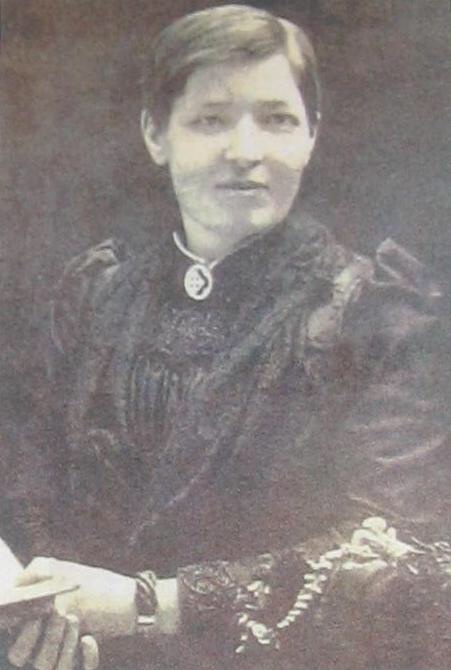
Mary Slessor – Public domain
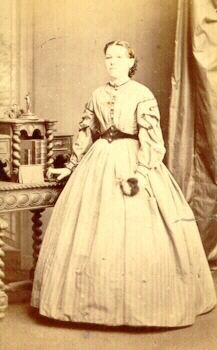
Mary was born in Aberdeen on the 2nd of December 1848 into a poor working class family; she was the second of seven children…. When she was aged 11 the family moved to Dundee…. Her father, a shoemaker, was an alcoholic and was unable to keep up his trade – so he took a job as a labourer in a mill…. Mary’s mother, a skilled weaver, also worked in the mills – and at the age of 11 Mary joined them as a ‘half-timer’- meaning she spent half the day working and the other half attending the school provided by her employers…. By the age of 14 she was working full time – from 6am to 6pm…
Tragically Mary’s father and brothers all died from pneumonia – leaving just Mary, her two sisters and her mother…. Being a devout Presbyterian Mary’s mother made sure her daughters continued to attend Church – and Mary developed an interest in religion; she joined a local mission for the poor….
Mary Slessor as a young woman – Public domain
When Mary was 27 she learned of the death of missionary David Livingstone – it became her desire to follow his example…. Soon after she applied to the United Presbyterian Church’s Foreign Mission Board and underwent training in Edinburgh…. On the 5th of August 1876 Mary boarded the SS Ethiopia to sail for West Africa – arriving just over a month later at Calabar in South Eastern Nigeria….
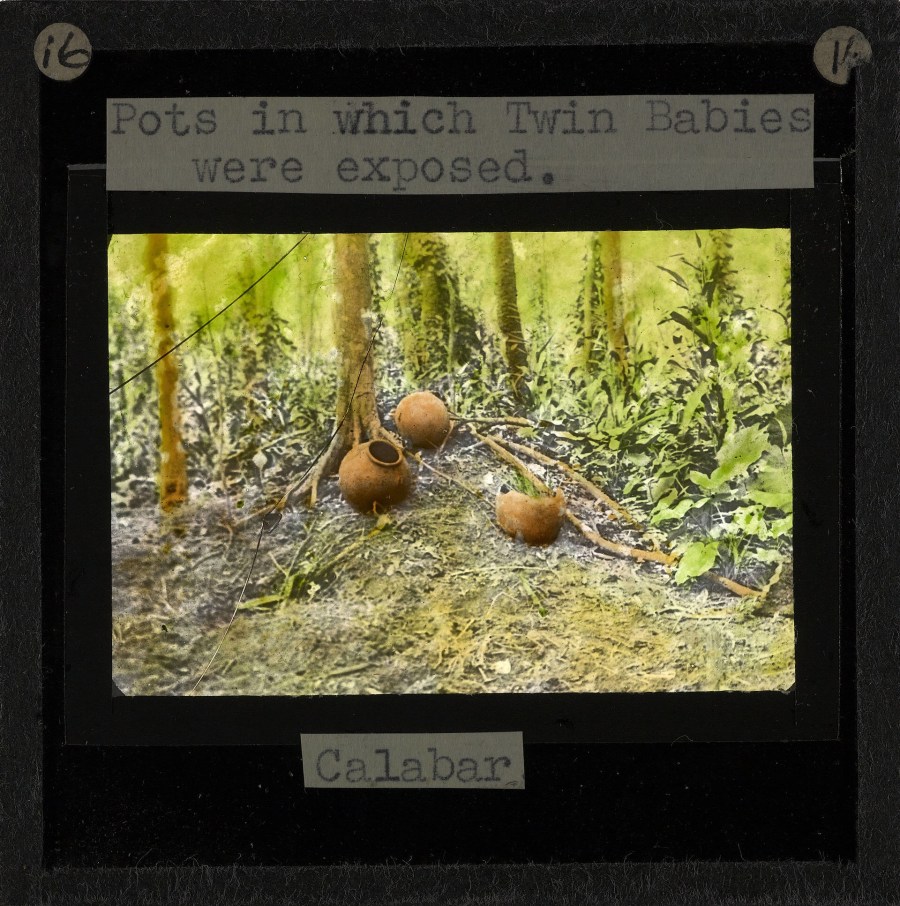
Britain had taken control of Nigeria but was not interested in the welfare of its people – it was more concerned with maintaining trade…. The slave trade was still very fresh in people’s minds…..women had virtually no rights – and infanticide was common practice…. The West African religion had superstitions and one in particular was related to the birth of twins…. They were considered a curse and it was believed that one of them had to be a devil – twins would often be sacrificed, being left in clay pots in the jungle to die….
Source unknown – Public domain
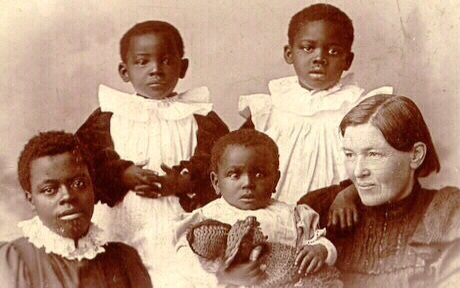
Mary gradually gained the trust of the Ibibio people – for 15 years she lived amongst them…. She became fluent in their language, ‘Efik’ – and learnt their way of life and customs…. She encouraged trade, introduced social changes and Western style education…. She adopted several local children who had been rejected by their families…. To the Nigerians she became known as “Mother of All The People’s” – and she was made a member of the Itu Native Court….
Mary Slessor pictured with adopted children Jean, Alice, Maggie and May – a photograph taken on a trip home to Scotland C1880 Source : Dundee City Library Local Research – Public domain
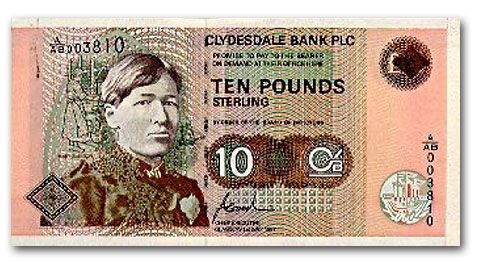
By the early 1900s Mary was helping to vaccinate the people against smallpox…. Disease was rife in Western Africa, including malaria, which Mary herself was to suffer from the last four decades of her life…. As her health declined so did her strength, until eventually she could no longer walk through the rainforest but had to be pushed in a handcart…. She died on the 13th of January 1915 and was given a state funeral in Nigeria…. In 1953 Queen Elizabeth II visited her grave…. In 1977 the Clydesdale Bank issued a Scottish £10 note with the image of Mary Slessor upon it….
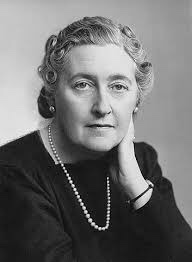
On this day in history : 12th January 1976 – Crime writer Dame Agatha Christie dies peacefully of natural causes, at the age of 85, at her home in Wallingford, Oxfordshire….
After a simple funeral service she was buried in the nearby churchyard of St. Mary’s at Cholsey – having chosen her own final resting place 10 years earlier….
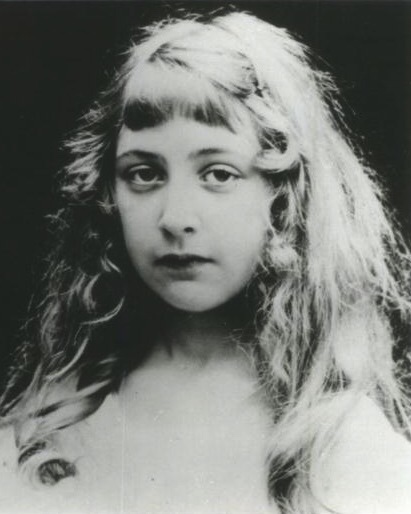
Agatha Mary Clarissa Miller was born on the 15th of September 1890 in Torquay, Devon…. She was born into a wealthy upper-middle class family and was the youngest of three children…. Her parents only decided on what name to call her minutes before her christening….
We all know Agatha Christie as perhaps the most successful writer of modern times…. She has sold over 2 billion books worldwide – having only ever being outsold by Shakespeare and the Bible…. Agatha never actually intended to become a writer, she only found her vocation after being challenged by her elder sister, Madge, to write a detective story…. During her writing career she also wrote six non-crime novels, under the pseudonym of Mary Westmacott….
Agatha as a child, date unknown – Public domain
Agatha did not go to school, she received a home education, where her parents taught her to read and write and the basics of arithmetic…. She was also musical, playing the piano and mandolin….
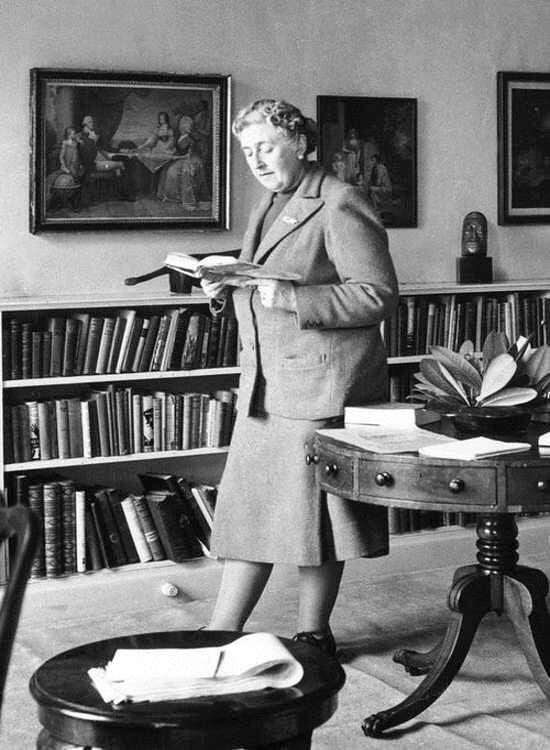
An avid reader from an early age, her own favourite authors as an adult were Graham Greene and Elizabeth Bowen…. Agatha gained her knowledge of poisons for her own novels whilst working in a hospital dispensary during the First World War….
Image credit : Ninian Reid via Flickr
Here are a few more little facts about Agatha Christie which you may not have known….
She was a keen gardener and won prizes for horticulture…. She loved the sun and the sea and flowers…. Her favourite colour was green…. She enjoyed travelling, trying different foods, going to concerts and the theatre…. She liked sport and relaxed by doing embroidery…. She didn’t drink alcohol and hated smoking…. She detested cockroaches and marmalade pudding! In her own words her chief dislikes in life were : ‘crowds, loud noises, gramophones and cinemas’…. Agatha’s last public appearance was in 1974 at the film premier of’Murder on the Orient Express’….
On this day in history : 11th January 1866 – SS London, a British steamship, sinks in the Bay of Biscay…. At least 220 lives are lost….
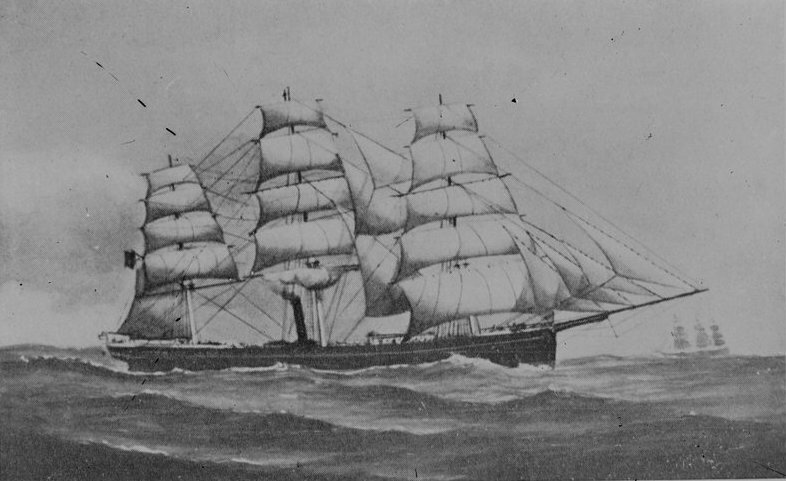
Although a steamship SS London looked more like a sailing ship – a ‘hybrid’ ship, as they were known…. The London was just 2-years-old, having been built at the Blackwall Yard and then launched on the River Thames on the 20th of July 1884…. She was considered to be modern, luxurious – and had a top-speed of 11 knots…. She also boasted 7 lifeboats – more than the legal requirement for a ship of her size at the time…. Tragically, these lifeboats were to be of little use….
SS London – Image from the John Oxley Library, State Library of Queensland – Public domain
SS London’s final voyage began on the 28th of December 1865…. She left London’s East India Docks, under the command of Captain Martin – an experienced Australian navigator – and sailed to Gravesend in Kent…. From here she went on to Plymouth, arriving on the 4th of January 1866 – a day late, as due to storms she had taken refuge near to Portsmouth…. On the 6th of January she finally set sail for Melbourne, a voyage expected to take between 60 to 90 days….
On board were some 239 passengers and crew, including 6 stowaways…. Out of the 92 crew all were men with the exception of 1 woman, who acted as part nurse / part stewardess…. The average age of the crew members was just 24….
The 3rd class passengers would have been herded together, sleeping in dormitory-type accommodation…. At the opposite end of the scale 1st class passengers enjoyed the luxury of having their own cabins…. Among the passengers were several celebrities and dignitaries – including Gustavus V Brooke, a well-known Shakespearean actor of the time and very popular in Australia…. Also on board was the eldest son of William Debenham – founder of the chain of department stores….
By the second day the weather had started to deteriorate and by the 8th of January it had turned into a howling gale…. The following day it was so severe that a lifeboat was torn away, followed by the jib-boom and then the tops of the mainmast and foremast…. By the 10th of January people were in fear for their lives; 2 more lifeboats had been lost, along with more sails…. It was at this point that the captain decided to turn back – and he steered towards the eye of the storm…. A decision that was later to be criticised, as they had already come through the worst of the storm….
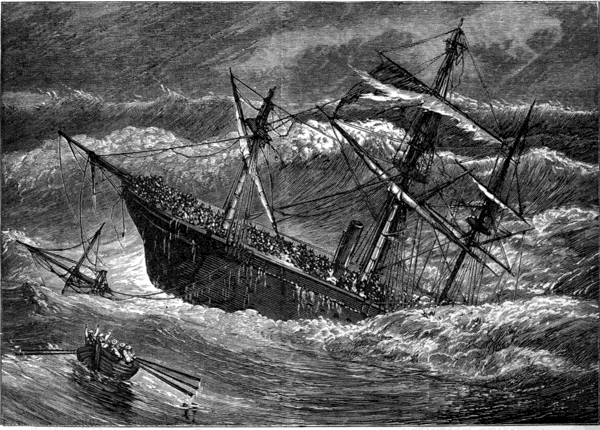
A huge wave crashed on to the deck, the engine hatch was smashed and water flooded the engine room, putting the fires out…. A massive hole appeared which the crew attempted to plug with mattresses and tarpaulins…. Both crew and passengers frantically tried to pump out the water….
At 5am on the 12th of January another huge wave crashed into the stern, smashing all the portholes…. The captain decided it was time to abandon ship and a lifeboat was launched…. However, it promptly sank, as all the lifeboats had been swamped….
By now the passengers were giving up hope….and had all but resigned themselves to their fate…. Many had spent time with the 3 ministers on board the ship, praying and trying to find some comfort…. Matters were not helped by the attitude of the captain, who repeatedly told them there was no hope….
Another lifeboat was successfully launched – but by now spirits were so crushed that nobody, especially the women, would attempt to get into it…. In the end it was 16 crew members and 3 male passengers who took the places in the boat…. Ironically, they were the only ones to survive – and were rescued the following day….
The London going down – Frederick Whymper – From page 293 of the 1887 book ‘The Sea : its stirring story of adventure, peril & heroism’ – Public domain
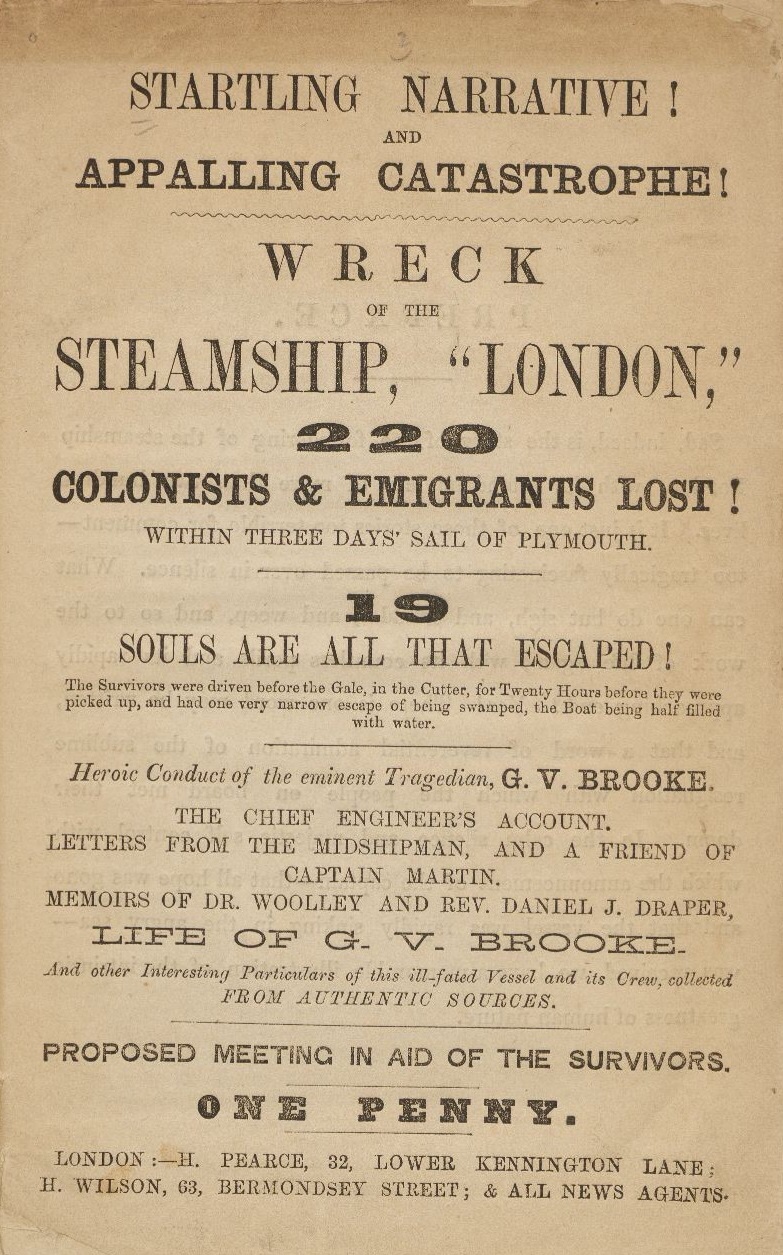
SS London went down taking at least 220 men, women and children with her…. The successfully launched lifeboat was just 100ft away – and so the 19 onboard had little choice but to witness the sinking…. It is said as the doomed ship sank beneath the waves the last thing to be heard from her was the sound of singing – the popular hymn of the time ‘Rock of Ages’….
Following the sinking of SS London there was much controversy…. The public were furious and arguments raged in Parliament…. A public inquiry was held and concluded 3 main factors contributed to London’s fate…. The captain’s decision to turn back into the storm to return to Plymouth being the first…. Secondly, the ship was over-laden – she was carrying 345 tons of railway iron…. Finally, 50 tons of coal carried on the upper deck had blocked the scupper holes, which then prevented the drainage of seawater….
In the weeks and months to follow several bottles containing messages washed up on the French shores of the Bay of Biscay, containing farewell letters from some of those lost on SS London….
Rock of Ages, cleft for me, Let me hide myself in Thee; Let the water and the blood, From Thy riven side which flowed, Be of sin the double cure, Cleanse me from its guilt and power....
1866 pamphlet describing the disaster – H.Pearce (publisher) – Houghton Library – Public domain