On this day in history….17th April 1951

On this day in history : 17th April 1951 – The Peak District is officially confirmed as the United Kingdom’s first designated National Park after decades of campaigning by the public….img_2918

It was during the 1880s that Member of Parliament James Bryce started the campaign for public access to the countryside. His first Freedom to Roam Bill failed – but the ball had started to roll…. The 1900s saw a growing appreciation for the outdoors, with people wanting to escape the towns and cities to take advantage of the country air…. The arrival of the motor car and improvements in public transport making the countryside far more accessible to all….

In 1931 a government inquiry recommended the formation of an authority to select designated areas…. Only no further steps were taken….causing major public discontentment, resulting in a mass trespass in 1932…. Scores of walkers exercised their ‘right to walk’ in the Peak District – only to be opposed by the gamekeepers of wealthy landowners. Occasionally things got heated and came to blows; five trespassers found themselves being imprisoned….

In 1936 the SCNP – Standing Committee for National Parks – was set up….a voluntary organisation to lobby government. The result was the establishment of the Principle for National Parks….as part of Labour’s post-war reconstruction a White Paper was produced in 1945. Finally in 1949 the National Parks and Access to the Countryside Act was passed – an Act to establish National Parks to preserve and enhance their natural beauty and provide recreational opportunities for the public….

Nowadays we have a total of 15 National Parks in the United Kingdom; 10 in England, 3 in Wales and 2 in Scotland…. Each is looked after by its own authority – with the aim to conserve and enhance natural beauty, wildlife and cultural heritage – and to promote understanding and enjoyment of the area’s special qualities….

The Peak District with its historic houses, rugged rocky moorlands and limestone valleys creating breathtaking views was the original Park designated in 1951….

Also in 1951 came…. Dartmoor with its open moorlands, medieval villages and wild ponies….

….The Lake District – home to deep glacial lakes, high fells, rural villages – and is now a World Heritage Site….

….And Snowdonia – where the highest mountain in Wales is found…. With its wooded valleys, coastline of sandy beaches and historic villages Snowdonia was the first National Park in Wales….

1952 saw Wales gain another Park – when the Pembrokeshire Coast, with its golden beaches, volcanic headlands and limestone cliffs, was designated…. It is also known for its 300km coastal path and marine wildlife….

In the same year the North York Moors were made into a National Park; wide open moorland with high hills, deep dales, bubbling streams and beautiful coastline….

The Yorkshire Dales were added to the list in 1954; old stone villages and dry stone walls, rolling hills – and the Three Peaks….Pen-y-Ghent, Whernside and Ingleborough….

Exmoor National Park was also established in 1954 – with its rolling hills, moorlands, dramatic coastline and wild ponies….

Northumberland with its heather covered Cheviot Hills and Hadrian’s Wall was designated in 1956 – and is Europe’s largest area of protected night sky….

The last National Park to be designated in this decade was the third of the Parks in Wales – the Brecon Beacons in 1957…. Situated in South Wales with four mountain ranges and rolling hills it is again an International Dark Sky reserve….

In 1976 the Norfolk Broads in East Anglia, which had not originally been named as a National Park but had been recognised as having the same status, adopted the name…. Over 200km of navigable waterways and the habitat of some of Britain’s rarest wildlife….

In 1987 the UK’s largest National Park was designated….the Cairngorms in Scotland. Britain’s highest mountain range and the natural habitat of red squirrels, pine martens and golden eagles….

Scotland’s second National Park, Loch Lomond and the Trossachs was established in 2002…. Mountain ranges, forests, lochs – and the location of the largest lake in the British Isles….

The New Forest was given National Park status in 2005…. Wild heathlands, ancient woodlands, roaming sheep, cattle and of course, ponies….

Finally, the last area to be designated a National Park – the South Downs in 2010. Our newest Park, with its dramatic white cliffs, rolling hills, beautiful villages and rare wildlife, stretches across the South of England….

You cannot deny – this is a beautiful land we live in….

On this day in history….16th April 1953

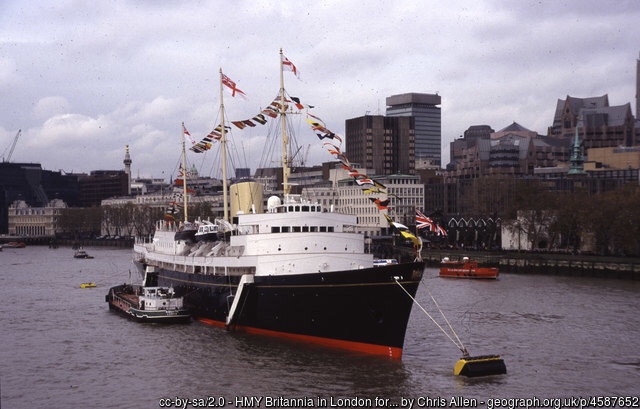
On this day in history : 16th April 1953 – Her Majesty Queen Elizabeth II launches the Royal Yacht Britannia in a ceremony at the yard of John Brown & Co, Clydebank, Scotland….img_2198

30,000 people gathered at the dockside in the pouring rain; workers at the dockyard had been given a day’s holiday and children had been let out of school for the day…. The wet weather did not dampen the spirits of those who turned out to see the Queen, accompanied by the Duke of Edinburgh, launch the new royal yacht….

The name of the ship had been kept a close-guarded secret….it was not until the moment of launch that it was revealed…. Her Majesty, dressed in a black coat with matching straw hat, pressed a button and a bottle smashed against the side of the yacht…. “I name this ship Britannia”….the rest of her words ….“I wish success to her and all who sail in her”….were almost drowned out by the cheers of the crowd…. The band then struck up ‘Royal Britannia’ and the crowd joined in by singing along….

The cost of the yacht was £1.8m (equivalent to over £49m today) – some might call this an extravagance so soon after the War but savings had been made where possible…. Many of the fixtures and fittings onboard had been recycled – particularly from Queen Victoria’s royal yacht ‘The Victoria and Albert’…. Even the bottle used in the launch ceremony contained Empire wine, as champagne was considered too extravagant….

For more information of HMY Britannia On this day in history….20th January 1997 ….

On this day in history….15th April 1929

On this day in history : 15th April 1929 – Author of Peter Pan, J.M. Barrie, donates his copyright fee for the story to the Great Ormond Street Hospital for Sick Children, in London….

img_2840
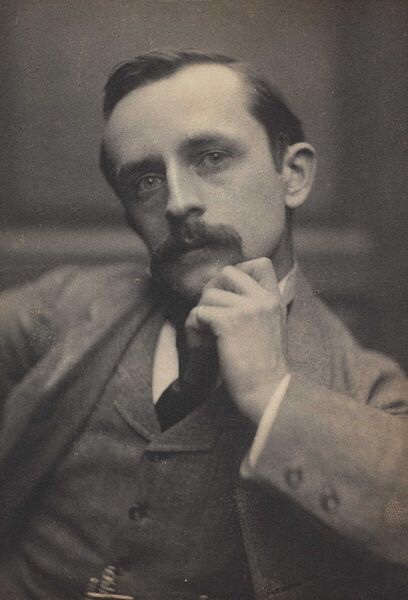
J.M. Barrie 1892 – National Media Museum @ Flickr Commons

James Matthew Barrie was the ninth of ten children and was born in the weaving town of Kirriemuir in Scotland on the 9th of May 1860…. His father was a hand-loom weaver….

img_2845
J.M. Barrie’s birth place

When Barrie was 6-years-old his older brother David – the apple of his mother’s eye – died in a tragic skating accident the day before his 14th birthday…. His heartbroken mother, Margaret, drew some comfort from the notion that her beloved David would forever remain a child to her….

It was a thought that stayed with Barrie as he grew up….an ‘everlasting childhood’….and would eventually develop into the story of Peter Pan….

img_2846
Illustration of Peter Pan playing the pipes by F.D. Bedford from ‘Peter and Wendy’ – Public domain

Barrie always had a love for children….none more so than for the children of his dear friends Arthur and Sylvia Llewelyn-Davies…. It was in 1897 that Barrie first met their three boys; George 5, Jack 4 and Peter, who was still a baby…. Two more boys, Michael and Nico were to be born to the family later….

In 1901, the family joined Barrie for a summer holiday at his Surrey home, it was then that he was inspired to write ‘The Boy Castaways’…. The story drew on the antics, games and adventures of the Llewelyn-Davies boys – and was a prequel to Peter Pan….

img_2844
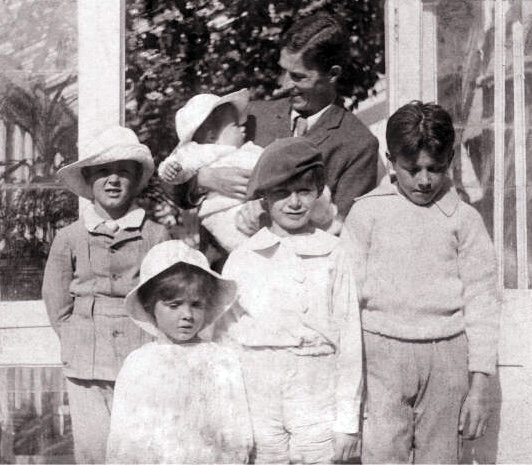
Arthur Llewelyn-Davies and sons 1905 – Public domain

Sadly, when the boys were still very young, both Arthur and Sylvia died from cancer…. Although Barrie’s own marriage had broken down and he was now divorced he became guardian to the children…. It was his life with the boys that formed the bedrock of Peter Pan….

It was in a chapter of ‘The Little White Bird’ in 1902 that Peter Pan made his first appearance – the story tells of how baby Peter learned to fly…. Barrie then wrote a stage play which was first performed at the Duke of York’s Theatre in London on the 27th of December 1904…. The play was a huge success and Barrie responded by writing the novel ‘Peter and Wendy’ in 1911…. It was an instant bestseller and has been in print ever since….img_2843

In 1929 Barrie was asked by Great Ormond Street Hospital – who he had supported for a long time – to sit on a committee to raise funds for a much-needed hospital wing…. Barrie declined their invitation but said he hoped he could find another way to help….

It was two months later that the Board learned, with much surprise, that Barrie had donated all rights of Peter Pan to the hospital…. Every play performance, every book sold – a benefit to Great Ormond Street Hospital…. Barrie just asked that the amount of money raised was never revealed….and it never has been….

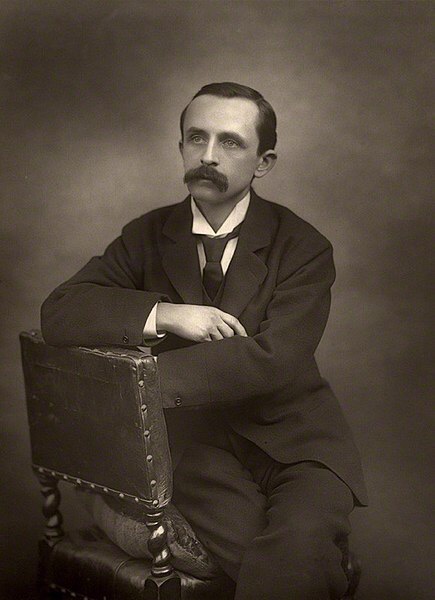
by Herbert Rose Barraud, sepia carbon print on card mount, 1892

by Herbert Rose Barraud, sepia carbon print on card mount, 1892

On this day in history….14th April 1950

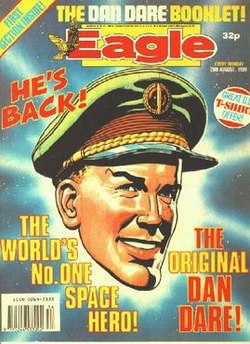
On this day in history : 14th April 1950 – The first issue of ‘Eagle’ is published with hero Dan Dare on the front cover…. The children’s comic was an instant success selling 900,000 copies of the first issue….

img_2834
Front cover of the first issue of Eagle with artwork by Frank Hampson – Fair use

Eagle was founded by Marcus Morris, vicar of St. James’ Church, Birkdale in Lancashire and artist Frank Hampson…. Morris had produced a Christian magazine entitled ‘The Anvil’ which was based on the humour and art of popular magazine of the time ‘Liliput’…. The Anvil had several well-known contributors including C.S. Lewis and Harold Macmillan…. In 1948 he hired Frank Hampson, a young aspiring artist, to work as illustrator of his Christian magazine….

Morris was unimpressed by children’s magazines available at the time…. Publications such as ‘The Rover’, ‘Schoolgirls’ Own’, ‘Adventure’ and ‘The Hotspur’ all had stories written in text form and were not very visual. Some children, particularly the boys, were buying unsuitable American horror comics aimed at G.I.s…. Morris, whilst admiring the artwork of these comics, was horrified by their content…. He also realised there was a substantial gap in the market….

img_2836
Eagle, January 3rd 1958 – Image credit: Fresh On The Net – via Flickr

The vision was for a comic filled with role models that set a moral example based on Christian values….the aim to entertain and educate…. Morris and Hampson set about creating a dummy comic – working at Hampson’s kitchen table…. They then showed it to several Fleet Street publishers, initially with no success – but then Hulton Press agreed to take it on….

A large-scale advertising campaign was launched…. The comic was a totally new concept; a new printing technique using vivid colours….nothing like it had been seen before…. The original artwork with its outstanding visual quality was done by Frank Hampson – who was always obsessed with getting detail and consistency right….

The publication format was twenty pages, eight of which were printed in full colour…. The very first edition introduced ‘Dan Dare, Pilot of the Future’ on its front cover…. Dan Dare, with his side-kick, Albert Digby, battling with the egg-headed, green-skinned Mekon – the evil alien who ruled Venus and planned to take over Earth…. The stories were set in the late 1990s and the very first issue saw Earth in the grips of a food shortage that threatened to destroy mankind…. Dan Dare was off on a desperate mission to reach Venus and win salvation…. It was relevant to the times as Britain was still under food rationing after World War II….and Hampson had always wanted to be a pilot…. Other stories that appeared in Eagle included ‘Riders of the Range’ and ‘P.C.49’…. It also featured news and a sports section….

img_2837
Eagle, October 7th, 1955 – Image credit: Robin Hutton via Flickr

Eagle was published every Friday and before long it was selling nearly a million copies a week…. To keep up with production 8 hour shifts were worked, 24 hours per day, 7 days a week…. It was published from 1950-1969 – when it merged with its rival comic ‘Lion’…. It was relaunched in 1982 and ran until 1994 – before disappearing again, seemingly forever….but you never know….

img_2835
The return of Dan Dare in 1989 – Fair use

On this day in history….12th April 1831

On this day in history : 12th April 1831 – The Broughton Suspension Bridge in Manchester collapses – believed to have been caused by a mechanical resonance due to troops marching over it….

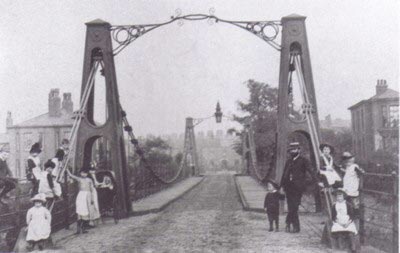
The iron chain suspension bridge, one of the first in Europe, was erected in 1826 to span the River Irwell between Broughton and Pendleton – now part of Salford, Greater Manchester – to link the two towns together…. It was built at the personal expense of John Fitzgerald, MP and wealthy owner of Castle Irwell House….

img_2814
Broughton Suspension Bridge after it had been rebuilt, 1883 – Public domain

The 60th Rifle Corps had been out on exercise on Kersal Moor, under the command of Lieutenant Percy Slingsby Fitzgerald – the son of John Fitzgerald…. The troops needed to cross the bridge as part of their route back to the barracks – 74 soldiers, 4 abreast began to march across…. As they did so they felt it begin to vibrate in time to their marching feet…. They found it all rather amusing and began to whistle an accompanying marching tune; the vibrations continued to get stronger….

As the head of the column approached the far side loud cracking and banging sounds were heard…. Suddenly one of the iron pillars supporting the suspension chains gave way….falling towards the bridge, dragging with it the massive stone to which it was fixed…. The bridge, now unsupported, fell into the river….

About 40 of the soldiers were hurled into the water, which lay 16-18ft below…. The river was low at the time, with around only 2ft of water – so not enough to break a fall…. Thankfully nobody was killed but around 20 sustained injuries – ranging from broken bones, to concussion, head injuries and severe bruising….

An investigation discovered a bolt in one of the stay-chains had snapped; further examination revealed it had been badly forged…. It is believed the cross-bolts had begun to bend and crack before the bridge’s collapse and it was an accident waiting to happen…. The marching troops had just sped up the process….

img_2815
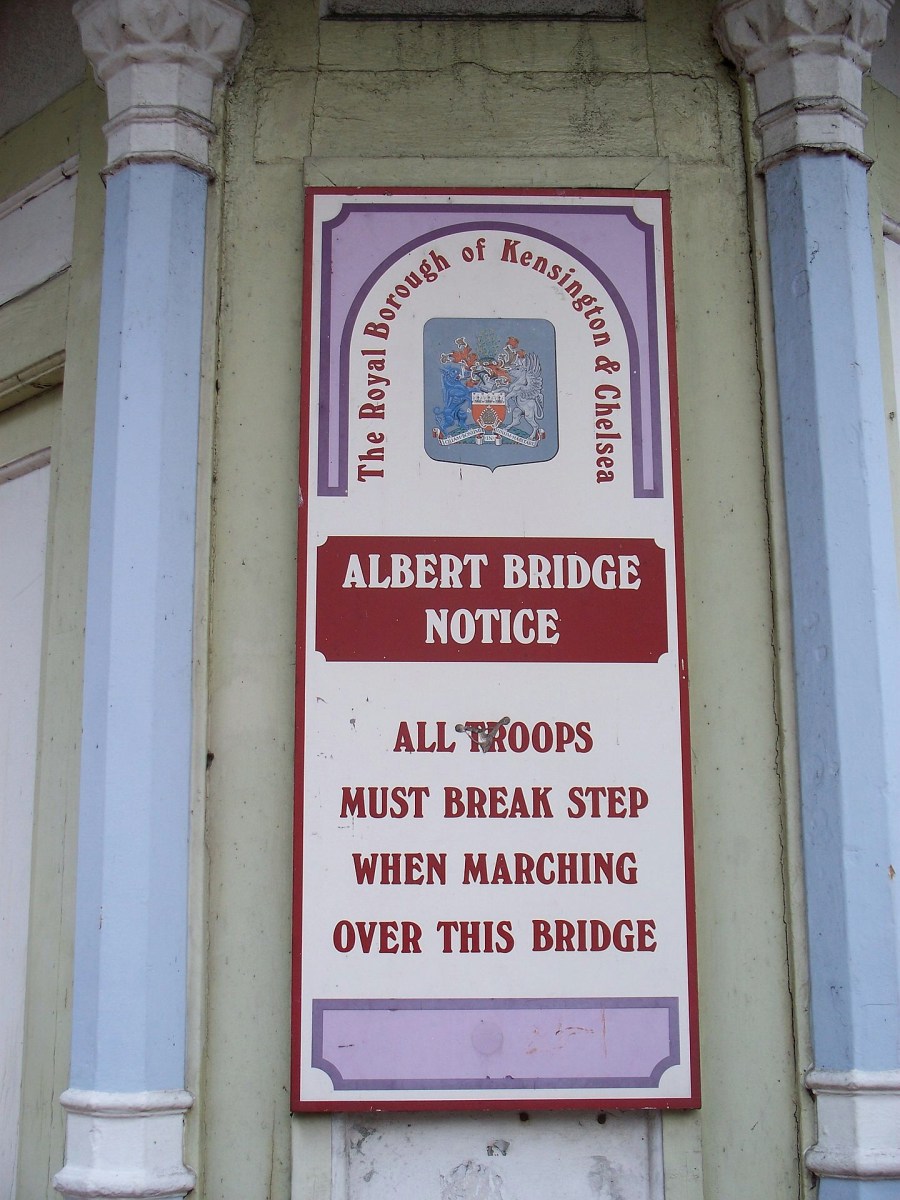
Sign on Albert Bridge, London – Image credit: Iridescent CC BY-SA 3.0

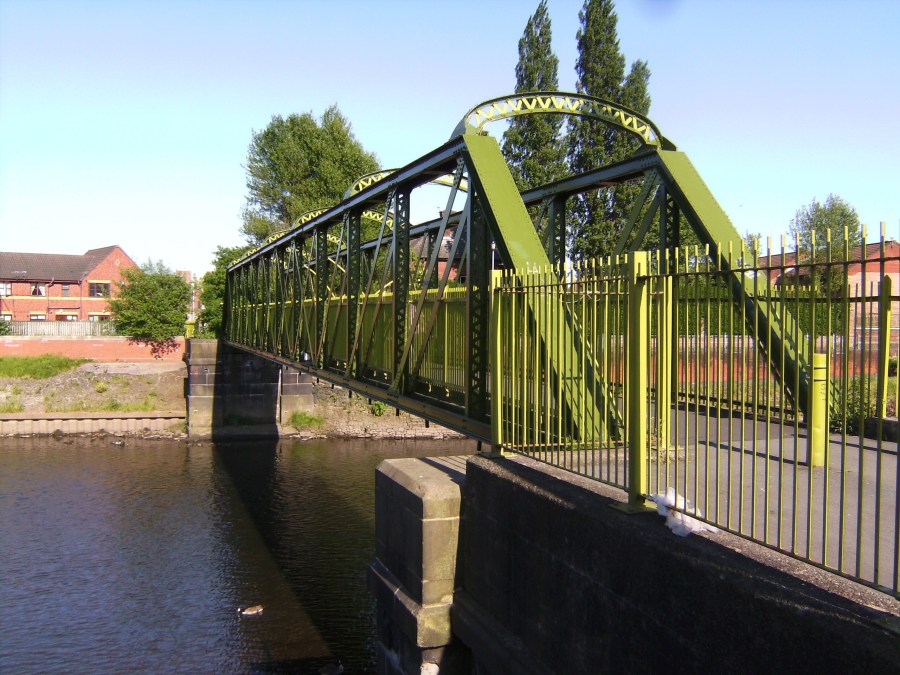
After the incident the British army issued an order to ‘break step’ when marching across bridges…. The Broughton Suspension Bridge was rebuilt – but in 1924 it was replaced with a Pratt truss footbridge – which is still in use today….

img_2816
The replacement Pratt truss footbridge still in use today – Image credit: Richerman CC BY-SA 3.0