On this day in history….15th March 1949

On this day in history : 15th March 1949 – The end of clothing rationing in Britain – after its introduction during World War II….
img_2578
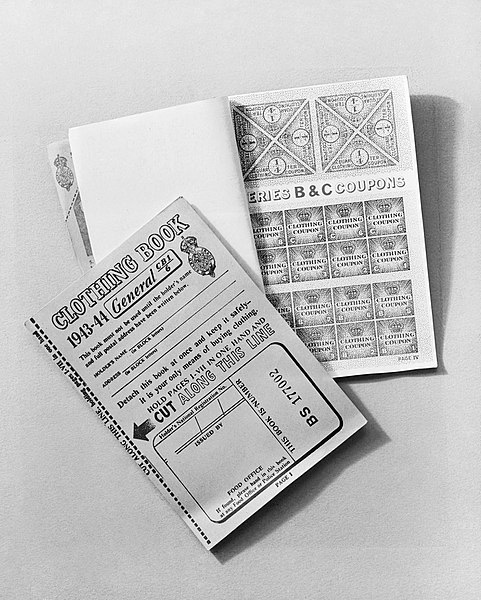
Clothing coupon books as issued to British civilians during the Second World War – From the collections of the Imperial War Museums

When clothing rationing was announced by Oliver Littleton, President of the Board of Trade, on the 1st of June 1941, it came as a complete surprise to many people…. The announcement was made just before a bank holiday to allow the retail trade time to adjust….

Roughly 25% of the British population wore a military uniform at the time….putting pressure on the textile and clothing industries…. The allocation of raw materials prioritised for the war effort – wool for uniforms, leather for boots, silk for parachutes – and so on…. Little was left for civilian use….and by reducing manufacture for civilian purposes more space was created in the factories for war related production….

Rationing was also intended to ensure fairness. Each item of clothing would be allocated points in the form of coupons….the amount varied according to the amount of material used and labour required for its manufacture…. For example – a pair of stockings would be 2 points, whereas a dress would have been 11…. A man’s shirt or a pair of trousers needed 8 coupons….women’s shoes needed 5 and a man’s pair required 7….

Children’s clothes had lower coupon values – as they needed to be purchased more frequently – as kids have a tendency to grow…. Often schools did not relax the school uniform rules and this caused problems for many….

img_2576
Reinforce Children’s Clothes – From the collections of the Imperial War Museums

At the beginning of rationing everybody was allocated 66 points to last a year….but this number decreased as time went on…. At the lowest point there were just 3 coupons available per month – although from 1942 children were allocated an extra 10 points per year…. New mothers received an extra allowance of 50 coupons….and special provisions were made for some professions – such as manual workers and those who wore civilian uniforms….

One of the problems was that no matter the quality of the garment it carried the same coupon value…. This meant those with larger incomes could buy better quality clothes that lasted longer…. The Women’s Voluntary Service set up clothes exchanges to help those having difficulties in clothing their families…. In 1942 the government introduced the Utility Clothing Scheme…. A range of standardised, good quality, well-designed and price controlled garments was made available…. At first people worried that individual style would be lost, everyone would look the same – but most were pleasantly surprised as a considerable amount of choice was offered….

img_2574
A model wearing a black woollen Utility Artima dress in 1943 – From the collections of the Imperial War Museums

Women were still expected to look their best….keep standards up by not letting their appearance slip – it was thought to be good for the Country’s morale…. Make-up was still manufactured but in smaller quantities….it was never rationed but became very expensive as a luxury tax was added…. Women improvised, with tricks such as using beetroot juice as lipstick, even boot polish for mascara…. More attention was paid to hairstyles….

Clothing changed….skirts became straighter and shorter to save material…. Even men’s attire changed slightly, gone were the waistcoats and along came the two-piece suit…. Clothing was made with minimal pleating, gathering, pockets and buttons…. Straighter lines, no frills, no fuss….

Then there was the ‘Make-do and Mend’ campaign. Posters and leaflets were issued giving advice on how to make clothes last longer…. How to care for particular fabrics, prevent moth damage, make shoes go that extra mile…. Make-do and Mend classes started up, teaching skills such as dress making…. People became very creative at recycling and renovating existing clothes….and many made their own, spending their coupons on dress fabric – which usually worked out cheaper…. Some used curtain and furnishing fabric – until that too became rationed…. Even blackout material was used, as this did not require coupons…. Parachute silk was the ultimate prize – perfect for underwear, night gowns and of course, wedding dresses….

img_2573
Make-do and Mend – From the collections of the Imperial War Museums

People were to some extent already used to make-do and mend, it had always been a way of life – so different to today’s consumer driven throwaway society….

img_2577
Useful Jobs that Girls can do – From the collections of the Imperial War Museums
img_2575
1946 British clothing ration coupons – British government – Public domain

On this day in history….14th March 1757

On this day in history : 14th March 1757 – The execution by firing squad of Admiral John Byng on HMS Monarch at Portsmouth – for ‘failing to do his utmost’….

img_2567
john Byng – oil on canvas, Thomas Hudson 1749

“In this country it is good to kill an admiral from time to time, in order to encourage the others”…. as written by the philosopher Voltaire in his controversial novella of the time ‘Candide’…. He was referring to a revision of a British law to make ‘failing to do his utmost against the enemy, either in battle of pursuit’ an offence punishable by death – among the officers of the British Navy….

John Byng was born in 1704 in Bedfordshire and joined the Navy at the age of 13…. By the time he was 23 he was a captain and a rear-admiral at 40…. By 1756, at the start of the Seven Years’ War, he was a well-respected Admiral….

Byng was given orders to prevent the French from capturing the garrison at Fort St. Philip on the island of Menorca – a British stronghold…. He set sail with a fleet of 10 ships to Gibraltar to collect a detachment of 700 soldiers…. From the onset Byng made it clear his resources were inadequate; he had 10 leaking ships and not enough men to sail them….

img_2568
Admiral Byng’s fleet getting underway from Spithead – John Cleveley the Elder – oil on canvas 1755

Having collected the Gibraltar garrison the fleet continued on its way….and on the 20th of May a battle with the French left some damage to the British ships whilst the French retreated unscathed…. Having learned the French already had a strong foothold on Menorca Byng decided to return to Gibraltar…. He sent a letter to the Admiralty explaining his reasons; the fort was already as good as lost – it would be a pointless exercise and an unnecessary risk to life….

When the letter arrived in London the government and King George II were furious…. The King’s words being…. “This man will not fight”….

In late June Fort St. Philip surrendered to the French and Byng was summoned home…. On his arrival he was arrested on breach of the 12th Article of War…. The court martial was held at the end of December with Byng being charged with ‘failing to do his utmost’…. Crowds chanted ‘swing, swing Admiral Byng’….

img_2569
The siege of Fort St. Philip – Jean-Baptiste Martin le jeune (1700-1778) Public domain

Although he defended himself the Admiral was found guilty – but was cleared of cowardice and disaffection…. It was with extreme reluctance that the death sentence was passed….Prime Minister William Pitt the elder appealed to King George for clemency for Byng – but this was refused – the King’s response being “You have taught me to look for the sense of my people elsewhere than in the House of Commons”….

At 7am on the day of the execution, during a howling gale, a coffin was brought onboard the Monarch, Admiral Byng’s flagship…. The inscription upon it read…. ‘The Hon. John Byng Esqr. Died March 14th 1757’….

Next the Admiral was brought on board…. The ship was soon full with officers from all of the other warships at anchor in the harbour at the time…. Other vessels crammed with spectators filled the waters….

At noon Admiral Byng, wearing a light grey coat, white breeches and a large white wig, was taken to the quarter-deck…. Waiting for him on a pile of sodden sawdust was a cushion, on which he knelt…. He tied the blindfold which he had reluctantly agreed to wear on account of the firing squad – six marines in their scarlet tunics – not to see his face…. The Admiral raised a neatly folded handkerchief in his right hand and after a pause of a few moments it dropped…. The six marines fired and he fell to the side – Admiral Byng was dead….

The King and his government had underestimated the French….rather than lose face they found a scapegoat….

img_2566
The Shooting of Admiral Byng – artist unknown – Engraving 1757

On this day in history….13th March 1764

On this day in history : 13th March 1764 – The birth of Charles Grey, 2nd Earl Grey – future British Prime Minister and for whom Earl Grey tea is named….

img_2553
The Right Honourable The Earl Grey – Portrait by unknown artist

Earl Grey is a blend of traditionally black tea, flavoured with oil of bergamot…. The oil is extracted from the peel of the bergamot orange, supposedly a hybrid of lemon and bitter orange plants – which mainly grow in France and Italy….

Legend has it the tea was presented as a gift to Lord Grey by a Chinese Mandarin-speaking man….who was grateful to the lord as one of his men had saved the Mandarin’s son

img_2555
Earl Grey tea blend – Photo credit: Sebastian Stabinger CCO

According to the Grey family the tea was specially blended for them to suit the lime found in their local water source…. Lady Grey would entertain with it in London and so popular was it people asked it if could be purchased…. This is how Twinings came to market it….

However, Jacksons of Piccadilly claim they were the original company to make it…. They say the recipe was given to Robert Jackson in 1830 and they have used it unchanged ever since….

It was once thought of as a tea enjoyed mainly by the upper classes – but nowadays it is one of our most popular brews….img_2554

On this day in history….12th March 1969

On this day in history : 12th March 1969 – Paul McCartney marries US photographer Linda Eastman at Marylebone Registry Office….

img_2551
Linda McCartney – Image courtesy: Kristine via Flickr

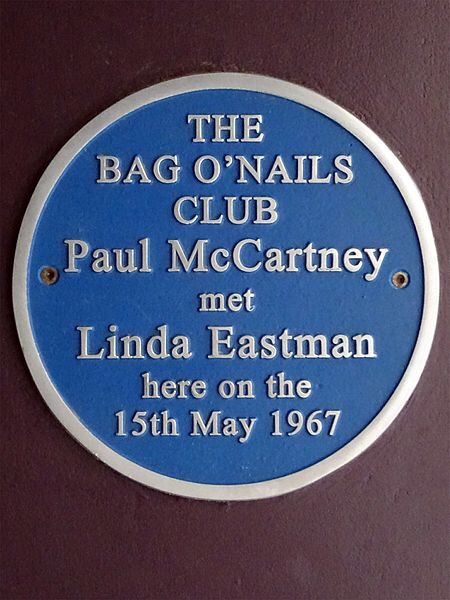
Paul and Linda had first met on the 15th of May 1967, in Soho nightclub ‘Bag O’ Nails’…. Linda was in the UK to take photographs for a book called ‘Rock and Other Four-Letter Words’…. A few days later she met him again at a photo shoot of the Beatles….but was soon afterwards to return home to the States and her own life with young daughter, Heather – from a previous marriage…. Paul, meanwhile, was to become engaged to long-term girlfriend, Jane Asher…. However, a year later, in May 1968 the pair met up again in New York – and Paul invited Linda and her daughter to London…. A romance was to blossom….

img_2549
Photo credit: Spudgun67 CC BY-SA 4.0

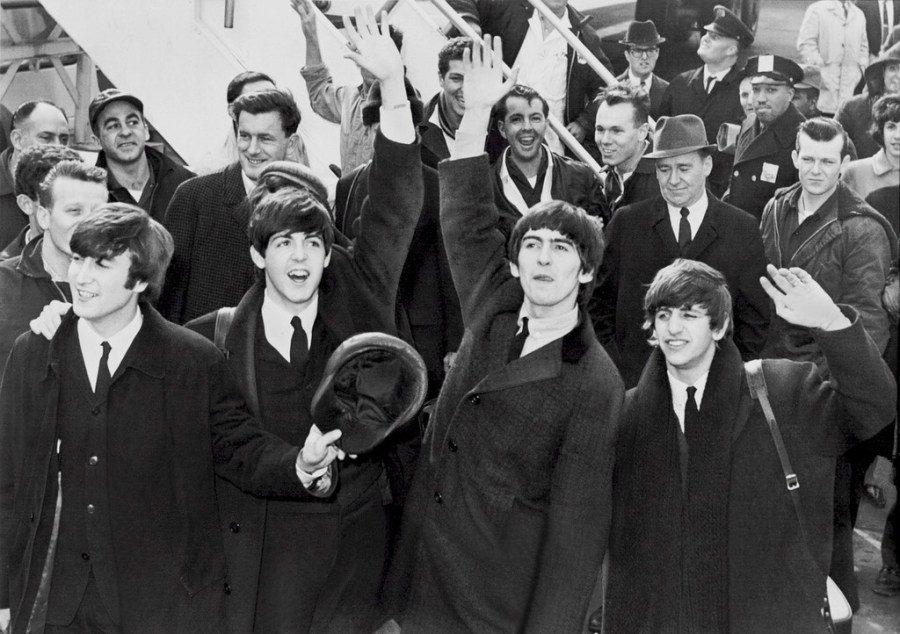
The wedding was supposed to be a secret – but these things have a habit of leaking out…. Even though the registry office had only been booked the day before reporters and photographers were waiting outside it, in the rain, from 7am…. So were the fans….hundreds of them, many visibly distraught…. Paul was the last bachelor Beatle….their teenage dreams of becoming Mrs Paul McCartney shattered forever….img_2552

The couple arrived at 10am, entering the building via a side door to avoid the crowds; the other members of the Beatles did not attend…. Paul wore a dark suit, with a floral shirt and yellow kipper tie….whilst Linda wore a fawn coloured dress with a yellow coat…. Heather carried a posy of freesias….

The ceremony was delayed for an hour…. Paul’s brother, Michael, who was best man and acting as a witness, was travelling down from Birmingham – but his train had broken down…. On arriving in London he headed to the registry office assuming he was too late – but the wedding party had waited for him…. The other witness was the Beatles’ assistant, Mal Evans….

After the ceremony the newly wed Mr and Mrs McCartney made their way down the steps to their waiting car….throwing freesias to the crowd as they went….

On this day in history….11th March 1818

On this day in history : 11th March 1818 – Mary Shelley’s Frankenstein is published – it is often referred to as the world’s first true work of science-fiction….

img_2543

Mary was born on the 30th of August 1797 in Somers Town, London…. Her mother, who died a few days after her birth, was the well-known defender of women’s rights, Mary Wollstonecraft…. Her father, William Godwin, was a radical philosopher….

img_2539
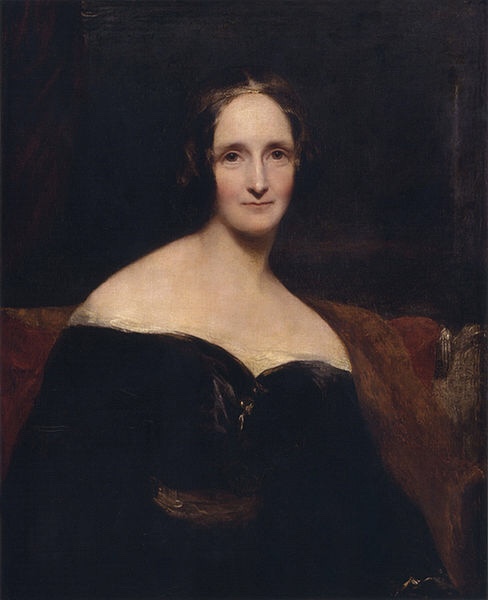
Portrait of Mary Shelley – housed in the National Portrait Gallery – London – Public domain

Godwin had got himself into considerable debt…. One of his followers, a young poet by the name of Percy Bysshe Shelley, was in-line for a large inheritance – and promised to help him….

Although young, around 21, Percy was a married man…. However, he and Mary – who was just 16 – found they had a strong attraction to each other….and they began to meet in secret at her mother’s graveside…. On the 26th of June 1814 they declared their love for one another….

img_2541
Percy Bysshe Shelley by Alfred Clint – housed in the National Portrait Gallery – London – Public domain

Mary’s father did not approve….he was also extremely angry because Percy had informed him that he was unable to gain access to his future inheritance and so could not help him…. On the 28th of July Percy and Mary ran off to France together, taking with them Mary’s stepsister, Claire Clairmont…. The trio made their way to Paris, leaving behind them all that they knew – including Percy’s now pregnant wife….

From Paris they travelled through a war-torn France to Switzerland…. Mary and Percy kept a joint journal and both continued to keep up their own individual writing whilst on their travels…. But eventually they ran out of money and had to make their way home….arriving the 13th of September 1814…. Mary was pregnant….

Godwin refused to have anything to do with his daughter…. Mary, Percy and Claire moved in to lodgings…. Percy would disappear for long lengths of time to avoid people he owed money to…. This must have been a miserable time for Mary…. Pregnant (and often poorly with it), penniless and Percy – who believed in free-love – was most certainly ‘carrying-on’ with Claire…. To make her feel even worse, Harriet – Percy’s wife – had given birth to a boy and Percy was over-the-moon….

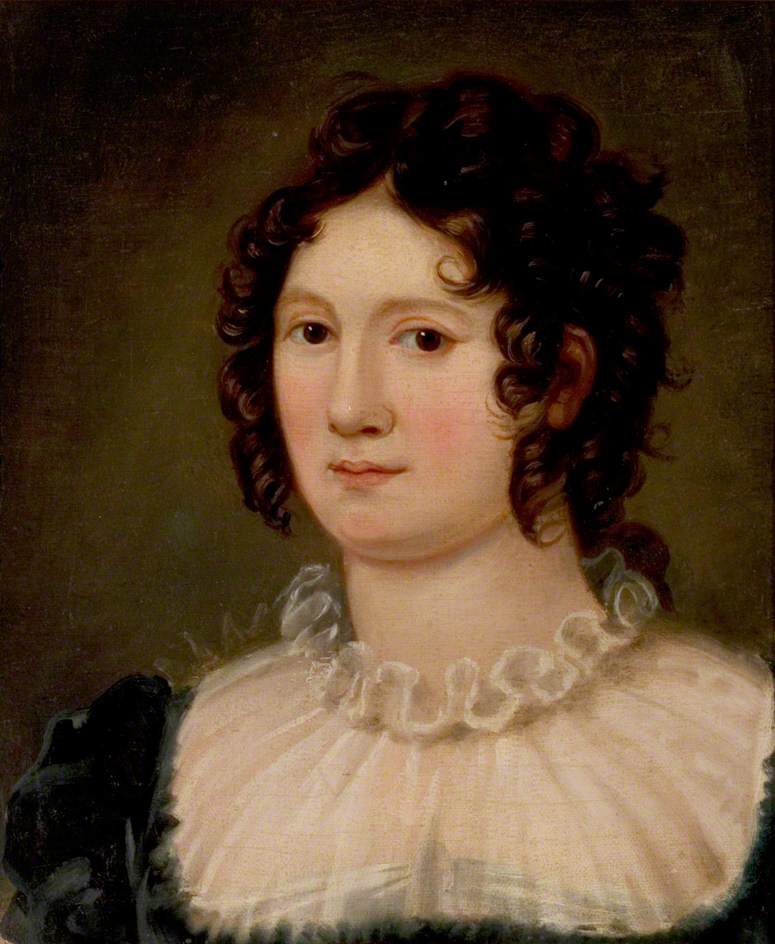
Curran, Amelia, 1775-1847; Claire Clairmont (1798-1879)
Claire Clairmont – portrait by Amelia Curran – Public domain

On the 22nd of February 1815 Mary gave birth two months prematurely to a girl…. Sadly she was not to live – but Mary was soon to fall pregnant again and on the 24th of January 1816 she had a son…. They called him William, after her father – although he quickly gained the nickname ‘Willmouse’….

In May 1816 Mary, Percy, their young son and Claire travelled to Geneva to spend the summer with Lord Byron…. He and Claire had indulged in an affair – and she was now pregnant…. They stayed with him at his villa near to Lake Geneva….

It was a particularly wet and stormy summer and the constant rain kept them confined indoors much of the time…. During the times when they were not writing the party amused themselves by telling ghost stories…. One night Lord Byron challenged his guests to a ghost story writing competition…. It was this that inspired Mary’s ‘Frankenstein’…. What started out as a short story became ‘Frankenstein; or, The Modern Prometheus’….her first novel….

img_2544
A draft by Mary Shelley – Public domain

They returned to England in the September….and settled in Bath – hoping to keep Claire’s pregnancy a secret…. On the 10th of December Harriet was found dead in the Serpentine, Hyde Park – she had committed suicide…. To try and gain custody of his two children by Harriet, Percy was advised to get married…. He and Mary married on the 30th of December 1816…. The marriage ended the rift between Mary and her father, he attended the ceremony…. Mary was also pregnant again….

Percy did not manage to gain custody of his children…. He and Mary had several more in their marriage….but only one survived….

In 1822, just before his 30th birthday Percy was drowned in a storm whilst sailing his schooner in Italy…. Mary returned to London and pursued a very successful writing career…. She was a novelist, biographer and travel writer…. In their time together Mary and Percy had always encouraged each other’s writing…. After his death Mary also edited and promoted her husband’s poetry and writing….

img_2540
Miniature portrait of Mary Shelley by Reginald Easton – Public domain