On this day in history….5th March 1936

On this day in history : 5th March 1936 – Iconic British fighter plane of the Battle of Britain, the ‘Spitfire’, makes its first test flight from Eastleigh Aerodrome, Hampshire….

The Spitfire was the creation of Reginald J Mitchell – who had been asked by Sir Robert McLean, Chairman of Vickers-Armstrongs, to design a fast and manoeuvrable fighter aircraft…. The intention being to replace the outdated models which were then currently in service with the Royal Air Force….
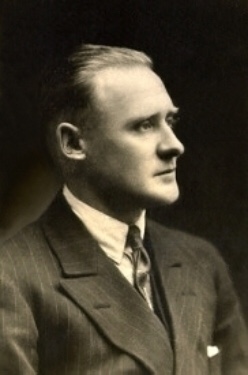
img_2518
R.J. Mitchell – Public domain

Piloted by Captain Joseph ‘Mutt’ Summers, Vickers-Armstrongs Chief Test Pilot, Type 300 K5054, powered by a Rolls-Royce Merlin engine took off from Eastleigh Aerodrome (now Southampton Airport)…. On landing after the 8 minute flight Summers told the ground crew “I don’t want anything touched”….

img_2514
Supermarine Spitfire Prototype K5054 Replica

Three months later the Air Ministry put in an order for 310 Spitfires – an order worth £1.25 million…. The aircraft went into service with the RAF in 1938…. It was the only British fighter plane to be in continuous production before, during and after WWII. It remained in service until 1954 – the last ones being used for photo reconnaissance work….
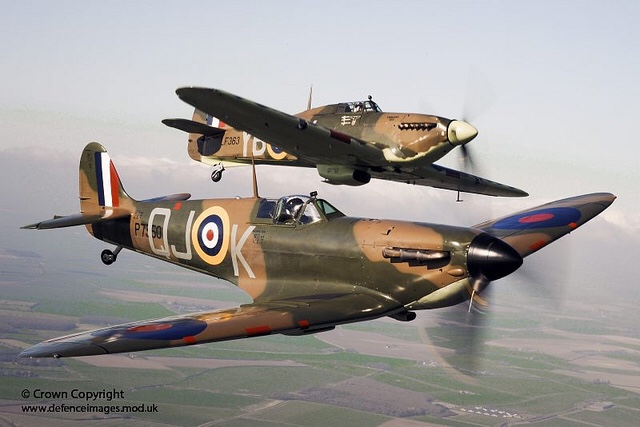
Spitfire P7350, flies alongside Hurricane LF363.
Spitfire P7350 (front) flies alongside Hurricane LF363 (back). P7350 (Mk IIa) is the oldest airworthy Spitfire in the world and the only Spitfire still flying to have actually fought in the Battle of Britain. LF363 (Mk IIC) was the last Hurricane to enter service with the RAF. The aircraft currently wears the colours of Hurricane Mk 1 P3878 ‘YB-W’, the aircraft of Flying Officer Harold Bird-Wilson of No 17 Sqn during the Battle of Britain. This image is available for non-commercial, high resolution download at http://www.defenceimages.mod.uk subject to terms and conditions. Search for image number 45151794.jpg —————————————————————————- Photographer: SAC Neil Chapman Image 45151794.jpg from http://www.defenceimages.mod.uk

‘Spitfire’ – an old English word meaning of strong and fiery character…. Mitchell was less than impressed with the name chosen for his aircraft…. He is reputed to have said “just the sort of bloody silly name they would think of”…. Mitchell died in 1937 – he was never to know how successful the aircraft would become…. As for the prototype K5054 it crashed at Farnborough in 1939….killing the pilot. It was scrapped instead of being repaired….
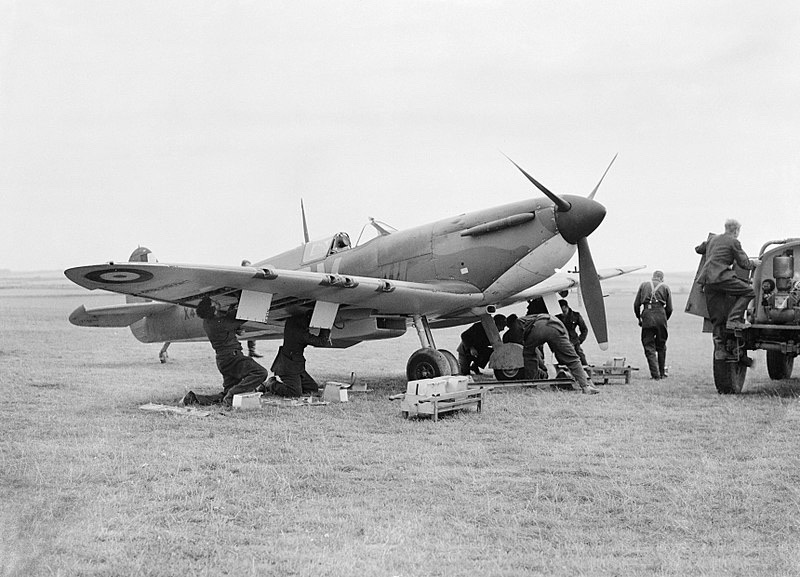
img_2516
A Supermarine Spitfire Mk1 of No.19 Squadron RAF being re-armed between sorties of Fowlmere, near Duxford, September 1940. From the collections of the Imperial War Museums – Photo CH 1367
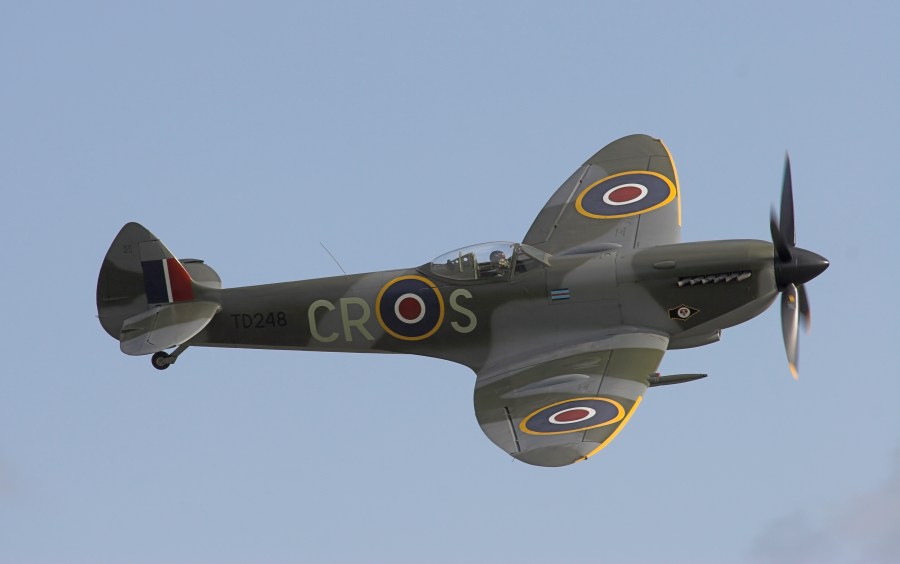
img_2515
Supermarine Spitfire Mk XVI Photo credit : Chowells via Wikipedia CC BY-SA 2.5

On this day in history….3rd March 1982

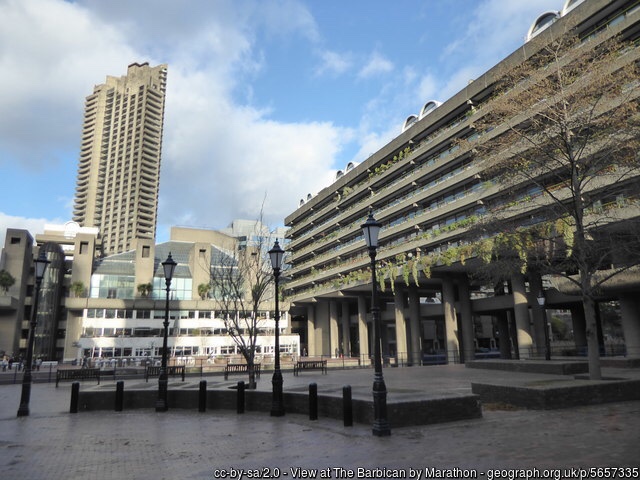
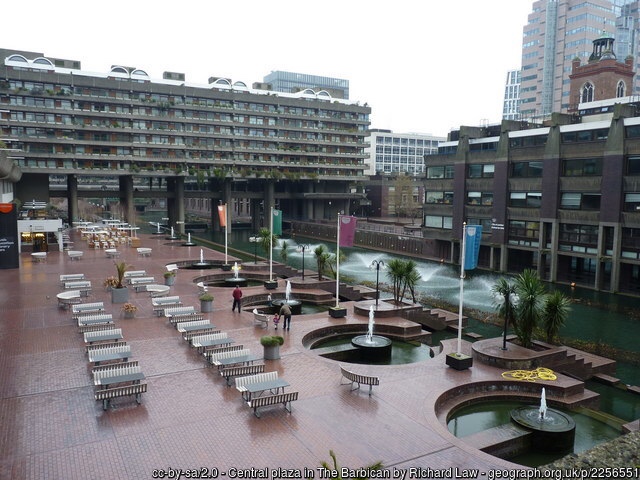
On this day in history : 3rd March 1982 – The opening of the Barbican Centre in London, by Her Majesty the Queen Elizabeth II…. It is Western Europe’s largest arts centre ….

img_2507

‘Barbican’ was the name of one of the streets in a busy commercial part of the Cripplegate ward…. At the end of the 19th Century it was the centre of London’s rag trade – bustling with fabric and leather merchants, furriers, glove makers and milliners….

It was during the Blitz that the area was to become completely destroyed…. On the 29th of December 1940 it was flattened by German bombers….fire swept through the warehouses…. By the end of World War II only a few buildings remained….one of which, although badly damaged, was the Church of St. Giles’ Cripplegate….

After the war plans were made to rebuild the stricken area – The Town and Country Planning Act 1947 gave local authorities the power to buy up large areas of land for redevelopment….

img_2509

In 1955 the first proposals for the Barbican Centre were submitted to the Corporation of London – the regeneration of five and a half acres of land in Cripplegate…. Four years later a design by architects Chamberlain, Powell & Bon was accepted…. The following year the Royal Shakespeare Company and the London Symphony Orchestra became involved in the planning as the centre was to become their new home….

Construction began in 1971 – with a proposed cost of £17m and an estimated six-year completion time…. It was finally finished in 1982 and had cost £153m to build…. With a concert hall to accommodate 2,000 people, 2 theatres, a cinema, library, conference centre and several galleries it was to become the largest cultural centre for the arts in Western Europe. By its 20th anniversary the Barbican had received more than 27 million visitors. It is a leading venue for classical music – and was home to the Royal Shakespeare Company until May 2001….

On unveiling the commemorative plaque when opening the centre in 1982 the Queen remarked – “What has been created here must be one of the wonders of the modern world”….

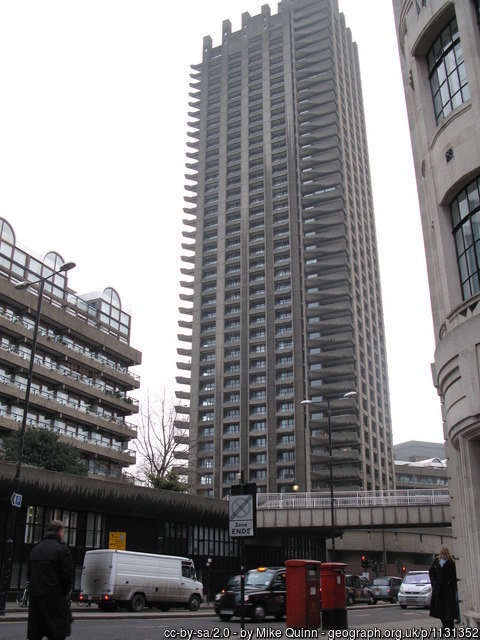
In 2003 a survey commissioned by the advertising agency Grey London named the Barbican as London’s ugliest building….

img_2508

On this day in history….2nd March 1882

On this day in history : 2nd March 1882 – Scotsman Roderick Maclean attempts to assassinate Queen Victoria as she waits to board her train at Windsor railway station….

img_2503
Photograph by Alexander Bassano 1882. Public domain

Queen Victoria had just walked across the platform to the waiting carriage with her daughter, Princess Beatrice and other members of her court, when a shot rang out…. Roderick Maclean had stepped from a crowd of cheering onlookers, raised a gun and fired…. Before he could do so again the crowd, including a group of Eton schoolboys who hit him with umbrellas, managed to overcome him…. Maclean was then arrested by a Superintendent Hayes….

img_2506
Queen Victoria with Princess Beatrice. Public domain via Wikimedia

Maclean had not been quite right in the head since a childhood accident. His father was the proprietor of  ‘Fun’ magazine – a rival to ‘Punch’ – and so the family would have been comfortable and Roderick Maclean depended upon them financially…. When his parents died he had no means of an income and had to rely on handouts from his three brothers and sister….

As time passed by this help became less frequent, which frustrated Maclean – as a republican he directed his anger at the Monarchy…. He took to wandering from town to town and was becoming more and more like a tramp….

Maclean was also a ‘would-be’ poet and he sent some of his verse to Queen Victoria – but was angered by the response he received from the Palace….his work was returned to him accompanied by a curt note from a lady-in-waiting…. This appears to have finally tipped him over the edge…. Maclean sold his meagre possessions, bought himself a cheap and cheerful revolver….and then walked to Windsor….

In fact Maclean had already been certified as insane two years previously in June 1880….and had spent some time in a lunatic asylum. He had complained of headaches and thought that everybody in England was plotting against him…. He even had a problem with the colour blue and thought people who wore it did so to deliberately provoke him…. He had also sent some disturbing letters to his sister Caroline, in which he discussed murder….

Maclean went on trial in Reading on April the 20th 1882 on the charge of high treason….a crime then punishable by death…. However he was found ‘not guilty but insane’ – the jury took just five minutes to deliver their verdict…. Roderick Maclean spent the rest of his days in Broadmoor Asylum….he died of apoplexy in 1921….

img_2505
Asylum for Criminal Lunatics, Broadmoor. Image credit : Wellcome Collection CC BY

On this day in history….1st March 1978

On this day in history : 1st March 1978 – The coffin of Charlie Chaplin is stolen from his grave in a Swiss cemetery….

Chaplin had spent the last few years of his life in Switzerland with his fourth wife, Oona…. He died peacefully at his home in Corsier-sur-Vevey by Lake Geneva on Christmas Day 1977, he was 88….

img_2500
Charlie Chaplain – Image credit: Imsomnia Cured Here via Flickr

Four days later a simple family funeral service was held at the Anglican Church in Vevey, attended by his wife and eight children…. Afterwards Chaplain was laid to rest in the churchyard….

Two months later the grave was discovered empty…. The media had a field day with speculation…. It was claimed fans had stolen the body….or local anti-semites objected to a Jew being buried in a Christian graveyard – even that it was revenge by neo-Nazis for Chaplain’s film ‘The Great Dictator’….

But then the ransom demand came…. 600,000 Swiss francs for the body to be returned – the grave robbers also threatened to harm Chaplin’s younger children if the demands were not met…. Oona was having none of it and refused to pay up….“my husband is in Heaven and in my heart”….

img_2499
Sir Charles Spencer “Charlie” Chaplain KBE and Oona 1965. Dutch National Archives – Public domain

Her phone was tapped – along with all 200 of the public phone booths in the area – and monitored by the police…. It worked – and the culprits were caught. Two Eastern European political refugees were responsible, Roman Wardas and Gantscho Ganev – both motor mechanics….

The pair showed police where they had buried the coffin in a cornfield…. Eleven weeks after it had disappeared the coffin of the British star of silent movies and early talkies was found, still intact – and it was re-buried in the original grave in the churchyard…. This time a concrete casing was placed over it….

img_2501
Charlie Chaplian’s grave Image: Giramondo1 via Wikimedia CC BY-SA 3.0

The perpetrators were prosecuted for grave robbery and attempted extortion…. Wardas was the ‘brains’ behind the plot and for that he received four years in prison – whereas Ganev got away with an 18-month suspended sentence….

img_2502

On this day in history….28th February 1888

On this day in history : 28th February 1888 – A little boy rides his tricycle in a Belfast street, watched by his father…. On the rear two wheels are a pair of pneumatic tyres….

The little boy’s name was Johnny – and he was the son of John Boyd Dunlop….a veterinary surgeon by profession, having studied at Edinburgh University. But Dunlop was also an inventor – and was used to working with rubber…. In 1867, after moving from Scotland to Ireland, he married Margaret Stevenson and they had two children, a boy and a girl….

img_2494
John Boyd Dunlop 1840

It was whilst watching his son riding his tricycle on the cobbled street that Dunlop noticed the child looked uncomfortable and the tricycle could not move very fast on its solid rubber tyres….

He took the two rear wheels of the tricycle and wrapped them in thin layers of rubber…. He then inflated them with a football pump, using the top of a baby’s feed bottle as a valve…. He had formed the basis of the pneumatic tyre….

img_2496
Dunlop first pneumatic bicycle tyre – National Museum of Scotland. Geni via Wikimedia GFDL CC BY-SA

So successful were these new tyres on Johnny’s tricycle that Dunlop began to have them commercially made…. Within a year a previously unknown cyclist began to win every race he entered by using the tyres on his bicycle…. Dunlop immediately patented his design….

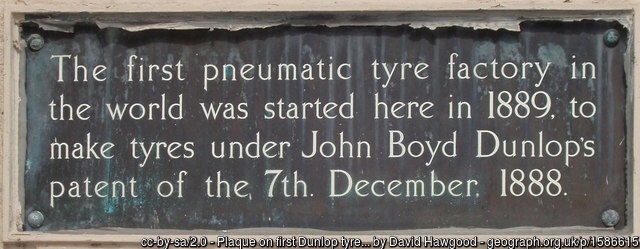
In 1889, along with several other Dublin businessmen, he set up the Dunlop Pneumatic Tyre Company…. A year later a factory was opened to make bicycle tyres and they were soon even exporting to Australia – followed by the USA in 1890….

img_2495

In 1893 a factory was opened in Hanau, Germany and another in Australia…. The business was expanding rapidly and the tyres were selling all over the World…. To keep up with demand, in 1898 the operation was moved to bigger premises in Coventry. Then, in 1902, it relocated to a purpose build modern factory and offices – a huge site of more than 160 hectares, at Erdington near Birmingham…. It became known as Fort Dunlop….

By 1900 the company had started producing car tyres….