On this day in history : 30th January 1969 – The Beatles play an impromptu concert on the rooftop of Apple Records in London…. It is to be their last public performance….
Via Photo Community Site
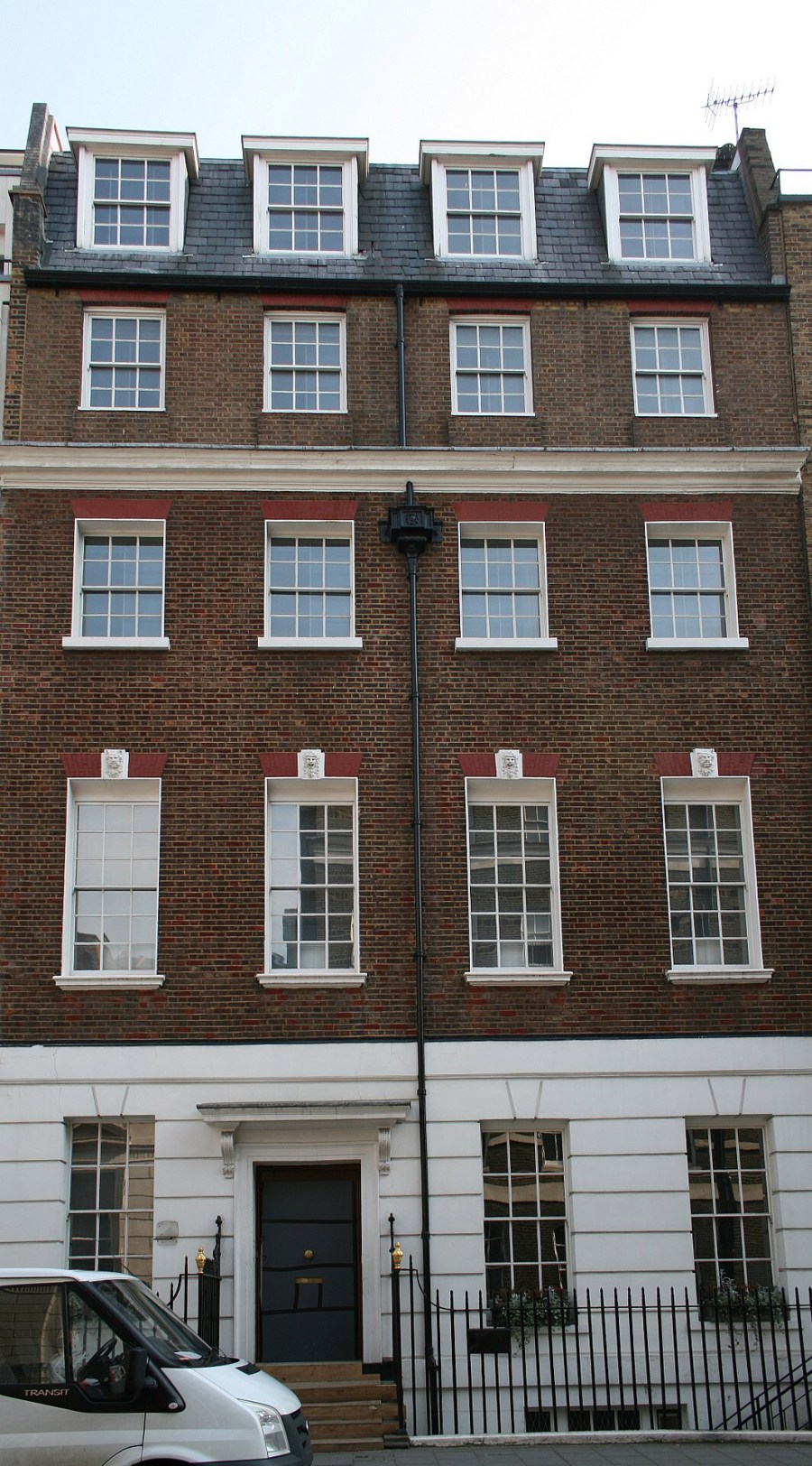
It was a bitterly cold Thursday lunchtime, many were on their lunch break when they were surprised by the loud music coming from the rooftop of No.3 Savile Row – the home of Apple Records…. At first there was some confusion – but then as word spread crowds gathered in the street, five storeys below….and people climbed out on to the rooftops of neighbouring buildings….
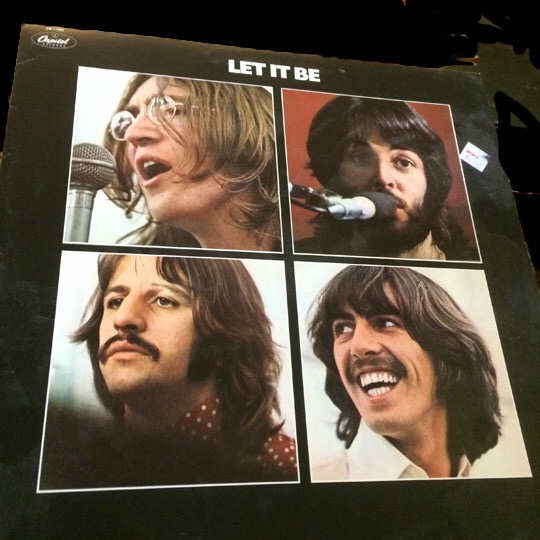
The Beatles had been recording their album ‘Let it Be’ in the basement studio at Apple Records and had been planning a live performance since earlier in the month….but the idea of performing on the roof had only come about a couple of days before….
Image credit: Jan via Flickr
George, Ringo, John and Paul – accompanied by a young Billy Preston on keyboards – treated their delighted audience to a 42 minute set which included songs such as “Don’t Let Me Down”, “I’ve Got a Feeling” and “Get Back”…. It was their first ‘gig’ since they had stopped touring in 1965 – and it was to be their last, as by September 1969 the Beatles had unofficially disbanded….
Unfortunately, not everybody was happy about the unexpected entertainment…. The Metropolitan police were concerned about safety, traffic issues and noise disturbance…. Policeman Ken Wharfe later said that he had been ordered by his superiors to “turn that noise off”….
3, Savile Row, London, the location of the concert – public domain – Misterweiss via English Wikipedia
On arriving at Apple Records the police were initially refused entry into the building by staff – but when threatened with arrest they had to back down…. As the police reached the rooftop the Beatles realised their concert was about to be brought to an end – but managed to carry on for several more minutes. Paul McCartney changed the lyrics to “Get Back” to something more fitting for the situation….
“You’ve been playing on the roofs again, and you know your momma doesn’t like it, she’s gonna have you arrested”….
Fair Use
John Lennon finished up by saying…. “I’d like to thank you on behalf of the group and ourselves and I hope we’ve passed the audition”….
On this day in history : 29th January 1916 – Britain’s Mark I prototype tank is trialled for the first time at Hatfield Park, Hertfordshire….
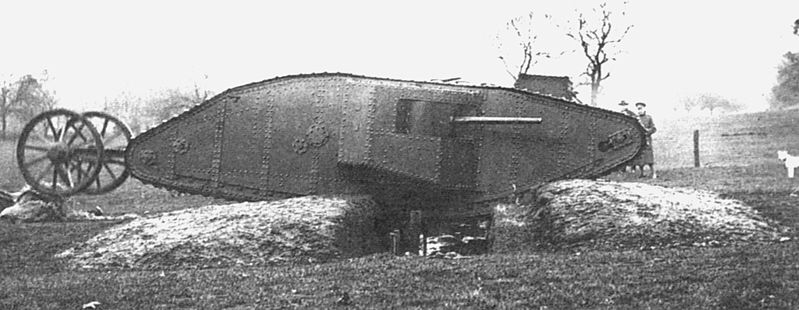
The prototype was commonly known as ‘Mother’ or ‘Big Willie’ – a pun directed at the German Kaiser – but its official name was ‘His Majesty’s Land Ship Centipede’…. ‘Tank’ was initially a code name….
HMSO – Public domain
Developed in 1915, as a means to break the stalemate of trench warfare, the MKI prototype was built by Fosters of Lincoln in the December of 1915 – and was the World’s first tank…. Initial driving, firing and obstacle-crossing trials took place in Lincoln before ‘Mother’ was taken by rail to Hatfield Station on the 28th of January 1916…. The last part of the journey was made under the cover of darkness, when she was driven to Hatfield Park….
Three days of demonstration then followed – for civilian, military and naval personnel – and started on Saturday the 29th of January…. Over the course of the following week she was shown to various dignitaries including King George V, David Lloyd George and Lord Kitchener – who made the remark that she was a “pretty mechanical toy”…. A rather large toy – ‘Mother’ was 31ft 3ins long (complete with her rear steering wheels) and weighed 28 tons 8cwt….
Following the successful trials an order was placed for 150 tanks….and the first saw action on the 15th of September 1916, when used at the Battle of Flers-Courcelette, part of the Somme Offensive….
Mark I tank – image: Ernest Brooks. Public domain
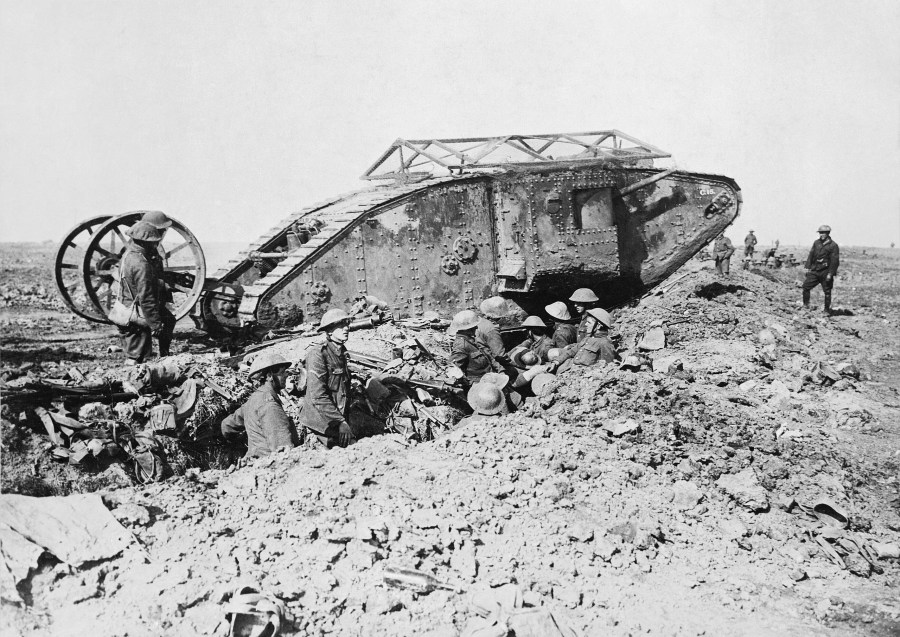
With a crew of 8, the tank had a range of 24 miles and could travel at a speed of 4mph…. It could negotiate rough terrain, go through barbed wire, cross trenches and survive machine gun and small-arms fire…. The MKI had a mounted 6-pounder cannon and a Hotchkiss machine gun on each side – and became referred to as ‘male’ – as a later version with no cannon, only machine guns, became known as ‘female’…. The one weakness that blighted the tank throughout its service being the Daimler 6-cylinder 105 horsepower engine – which proved to be far from reliable….
Captured British tank in German hands destroying tree…. Unknown author CC BY SA 3.0
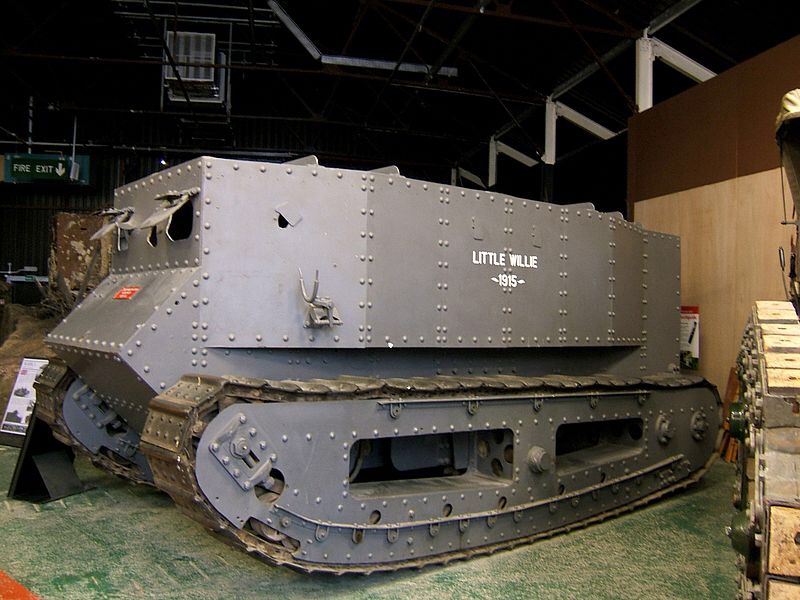
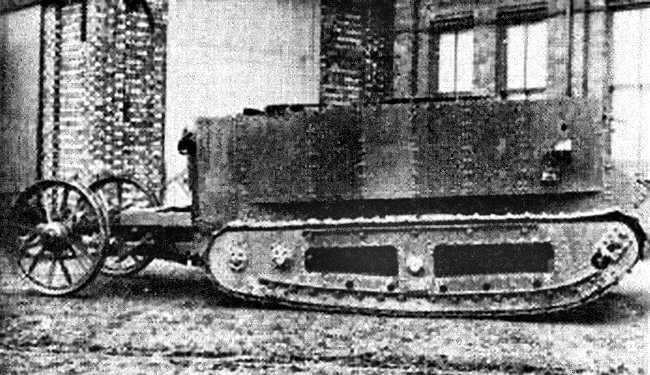
The original ‘Mother’ prototype, which had been used at the Hatfield trials, had her guns removed and was used for driver training…. Around December 1916 she was modified to a petrol-electric drive, using Daimler (of Coventry) parts…. This was intended to make the drive easier but was unsuccessful…. Eventually all of her equipment was stripped out and her tracks removed….leaving just an empty shell…. Finally, she was scrapped…. Her predecessor, ‘Little Willie’, fared better and can be seen in the Bovington Tank Museum….
‘Little Willie’ – Photo credit: Andrew Skudder via Flickr‘Little Willie’ showing rear steering wheels – Public domain
On this day in history : 28th January 1829 – William Burke is publicly hanged in Edinburgh…. Burke and his accomplice William Hare had sold the corpses of their 16 victims to Dr Robert Knox for dissection….
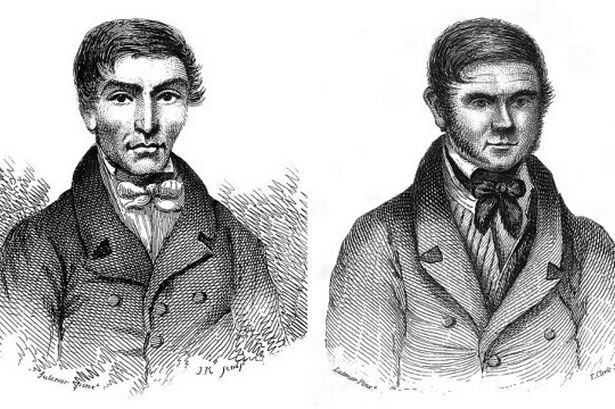
Hare and Burke
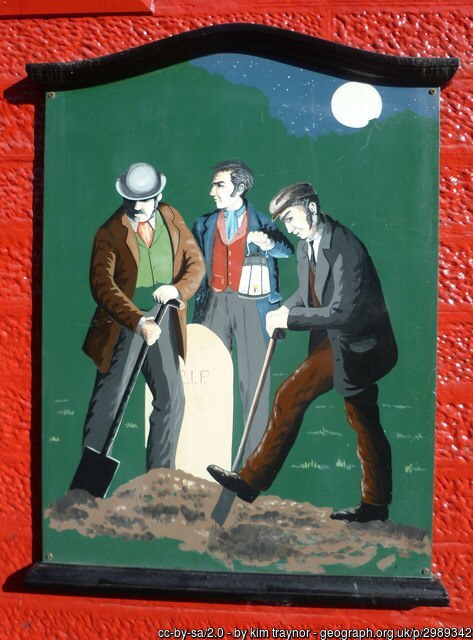
Edinburgh was a leading centre for anatomical study and Dr Robert Knox was one of several pioneering anatomy teachers of the time…. The law in Scotland stated that only bodies of executed criminals could be used for dissection…. the Judgement of Death Act 1823 meant there were fewer crimes punishable by death – and at a time when medical science was on the rise there became a shortage of cadavers…. This in turn led to an epidemic of ‘body snatching’….
Disturbing a grave was deemed a criminal offence – as was stealing property from a deceased person. However, actually stealing a body was not illegal – as it did not legally belong to anyone…. The price of a corpse depended on the time of year….during the warmer summer months bodies were quicker to decompose…. A corpse could fetch up to £10 in the winter, as it could be stored for a longer period and be used for more dissections….
Body snatching became so rife that measures had to be taken in graveyards for its prevention; watchtowers were built, guards hired – and sometimes families would rent huge slabs of stone to place over a new grave – just long enough for a body to decompose sufficiently enough to be of no use….
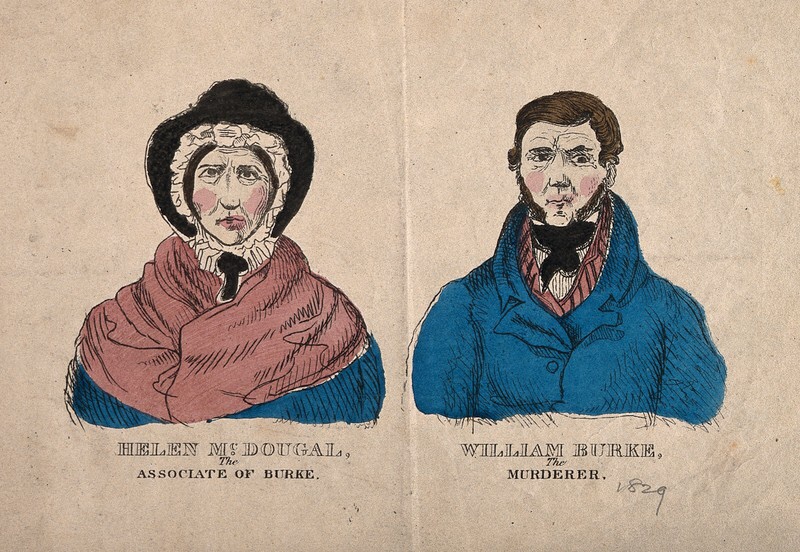
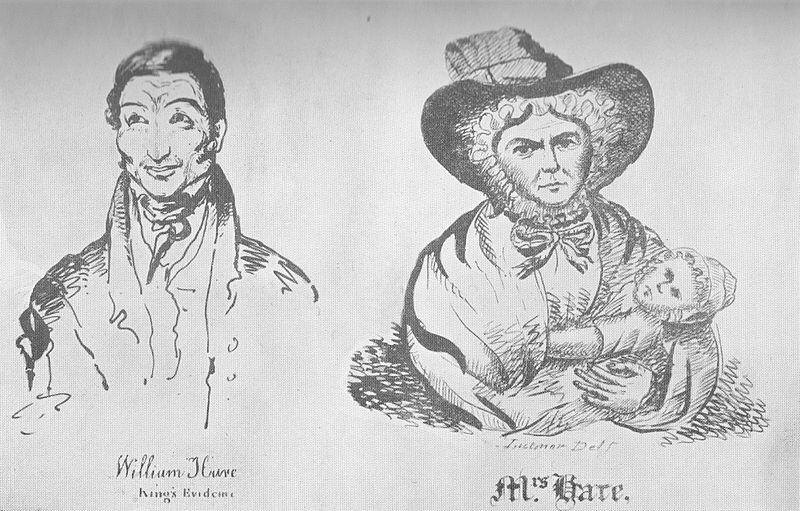
Burke and Hare both originated from the Province of Ulster, in the north of Ireland – and had moved to Scotland to work on the Union Canal. Burke had deserted a wife and two children in Ireland and was living in lodgings in Tanner’s Close, in the West Port area of Edinburgh, with his mistress Helen McDougal…. Also living in the same street was Hare, with his common-law wife Margaret Laird – with whom he ran a boarding house…. The two men became firm friends….
Burke and Hare were to embark on a killing spree that lasted for a period of about 10 months. It all started on the 29th of November 1827; a tenant of Hare’s, named Donald, died of natural causes…. He owed back rent of £4 to Hare, who complained of this to Burke….and the pair cooked up a plan…. Donald’s burial was to be arranged and paid for by the Parish; a carpenter was employed and a coffin made…. Once the carpenter had left Burke and Hare removed the body and hid it and refilled the coffin with bark from the local tanners…. Once the coffin had been collected for burial Burke and Hare took the body to Edinburgh University to find a buyer – and were directed to Dr Robert Knox….
Dr. Robert Knox – Public domain
Burke and Hare received £7 10S for Donald’s body, which was a considerable amount of money to them…. A couple of months later another opportunity arose, when another of Hare’s tenants, a miller named Old Joseph, fell ill…. He was delirious with fever and Hare worried that other lodgers would be put off from staying there…. Rather than wait for natural causes to happen Burke and Hare decided to help him on his way….after being plied with whisky Joseph was suffocated and his body sold to Knox….
Having run out of conveniently sick tenants Burke and Hare began to entice victims back to the lodging house – preying on those least likely to be missed in society. They murdered at least 16, possibly even more….and it is highly likely that their partners McDougal and Laird were in on it….
Their downfall came with the murder of their last victim, Marjory Docherty…. Burke and Hare had argued; Burke suspected Hare and Laird had been doing deals with Knox, cutting himself and McDougal out…. So Burke and McDougal started taking in lodgers themselves….
Image: Wellcome Collection CC BY
Marjory Campbell Docherty was invited to stay at Burke’s and the couple lodging there already, a James and Ann Gray, were told she was a distant relative – and they were asked to stay at Hare’s lodging house for the duration of her visit…. It was when the Grays returned to Burke’s to retrieve some belongings that suspicions were aroused…. They were told that Marjory had been asked to leave as she had made amorous advances on Burke – but they thought it strange when they were denied access to the room where their possessions were…. Seizing an opportunity when they found themselves alone in the house the couple gained access to the room and discovered Marjory’s body concealed beneath the bed…. They went to the police – but Burke must have got wind – because when the police arrived to search the body had gone….Burke had already delivered it to Knox….
William Burke murdering Margery Campbell – Robert Seymour (1798-1836) Public domain
Burke, McDougal, Hare and Laird were all arrested….and all blamed each other when questioned…. The investigation quickly led to Knox and James Gray identified the body of Marjory Docherty there…. However, the police had no real evidence of murder to bring charges…. It was at this point that an offer was made to Hare, granting him immunity from prosecution if he admitted guilt and acted as a witness for the State against Burke…. Hare confessed to all 16 deaths and gave details of Marjory Docherty’s murder….Burke and McDougal were arrested and charged with a total of three murders….
William Hare and Margaret Laird
The trial began on Christmas Eve 1828 at 10am and was heard by Lord Justice-Clerk David Boyle. The court was full and a large crowd gathered outside….the hearing lasted all day, through the night and well into the following day…. Burke was eventually found guilty of one murder and sentenced to death….McDougal was acquitted as there was no proof against her – this did not however prove her innocence….
William Burke and Helen McDougal at their trial
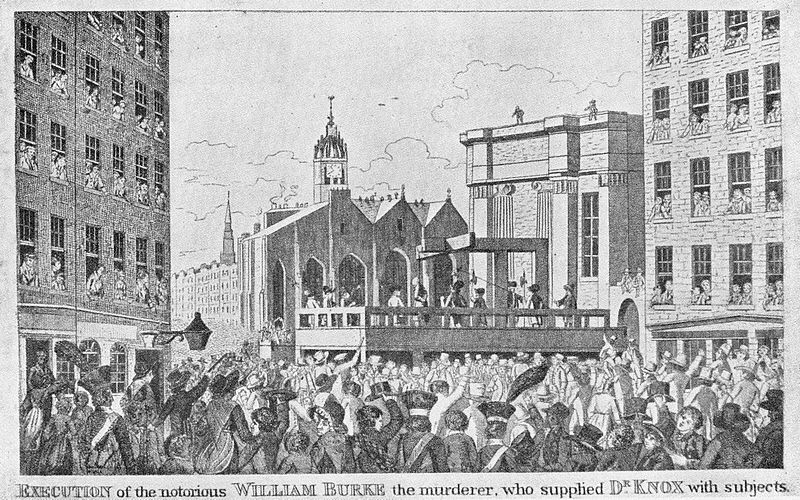
Burke was hanged on the morning of the 28th of January; a crowd of some 25,000 came to watch….views from windows overlooking the gallows were charged at up to 20 shillings per person….
Execution of Burke in the Lawnmarket, Edinburgh – Public domain
On February the 1st Burke was publicly dissected by Professor Munro in th anatomy theatre of Edinburgh University’s Old College. A minor riot broke out when students without tickets tried to get in to the theatre…. Burke’s skeleton was given to the Anatomical Museum of the Edinburgh Medical School and can still be seen there today…. His death mask and a book said to be made from his tanned skin can be seen at Surgeon’s Hall Museum….
Skeleton of William Burke exhibited in the Anatomy Museum of the Edinburgh Medical School. Image: Kay Traynor via Wikipedia
William Burke’s death mask and pocket book, Surgeons’ Hall Museum. Edinburgh. Image: Kim Traynor via Wikimedia
Hare was released in 1829 and fled across the border to England; although there are rumours nobody really knows what became of him…. McDougal and Laird both fled Edinburgh…. The murders raised awareness of the need for bodies for medical research and prompted the Anatomy Act 1832….
On this day in history : 27th January 1916 – The British government passes a legislation which introduces conscription in the United Kingdom….
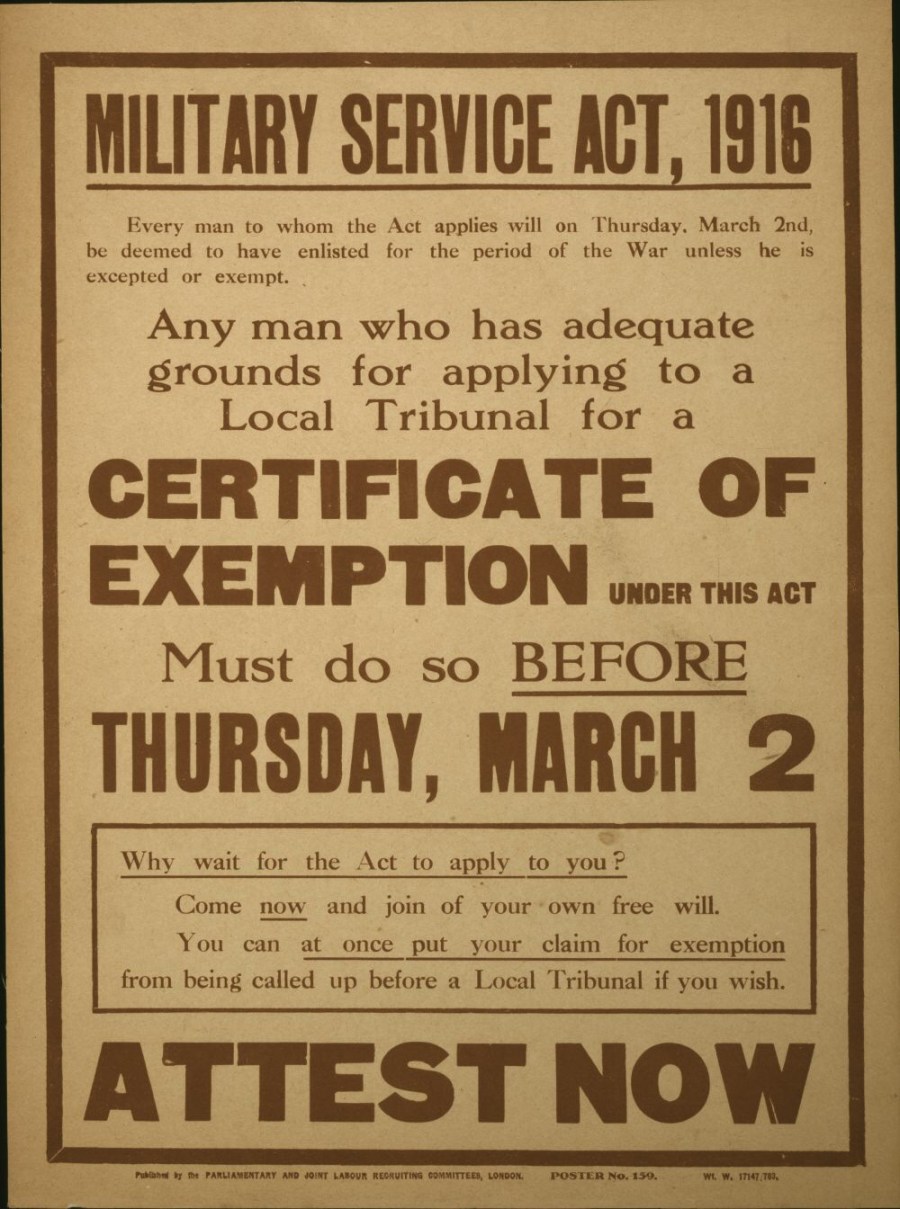
Known as the Military Service Act the Bill had been introduced by Prime Minister H.H.Asquith and came into force on the 2nd of March 1916…. It was only ever enforced in England, Scotland and Wales due to the political situation in Ireland….
Before conscription the government had relied on volunteers….now all single men between the ages of 18-40 years old were liable to be called up for military service…. There were exclusions – widowed men with dependent children and ministers of religion…. However, there was also a system of Military Service Tribunals which examined claims of exemption…. Claims such as performing civilian work of national importance, domestic hardship, health issues and conscientious objection were all taken into consideration – although the latter with very little sympathy….
By the end of June 1916 748,587 men had applied to tribunals – whereas some 770,000 had joined up…. In the beginning married men had been exempt but this changed in June 1916…. The age limit was raised to 51 in 1918 – and there were changes made to laws in recognition of work of national importance. Towards the end there was even support to call up clergy…. Conscription ended in 1919….
WW1 – British soldiers marching to the Somme. Photo credit: Anders via Flickr
On this day in history : 26th January 1788 – The British First Fleet sails into Port Jackson, led by Arthur Phillip, to establish Sydney – the first permanent European settlement in Australia….
On the 6th of December 1785 orders had been given for the establishment of a new penal colony in New South Wales, on land claimed for Britain by the explorer James Cook, in 1770…. Convicts had originally been transported to the Colonies in North America – but after the American War of Independence the United States refused to take any more of Britain’s convicts….
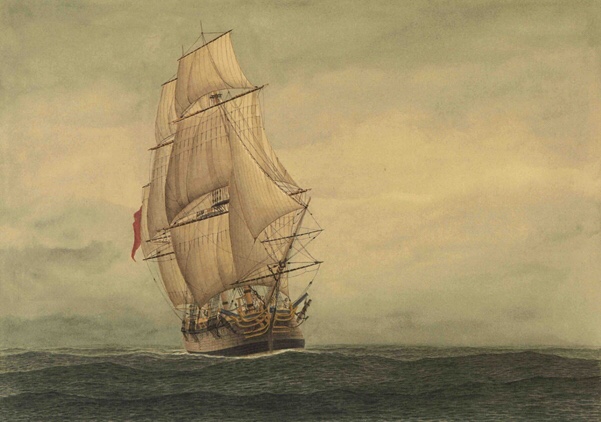
Eleven ships left Portsmouth on the 13th of May 1787, to set sail for Australia…. The Fleet comprised of two Royal Navy vessels ~ ‘HMS Sirilus’, a 10-gun ship and ‘HMS Supply’….six convict transport ships ~ ‘Alexander’, ‘Charlotte’, ‘Friendship’, ‘Lady Penrhyn’, ‘Prince of Wales’ and ‘Scarborough’ ~ and three store ships…. The Fleet carried seamen, marines and their families, government officials and a large group of convicts, including women and children (some of which were born on the voyage)….
The Lady Penrhyn – convict transport ship – Gooreen Collection
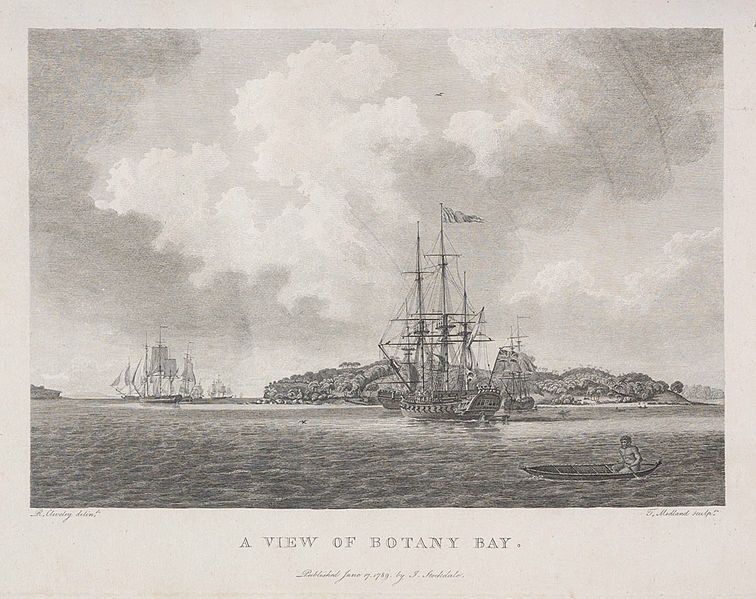
The Fleet, under the command of Captain Arthur Phillip arrived at Botany Bay between the 18th and 20th of January 1788…. Immediately it was obvious that Botany Bay was not suitable for a new settlement ~ it was not quite as James Cook had described it…. The Bay was unprotected, the water too shallow to allow ships to anchor close to shore, there was a lack of fresh water available and the soil was poor….
Engraving depicting First Fleet arriving at Botany Bay in January 1788 – State Library of New South Wales
Arthur Phillip decided to explore further afield…. On the 21st of January he and some of his officers travelled 7.5 miles north to Port Jackson, to see if it was more suitable…. They stayed for a couple of days, getting a ‘feel for the place’ and even making contact with the local Aboriginal people…. Phillip named it ‘Sydney Cove’ – after the Home Secretary, Thomas Townsend the 1st Viscount of Sydney….
The scout party returned to Botany Bay to rejoin the other ships and Phillip gave the order for the whole Fleet to move to Sydney Cove the following day, the 24th of January…. Unfortunately a huge gale raged the next day and so the departure had to be delayed…. The 25th of January saw little improvement in the weather but the Fleet attempted to leave anyway…. Only ‘HMS Supply’ managed to leave the bay; on board were Captain Phillip, a few officers, some marines and about 40 convicts…. They sailed on ahead leaving the other vessels to catch up when they finally managed to get out of the bay….
‘HMS Supply’ arrived at Sydney Cove and anchored – and the next morning, on the 26th of January, Phillip was rowed ashore and took possession of the land in the name of King George III…
Meanwhile, back at Botany Bay…. ‘HMS Sirilus’ had managed to clear the bay – but the other ships were having a few problems…. ‘Charlotte’ had nearly been blown on to rocks – ‘Friendship’ and ‘Prince of Wales’ had become entangled together, losing sails and booms…. ‘Charlotte’ and ‘Friendship’ then collided…. ‘Lady Penrhyn’ almost ran aground….
But eventually all eleven ships made it to Sydney Cove….the last one limping in around 3pm on the 26th of January….
The First Fleet entering Port Jackson January 26, 1788 – State Library of New South Wales
Formal establishment of the new settlement did not actually happen until the 7th of February 1788 – when the formal proclamation of the colony and Arthur Phillip’s governorship was read out….not the 26th of January as many believe…. However, the 26th is the day that every year Australians celebrate ‘Australia Day’….
The founding of Australia – Algernon Talmage (1937)












 Cottage Capers