On this day in history : 23rd May 1797 – The Bank of England acquires the nickname ‘The Old Lady of Threadneedle Street’ – when a cartoon by caricaturist James Gillray is published….
James Gillray (1756-1815) was a well-known caricaturist and satirist of the time…. His cartoon, entitled ‘Political Ravishment – The Old Lady of Threadneedle-Street in Danger!’ referred to the financial crisis of the time…. It protested against the introduction of paper money – which had been produced to replace gold coins….
The old lady represented the Bank of England, which of course is situated on Threadneedle Street, the City of London…. Her dress is made from banknotes and she is seated upon a locked money chest – which represents the Bank’s gold reserves…. Prime Minister William Pitt the Younger is seen to be making unwanted advances towards her…. She cries “Rape! Ravishment! Ruin! Ruin! Ruin!!!” He is trying to pick her pockets of any gold coins she may have secreted away – but his real intention is to get into that chest she is sitting upon….
Under his hat, which is lying on the floor, can be seen a loans notice…. The Bank had been making large loans to the government to fund the war with France….
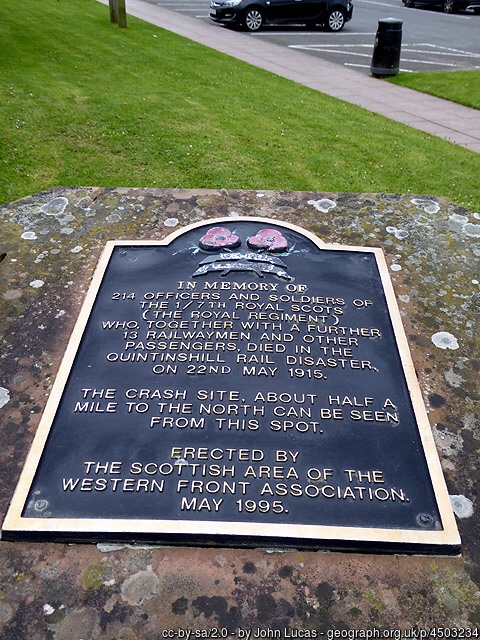
On this day in history : 22nd May 1915 – The Quintinshill rail disaster takes place near to Gretna Green, Scotland…. To this day it remains Britain’s worse rail disaster – with 227 dead and 246 injured….
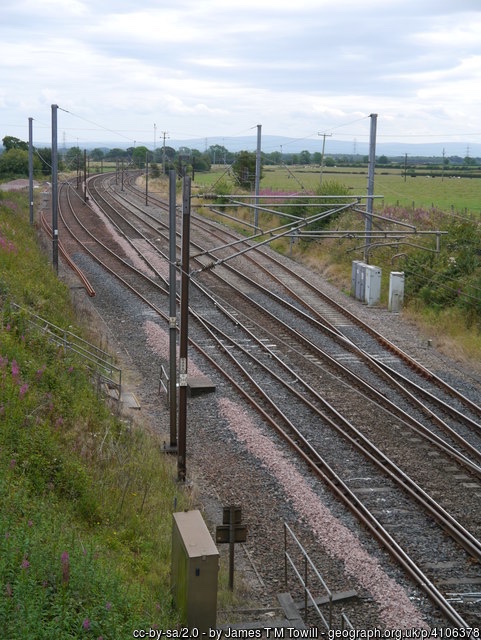
The signal box at Quintinshill controlled two passing loops, situated parallel to one another on the Calendonian mainline between Glasgow and Carlisle…. The signal box was the responsibility of the station master at Gretna Green and manned by one signalman at a time and was worked in shifts…. On the day of the accident the night shift had been manned by signalman George Meakin and he was due to be relieved at 6.30am by James Tinsley, for the morning shift….
Site of the Quintinshill crash (2014)
Two regular express trains were due to pass through at this time of the morning – a long with a local train…. The normal procedure was – so as to make way for the faster trains – to shunt and hold the local train on one of the passing loops…. However, there was extra traffic on the line this particular morning – a special troop-train, carrying a Royal Scots battalion, was passing through on its way south to Liverpool…. They were on their way to join the troop-ship Aquitania bound for Gallipoli….
The two passing loops were already occupied when the local service train arrived at Quintinshill – a freight train with empty coal wagons and another goods train…. Both express trains were running late – so Meakin directed the local train to be held, facing north, on the south bound line…. James Tinsley was on the train, arriving to do his shift in the signal box…. He joined his colleague – who did not leave immediately – but remained to read the newspaper that Tinsley had brought with him…. They were joined by a couple of crew from the waiting trains and the group discussed the latest war news….
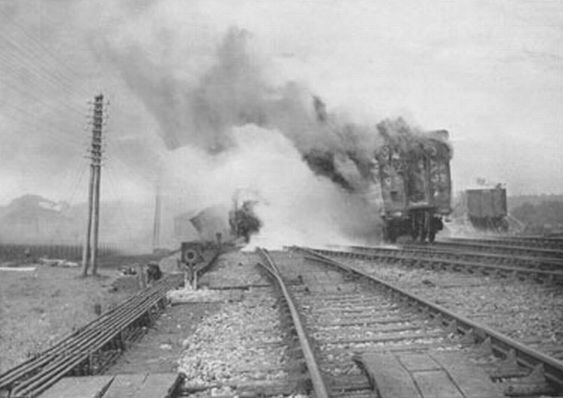
At 6.49am the south bound troop-train collided head-on with the waiting local train…. The train carrying the Royal Scots over-turned onto the north bound main line…. Shortly after one of the express trains ploughed into it….
The Illustrated London News 25 May 1915
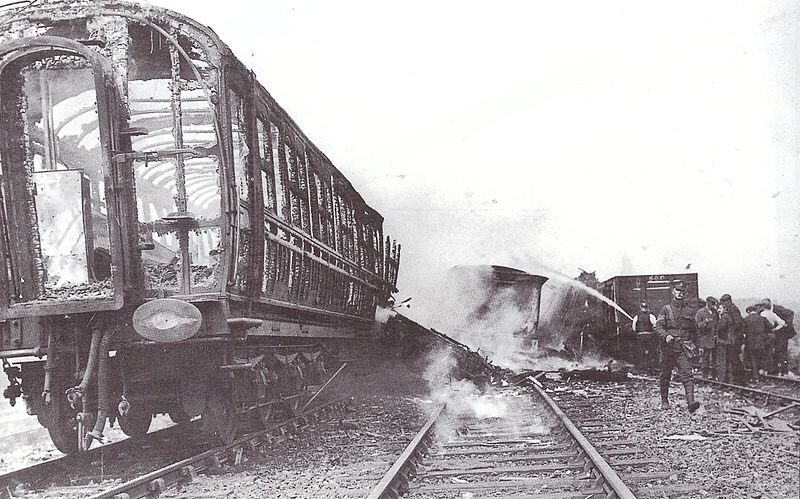
The troop-train burst into flames – the ferocity of the fire made it impossible for rescuers to get near…. The old wooden carriages were lit by gas lamps….the gas being stored in cylinders beneath the floor….which of course added to the inferno….
Out of the 498 soldiers onboard 214 were killed….only 83 of these could be identified…. A total of 227 lost their lives in the disaster – and a further four children remained unaccounted for…. Another 246 people were injured…. Only 58 men and 7 officers from the Royal Scots escaped un-injured – and were sent on to Liverpool for departure to Gallipoli…. However, they were declared medically unfit and returned to Edinburgh….
At the following public enquiry all blame was placed on Meakin and Tinsley…. George Meakin had failed to put into motion two vital safety procedures…. He had forgotten to inform the signal box further north that no trains should be allowed onto the Quintinshill section – and he did not put the regulation safety lock collar on to the signal lever…. James Tinsley, on taking over, had forgotten the local train was being held on the south bound line – and as there was no safety collar on the lever it meant he was able to signal the express train through….
Public domain
Meakin and Tinsley were charged with culpable homicide and found guilty at trial…. Tinsley received a sentence of 3 years imprisonment and Meakin 18 months…. Both men actually served just over a year – and returned to work on the Calendonian Railway – but not as signalmen….
It has to be questioned whether the men were entirely to blame….most of the lives lost were due to the fire…. It could be said the age and condition of the carriages made them not fit for purpose….and contributed to the disaster….
On this day in history : 21st May 1780 – The birth of English Quaker and prison reformer Elizabeth Fry…. Often referred to as the ‘Angel of Prisons’ – but also a social reformer in many other ways….
Elizabeth Fry the ‘Angel of Prisons’ – Flickr Commons – Public domain
Born Elizabeth Gurney, into a wealthy Quaker family in Norwich, she was known as ‘Betsy’ to those who knew her well…. At the age 12 she was devastated when her mother died – but even at such a young age she was expected to help bring up her younger brothers and sisters….
It was after hearing a prominent Quaker preacher in 1797 that she vowed to do something to help others…. She set up a Sunday school in the laundry room of the family home for children working in the factories of Norwich…. Her sisters called them ‘Betsy’s imps’…. She also began visiting the sick and those in need….
When she was 20 Elizabeth met Joseph Fry – part of the Fry’s chocolate family…. They were married on the 19th of August 1800….and set up home in East Ham, London…. They had eleven children, five sons and six daughters, one of whom – Betsy – died at the age of 5…. Elizabeth and Joseph were later to have 25 grandchildren….
Elizabeth Fry – Public domain
Elizabeth hated violence of any kind – she campaigned against capital punishment and flogging…. She once sacked a governess to her children on the spot, having caught her administering a beating…. Elizabeth’s compassion also stretched to those unfortunate enough to find themselves in Britain’s squalid gaols of the time….
A visit to Newgate Prison in 1813 shocked and horrified Elizabeth….over 300 women and children living in filthy, overcrowded conditions – some of the women had not even had a trial…. The gaoler did not want her to enter the prison alone ~ “they’ll tear off your things and scratch and claw you. And first of all they’ll snatch your watch” …. Elizabeth conceded to leave her watch behind but adhered to her resolve to visit the women and their children alone….
Elizabeth Fry – Reproduction of lithograph – credit: Wellcome Collection CC BY
At the time her own family were having financial difficulties and she was not in a position to do much to help the prisoners….but in 1816 she returned…. One of the first things she did was to fund a school for the children of the women prisoners – it was common for children to accompany their mothers to prison….
In 1817 she helped found the ‘Association for the Reformation of the Female Prisoners of Newgate’…. One of the areas the Association worked in was to provide the materials and equipment for the women to learn to sew and knit – to give them the skills and an opportunity to earn a living once they got out of prison…. Elizabeth believed in rehabilitation rather than harsh punishment….
Elizabeth Fry reading to inmates in Newgate Prison – by Jerry Barrett CC BY-SA 4.0
On a visit to England the King of Prussia, Frederick William IV, requested that he accompany Elizabeth Fry on one of her visits to Newgate Prison…. Such was the admiration for her work that support came from high places; Robert Peel helped where he could within his Parliamentary capacity….and Princess Victoria championed her cause and contributed money….
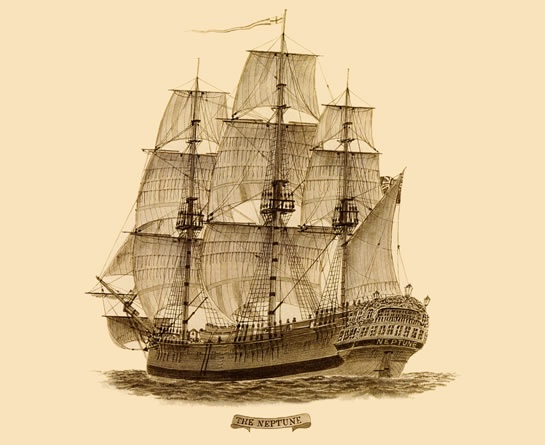
Elizabeth’s work in the reform of the penal system for women also included the welfare of those about to be transported…. For over 25 years she visited every convict ship bound for Botany Bay….her mission to improve conditions on board for the women prisoners – to make sure they were properly fed and had access to water…. Materials and sewing equipment would be provided for the women to make items – such as quilts – so they had something they could sell on reaching Australia….
She even campaigned for the prisoners to have closed carriages from the prison to the convict ship…. The practice had been for the women to be taken by open cart….to be met by hostility from people in the street – who relished yelling abuse and hurling rotten fruit – or worse…. Elizabeth fought to give those about to be transported some degree of dignity….
The Neptune, a convict ship that took convicts to Australia – Public domain
Her work and dedication to making conditions for prisoners more humane was demanding enough – but with Elizabeth it didn’t stop there….
She proposed reforms for mental asylums and founded hostels and soup kitchens for the homeless…. She promoted education for working women and worked to provide housing for the poor….
Elizabeth was personally adept at tending to the sick….and particularly supported vaccination against smallpox…. She had been trained in the procedure herself by Dr. Willan – an early advocate of the smallpox vaccination…. She also founded a nursing school at Guy’s Hospital, which inspired a distant relative of hers – Florence Nightingale….who took a team from Elizabeth’s school to the Crimea with her….
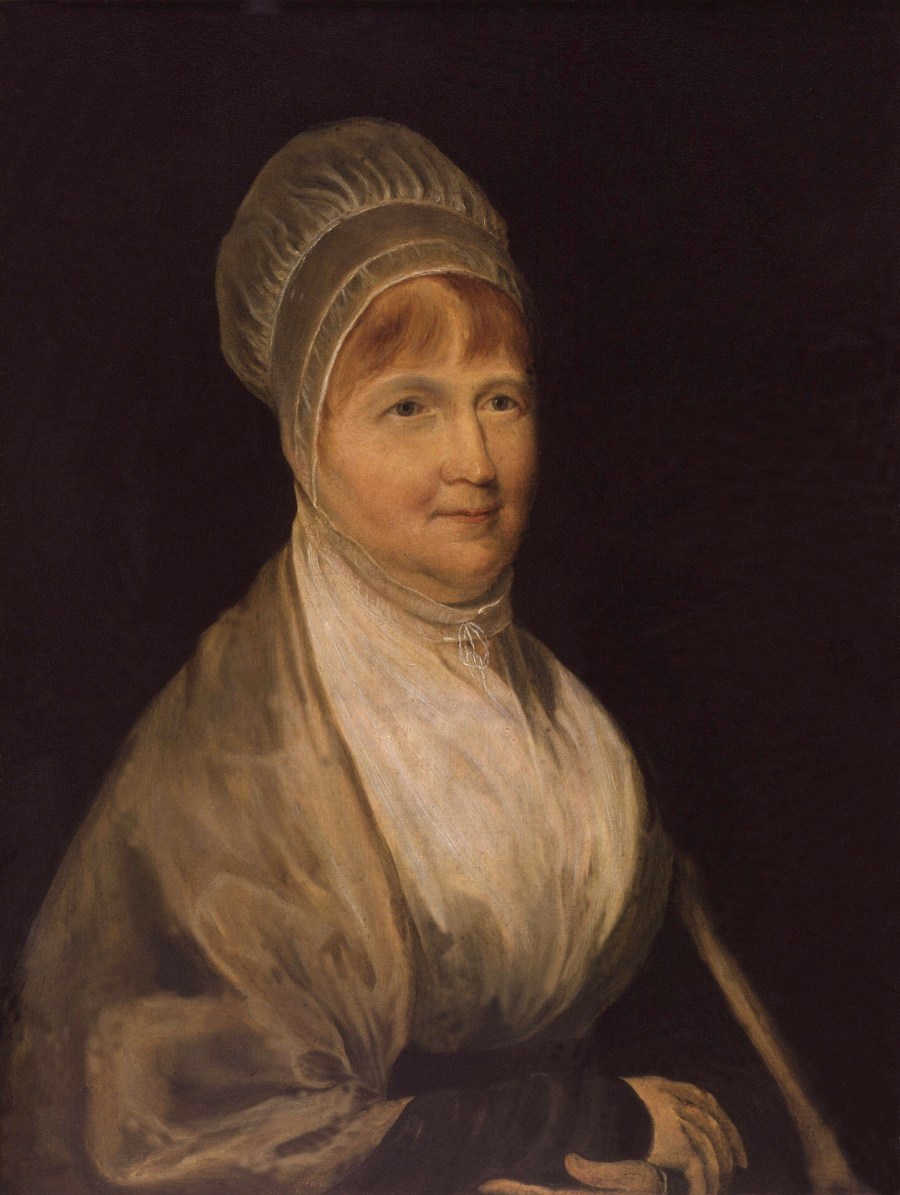
Elizabeth died in Ramsgate, Kent on the 12th of October 1845 – after suffering a stroke…. In 2001 the Bank of England commemorated her by featuring her picture on the reverse side of the £5 note….remaining until its replacement by an image of Sir Winston Churchill in 2016….
Elizabeth Fry (after Charles Robert Leslie) – Public domain
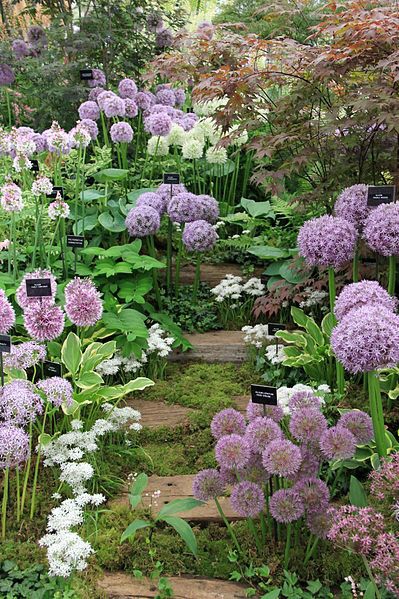
On this day in history : 20th May 1913 – The first Chelsea Flower Show is held in the grounds of the Royal Chelsea Hospital….
The Royal Horticultural Society held its very first ‘Great Spring Show’ in Chiswick in 1827 and it became an annual event which proved very popular…. However, rival flower shows came along, namely Crystal Palace and Regent’s Park, visitor numbers to Chiswick dropped significantly…..and it did not help matters that Chiswick at the time was not accessible by railway…. The shows stopped in 1857….
Hillier Nurseries and Garden Centres, 2012 – Photo: Karen Roe via flickr
But four years later, in 1861, the RHS was back; this time the Great Spring Show was held at Kensington Gardens – former site of the Great Exhibition of 1851…. The three day show was held in a single marquee and made a profit of £88….
The South West in Bloom, 2014 – Photo: Karen Roe via flickr
The Great Spring Show continued to expand – by the late 1880s it had grown from 48 to 120 exhibitors and a bigger venue was needed – so in 1888 it moved to Temple Gardens between Fleet Street and the Embankment…. However, not everybody was happy by the large amount of visitors attracted to the show….the crowds were an annoyance for those working in the Law profession around Temple….
Vital Earth The Night Sky Garden, designed by Harry Rich & David Rich, 2014 – Photo: Herry Lawford via flickr
In 1912 Sir Harry Veitch secured a site at the Royal Hospital, Chelsea for what was supposed to be a one-off event for the Great Spring Show….but such was its success that it made a £25,000 profit which was divided between three charities…. It was therefore decided that an annual show should be held in the grounds of the hospital….so, on the 13th of May the following year, 1913, the first ‘Chelsea Flower Show’ was held – and was attended by the King’s mother, Queen Alexandra….
Chelsea, 2014 – photo: Karen Roe via flickr
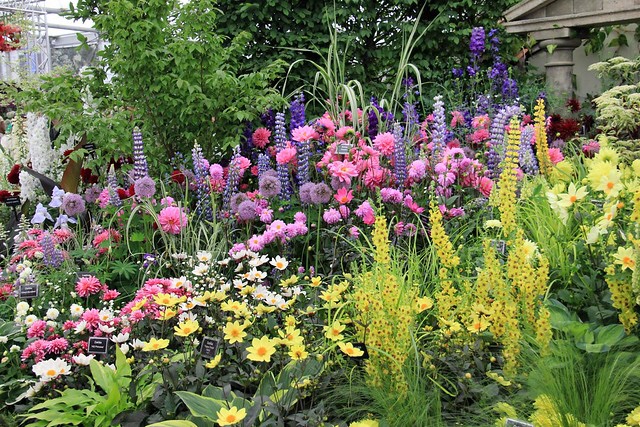
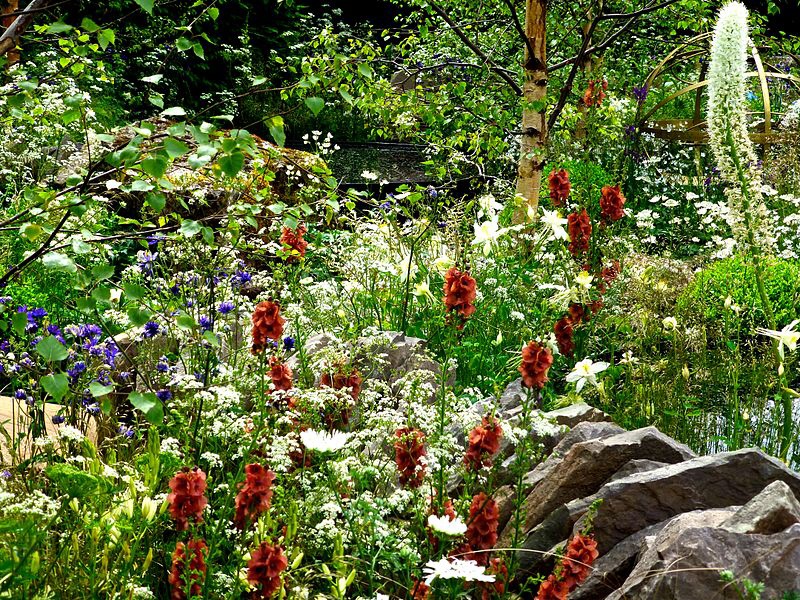
Even though it attracts over 150,000 visitors every year Chelsea is no longer Britain’s biggest flower show – these days that accolade goes to Hampton Court – but Chelsea is part of our culture and remains one of the most famous flower shows in the World….
The DialAFlight Potter’s Garden, 2014 – Photo: Karen Roe via flickr‘Spice Isle’, Grenada – Suzanne Gaywood Exhibit, 2014 – Photo: Karen Roe via flickrPart of the Dibleys Streptocarpus display, 2011 – Photo: Nefauna CC BY-SAChelsea, 2018 – Photo: Clive G’ via flickr
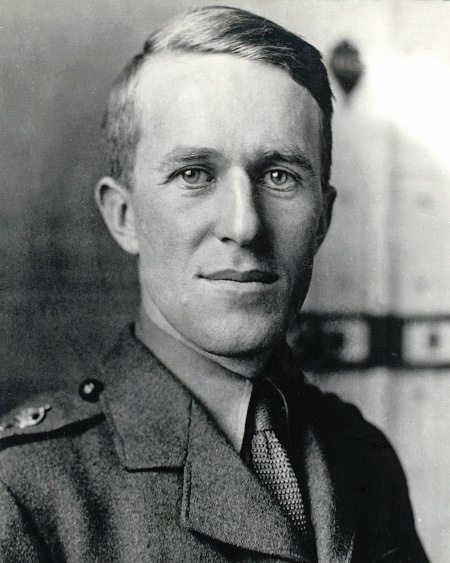
On this day in history : 19th May 1935 – Army Officer and writer T.E. Lawrence, better known as ‘Lawrence of Arabia’, dies of injuries sustained in a motorcycle accident six days before….
T.E. Lawrence -Public domain
Thomas Edward Lawrence was born in Tremadog, Carnarvonshire, Wales on the 16th of August 1888…. His parents never married but lived together under the name of Lawrence…. His father was actually Thomas Chapman (later to become Sir) and was married to Edith…. He had ran off with Sarah Judder, the governess of his daughters and together they had five sons, of which Thomas Edward Lawrence was the second….
Lawrence obtained a first class honours degree at Oxford in modern history – and began a career in archeology…. In 1911 he was part of an archeological expedition in Syria and also worked in Egypt and Palestine…. He came to know the customs of the people and gained knowledge of their languages….
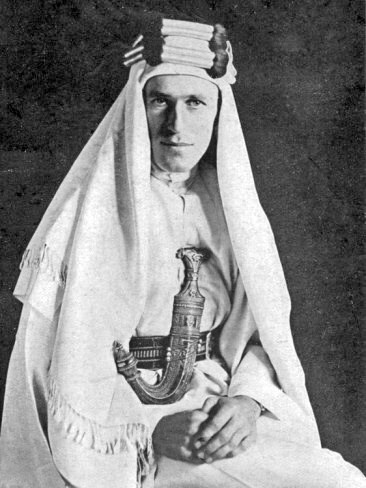
At the outbreak of World War I he was selected for an intelligence role, as Liaison Officer, on account of his Arabian expertise…. In 1916 he gave his support to the Arab revolt against the Turks; he became advisor to Prince Faisal, who led the uprising…. It was at this time that he began to dress as an Arab….
Lawrence, 1917 – Public domain
Public domain
He became an influential presence in the Arab forces…. He was successful in his campaigns against the Ottomans, who were Germany’s ally…. but he was badly injured on several occasions…. In July 1917 he led his Arab forces into the desert, acting as a decoy to distract the Turks whilst the British army invaded Palestine and Syria…. By the time the war was over he had risen to the rank of Colonel and had become recognised as a national hero….and known as ‘Lawrence of Arabia’….
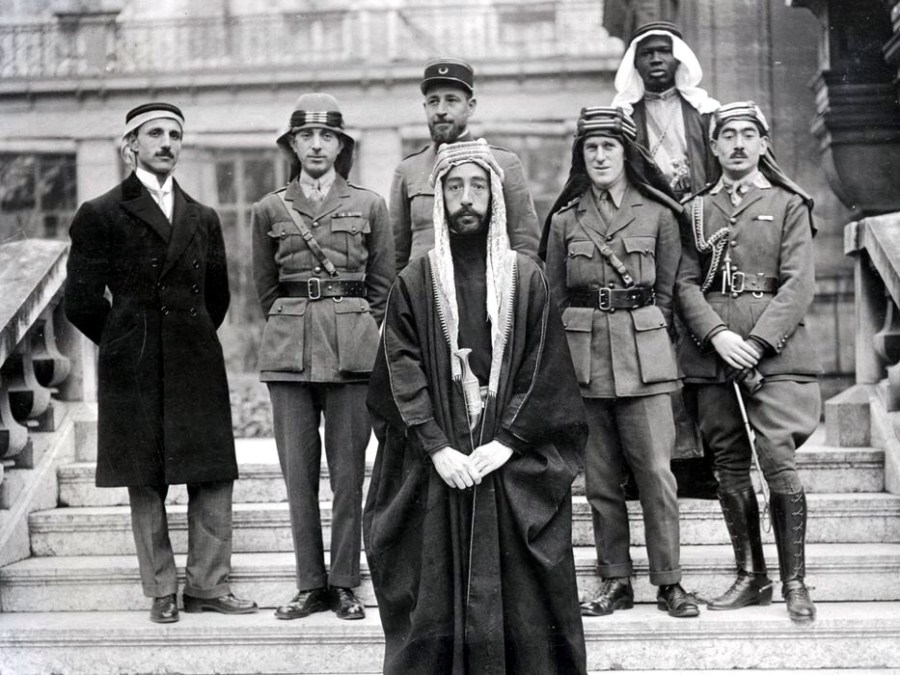
After the War he worked to support independence for the Arab states at the Versailles Peace Conference and also served Winston Churchill as advisor at the Colonial Office on Middle Eastern Affairs…
Emil Faisal’s party at Versailles 1919 – Public domain
As a writer he published three major works – the most significant being ‘Seven Pillars of Wisdom’ – his account of the Arab Revolt….
Wanting a life of obscurity he joined the RAF under the assumed name of John Hume Ross…. However, a Press leak revealed his true identity and he was released from the RAF…. He changed his name to T.E. Shaw and joined the Royal Tank Corps as a Private but was unable to find happiness there – so returned to the RAF…. He remained as Aircraftsman Shaw until he retired from service in February 1935….
He then went to live in his cottage retreat ‘Clouds Hill’, near Wareham in Dorset…. He had bought it as a place to escape to – just three rooms – a ‘book room’, ‘music room’ and an ‘eating room’…. Clouds Hill is now owned by the National Trust and is a museum dedicated to T.E. Lawrence….
Front & side of Clouds Hill
Back of Clouds Hill
Music Room at Clouds Hill – Photo credit: Ydigresse CC BY-SA 4.0
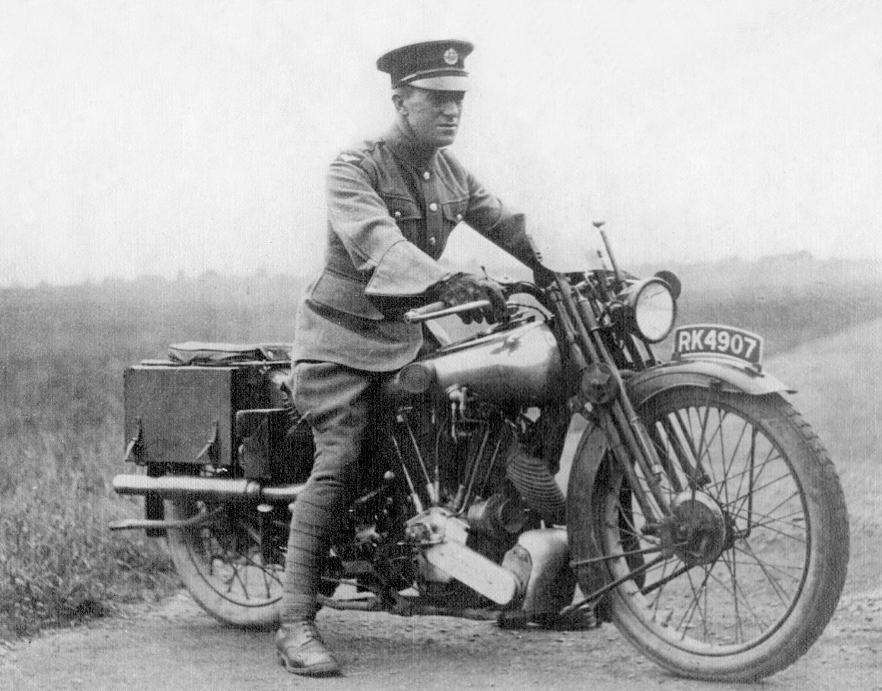
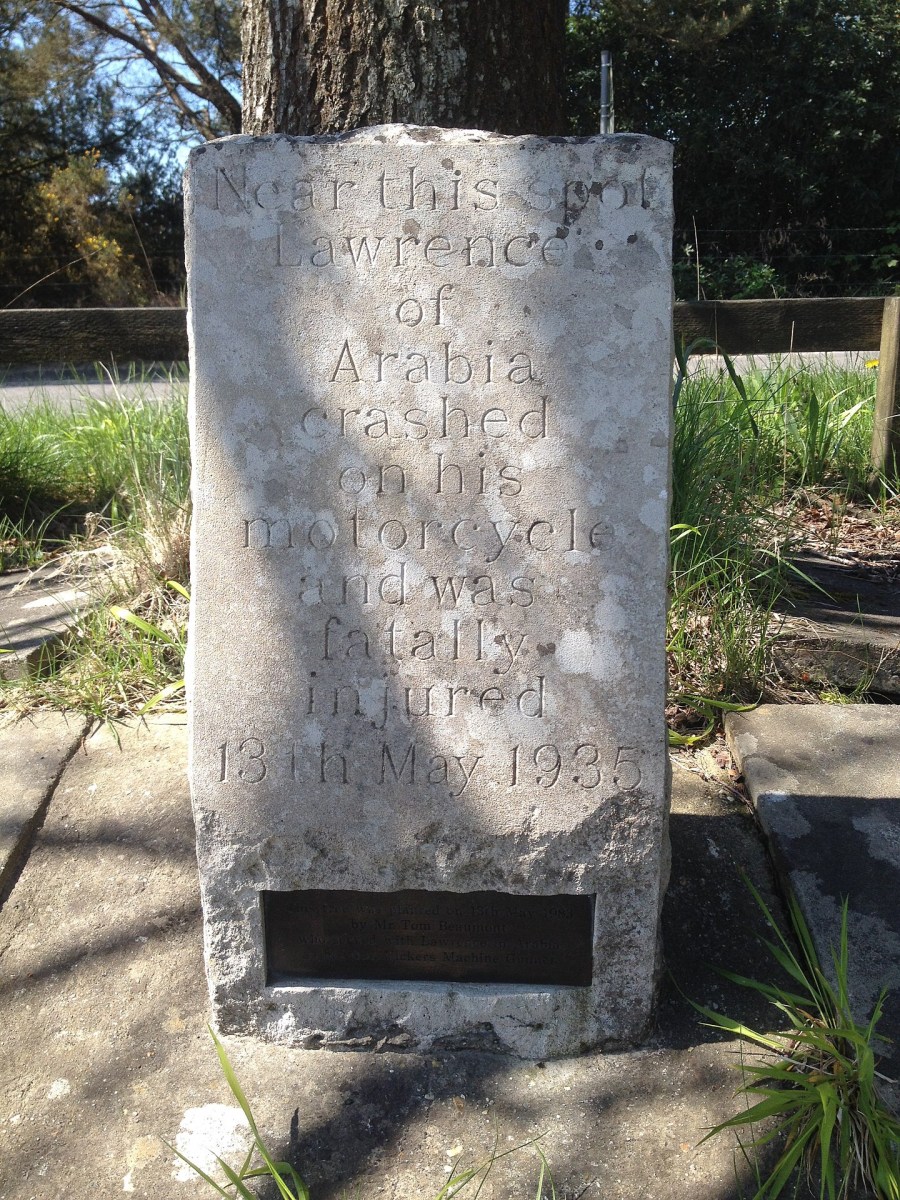
Having always been a keen motorcyclist Lawrence had owned a series of Brough Superior motorcycles….and was riding his SS100 when fatally injured in a road accident…. He was close to Clouds Hill when he came to a dip in the road – which obscured his view of two boys on bicycles…. He had to swerve to miss them – lost control of his bike and was thrown from it…. He died of severe head injuries at Bovington Camp Hospital six days later…. A memorial marks the site of the crash…. Lawrence was just 46-years-old and had only left military service three months before….
Lawrence on his Brough Superior SS100 – he called it ‘George V’…. – Public domainMemorial near to the crash site – Image credit: Dr Gaz Wild – Public domainLawrence, 1919 – Taken by Lowell Thomas (photographer) – Public domain












 Cottage Capers