On this day in history….23rd February 1892

On this day in history : 23rd February 1892 – The birth of character actress Kathleen Harrison – known for her Cockney characters but best remembered for her role as Mrs Huggett….
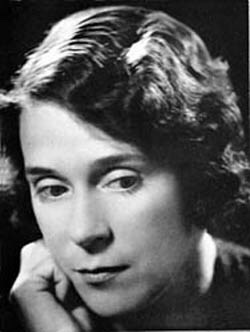
img_6065
Kathleen Harrison – Fair use

Kathleen was born in the Lancashire town of Blackburn – she studied at RADA during 1914-15…. She then spent some time in Argentina and Madeira after marrying John Henry Beck in 1916…. The couple had three children, two sons and a daughter….

Returning to England in the 1920s Kathleen made her stage debut as Mrs Judd in ‘The Constant Flint’ at Eastbourne’s Pier Theatre in 1926…. She had already made her film debut in 1915, with a part in ‘Our Boys’…. In 1927 she appeared in London’s West End for the first time, as Winnie in ‘The Cage’ at the Savoy Theatre…. She was to appear in several other West End plays….

In 1931 her film career started in earnest with a part in ‘Hobson’s Choice’…. She was to go on to appear in some fifty films up to the mid 1970s, including ‘Caesar and Cleopatra’, ‘The Ghost Train’, ‘Oliver Twist’ and ‘Scrooge’…. She appeared on the small screen in the BBC production of Dickens’s ‘Martin Chuzzlewit’ and ‘Our Mutual Friend’….

But it was the Huggetts trilogy of films that she was best known for….where she appeared opposite Jack Warner and Petula Clark…. The Huggett family were first introduced in the 1942 film ‘Holiday Camp’…. Kathleen played East End chairwoman Ethel Huggett, with Jack Warner as her onscreen husband, Joe and Hazel Court as their daughter, Joan – and whom had a baby…. The family also consisted of their son, Harry, played by Peter Hammond and Jimmy Hanley as Jimmy, Joan’s boyfriend….

img_6066
Fair use

The film centred around a working class London family’s first visit to a holiday camp – and was the sixth most popular film at the British Box Office in 1947….and so leading to the trilogy of Huggett films…. The first, ‘Here Come the Huggetts’ in 1948 replaced the family children with three daughters, Jane (Jane Hylton), Susan (Susan Shaw) and Pet (Petula Clark)…. The film revolved around the chaos caused by the arrival of Ethel’s niece and the upcoming wedding of the now engaged Joan and Jimmy….
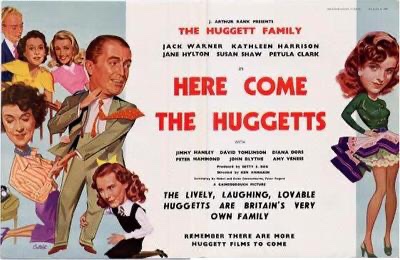
img_6067
Fair use

The second film, ‘Vote for Huggett’ saw Joe stand for election – and then the third, ‘The Huggetts Abroad’, where the family emigrate to South Africa and get involved in diamond smuggling…. Both of the latter films were released in 1949; a fourth film, ‘Christmas with the Huggetts’, was in the pipeline but never happened…. A radio series, ‘Meet the Huggetts’, ran between 1953 and 1962 and was a big hit with listeners, even if it was disliked by the critics….

Kathleen also starred opposite Jack Warner in the 1956 film ‘Home and Away’ – about a working class family who win the football pools….

Kathleen always claimed to be six years younger than what she really was….but she came clean in 1992 and received a telegram from the Queen for her 100th birthday…. She died in 1995 at the age of 103….
On this day in history….22nd February 1889

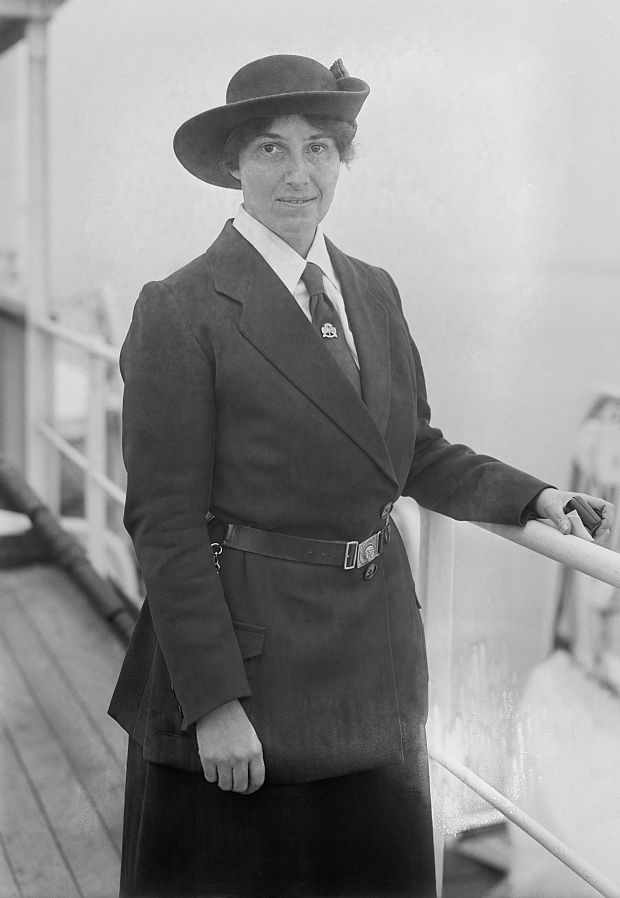
On this day in history : 22nd February 1889 – The birth of Olave Baden-Powell, first Chief Girl Guide for Britain and wife of Robert Baden-Powell, founder of the Scout and Guide Movement….

img_6030
Lady Olave Baden-Powell – Public domain

Olave was born at Stubbing Court, Chesterfield in Derbyshire and she was educated at home by her parents and by governesses…. She was very keen on outdoor sporting activities such as swimming, rowing, canoeing, skating, tennis, riding and football…. She also played the violin….

It was in 1912 that she met Robert Baden-Powell – whilst onboard the Arcadian, sailing to New York via the Caribbean…. She said he was the only interesting person onboard! They shared the same birthday, the 22nd of February, only he was 32 years her senior….

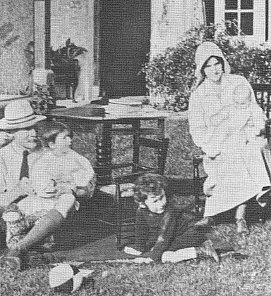
The couple became engaged on the 20th of September 1912 ~ amidst a media sensation…. They married in a small, private ceremony at Olave’s parish church on the 30th of October the same year…. The following October their first child was born; they had three children altogether, their eldest – a son, Peter – followed by two daughters, Heather and Betty…. In 1919 Olave’s sister died leaving three young daughters – Olave took them in and raised them as her own….

img_6031
Robert and Olave with their three children, 1917 – Public domain

Robert and Olave’s first home was Ewhurst Place, near to Robertsbridge in East Sussex… Here they formed the 1st Ewhurst Scout Troop for the children of their staff…. In 1914 Robert taught Olave to drive, an activity he didn’t much care for himself – so once accomplished she became his chauffeur….

img_6032
Ewhurst Place – Photo : The Voice of Hassocks – own work – Public domain

The Girl Guide Movement had formed after growing pressure from girls wanting to join their male counterparts in the Scouts…. The Guides were set up by Robert and his sister Agnes – Olave became involved in 1915 – and in March 1916 became County Commissioner for Sussex…. She encouraged women all over Britain to get involved in organising Girl Guide groups – and in 1918 she was unanimously voted as Chief Guide….

It was in 1919 that the Baden-Powells moved to Bentley in Hampshire, where they lived until October 1938…. They travelled extensively and eventually settled in Kenya…. It was here that Robert died in 1941….

Olave continued to lead the Guides after her husband’s death….and she continued to travel…. She had been made World Chief Guide in 1930 and was awarded the Dame Grand Cross of the Most Excellent Order of the British Empire (DGE) by King George V in 1932, in recognition of her voluntary work….

LK1960MMXXDOC1538448
Lady Baden-Powell visiting Helsinki, 1960 – Public domain

In 1970 Olave was diagnosed with diabetes and advised to stop travelling…. She died on the 25th of June 1977 at Birtley House in Bramley, Surrey…. Her ashes were taken to Kenya to be buried with her husband….

img_6034
Image credit : Carolandjessie via Flickr CC BY-SA 2.0

On this day in history….21st February 1952

On this day in history : 21st February 1952 – Winston Churchill’s Conservative Government abolishes identity cards in the United Kingdom ~ ‘Setting the people free’….

National Identity Cards were introduced by the National Registration Act at the beginning of World War 2…. Every man, woman and child was issued with one and on it was recorded name, age, sex, address, marital status and occupation…. The first cards were brown – with the introduction of blue cards for adults in 1943 and green cards with a photograph were issued to government officials….

At the end of the War the Labour Government, under Clement Attlee, opted to keep the identity card – which was not a popular decision amongst much of the population…. Labour argued that the card was important for preventing fraud, for rationing, the health service and benefits such as family allowance….

In their election manifesto the Conservative Party had pledged to scrap the cards…. It was in answer to a question that he had been asked in the Commons that Health Minister Harry Crookshank said… “It is no longer necessary to require the public to possess and produce an identity card, or to notify change of address for National Registration purposes, though the numbers will continue to be used in connection with the National Health Service”… His reply was met with cheers from members in the House of Commons….img_0483

From then on other forms of identification were acceptable when required, such as passport, driving licence, trade union membership card etc…. However, the National Registration number was kept and became the National Health Service number….

In 2006 the Labour Government made the Identity Cards Act law…. A voluntary National Identity Card scheme with a National Identity Register database…. It proved to be very controversial and when the Conservatives came to power the Act was repealed in 2010….

img_6023
Promotional image of a UK National Identity Card released by the Home Office – Public domain

On this day in history….20th February 1472

On this day in history : 20th February 1472 – Orkney and Shetland are transferred to Scotland from Norway in lieu of a dowry payment for Margaret of Denmark….

img_6021
Queen Margaret of Scotland – Public domain

Thirteen-year-old Margaret was the daughter of King Kristian I of  Denmark, Norway and Sweden…. She was betrothed to King James III of Scotland as a long standing agreement in an aim to bring a feud over tax to an end…. Her dowry was set at 60,000 Guilders – 10,000 of which to be paid up front, the rest to be mortgaged against Orkney and Shetland…. The idea was that once the dowry had been paid in full the islands would be returned to Scandinavia….

img_6022
Kristian I of Denmark, Norway and Sweden – Public domain

King Kristian was strapped for cash; he could only raise 2,000 Guilders of the initial payment and so the remainder was added to the mortgage…. The wedding of King James III and Margaret went ahead in July 1469 at Holyrood Abbey and was overseen by Abbot Archibald Crawford…. By 1472 no money had been paid towards the outstanding dowry balance and so on the 20th of February Orkney and Shetland were officially annexed to the Scottish Crown through an Act of Parliament….

img_6019
James III and Margaret of Denmark – National Library of Scotland – Public domain

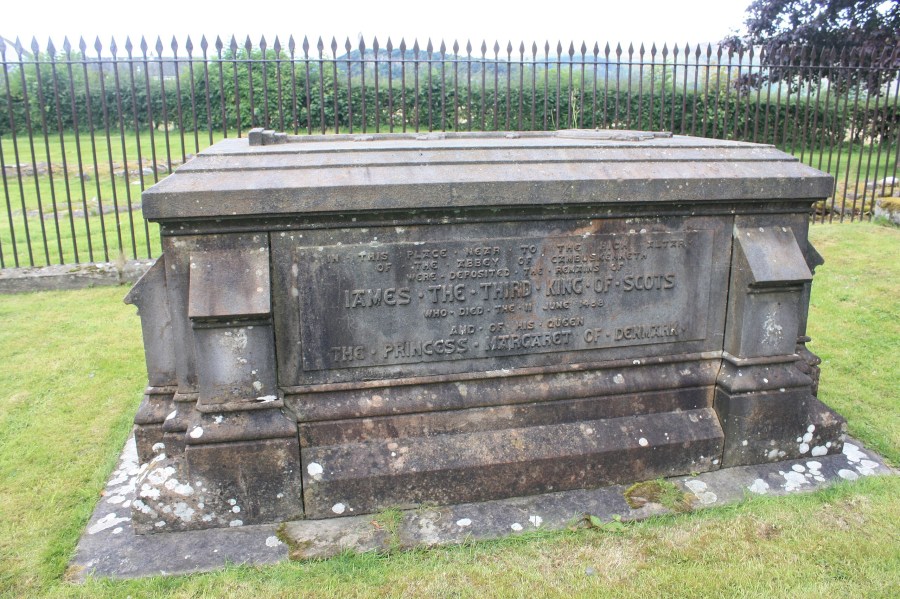
Margaret and James went on to have three sons, the eldest later to become James IV of Scotland…. James III was not a popular king, although Margaret was well liked as Queen…. When she died in July 1486 rumours circulated that her husband had poisoned her…. In 1488 a revolt against the King was supported by his 15-year-old son…. James III was killed in unexplained circumstances….

img_6020
The grave of King James III and Queen Margaret, Cambuskenneth Abbey – Stephen C Dickson – own work – CC BY-SA 4.0

On this day in history….19th February 1959

On this day in history : 19th February 1959 – The United Kingdom grants independence to Cyprus, which is then formally proclaimed in August 1960….

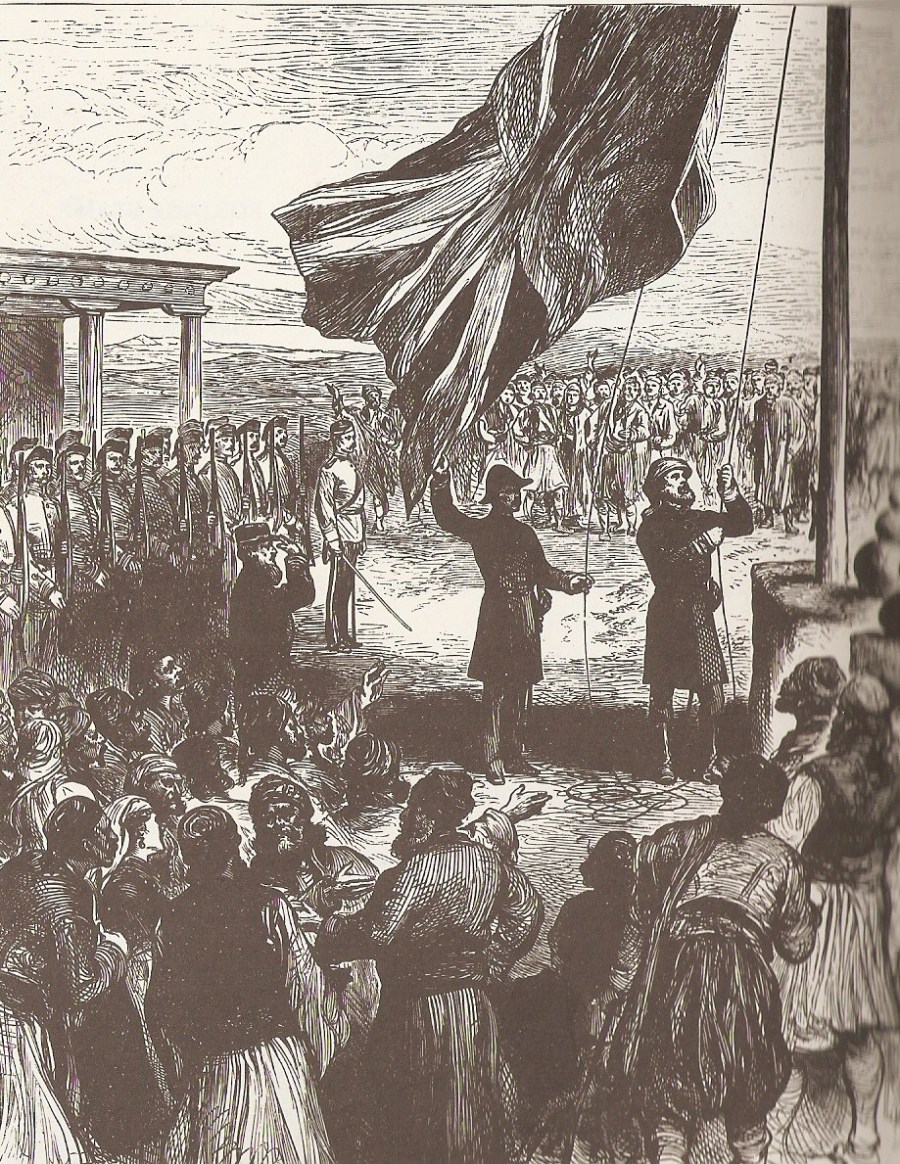
Cyprus had been under Ottoman rule for over 300 years before it was annexed by Britain in 1914 – and then in 1925 it became a British colony….

img_6015
Hoisting the British flag at Nicosia – Illustrated London News – Public domain

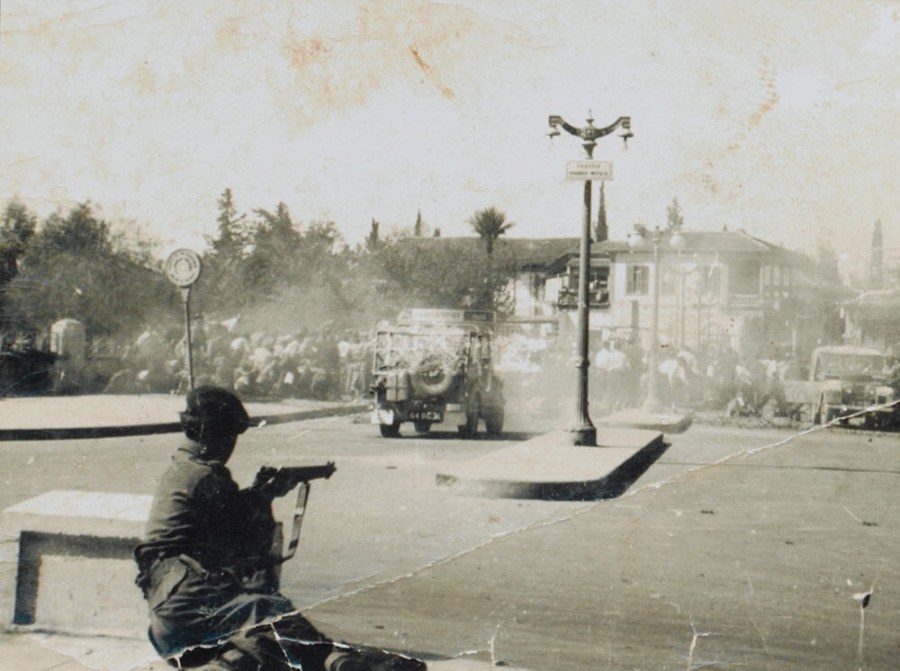
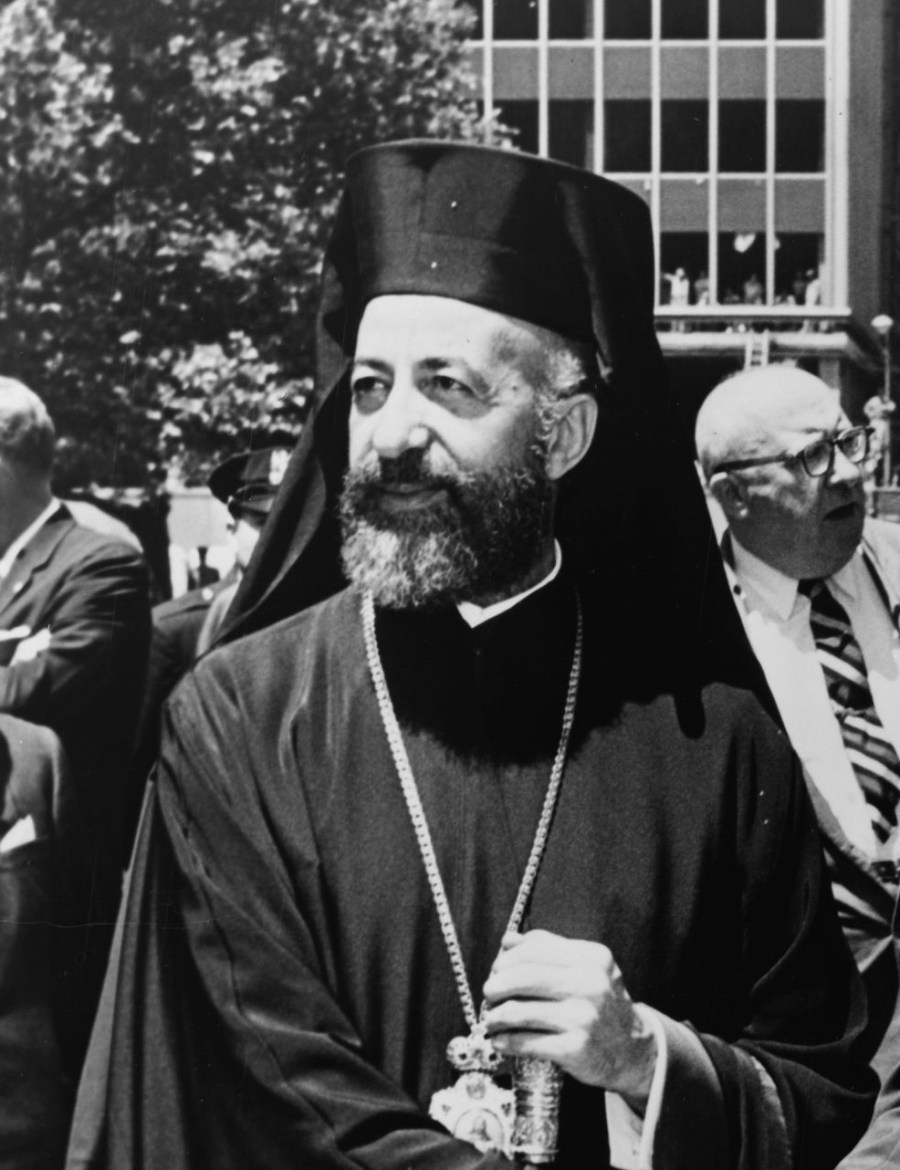
Thirty years later Cyprus was anything but a happy place…. Greek Cypriots, wanting unification with Greece, were waging all-out guerrilla warfare against British rule…. It led to the leader of the campaign, Archbishop Makarios, being deported to the Seychelles…. He was to return in 1959 when independence was granted and was subsequently elected President….

img_6017
British soldier taking aim at Greek Cypriot demonstrators in Nicosia, 1956 – British Colonial Government – Public domain

Independence was proclaimed on the 16th of August 1960 after the Greek and Turkish communities managed to come to an agreement on a constitution…. The Treaty of Guarantee was drawn up, giving Britain, Greece and Turkey the right to intervene if the need should arise…. Britain also retained two military bases on the island….

img_6014
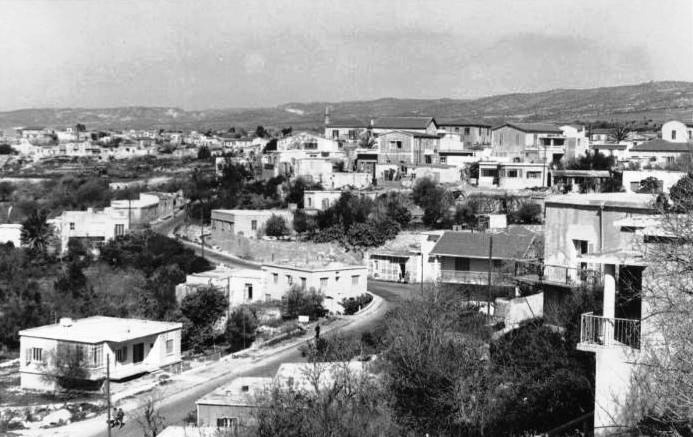
Old Turkish Cypriot quarter in Paphos, 1969 – Brian Harrington Spier via Flickr CC BY-SA 2.0

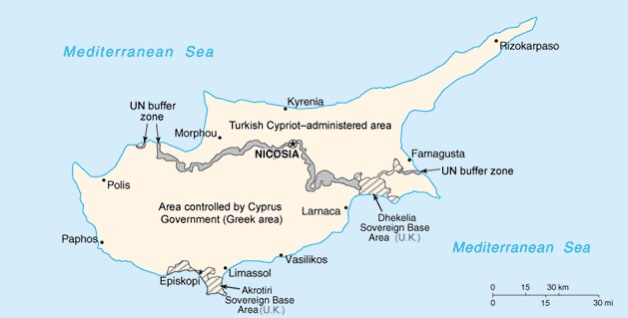
In 1963 President Makarios proposed constitutional changes – resulting in unrest, violent flare-ups and the withdrawal of the Turkish community from the power sharing deal…. In 1964 the United Nations had to step in by setting up a peace keeping force…. A decade later Greece backed a coup against President Makarios – and he fled…. Turkish troops landed on the north of the island, sending Greek Cypriots fleeing from the northern homes….

img_6013
Archbishop President Makarios, 1962 – Public domain

After the collapse of the coup one third of Cyprus was occupied by Turkish forces – leaving the island divided…. Approximately 165,000 Greek Cypriots fled to the south, while some 45,000 Turkish Cypriots had set up their own administration under President Rauf Denktash…. The death of Makarios in 1977 saw Spyros Kyprianou take over and peace talks began once more in 1980 – only to be suspended again in 1983….

img_6018
A map showing the division of Cyprus – United States Central Intelligence Agency – Public domain