On this day in history….30th April 1948

On this day in history : 30th April 1948 – Iconic British all-terrain vehicle, the Land Rover, makes its debut appearance at the Amsterdam Motor Show….img_3064
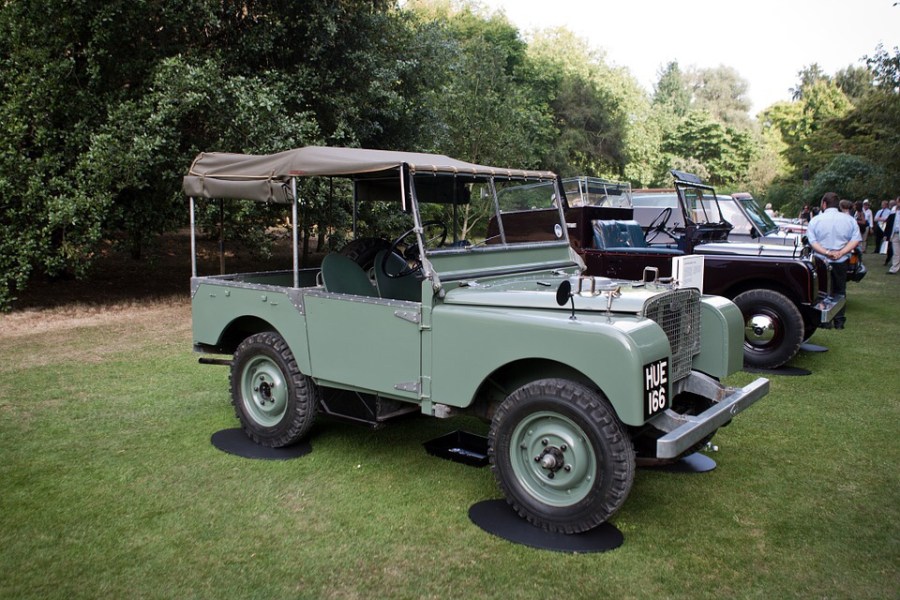
The Land Rover was the brainchild of Maurice Wilks, chief designer at Rover and his brother Spencer, who was the Managing Director…. Maurice had been using an American Willys-Overland Jeep on his Anglesey farm but it was proving to be temperamental…. In 1947 the brothers decided to put their heads together and come up with a more reliable vehicle – one that could work on the farm but be more versatile than a tractor…. The very first prototype they developed had a central driving position and used many components from the Willys Jeep….

Three prototypes were shown at the Amsterdam Motor Show – later these vehicles would evolve into the ‘Series I’…. With a 50bhp 1595cc Rover petrol engine, 80in wheelbase, pick-up body and canvas roof it was priced at £450…. The original plan was that it would be a temporary stop-gap for Rover in the difficult financial period following World War 2….

After the show the three vehicles were brought back to Solihull, converted to right hand drive and sold…. In the first year after the launch 8,000 Land Rovers were built and in 1949 the British Army ordered its first batch to trial…. It quickly became obvious this was not just a farm vehicle….with its diverse versatility it has since been used by organisations all over the World…. From our own emergency services here in the UK to wildlife safari operators in South Africa this workhorse is at home anywhere…. Since 1953 it has been a firm favourite with the Royal Family….

The last Defender rolled off the production line in 2016….but what of the very first one? HUE 166, chassis no.LR1, affectionately known as ‘Huey’, is now kept at the British Motor Museum in Graydon….

img_3059
‘Huey’ – Image credit: DeFacto

Another of the three prototypes has surfaced in recent years…. SNX 910 went to work on a farm and wasn’t registered for road use until June 1955…. It sold in 1961 and was to change hands a few more times before ending up in Worcestershire…. It then went to a farm in Wales and spent the next twenty years in a field…. In 1988 the Land Rover’s engine seized and since it wasn’t worth repairing as a farm vehicle it became redundant…. Eventually it was sold to a Land Rover enthusiast in Birmingham who had the good intention of restoring it…. However, like so many of these intended projects, it never happened and the vehicle was left standing forgotten in the garden….

It was in 2016 that somebody with a keen eye spotted the lonely Landy…. After confirmation from Jaguar Land Rover that it was indeed one of the original three prototypes it was passed to the Land Rover Series I Reborn restoration programme to be brought back to its former glory – ready to take its rightful place next to Huey….

img_3066
SNX 910 awaiting restoration – image credit Land Rover MENA via flickr

On this day in history….29th April 1986

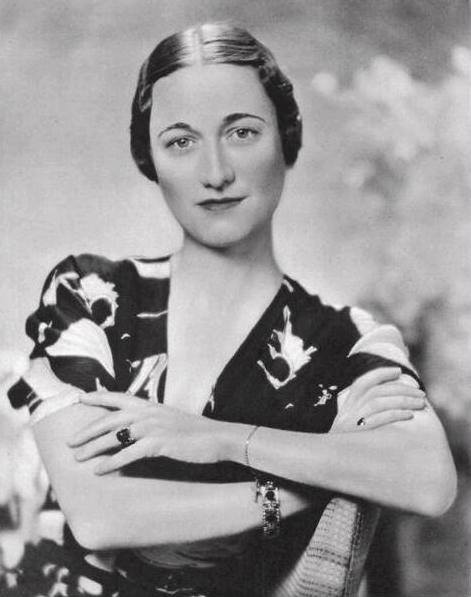
On this day in history : 29th April 1986 – The funeral of Wallis Simpson, Duchess of Windsor – who is laid to rest alongside her husband, the abdicated King Edward VIII at Frogmore in Windsor….

img_3048
Public domain

The service at St. George’s Chapel was a simple affair, unlike most royal funerals…. One hundred guests attended, among them Prime Minister Margaret Thatcher and Leader of the Opposition Neil Kinnock…. The royal family was represented by Her Majesty the Queen, the Duke of Edinburgh, the Prince of Wales, Princess Diana, Princess Anne and the Queen Mother….

At the Duchess’s request there was no funeral address and very few flowers…. Although a single striking wreath of orange, yellow and white lilies from the Queen lay on the English oak coffin – with its simple inscription on a silver plate ‘Wallis, Duchess of Windsor, 1896-1986’…. The final blessing was given by Dr. Robert Runcie, Archbishop of Canterbury….

img_3050
Wallis, 1919 – Public domain

Just eight personal friends and four members of the royal family – the Queen, Duke of Edinburgh, Prince Charles and Princess Diana – stood at the graveside for the burial…. The Queen had decided that the Queen Mother would not be present as she and Wallis had endured a difficult relationship…. The Queen Mother blamed the premature death of her husband, George VI, on the stress that came with being King – a role forced upon him after the abdication of his brother, Edward VIII, to marry the woman he loved…. Something the Queen Mother could neither forgive nor forget….she was still angry…. Indeed she had once called the Duchess “the lowest of the low”….

The American divorcee married her second husband Ernest Aldrich Simpson, an Anglo-American executive and former officer in the Coldstream Guards and they settled down to live in London…. He had divorced his first wife Dorothea, with whom he had a daughter, to marry Wallis….

Not long after Wallis became friends with Thelma, Lady Furness – who was the mistress of Edward, Prince of Wales…. On the 10th of January 1931 Thelma introduced Wallis to the Prince; he then met her with her husband several times more between 1931 and 1934 at various functions – Wallis was even presented at Court…. Meanwhile, Ernest was beginning to experience financial difficulties….

In January 1934 Lady Furness visited New York, whilst she was away Wallis and the Prince became lovers…. Soon he was besotted, showering her with gifts and jewels…. His parents however, particularly his father, King George V, were outraged….

img_3049
Wallis Simpson and Prince Edward 1935, Austria – Public domain

On the 20th of January 1936 King George V died and Edward succeeded to the throne…. Wallis was still married and the new King’s behaviour made him unpopular with the government and deeply upset his mother and brother, the Duke of York….

img_3047
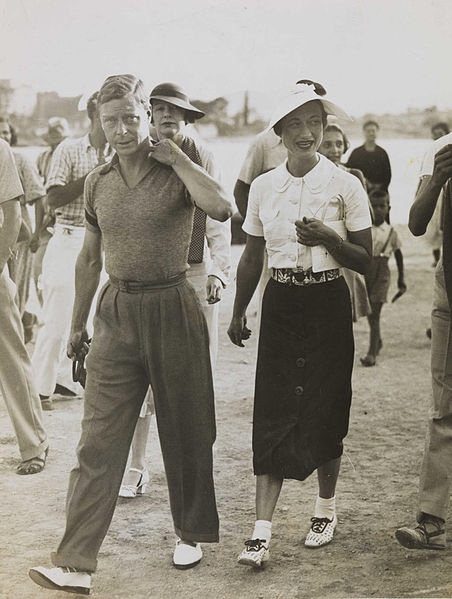
King Edward VIII and Mrs Simpson on holiday in Yugoslavia – via Flickr the Commons – Public domain

Wallis divorced Ernest, on the grounds of his adultery – but even now she was free to re-marry she was thought to be unworthy as a Consort…. So, to marry the woman he loved King Edward VIII had to give up the throne…. On the 10th of December 1936 he signed an Instrument of Abdication….

They married on the 3rd of June 1937 in France….and remained together until his death in 1972…. Afterwards Wallis lived in chosen exile in France…. There are some who believe she married Edward for his wealth….but for others their’s was the love story of the century….

img_3051
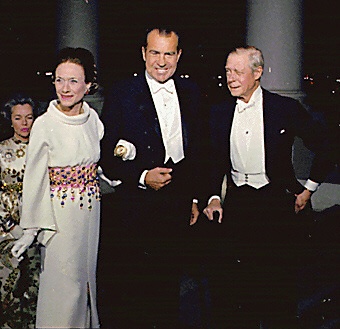
Wallis and Edward, 1970 with President Richard Nixon – Image credit: Jack E Kightlinger – Public domain

On this day in history….28th April 1772

On this day in history : 28th April 1772 – The death in Mile End, London of what is believed to be the World’s most ever travelled goat ~ having circumnavigated the globe twice….

When practical it was normal practice to carry livestock onboard a ship for use during the voyage – and remained so until the time refrigeration became available…. Small animals, such as pigs, goats, lambs and chickens provided fresh meat, milk and eggs…. Goats were a popular choice, being hardy and easy to breed….

The goat we are concerned with here must have been truly exceptional…. We don’t have a name for her – but sometimes she is referred to as ‘Sir Joseph Banks’ goat’…. We’ll come to that shortly….

NPG 5868; Sir Joseph Banks, Bt by Sir Joshua Reynolds
Sir Joseph Banks by Sir Joshua Reynolds, oil on canvas, 1771-1773 – Public domain

Our goat’s first trip around the World was onboard HMS Dolphin, the first ship to circumnavigate the globe twice…. George Robertson was master on the second voyage, which sailed under Captain Wallis…. Robertson wrote a book recounting the journey and it was entitled ‘The discovery of Tahiti; a journal of the second voyage of H.M.S. Dolphin round the world under the command of Captain Wallis, R.N. In the years 1766, 1767 and 1768 written by her master’ – and in it he makes reference to the goat….

img_3043
HMS Dolphin – Public domain

But what really earned our little goat her stripes was her second circumnavigation – this time with Captain James Cook on his first voyage onboard HMS Endeavour from 1768-1771….

Endeavour departed Plymouth on the 26th of August 1768…. It carried onboard 96 people, including a team of elite scientists consisting of naturalists, an astronomer – and eminent botanist Sir Joseph Banks…. Also onboard were a number of pigs, goats, poultry, 2 greyhounds and a milking goat….yes, our goat….

img_3044
HMS Endeavour by Samuel Atkins (c.1760-1810) – Public domain

Cook was fastidious about keeping a clean, hygienic, disease-free ship and knew the importance of a good diet to maintain a healthy crew…. Our precious goat more than stepped up to the mark in performing her duty of providing fresh milk each day…. One sailor onboard recorded….“I must not omit how highly we have been indebted to a milch goat; she was three years in the West Indies, and was once round the world before in the Dolphin, and never went dry the whole time; we mean to reward her services in a good English pasture for life”….

And that is exactly what happened…. Sir Joseph Banks had a silver collar made for her to wear…. His friend, Dr. Samuel Johnson – English writer, poet and playwright, most noted for his Dictionary of English Language in 1755 – comprised a Latin epigram for her which was engraved upon the collar….

‘Perpetui ambita his terra praemia lactis,

Hac habet, altrici capra secunda Jovis’….

Later Boswell wrote Dr. Johnson’s biography and expanded on its meaning….

‘If fame scarce second to the nurse of Jove,

This Goat, who twice the world had traversed round,

Deserving both her master’s care and love,

Ease and perpetual pasture has found’….

Our little goat was bestowed ‘the privileges of an in-pensioner of Greenwich Hospital’ and cared for and put out to pasture…. Sadly her retirement was to be short-lived, as she died not long after…. I can’t help thinking that maybe she missed her sea legs….

img_3046
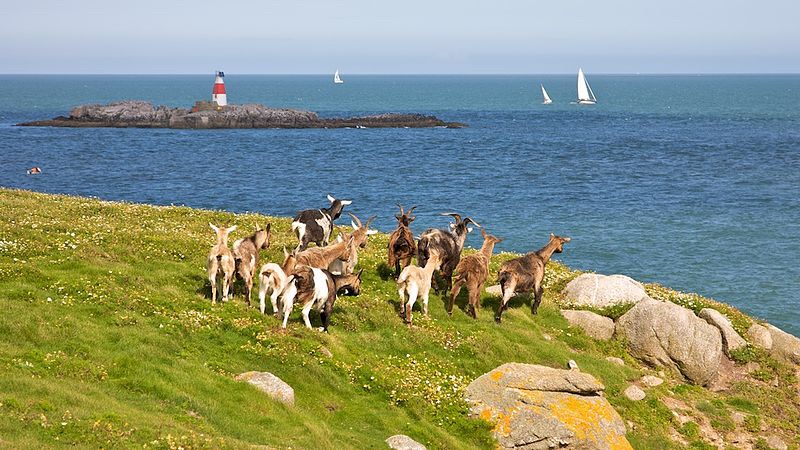
Goats on Dalkey Island – John Fahy CC BY-SA 3.0

On this day in history….27th April 1828

On this day in history : 27th April 1828 – The opening of the London Zoological Gardens in Regent’s Park – originally it was only intended for fellows of the Zoological Society but opened to the public in 1847….

img_3039
Gardens of the Zoological Society Regent’s Park 1828 Project – Public domain

We all know it as London Zoo (or Regent’s Zoo) and many of us have visited at one time or other – but the World’s oldest scientific zoo was never originally intended to be anything other than a collection for scientific study and research….

The Zoological Society of London was established by Sir Stamford Raffles ad Sir Humphrey Davy in 1826. The Zoological Gardens opened in Regent’s Park in 1828; unfortunately Raffles was never to see the completed project as he died in July 1826….

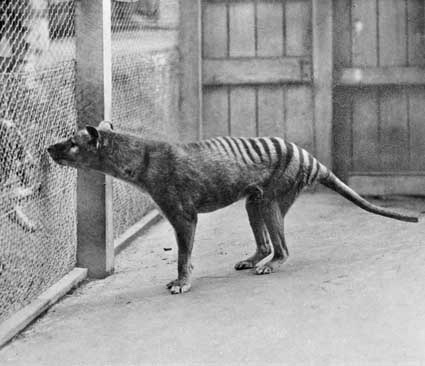
In the beginning it housed animals such as Arabian oryx, Greater kudu and orangutan; it also had the now extinct quagga and thylacine….

img_3040
Quagga – now extinct sub-species of zebra. Mare at London Zoological Gardens 1870. Public domain.
img_3041
The last known Thylacine photographed at Hobart (formerly Beaumais) Zoo in 1933. image credit: Kelly Garbato via Flickr

It was granted a Royal Charter by King George IV in 1829 – and a couple of years later, either 1831 or 32, it was decided to rehouse the animals from the Tower of London Menagerie at the Zoological Gardens…. It is thought that the decision was taken due to an incident which had occurred at the Tower…. Stories conflict slightly but either a soldier was bitten by a lion or a sailor by a monkey….whichever way, the 60 or so species of the Menagerie found a new home at Regent’s Park…. Nowadays London Zoo houses over 670 species….

In 1847 the London Zoological Gardens opened to the public to help aid funding…. In 1849 it opened the World’s first reptile house, the first public aquarium in 1853 and the first insect house in 1881…. The first children’s zoo was added in 1938….

Up until 1902 all of the animals were kept indoors as it was believed they could not survive the cold London climate…. However, when Dr. Peter Chalmers-Mitchell was appointed Secretary he embarked on a major reorganisation of the buildings and enclosures…. Many of the animals were introduced to the open air….a concept inspired by Hamburg Zoo….

img_3038
View of the Zoological Gardens 1835 – Public domain

On this day in history….26th April 1923

On this day in history : 26th April 1923 – The marriage of Prince Albert, Duke of York (to become King George VI) to Lady Elizabeth Bowes-Lyon (later the Queen Mother)….

Prince Albert, ‘Bertie’ to his family, was the second son of King George V and Queen Mary and was second in line to the throne – but was in fact to ascend the throne in 1936 after the abdication of his brother, Edward VIII…. Elizabeth Bowes-Lyon was the ninth of ten children born to Claude Bowes-Lyon, Lord Glamis and Cecilia Cavendish-Bentinck….

The Prince first proposed to Elizabeth in 1921 – but she refused him, thinking royal life was not for her….“afraid never, never again to be free to think, speak and act as I feel I really ought to”…. After three times of being asked she eventually agreed in January 1923 to become his wife….

img_3037
Albert, Duke of York with Lady Elizabeth Bowes-Lyon – Public domain

The ceremony took place in Westminster Abbey….the first royal wedding to take place at the Abbey since 1383…. The newly formed BBC wanted to record and broadcast the service but was refused permission – The Archbishop of Canterbury expressed concerns that men may listen to it whilst in public houses….

Elizabeth had eight bridesmaids…. Her dress, designed by Madame Handley-Seymour – dressmaker to Queen Mary – was made in a deep ivory chiffon, embroidered with pearls and silver thread…. It had two trains, one flowing from the shoulders, the other attached at the hips…. Although in the fashion of the early 1920s it had a medieval style to it…. She wore no tiara – but a circlet of leaves held her veil in place….

The Duke of York wore the full RAF uniform of a group captain – his rank at the time….

img_3036
Wedding of George VI and Elizabeth Bowes-Lyon – Public domain

On the way into the Abbey Elizabeth did an unexpected thing…. She laid her bouquet of flowers on the tomb of The Unknown Warrior – in memory of her brother Fergus…. This is something that has now become a tradition with royal brides….only they lay their flowers on the way out after the ceremony….

The wedding rings were made from 22 carat Welsh gold, from the Clogau St. David’s mine in Bontddu – this has also now become a tradition….

After the ceremony the royal couple had a wedding breakfast at Buckingham Palace…. They then spent part of their honeymoon at Polesdon Lacey – a Manor House in Surrey that now belongs to the National Trust – before travelling to Scotland….