On this day in history….15th April 1929

On this day in history : 15th April 1929 – Author of Peter Pan, J.M. Barrie, donates his copyright fee for the story to the Great Ormond Street Hospital for Sick Children, in London….
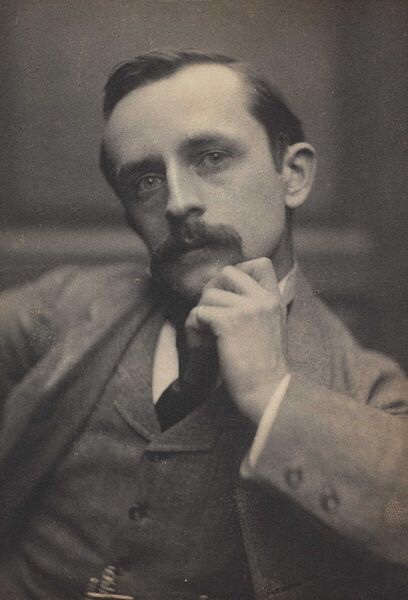
img_2840
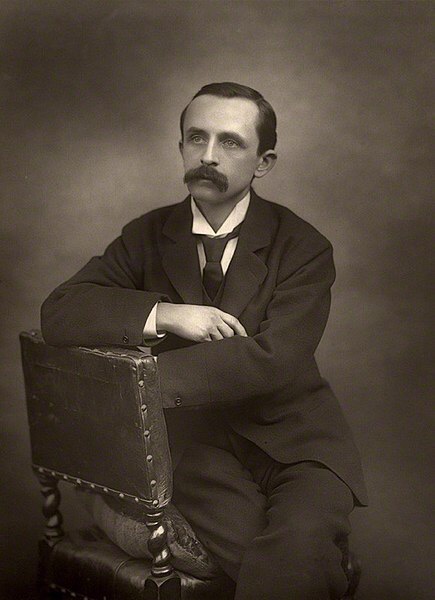
J.M. Barrie 1892 – National Media Museum @ Flickr Commons

James Matthew Barrie was the ninth of ten children and was born in the weaving town of Kirriemuir in Scotland on the 9th of May 1860…. His father was a hand-loom weaver….

img_2845
J.M. Barrie’s birth place

When Barrie was 6-years-old his older brother David – the apple of his mother’s eye – died in a tragic skating accident the day before his 14th birthday…. His heartbroken mother, Margaret, drew some comfort from the notion that her beloved David would forever remain a child to her….

It was a thought that stayed with Barrie as he grew up….an ‘everlasting childhood’….and would eventually develop into the story of Peter Pan….

img_2846
Illustration of Peter Pan playing the pipes by F.D. Bedford from ‘Peter and Wendy’ – Public domain

Barrie always had a love for children….none more so than for the children of his dear friends Arthur and Sylvia Llewelyn-Davies…. It was in 1897 that Barrie first met their three boys; George 5, Jack 4 and Peter, who was still a baby…. Two more boys, Michael and Nico were to be born to the family later….

In 1901, the family joined Barrie for a summer holiday at his Surrey home, it was then that he was inspired to write ‘The Boy Castaways’…. The story drew on the antics, games and adventures of the Llewelyn-Davies boys – and was a prequel to Peter Pan….
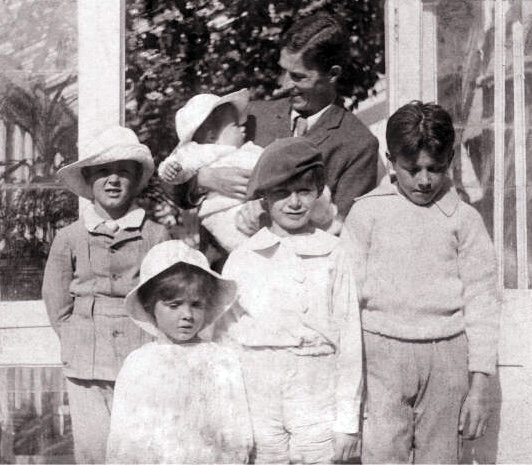
img_2844
Arthur Llewelyn-Davies and sons 1905 – Public domain

Sadly, when the boys were still very young, both Arthur and Sylvia died from cancer…. Although Barrie’s own marriage had broken down and he was now divorced he became guardian to the children…. It was his life with the boys that formed the bedrock of Peter Pan….

It was in a chapter of ‘The Little White Bird’ in 1902 that Peter Pan made his first appearance – the story tells of how baby Peter learned to fly…. Barrie then wrote a stage play which was first performed at the Duke of York’s Theatre in London on the 27th of December 1904…. The play was a huge success and Barrie responded by writing the novel ‘Peter and Wendy’ in 1911…. It was an instant bestseller and has been in print ever since….img_2843

In 1929 Barrie was asked by Great Ormond Street Hospital – who he had supported for a long time – to sit on a committee to raise funds for a much-needed hospital wing…. Barrie declined their invitation but said he hoped he could find another way to help….

It was two months later that the Board learned, with much surprise, that Barrie had donated all rights of Peter Pan to the hospital…. Every play performance, every book sold – a benefit to Great Ormond Street Hospital…. Barrie just asked that the amount of money raised was never revealed….and it never has been….

by Herbert Rose Barraud, sepia carbon print on card mount, 1892

by Herbert Rose Barraud, sepia carbon print on card mount, 1892

On this day in history….14th April 1950

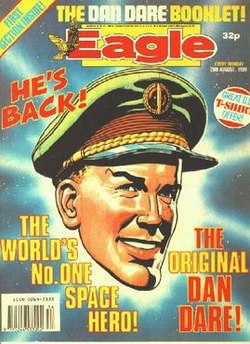
On this day in history : 14th April 1950 – The first issue of ‘Eagle’ is published with hero Dan Dare on the front cover…. The children’s comic was an instant success selling 900,000 copies of the first issue….

img_2834
Front cover of the first issue of Eagle with artwork by Frank Hampson – Fair use

Eagle was founded by Marcus Morris, vicar of St. James’ Church, Birkdale in Lancashire and artist Frank Hampson…. Morris had produced a Christian magazine entitled ‘The Anvil’ which was based on the humour and art of popular magazine of the time ‘Liliput’…. The Anvil had several well-known contributors including C.S. Lewis and Harold Macmillan…. In 1948 he hired Frank Hampson, a young aspiring artist, to work as illustrator of his Christian magazine….

Morris was unimpressed by children’s magazines available at the time…. Publications such as ‘The Rover’, ‘Schoolgirls’ Own’, ‘Adventure’ and ‘The Hotspur’ all had stories written in text form and were not very visual. Some children, particularly the boys, were buying unsuitable American horror comics aimed at G.I.s…. Morris, whilst admiring the artwork of these comics, was horrified by their content…. He also realised there was a substantial gap in the market….

img_2836
Eagle, January 3rd 1958 – Image credit: Fresh On The Net – via Flickr

The vision was for a comic filled with role models that set a moral example based on Christian values….the aim to entertain and educate…. Morris and Hampson set about creating a dummy comic – working at Hampson’s kitchen table…. They then showed it to several Fleet Street publishers, initially with no success – but then Hulton Press agreed to take it on….

A large-scale advertising campaign was launched…. The comic was a totally new concept; a new printing technique using vivid colours….nothing like it had been seen before…. The original artwork with its outstanding visual quality was done by Frank Hampson – who was always obsessed with getting detail and consistency right….

The publication format was twenty pages, eight of which were printed in full colour…. The very first edition introduced ‘Dan Dare, Pilot of the Future’ on its front cover…. Dan Dare, with his side-kick, Albert Digby, battling with the egg-headed, green-skinned Mekon – the evil alien who ruled Venus and planned to take over Earth…. The stories were set in the late 1990s and the very first issue saw Earth in the grips of a food shortage that threatened to destroy mankind…. Dan Dare was off on a desperate mission to reach Venus and win salvation…. It was relevant to the times as Britain was still under food rationing after World War II….and Hampson had always wanted to be a pilot…. Other stories that appeared in Eagle included ‘Riders of the Range’ and ‘P.C.49’…. It also featured news and a sports section….

img_2837
Eagle, October 7th, 1955 – Image credit: Robin Hutton via Flickr

Eagle was published every Friday and before long it was selling nearly a million copies a week…. To keep up with production 8 hour shifts were worked, 24 hours per day, 7 days a week…. It was published from 1950-1969 – when it merged with its rival comic ‘Lion’…. It was relaunched in 1982 and ran until 1994 – before disappearing again, seemingly forever….but you never know….

img_2835
The return of Dan Dare in 1989 – Fair use

On this day in history….12th April 1831

On this day in history : 12th April 1831 – The Broughton Suspension Bridge in Manchester collapses – believed to have been caused by a mechanical resonance due to troops marching over it….

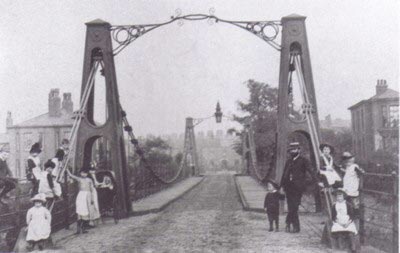
The iron chain suspension bridge, one of the first in Europe, was erected in 1826 to span the River Irwell between Broughton and Pendleton – now part of Salford, Greater Manchester – to link the two towns together…. It was built at the personal expense of John Fitzgerald, MP and wealthy owner of Castle Irwell House….

img_2814
Broughton Suspension Bridge after it had been rebuilt, 1883 – Public domain

The 60th Rifle Corps had been out on exercise on Kersal Moor, under the command of Lieutenant Percy Slingsby Fitzgerald – the son of John Fitzgerald…. The troops needed to cross the bridge as part of their route back to the barracks – 74 soldiers, 4 abreast began to march across…. As they did so they felt it begin to vibrate in time to their marching feet…. They found it all rather amusing and began to whistle an accompanying marching tune; the vibrations continued to get stronger….

As the head of the column approached the far side loud cracking and banging sounds were heard…. Suddenly one of the iron pillars supporting the suspension chains gave way….falling towards the bridge, dragging with it the massive stone to which it was fixed…. The bridge, now unsupported, fell into the river….

About 40 of the soldiers were hurled into the water, which lay 16-18ft below…. The river was low at the time, with around only 2ft of water – so not enough to break a fall…. Thankfully nobody was killed but around 20 sustained injuries – ranging from broken bones, to concussion, head injuries and severe bruising….

An investigation discovered a bolt in one of the stay-chains had snapped; further examination revealed it had been badly forged…. It is believed the cross-bolts had begun to bend and crack before the bridge’s collapse and it was an accident waiting to happen…. The marching troops had just sped up the process….

img_2815
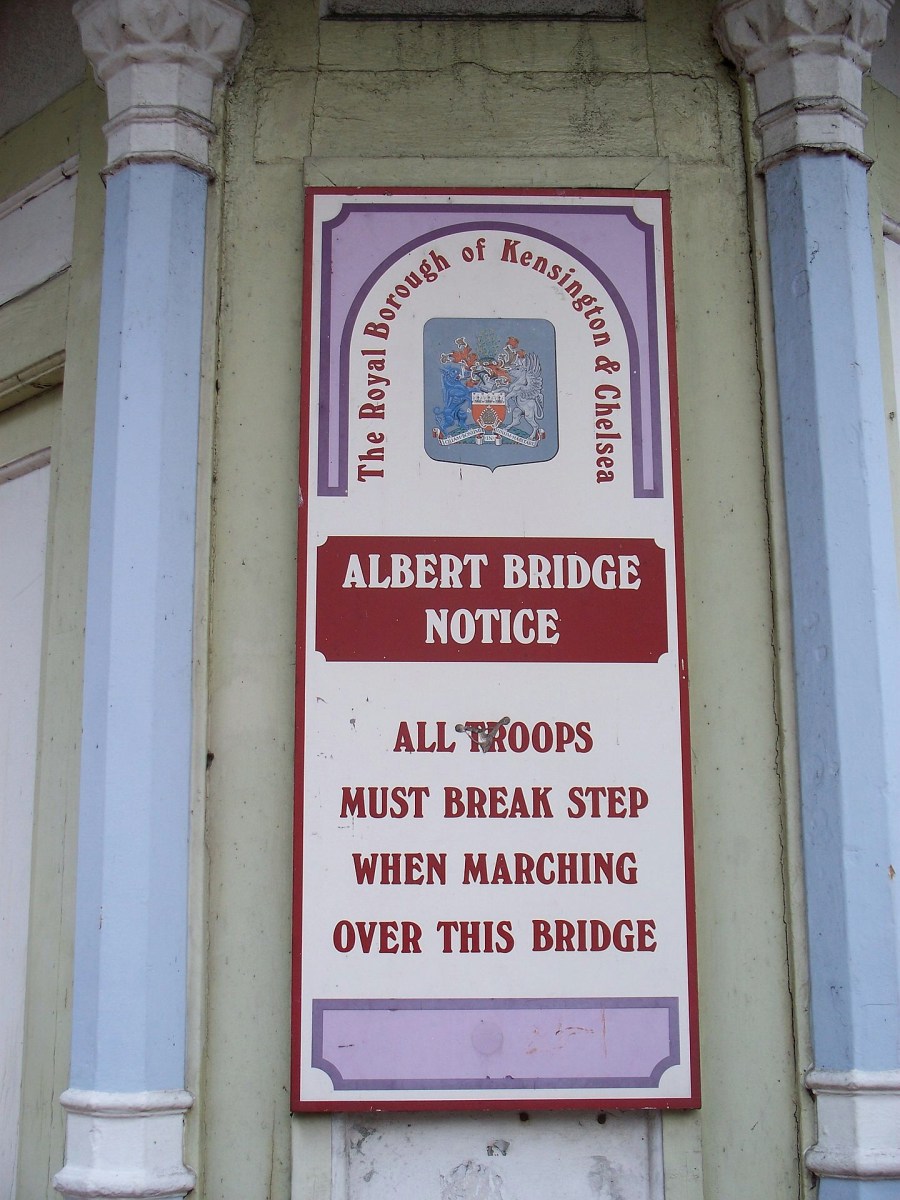
Sign on Albert Bridge, London – Image credit: Iridescent CC BY-SA 3.0

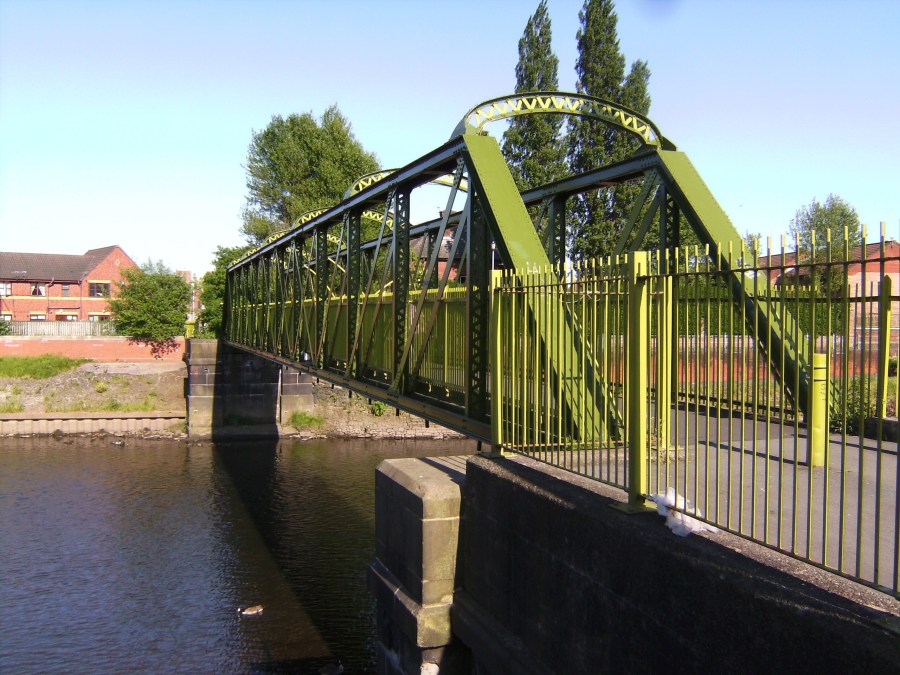
After the incident the British army issued an order to ‘break step’ when marching across bridges…. The Broughton Suspension Bridge was rebuilt – but in 1924 it was replaced with a Pratt truss footbridge – which is still in use today….

img_2816
The replacement Pratt truss footbridge still in use today – Image credit: Richerman CC BY-SA 3.0

On this day in history….11th April 1936

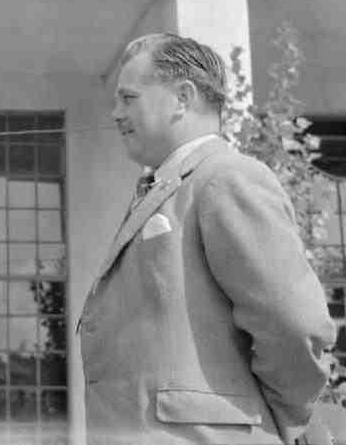
On this day in history : 11th April 1936 – Billy Butlin opens his first Butlin’s Holiday Camp in Skegness….changing the concept of the British family holiday….

img_2799
Billy Butlin – Public domain

Billy Butlin was born in Cape Town in 1899 – but when he was around 7-years-old his parents separated and he came to England with his English mother…. For the next five years he travelled the Country with his grandmother’s fairground, where his mother sold gingerbread…. This gave the young Billy an insight into commerce and entertainment…. His mother emigrated to Canada when he was 12, leaving him in the care of an aunt; but two years later, once she had settled, she sent for him….

Finding it difficult to fit into school, where he was bullied and teased for his English accent, Billy left and found work in a department store…. He served in the Canadian army as a bugler during World War 1 and after the war returned to England – with just £5….

Billy invested £4 of his money into a stall on his uncle’s travelling fair…. One stall became several, some of which were at prime static locations…. He purchased some fairground equipment and started a travelling fair of his own…. By 1927 he had opened a static fairground in Skegness….he opened a similar one at Bognor Regis in 1932….

It was on a visit to Barry Island that Billy experienced the frustration of many a family holidaying in Britain at the time…. Staying in a boarding house he found himself being shooed out by his landlady between meals…. He felt sorry for the families who were on their holidays, locked out of their paid accommodation – in whatever weather – often with little to do….

Billy had already been considering the idea of providing accommodation to attract visitors to his fairground in Skegness…. Holiday camps were to a certain extent already founded – such as Warner’s – but it was Billy Butlin who was to take the concept and turn it into an iconic British culture….

After securing a plot of land Billy built his first camp at Ingoldmells, close to Skegness…. His idea was to provide a week’s holiday, with 3 meals a day and free entertainment in between…. A holiday would cost between 35 shillings and £3 per week, depending on the time of year…. He took out an advertisement in the Daily Express costing £500 (equating to over £30K in today’s terms) and on the 11th of April 1932 – Easter Eve – the camp was officially opened by aviator Amy Johnson – the first woman to fly solo from England to Australia….

He quickly realised the holiday makers were not interacting with one another quite the way he had intended – families were keeping themselves to themselves…. he asked Norman Bradford, an engineer who had been involved with the construction of the camp, to take on the duty of entertaining the guests…. Norman mingled with the holiday makers, chatting, telling jokes and creating a holiday atmosphere…. He was to become the first of Butlin’s Redcoats….and soon a whole team had been recruited….

Within a year the holiday camp had doubled in size – and two years later Billy built his second camp at Clacton-on-Sea…. Butlin’s holiday camps were on their way….

This slideshow requires JavaScript.

On this day in history….10th April 1877

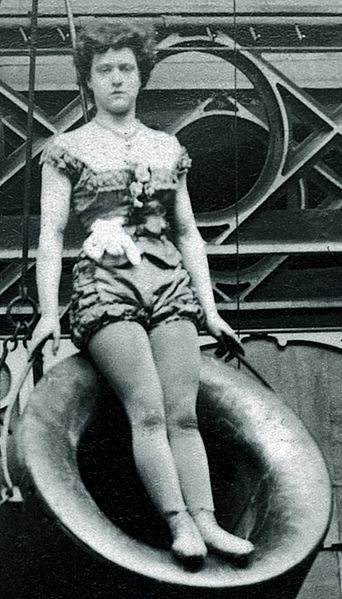
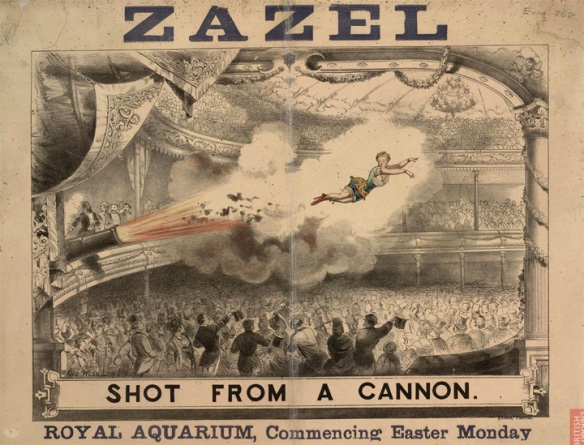
On this day in history : 10th April 1877 – 14-year-old Rossa Matilda Richter, using the stage name ‘Zazel’, performs the first human cannonball act in London….

img_2791
Public domain

Rossa was born into a family of acrobats in Lambeth, London in 1863….her parents having come to live in England from Dresden…. Her father was a well-known agent, supplying performers and animal acts to circuses and shows – whilst her mother was a dancer in a circus….

At the age of 4 or 5 Rossa started a career on the stage…. She took up ballet lessons and gymnastics and by the time she was 6 she was performing as a trapeze artist with the stage name ‘La Petite Lulu’….

When she was aged 12 Rossa joined an acrobat troupe that took her to Dublin, Marseilles and Toulouse…. It was whilst performing in Toulouse that she had an accident and subsequently returned home to London….

Rossa had come to the attention of Canadian daredevil William Leonard Hunt – ‘The Great Farini’….known for his death-defying stunts and particularly his high wire acts – such as his crossing of Niagara Falls…. It was he who conceived the idea for the human cannonball act…. In the beginning he used his stepson as the ‘cannonball’; the boy, dressed as a girl, wowed the crowds and the act became extremely popular…. Only after a serious accident that hospitalised the boy was his true identity revealed….

Farini needed a new ‘cannonball’….he had been hired by the Royal Aquarium in London to attract visitors…. Rossa’s father was very protective and swore that his daughter was not going to be used in one of Farini’s dangerous performances…. However, her mother had no such qualms and tricked Rossa’s father into signing an agreement with Farini – saying the contract was with someone else and that Rossa would just be singing and dancing….

Performing as ‘Zazel, the Beautiful Human Cannonball’ Rossa became an overnight success….thousands flocked to see her…. In the words of the Mackay Mercury “hurled from the jaws of death into the arms of fame”….and from the ‘jaws of death’ indeed it must have seemed…. The cannon operated using rubber springs, accompanied by a gunpowder explosion for effect only….the contraption was extremely temperamental and Rossa would have had no way of controlling her flight or landing…. A great deal depended on luck that she landed in the net….

img_2792
Public domain

So popular was her act that often she would perform in front of 20,000 spectators and sometimes twice a day…. Even the Prince of Wales, the future King Edward VII attended her performance twice…. Wearing a skimpy costume she cut a fine figure and souvenir photographs sold well…. Rossa was soon earning £200 a week – a considerable amount of money at the time…. So successful was the show the Aquarium extended its run….

img_2793
Public domain

Rossa went on to perform across Europe, adding more awe-inspiring acts such as high dives…. Eventually she went on to join Barnum’s Circus and ended up marrying its manager George Oscar Starr….

Although she suffered accidents nothing was as catastrophic as to harm her career….but all that was to change whilst performing in New Mexico…. Rossa was balancing on a high wire situated 40ft above the ground – when she fell…. She landed on her hands and knees – and broke her back….

Rossa spent several months in a body cast….she did recover – but was not to perform again….