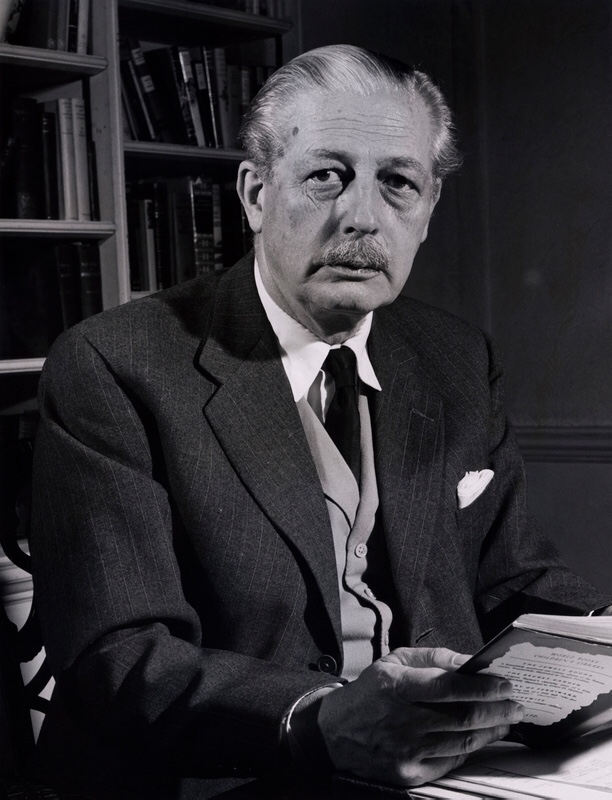
On this day in history….3rd January 1946

On this day in history : 3rd January 1946 – The execution for treason of William Joyce – the Nazi propaganda broadcaster, known to the British public as ‘Lord Haw-Haw’….
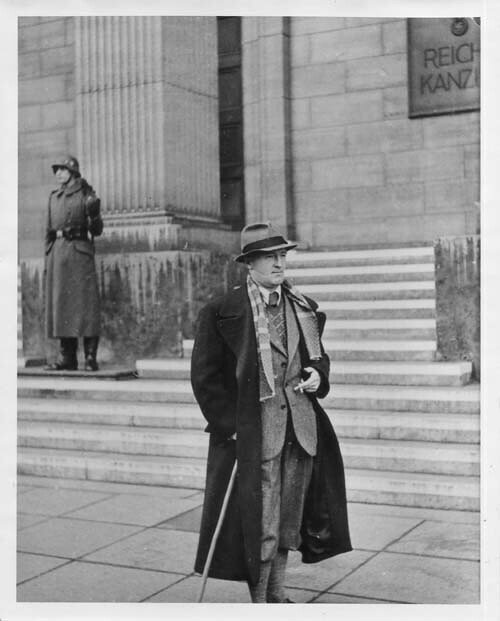
img_5345
Photograph of Joyce taken some time between 1939 & 45 – No known copyright restrictions – Archives of the Law Society via Flickr

‘Haw-Haw’ was a term first coined by Jonah Barrington of the Daily Express…. It actually referred to a number of announcers, with their exaggerated English accents, broadcasting during WW2 to the United Kingdom from the German radio station ‘Reichssender’, in Hamburg…. However, in time the name was to become primarily associated with Joyce….

Broadcasts would always start with “Germany calling, Germany calling”…. The aim was to attempt to break the morale and spirit of the British people – along with that of the allied troops…. Inaccurate reports of the sinking of ships and the shooting down of aircraft…. Urging the British to surrender – attacking the government and the British way of life…. Of course, most people knew it was propaganda – but at a time of heavy censorship it was often used as a way to try and find out information as to what may have become of a missing loved one…. Whilst not illegal to listen to the broadcasts it was discouraged – despite this some 18 million people in Britain are believed to have listened on occasion….
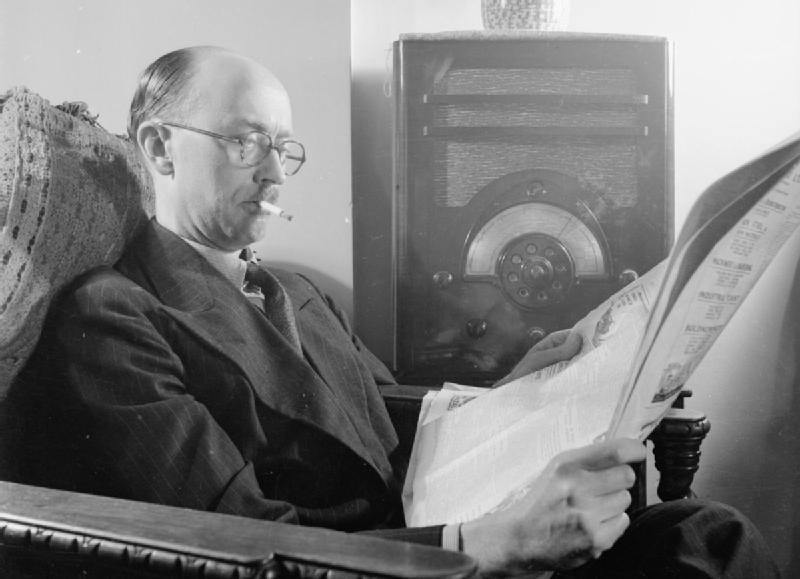
img_5347
From the collections of the Imperial War Museums

So, how did the likes of Joyce come to be working for the Germans during the war? To understand this it is necessary to learn more about the background of the man….

William Brooke Joyce was born on the 24th of April 1906, in Brooklyn, New York…. He was the son of immigrants – his father was Irish and his mother Anglo-Irish…. When Joyce was 3-years-old the family returned to live in Galway, Ireland….

In 1921, during the Irish War of Independence, Joyce was recruited as a courier by Captain Keating of British Army Intelligence, in the fight against the IRA…. After an attempted assassination on him Joyce was taken to England for his safety…. He was recruited into the Worcester Regiment – but soon discharged after it was discovered he was underage….

Joyce remained in England and finished his education at Kings College School, Wimbledon…. He then studied at Birkbeck College – part of the University of London – graduating with a first-class honours in English…. After being turned down for a position with the Foreign Office he took a job as a teacher….

He began to take a keen interest in Fascism…. It was on the 22nd of October 1924, whilst attending a meeting for Jack Lazarus, Conservative candidate for North Lambeth, that Joyce was attacked by Communists…. He received a deep razor slash across his right cheek, leaving him with a prominent scar from his ear lobe to his jaw….

Joyce took a paid job in the British Union of Fascists (BUF), under Sir Oswald Mosley – and in 1934 he was made Director of Propaganda…. It was after being sacked by Mosley in 1937 that he joined a splinter group, the National Socialist League…. On learning that the British authorities intended to arrest him Joyce fled with his wife in August 1939 to Germany – just before the outbreak of WW2…. He became a naturalised German citizen in 1940 and managed to get a job at the Rundfunkhaus (the German equivalent of Broadcasting House)…. Here he made radio announcements and wrote scripts – but he was to go on to become the best-known of the propaganda broadcasters….
img_5346
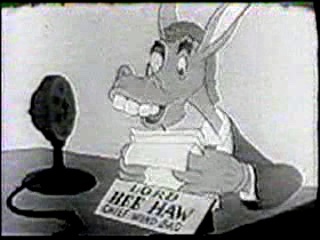
Still frame from 1943 – Allied propaganda cartoon – ‘Tokio Jokio’ – depicting Joyce as Lord Haw-Haw – ‘Lord Hee-Haw, Chief Windbag’

His final broadcast was made on the 30th of April 1945, during the Battle of Berlin…. He finished the broadcast with “Heil Hitler and farewell” – the following day Radio Hamburg was seized by the British – but Joyce had managed to make his escape….

Nearly a month later, on the 28th of May, Joyce was captured at the German/Danish border by British intelligence officers…. During his arrest he was shot through the buttocks – as he had gone to his pocket to produce his false passport but the officers had believed him to be armed….
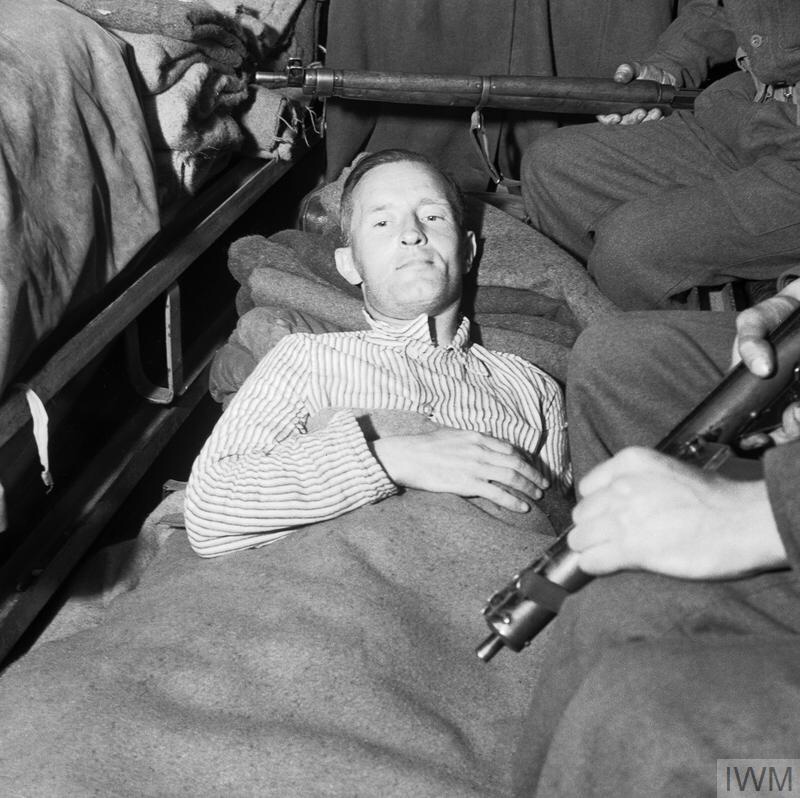
THE CAPTURE OF WILLIAM JOYCE, GERMANY, 1945
THE CAPTURE OF WILLIAM JOYCE, GERMANY, 1945 (BU 6910) William Joyce lies in an ambulance under armed guard before being taken from British 2nd Army Headquarters to hospital. He had been shot in the thigh at the time of his arrest. Copyright: � IWM. Original Source: http://www.iwm.org.uk/collections/item/object/205192927

Initially it was thought that due to his American nationality Joyce would have to be acquitted – it was reasoned that he could not be convicted of treason against a country that was not his own…. However, at his trial it was successfully argued that since he had obtained a British passport, by not revealing his true nationality, he had in fact had allegiance to the King and country whilst the passport was valid – and this happened to be the period of time during which he was working for Germany…. Joyce was convicted and sentenced to death on the 19th of September 1945….

The sentence was upheld on the 1st of November 1945 after an appeal – and he was executed at Wandsworth Prison on the 3rd of January 1946 by hangman Albert Pierrepoint…. As he went to the gallows Joyce was unrepentant – as he fell the pressure from the drop split the old scar on his face wide open….

Joyce was buried in an unmarked grave within the prison walls but – after a long campaign by his daughter – in 1979 his body was reinterred in Galway, Ireland….
On this day in history….1st November 1993

On this day in history : 1st November 1993 – The Maastricht Treaty (officially known as the Treaty of European Union) comes into force….

img_4442
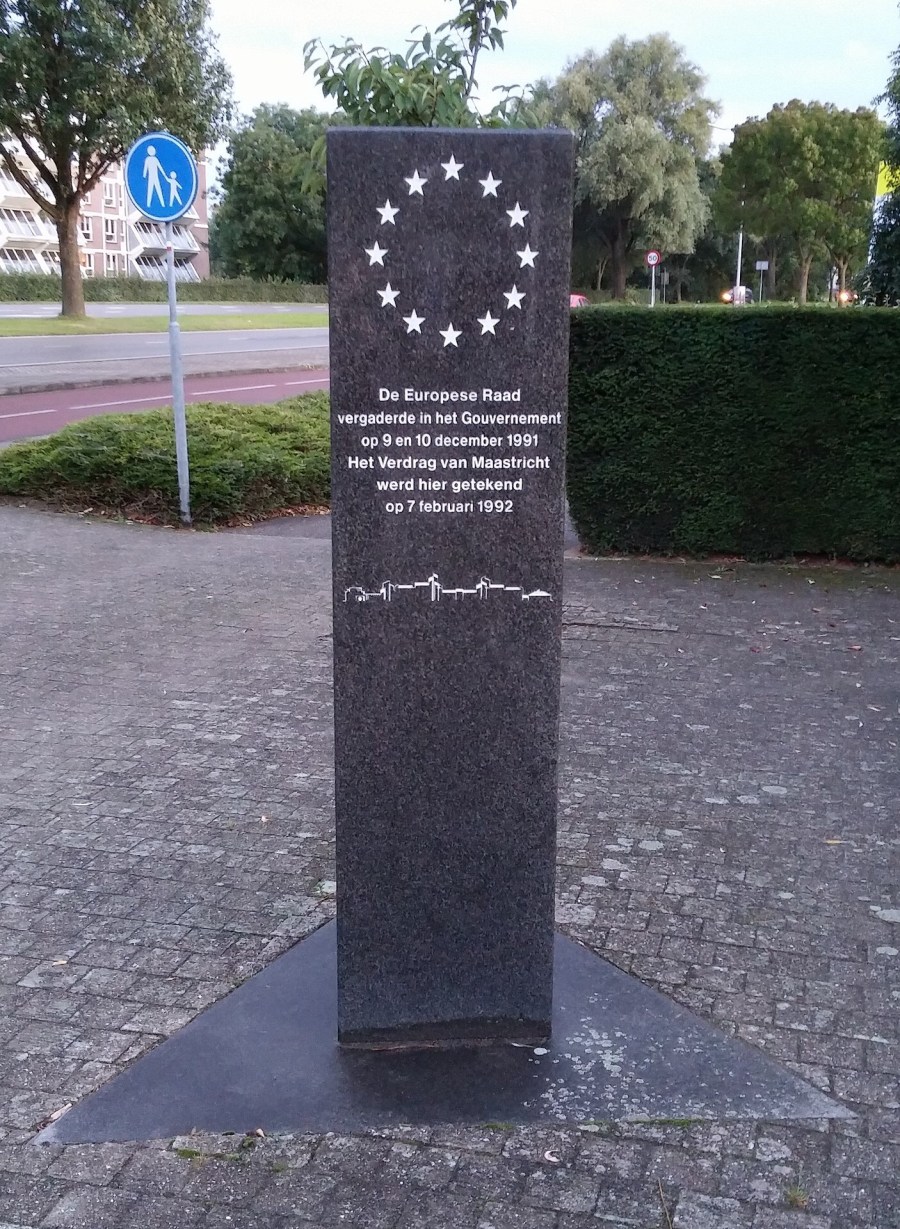
Memorial situated in front of the Limburg Province government building, Maastricht, Netherlands – commemorating the signing of the Treaty – Image credit : Dozura CC BY-SA 4.0

The Treaty marked the beginning of a new stage in the creation of a closer union amongst European countries…. After being involved in two world wars, in the first half of the 20th century, Europe needed a way to secure peace and facilitate economic development…. In the 1950s the European Community (EC) was established; three organisations were set up – the European Coal and Steel Community (ECSC), the European Atomic Energy Community (EAEC) and the European Economic Community (EEC)…. Six nations came together to sign the Treaty of Paris in 1951 to establish the Community;- France, Belgium, The Netherlands, Italy, Luxembourg and West Germany….

img_4445

The Maastricht Treaty was signed on the 7th of February 1992 reforming the structure of the EC…. The Treaty was signed by 12 countries, the original 6 plus Spain, Portugal, Greece, Denmark, Ireland and Great Britain….and was the first step in the commitment to strengthen the bond within Europe, by integrating and uniting member states…. It granted EU citizenship to everyone with a citizenship of a member state – allowing free movement between states and the entitlement to run for local European Parliament elections, in whichever country of the EU they reside in, regardless of nationality….

img_4443

It meant a closer co-operation between the police and judiciary of the member states, creating a unified security policy and covering matters such as the environment and social policy…. It also laid the foundations for the formation of the single currency (the Euro) and establishment of the European Central Bank as a central banking system….

The Maastricht Treaty has been amended by other treaties….but since it first came into force a further 16 countries have joined the EU…. And as we all know….one country has now become the first member to leave….

img_4444

On this day in history….3rd September 1954

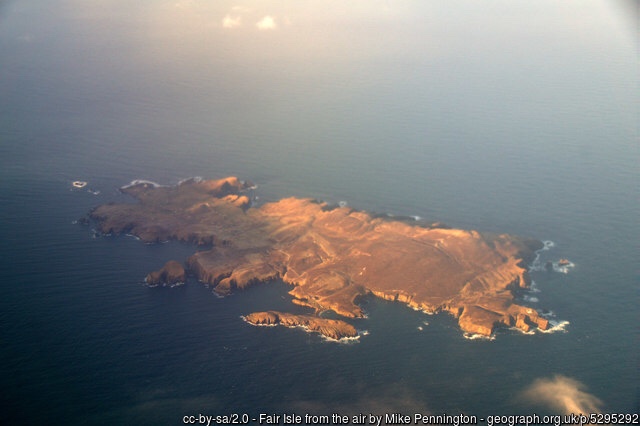
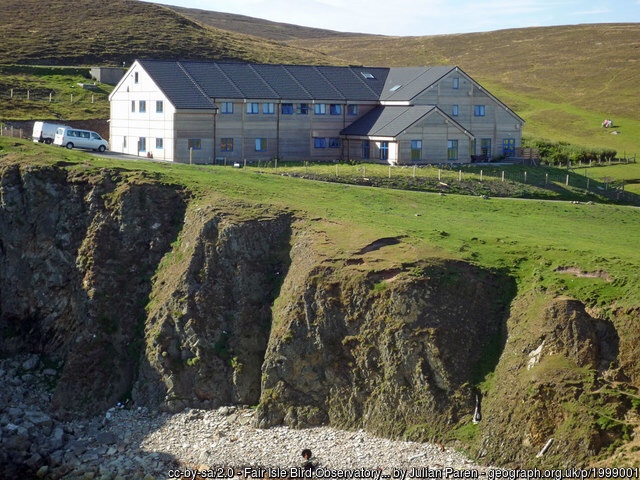
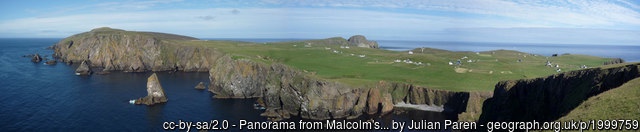
On this day in history : 3rd September 1954 – The National Trust buys Fair Isle, the remote island situated between Shetland and Orkney, in a bid to help secure its future….img_3803

Fair Isle, which is just 3 miles long and 1.5 miles wide, is probably the most remote inhabited island of the British Isles…. and is located 24 miles from the Shetland mainland…. The population of around 60 mostly live on the south end of the island; there is a shop, a community hall, a fire station and a primary school – which typically has between 5 and 10 pupils at any one time…. Older children generally tend to receive their secondary education off the island….


Fair Isle is not connected to the National Grid – but has its own Fair Isle Electricity Company…. From the 1980s this consisted of two diesel generators and two wind turbines…. Since 2018 24-hour electricity has been supplied by three wind turbines, solar panels and batteries….

img_3804

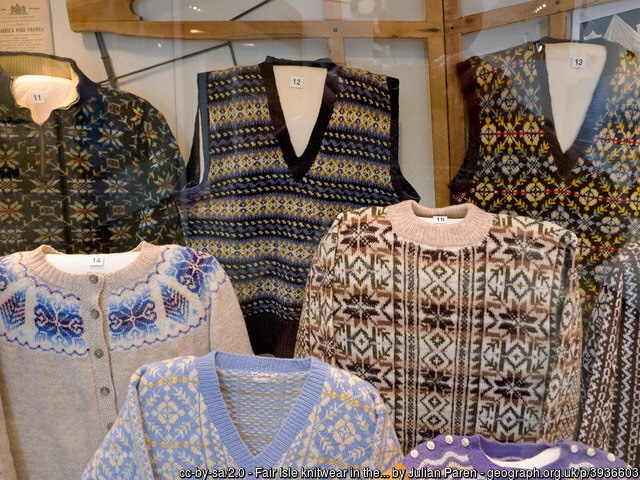
The main occupations of the islanders include fishing and crofting – and of course the island is famous for its Fair Isle knitwear….which was made popular in the 1920s by the Prince of Wales, who frequently wore a Fair Isle jumper whilst playing golf….img_3805

Ownership of the island had changed hands many times over the centuries; in 1900 it had a population of around 400 – but this number was to dramatically dwindle…. From 1948 Fair Isle belonged to George Waterson, an ornithologist from Edinburgh – and it is he who set up a bird observatory, which became recognised worldwide…. Fair Isle is home to many rare species of birds…. Using a grant of £5,000 from the Dulverton Trust the National Trust bought the island with plans to continue research into migratory bird life…. At the time of the National Trust taking on ownership the population of Fair Isle had fallen to an all-time low, with just 45 inhabitants…. In 1956 a conference organised by the National Trust was held on the island to discuss ways of saving its economy…. Nowadays tourism plays a major part….img_3802

In 2010 a new observatory was built at a cost of £4m, consisting of a two-storey wooden lodge, capable of accommodating 30 guests…. It even boasted a small bar for the evenings – no doubt proving popular as there is no public house on the island…. Tragically this new observatory was destroyed by fire on the 10th of March 2019…. But the people of Fair Isle are resilient – plans are already well underway and all efforts are being made to reopen in 2021….img_3806


On this day in history….13th April 1570

On this day in history : 13th April 1570 – The birth of Guy Fawkes – who as a member of a provincial group of English Catholics was to take part in the failed Gunpowder Plot of 1605….

img_2831
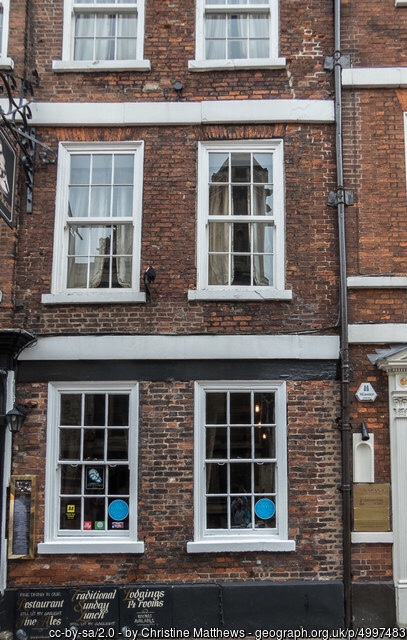
Birthplace of Guy Fawkes – 25, High Petergate, York – now the Guy Fawkes Inn public house

Guy was born in Stonegate, York – the second of four children, one of whom died – but he had two sisters, Anne and Elizabeth, who survived into adulthood…. His father, Edward Fawkes, worked as a Proctor for the Church and although his mother, Edith, came from a recusant Catholic family she too attended Church of England services….img_2830

When Guy was just 8-years-old his father died, leaving his son an estate in Clifton, York as an inheritance…. Edith remarried a few years later, this time to a Catholic, Dionis Bainbridge; it was around this time a now teenage Guy converted to Catholicism…. Although undoubtedly influenced by his step father it is likely that Guy was encouraged at school in his Catholic beliefs…. He attended St. Peter’s School in York where the Head Master, John Pulleyn, came from a family of strong Yorkshire recusants…. Also a governor at the school had spent 20 years imprisonment for recusancy…. It was a crime to be a Catholic in the time of the reign of Queen Elizabeth I….although there were those who refused to attend Anglican services and stayed loyal to the Pope….

On leaving school Guy went into service, working for Anthony Browne, 1st Viscount Montagu….but who took a dislike to the young Fawkes and so dismissed him…. In October 1591 Guy decided to sell his inherited estate and travel to the continent to fight for Spain in the Eighty Years War against the Dutch Republic….

img_2826
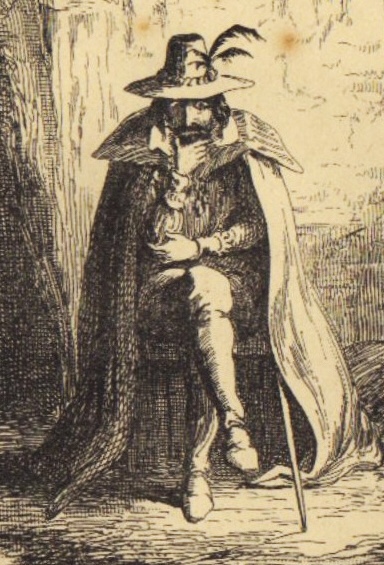
Guy Fawkes as depicted by George Cruickshank – Public domain

He was to join Sir William Stanley, an English Catholic who had formed an army in Ireland to fight in the Netherlands…. Guy became a junior officer, taking part in the Siege of Calais in 1596 – and worked his way up through the ranks to gain a Captaincy…. Whilst in Flanders he met a disgruntled Englishman by the name of Thomas Wintour, who persuaded him to join a small band of angry Catholics planning a rebellion….

It was around this time that Guy became known as ‘Guido’ – the Italian version of his name….

img_2828
Signature of “Guido” Fawkes – note the top example – this was made soon after his being tortured after the failed Gunpowder Plot…. Public domain

He travelled to Spain in an attempt to gain support for the English Catholic rebellion – and managed to secure an audience with the Spanish King…. Whilst politely listening to what ‘Guido’ had to say – that the newly crowned King James I was a heretic (and he also denounced Scotland plus all those favoured by the King) – Philip III offered no help; Spain was not going to declare war on England….

img_2827
Contemporary engraving of 8 of the 13 conspirators – Crispijn van de Passe the Elder – Public domain

In 1604 as part of a group of 13 English rebellious Catholics, led by Robert Catesby, who conspired to assassinate the Protestant King James, Guy helped hatch the plans for the Gunpowder Plot – and we all know where that led….

img_2829
Children preparing for Guy Fawkes night celebrations (1954) – Geoff Charles CCO

On this day in history….3rd February 1960

On this day in history : 3rd February 1960 – Prime Minister Harold MacMillan makes his famous ‘Wind of Change’ speech against apartheid, angering some South African politicians….

img_5877
Harold MacMillan in 1959 – Public domain

MacMillan had been in South Africa for over a month visiting the then British colonies, including Ghana and Nigeria…. He chose to give his speech whilst addressing the South African Parliament in Cape Town, making it clear that South Africa was included in the views of the British government…. What he had to say did not come as a total surprise as he had hinted he was going to use the opportunity to voice his opinion about the situation in South Africa….

“The wind of change is blowing through this continent, whether we like it or not, this growth of national consciousness is a political fact. We must all accept it as a fact, and our national policies must take account of it”….

img_5875
MacMillan meeting Ghanaian leader Prempeh II – The National Archives UK – OGL v1.0

MacMillan’s speech was the first time a senior international representative had publicly voiced disapproval on South Africa’s racial segregation laws…. It made it clear the UK government was not going to prevent the independence of its own territories and recognised that the people had the right to claim the governing of their countries for themselves…. It was the responsibility of the British government to promote the equal rights of all the individuals concerned…. As this was something MacMillan envisaged for the whole of the Commonwealth he urged South Africa to move towards racial equality….

South African Prime Minister Hedrick Verwoerd thanked MacMillan for his speech but added that he disagreed, claiming it was white South Africans who had brought civilisation to the country….

“To do justice in Africa means not only being just to the black man of Africa, but also to the white man of Africa”….

img_5876
The National Archives UK – no restrictions

It was the first time Britain had acknowledged the black nationalist movements in Africa…. Nationalist Party politicians were outraged by the speech…. However, it opened the way for international opposition to the apartheid system…. A month later the Sharpeville Massacre caused so much revulsion worldwide that South Africa faced exclusion and trade sanctions….

It took a further 30 years for South Africa to finally begin to disband its apartheid laws, under President de Klerk…. Nelson Mandela was released in 1990 and became President of South Africa in May 1994….