On this day in history….9th March 1946

On this day in history : 9th March 1946 – Barriers collapse at an overcrowded football match at Burnden Park, home to Bolton Wanderers…. 33 fans are killed and hundreds more are injured….

The match was between Bolton Wanderers and Stoke City…. At 2.40pm the decision was taken to close the turnstiles as the ground had already filled to over-capacity…. But still the crowds came in, climbing over the turnstiles…. Then somebody – wanting to escape the crush – pricked the lock of a gate….as it opened more and more people poured in…. It is estimated 85,000 were packed into the ground – which should have had no more than 70,000….

A quarter of an hour after the game had started the crowd began to spill onto the pitch – play was temporarily stopped whilst the pitch was cleared…. It was just after then that two barriers collapsed and the crowd surged forwards….those knocked to the ground were crushed….

img_2532
Women and children being passed over the heads of the crowd during the crush – Fair use

The game had restarted – but a police officer went to speak to the referee, George Dutton, to explain there had been fatalities…. At that point the players returned to the dressing rooms….

The injured were removed from the crowd and the dead were lain along the touch-line and covered with coats…. A new touch-line was marked out with sawdust – and less than half an hour after leaving the pitch the players returned to restart the game! Just a line of sawdust separating them from the bodies….

At the end of the first half the teams swapped ends and immediately started the second half…. The match ended goalless…. Stanley Matthews, who was on the Stoke team, later said he was sickened that the game was allowed to continue….

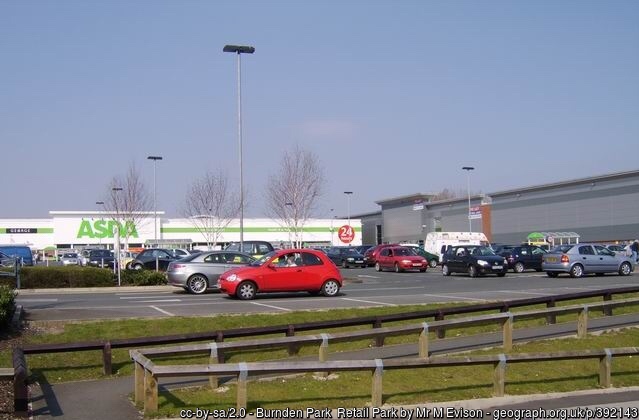
Until the Ibrox Park disaster in 1971 Burnden Park was the deadliest stadium disaster in British history…. 33 dead, including one woman and over 400 injured…. Bolton played their last game there in 1997, before moving to a new stadium…. It was demolished in 1999 and the site is now occupied by a supermarket….

img_2531

img_2530
Image credit: Bradford Timeline via Flickr

On this day in history….8th March 1859

On this day in history : 8th March 1859 – The birth of Kenneth Grahame, the Scottish author who brought us tales of Toad, Ratty, Mole and Badger in ‘The Wind in the Willows’….

img_2527
Image credit : Paul K via Flickr

Kenneth was born in Edinburgh; his mother died when he was just 5-years-old. His father, an alcoholic, gave up the care of his children to their grandmother…. Kenneth, his brother, sister and a new baby went to live with ‘Granny Ingles’ near to Cookham, Berkshire….

It was a large tumble-down house – in a certain state of neglect – but it had a big rambling garden and was near to a river…. The children’s uncle, David Ingles – curate of the village church – introduced them to the delights of the riverbank and boating…. It was an idyllic place for a childhood and believed to be the setting for ‘The Wind in the Willows’…. Eventually though the family had to move, as the chimney stack of the dilapidated old house collapsed….

Kenneth had wanted to go to Oxford University – but because of finances this was not possible…. Instead he started work in 1879 at the Bank of England…. He worked his way up and by the time he retired (due to ill-health) in 1908 he had risen to the position of Secretary of the Bank of England….

In 1899 Kenneth married Elspeth Thomson – and the following year they had a son…. Alastair was born premature, he was blind in one eye and suffered from health problems throughout his life….

On retirement Kenneth took his family back to live where he had spent his childhood – Berkshire…. At his son’s bedtime he would tell the boy stories and it was then that the characters of ‘The Wind in the Willows’ were created…. Toad was based on Alastair himself – whilst Ratty was influenced by Kenneth’s good friend and fellow writer, Sir Arthur Quiller-Couch…. Kenneth frequently went on boating holidays – without his family – but when he was away he would write home to Alastair with more tales of Toad, Ratty, Mole and Badger…. Later he was to use theses stories as a basis for his book, which was first published in 1908….

img_2528
Ratty and Mole – Image credit : Amber Case via Flickr

Tragically, on the 7th of May 1920 Alastair committed suicide on a railway line…. It was five days before his 20th birthday – he was an undergraduate at Oxford University…. Out of a mark of respect to his parents the death was recorded as accidental….

Kenneth himself died in 1932 in Pangbourne, Berkshire. English novelist and playwright Anthony Hope – who happened to be Kenneth’s cousin – wrote his epitaph….

‘To the beautiful memory of Kenneth Grahame, husband of Elspeth and father of Alastair, who passed the river on the 6th of July, 1932, leaving childhood and literature through him the more blest for all time’….

On this day in history….6th September 1952

On this day in history : 6th September 1952 – A de Havilland jet fighter disintegrates at the Farnborough Air Show – 31 people, including the pilot and the onboard flight test observer, are killed….

The prototype De Havilland DH.110 – Image : USN – US Navy Naval Aviation News July 1952 – Public domain

Pilot John Derry and flight observer Anthony Richards had collected the DH.110 prototype aircraft from de Havilland’s factory at Hatfield, Hertfordshire and had flown it to Farnborough, arriving just in time for their slot in the airshow’s schedule…. The plan had been to fly another prototype which had been used for the airshow the previous day – but it had developed technical faults…. The September 6th de Havilland display had nearly been cancelled….

Derry had been the first pilot in Britain to exceed the speed of sound, when flying a DH108 research aircraft in 1948…. During the performance at Farnborough he flew the DH110 in a supersonic dive, creating a sonic ‘boom’ and continued on a fly past at 40,000 feet…. He then completed a left bank, travelling at around 520mph and flew towards the 120,000 spectators at the airshow…. Next he pulled the jet into a climb – but within a second the aircraft had disintegrated – the outer wing sections, both engines and the cockpit separating from the airframe…. The cockpit landed, with both men still inside, in front of the crowd near to the runway – several spectators were injured….

Pilot John Douglas Derry – National Library of Australia – Public domain

One engine crashed harmlessly…. The other carried on and ploughed into the crowd that had gathered on ‘Observation Hill’ – a vantage point outside of the airfield used by many locals to watch the display…. It was here that most of the fatalities occurred….

The emergency services were on the scene within minutes and after only a short break the air display continued! In total 31 people lost their lives, with many more injured….

On this day in history….31st July 1947

On this day in history : 31st July 1947 – The birth of English actor Richard Griffiths – perhaps best known for his role as Vernon Dursley in the Harry Potter series of films….

Richard Griffiths at the 61st British Film Academy Awards, 2007 – Image credit : S Pakhrin CC BY 2.0

Richard was born in Thornaby-on-Tees, in the North Riding of Yorkshire…. His father was a steel worker who also took part in paid fights in pubs…. He and Richard’s mother had three other children, a daughter and two sons but all had died before Richard came along…. Richard’s parents were both deaf and mute, he grew up adept in sign language…. There was no TV or radio in the house – his was a very quiet childhood….

Richard left school at 15 – but returned to education to study drama at Stockton and Billingham College…. He then went on to the Manchester Polytechnic School of Drama…. Initially he kept all this a secret from his father – who was furious when he did eventually find out….

Following his graduation Richard landed a contract with the BBC for their Radio Drama Company…. He was then to join the Royal Shakespeare Company and was a natural in the comic roles, such as Falstaff…. He came to the attention of Trevor Nunn, the then RSC artistic director….

Richard’s early TV career saw him with small roles in ‘Minder’, ‘The Sweeney’, ‘Bergerac’ – amongst others…. He also had small parts in films such as ‘Chariots of Fire’, ‘Superman II’ and ‘Gandhi’…. His breakthrough came as Uncle Monty in 1987’s ‘Withnail and I’….Another of his best known characters was that of the disillusioned Inspector Henry Crabbe, a role made especially for him…. ‘Pie in the Sky’ ran between 1994-1997 and was about a policeman who was rather discontent with his work and between getting into scrapes and solving cases had a sideline of being the most amazing pie chef in his wife’s restaurant….

fair use

A role as a ‘foodie’ suited Richard – as he was known for his rotund girth…. But he had actually started out skinny and underweight…. At the age of 8 he had been given treatment for his pituitary gland – and within a year had gained 60% more body weight…. He was picked on by his school mates but was more than capable of standing up for himself….

Richard met Irish actress Heather Gibson in a production of ‘Lady Windermere’s Fan’ – and they were married in 1980…. They were to have no children – but Richard was Godfather to comedian Jack Whitehall….

Many will associate Richard with the Harry Potter films…. He played the part of Uncle Vernon, married to Harry’s aunt Petunia and having grudgingly raised Harry from an early age was certainly not very nice to him…. He never explained to the boy how his parents had died or told him about the magical world….

When performing on stage Richard was not adverse to showing his displeasure towards the audience if his performance was disturbed – especially by a mobile phone…. In 2005 he ordered a man out of London’s National Theatre after his phone rang for a sixth time during a performance of Alan Bennett’s ‘The History Boys’ (a role for which Richard was awarded with a Tony Award in 2006)…. In November 2005, whilst he was on stage in London’s Wyndham Theatre, a woman’s phone kept ringing – after the third time Richard stopped and had her ejected, to a loud applause from the audience…. Again, during a performance of History Boys, this time in New York’s Broadhurst Theatre he thundered at a member of the audience after their phone rang for a third time….

Richard was awarded an OBE in 2008…. He died on the 28th of March 2013 at University Hospital, Coventry after complications following heart surgery….

Richard Griffiths and Danny DeVito in The Sunshine Boys, Savoy Theatre, London, July 2012 – Image credit : Chris Beckett via Flickr

On this day in history….29th February 1964

On this day in history : 29th February 1964 – Princess Alexandra, cousin to Queen Elizabeth II, gives birth to a son – believed to be the first ever Royal baby to be born on February the 29th….

img_6173
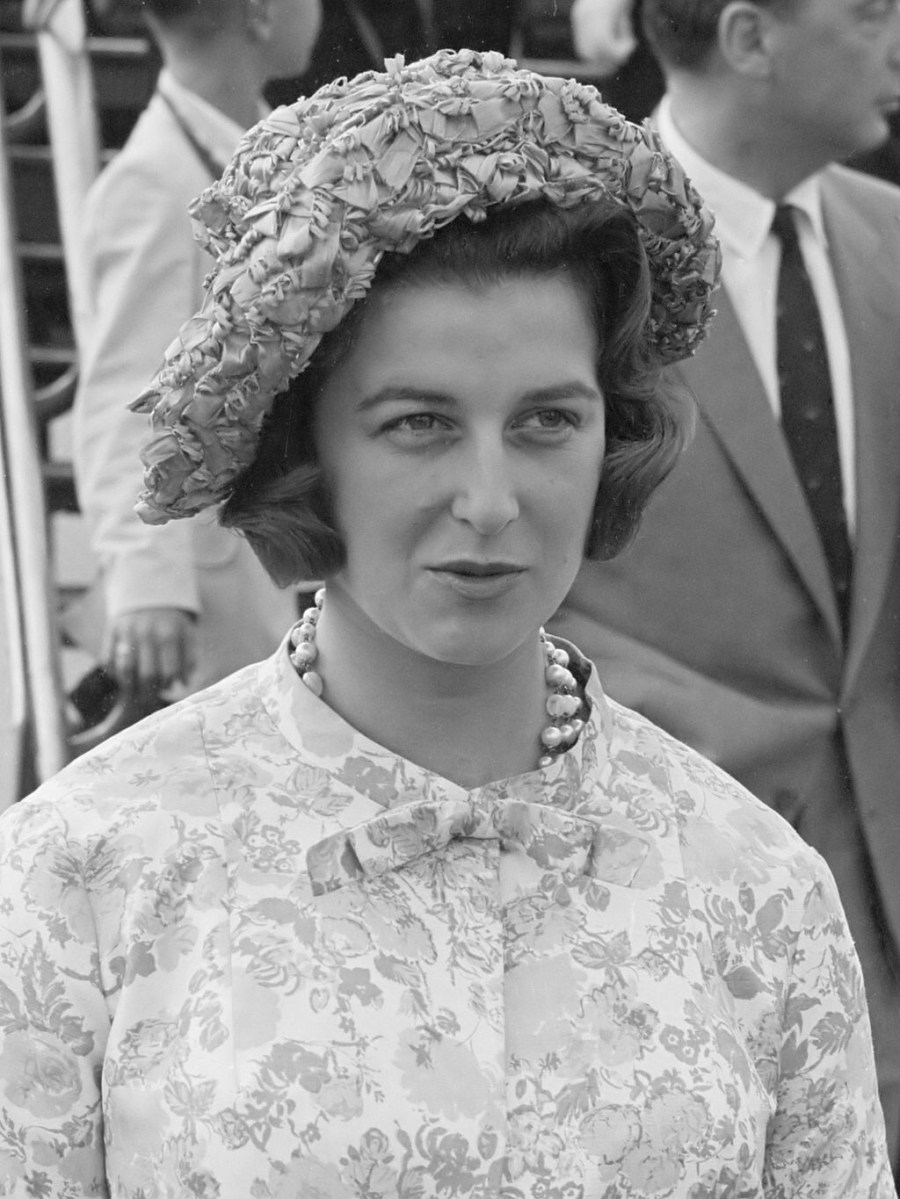
Princess Alexandra, June 1961 – Photo credit : Harry Pot – National Archief (Netherlands) CC BY-SA 3.0nl

Princess Alexandra gave birth at home in Richmond, Surrey; her husband, Angus Ogilvy, was with her and her mother, Princess Marina, was also at the house…. The 9lb 6oz baby boy was born at 12.15am and was a week overdue…. He was named James Robert Bruce and later christened in the chapel at Buckingham Palace…. Two years later he was to be joined by a sister, Marina….

Princess Alexandra’s baby was the first of four royal babies to be born within a matter of weeks of each other…. The Queen’s fourth child, Prince Edward, was born on the 10th of March….and her sister, Princess Margaret, had a daughter, Lady Sarah Armstrong-Jones, on the 1st of May…. Finally the Duchess of Kent had her second baby, Lady Helen Windsor, on the 28th of April….