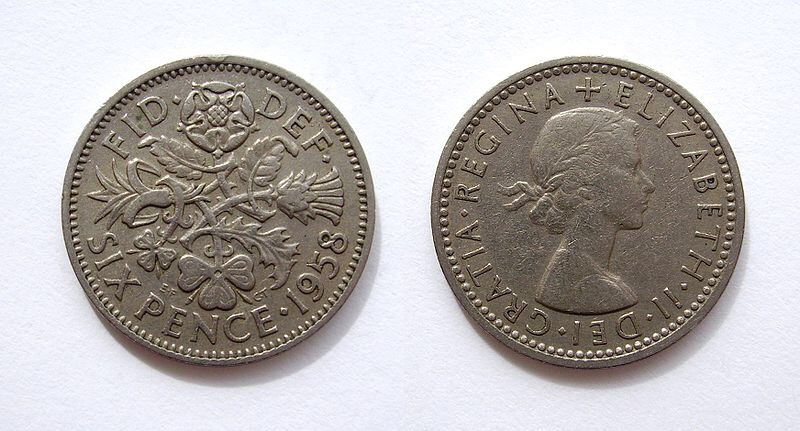
On this day in history….15th February 1971 – Britain wakes up to ‘D-Day’ and a new currency – over the next 18 months the old pounds, shillings and pennies are to be phased out….
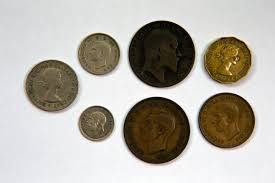
Known as Decimal Day it was the time to say goodbye to the currency system that had been with us for over 1,000 years…. the old system dated back to Roman times when a pound of silver was divided into 240 denarius – which is where we got the old ‘d’ for a penny….
12 pennies to a shilling, 20 shillings to a pound was to be replaced by 100 pennies to a pound instead of the 240 pennies people were used to…. It was to be out with the guineas, crowns, half crowns and threepenny bits….to be superseded by a system inspired by Napoleonic France….
The USA and France had gone decimal in the 1790s…. Britain had considered doing so during the 1820s but had not proceeded…. The closest we got was when a florin worth 2 shillings was introduced in 1849 – 24d or 10 new pence…. It was followed by a double florin in 1887….
In the 1960s a number of commonwealth countries had gone decimal including New Zealand, Australia and South Africa. Although previous British governments had shied away from taking the plunge – because of the amount of disruption it would cause – in the end it took a conversation lasting just 20 seconds, between the then Prime Minister Harold Wilson and Chancellor of the Exchequer Jim Callaghan, to start the ball rolling….
The decision was announced in Parliament in 1966 and a Decimal Currency Board was set up to manage the transition…. The DCB ran a public information campaign – and currency converters were made available to everybody….
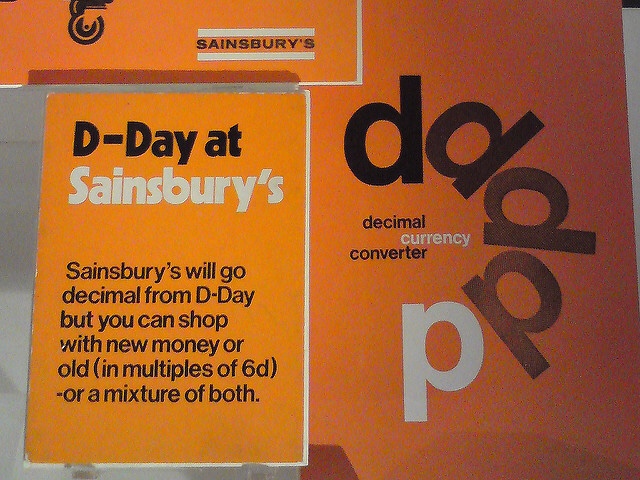
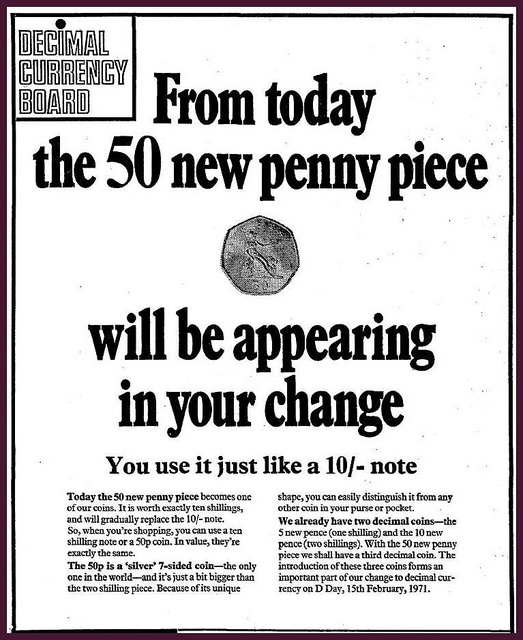
The first coins were introduced in 1968 with the new 5p and 10p pieces, which were the same size and value as the old shilling and two-shilling coins…. As it was engineered to be a gradual change-over a further coin was introduced in 1969 – the 50p – to replace the ten bob (shilling) note….

People referred to it as the ‘ten shilling coin’…. Then on Decimal Day itself, 15th February 1971, the last of the new coins were brought in – the 0.5p, 1p and 2p….
Banks closed for four days beforehand to prepare – and at first prices were shown in shops in both currencies….Some people had feared shopkeepers might use it as a way to increase prices…. The elderly generation especially found it more difficult to adapt….but generally the change-over went without a hitch….
The old penny, half penny and threepenny bit officially went out of circulation in August 1971….but there was one particular coin that stayed with us right up until 1980…. Such affection did the British public have for the sixpence that they campaigned to keep it….as it was deemed as being part of our heritage….