On this day in history….11th December 1967

On this day in history : 11th December 1967 – Concorde is rolled out of its hangar for its first public appearance….

Prototype Concorde 001 was revealed in Toulouse amid much pomp and ceremony, in front of some 1,100 guests from organisations such as the British Aircraft Corporation, Sud-Aviation, representatives of airlines who had already placed orders for the aircraft and ministers of state….

img_4832
Concorde 001 first flight, 1969 – Andre Cros CC BY-SA 4.0

Concorde’s first test flight was on the 2nd of March 1969…. Applause and cheers broke out from those watching as the Anglo-French supersonic airliner took off from Toulouse, at around 3.30pm, for the first time – piloted by test pilot Andre Turcat…. During the test flight the speed did not exceed 300 mph – and it stayed at a maximum altitude of 10,000 feet…. During commercial flights it would reach speeds of 1,350 mph – twice the speed of conventional aircraft – and would fly at a height of 60,000 feet….

img_4836
British Airways Concorde, 1986 – Eduard Marmet CC BY-SA 3.0

The first flight of the British prototype was made from Filton Airfield, near to Bristol – to RAF Fairford, Gloucestershire on the 9th of April 1969 and was piloted by Brian Trubshaw…. It was also in 1969 – on the 10th of October – that Concorde completed its first supersonic flight….

img_4833
Landing at Farnborough, September 1974 – Steve Fitzgerald GFDL 1.2

On the 21st of January 1976 Britain and France began their first regularly scheduled Concorde flights – with British Airways operating between London and Bahrain and Air France between Paris and Rio de Janeiro…. The London to New York service began on the 22nd of November 1977…. Concorde set itself a record on the 16th of December 1979 by completing the flight between New York and London in less than three hours….

It was on the 25th of July 2000 that Air France flight 4590 took off from Riossy Charles de Gaulle Airport, Paris….bound for New York…. Two minutes later it crashed – killing all 109 passengers and crew on board and 4 people on the ground…. As Concorde had reached take off speed it had struck a piece of metal debris on the runway – that had fallen from a plane that had taken off five minutes previously…. The metal strip caused one of Concorde’s tyres to burst….fragments of tyre hit the aircraft’s wing with such force that the fuel tank punctured…. Gases from the engines ignited the leaking fuel, causing a massive fire…. Concorde crashed into the Hotelissimo Les Relais Bleus Hotel, close to the airport….

France Concorde Crash
Flight 4590 during takeoff – Toshihiko Sato – Fair use

This was the first crash in Concorde’s 31 year history….it was considered to be among the safest of planes…. As a result of the crash all Concordes, both French and British, were grounded pending further investigations…. Commercial services were resumed in November 2001, after £71m being spent on safety improvements….

img_4835
Parade flight at the Queen’s Golden Jubilee, June 2002 – Bleiglass CC BY-SA 3.0

However, on the 10th of April 2003 British Airways and Air France announced the retirement of their Concorde fleets…. Higher maintenance and running costs – combined with lower passenger numbers, after loss of confidence following the 2000 crash – were blamed…. The final Air France flight took place on the 27th of June – whilst British Airways put on a farewell tour…. The last flight was made on the 24th of October 2003….

On this day in history….23rd August 1944

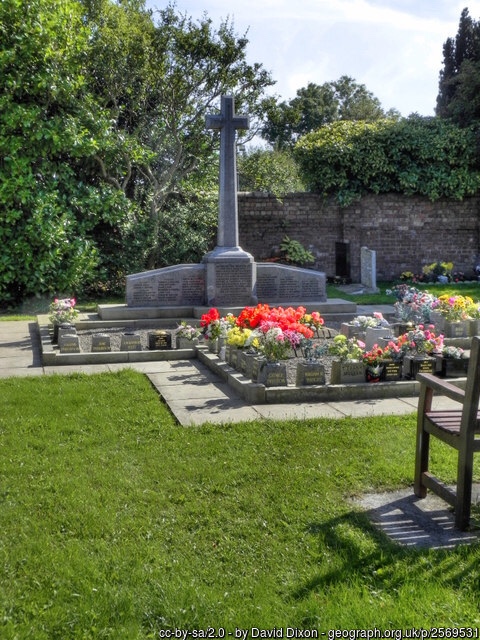
On this day in history : 23rd August 1944 – An American Liberator bomber crashes into an English village school in Feckleton, Lancashire – killing 61 people, 38 of whom are children….

Two recently refurbished B-24 bombers had departed from Warton Aerodrome at 10.30 in the morning on a test flight, when a violent storm blew up…. Both aircraft were recalled to the USAAF airbase and as they approached visibility was greatly reduced because of the torrential rain and 60mph gusts of wind….

img_3757
B-24H Liberator bomber – similar to the one that crashed. Image : United States Army Air Forces – Public domain

Pilot John Blosmendal, in the first of the two bombers, reported to the control tower that he was going to abort his landing attempt and would circle around again – only his aircraft was to disastrously crash into the Holy Trinity Church of England village school, which lay to the east of the airfield…. The right wing of the B-24 was ripped from the fuselage as it hit a tree-top; it then impacted with the corner of a building…. The fuselage of the 25-ton bomber then continued to plough a path of destruction, partly demolishing three houses and ‘The Sad Sack Snack Bar’ – which catered for the American servicemen stationed at the base…. The aircraft then burst into flames, whilst another inferno raged, caused by the ruptured fuel tanks of the bomber, at the infants school….

The Feckleton air disaster instantly claimed the lives of the B-24’s three crew members, thirty-four children, a teacher, six American servicemen, one RAF airman and seven staff at the snack bar…. A further four children, a teacher, an American serviceman and three RAF airmen died later in hospital – and many more people were injured….

img_3755
Feckleton Air Disaster Memorial and Remembrance Garden

On this day in history….22nd August 1985

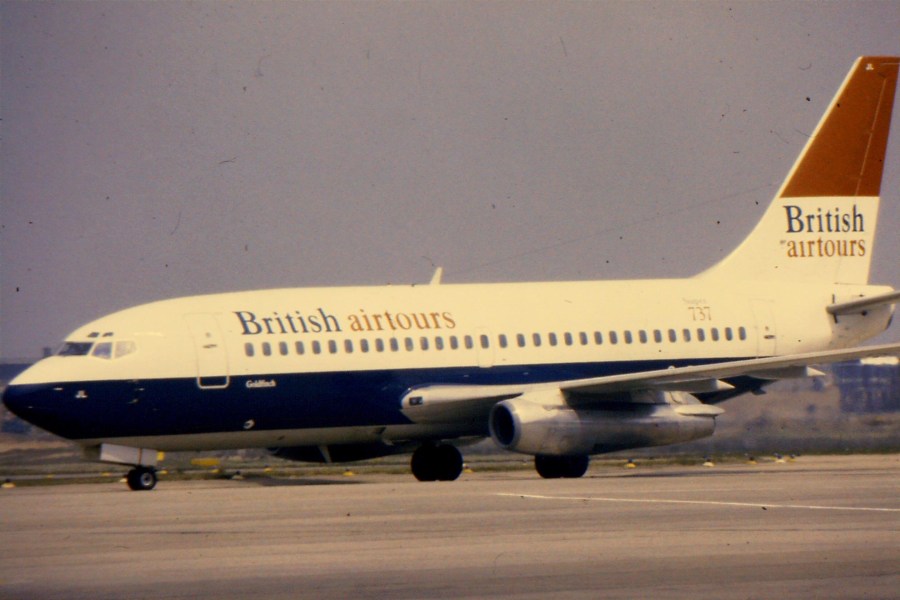
On this day in history : 22nd August 1985 – A British Airtours Boeing 737 catches fire during take-off from Manchester Airport bound for Corfu; 55 lives are lost….

img_3751
The aircraft involved – Image credit : G B_N Z CC BY-SA 2.0

British Airtours Flight 28M was full of holiday makers; 131 passengers, including 2 infants and 6 crew…. At 6.08am the engines started and all seemed normal – a request for clearance to taxi was made…. Once on the runway First Officer, 52-year-old Brian Love, requested take-off power and at 6.12am the take-off run began…. Twelve seconds later a loud thumping sound was heard; assuming it was either a burst tyre or bird-strike, 39-year-old Captain Peter Terrington immediately ordered the take-off to be aborted….

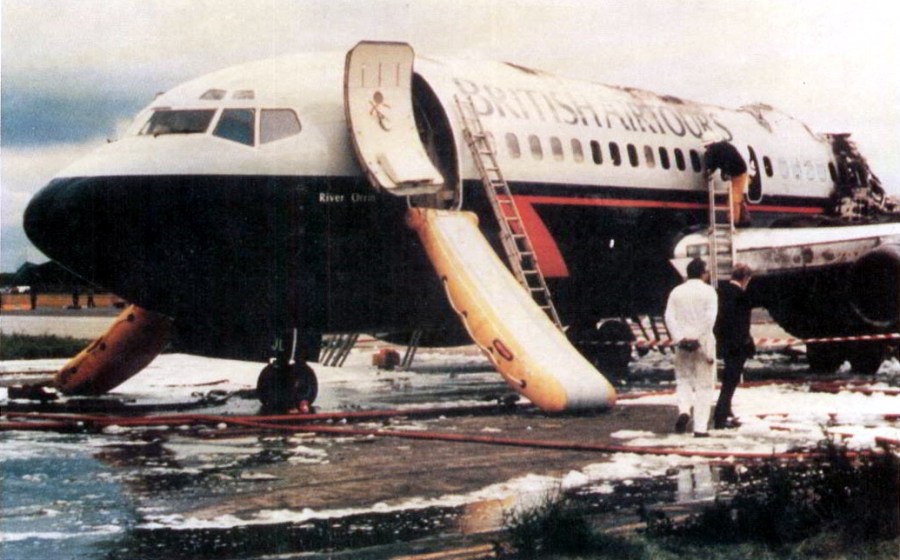
Unbeknown at the time to the crew No.1 engine, on the left hand side of the aircraft, had failed, resulting in an explosion…. In the process the underwing fuel tank, containing 4,590kg of fuel was struck; the leaking fuel ignited…. The fire warning signals were heard within seconds and the captain ordered evacuation of the aircraft, via the right-hand side exits…. However, the engine failure had caused the aircraft’s PA system to have a lower volume setting and many passengers did not hear the announcement….

The senior cabin crew member opened the door to release the inflatable escape slide – only for it to jam in the doorway…. He attempted to clear it but had to resort to opening the left-hand side exit – and was able to inflate the slide…. But by now the plane had filled with black smoke; passengers were unable to see – and panicked…. There was pushing, people fell and collapsed, blocking the aisle….while others clamoured over the seats…. There was simply not enough space inside the aircraft to allow people to reach the exits….

img_3752
Her Majesty’s Stationery Office (C) Crown Copyright 1989 OGL3

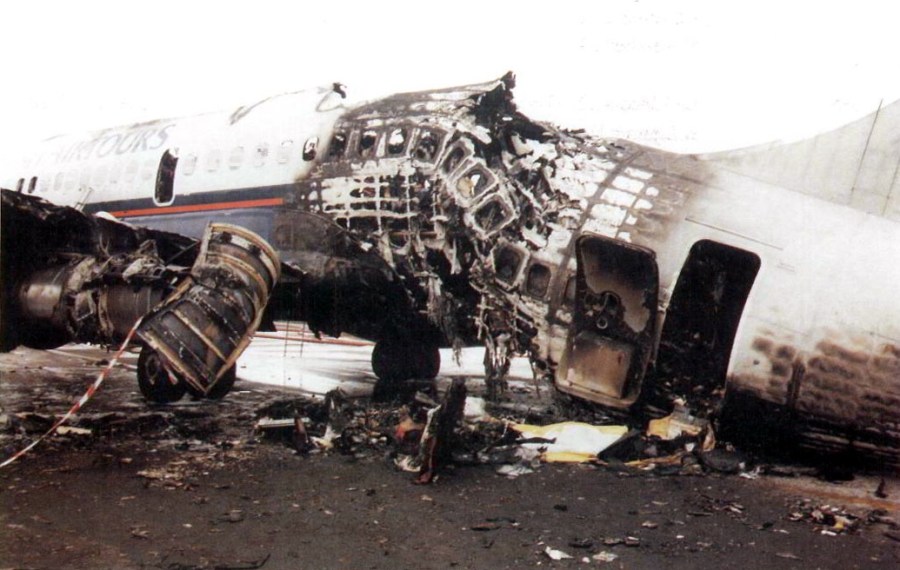
Meanwhile, on the ground another calamity was unfolding…. Fire crews battled to bring the flames under control but on attempting to refill their appliances found there was no water available…. The hydrant system at the airport was undergoing modification and the valves had been turned off, without the knowledge of the fire service….

img_3753
Her Majesty’s Stationery Office (C) Crown Copyright 1989 OGL3

This accident was one of the worst of its kind to happen in Britain…. Out of the 137 onboard there were just 82 survivors – most of the deaths were due to smoke inhalation…. In the aftermath changes were made across the air-travel industry; seating layouts near to emergency exits were changed – fire resistant seat covers, along with wall and ceiling panels were introduced…. Floor lighting was installed, more fire extinguishers made available onboard and clearer evacuation rules were devised….

img_3754
Her Majesty’s Stationery Office (C) Crown Copyright 1989 OGL3

On this day in history….27th July 1949

On this day in history : 27th July 1949 – The first jet-propelled airliner, the de Havilland Comet makes its maiden flight out of Hatfield Aerodrome, Hertfordshire….


The flight lasted for 31 minutes and was piloted by Chief Test Pilot John Cunningham – who was also known as ‘Cats Eyes Cunningham’ – having been a famous night-fighter pilot during World War 2…. He also flew the de Havilland Comet at the Farnborough Air Show in 1949 before the start of its flight trials….

img_3630
John Cunningham – RAF photographer – public domain

The de Havilland DH106 Comet was the world’s first commercial jet airliner…. With its four de Havilland Ghost turbo jet engines, the quiet, smooth, vibration-free flight that it gave – compared to that of other propellor airliners – was quite a novelty for passengers at the time…. The pressurised cabin, with its large, square, picture windows gave its passengers a feeling of comfort and luxury virtually unknown in travel at that time…. There was a galley that could serve hot and cold drinks and meals, separate men’s and women’s loos and individual life jackets underneath the seats as well as several life rafts stowed onboard….

However, in the first 12 months of service three aircraft were lost in highly publicised accidents – two of which were found to be caused by structural failure due to metal fatigue in the air-frame – causing the planes to break up….

The de Havilland Comets were taken out of service and largely redesigned…. The large square windows were replaced with smaller oval ones, as this was one area identified as a structural weakness….

Sales for the aircraft never truly recovered…. However, an improved Comet 2 and then Comet 3 resulted in the redesigned Comet 4, which made its debut in 1958…. This proved to be a highly successful aircraft, with over 30 years of service…. As well as being used as an airliner it was also adapted for military purposes – such as for VIP travel and medical transport….


img_3627

The flight deck of a Comet 4 – Geni CC BY-SA 3.0

On this day in history….6th June 1936

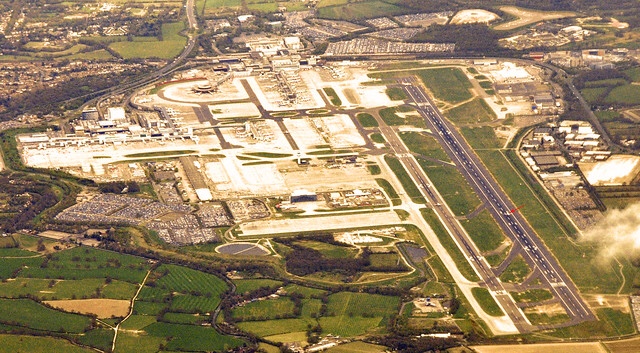
On this day in history : 6th June 1936 – Gatwick Airport, Britain’s second largest international airport and one of the biggest in the World, opens officially for scheduled flights….

img_3303Gatwick had first been established as an aerodrome in the 1920s…. In September 1933 it was bought by Morris Jackaman, who owned several light aircraft…. He purchased the airfield for £13.5K and the Air Ministry approved commercial flights….

Up until this time a converted farmhouse had served as the aerodrome building – but Jackaman planned a purpose-built terminal building…. In October 1934 he submitted plans and a patent for the design – a unique circular building – which became known as ‘The Beehive’…. Construction began in 1935 – the airfield closed briefly to allow for the building work, which was completed in 1936…. The contracted opening date had been for October 1935 but this date was missed due to ongoing drainage issues and to coincide with the timing of a new railway station….

The airport reopened officially in June 1936 – although some services, including flights to Paris, had resumed in the May…. Newly formed British Airways had made Gatwick its operational base in 1935…. Jackaman had floated his Company, Airports Ltd, on the Stock Exchange to raise money for the developments….

During World War 2 Gatwick was requisitioned for military use…. After the War it was decided the site should become London’s second official airport after Heathrow…. The decision was announced in July 1952 and a programme of large scale land acquisition began…. Roads were diverted and a new station and terminal building were built…. The Beehive, no longer part of the main complex, was used for helicopters for a few years afterwards but nowadays the Grade II* listed building is used for offices….

During the 1960s some of Britain’s largest independent airlines, such as British United Airways and Dan Air were based at Gatwick…. The ’70s saw the likes of Caledonian and Laker Airways….

Today the airport runs as a single runway operation, although it does have two and is currently exploring options…. As well as British Airways Gatwick is used by many other airlines including EasyJet, Ryanair and Virgin Atlantic…. It has two terminal buildings and its flight statistics continued to rise year on year….(until the Covid pandemic hit us)…. Recent controversial expansion plans saw a recommendation that Heathrow Airport build a third runway rather than Gatwick – a decision that does not sit well with all….

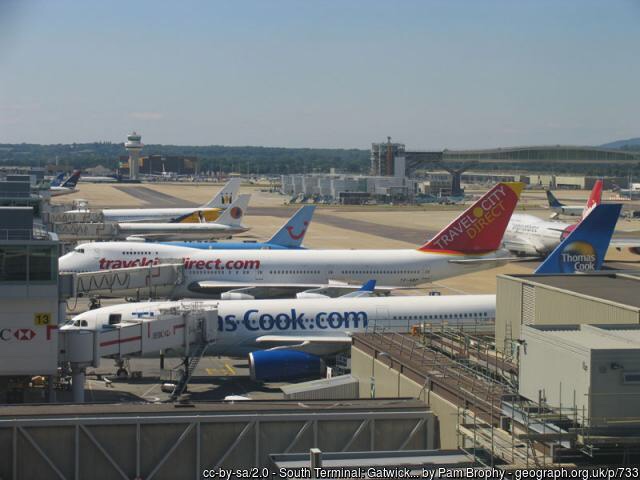
img_3300
Gatwick Airport – Mike McBey via flickr