On this day in history….5th January 1941

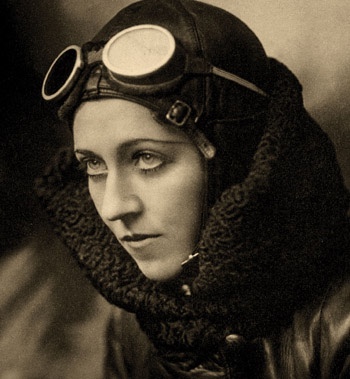
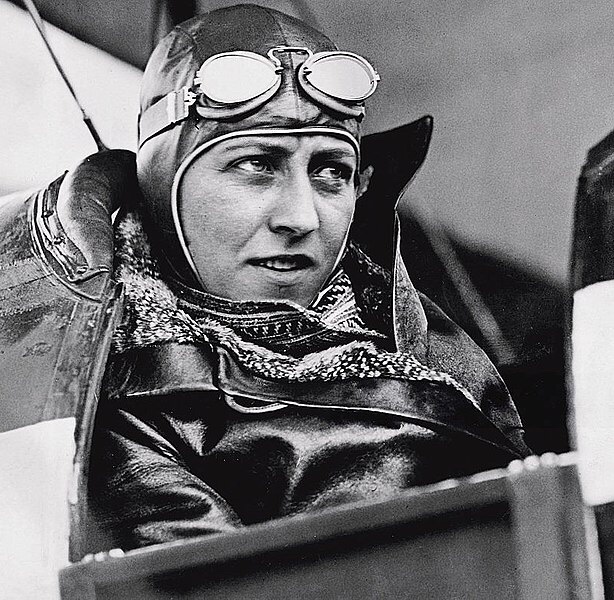
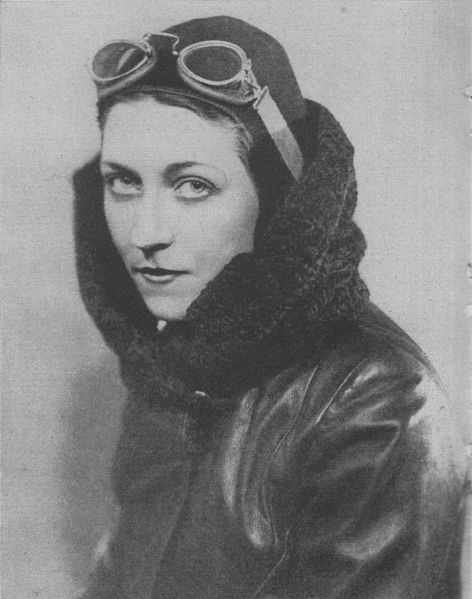
On this day in history : 5th January 1941 – The death of English record-breaking aviator Amy Johnson CBE – who is killed whilst delivering an RAF aircraft from Prestwick to RAF Kidlington in Oxfordshire, via Blackpool….
img_2078

Amy was the first woman to fly solo from England to Australia – a journey that took 19 days…. She was also the first woman to fly from London to Moscow in under a day, completing the 1,760 mile trip in approximately 21 hours…. In her time she held World records for the fastest flights from Britain to India, Britain to South Africa and Britain to Japan….


It was in 1940, during World War 2, that she joined the newly formed Air Transport Auxiliary, transporting RAF aircraft between airfields all over Britain….and it wasn’t long before she rose to the rank of First Officer….

On the 5th of January 1941 Amy was delivering an Airspeed Oxford aircraft to RAF Kidlington, near to Oxford….the weather conditions were atrocious, with freezing fog and heavy snow…. It was a journey that should have taken ninety minutes – but four hours later Amy’s plane was seen to ditch into the water of the Thames Estuary, on the Kent coast, near to Herne Bay….

An eye-witness, who was on board a Destroyer escorting a convoy, said he saw the plane was in trouble – with the engines cutting out and restarting. He also said the aircraft had hit the sea between the Destroyer and HMS Haslemere, which was nearby…. As it made contact with the sea the plane skidded along the surface for a bit and then began to sink. The door opened and the pilot jumped out – just as the plane sank, creating a turbulence, so the pilot was lost from sight…. He then witnessed a man jumping from HMS Haslemere with a rope tied around his waist….

At least some of this does tie-in with the official account of what happened…. Possibly Amy’s plane ran out of fuel, after she had become lost in the fog…. The crew of HMS Haslemere, a small converted ferry being used as an escort vessel, apparently spotted Amy’s parachute as she bailed from the aircraft….and they mounted a rescue mission. The story goes that Amy called out for help and a rope was thrown to her but she was unable to grasp it…. HMS Haslemere’s Commanding Officer, Lt Cmdr Walter Fletcher, with a rope attached to him, dived in to save her – but she had disappeared beneath the surface – and he had to be pulled back on board…. Amy’s body was never found – and Lt Cmdr Fletcher died a few days later from hyperthermia…. He was awarded the Albert Medal for his bravery posthumously….
img_2082

However, Amy’s death has always remained shrouded in mystery….and it is a possibility there may have been a ‘cover-up’….

One theory, however an unlikely one, is that her plane was shot down by ‘friendly fire’…. In 1999 a former member of the 58th (Kent) Heavy Anti-Aircraft Regiment claimed that an aircraft had been contacted by radio and the pilot asked to identify themselves…. Twice the wrong identification code (which was changed on a daily basis) was given…. Sixteen rounds of shells were fired and the plane crashed into the Thames Estuary…. Initially they believed they had shot down an enemy aircraft – and it was only the next day when they learned of Amy’s plight did they realise what they may have done…. Officers ordered them to keep quiet…. Experts believe this theory to be implausible – given the distance the guns were from the aircraft that Amy was flying….

In 2016 another version of what happened on board HMS Haslemere emerged….via the son of a naval reservist who had been serving as part of the crew at the time…. The ship had hit a sandbank during the rescue mission and had been put into reverse to free it…. The reservist sailor saw that Amy was getting too close to the stern and so he shouted to the Bridge to cut the engines…. An angry retort came back from one of the officers ~ “Don’t you tell me what to do!”…. A few moments later Amy was dragged beneath the boat….and was sucked into the blades of the propellers….

Of course this claim can never be verified – the reservist and his crew-mates were not called to give evidence at the enquiry….and no inquest was ever held in to Amy’s death as her body was never recovered…. Amy was 37-years-old – such a short life – but she achieved so much….and was much-loved by the British public….
img_2081

On this day in history….12th November 1919

On this day in history : 12th November 1919 – The first successful flight from England to Australia begins at Hounslow…. The converted Vickers Vimy bomber reached Darwin on the 10th of December 1919….

The winning Vickers Vimy, 1919 – Image credit : John Oxley Library, State Library of Queensland – Public domain

It was in 1919 that the Australian government offered 10,000 Australian £s, as prize money, to the first Australian pilots in a British aircraft to fly from Britain to Australia…. Six entries were received…. The rules stipulated that the crews had to be Australian, the aircraft had to be made in the British Empire and the flight had to be done in no more than 30 days – arriving by midnight on the 31st of December 1920…. In addition departure had to be either from Heath Aerodrome, Hounslow near to London for land-planes or from RNAS Calshot for sea-planes….

Vickers entered a Vimy bomber, which had been designed for World War I but which had not seen active service…. It had twin Rolls Royce engines, a top speed of 177 kph – and an open cockpit…. It completed the 17,911 km (11,123 mile) journey in 28 days – at an average speed of 137 kph….

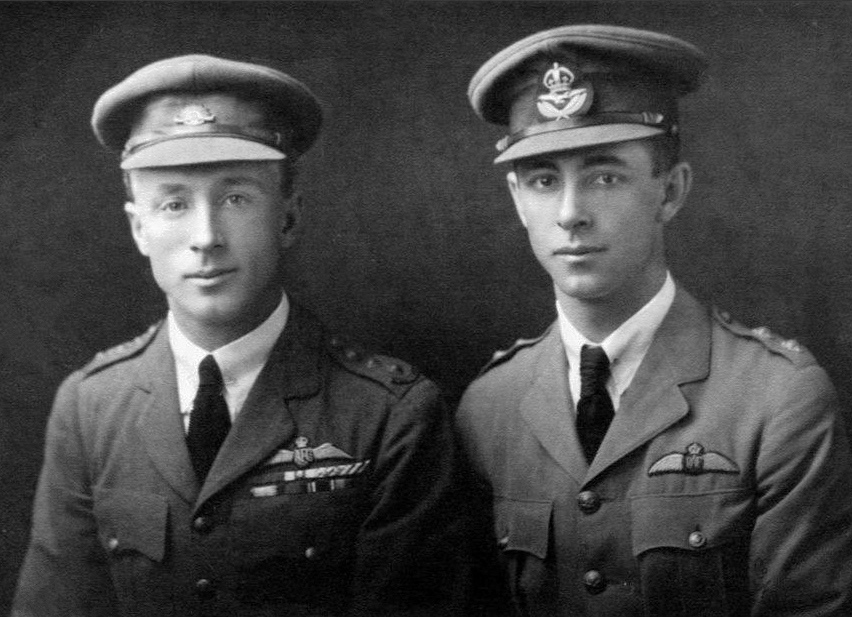
The aircraft was crewed by brothers pilot Ross and co-pilot Keith Smith, along with mechanics James Bennett and Wally Shiers…. They left Hounslow at 8.30am and flew via Lyon, Rome, Cairo, Damascus, Basra, Karachi, Delhi, Calcutta, Akyab, Rangoon, Singora, Singapore, Batavia, Surabaya and reaching Darwin at 4.10pm on the 10th of December…. The journey was not without its difficulties…. They became bogged-down in Surabaya – and a temporary airstrip had to be constructed from bamboo mats – and heavy rain forced several unscheduled stops….

Brothers Capt. Ross & Lieut. Keith Smith – Pilot and co-pilot – Image credit : State Library of South Australia via Flickr CC BY 2.0

The prize money was shared between the four crew and each of the two brothers received a knighthood…. The aircraft was presented to the Australian government and is now on display at Adelaide Airport….

On this day in history….27th April 1922

On this day in history : 27th April 1922 – The birth of aviator Sheila Scott – who broke over 100 aviation records and was the first British pilot to fly solo around the world….

Sheila Scott – Public domain

Sheila Christine Hopkins was born in Worcester and she had a troubled childhood…. She attended the Alice Ottley School, a prestigious school that has seen pupils such as Barbara Cartland and Vanessa Redgrave…. But Sheila was not to do well at the school and was nearly expelled on several occasions….

During World War 2 she was to serve as a nurse at the Haslar Royal Naval Hospital – and then between 1945-1959 she was to pursue a career as an actress and model…. Using the name Sheila Scott she had small roles in theatre, films and TV…. She married Rupert Bellamy in 1945 but it was to be a short-lived marriage, ending in 1950….

Sheila learned to fly at Thruxton Aerodrome, near to Andover, Hampshire in 1958…. Her first aircraft was a Thruxton Jackaroo – a converted de Havilland Tiger Moth – which she bought from the RAF…. She owned this plane until 1964 and won several races with it…. To pay for her flying she worked as a demonstrator for Cessna and Piper….

In April 1966 she bought her Piper Comanche, which she named ‘Myth Too’ – it was the aircraft in which she set almost 90 of her records…. In 1967 she set the world record for flying between London and Cape Town and also in the same year the record for crossing the North Atlantic Ocean…. In 1969 the South Atlantic – and then in 1971 flying from Equator to Equator over the North Pole…. Sheila was the first to fly over the North Pole in a light aircraft….

The Comanche ‘Myth Too’ (which was damaged after Sheila owned it) – Image credit : Alan Wilson via Flickr

Her first solo around the world flight began on the 18th of May 1966, from Heathrow…. 34 days later, after flying some 31,000 miles and 189 hours of flying time, on the 20th of June 1966 she arrived back…. She was to repeat the trip again 1969-70…. In 1971 she bought her Piper-Aztec in which she completed her third solo around the world trip…. Unfortunately this aircraft was destroyed in 1972 whilst at the Piper factory in Lock Haven, Pennsylvania, after a severe flood caused by Hurricane Agnes….

Sheila was to win several awards…. She received a Herman International Aviation Trophy for setting a new light aircraft speed record of 28,633 miles solo in 33 days and 3 minutes in 1967…. She won the Brabazon of Tara Award in 1965, 1967 and 1968, the Britannia Trophy of the Royal Aero Club of Britain 1968 and the Royal Aero Club Gold Medal in 1971…. In 1968 she was awarded an OBE….

She wrote two books:- ‘I Must Fly’ (1968) and ‘On Top of the World’ (1973)…. She founded the British branch of the ‘Ninety-Nines’ an international organisation providing support, networking, mentoring and scholarship for female pilots – which was originally created by Amelia Earhart in 1929…. She was also a member of the ‘International Association of Licensed Women Pilots’ and the ‘Whirly-Girls International’ – a non-profit making educational organisation to help women advance in helicopter aviation….

Image credit : SDASM Archives via Flickr

After having achieved so much in her lifetime it is sad to think Sheila’s life ended in poverty, living in a bedsit in Pimlico, Central London…. She died of cancer at the Royal Marsden Hospital on the 20th of October 1988, aged 66….