On this day in history….25th October 2004

On this day in history : 25th October 2004 – The world of radio and music is left shocked and in mourning following the sudden death of DJ, record producer and journalist John Peel….
John Peel – Public domain

Revered in the broadcasting and music industry John had been the longest serving of the original Radio disc jockeys…. He had died at the age of 65 of a heart attack with his wife, Sheila, at his side, while on a working holiday in Cuzco, Peru…. The death of this broadcasting legend was to hit so many, not least those at Radio 1, the BBC station to which he had devoted so much of his working life….

John Robert Parker Ravenscroft was born on the 30th of August 1939 in a nursing home on the Wirral, Liverpool and he grew up in the Cheshire village of Burton…. His father was a successful cotton merchant; John had a middle-classed upbringing and attended boarding school….

From an early age he loved to listen to the radio, the likes of Radio Luxembourg and American Forces Radio; he was also an avid collector of records…. He completed his National Service in 1959, then worked in a Rochdale mill for a while before travelling to the United States in 1960, where he had a variety of jobs…. One of these was at ‘KLIF’ – a Dallas radio station – being a ‘fellow’ Liverpudlian he became their official Beatles correspondent…. It was also during this time in the States that John got married for the first time; although his wife returned to England with him it was to be a short-lived marriage, ending in divorce….

John returned to the UK in 1967 and began to work for the pirate radio station Radio London…. He hosted a late night programme that became called The Perfumed Garden – playing music emerging from the hippie scene of California, blues, folk and psychedelic rock…. He adopted the name ‘John Peel’ at the suggestion of a work colleague at the station – and his distinctive radio voice began to become recognisable to many – as it would to so many more over the years to come….

Pirate radio station Radio London’s transmitter ship the MV Galaxy – Fair use

Radio London closed on the 14th of August 1967 and Radio 1, in an embryonic state, launched – with its first programme, hosted by Tony Blackburn, going out an air at 7am on Saturday the 30th of September 1967…. John’s first programme for the new station was called Top Gear…. The BBC were at a bit of a loss at how to sail such a modern ‘ship’…. They were still at the time airing a mixture of recorded music and live studio orchestra…. With Radio 1 being conceived through the popularity of stations such as Radio London and Radio Caroline they needed a few ‘pirates’ onboard to show them how it was done….

John was to go on to host Night Ride – a programme of words and music, featuring guests…. His personal friend Marc Bolan appeared on it, as did The Byrds, John Lennon and Yoko Ono – to name but a few…. After 18 months the show ended – the BBC still hadn’t quite caught up with how society was moving and the bosses did not approve of the unpredictability of a real-life show…. But John’s characteristic broadcasting style had been unleashed, with a formula of live music, chat and records that would stay with him….

Then along came punk…. The BBC boffins were keen to exclude any undesirable music genre – and punk in their eyes represented the most unpalatable of the unsavoury…. But with John’s keenness for new music they had voiced their concerns too late, as he had in fact been playing little else…. He was the saviour of many an unsigned act – helping to launch thousands of careers by giving them airplay…. He was the first to introduce The Ramones, The Sex Pistols, The Smiths, Roxy Music, Rod Stewart and Blur – the list is almost endless…. There are so many bands and artists we would never have heard of if it hadn’t been for John Peel….

He could often be seen presenting BBC One’s Top of the Pops – and he also broadcasted on the BBC’s World Service…. His independent overseas work included broadcasting in Holland, Germany, Austria and Finland….
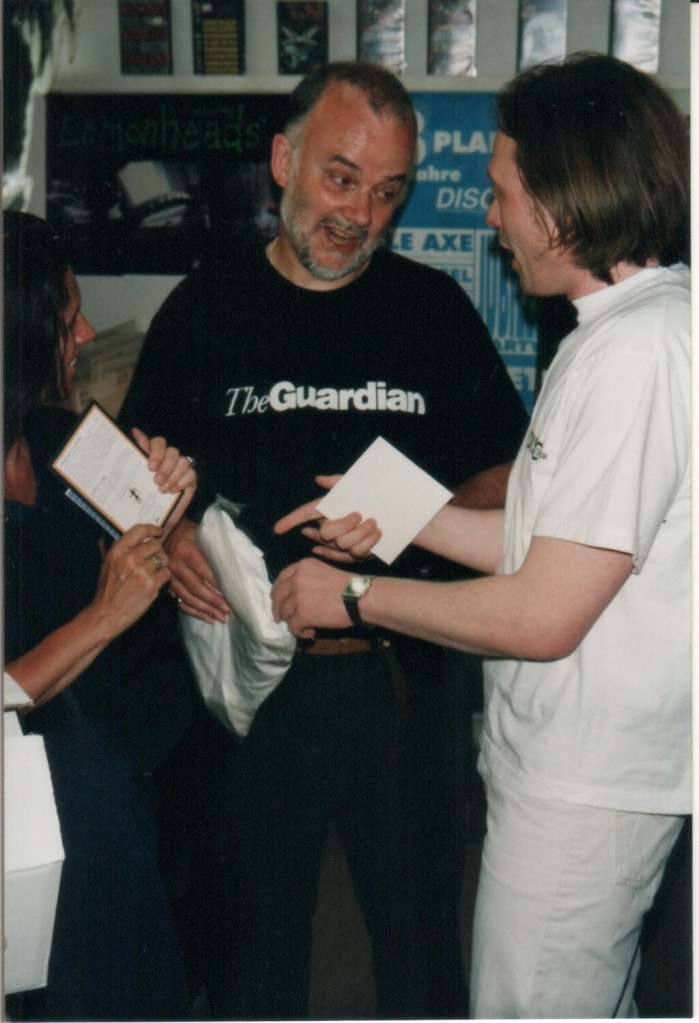
John Peel in a record shop in Bochum, Germany – Image credit : Zetkin – own work CC BY SA 3.0

On the 31st of August 1974 John married Sheila…. He had been working on a television show when he spotted her in the audience…. Feeling a little shy he had a note delivered to her; three years later they had bought a country home in Great Finborough near to Stowmarket, in Suffolk…. They went on to have four children, William, Danda, Tom and Flossie…. Tom now has his own radio shows on the BBC….

Suffolk was a good retreat for John – an escape from the busy city life of London…. He came to realise he did not care much for the hustle and bustle…. Becoming involved in his local community in Suffolk he began to run a youth group….

John’s studio at his home – Image credit : Arno Matthias – own work – Public domain

In 1998 John was awarded with an OBE for his services to broadcasting…. Although he was diagnosed with diabetes at the age of 61 it looked as if the new approaching millennium was going to be rosy for him…. He was still at the top of his game and as popular as ever…. He had just become a grandad and after a trip to New Zealand had caught the travel bug…. He began doing some work for the Daily Telegraph as a musical travel writer….

And so it came to be that whilst on his travels he was to suffer a fatal heart attack…. Over a thousand people attended his funeral, tributes poured in from across the globe…. Radio had lost one of its heroes…. When his death was announced on Radio 1 it was followed by his favourite song, Teenage Kicks by the Undertones….
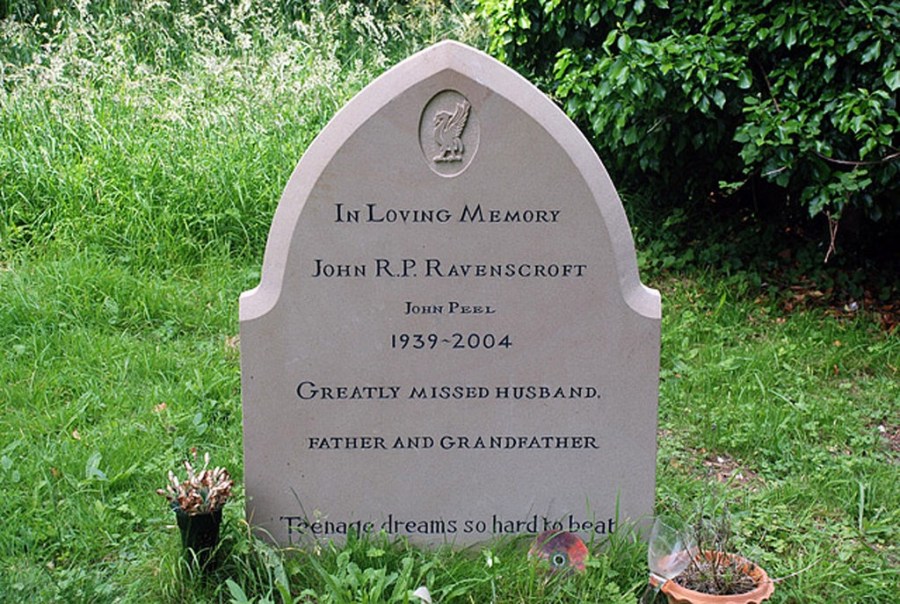
Image credit : Peter Tarleton CC BY-SA 2.0

On this day in history….13th October 1904

On this day in history : 13th October 1904 – The birth of actor and radio presenter Wilfred Pickles – a proud Yorkshire man and the first newsreader to speak on the BBC with a regional accent….

Wilfred Pickles in 1950 – Fair use

Pickles was born and grew up in Halifax – and when his family moved to Southport, Lancashire in 1929 he, now a young man, went with them…. He was to join an amateur dramatic society and here he was to meet Mabel Cecelia Myerscough; they were to marry on the 20th of September 1930 and went on to have one child….

It was during the 1920s that Pickles made his first professional appearance as an actor, at the Theatre Royal in Halifax, as an extra in a production of Julius Caesar…. He was to go on to become a radio celebrity after joining the BBC in 1927…. He was chosen by the BBC as an announcer for their Northern Regional Radio Service during World War 2 – the thinking behind this being that his regional accent would make it harder for the Nazis to impersonate BBC broadcasters….

Pickles made his West End debut in 1946 – and his acting career developed to include films and television…. Also in 1946 he became the host of radio show Have A Go, which ran until 1967…. This hugely popular show, which also featured his wife, brought familiar catchphrases, such as ‘How do, how are yer?’, ‘What’s on the table, Mabel?’, ‘Give him the money Barney’ and ‘Are yer courting?’…. By sharing their innermost secrets contestants could earn £1.19s.11d…. Over 20 million listeners tuned in each week….

In 1948 a children’s board game, called Ask Pickles, was released that was based on the format of the show…. In May 1954 the hit radio show became a TV show, with the same name – Ask Pickles…. It ran until 1956…. Pickles starred in his first TV sitcom Caxton’s Tales (along with Mabel) in 1958….

Pickles was not unique in his family for becoming famous…. He was the uncle of actresses Vivian Pickles and Christina Pickles and great uncle to Carolyn Pickles…. He was also uncle to colourful and outspoken Judge, James Pickles….

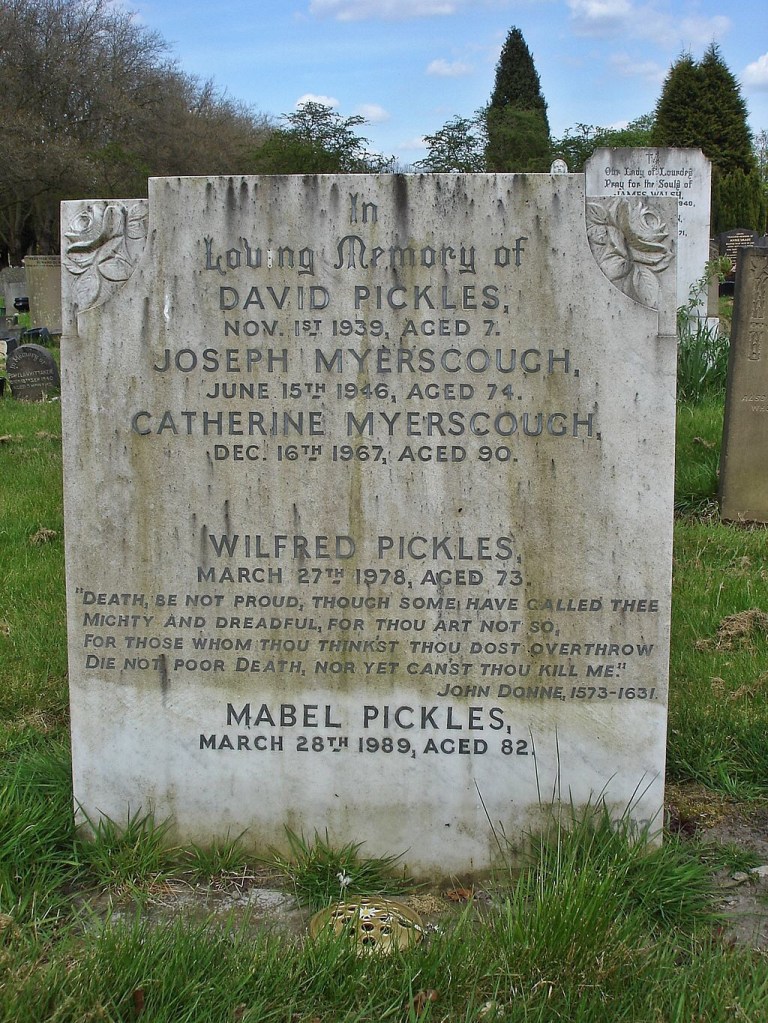
Pickles was awarded with a CBE for services to broadcasting in 1950…. He died in Brighton on the 27th of March 1978 and is buried with Mabel in Southern Cemetery, Manchester….

Image credit : Plucas58 -own work CC BY-SA 4.0

On this day in history….5th July 1954

On this day in history : 5th July 1954 – The BBC broadcasts its first television news programme…. The twenty minute bullet-in is introduced by Richard Baker….

Richard Baker – Fair use

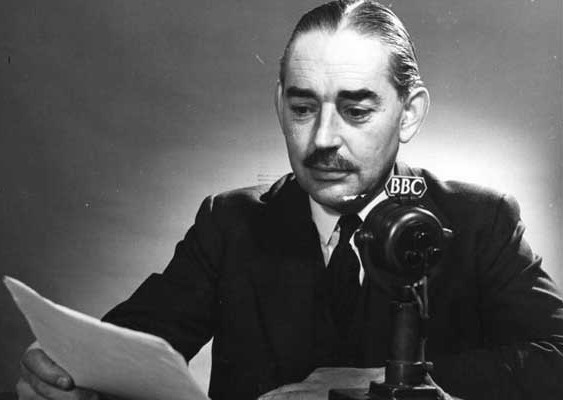
We are all very familiar with the format of today’s TV news programmes; the presenters, news stories from around the world and closer to home – and the film footage that almost always accompanies them…. But how different things were back then…. Richard Baker narrated the news story whilst a supporting relevant still photograph was broadcast for viewers to look at…. It was really like an illustrated summary of the news…. A customary news reel would be shown, usually with recorded commentary from John Snagge or occasionally Andrew Timothy….

John Snagge reading the news in 1944 – Public domain

The BBC’s new news programme certainly wasn’t popular with all…. Some described it as ‘absolutely ghastly!’ and ‘as visually impressive as the fat stock prices’…. BBC Radio 4 were also doubtful about this newfangled way of delivering news to the nation and insisted on keeping control over the editorial of the headlines and the programme content….

The very first programme to be broadcast included a story on French troop movements in Tunisia and covered the truce talks being held near to Hanoi…. The service was intended to be more up to date, as the previous ‘Television Newsreel’ programme often contained news stories several days old….

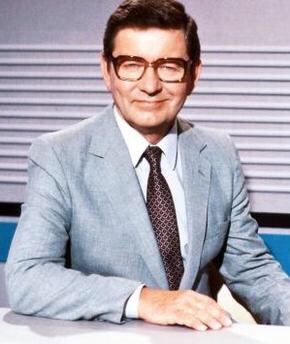
In 1955 other news readers were introduced, such as Kenneth Kendall – who was the first news presenter to be visually seen – and Robert Dougall…. Television news time also doubled during this period…. Shortly after this expansion by the BBC, on the 21st of September 1955, ITN launched their news programme….

On this day in history….13th June 1910

On this day in history : 13th June 1910 – The birth of Mary Whitehouse, the educator, conservative activist and co-founder of the ‘Clean-Up TV’ campaign….

Mary Whitehouse, 1981 – Fair use

Whitehouse was born Constance Mary Hutchison in Nuneaton, Warwickshire and after finishing school she trained to become a teacher…. At the same time she became involved with evangelical Christian groups, such as the Student Christian Movement…. She qualified as a teacher in 1932….

It was at a meeting of the Oxford Group – a Christian organisation later to become known as Moral Re-Armament – that she met Ernest Raymond Whitehouse…. They married in 1940 and were to have five sons (two of whom died in infancy)….

In 1960 Whitehouse was working as a teacher in a school in Madely, Shropshire and was given the responsibility of sex education…. She was to be totally shocked by the lack of morals amongst many of her students…. It was at a time when sex scandals seemed to dominate the news headlines – particularly the exploits of Christine Keebler and Mandy Rice-Davies…. Whitehouse blamed the media, especially the BBC for exposing the nation to ‘such filth’….

In 1963 she wrote to the BBC asking for a meeting with the then Director-General, Hugh Greene…. But she had to make do with his deputy, Harman Grisewood – who she felt was sympathetic because he had good Catholic values…. However, she was to remain dissatisfied with the content she saw on television, so in 1964 she teamed up with vicar’s wife Norah Buckland and they launched the ‘Clean-Up TV’ campaign…. Appealing to the women of Britain they held their first public meeting on the 5th of May at Birmingham Town Hall…. Around 2,000 turned up, including several coach loads….

Whitehouse was to become a thorn in the side of Sir Hugh Greene…. According to her, he was ‘the devil incarnate’ and responsible for the moral collapse of the country – with its promiscuity, infidelity, indecency, violence, blasphemy, bad language and drinking…. She made some 300 speeches across the country each year – and the BBC, Downing Street and Buckingham Palace all received a bombardment of correspondence from her….

Hugh Green, 1968 – Fair use

She became General Secretary of the National Viewers’ and Listeners’ Association in 1965, an association with over 400,000 supporters including many professionals such as senior police officers and bishops….

Just about every programme shown on British television came under her scrutiny…. One of her absolute pet hates was sitcom ‘Til Death Us Do Part’ – and particularly Alf Garnett’s love of the word “bloody”…. Another one she had it in for was Benny Hill…. Comedian Dave Allen fared little better, who she described as ‘offensive, indecent and embarrassing’…. However, comedy writers began to turn the tables, seeing her as potential material for their humour…. The Goodies devoted a whole episode – ‘Gender Education’ – in 1971, purely with the intention of irritating her….

She even turned her attention to popular music…. She unsuccessfully tried to get the BBC to ban Chuck Berry’s ‘My Ding-a-Ling’ – but had a better result when she managed to stop Alice Cooper’s ‘School’s Out’ from being aired…. He responded by sending her flowers – as he was convinced it was this that helped his record reach the No.1 spot in the British charts….

Even family favourite ‘Dr Who’ attracted her wrath – which she referred to as ‘teatime brutality for tots’…. She objected to its violence! And within a week of Channel 4 launching in November 1982 she was having a go at the soap ‘Brookside’ for the amount of swear words in it….

Whitehouse retired in 1994….but even from her nursing home she still had plenty to say…. In her book, ‘Whatever Happened To Sex’, she explained, that as a happy family woman, she had nothing against sex itself – but was against its exploitation in the media…. To some Mary Whitehouse was a champion of Christian family values – indeed in 1980 she was awarded a CBE…. To others she was just an interfering busy body…. She died on the 23rd of November 2001 at the age of 91….

On this day in history….25th May 1913

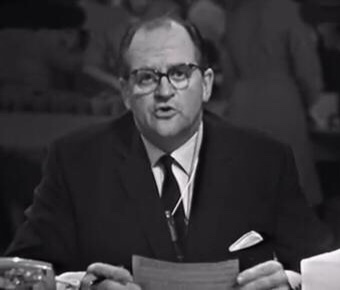
On this day in history : 25th May 1913 – The birth of Richard Dimbleby, pioneering journalist and broadcaster and the BBC’s first war correspondent – before becoming its main news presenter….

Richard Dimbleby – Fair use

Frederick Richard Dimbleby was born in Richmond, Surrey to Gwendoline and Frederick J.G. Dimbleby, who was a journalist…. After leaving school in 1931 he began working on the family newspaper, which had been acquired by his grandfather in 1894…. The Richmond and Twickenham Times remained in the family until 2002….

Richard worked on other papers, including the Southern Evening Echo in Southampton, before joining the BBC in 1936…. It was in 1937 that he married Dilys Thomas and they were to go on and have four children….two of whom became major broadcasters in their own right – David and Jonathan….

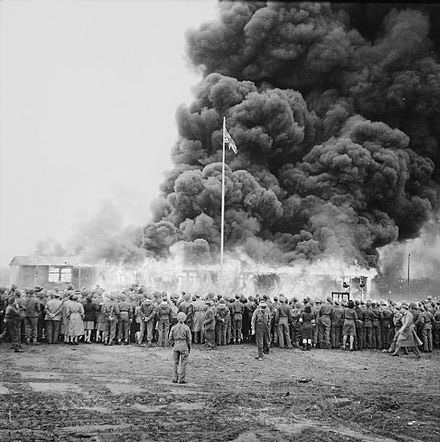
The BBC sent Richard to Spain to cover the Civil War…. At the time there was no official foreign correspondent and it was at the outbreak of World War 2 that the title ‘War Correspondent’ was created…. During the War Richard was to accompany the British Expeditionary Force to France, making broadcasts from the Normandy beaches during the D-Day landings….and from the Battle of El Alamein, North Africa…. He flew on some 20 raids with the RAF as an observer and in April 1945 he made one of the first reports during the liberation of the Bergen-Belsen concentration camp….He was a groundbreaking broadcaster, reporting from 14 countries during WW2…. He was among the first into Berlin and was to broadcast from the ruins of Hitler’s bunker….

Liberation of Bergen-Belsen, May 1945…. A crowd watches the destruction of the last camp hut – Image : Bert Hardy No.5 Army Film & Photographic Unit – Public domain

In 1946 Richard was awarded an OBE and then later in 1959 a CBE…. He was to become one of the most familiar and trusted faces on British television…. He was to lead the coverage for the majority of major state and political affairs, including Queen Elizabeth II’s Coronation, the Victory Parade of 1946 and the funerals of Sir Winston Churchill, King George VI and John Kennedy…. He was to be the anchorman on the coverage of the General Elections of 1955, 1959 and 1964…. He was also to become the presenter of ‘Panorama’ – the BBC’s flagship current affairs programme….

Of course there were lighter moments in his broadcasting career…. He took part in radio broadcasts on the panel of ‘Twenty Questions’ and hosted ‘Down Your Way’…. He was also involved in the now famous April Fools Day prank of 1957 when he provided the narration for the Spaghetti Tree Hoax….

In December 1965 Richard presented a documentary on the link between smoking and lung cancer…. It was at this time he revealed that he too was suffering from cancer – a subject that was still little talked about…. By talking about his own condition he helped raise public awareness and break the taboo…. Richard had been diagnosed five years earlier with testicular cancer….he was to die just two weeks after the documentary on the 22nd of December 1965 in St. Thomas’ Hospital, London…. He was just 52 years of age….

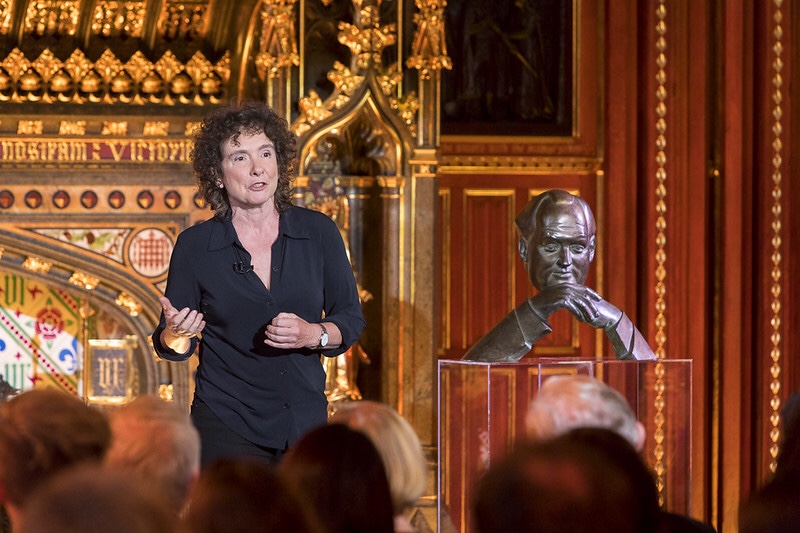
With funds from public donations the family set up the Richard Dimbleby Cancer Fund – which relaunched in 2008 as Dimbleby Cancer Care…. In 1972 the Richard Dimbleby Lecture, an annual televised lecture, was founded in his memory…. Every year it is delivered by an influential, respected person and over the years has included Prince Philip, Prince Charles, Lord Hailsham, Bill Clinton, Bill Gates, Sir Terry Pratchett and of course many, many others….

2018 BBC Richard Dimbleby Lecture – speaker Jeanette Winterson on the theme of women’s equality – Image: ukhouseoflords via Flickr