On this day in history : 23rd June 1940 – To help relieve the tedium of workers in the munitions factories and to increase their productivity, the BBC’s ‘Music While You Work’ programme is introduced….
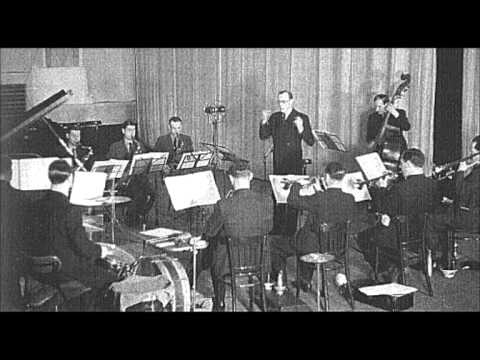
Music While You Work – Jack White and his Band – YouTube
The first show was announced in the Radio Times as a ‘half hour’s music meant specially for factory workers to listen to as they work’…. The programmes were scheduled for 10.30am, mid-afternoon and for a period a night shift slot at 10.30pm…. The first day featured Dudley Beavan at the theatre organ in the morning and The Organolists – an organ trio – in the afternoon….
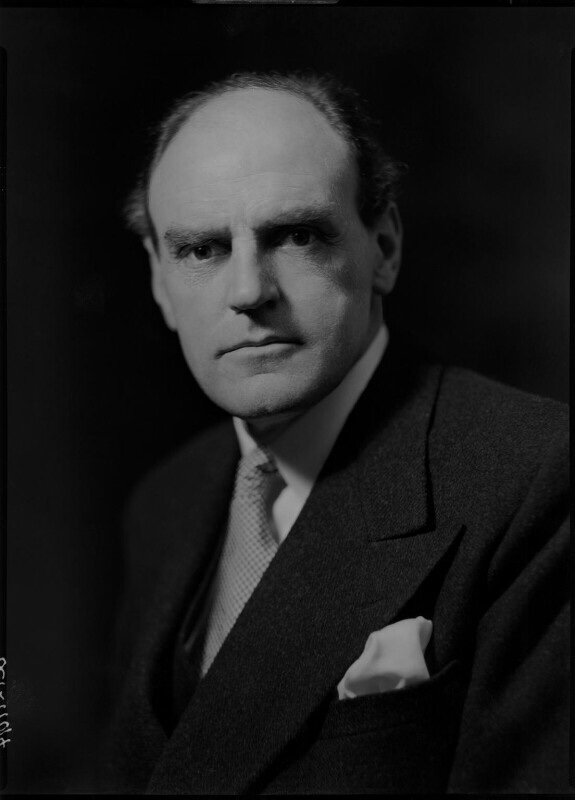
The programme was piped to the workers through a tannoy and there were strict rules as to what could and could not be performed…. By playing non-stop popular music with an even tempo morale lifted and work output increased…. Mainly it was familiar music that workers could sing or whistle to…. Brass bands, military bands and dance bands were all featured – along with performers such as Joe Loss, Victor Silvester and Mantovani…. From October 1940 the programme always began and ended with ‘Calling All Workers’ by Eric Coates….
Eric Coates c.1925 – Fair use
The music had to be cheerful; there had to be no over-loud drumming – as this could sound like gunfire! Nothing lethargic was allowed and nothing that would make people want to clap or bang tools in time…. Certain songs, such as ‘Deep in the Heart of Texas’ were banned for this reason….
In 1941 orchestra leader Winford Reynolds was appointed ‘Music While You Work Organiser’…. His task was to tour the factories of the country to get feedback on the programmes from the workers….
The night shift slot was reintroduced between 1947 and 1950…. Apparently during the time the programme aired production increased by around 13%…. Up until 1963 the music was performed live – but to free up BBC studios during the day they began to pre-record the shows – usually on a Sunday evening…. The programme ran until the 29th of September 1967….
Music While You Work – Anton and his Orchestra – YouTube
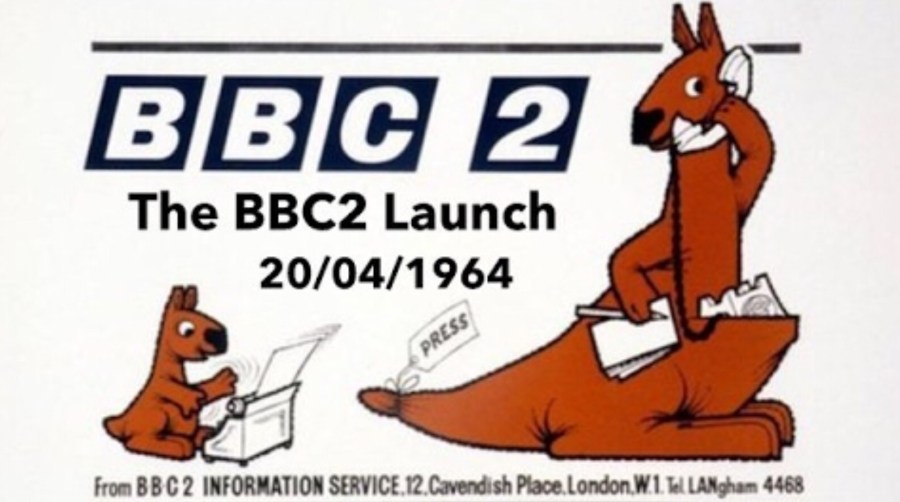
On this day in history : 20th April 1964 – BBC2 television is launched – only things don’t go quite to plan – as a fire breaks out at Battersea Power Station causing a major power cut….
Much publicity had surrounded the coming launch of Britain’s third TV channel – the two kangaroo mascots used to herald its arrival ~ ‘Hullabaloo’ the mother kangaroo and her joey ‘Custard’ ~ were a familiar sight….
And a right hullabaloo it was too…. The evening had been planned to start at 7.20pm with a news bullet-in and then continue with a programme schedule of music and comedy – including a special of ‘The Alberts’, a performance of ‘Kiss me, Kate’ and was to be rounded off with a celebratory firework display from Southend Pier….
However, just over half an hour before the launch was set to air a fire broke out at Battersea Power Station…. At the same time a 60,000 volt cable carrying electricity from the Midlands to the south of England developed a fault in Buckinghamshire – the result being a total blackout in the west of London and much of the city centre….
As it happened, news anchorman Gerald Priestland, who was to deliver the opening news bullet-in, was not broadcasting from Television Centre…. Instead he was in the north London studios at Alexandra Palace – which still had power…. Amidst the mayhem and chaos he bravely soldiered on – over the next couple of hours TV screens across the land displayed the words ‘Will Start Shortly’ – broken intermittently with news bullet-ins…. Eventually at 9.30pm the evening’s schedule was abandoned….
Power was restored for the channel to launch properly the following day…. At 11am the first complete programme to air was ‘Play School’….
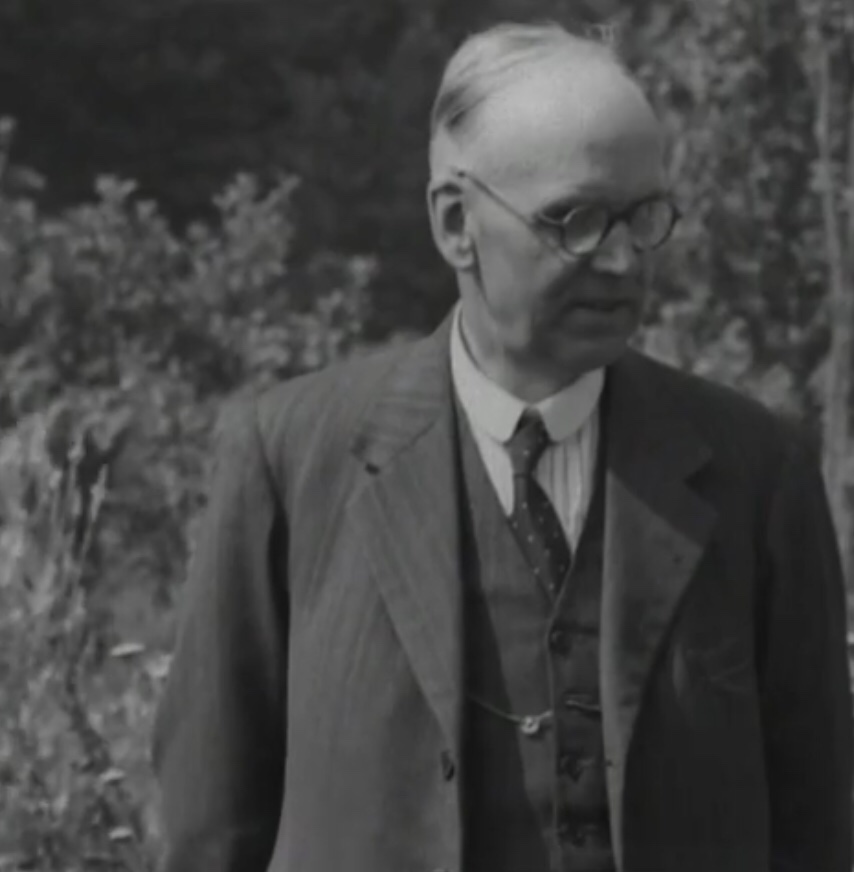
On this day in history : 21st December 1936 – The world’s first television gardening programme – In Your Garden, With Mr Middleton – is broadcast by the BBC….
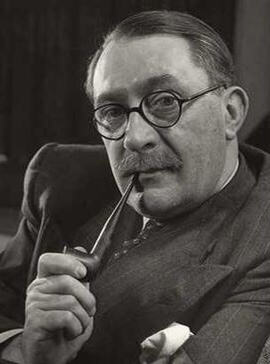
Cecil Henry Middleton
The programme was presented by Middleton from a purpose-built plot at Alexandra Palace in the first month of television broadcasting…. Cecil Henry Middleton was already well-known to the British public, his broadcasting career having started on the 9th of May 1931 when he gave a talk on gardening on BBC radio…. From 1934 his programme In Your Garden began regularly being aired on a Sunday afternoon at 2.15pm – and by 1940 some 3.5 million listeners were tuning in to listen to his 15 minute talks…. His style was informal and chatty and peppered with humour…. He talked to his audience as if addressing friends, whereas so many other BBC voices of the time were formal, stilted and stuffy….
In 1939 his gardening series was relaunched on the BBC World Service – in an effort to encourage people to grow their own food…. Working with the Ministry of Agriculture the BBC extended the series to give the public advice on what became known as the Dig For Victory campaign…. A 1942 survey suggested that 70% of those who owned a radio tuned in to get gardening advice….
From Middleton’s 1945 gardening guide – Image credit : NewquayZooArchive1969 – own work – CC BY-SA 3.0
Middleton was the first of the celebrity gardeners; others followed, including Percy Thrower, Geoff Hamilton and Alan Titchmarsh…. He also wrote several books and regularly for the Daily Express…. After he died of a heart attack, on the 18th of September 1945, flowers and tributes poured in from all over Britain….
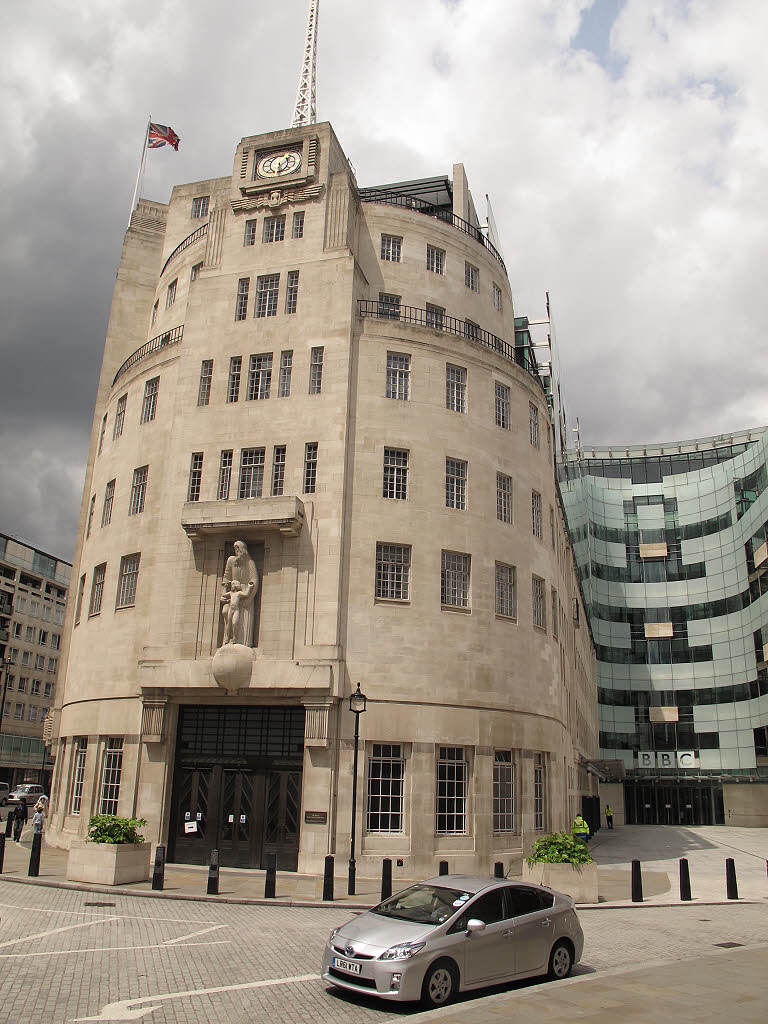
On this day in history : 16th November 1960 – The death of outspoken TV personality Gilbert Harding – who died as he was about to get into a taxi outside the BBC’s Broadcasting House….
Gilbert Harding in 1949 – Fair use
Harding was known for his short-temper and rudeness, not least on the panel game What’s My Line…. He was one of the most famous faces on British television during the 1950s and a regular contributor to BBC Radio’s Twenty Questions…. He also appeared in several films, usually as himself….
But there is one particular edition of the BBC series Face to Face in 1960 that will stick in many people’s minds…. When after being questioned by host John Freeman – Harding was reduced to tears…. Freeman asked if Harding had ever been in the presence of a dead person…. Harding’s eyes watered and his voice cracked – and he answered in the affirmative…. However, Freeman missed the point and was unaware that Harding was referring to his mother, whose death he had witnessed in 1954…. The interview continued and Freeman later made a reference to Harding’s mother, assuming she was still very much alive…. Harding immediately contradicted him and Freeman rapidly moved on – although afterwards publicly said that he regretted his method of questioning…. There are those who thought that by emphasising Harding’s closeness to his mother it was in fact a clumsy attempt to draw him out about his homosexuality – which was still illegal at that time…. In the eyes of the British public Harding was a confirmed bachelor resigned to never marrying….
Gilbert Charles Harding had been born in Hereford on the 5th of June 1907…. His parents had been the Master and Matron of the city’s workhouse…. His father was to die in 1911, at the age of just 30, following surgery for appendicitis…. Harding’s mother had little choice but to put her son into the care of the Royal Orphanage of Wolverhampton….
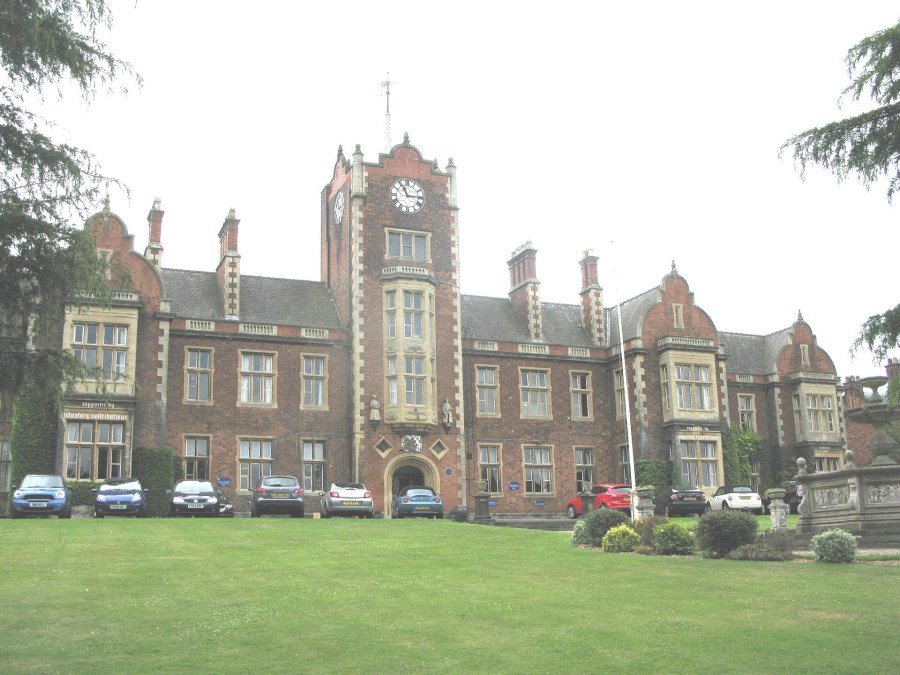
The Royal Wolverhampton School – Image credit Brianboru100 – CC BY-SA 4.0
The orphanage, funded by voluntary subscription, was granted Royal Patronage by Queen Victoria in 1891 – and was dedicated to providing education and care for children who had lost one or both parents…. It was to serve Harding well, as he was able to go on to Queen’s College, Cambridge…. After graduating he was to take teaching jobs in Canada and France, where he taught English…. On his return to England he became a police officer in Bradford before becoming a correspondent for The Times Newspaper in Cyprus…. It was after coming back to the UK in 1936 that he joined the BBC and started his broadcasting career….
Just a few weeks after that infamous Face to Face interview, words that he had said after the programme were to become prophecy…. Harding had admitted that during the interview his bad manners and temper were indefensible…. Excusing himself by saying “I’m profoundly lonely” – and then later adding “I would very much like to be dead”…. Harding was an asthma sufferer…. on the 16th of November, as he left the BBC and prepared to climb into a taxi he collapsed and died from an attack…. He was 53 years old….
On this day in history : 25th October 2004 – The world of radio and music is left shocked and in mourning following the sudden death of DJ, record producer and journalist John Peel….
John Peel – Public domain
Revered in the broadcasting and music industry John had been the longest serving of the original Radio disc jockeys…. He had died at the age of 65 of a heart attack with his wife, Sheila, at his side, while on a working holiday in Cuzco, Peru…. The death of this broadcasting legend was to hit so many, not least those at Radio 1, the BBC station to which he had devoted so much of his working life….
John Robert Parker Ravenscroft was born on the 30th of August 1939 in a nursing home on the Wirral, Liverpool and he grew up in the Cheshire village of Burton…. His father was a successful cotton merchant; John had a middle-classed upbringing and attended boarding school….
From an early age he loved to listen to the radio, the likes of Radio Luxembourg and American Forces Radio; he was also an avid collector of records…. He completed his National Service in 1959, then worked in a Rochdale mill for a while before travelling to the United States in 1960, where he had a variety of jobs…. One of these was at ‘KLIF’ – a Dallas radio station – being a ‘fellow’ Liverpudlian he became their official Beatles correspondent…. It was also during this time in the States that John got married for the first time; although his wife returned to England with him it was to be a short-lived marriage, ending in divorce….
John returned to the UK in 1967 and began to work for the pirate radio station Radio London…. He hosted a late night programme that became called The Perfumed Garden – playing music emerging from the hippie scene of California, blues, folk and psychedelic rock…. He adopted the name ‘John Peel’ at the suggestion of a work colleague at the station – and his distinctive radio voice began to become recognisable to many – as it would to so many more over the years to come….
Pirate radio station Radio London’s transmitter ship the MV Galaxy – Fair use
Radio London closed on the 14th of August 1967 and Radio 1, in an embryonic state, launched – with its first programme, hosted by Tony Blackburn, going out an air at 7am on Saturday the 30th of September 1967…. John’s first programme for the new station was called Top Gear…. The BBC were at a bit of a loss at how to sail such a modern ‘ship’…. They were still at the time airing a mixture of recorded music and live studio orchestra…. With Radio 1 being conceived through the popularity of stations such as Radio London and Radio Caroline they needed a few ‘pirates’ onboard to show them how it was done….
John was to go on to host Night Ride – a programme of words and music, featuring guests…. His personal friend Marc Bolan appeared on it, as did The Byrds, John Lennon and Yoko Ono – to name but a few…. After 18 months the show ended – the BBC still hadn’t quite caught up with how society was moving and the bosses did not approve of the unpredictability of a real-life show…. But John’s characteristic broadcasting style had been unleashed, with a formula of live music, chat and records that would stay with him….
Then along came punk…. The BBC boffins were keen to exclude any undesirable music genre – and punk in their eyes represented the most unpalatable of the unsavoury…. But with John’s keenness for new music they had voiced their concerns too late, as he had in fact been playing little else…. He was the saviour of many an unsigned act – helping to launch thousands of careers by giving them airplay…. He was the first to introduce The Ramones, The Sex Pistols, The Smiths, Roxy Music, Rod Stewart and Blur – the list is almost endless…. There are so many bands and artists we would never have heard of if it hadn’t been for John Peel….
He could often be seen presenting BBC One’s Top of the Pops – and he also broadcasted on the BBC’s World Service…. His independent overseas work included broadcasting in Holland, Germany, Austria and Finland….
John Peel in a record shop in Bochum, Germany – Image credit : Zetkin – own work CC BY SA 3.0
On the 31st of August 1974 John married Sheila…. He had been working on a television show when he spotted her in the audience…. Feeling a little shy he had a note delivered to her; three years later they had bought a country home in Great Finborough near to Stowmarket, in Suffolk…. They went on to have four children, William, Danda, Tom and Flossie…. Tom now has his own radio shows on the BBC….
Suffolk was a good retreat for John – an escape from the busy city life of London…. He came to realise he did not care much for the hustle and bustle…. Becoming involved in his local community in Suffolk he began to run a youth group….
John’s studio at his home – Image credit : Arno Matthias – own work – Public domain
In 1998 John was awarded with an OBE for his services to broadcasting…. Although he was diagnosed with diabetes at the age of 61 it looked as if the new approaching millennium was going to be rosy for him…. He was still at the top of his game and as popular as ever…. He had just become a grandad and after a trip to New Zealand had caught the travel bug…. He began doing some work for the Daily Telegraph as a musical travel writer….
And so it came to be that whilst on his travels he was to suffer a fatal heart attack…. Over a thousand people attended his funeral, tributes poured in from across the globe…. Radio had lost one of its heroes…. When his death was announced on Radio 1 it was followed by his favourite song, Teenage Kicks by the Undertones….