On this day in history….5th February 1982

On this day in history : 5th February 1982 – Budget airline Laker Airways collapses owing £270 million to its banks and creditors….

Laker Airways was a private British independent airline founded by Sir Freddie Laker in 1966…. It was based at Gatwick and from 1977 it began to offer low cost, no frills, long haul flights to the United States….
img_5882
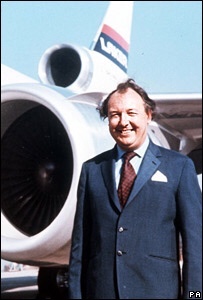
Sir Freddie Laker – Fair use

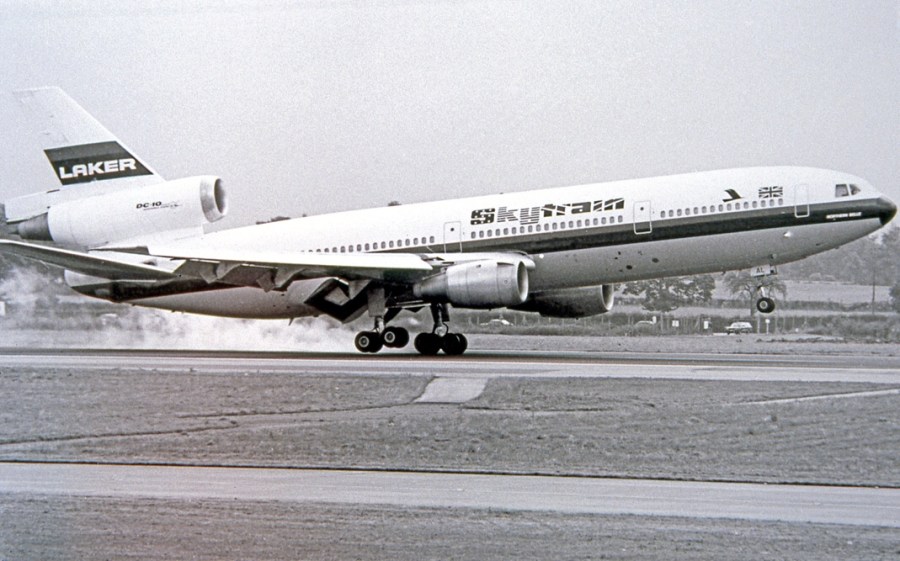
To offer the discounted prices it was known for Laker Airways needed to attract all year round business – which was not an easy task as most travel was required during the summer months – and this in turn could easily cause cash flow problems…. With the launch of ‘Skytrain’ in 1977, attracting long haul business travellers between Gatwick and JFK, the company seemed to have found the recipe for success….
img_5883
Skytrain at Manchester Airport in 1979 – RuthAS own work – CC BY-SA 3.0

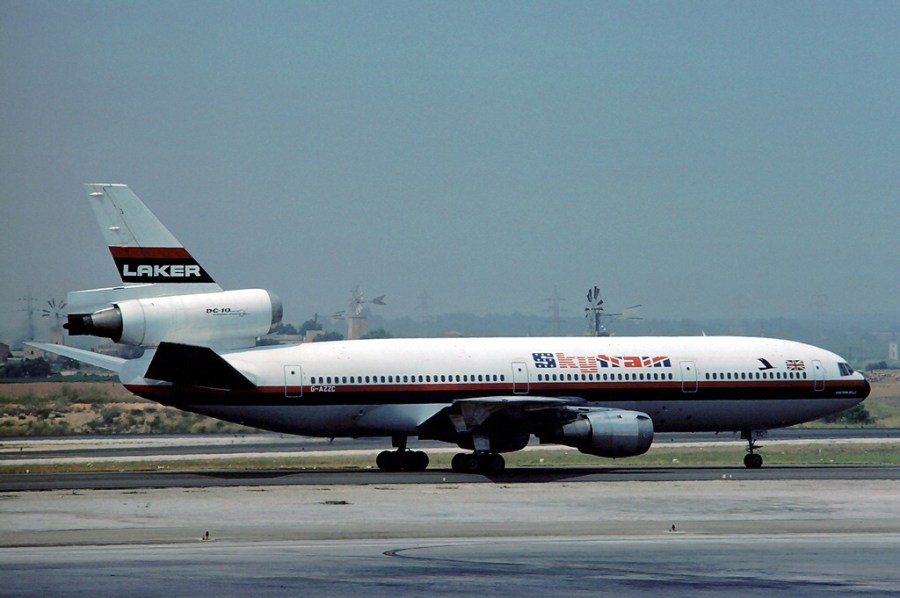
A period of rapid expansion followed and new aircraft were acquired…. Laker became the first airline outside of North America to operate the Douglas DC-10….

However, Laker had overstretched its finances – and with competition from other established airlines was unable to withstand the 1980’s recession…. To maintain its position as Britain’s second largest independent airline it had borrowed heavily at very high interest rates…. There was also the added factor that the DC-10 had a history of a series of fatal accidents and many people were avoiding flying on them….
img_5884
McDonnell Douglas DC-10 at Palma de Mallorca Airport – Eduard Marmet CC BY-SA 3.0

A £5m rescue plan was put together by McDonnell Douglas and General Electric, suppliers of the DC-10…. However, British Caledonian got wind of the deal and together with other DC-10 operators refused to do business with McDonnell Douglas and GE…. The rescue deal with Laker did not go ahead….

On the 5th of February 1982 – after a four hour board meeting – Laker asked Clydesdale Bank to call in the receivers – Laker Airways had collapsed…. All 17 Laker Aircraft were ordered to return to the UK by that night…. A DC-10 at Gatwick was impounded to cover landing and parking costs…. 6,000 stranded passengers had their return tickets honoured by other airlines such as British Airways, British Caledonian, Pan Am and Air Florida…. A ‘Save Laker’ fund was set up by the public – but it was too late….
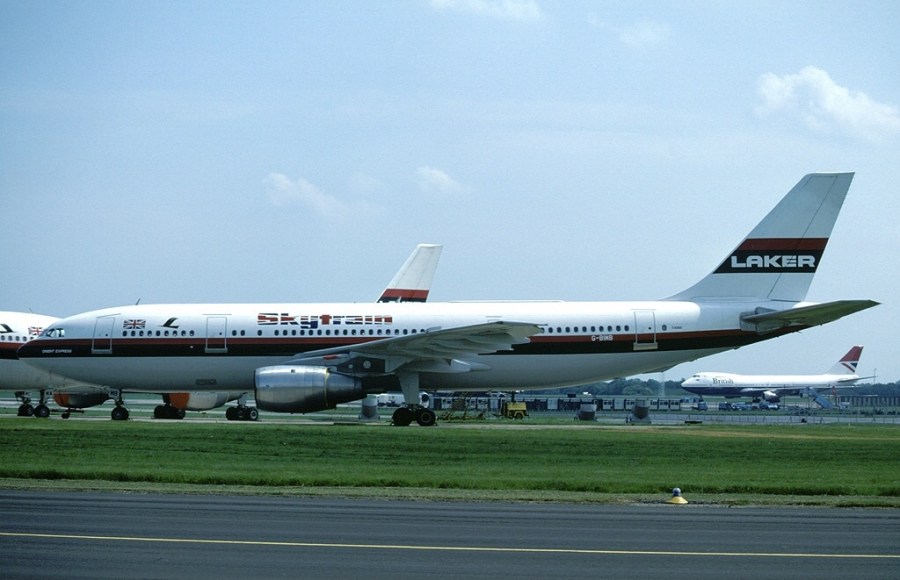
img_5885
Laker Skytrain Airbus A300 in 1982 at London Stanstead Airport – Eduard Marmet CC BY-SA 3.0

Within weeks Sir Freddie was trying to relaunch his airline by transferring Laker Airways licences to a new company – but this was blocked by the Civil Aviation Authority…. Twelve months later Sir Freddie sued British Airways, British Caledonian, Pan Am, TWA, Lufthansa, Air France, Swissair, KLM, SAS, Sabena, Alitalia and UTA – all IATA members – for a conspiracy to put his airline out of business…. He received an out of court settlement for $50m – and a separate £8m settlement from British Airways….

On this day in history….13th September 1970

On this day in history : 13th September 1970 – Concorde makes its first landing at Heathrow Airport to a barrage of complaints about the noise from local residents….

Image via Pinterest

Concorde 002 (G-BSST) was Britain’s first Concorde and made its maiden flight on the 9th of April 1969…. It took off from Filton for RAF Fairford, where it was to be based for testing and development…. The pilot was chief test pilot Brian Trubshaw, who made a faultless landing at Fairford despite the altimeters failing to function….

The Concorde was shown at the Farnborough Airshow on the 1st of September 1970 – shortly before making its landing at Heathrow on the 13th – its first landing at an international airport….

During its flight history Concorde 002 made 438 flights, 196 of which were supersonic…. Its final flight was on the 4th of March 1976, when it was delivered to Yeovilton Air Museum – where it can be seen today….

Concorde 002 G-BSST at Yeovilton Air Museum – Photo credit : Alan Wilson CC BY-SA 2.0

On this day in history….6th September 1952

On this day in history : 6th September 1952 – A de Havilland jet fighter disintegrates at the Farnborough Air Show – 31 people, including the pilot and the onboard flight test observer, are killed….

The prototype De Havilland DH.110 – Image : USN – US Navy Naval Aviation News July 1952 – Public domain

Pilot John Derry and flight observer Anthony Richards had collected the DH.110 prototype aircraft from de Havilland’s factory at Hatfield, Hertfordshire and had flown it to Farnborough, arriving just in time for their slot in the airshow’s schedule…. The plan had been to fly another prototype which had been used for the airshow the previous day – but it had developed technical faults…. The September 6th de Havilland display had nearly been cancelled….

Derry had been the first pilot in Britain to exceed the speed of sound, when flying a DH108 research aircraft in 1948…. During the performance at Farnborough he flew the DH110 in a supersonic dive, creating a sonic ‘boom’ and continued on a fly past at 40,000 feet…. He then completed a left bank, travelling at around 520mph and flew towards the 120,000 spectators at the airshow…. Next he pulled the jet into a climb – but within a second the aircraft had disintegrated – the outer wing sections, both engines and the cockpit separating from the airframe…. The cockpit landed, with both men still inside, in front of the crowd near to the runway – several spectators were injured….

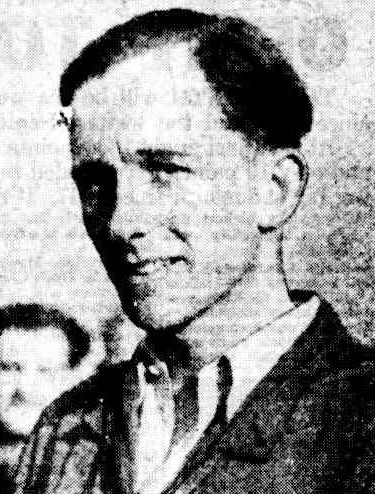
Pilot John Douglas Derry – National Library of Australia – Public domain

One engine crashed harmlessly…. The other carried on and ploughed into the crowd that had gathered on ‘Observation Hill’ – a vantage point outside of the airfield used by many locals to watch the display…. It was here that most of the fatalities occurred….

The emergency services were on the scene within minutes and after only a short break the air display continued! In total 31 people lost their lives, with many more injured….