On this day in history….26th October 899

On this day in history : 26th October 899 – The death of Anglo-Saxon King, Alfred the Great….the only English monarch to be known as ‘the Great’….
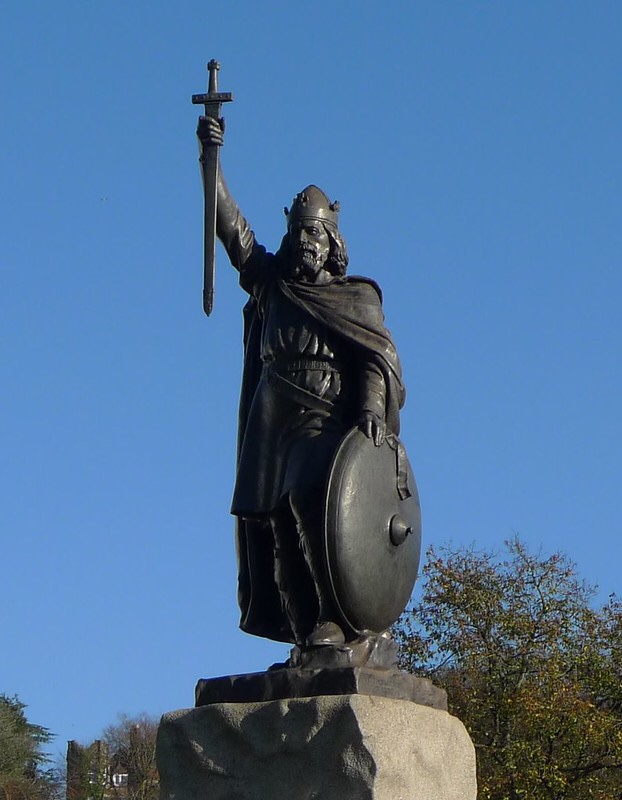
img_4409
Statue of Alfred the Great – Henry Burrows via Flickr

Alfred has been revered in history not only for his military successes and eventual peace-making with the Vikings but also for his educational and social reforms….

The cause of his death (at the approximate age of 50 years) is unknown – but he had suffered an illness all his life…. He was buried at the Old Minster – an Anglo Saxon cathedral in Winchester…. This was a temporary burial – as 4 years later he was moved to the New Minster, a Benedictine Abbey, possibly built for the purpose of taking his body….

In 1110 the monks of the New Minster were relocated to Hyde Abbey, situated just outside the walls of Winchester City…. They took with them Alfred’s remains and those of his wife and children…. During the reign of King Henry VIII Hyde Abbey was dissolved and demolished….

img_4407
Hyde Abbey, gatehouse, Winchester – John Armagh CC BY-SA 3.0

It was in 1788 that a prison was built on the site…. Upon finding coffins, whilst digging around the altar area, the lead was stripped from them and the bones within were scattered and lost…. The prison was demolished some time between 1846 and 1850….

In 1866 John Mellor, an amateur antiquarian recovered a number of bones from the site, claiming them to belong to Alfred the Great…. They came into the possession of the vicar of a local church, St. Bartholomew’s…. The vicar reburied the remains in an unmarked grave within the churchyard….

img_4408
St. Bartholomew’s Church, Hyde, Winchester – Johan Bakker CC BY-SA 3.0

The Winchester Museums. Service excavated the Hyde Abbey site in 1999 and discovered a pit in front of where the high altar would have been and concluded this was probably Mellor’s excavation…. The Museum Service found the foundations of the original abbey buildings….and some bones…. But they turned out to be those of an elderly woman….

In March 2013 the Diocese of Winchester exhumed the bones from the unmarked grave at St. Bartholomew’s – because of the huge publicity surrounding the discovery of King Richard III’s remains they were concerned for their safety…. The bones were put into storage for future analysis….

The Diocese later gave permission to a local group, Hyde 900, to test the bones….but radio-carbon dating showed them to be from the 1300s….

In January 2014 a fragment of pelvis unearthed at the 1999 Hyde Abbey site excavation was carbon dated to the right period…. Suggestions have been made it could belong to Alfred or his son….but this is still unproven….

I have a feeling we will never know the final resting place of Alfred the Great – perhaps after having had his ‘sleep’ disturbed so many times over the centuries he would prefer not to be found….
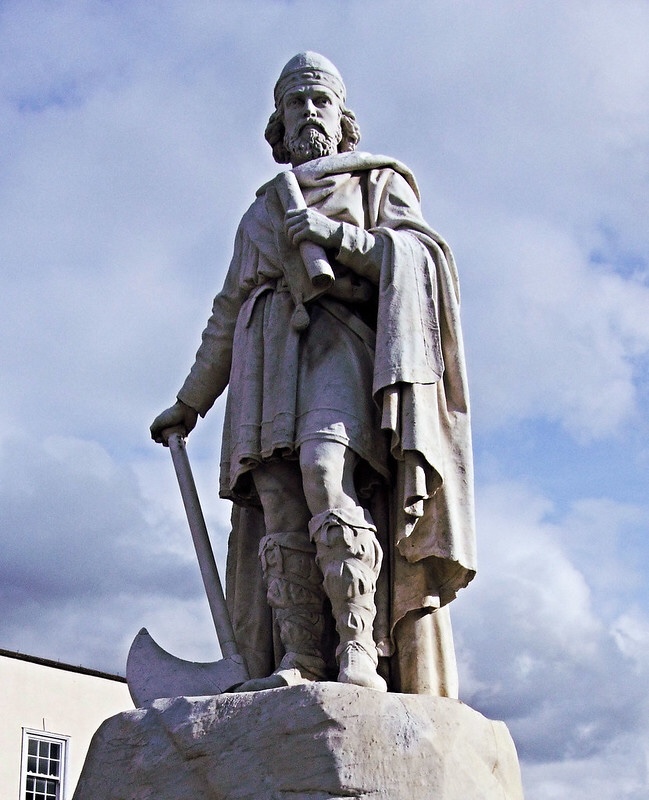
img_4410
Statue of Alfred the Great – Jim Linwood via Flickr

On this day in history….25th October 1760

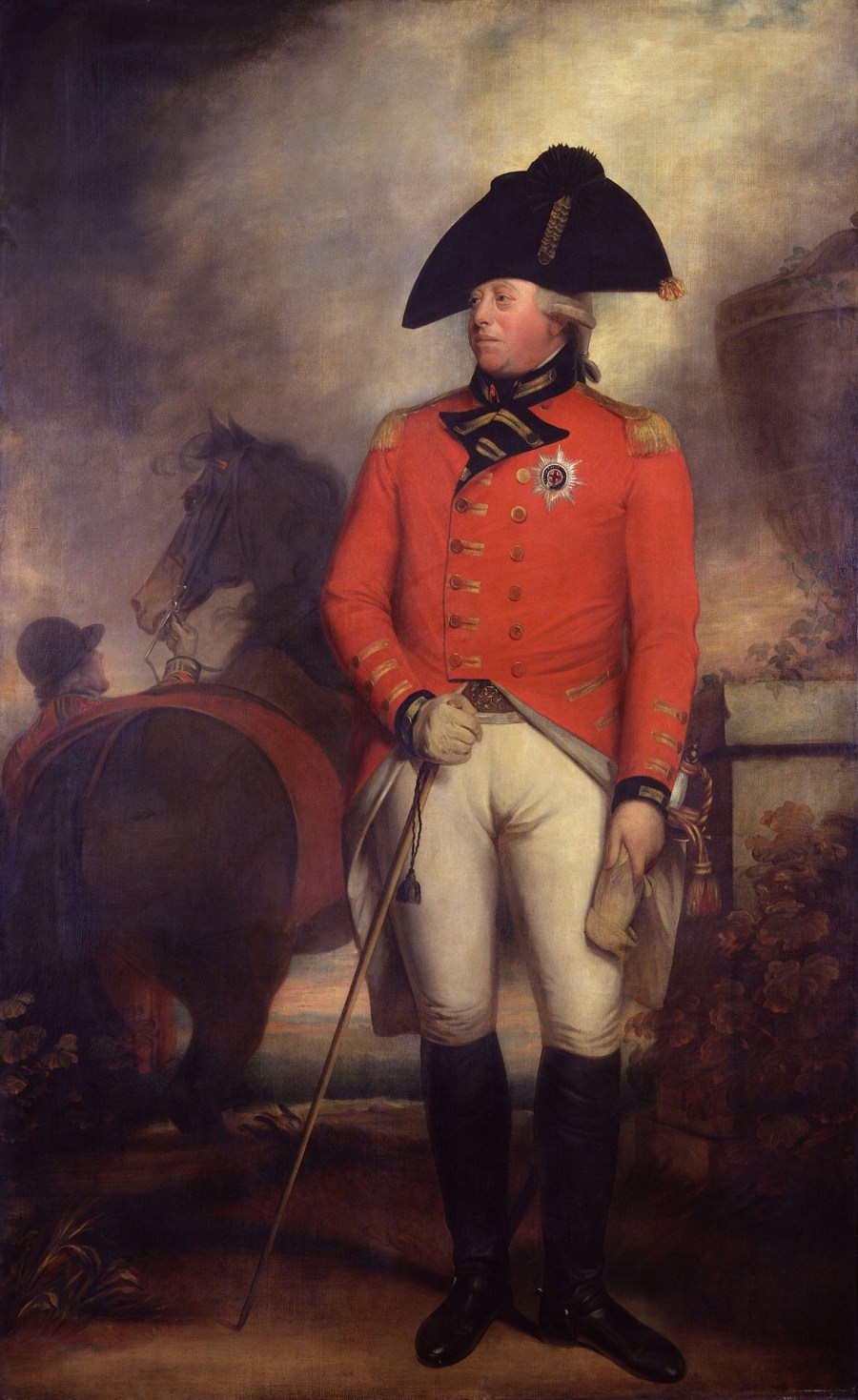
On this day in history : 25th October 1760 – George III becomes King of England and Ireland and reigns for almost 60 years – although he was mentally unfit to reign in his last decade….

img_4395
Coronation portrait by Allan Ramsay, 1762 – Public domain

Born in London at Norfolk House, St. James’s Square on the 4th of June 1738, George was two months premature and not expected to live – as a precaution he was baptised the same day…. However, he grew to be a healthy child, albeit rather shy…. Along with his younger brother, Prince Edward, George was educated by private tutors and could read and write in English and German….and by the age of 8 years was able to comment on current day political matters…. His lessons included physics, chemistry, astronomy, French, Latin, mathematics, geography, agriculture, music, commerce and law….

img_4396
George and brother Prince Edward, Duke of York, with their tutor Francis Ayscough – by Richard Wilson – Public domain

His father, Frederick, Prince of Wales, did not get on with his own father, King George II – and as a result the King took little interest in his grandchildren…. When Frederick died suddenly in 1751, from a lung injury, the young Prince George became heir to the throne….and suddenly his grandfather developed an interest in him…. The title of Prince of Wales was bestowed upon him – although the young George had inherited his father’s title of ‘Duke of Edinburgh’, ‘Prince of Wales’ was not automatically passed on….

King George II died suddenly on the 25th of October 1760 and the 22-year-old Prince of Wales succeeded the throne…. Being an unmarried monarch his mother and advisors were eager to see him settled down – and so the hunt for a suitable wife began….

On the 8th of September 1761 the new King married Princess Charlotte of Mecklenburg-Strelitz, from a small North German duchy…. Their marriage took place in the Chapel Royal, St. James’s Palace – and it was the first time they had ever met….

img_4398
Princess Charlotte by Johann Georg Ziesenis C1761 – Public domain

Princess Charlotte had received a far more basic education to that of George – her upbringing could be compared to that of an English country gentleman’s daughter….she would have had little interest or experience in politics or such matters…. However, theirs was a good match, it worked and they became devoted to one another – unlike his grandfather before him and indeed his own sons after him, George never took a mistress…. The marriage produced 15 children – 9 sons and 6 daughters…. In 1761 King George bought Buckingham House (now Buckingham Palace) for his wife as a comfortable family home….close to St. James’s Palace, where all important court functions took place it became known as the Queen’s House….

Their’s was, it seems, a happy marriage – but as the years went by George began to become unwell – suffering from bouts of mental illness…. The cause of his illness remains unknown, although there have been suggestions it was due to the blood disease porphyria….

George’s reign would have been a particularly stressful one – there were many military conflicts and wars during the time….not least the American War of Independence…. George would have been under much strain as many of Britain’s colonies in North America were lost….

img_4397
Portrait by Sir William Beechy 1799/1800 – Public domain

In late 1810, already nearly blind with cataracts and suffering great pain from rheumatism, George became extremely ill…. He blamed stress after the death of his beloved youngest daughter, Princess Amelia – who had died from TB….

King George III was mentally unfit to reign in his last decade….his eldest son – the later George IV – acted as Prince Regent from 1811…. Queen Charlotte was terrified by her husband’s illness – he had developed acute dementia, had become completely blind and increasingly deaf and even showed erratic and violent behaviour – eventually she could not bring herself to visit him…. When she died in November 1818 he was incapable of understanding….

For the last few weeks of his life George was unable to walk…. Christmas 1819, for a 48 hour period he spoke utter nonsense and could be understood by no one…. He died at Windsor Castle on the 29th of January 1820…. Despite his illness, George III lived and reigned longer than any of his predecessors – only Queen Victoria and Queen Elizabeth II have lived and reigned longer….

On this day in history….23rd October 1843

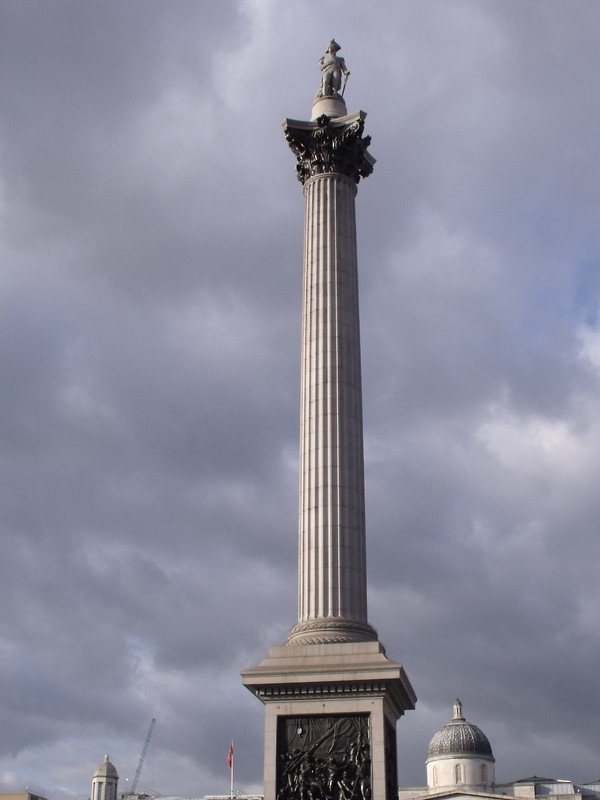
On this day in history : 23rd October 1843 – Nelson’s Column in Trafalgar Square, erected to commemorate Admiral Horatio Nelson’s victory at Trafalgar in 1805, is finally completed….img_4388

In February 1838 a group of 121 Peers, MPs and dignitaries formed a committee to organise a monument to Lord Nelson…. It was funded mainly from private donations, including very generous help from the Tsar of Russia – and the British Government agreed to provide a site in Trafalgar Square, in front of the National Gallery….

A competition was held for the design – with a budget guide of between £20K-£30K…. (The end cost was actually £47K, over £3 million in today’s terms)…. The winning design came from William Railton; however, after criticism of how the completion was organised, it had to be run again…. After making slight revisions to his original design, Railton still won….the wining entry was chosen by a sub-committee, led by the Duke of Wellington….

Excavation work on the site began in July 1840 and on the 30th of September 1840 the first stone was laid – by Charles Davison Scott, honourably Secretary of the committee and also the son of John Scott, who had been Nelson’s secretary….

img_4385
Nelson’s Column under construction 1843 – William Henry Fox Talbot – Public domain

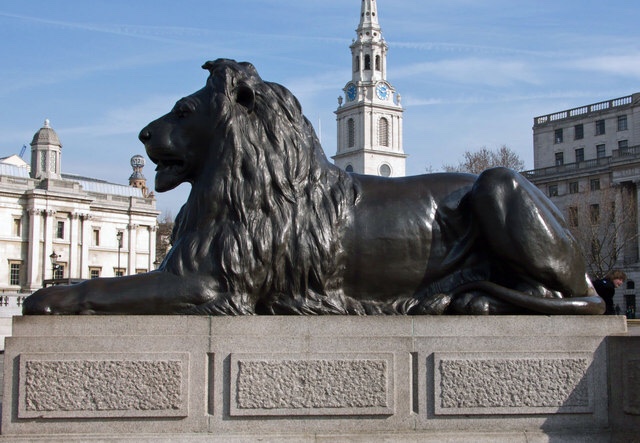
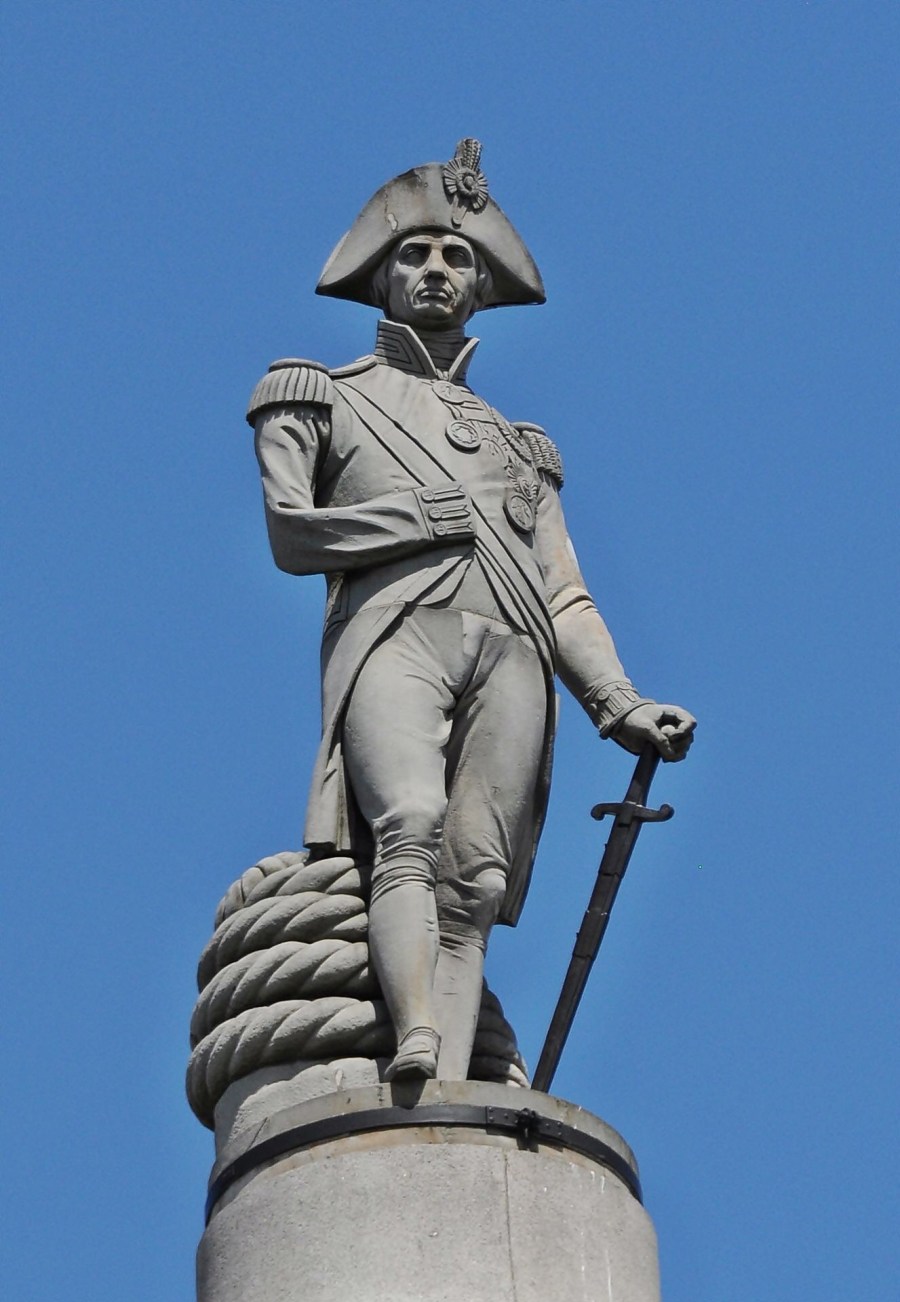
Built from Dartmoor granite, with a Craigleith sandstone statue of Nelson, designed by E.H.Baily, the monument has four bronze lions at the base – which were added in 1867…. The lions were designed by Sir Edwin Landseer and have come into some ridicule over the years…. Landseer had been given a dead lion by London Zoo, as a model to work from….but unfortunately it rotted and he had to resort to artistic licence….

img_4387
One of the lions at the base designed by Landseer – Image credit : Anthony O’Neil CC BY-SA 2.0

The pedestal is decorated by four bronze relief panels, one on each side….and were cast from captured French guns…. They depict the Battle of Cape St. Vincent, Battle of the Nile, Battle of Copenhagen and the death of Nelson at Trafalgar…. The statue of Nelson himself faces down Whitehall towards the South – to HMS Victory at Portsmouth – and further beyond towards Southern Spain and Cape Trafalgar…. Fourteen stone masons were responsible for hoisting the statue up to the top of the column – and they held a dinner party up there on the plinth before doing so….

During World War 2 the German Luftwaffe were ordered not to bomb Nelson’s Column – as the intention was to move it to Berlin after they had ‘won the war’….

img_4386
The sandstone statue of Nelson by Edward Hodges Baily – Image credit : Beata May CC BY-SA 3.0

On this day in history….22nd October 1877

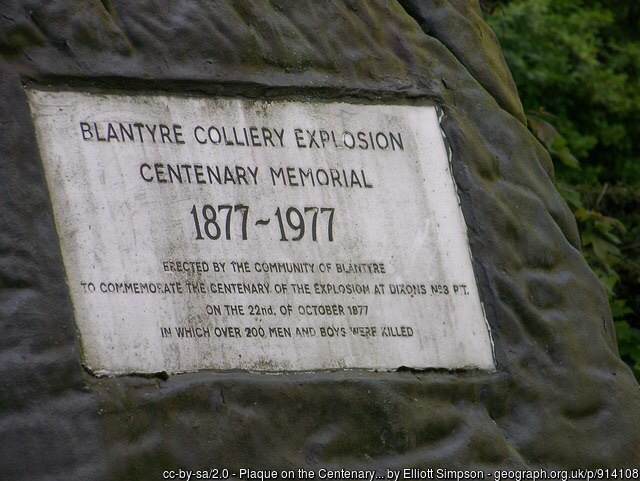
On this day in history : 22nd October 1877 – An explosion at the High Blantyre Colliery sees Scotland’s worst ever mining disaster…. At least 218 men and boys are killed, the youngest just 11-years-old….img_4365

It was a gloomy Monday morning….230 men went down the mine to start work as usual at 5.30am…. At 8.45am a huge underground explosion occurred that could be heard from miles around, an explosion that lasted between 4 and 5 minutes…. Flames could be seen coming from 2 of the 5 pits….

The pit horn would have signalled the disaster….women would have rushed to the scene fearing for their menfolk…. As the news spread workers from neighbouring pits hurried to help… The rescue effort was led by James Gilchrist, manager of Mr John Watson’s Colliery – he had formerly been employed at Blantyre and so knew it well….

The presence of carbon dioxide and debris caused major difficulties but the rescuers persevered throughout the day and into the night….before eventually being forced to suspend the rescue mission due to ‘bad air’…. The search resumed the following morning – those that were brought out alive were so badly burnt or suffering from the effects of ‘choke-damp’ (carbon dioxide) that they died either on the way to or in Glasgow Infirmary….

The bodies recovered from the pit were taken to ‘the death house’ – a temporary mortuary…. They were washed and tended to by the women of the village…. It was here the womenfolk came to identify their husbands, sons, sweethearts and fathers…. For some women it meant several trips to find their loved ones – for many the entire male family members were taken from them…. The disaster left 106 widows and 300 fatherless children….img_4364

Once identified the bodies could be taken home – often in a handcart – so that funeral preparations could be made…. Little did they know that less than 2 years later, on the 9th of July 1879, another disaster was to strike at pit no.1 – claiming another 27 lives….

On this day in history….21st October 1958

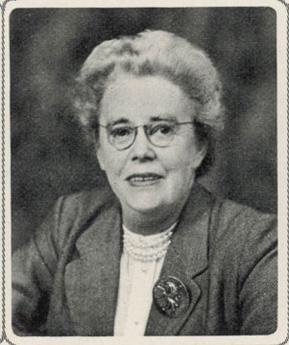
On this day in history : 21st October 1958 – Stella Isaacs, Marchioness of Reading and Baroness Swanborough is the first woman to take her seat in the House of Lords….

img_4360
House of Lords Chamber : Image : UK Parliament CC BY-SA 3.0

Baroness Swanborough had been heavily involved with charity work for most of her life, including founding the Women’s Voluntary Service in 1938….

“I have no right to speak, except for my experience over many years with a great number of very strong commonsensical women”…. – Stella Isaacs

img_4359
Lord and Lady Reading c.1935 – Public domain

After the passing of the Life Peerages Act, 1958 women were finally allowed to sit in the Upper House as life Peers…. Baroness Swanborough was not the first woman to be appointed (that went to Baroness Wootton of Abinger) – but she was the first woman to take her seat…. Before 1958 only male hereditary Peers were permitted to sit in the House of Lords, along with a small number of judges (Law Lords) and Bishops…. There were women hereditary Peers but of course they were not allowed to sit…. The Life Peerages Act was passed to address the problem of a decline in the number of members….by opening the way to include life Peers this also opened the channels for women…. Ironically, hereditary ‘Peeresses’ were still excluded until the Peerage Act, 1963….

img_4361
Baroness Wootton of Abinger – Fair use

With women now being allowed into the formerly male dominated establishment certain changes had to be made…. The House of Lords administration had to decide what to call their new female counterparts…. “Peeresses” was favoured by the establishment but the women fought hard to be known as Peers…. Even as late as 1970 there was still resistance to this….but eventually ‘Women Peers’ became accepted….

Another matter was ‘Oh what to wear!’…. It was decided ceremonial dress would consist of a scarlet robe, trimmed with ermine and gold oak leaf lace…. To complete the ensemble a Tricorne hat, designed and made by Ede and Ravenscroft….constructed from lightweight black velour and adorned on the left-hand side by a rosette of gold lace with a gold sequinned button at the centre….

Bathroom facilities were an issue that needed to be addressed…. A ‘Peeresses retiring room’ was allocated, redecorated and furnished…. In 1958 four women took their seats in the House of Lords; by 1971 there were 46 women Peers and the facilities were desperately inadequate…. A letter from the Yeoman Usher of the Black Rod stated two baths and two lavatories were urgently required…. Nowadays there are approximately 200 women Peers…. The first female Chief Whip was Baroness Llewelyn-Davies of Hastoe in 1973 and the first woman leader of the House of Lords was Baroness Young in 1981….

img_4362
Baroness Young – Image : BBC – Fair use