On this day in history….3rd May 1951

On this day in history : 3rd May 1951 – King George VI opens the Royal Festival Hall on London’s South Bank and inaugurates the Festival of Britain – promoting the best of British in art, design and industry….

Timed to mark the centenary of the Great Exhibition of 1851 the festival was intended to raise public spirits after the austerity of the years following World War II…. There were those that said it was a waste of money – but the festival attracted 8.5 million visitors in 5 months…. It demonstrated Britain’s achievements in the arts, science, technology and industrial design….
img_3090
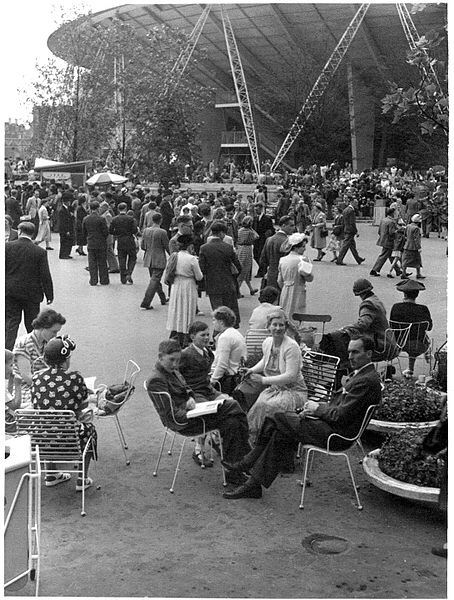
Visitors to the Festival of Britain – Opringle at English Wikipedia CC SA

The day was one of celebration, tradition and prayer…. A large crowd cheered the royal procession on the route from Buckingham Palace to St. Paul’s Cathedral – where the King, Queen and Princesses Elizabeth and Margaret, along with other members of the royal family, attended a special service….

On route to St. Paul’s the procession stopped at Temple Bar where in a traditional ceremony King George received the Pearl Sword of the City…. The Lord Mayor of London has precedence over all other subjects within the boundaries of the City of London…. He surrenders the sword to the Sovereign as a symbol of recognition to the Sovereign’s supremacy…. King George then handed the sword back and the Lord Mayor led the procession on to St. Paul’s….

After the service at St. Paul’s King George, in a broadcast from the steps of the Cathedral, declared the festival open…. Later in the afternoon the royal family attended another service at the Royal Festival Hall….a service of dedication led by the Archbishop of Canterbury….img_3086

A 41-gun salute was fired from Hyde Park and the Tower of London…. Celebrations took place across the country, with art and design exhibitions….and in the evening 2,000 bonfires were lit across Britain….

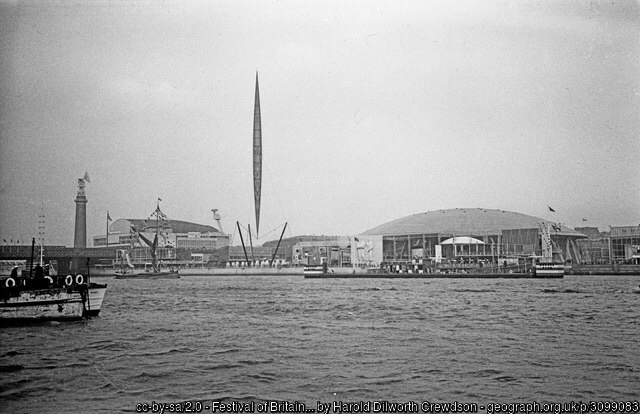
The Royal Festival Hall was designed by Sir Robert Matthew, Leslie Martin and Sir Hubert Bennet along with a team of architects and designers…. Battersea Park was transformed into Festival Pleasure Gardens with fountains, a grotto and tree walk…. Several other buildings, such as the Skylon and Dome of Discovery were also built on what had been a bomb site near to Waterloo Station…. Now only the Royal Festival Hall remains, although it is surrounded by the National Film Theatre (1952), the Royal National Theatre (1963) and the Hayward Modern Art Gallery (1968)….

img_3089
Night time view of the Skylon – HeresyOuk CC SA


img_3087

img_3088


On this day in history….2nd May 1942

On this day in history : 2nd May 1942 – HMS Edinburgh is sunk in the Barents Sea off the Norwegian coast….with a cargo of gold bars, which lay un-salvaged until 1981….

img_3078
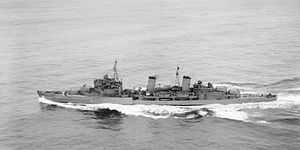
HMS Edinburgh, October 1941 – Royal Navy official photographer Coote, RGG (Lt) – Public domain

Under the command of Rear-Admiral Stuart Bonham-Carter HMS Edinburgh was acting as flag-ship escorting a convoy of 17 ships departing from Murmansk, Norway on the 28th of April 1942 bound for Britain…. On the 30th of April a torpedo hit the Town-class Light Cruiser and she began to list…. Quick acting crew managed to close the watertight bulkheads at the front to prevent her from sinking….

img_3079
Rear-Admiral Stuart Bonham-Carter – from the collections of the Imperial War Museums

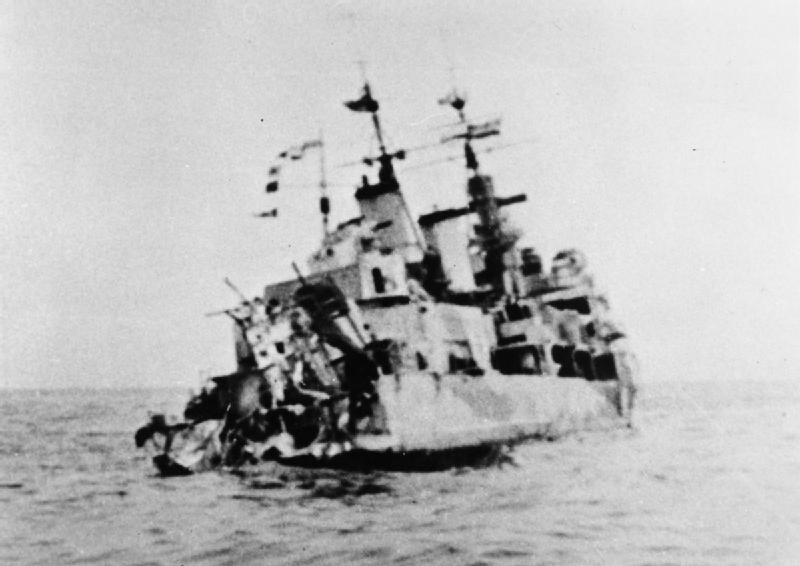
Shortly after another torpedo was to hit Edinburgh’s stern, crippling her…. It was decided to try and attempt to tow her back to Murmansk; two destroyers – Foresight and Forester – along with four minesweepers – Niger, Hussar, Gossamer and Harrier – were despatched to accompany her….

img_3077
HMS Edinburgh’s wrecked stern – image assumed Royal Navy – Public domain

Progress was slow but on the 2nd of May the small convoy and stricken Edinburgh reached Bear Island, the most southernmost Norwegian Svalbard Archipelago island – but then she was attacked by three large German destroyers….

Edinburgh cast off her tow and started to sail in circles, at the same time firing her guns…. One of the German destroyers was so badly damaged its crew scuttled it….

Edinburgh took another torpedo hit and her crew were forced to abandon…. Gossamer and Harrier took the crew onboard; 58 men had lost their lives….

Harrier then attempted to scuttle Edinburgh using gunfire….although 20 shells were fired she remained afloat…. Even after depth charges were used she refused to sink…. Eventually Forester used her last torpedo to sink HMS Edinburgh….

img_3081
Barents Sea Map – assumed author NormanEinstein CC SA 3.0

4.5 long tons of gold bullion went down with Edinburgh….465 gold ingots in 93 wooden boxes, which were stored in the bomb room at the front of the ship…. She was carrying the gold back to the UK; it was part of a payment from Russia for war equipment received from the Western Allies…. In 1942 the bullion was worth £1.5 million, equating to nearly £70m today….

In 1954 the British government offered the salvage rights to a British salvage company….but because by then the relationship had become strained with Russia plans were put on hold…. In 1957 the wreck became a designated war grave making any further thoughts of retrieving the gold improbable….

However, in the late 1970s the government became increasingly worried that Russian salvagers were going to attempt to recover it…. In the early 80s a contract was awarded to a leading global diving company…. Experienced divers from Jessop Marine, under the guidance of Wharton Williams Ltd were to attempt to cut into the wreck – far more sensitive and appropriate for the situation as opposed to the normal explosive methods usually employed….

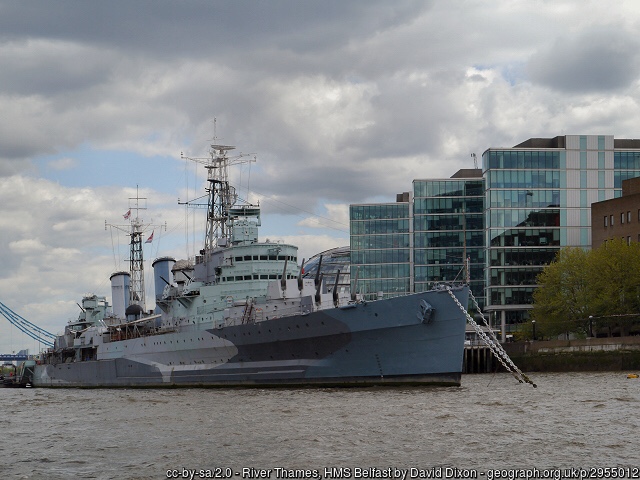
In April 1981 survey ship Dammtor began to search for Edinburgh in the Barents Sea – in less than 48 hours it had found her….in 800ft of water…. Using detailed film footage the team were able to evaluate the recovery project…. Edinburgh’s sister ship HMS Belfast, moored in the Thames, was also invaluable to the planning of the operation…. The divers were able to gather vital information and knowledge as to the layout and interior of the ship especially around the bomb room area….

img_3080
HMS Belfast

The diving operation began on the 30th of August 1981, under the leadership of Mike Stewart, a former Royal Navy clearance diving officer. On the 15th of September diver John Rossier found the first gold bar….by the 7th of October 431 of the 465 gold ingots had been recovered….but then bad weather forced the operation to stop…. However, it was a bullion recovery project in deep water diving that set a world record – a record that still stands today….

In 1986 a further 29 bars of gold were brought up….that means there’s still five bars down there…!

On this day in history….1st May 1840

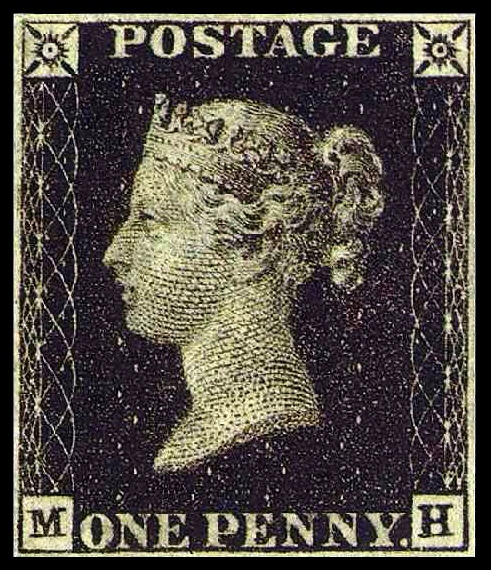
On this day in history : 1st May 1840 – The Penny Black, the World’s first adhesive postage stamp is first issued in Great Britain – but is not officially valid for use until the 6th of May…

img_3071

At the time Britain’s postal system was slow, mis-managed and expensive…. The postage was usually paid for by the recipient – who could quite simply refuse a letter they did not wish to receive…. Alternatively it may have been correspondence they were desperate to receive but were too poor to pay for…. Letters were charged per sheet and the distance travelled…. Teacher, inventor and social reformer Sir Rowland Hill campaigned for a reform on the complicated system; he proposed a pre-paid adhesive stamp…. One penny would allow a letter weighing up to half an ounce (14g) to travel any distance across the land….

img_3073
Sir Rowland Hill, KCB – Public domain

Teaming up with Sir Henry Cole, civil servant and inventor – who incidentally introduced the first commercial Christmas card – a competition was launched for the design of the stamps…. Some 2,600 entries were received but none were considered to be suitable….

Hill settled on a rough design with a profile of a young Queen Victoria in her days as a princess – believing this to be an image that would be hard to forge…. From this idea a portrait was engraved by Charles Heath and his son Frederick…. They based the final design on the cameo-style head that had been featured on a medal issued to commemorate Queen Victoria’s visit to the City of London in 1837…. This portrait remained on all British stamps until her death in 1901….

img_3074
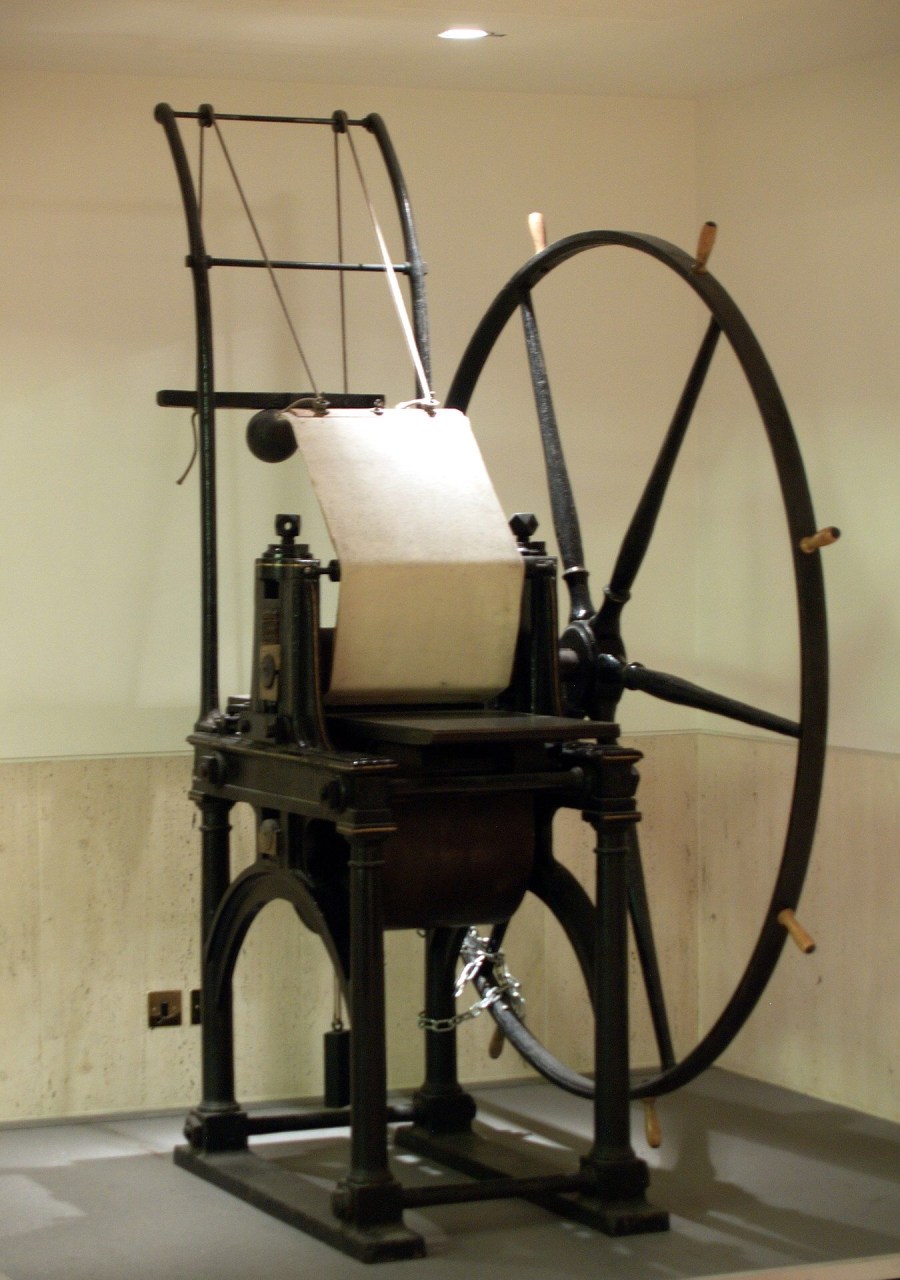
The Jacob Perkins’ press, which printed the Penny Black and the 2d Blue, in the British Library Philatelic Collections – Image credit: takomabibelot CC BY 2.0

Since then all British postage stamps have included a portrait or silhouette of the reigning monarch…. Britain is the only country in the World that doesn’t use anything other than the monarch’s image to show country of origin….

Although officially not sold until the 6th of May 1840 there were places, such as Bath, that sold them before…. There are some stamps around with the date mark of May the 2nd and even one example dated May the 1st 1840….img_3072

The Penny Black lasted less than a year as it was hard to see the red cancellation mark to show the stamp had been used…. Added to that the red ink was too easy to remove…. In February 1841 the Penny Red was introduced….

In total 286,700 sheets of Penny Blacks were printed, giving 68,808,000 stamps…. The only complete intact sheets still in existence are owned by the British Postal Museum….img_3070

On this day in history….30th April 1948

On this day in history : 30th April 1948 – Iconic British all-terrain vehicle, the Land Rover, makes its debut appearance at the Amsterdam Motor Show….img_3064

The Land Rover was the brainchild of Maurice Wilks, chief designer at Rover and his brother Spencer, who was the Managing Director…. Maurice had been using an American Willys-Overland Jeep on his Anglesey farm but it was proving to be temperamental…. In 1947 the brothers decided to put their heads together and come up with a more reliable vehicle – one that could work on the farm but be more versatile than a tractor…. The very first prototype they developed had a central driving position and used many components from the Willys Jeep….

Three prototypes were shown at the Amsterdam Motor Show – later these vehicles would evolve into the ‘Series I’…. With a 50bhp 1595cc Rover petrol engine, 80in wheelbase, pick-up body and canvas roof it was priced at £450…. The original plan was that it would be a temporary stop-gap for Rover in the difficult financial period following World War 2….

After the show the three vehicles were brought back to Solihull, converted to right hand drive and sold…. In the first year after the launch 8,000 Land Rovers were built and in 1949 the British Army ordered its first batch to trial…. It quickly became obvious this was not just a farm vehicle….with its diverse versatility it has since been used by organisations all over the World…. From our own emergency services here in the UK to wildlife safari operators in South Africa this workhorse is at home anywhere…. Since 1953 it has been a firm favourite with the Royal Family….

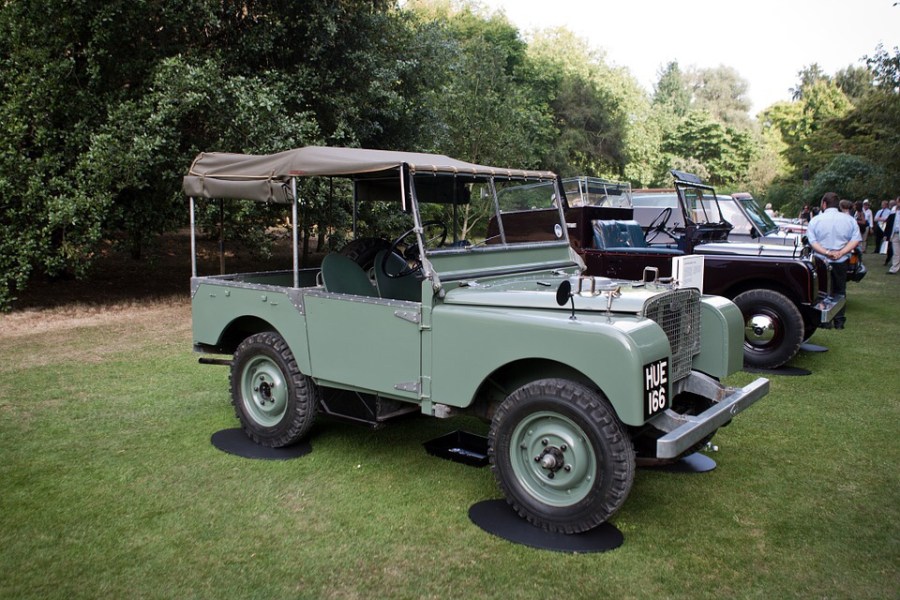
The last Defender rolled off the production line in 2016….but what of the very first one? HUE 166, chassis no.LR1, affectionately known as ‘Huey’, is now kept at the British Motor Museum in Graydon….

img_3059
‘Huey’ – Image credit: DeFacto

Another of the three prototypes has surfaced in recent years…. SNX 910 went to work on a farm and wasn’t registered for road use until June 1955…. It sold in 1961 and was to change hands a few more times before ending up in Worcestershire…. It then went to a farm in Wales and spent the next twenty years in a field…. In 1988 the Land Rover’s engine seized and since it wasn’t worth repairing as a farm vehicle it became redundant…. Eventually it was sold to a Land Rover enthusiast in Birmingham who had the good intention of restoring it…. However, like so many of these intended projects, it never happened and the vehicle was left standing forgotten in the garden….

It was in 2016 that somebody with a keen eye spotted the lonely Landy…. After confirmation from Jaguar Land Rover that it was indeed one of the original three prototypes it was passed to the Land Rover Series I Reborn restoration programme to be brought back to its former glory – ready to take its rightful place next to Huey….

img_3066
SNX 910 awaiting restoration – image credit Land Rover MENA via flickr

On this day in history….29th April 1986

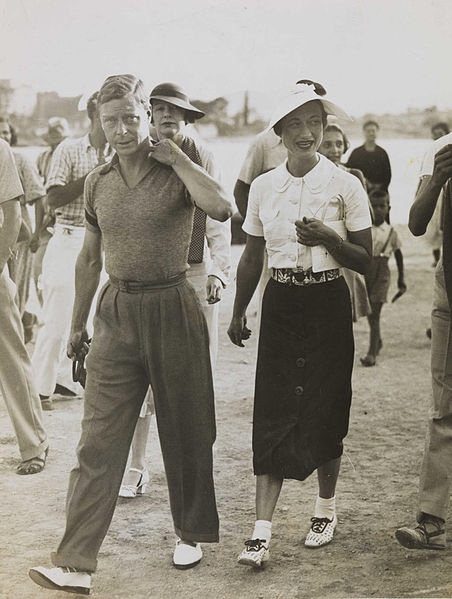
On this day in history : 29th April 1986 – The funeral of Wallis Simpson, Duchess of Windsor – who is laid to rest alongside her husband, the abdicated King Edward VIII at Frogmore in Windsor….

img_3048
Public domain

The service at St. George’s Chapel was a simple affair, unlike most royal funerals…. One hundred guests attended, among them Prime Minister Margaret Thatcher and Leader of the Opposition Neil Kinnock…. The royal family was represented by Her Majesty the Queen, the Duke of Edinburgh, the Prince of Wales, Princess Diana, Princess Anne and the Queen Mother….

At the Duchess’s request there was no funeral address and very few flowers…. Although a single striking wreath of orange, yellow and white lilies from the Queen lay on the English oak coffin – with its simple inscription on a silver plate ‘Wallis, Duchess of Windsor, 1896-1986’…. The final blessing was given by Dr. Robert Runcie, Archbishop of Canterbury….

img_3050
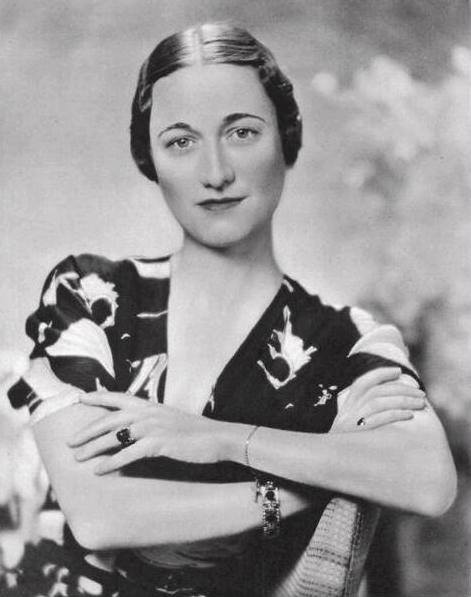
Wallis, 1919 – Public domain

Just eight personal friends and four members of the royal family – the Queen, Duke of Edinburgh, Prince Charles and Princess Diana – stood at the graveside for the burial…. The Queen had decided that the Queen Mother would not be present as she and Wallis had endured a difficult relationship…. The Queen Mother blamed the premature death of her husband, George VI, on the stress that came with being King – a role forced upon him after the abdication of his brother, Edward VIII, to marry the woman he loved…. Something the Queen Mother could neither forgive nor forget….she was still angry…. Indeed she had once called the Duchess “the lowest of the low”….

The American divorcee married her second husband Ernest Aldrich Simpson, an Anglo-American executive and former officer in the Coldstream Guards and they settled down to live in London…. He had divorced his first wife Dorothea, with whom he had a daughter, to marry Wallis….

Not long after Wallis became friends with Thelma, Lady Furness – who was the mistress of Edward, Prince of Wales…. On the 10th of January 1931 Thelma introduced Wallis to the Prince; he then met her with her husband several times more between 1931 and 1934 at various functions – Wallis was even presented at Court…. Meanwhile, Ernest was beginning to experience financial difficulties….

In January 1934 Lady Furness visited New York, whilst she was away Wallis and the Prince became lovers…. Soon he was besotted, showering her with gifts and jewels…. His parents however, particularly his father, King George V, were outraged….

img_3049
Wallis Simpson and Prince Edward 1935, Austria – Public domain

On the 20th of January 1936 King George V died and Edward succeeded to the throne…. Wallis was still married and the new King’s behaviour made him unpopular with the government and deeply upset his mother and brother, the Duke of York….

img_3047
King Edward VIII and Mrs Simpson on holiday in Yugoslavia – via Flickr the Commons – Public domain

Wallis divorced Ernest, on the grounds of his adultery – but even now she was free to re-marry she was thought to be unworthy as a Consort…. So, to marry the woman he loved King Edward VIII had to give up the throne…. On the 10th of December 1936 he signed an Instrument of Abdication….

They married on the 3rd of June 1937 in France….and remained together until his death in 1972…. Afterwards Wallis lived in chosen exile in France…. There are some who believe she married Edward for his wealth….but for others their’s was the love story of the century….

img_3051
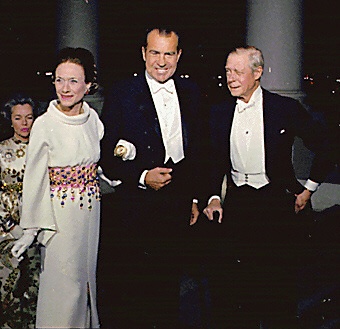
Wallis and Edward, 1970 with President Richard Nixon – Image credit: Jack E Kightlinger – Public domain