On this day in history : 3rd August 1692 – The birth of English clergyman John Henley – known as ‘Orator Henley’ because of his eccentricity and showmanship….
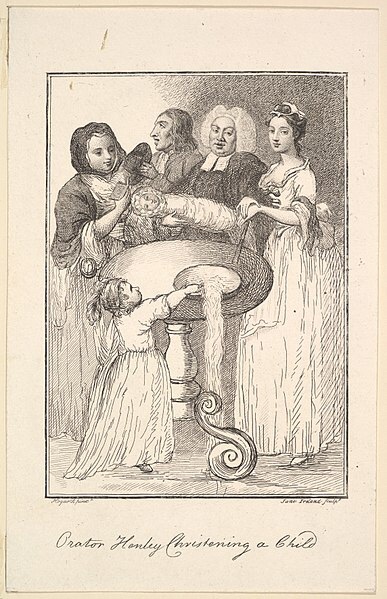
Orator Henley christening a child – Public domain
Born in Melton Mowbray, the son of a vicar, Henley had received a grammar school education and had then gone on to study at St. John’s College, Cambridge…. Or, as he put it – “Ye college where I had ye stupidity to be educated”….
He became assistant, then director at Melton Mowbray Grammar School before moving to London in November 1721 to become an assistant preacher…. It was also during this period that he wrote several books…. It was after quarrelling with the Bishop of London that he began his own series of lectures – or ‘orations’ as he liked to call them – on ‘theological subjects and mundane matters’….
In 1723 he became Rector of Chelmondiston in Suffolk and on the 3rd of July 1726 opened his ‘Oratory’ – in a meeting room over the Shambles in Newport Market…. So keen were people to hear his somewhat unorthodox method of preaching that he moved his Oratory to a bigger premises – in an old theatre at Clare Market, near to Lincoln’s Inn Fields….
His well-attended meetings, in which he preached “on the world as it is, serious or ridiculous’ would often turn into a rowdy affair…. His theatrical approach prompted the weekly critical paper ‘The Connoisseur’ to write: “the Clare Market Orator, while he turns religion into farce, must be considered as exhibiting shrews and interludes of an inferior nature, and himself regarded as Jack-Pudding in a gown and cassock”….
Despite this criticism his services remained as popular as ever – not just with those attending for their entertainment value but also by freethinkers – those who inquire into the basis of traditional religious beliefs….
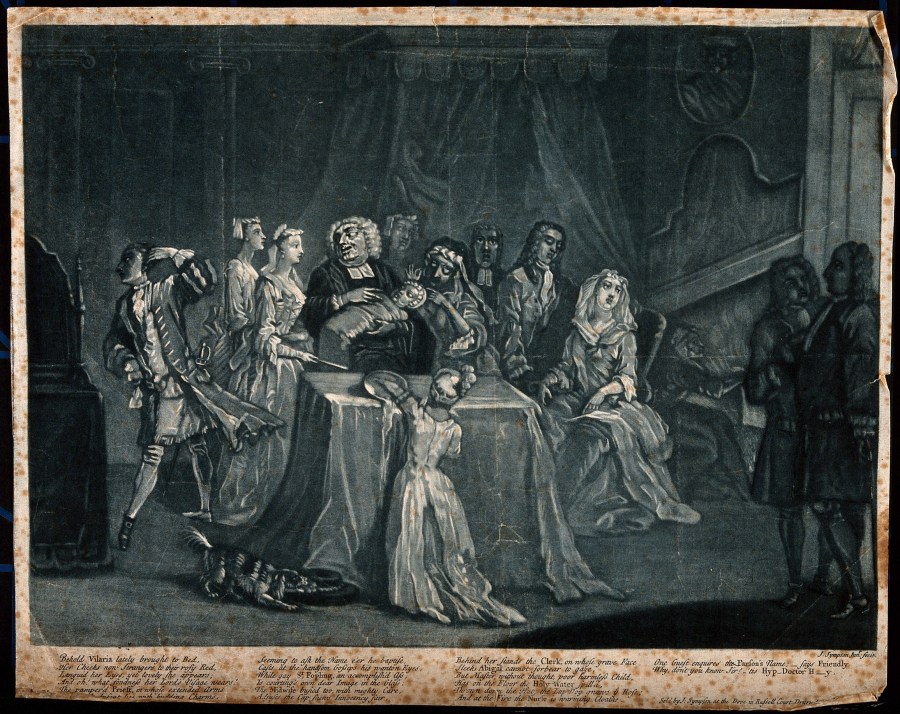
Orator Henley – Image credit : The Wellcome Collection CC BY
One cannot help wondering if the more cynical amongst his ‘flock’ didn’t have a point though…. It was once suggested that the god he actually worshipped was money….after all, he did charge a shilling to attend his meetings…. When questioned on this policy he replied that the seats were his personal property….
On this day in history : 2nd August 1784 – The first purpose scheduled mail coach begins a delivery service between Bristol and London…. It is the brainchild of theatre owner John Palmer….
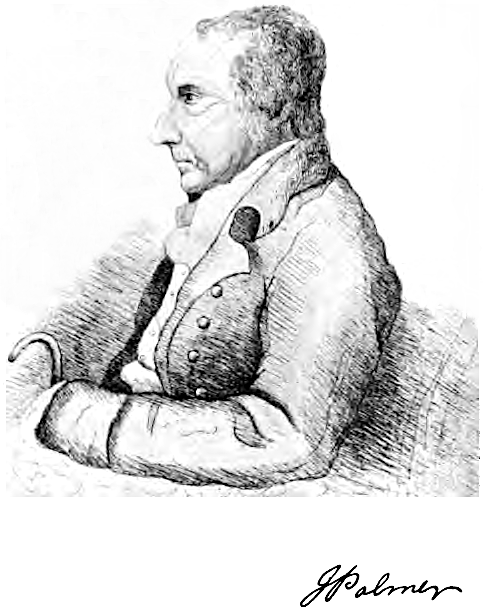
John Palmer (aged 75) – Robert Charles Tombs – Public domain
For 150 years, since its introduction in 1635, Britain’s postal service had used mounted riders who had ridden between appointed ‘posts’…. The postmaster would then remove the letters for his local area….remaining letters and any additions would then be handed on to the next rider…. Under this system the riders were vulnerable to frequent robberies….
John Palmer owned theatres in Bristol and Bath – he used stage coaches to move actors, stagehands and props between them….it was a safe and efficient way of doing so…. He was also a regular user of the stage coach to travel to various towns and cities himself…. He pondered that he could travel from Bath to London in a day – but a letter doing the same journey could take up to three days….
In 1782 he made the suggestion to the Post Office in London that perhaps they could use a stage coach instead…. His idea was met with little enthusiasm – their belief being that the existing system could not be improved upon…. However, the then Chancellor of the Exchequer, William Pitt, allowed Palmer to carry out an experimental run between Bristol and London; the existing postal service took around 38 hours….
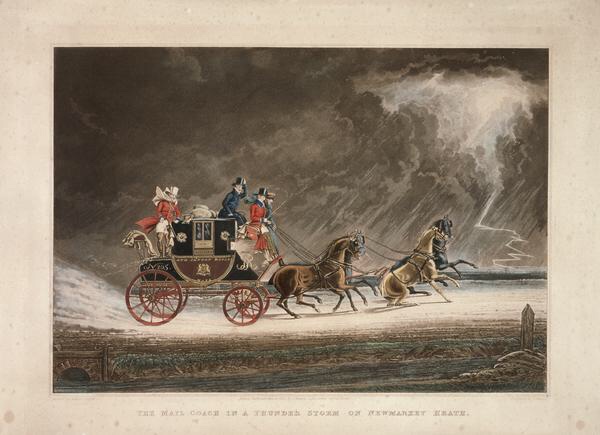
Print showing a mail coach in the black and scarlet livery of the Post Office, near to Newmarket, Suffolk, 1827 – G.Reeves – Public domain
The coach left Bristol at 4pm on the 2nd of August 1784 and arrived in London just 16 hours later…. So impressed was Pitt that he authorised other routes to be set up…. Within a month services ran between London and Norwich, Liverpool, Manchester and Nottingham…. By the end of 1785 Leeds, Portsmouth, Poole, Dover, Exeter, Gloucester, Worcester, Holyhead and Carlisle had been added….with Edinburgh the following year…. In recognition of his role in the reformation of the postal service Palmer was made Surveyor and Comptroller General of the Post Office….
On this day in history : 1st August 1984 – The preserved body of a man who became known as ‘Lindow Man’ is discovered by a peat-cutter working at Lindow Moss in Cheshire….
Lindow Moss, where Lindow Man was discovered – Photo credit : Roger Gittins CC By-SA 2.0
The peat-cutter had the task of keeping a conveyor belt free of debris…. Thinking a lump of wood had got amongst the peat he picked it up and threw it aside…. As the lump hit the ground the dirt fell away….revealing a human leg….
The county archaeologist was called in – who searched the area where the peat had been taken from….and he found a piece of dark skin protruding from the ground…. After a few days of careful excavation Lindow Man was lifted from the ground – encased in a block of surrounding peat….
The British Museum called it “one of the most significant archaeological discoveries of the 1980s” – and Lindow Man caused quite a media sensation….
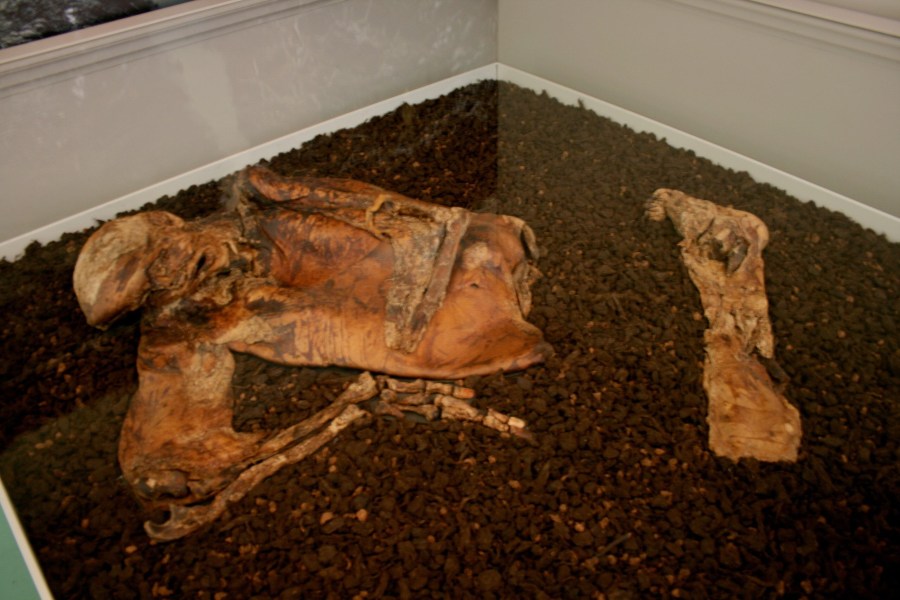
Lindow Man on display at the British Museum in June 2010 – Photograph credit: Mike Peel (www.mikepeel.net) CC By-SA-4.0
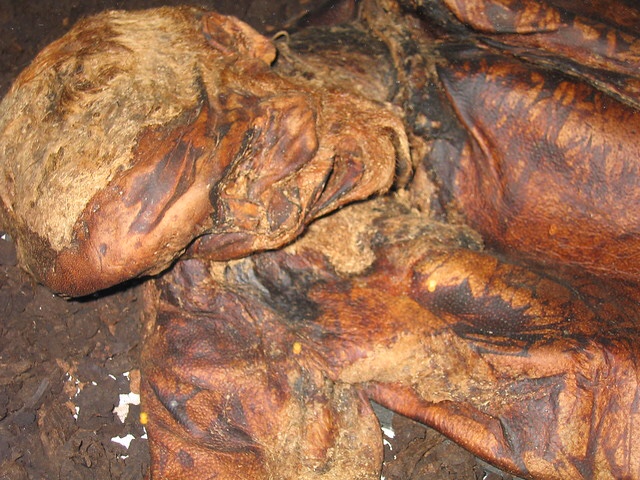
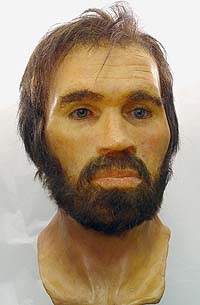
Even after being preserved for nearly 2,000 years it was still possible to make out the man’s facial features…. He had short cropped hair, a trimmed beard and long sideburns…. Although the soil had removed the enamel, his teeth were healthy – and his fingernails were manicured, which gave the impression he would have done no rough or manual work – and would possibly have had social status…. Examination showed him to have been in his twenties; he was well-built, of average height and appeared to have been in good health – although there was evidence that he had suffered from intestinal parasites…. His last meal had included unleavened bread, made from wheat and barley….
Detail of Lindow Man’s face – Image credit : Verity via Flickr
However Lindow Man (also sometimes known as ‘Pete Marsh’) had come to a violent end…. He had suffered blows to the head, had a garrotte of animal sinew around his neck, a broken rib, had swallowed mistletoe and his throat had been cut…. He was then placed face down in the bog…. His lower abdomen and a leg were missing….
There have been several theories as to his death – but one that comes to the forefront is that of a ritual killing or religious sacrifice…. All the classic signs are there:- blow to the head, strangulation and bleeding…. It was also unusual for the time that he had not been buried with any possessions….in fact he was naked apart from a band of animal fur around his arm…. Could it be possible that he may have even of volunteered to die, as a sacrifice? Was he an important member of a tribe trying to protect his people from the invading Romans by offering himself to the Pagan gods?
Lindow Man was not the first preserved remains. To have been found at Lindow Moss….not was he the last…. In May 1983 a well-preserved head had been found – and then in February 1987 over 70 pieces of a headless male…. In June and September 1988 other body parts were found close to where Lindow Man had lain….
Reconstructed face of Lindow Man…. A replica skull created from radiographs was used for the process – Fair use
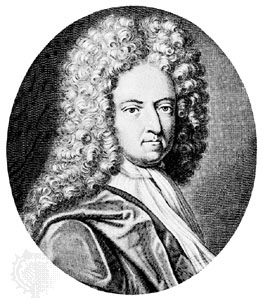
On this day in history : 31st July 1703 – As a punishment for offending Parliament and the Church, with his satirical writing, Daniel Defoe is put in the pillory – but is bombarded with flowers….
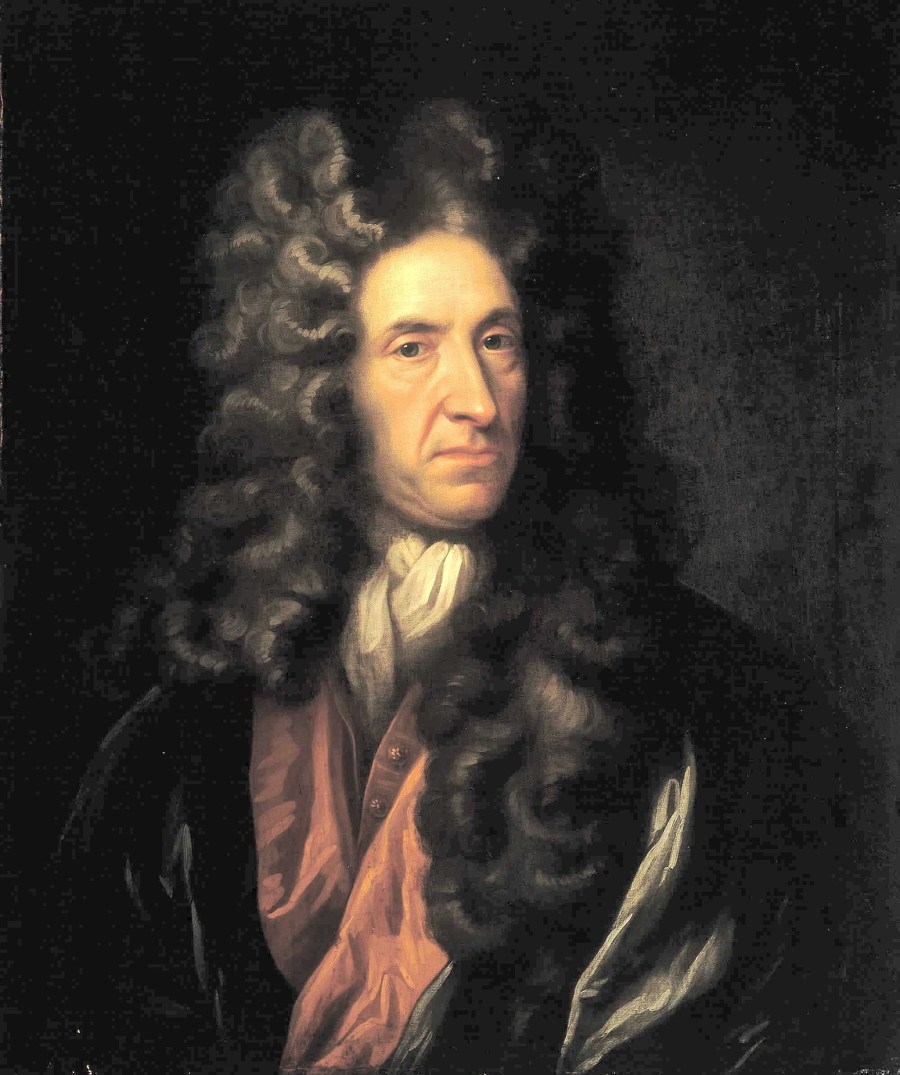
Daniel Defoe in the style of Sir Godfrey Kneller – Public domain
Defoe was a married man, a father to eight children, the owner of a brickworks, a government spin doctor, a writer – and a dissenter (English separatist; a Protestant Christian who had broken away from the Church of England)….
At the end of 1702 he wrote an anonymous pamphlet entitled ‘The Shortest Way with the Dissenters’ – in which he mocked the High Anglican powers and satirised contemporary politicians…. His ‘advice’ being that the best way to deal with dissenters was to ‘banish them abroad and send their preachers to the hangman’…. The pamphlet suggested that ‘the Church of England was like Christ crucified between two thieves, Papists on one side and Nonconformist Sectarians on the other’… It went on to say ‘let us crucify the thieves. To go on tolerating them is like allowing a plague to continue without medical treatment’….
Needless to say, although written as satire, neither the authorities nor dissenters found it amusing…. Defoe’s identity was soon discovered and a large reward offered for his arrest…. Defoe went into hiding – and to try and clear up the misunderstanding, published a further pamphlet – ‘A Brief Explanation of a Late Pamphlet’…. Parliament, still not recovering its sense of humour, responded by having the hangman publicly burn ‘The Shortest Way’….
Defoe was captured in Spitalfields in May 1703 after being betrayed by someone tempted by the reward money…. He was held at Newgate Jail – it has to be said in relative comfort, paid for out of his own pocket…. He managed to secure bail the following month – and awaited his trial, which was set for July….
Daniel Defoe – Image credit : immugmania via Flickr
He pleaded guilty to the charge of committing seditious libel – and begged for mercy as it had not been his intention to be taken seriously…. He was sentenced to stand in the pillory three times and remain in prison either for seven years or until he had paid a large fine….
The pillory was used mainly for petty crimes and minor offences – such as cheats, liars and rioters….it was intended as a way of humiliating and shaming…. Those held in the pillory could expect to be pelted with all manner of unsavoury items; rotten fruit and eggs, mud, dead rodents….and worse…. Sometimes things could turn violent – stones and larger missiles could be thrown….serious injury or even death could occur….
Defoe’s scheduled time in the pillory was set for the last three days in July, at one hour at a time…. Three of London’s busiest locations were chosen; outside the Royal Exchange at Cornhill (which was close to his home), near to the Conduit at Cheapside and near to Temple Bar, Fleet Street….
Admittedly it was raining most of the time (making it a little unpleasant for Defoe) – or perhaps people were simply disinterested – but for whatever reason the crowds kept away when Defoe was placed in the pillory…. All that was thrown at him were flowers….whilst his friends sold copies of ‘The Shortest Way’ and ‘A Hymn to the Pillory’ – which Defoe had written specially for the occasion – to those who did bother to turn out to witness the spectacle…. With his friends ‘drinking to his good health’, one can almost imagine a party atmosphere….
Daniel Defoe in the pillory, 1862 line engraving by James Charles Armytage after Eyre Crewe – Public domain
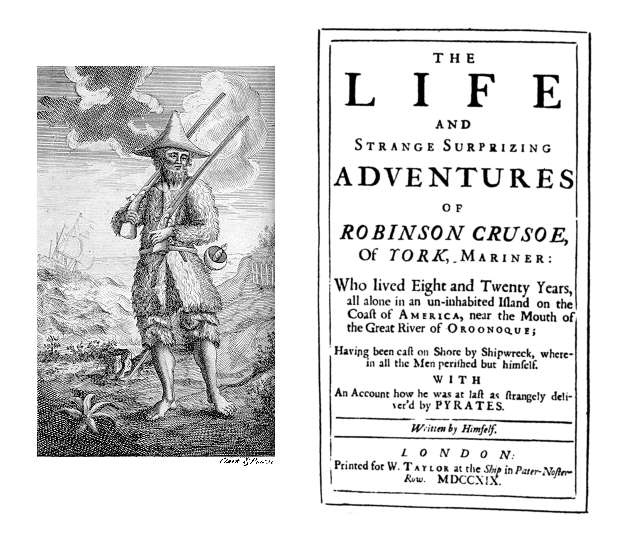
Defoe was returned to Newgate, as he was unable to pay his fine….since his brickworks had now gone bankrupt…. However, a few months later the government decided he might be useful…. In the November his fine was paid on his behalf – in return he was to publish a newspaper showing the establishment in a positive light…. He was also to act as a spy on behalf of the government…. In 1706 he was sent to Scotland to gather political intelligence…. He also established himself in writing government propaganda…. It wasn’t until much later in his life that he turned to writing fiction…. We know him best for Robinson Crusoe….
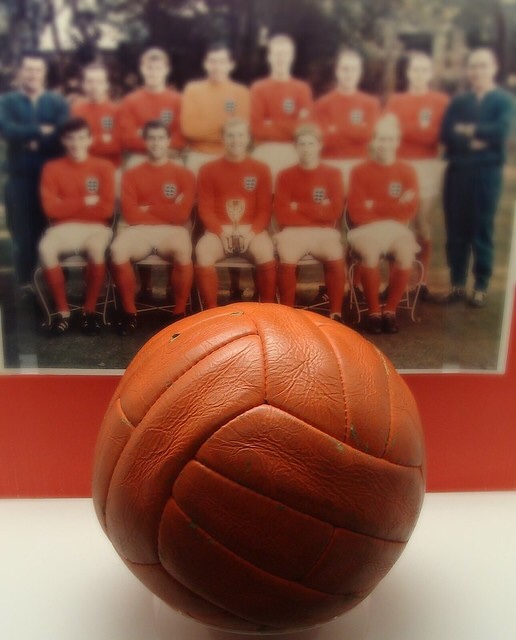
On this day in history : 30th July 1966 – Nearly 97,000 spectators, including the Queen and Prince Philip, fill Wembley Stadium to watch England win the World Cup Final….
A further 400 million watched around the world on television – 32.3 million of those were in Britain and it remains the most-ever watched event on British TV…. And it is the only time that England have ever won the World Cup since the start of the tournament in 1930….
The match ball from the 1966 World Cup Final – Image credit : Ben Sutherland via Flickr
West Germany had taken an early lead – but Geoff Hurst had equalised by half time…. Martin Peters scored a second goal 13 minutes from time – but a free kick to Germany just 15 seconds from full time gave a close range shot to the West German team…. Wolfgang Weber took the shot and put a goal into Gordon Banks’ net – taking the score to 2-2 and the game into extra time….
Eleven minutes into extra time saw Hurst score what was to become a controversial goal – one that has been debated ever since…. Alan Ball put in a cross and Hurst swivelled and shot from close range…. The ball struck the underside of the crossbar and bounced down….leaving Swiss referee, Gottfried Dienst, uncertain if it was a goal…. Only after consultation with his linesman, Tofiq Bahramov, was the goal allowed…. Even to this day photographic evidence has been unable to give decisive confirmation….
However, a third goal from Hurst in the final moments of extra time was deciding…. Geoff Hurst was the first man ever to score a hat trick in a World Cup Final….and the final score was 4-2 to England…. Captain Bobby Moore lifted the Jules Rimet Trophy as it was presented to him by Her Majesty the Queen….
Queen Elizabeth II presents the Jules Rimet Trophy to England’s team captain Bobby Moore – National Media Museum UK – no restrictions