On this day in history….7th February 1873

On this day in history : 7th February 1873 – The birth of Thomas Andrews – the naval architect in charge of overseeing the plans for the supposedly unsinkable RMS Titanic….

img_5890
Thomas Andrews – Public domain

Andrews was born in Comber, near to Belfast, into a prominent family…. His father was the Right Hon. Thomas Andrews and his mother Eliza Pirrie…. His brother, John, was later to become Prime Minister of Northern Ireland…. Andrews’ uncle was Lord Pirrie, owner of Harland & Wolff, who were to build the Titanic….

img_5893
Harland & Wolff at ‘knocking off’ time…. Titanic can be seen in the background – Public domain

Andrews joined Harland & Wolff in 1889, at the age of 16, as an apprentice….and spent the next five years working his way through the various departments of the company…. He was hardworking and well liked; he progressed quickly and in 1901 he became a member of the Institution of Naval Architects…. By 1907 he had been made Managing Director of Harland & Wolff, in charge of design and construction….

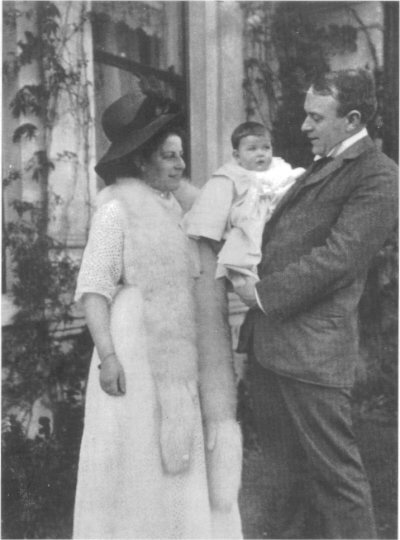
Andrews married Helen Reilly Barbour on the 24th of June 1908 and the couple were blessed with a daughter, Elizabeth, two years later….
img_5891
Thomas with his wife Helen and baby daughter Elizabeth – Public domain

Always wanting to be involved Andrews sailed on the maiden voyages of the Adriatic, Oceonic and Olympic – to oversee, observe and learn…. He was always looking for ways to improve things…. So, this is how he happened to be on the maiden voyage of RMS Titanic….

Leaving his wife and daughter behind in Belfast he boarded Titanic with his complimentary ticket No. 112050 and settled into cabin No. A36…. The ship sailed to Southampton on the 10th of April 1912 – and then on to the North Atlantic…. Andrews spent the first few days assisting where he was needed, helping the crew familiarise themselves with the new vessel – and making notes as to what could be done to make things better for future voyages….

img_5894
RMS Titanic departing Southampton 10th April 1912 – Public domain

On the evening of the 14th of April 1912 Andrews returned to his cabin after dinner and became engrossed in catching up with some work…. So absorbed was he that when the ship collided with the iceberg at approximately 23.40pm he hardly even noticed….and thought little of it…. His first hint of the danger they were in came when a message arrived to say his presence was immediately required on the Bridge….

He and 62-year-old Captain Smith, the White Star Line’s most senior captain, assessed the damage in the flooded mail room and squash court…. The design of the ship involved sixteen watertight compartments, with doors which could be closed from the Bridge, sealing off compartments if necessary…. Up to 4 compartments could flood at any one time and the ship would remain upright…. It was the safety design that led White Star to claim their vessels were practically unsinkable….

img_5895
Captain Edward Smith – Public domain

Despite this, Andrews had to break the news to Captain Smith that he did not think the Titanic would stay afloat for more then two hours…. Andrews spent his last hours urging passengers to the lifeboats…. The Titanic sank at around 2.20am on the 15th of April 1912…. The body of Andrews was never recovered….
On this day in history….31st January 1953

On this day in history : 31st January 1953 – The Princess Victoria, a car ferry, sinks in the Irish Sea during a severe gale – claiming the lives of over 130 passengers and crew….

img_5790
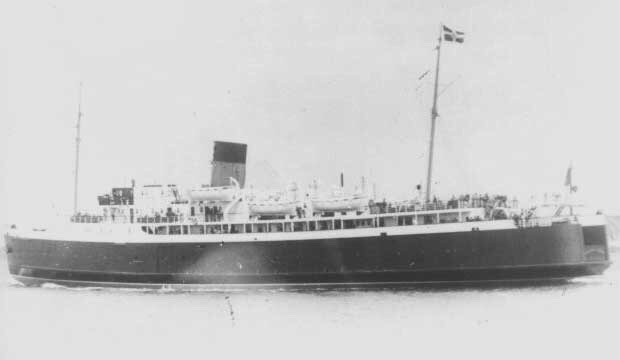
MV Princess Victoria – Image credit Wrecksite – http://www.wrecksite.eu – Public domain

The Princess Victoria, owned by British Railways, was one of the first roll on-roll off ferries…. It had left Stranraer on the Southwest coast of Scotland bound for Larne, Northern Ireland at 7.45am, in the charge of Captain James Millar Ferguson…. 128 passengers were onboard, along with 51 crew and 44 tons of cargo…. Warnings for severe gales had been issued….

Just 90 minutes later the ferry was in serious trouble – as a huge wave had smashed through the stern doors, mangling them out of shape…. The crew desperately tried to shut the doors but water poured on to the car deck…. As the ship filled with water it began to list alarmingly towards the starboard…. The passengers, by now wearing life jackets, tried helplessly to bail water out of the lounge area….

At 10.32am the first SOS was sent out by the ferry’s radio operator…. In the confusion the responding rescue lifeboat was given the wrong directions of how to find the stricken vessel….

At 1pm a message was put out from the Princess Victoria to other vessels in the area that the intention was to abandon ship at 2pm…. The very last message was transmitted at 1.58pm…. By 2pm the ferry was listing so badly that it was impossible to launch the lifeboats on the starboard side….

Two lifeboats, filled with women and children, were dropped so violently into the sea that they capsized, tipping their occupants into the icy sea…. The ferry then tipped over…. As the Princess Victoria went down 55-year-old Captain Ferguson stood on the deck, one hand gripping the hand rail – the other raised in a salute….

img_5791
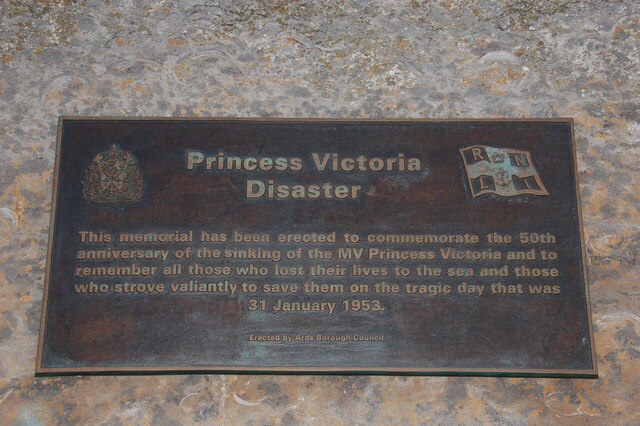
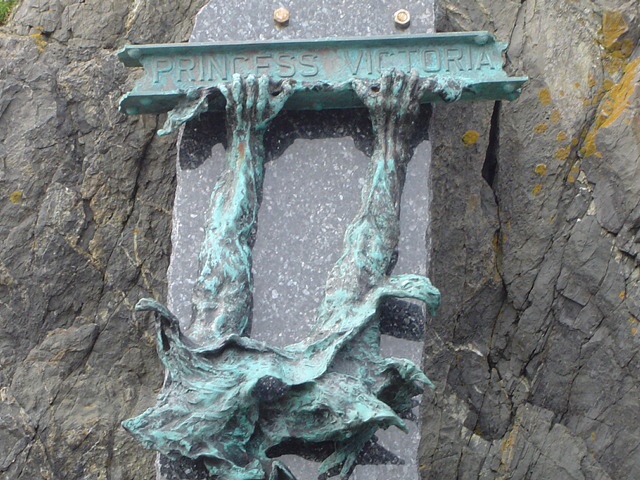
Memorial in Portpatrick – Image credit : I Craig from Glasgow CC BY 2.0

44 men were saved by the rescue operation – not one woman or child survived…. Among the dead were deputy Prime Minister of Northern Ireland, J Maynard Sinclair and MP for North Down, Sir Walter Smiles….

At the inquiry it was revealed that the Princess Victoria had been unseaworthy and British Railways was to blame for this…. In concluding the inquiry summarised : “If the Princess Victoria had been as staunch as the men who manned her, then all would have been well and this disaster averted”….

67 bodies were recovered from the sea after the sinking of Princess Victoria….

Later the highest civilian award for bravery was given posthumously to the ferry’s radio operator, David Broadfoot – who remained at his post sending out SOS messages right up to the moment the ferry sank….img_5792

On this day in history….11th January 1866

On this day in history : 11th January 1866 – SS London, a British steamship, sinks in the Bay of Biscay…. At least 220 lives are lost….

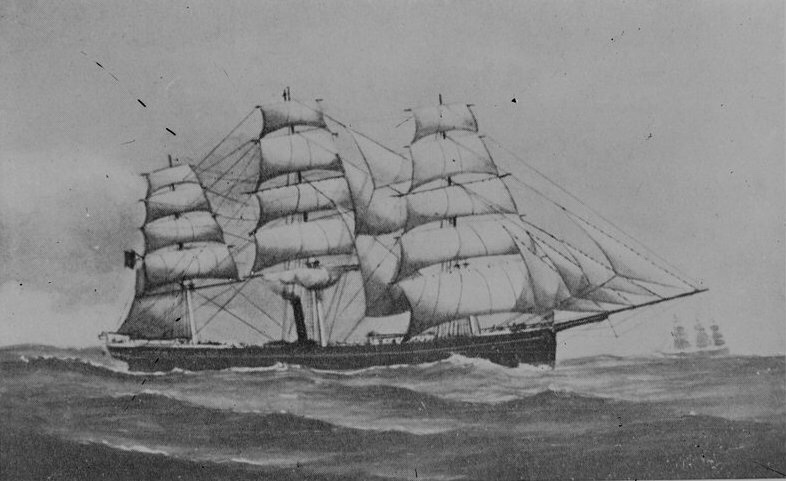
Although a steamship SS London looked more like a sailing ship – a ‘hybrid’ ship, as they were known…. The London was just 2-years-old, having been built at the Blackwall Yard and then launched on the River Thames on the 20th of July 1884…. She was considered to be modern, luxurious – and had a top-speed of 11 knots…. She also boasted 7 lifeboats – more than the legal requirement for a ship of her size at the time…. Tragically, these lifeboats were to be of little use….

img_5477
SS London – Image from the John Oxley Library, State Library of Queensland – Public domain

SS London’s final voyage began on the 28th of December 1865…. She left London’s East India Docks, under the command of Captain Martin – an experienced Australian navigator – and sailed to Gravesend in Kent…. From here she went on to Plymouth, arriving on the 4th of January 1866 – a day late, as due to storms she had taken refuge near to Portsmouth…. On the 6th of January she finally set sail for Melbourne, a voyage expected to take between 60 to 90 days….

On board were some 239 passengers and crew, including 6 stowaways…. Out of the 92 crew all were men with the exception of 1 woman, who acted as part nurse / part stewardess…. The average age of the crew members was just 24….

The 3rd class passengers would have been herded together, sleeping in dormitory-type accommodation…. At the opposite end of the scale 1st class passengers enjoyed the luxury of having their own cabins…. Among the passengers were several celebrities and dignitaries – including Gustavus V Brooke, a well-known Shakespearean actor of the time and very popular in Australia…. Also on board was the eldest son of William Debenham – founder of the chain of department stores….

By the second day the weather had started to deteriorate and by the 8th of January it had turned into a howling gale…. The following day it was so severe that a lifeboat was torn away, followed by the jib-boom and then the tops of the mainmast and foremast…. By the 10th of January people were in fear for their lives; 2 more lifeboats had been lost, along with more sails…. It was at this point that the captain decided to turn back – and he steered towards the eye of the storm…. A decision that was later to be criticised, as they had already come through the worst of the storm….

A huge wave crashed on to the deck, the engine hatch was smashed and water flooded the engine room, putting the fires out…. A massive hole appeared which the crew attempted to plug with mattresses and tarpaulins…. Both crew and passengers frantically tried to pump out the water….

At 5am on the 12th of January another huge wave crashed into the stern, smashing all the portholes…. The captain decided it was time to abandon ship and a lifeboat was launched…. However, it promptly sank, as all the lifeboats had been swamped….

By now the passengers were giving up hope….and had all but resigned themselves to their fate…. Many had spent time with the 3 ministers on board the ship, praying and trying to find some comfort…. Matters were not helped by the attitude of the captain, who repeatedly told them there was no hope….

Another lifeboat was successfully launched – but by now spirits were so crushed that nobody, especially the women, would attempt to get into it…. In the end it was 16 crew members and 3 male passengers who took the places in the boat…. Ironically, they were the only ones to survive – and were rescued the following day….

img_5478
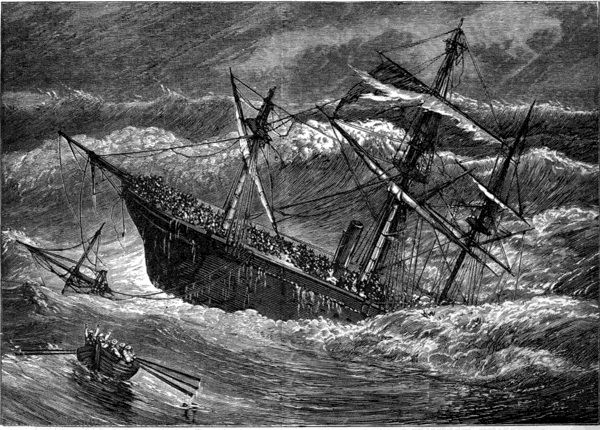
The London going down – Frederick Whymper – From page 293 of the 1887 book ‘The Sea : its stirring story of adventure, peril & heroism’ – Public domain

SS London went down taking at least 220 men, women and children with her…. The successfully launched lifeboat was just 100ft away – and so the 19 onboard had little choice but to witness the sinking…. It is said as the doomed ship sank beneath the waves the last thing to be heard from her was the sound of singing – the popular hymn of the time ‘Rock of Ages’….

Following the sinking of SS London there was much controversy…. The public were furious and arguments raged in Parliament…. A public inquiry was held and concluded 3 main factors contributed to London’s fate…. The captain’s decision to turn back into the storm to return to Plymouth being the first…. Secondly, the ship was over-laden – she was carrying 345 tons of railway iron…. Finally, 50 tons of coal carried on the upper deck had blocked the scupper holes, which then prevented the drainage of seawater….

In the weeks and months to follow several bottles containing messages washed up on the French shores of the Bay of Biscay, containing farewell letters from some of those lost on SS London….

Rock of Ages, cleft for me,
Let me hide myself in Thee;
Let the water and the blood,
From Thy riven side which flowed,
Be of sin the double cure,
Cleanse me from its guilt and power....
img_5479
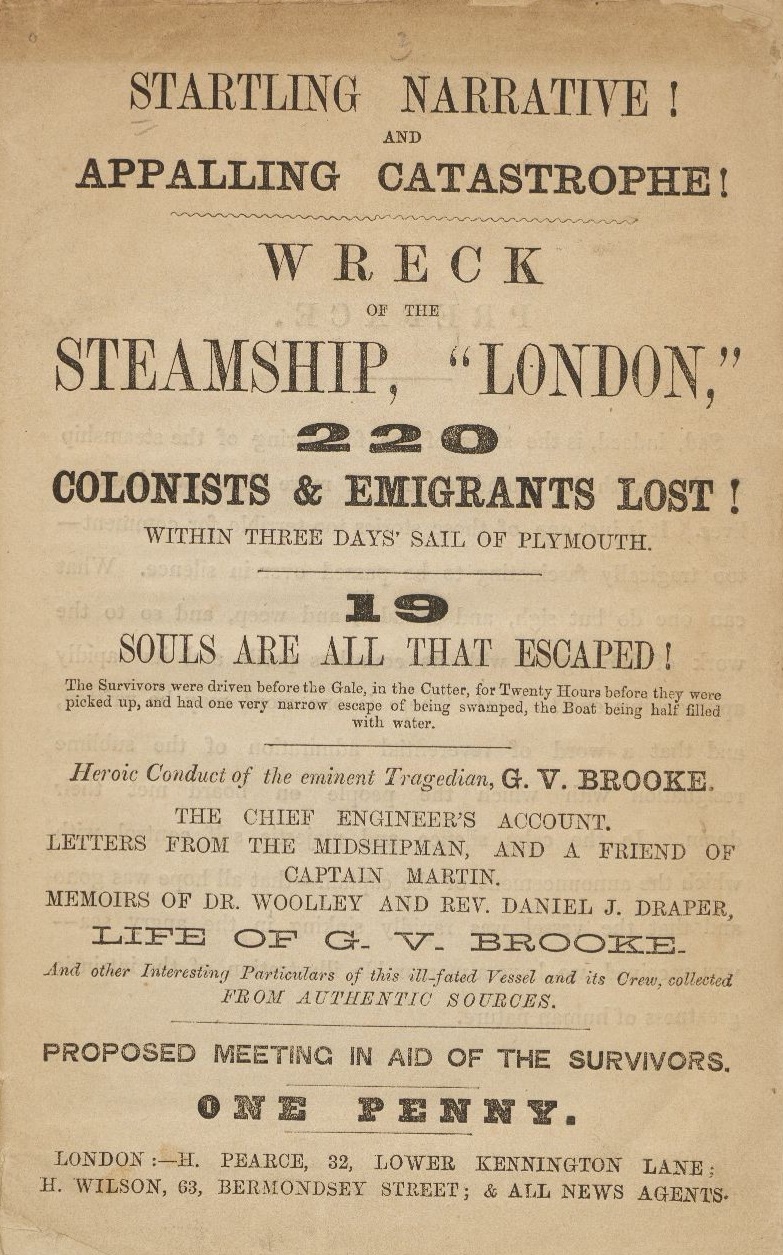
1866 pamphlet describing the disaster – H.Pearce (publisher) – Houghton Library – Public domain

On this day in history….10th November 1847

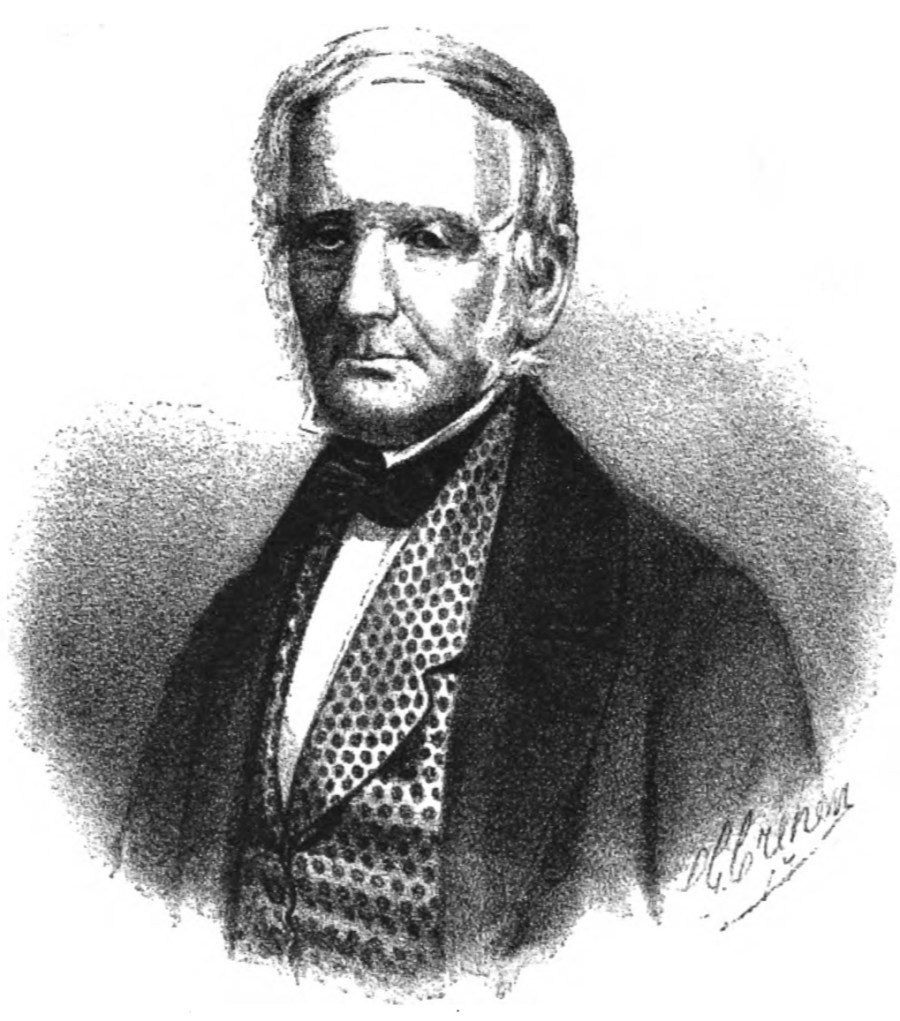
On this day in history : 10th November 1847 – A passenger ship is wrecked off the coast of Southern Ireland, killing 92 out of the 110 onboard – it prompts the construction of the Fastnet Rock Lighthouse….img_4503

The ‘Stephen Whitney’, a 1,034 ton ship, was built in New York around 1840; it was a fully rigged, wooden vessel and was part of Robert Kermit’s Red Star Line…. It had been named after an investor in Kermit’s Company, Stephen Whitney, one of the wealthiest merchants in New York City….

MAGAZINE OF AMERCIAN HISTORY
Stephen Whitney – Magazine of American History, 1890 – Google Books – Public domain

The ship left New York on the 18th of October bound for Liverpool, with a stop scheduled for Cork…. As well as the 76 passengers onboard it also carried a cargo which included 10,000 bushels of corn, 600 boxes of cheese, 1,000 barrels of flour, 1,000 bales of raw cotton and 20 boxes of clocks…. The voyage across the Atlantic was uneventful but it was as they approached the Irish coast on Wednesday the 10th of November that the weather became hazy making visibility difficult – and then it turned to thick fog…. Captain Charles W. Popham, originally from Cork, mistook Crookhaven Lighthouse for one at the Old Head of Kinsale – which is situated a little further around the coast to the east….

img_4504
Rock Island and Crookhaven Lighthouse

Around 10pm the ship struck the western tip of West Calf Island (between Cape Clear and Skull in Co. Cork) and ran aground…. Within ten minutes the ship had completely broken up….92 out of the 110 passengers and crew onboard perished…. The maritime community had long complained about the positioning of the main lighthouse on Cape Clear – the loss of the Stephen Whitney prompted the replacement of the lighthouse with one on the Fastnet Rock….

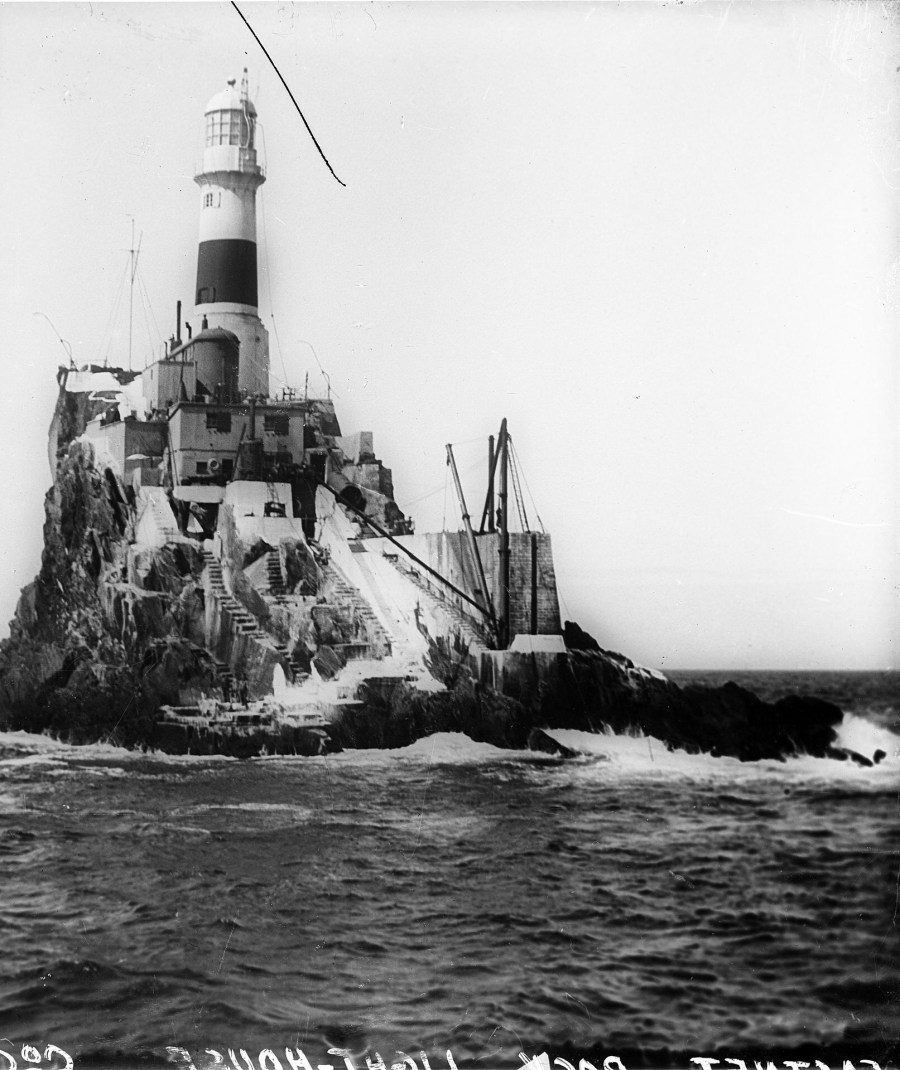
Construction of the first lighthouse began in 1853 and it went into operation on the 1st of January 1854…. Built from cast iron with an inner lining of brick, at a cost of £17,390, it was designed by George Halpin…. The tower was 19.43m high with an 8.43m high lantern housing on top – making a total structure of approx. 28m high…. The oil burning lamp put out 38 kilocandelas of light; the average modern lighthouse puts out 1,300 kilocandelas as a comparison….

img_4501
Fastnet Rock Lighthouse C.1900 – National Library of Ireland on The Commons – no restrictions

It didn’t take long for it to be realised that the structure was too weak…. In high winds the tower would shake – to the extent that crockery would sometimes fly off of tables…. Various attempts were made to strengthen it – such as putting a cast around the lower section and filling it with stone….

In 1891 it was decided that it was time to replace it…. The new lighthouse was designed by William Douglass and constructed from stone, as cast iron was now deemed unsatisfactory – although the lower half of the original lighthouse was left standing and was used as an oil store….

OLYMPUS DIGITAL CAMERA
The second Lighthouse – the base of the previous (used as an oil store) can be seen to the right, on top of the Rock – Image : Anthony Patterson from Cork, Ireland CC BY 2.0

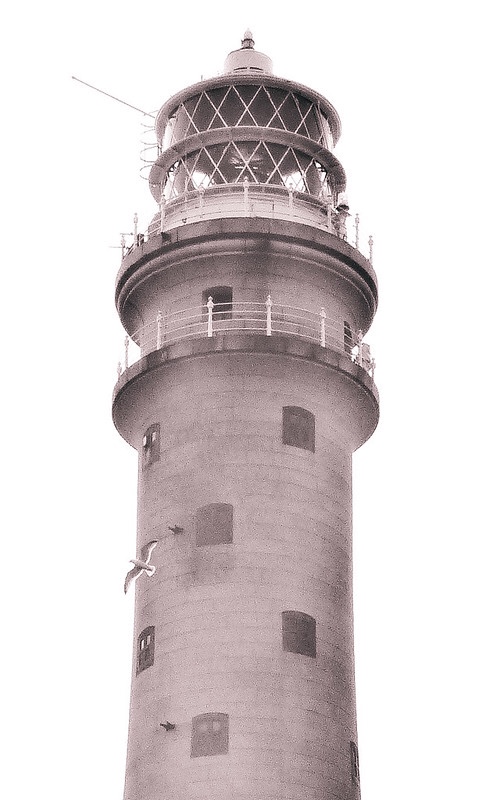
Construction began in 1897 and the new lighthouse entered service on the 27th of June 1904; it had cost £90,000 to build…. The tower stands some 45m high and at the base is 16m in diameter…. The original paraffin lamp was replaced by electric on the 10th of May 1969 – and at the end of March 1989 it was converted to an automatically operated lighthouse….The lamp has power of 2,500 kilocandelas and can be seen from a distance of 27 nautical miles….

img_4506
Image : Odd Wellies via Flickr

On the 16th of October 2017 downgraded Hurricane Ophelia hit Ireland; a gust of 191 kph was recorded at the Fastnet Rock Lighthouse…. Had it not of been automated, I wonder if the crockery would have stayed on the tables….

On this day in history….19th December 1981

On this day in history : 19th December 1981 – The eight volunteer crew of the Penlee Lifeboat lose their lives attempting to rescue those onboard the Union Star, off the coast of Cornwall…. In all sixteen people perish….

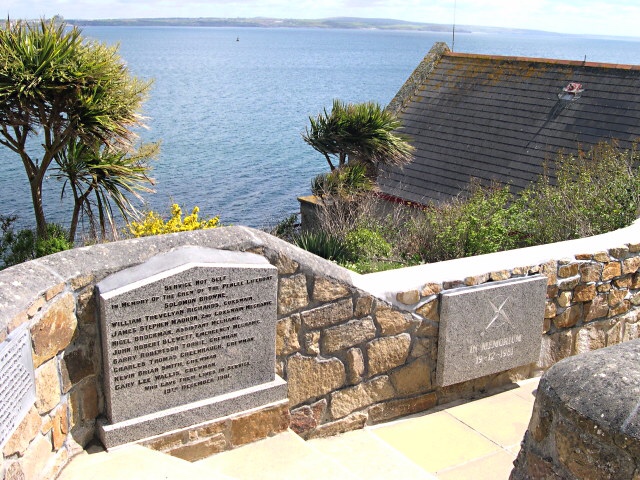
Memorial garden at Penlee – Image credit : Chris Wood – own work CC BY-SA 4.0

The MV Union Star had been launched a few days before in Denmark…. It was a mini-bulk carrier, registered in Ireland and was making its maiden voyage having collected a cargo of fertiliser from Holland to be delivered to Arklow, Ireland…. Onboard were five crew and the wife and two teenage daughters of Captain Henry Morton….

As the Union Star reached the south coast of Cornwall, approximately 8 miles east of Wolf Rock, the ship’s engines failed…. The crew attempted to restart them but unsuccessfully – a salvage tug offered assistance but this was refused as the crew believed at the time that the issue could be sorted….

However, the weather deteriorated and soon force 12 winds were whipping up 60ft waves – and the Union Star was being pushed towards the rocks of Boscawen Point close to Lamorna Cove…. A Sea King helicopter was scrambled by the coastguard – but on arriving it was unable to get a line to the Union Star…. There was no alternative but to call out the lifeboat….

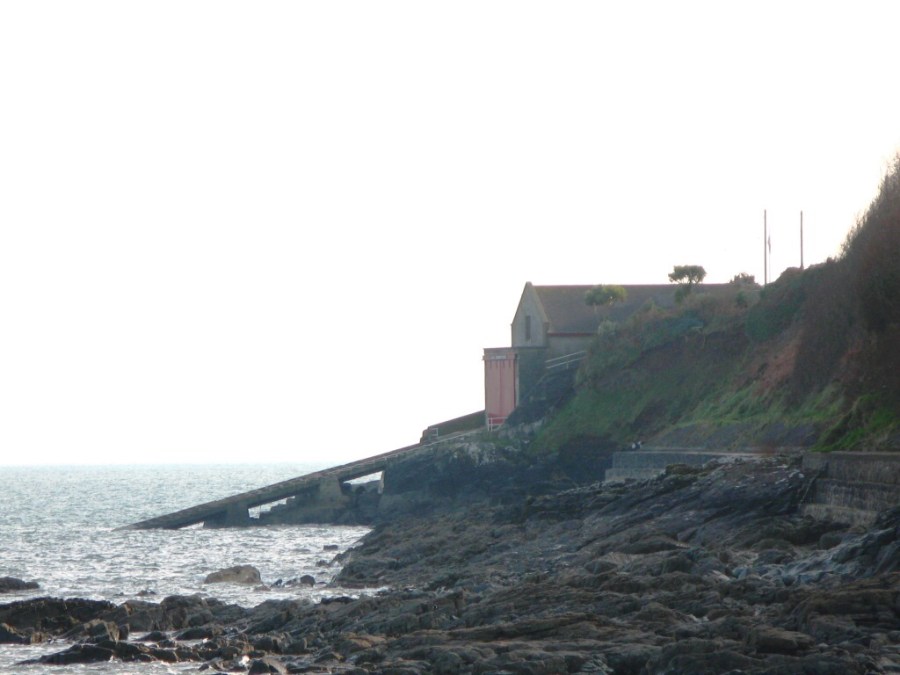
Original Penlee Lifeboat Station, where Solomon Browne was launched from – Image credit : Geof Sheppard – own work CC BY-SA 4.0

It was the Penlee (near to Mousehole) Lifeboat that responded…. The Solomon Browne was a 47ft wooden Watson Class motorised lifeboat, which had been built in 1960…. It was launched to embark on its rescue mission at 8.12pm and once it reached the Union Star was successful in managing to take 4 people off the stricken ship…. It then made a further attempt to go back alongside to rescue those still onboard – but at that point all radio contact with the two vessels was lost…. It is unclear exactly what happened next – but ten minutes later the lights of the lifeboat had disappeared….

Wreckage from the lifeboat was later found along the shore and the Union Star lay capsized on the rocks west of the Tater Du Lighthouse…. There were no survivors and only some of the sixteen bodies were ever recovered….

Tater Du Lighthouse – Image credit : Tom Corser CC BY-SA 3.0

An inquiry determined that the Union Star’s engines had failed due to contamination of the fuel by sea water…. The severity of the storm had made the rescue operation intensely difficult and had resulted in the loss of the Solomon Browne…. Tribute was paid to the crew….

“In consequence of the persistent and heroic endeavours by the coxswain and his crew to save the lives of all from the Union Star. Such heroism enhances the highest traditions by the Royal National Lifeboat Institution in whose service they gave their lives”….

Coxswain William Trevelyan Richards was posthumously awarded the RNLI’s gold medal and the remainder of the crew – Stephen Madron, Nigel Brockham, John Blewitt, Charlie Greenhaugh, Kevin Smith, Barrie Torrie and Gary Wallis – were each awarded the bronze medal….

Within a day of the disaster there were enough volunteers from Mousehole to form a new lifeboat crew….

Penlee Lifeboat Memorial – Image credit : Tony Atkin CC BY-SA 2.0