On this day in history….17th September 1954

On this day in history : 17th September 1954 – William Golding’s ‘Lord of the Flies’ is published by Faber and Faber, in London – a book familiar to many of us from our school days….

img_3855
Original UK book cover – Fair use

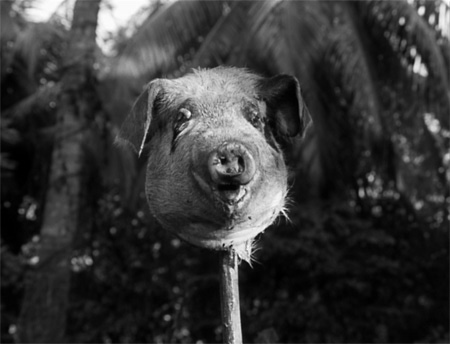
The plot of Lord of the Flies centres around a group of school boys marooned on an uninhabited island after a plane crash…. It is about the boys’ survival and how they attempt to govern themselves – and explores how quickly society breaks down without any form of proper authority or establishment….

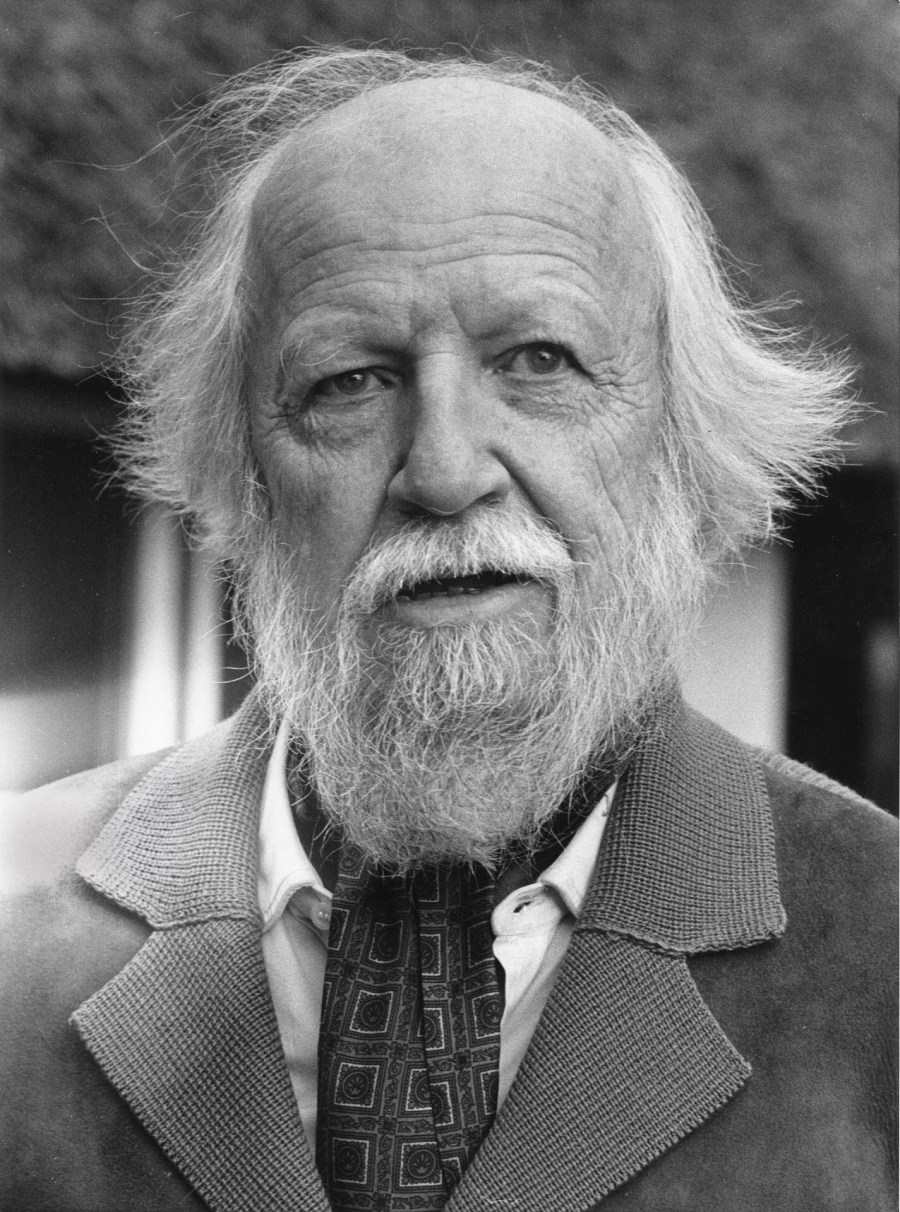
Lord of the Flies was the first novel by Sir William Gerald Golding CBE (19th September 1911 – 19th June 1993) – who was a British novelist, playwright and poet…. At first, when Golding first submitted his manuscript, the book was rejected by Faber and Faber – but after catching the interest of Charles Monteith, a new editor at the firm – and who advised on some changes to the text – the novel was published…. It was slow to make an impact but eventually became an international bestseller – and has been in the 100 best novels of the Modern Library and listed at No.70 on the BBC’s best 100 English language works….

img_3856
Sir William Golding CBE, in 1983 – Photographer unknown – CC BY-SA 3.0

Lord of the Flies has twice been made into an English language film; in 1963 directed by Peter Brook and again in 1990, this time directed by Harry Hook…. In 1975 a Filipino version was released, directed by Lupita A. Concio…. In August 2017 plans for a further film were announced by Warner Bros….this time to feature an all female cast…. A concept that was not very well received – as the general feeling being that it goes against the grain of the story’s original aim of exploring the theme of male power and the fight for dominance and leadership….

Golding was incredibly sensitive to reviews and criticism of his work – even being known to leave the country when his latest book was about to be published…. I don’t know about you – but Lord of the Flies is one of those books that has stayed ingrained in my memory….

img_3857-1
Pere Ubu via Flickr

On this day in history….24th August 1847

On this day in history : 24th August 1847 – Charlotte Brontë sends her manuscript for ‘Jane Eyre’ to London publishers Smith, Elder and Company – under the pseudonym Currer Bell….

img_3763
image : Uploaded to en.wikipedia by Chick Bowen – Public domain

It was not unusual for female authors at this time to write under a male name…. Women authors were not taken as seriously as their male counterparts – it was assumed women’s heads were full of fluff and frivolity; they were deemed as having no perception of the real world – their place was in the home…. The Brontë sisters collectively felt that their work would not be regarded as being feminine and would be looked upon with prejudice if their real gender was revealed….

img_2683
Charlotte Bronte – George Richmond Public domain

Charlotte, who was the eldest of the three sisters, had been unable to find a publisher for her first manuscript, ‘The Professor’ – however, Smith, Elder & Co of Cornhill expressed an interest to any longer works Currer Bell may wish to send…. So towards the end of August 1847 ‘Jane Eyre’ was submitted and published six weeks later….and was an instant success, gaining good reviews…. Because little was known about the author suspicions began to form that Currer Bell may be a woman – strengthening when ‘Wuthering Heights’ by Ellis Bell (Emily Brontë) was published – and then ‘Agnes Grey’ by Acton Bell (Anne Brontë)…. In 1848 the sisters admitted to their assumed names….and became celebrated in literacy circles – and their novels became classics of English literature….

img_3427-1
Anne, Emily and Charlotte Bronte, painted by brother Branwell Bronte – Public domain

On this day in history….20th June 1906

On this day in history : 20th June 1906 – Dame Catherine Cookson, one of Britain’s most widely read novelists, is born in Tyne Dock, South Shields….


Registered as Catherine Ann Davies but known as Kate as a child, Catherine was born at 5, Leam Lane in Tyne Dock, East Jarrod – close to the mouth of the River Tyne…. She was the illegitimate daughter of Kate Fawcett, an alcoholic barmaid who had fallen on hard times…. Catherine grew up thinking that her mother was her sister and she was brought up by her grandparents, Rose and John McMullen; she was 7-years-old before she found out that her ‘sister’ was in fact her mother….

Catherine left school around the age of 14 and went into service as a maid for a while, before going to work as a laundry checker at the Harton Workhouse…. In 1929 she moved to the South Coast to run the laundry at Hastings Workhouse….

She worked hard, saved every penny she could and in 1933 managed to get a £1,000 mortgage….with which she bought a large 14 bedroom Victorian house – ‘The Hurst’…. She turned this into a lodging house/old-peoples’ home/nursing home….

In June 1940 Catherine married Tom Cookson, a teacher at Hastings Grammar School…. They could not have been more like ‘chalk and cheese’…. Whereas Catherine was strong-willed and of a dominant nature, Tom was shy and softly-spoken…. Catherine came from a working-class, poverty-stricken background…. Tom, the son of a verger, was an Oxford graduate…. Catherine was 34 when they married, senior to Tom by 6 years….

Their first child, a boy, was born three months premature and was still-born; during the Second World War years Catherine suffered a further three miscarriages…. It was also discovered she had telangiectasia – a rare vascular disease which causes bleeding…. She had a breakdown which was to take the best part of 15 years to recover from….


As part of the therapy for her depression Catherine took up writing…. She had been an avid reader as a child and had written her first short story ‘The Wild Irish Girl’ at the age of 11…. She had sent it to the local newspaper – but it had been returned unpublished….

She joined the Hastings Writers’ Group and started her first novel ‘Kate Hannigan’ in 1946 and it was published in 1950…. But her writing career really took off in the late 1960s; her first major success ‘Our Kate’, published in 1969, took her 12 years to write….


Catherine Cookson wrote 103 books, often two a year, selling over 123 million copies – and her work has been translated into nearly 20 languages…. She was also published under the pseudonyms of Catherine Marchant and Katie McMullen…. For 17 years she was the most borrowed author from British libraries…. Many of her books have been adapted for film, radio, stage and particularly TV…. Between 1990 and 2001 some 18 of her books had been adapted for the small screen….

img_3408

Most of her novels were set in a run-down North East, reflecting the poverty of her early life; Tyneside was then one of the poorest parts of the Country…. But in later life the North East was where she and Tom were to return…. After living in several locations they finally settled in 1989 in the Jesmond area of Newcastle-upon-Tyne…. Catherine’s health had deteriorated considerably and she spent the last few years of her life bedridden….her final novels were written whilst she was in her sickbed….

Catherine died at home 16 days before her 92nd birthday, on the 11th of June 1998…. She had vascular disease, had suffered five heart attacks and was almost blind…. Her husband died just 17 days later…. After their deaths the couple’s £20m fortune was donated to charities…. Catherine had done much for charity in her lifetime; in 1985 she had given £800,000 to the University of Newcastle….who in gratitude set up a lectureship in haematology….

Catherine was awarded an OBE in 1985 and became a Dame of the British Empire in 1993…. In 1997 she was appointed Honorary Fellow of St. Hilda’s College, Oxford….

img_3407

On this day in history….28th March 1941

On this day in history : 28th March 1941 – English novelist Virginia Woolf, whilst suffering from depression, commits suicide by drowning herself in a river near to her Sussex home….

img_2667
Virginia Stephen (Woolf) 1902 – Photo: George Charles Beresford

Born Adeline Virginia Stephen on the 25th of January 1882 Virginia suffered with her mental health throughout her life…. Her first breakdown occurred in 1895, after the death of her mother….

Virginia met her future husband, Leonard Woolf, in November 1904 – they eventually married on the 10th of August 1912…. However, she continued to suffer periods of mood swings, manic excitement and psychotic episodes; she attempted suicide on more than one occasion. Psychiatrists today consider her illness to have been bipolar disorder….

img_2666
Virginia and Leonard Woolf – 1912

Her diary indicates she had become obsessed with death after the beginning of World War II…. After the Woolfs’ London home was bombed during the Blitz they moved to another house nearby – only for that to be made un-inhabitable in the same way…. It was at this point they moved to their country home near to Lewes, Sussex….

After completing the manuscript for what was to be her final novel ‘Between the Acts’, which was published posthumously, Virginia fell into a deep depression…. It was on a Friday that she decided to take a walk, along the banks of the River Ouse, which lay close to her home….it was a walk she was never to return from…. She left behind two notes; one for her sister, Vanessa Bell – who lived nearby – and the other for her husband…. It read….

img_2670
Public domain

“Dearest. I feel certain that I am going mad again. I feel we can’t go through another of those terrible times. And I shan’t recover this time. I begin to hear voices, and I can’t concentrate. So I am doing what seems the best thing to do. You have given me the greatest possible happiness. You have been in every way all that anyone could be. I don’t think two people could have been happier ’til this terrible disease came. I can’t fight any longer. I know that I am spoiling your life, that without me you could work. And you will I know. You see I can’t even write this properly. I can’t read. What I want to say is I owe all the happiness of my life to you. You have been entirely patient with me and incredibly good. I want to say that — everybody knows it. If anybody could have saved me it would have been you. Everything has gone from me but the certainty of your goodness. I can’t go on spoiling your life any longer. I don’t think two people could have been happier than we have been. V”….

img_2668
Virginia and Vanessa 1894 – Public domain

Without a doubt the letter stated her intention, it was a suicide note – but gave no indication as to where or how she meant to carry it out….she simply did not come home. Her hat and walking cane were discovered on the river bank but this was the only evidence the family had as to what may have happened to her…. Newspaper reports said that she was missing – but stated that at this stage the police were not investigating her disappearance…. The hope was that she would turn up alive – having been ill for some time perhaps she had just needed some time alone – but as time went by this hope diminished….

Eventually, three weeks later on the 18th of April the gruesome discovery was made by some children…. Her body washed up near to the bridge in the village of Southease….the Press announced the story the following day….

Virginia Woolf had drowned herself by filling the pockets of her overcoat with stones and walking into the River Ouse…. She is considered to be one of the most important modernist writers of the 20th Century…. Leonard buried her cremated ashes beneath an elm tree in the garden of Monk’s House, their home in Rodmell, Sussex – which is now owned by the National Trust….

img_2669
Monk’s House – image credit: Elisa.rolle CC BY-SA 4.0

On this day in history….19th October 1745

On this day in history : 19th October 1745 – The death of Anglo-Irish author, poet and satirist Jonathan Swift – most famous for his masterpiece Gulliver’s Travels….

Johnathan Swift – portrait by Charles Jervas – Public domain

Swift’s English father had settled in Ireland and married the daughter of an English clergyman…. Then in 1667 he died leaving his pregnant wife and young daughter to be cared for by his in-laws…. Swift was born and the fatherless family was supported by his mother’s brothers – who treated him well and at the age of six he was sent to Kilkenny, the best school in Ireland…. Then he went to Trinity College in Dublin, graduating in February 1686 with a Bachelor of Arts degree….

Swift’s birthplace – 1865 illustration by T.Morton – Houghton Library – Public domain

Returning to England to escape the unrest in Ireland Swift joined the household of his mother’s distant relative Sir William Temple, of Moor Park, near to Farnham in Surrey…. He remained here until Temple’s death in 1699 and it was where his writing career began…. He did return to Ireland a couple of times during this period – and on one such occasion took orders at the Anglican Church, ordaining as a priest in January 1695….. He was to become Vicar of Kilroy, near to Belfast….

After Temple’s death he returned to Dublin for a longer period…. By now he was becoming recognised in London, for his satirical wit as a writer…. His popularity grew, especially for his religious and political essays, such as A Tale of Tub…. Swift became a writer of political pamphlets, first for the Whigs and then the Tories…. But when King George I came to the Throne in 1714 the Tories were ruined…. Swift’s career in England was over….he retreated to Ireland and turned to poetry….

However, his greatest work, Gulliver’s Travels, was yet to come, being published in 1726…. It was originally entitled Travels Into Several Remote Nations of the World and was written under the pseudonym of ‘Lemuel Gulliver, First a Surgeon, and then a Captain of Several Ships’…. The prose satire was an immediate success – and was to go on to become one of our classics of English literature…. It is often thought of as being a children’s book but is actually a sophisticated satire of human nature and was based on Swift’s own life experiences….

First edition of Gulliver’s Travels – Public domain

Swift died on the 19th of October 1745 – and was buried in St. Patrick’s Cathedral, Dublin – where he had served as Dean from 1713-1745….

Swift at the Deanery, St. Patrick’s – illustration from 1905 Temple Scott edition of ‘Works’ – Public domain