On this day in history….12th June 1819

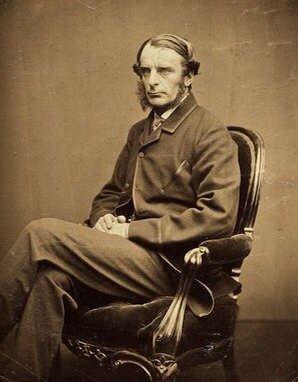
On this day in history : 12th June 1819 – The birth of English clergyman, university lecturer, historian, social reformer, novelist and poet Charles Kingsley – author of the classic ‘The Water Babies’….

Charles Kingsley – photograph by Charles Watkins – Credit : Wellcome Collection CC BY 4.0

Kingsley was born in Holne, Devon, the eldest son of the Reverend Charles Kingsley and Mary Lucas Kingsley…. His younger brother, Henry and sister, Charlotte were also to become writers…. His childhood was spent in Clovelly and then Barnack, Northamptonshire…. He was to develop a keen interest in geology and nature…. He attended grammar school before King’s College, London and then entering Cambridge University in 1838…. Upon graduating in 1842 he decided on a life in the Church and became Rector of Eversley, Hampshire in 1844….

St Mary’s, Eversley – Photo credit : Elisa Rolle, own work CC BY-SA 4.0

Influenced by the work of theologian Frederick Denison Maurice it was in 1848 that Kingsley became the founding member of the Christian Socialist Movement…. It was the Movement’s aim to seek ways of combatting the evils of industrialisation through Christian ethics….

In 1851 Kingsley’s first novel ‘Yeast’ was published – although it had been serialised in Fraser’s Magazine three years before…. It dealt with the social issues between the poor and the gentry…. The previous year his second novel ‘Alton Locke’ had been published – the story of a tailor, who was also a poet and who becomes a leader of the Chartist Movement in the fight against enforced long working hours and poor working conditions….

Kingsley was a great advocate of adult education…. He believed in the growth of the co-operative movement and he fought for improved sanitation and living conditions….

Charles Kingsley – photo by Cundall & Downes – Credit : Wellcome Collection CC BY 4.0

By the mid 1850s he had begun to write popular novels with ‘Hypatia’ being published in 1853 with a setting in early Christian Europe and ‘Westward Ho’ in 1854 and set in the Elizabethan period….

In 1859 Kingsley became Chaplain to Queen Victoria and was made Professor of Modern History at Cambridge University the following year…. In 1861 he became private tutor to the Prince of Wales…. Then in 1870 he was made Canon of Chester Cathedral where he served until 1873 – before being made Canon of Westminster Abbey….

He continued to pursue his other interests; he formed the Chester Society for National Science in 1872 – he had been one of the first to champion Charles Darwin’s ‘On Origin of Species’…. He remained highly critical of Roman Catholicism, which had controversially led to a public spat in print with theologian and poet Cardinal John Henry Newman…. Kingsley was a family man, he and wife Frances Eliza Grenfell had four children….

He continued to write throughout his life…. ‘Hereward the Wake’ was published in 1866 and was set in Anglo Saxon England at the time of the Norman Conquest…. But his most famous book, the children’s fantasy tale about a boy chimney sweep, ‘The Water Babies, A Fairy Tale For A Land Baby’ was published in 1863…. It is a story that combined so many elements of Kingsley’s life…. His interest in nature and his own theory on evolution, to his concerns on welfare reforms and the need for better sanitation….

1885 cover of The Water-Babies – Thomas Fisher Rare Book Library CC BY 2.0

Kingsley died in Eversley on the 23rd of January 1875….

On this day in history….2nd June 1840

On this day in history : 2nd June 1840 – The birth of English novelist and poet Thomas Hardy – who brought us classics such as ‘Far From the Madding Crowd’, ‘The Mayor of Casterbridge’ and ‘Tess of the d’Urbervilles’….

Thomas Hardy between 1910-1915 – Public domain

Hardy was born in Upper Bockhampton (now Higher Bockhampton) in the parish of Stinsford, near Dorchester…. His father was a stonemason and builder – and his mother, being educated, was his teacher at home until he went to school at the age of 8…. He attended Mr Last’s Academy for Young Gentlemen until he was 16 – he learned Latin and showed promising potential but the family did not have the means for him to go to university…. Instead he became an architect’s apprentice….

Hardy’s birthplace at Higher Bockhampton – Image credit : Martinevans123 – own work – Public domain

Hardy moved to London in 1862 and enrolled at King’s College…. He then joined the architecture practice of Arthur Bloomfield and became involved mainly with the restoration of churches…. However, he found it hard to settle in London – he became all too aware of class division in the city and felt himself to be socially inferior…. It led to him developing an interest in social reform…. By 1867 he’d had enough of London and returned to Dorset, to live in Weymouth…. It was at this time that he began to concentrate on his writing – although for his first novel ‘The Poor Man and the Lady’ he was unable to find a publisher…. After being advised by his friend, the poet and novelist George Meredith, that his book was too political Hardy destroyed the manuscript…. His next two novels, ‘Desperate Remedies’ (1871) and ‘Under the Greenwood Tree’ (1872) were published anonymously…. His 1873 novel ‘A Pair of Blue Eyes’ was inspired by his courtship of his future wife….

Hardy met Emma Gifford whilst working on the restoration of the parish church of St Juliot in Cornwall during 1870…. It was to be a long courtship, they eventually married in Paddington, London on the 17th of September 1874…. Being unable to have children may have put a strain on the marriage – it is known that they did not get along together very well…. Her delusions of superiority would not have helped matters much either – Emma regarded herself as being above her husband socially and it appears did little to hide her feelings….

In 1885 they moved into ‘Max Gate’ – a house which Hardy had designed himself and was built by his brother…. Emma became involved with the Suffragist movement and she and Hardy began to lead separate lives, to the point of becoming estranged…. In 1912 she died – and despite their differences Hardy was devastated…. Nevertheless, just two years later he married Florence Emily Dugdale, his secretary and nearly forty years his junior…. Florence was also a writer in her own right, as the author of children’s stories….

Florence Hardy, 1915 – Public domain

Hardy’s own writing career was now beyond established…. ‘Far From the Madding Crowd’ had been written in 1874, ‘The Mayor of Casterbridge’ in 1886 followed by ‘Woodlanders’ in 1887…. ‘Tess of the d’Urbervilles’ was met with controversy in 1891 and was initially refused publication – Victorian society was scandalised that a fallen woman could be viewed in a sympathetic light…. ‘Jude the Obscure’, published in 1895 was even more controversial – due to the way it dealt with religion, marriage and sex….

In December 1927 Hardy developed pleurisy – he died at home on the 11th of January 1928…. His funeral was held on the 16th of January at Westminster Abbey…. He had always expressed his wish to be buried with his first wife, Emma…. However, it was insisted upon that he be interred at Poets’ Corner within Westminster Abbey…. Therefore a compromise was reached…. Hardy’s ashes were indeed interred in the Abbey – but his heart was buried with Emma at Stinsford….

Max Gate is now owned by the National Trust – as is his birthplace at Bockhampton….

Max Gate, 2015 – Image credit DeFacto – own work – CC BY-SA 4.0

On this day in history….22nd May 1859

On this day in history : 22nd May 1859 – The birth of Sir Arthur Conan Doyle, the British medical doctor and writer – and the creator of Sherlock Holmes….

Arthur Conan Doyle in 1914 – Public domain

Doyle was born at 11 Picardy Place, Edinburgh; his father was born in England but both of his parents were of Irish Catholic descent…. The family split up in 1864 due to his father’s alcoholism and Doyle stayed with a family friend whilst continuing his education at Newington Academy…. In 1867 the family reunited but were living in poor conditions in a run-down tenement flat….

However, thanks to his wealthy uncles, Doyle was sent away to school in England at the age of 9…. He was to attend the Jesuit preparatory school, Hodder Place in Stonyhurst, Lancashire…. After leaving in 1875 he spent a year studying in Austria and then until 1881 studied medicine at the University of Edinburgh Medical School…. He was also to study botany at Edinburgh’s Royal Botanic Garden….

It was at this time that Doyle began to write short stories…. His first published work was in the Chambers Edinburgh Journal in September 1879; it was a story set in South Africa, entitled ‘The Mystery of Sasassa Valley’….

Portrait of Doyle by Herbert Rose Barraud 1893 – Public domain

Doyle graduated as a Bachelor of Medicine and Master of Surgery in 1881 and joined the crew of SS Mayumba as Ship’s Surgeon on a voyage to the west coast of Africa….He then went on to complete his Doctor of Medicine Degree and in 1882 became a partner in a medical practice in Plymouth…. However, it was a difficult working relationship and so he moved to the Portsmouth area to set up his own practice at 1, Bush Villas, Elm Grove, Southsea…. But his medical practice was slow to take off – and so he began to write fiction to fill in his time…. In November 1886 publishers Ward Lock & Co bought his first work featuring Sherlock Holmes and Dr Watson ‘A Study in Scarlet’…. Doyle had written it in just three weeks and the character of Holmes was based on Joseph Bell, one of his former university lecturers…. The story was received well by the public – and Doyle was commissioned to write a follow-up…. ‘The Sign of the Four’ first appeared in February 1890….

In 1885 Doyle married Louisa Hawkins and they had two children, Mary Louise in 1889 followed by a son, Kingsley in 1892…. However, his wife, a TB sufferer, died in 1906…. By this time Doyle had moved his medical practice to London and had been heavily involved with the design of the house he had built for his family…. They lived at ‘Undershaw’, near to Hindhead, Surrey from October 1897 to September 1907…. It became a hotel in 1924, closing in 2004 and then controversially stood empty falling into disrepair to the point of being derelict…. Rows about planning and development rumbled on – but finally in 2016 it opened as a school for children with disabilities….

Undershaw, with Doyle’s children, Mary and Kingsley, in the driveway – Public domain

In 1907 Doyle married Jean Elizabeth Leckie and had three more children; Denis 1909, Adrian 1910 and Jean 1912…. Sadly none of his children had offspring of their own – and so Doyle has no direct descendants….

Doyle with his family in New York, 1922 – Public domain

However, he was to leave us a legacy that includes many novels and short stories; there are 56 Sherlock Holmes short stories and 4 novels alone….

Doyle had many other interests in life…. He was a keen sportsman, playing football, cricket and golf…. He was an amateur boxer and even played billiards…. He became involved with politics at the turn of the century…. He was agnostic – despite his Catholic upbringing – and later in life became a spiritualist mystic…. He was also a Freemason, having been initiated in Southsea in 1887….

Doyle in 1930, the year of his death – with son Adrian – Image credit : Bundesarchiv CC BY-SA 3.0DE

Doyle died of a heart attack on the 7th of July 1930 at his home in Windlesham Manor at Crowborough, East Sussex…. He was originally buried there in the rose garden – but after the death of his wife in 1940 he was reinterred with her in the New Forest….

Image credit : Astrochemist – own work – Public domain

On this day in history….9th May 1935

On this day in history : 9th May 1935 – The birth of author and illustrator of children’s books, Roger Hargreaves – best remembered for his much loved Mr Men and Little Miss series of stories….

Charles Roger Hargreaves was born in Cleckheaton, West Yorkshire and attended Sowerby Bridge Grammar School…. He then spent a year working in the family laundry and dry cleaning business before going to work in advertising….

Roger wrote his first Mr Men story – ‘Mr Tickle’ – in 1971…. It came about when his 8-year-old son asked him what a tickle looked like…. In response he drew a figure with a round orange body and long bendy arms – and so the first Mr Men character was born….

Fair use

At the time Roger was the Creative Director of a London advertising company…. He had some difficulty in initially finding a publisher for his books but once he did success came quickly…. In three years more than one million copies had sold…. 1974 saw the BBC animated Mr Men series, narrated by Arthur Lowe – and by 1976 Roger had given up his advertising career to concentrate on his writing…. The Little Miss books were launched in 1981 and they too were made into a TV series in 1983 – this time narrated by husband and wife team John Alderton and Pauline Collins….

Fair use

In all there were 46 Mr Men and 33 Little Miss books…. With over 100 million books being sold Roger was to become Britain’s third best selling author of all time…. His other works included the 25 book series ‘Timbuctoo’, ‘The Roundy and Squary’ books, ‘John Mouse’, ‘Hippo Potto and Mouse’ and the ‘Veggie Fruits’ – but it is undoubtedly the Mr Men and Little Miss stories that won so many hearts….

Between 1975 and 1982 Roger and his wife Christine lived on Guernsey with their four children – Adam, Giles and twins Sophie and Amelia – upon whom ‘Little Miss Twins’ was based…. The family then moved to Cowden in Kent…. On the 11th of September 1988 Roger was to die suddenly following a stroke – he was aged just 53…. After his death his son, Adam, continued his work – and in April 2004 Christine sold the rights to the characters to the Chorion entertainment group….

Fair use

On this day in history….20th April 1912

On this day in history : 20th April 1912 – The death of Irish-born writer Bram Stoker, author of the 1897 gothic horror ‘Dracula’….

Bram Stoker – Public domain

Born on the 8th of November 1847 in Clontarf, Dublin, Abraham (Bram) Stoker was the third of seven children and his father worked as a senior civil servant….

Bram was a sickly child and spent many of his early years bedridden and was not expected to live – although nobody seemed to know exactly what ailed him…. He would entertain himself by ‘people watching’ through his bedroom window and listening to the stories and legends of Irish history told to him by his mother…. No doubt these pass-times helped fuel his creative imagination….

By the age of seven Bram had recovered from his mystery illness and was able to start his formal education, attending a private school run by Reverend William Woods…. Despite his frailty during his early childhood Bram was to go on to thrive both physically and academically…. He grew into a tall strapping young man and after being admitted to Trinity College, Dublin, in 1864 he even excelled at sporting activities…. He was recognised as Dublin University’s Athletic Sports Champion in 1867 and played rugby for the University…. He was President of the University Philosophical Society and auditor of the College Historical Society…. He also became interested in the theatre….

After graduating Trinity with a Bachelor of Arts in 1870 Bram was then to go on to gain a Master of Arts in 1875…. He was to embark on a career path which followed in his father’s footsteps as a civil servant, taking a position at Dublin Castle…. He also took an unpaid role as theatre critic for the Dublin Evening Mail – and in December 1876 gave a favourable review for actor Henry Irving’s ‘Hamlet’ at the Theatre Royal, Dublin…. This review was to change Bram’s life…. Henry Irving was Bram’s idol – and he would no doubt have been delighted when he received an invitation to dinner from Irving…. The two were to become firm friends….

Sir Henry Irving as ‘Hamlet’ from a painting by Sir Edwin Long – Image from the Wellcome Collection

Bram had started to write seriously in his twenties; his story ‘Crystal Cup’ was published in 1872 by the London Society and he followed it up with his four-part ‘The Chain of Destiny’…. He also wrote a non-fiction book, ‘The Duties of Clerks of Petty Sessions in Ireland’, which was published in 1879….

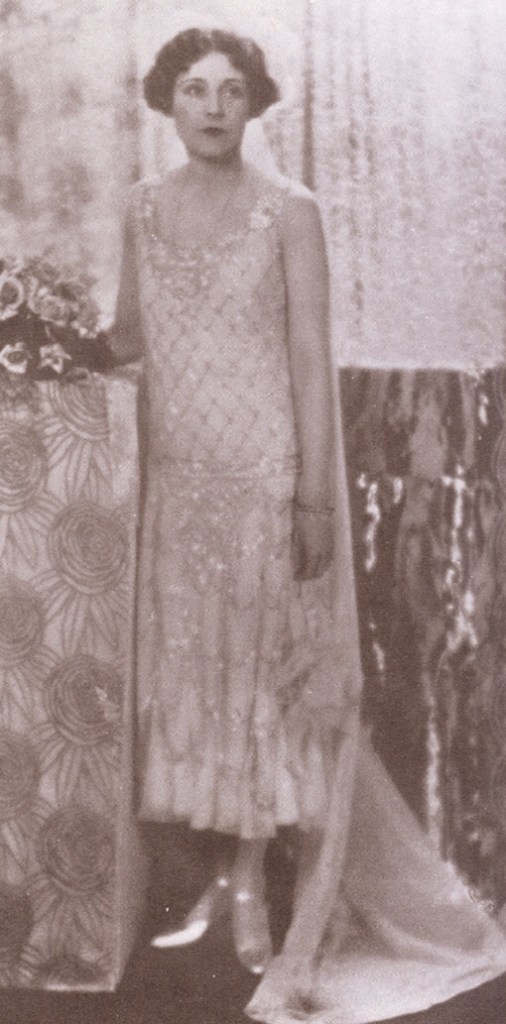
In 1878 Bram married Florence Balcombe, who was a renowned beauty and had formerly been romantically linked to Oscar Wilde…. Bram counted Wilde amongst his friends having met him during his student days…. The friendship was tested as Wilde was initially upset that Florence had chosen Bram over him – but eventually differences were overcome and Bram and Wilde resumed their friendship….

Florence Balcombe – Public domain

Following their marriage the Stokers moved to London as Irving had invited Bram to manage his Lyceum Theatre – which Bram continued to do for the next 27 years (1878-1904)…. On the 31st of December 1879 Bram and Florence became parents to a son who they named ‘Irving Noel Thornley Stoker’ – he was to be their only child….

Inevitably Bram was to make many connections in his role as manager of the Lyceum…. He was to become well-known in theatrical circles and included amongst his friends and acquaintances people such as Sir Arthur Conan Doyle, Alfred Lord Tennyson, Buffalo Bill (Cody) and Mark Twain…. He was acquainted with William Gladstone, Theodore Roosevelt and Lord and Lady Randolph…. One of his closest friends was British novelist Sir Thomas Henry Hall Caine (usually known as Hall Caine) – Bram dedicated his masterpiece ‘Dracula’ to his friend….

Hall Caine from a portrait by R E Morrison – Public domain

Henry Irving received a Knighthood in 1895 – he was the first actor to be knighted…. Bram accompanied Irving on many of his tours, particularly America but also to other parts of the world…. However, surprisingly, he never visited Eastern Europe – the setting for his masterpiece novel…. He was to set two of his novels in America and further novels in the small Scottish village of Cruden Bay in Aberdeenshire – a place dear to him and where he would spend month long holidays…. It was here that he began to write ‘Dracula’ in 1895 – it is believed Dracula Castle may have been inspired by the nearby ‘Slains Castle’…. Further inspiration for the novel had already been received by a previous visit in 1890 to the North Yorkshire seaside town of Whitby (which had also provided inspiration for another of his novels ‘The Snake’s Pass’ in 1890)…. ‘Dracula’ was finally published on the 26th of May 1897….

Slains Castle
Whitby

The story of ‘Dracula’ involves Jonathan Harker, a solicitor, who when on a business trip stays at the Transylvanian Castle of Count Dracula…. Harker discovers that Dracula is a vampire and flees…. The Count follows him to England and begins to terrorise Whitby…. A group form, led by Abraham Van Helsing, to hunt Dracula down – which they eventually succeed to do and manage to kill him…. The book itself is written in the format of the diary entries and journals of the main characters….

Bram had met a Hungarian-Jewish writer, traveller and expert in Turkic languages and culture by the name of Armin Vambery…. Some say Vambery’s tales may have given Bram the idea for ‘Count Dracula’ – but there are others who dispute this…. Bram’s original idea as a title for his novel was ‘The Un-Dead’…. His Count was going to have been from Austria – and was to have been called ‘Wampyr’…. However, he found the name ‘Dracula’ whilst browsing in Whitby Library and thought it a more suitable name…. After its publication ‘Dracula’ was immediately well received – and has become one of the most successful literary works of all time…. Since publication it has never been out of print…. There have been several play versions of the novel and a film….

Bela Lugosi as Count Dracula, 1931 – Public domain

After a series of strokes Bram was to die at 26, St. George’s Square, his London home…. He was cremated and his ashes rest at Golders Green Crematorium, North West London…. An annual festival to honour the literary achievements of Bram Stoker is held in Dublin….