On this day in history….17th March 1846

On this day in history : 17th March 1846 – The birth of Kate Greenaway – the artist and writer known for her illustrations in children’s books….

Kate Greenaway – Public domain

Kate was born Catherine Greenaway in Horton, London, the second of four children…. Her father, John, was a woodblock printer and engraver and her mother, Elizabeth, a seamstress…. They were a working class family – John also supported his mother and sisters, so very often it could be hard financially….but both he and Elizabeth were determined to give their children a good childhood….

The family moved around quite a lot but Kate spent a substantial part of her childhood in a farmhouse in Rolleston, Nottinghamshire – for her this felt like her real home and where she would often return to as an adult…. She studied at various places and at the age of 12 began nightly art classes at Finsbury School…. She was to go on to study at the Royal Female School of Art, which was part of what is now the Royal College of Art in London….

She began to exhibit her drawings in 1868 and her first published work was in magazines for children, such as ‘Little Folks’…. She also worked at illustrating greetings cards to contribute towards the family’s income….

In 1879 her first successful book was published – ‘Under the Window; Pictures and Rhymes for Children’…. It was to become a best seller, over 100,000 copies were sold…. In 1880 it was followed with her illustrations in ‘The Birthday Book’, ‘Mother Goose’ in 1881 and ‘Little Ann’ in 1883…. She was to go on to illustrate over 150 books – only two were both written and illustrated by Kate, her first ‘Under the Window’ and later ‘Marigold Garden’ (or ‘The Language of Flowers’) in 1895….

Marigold Garden – Public domain

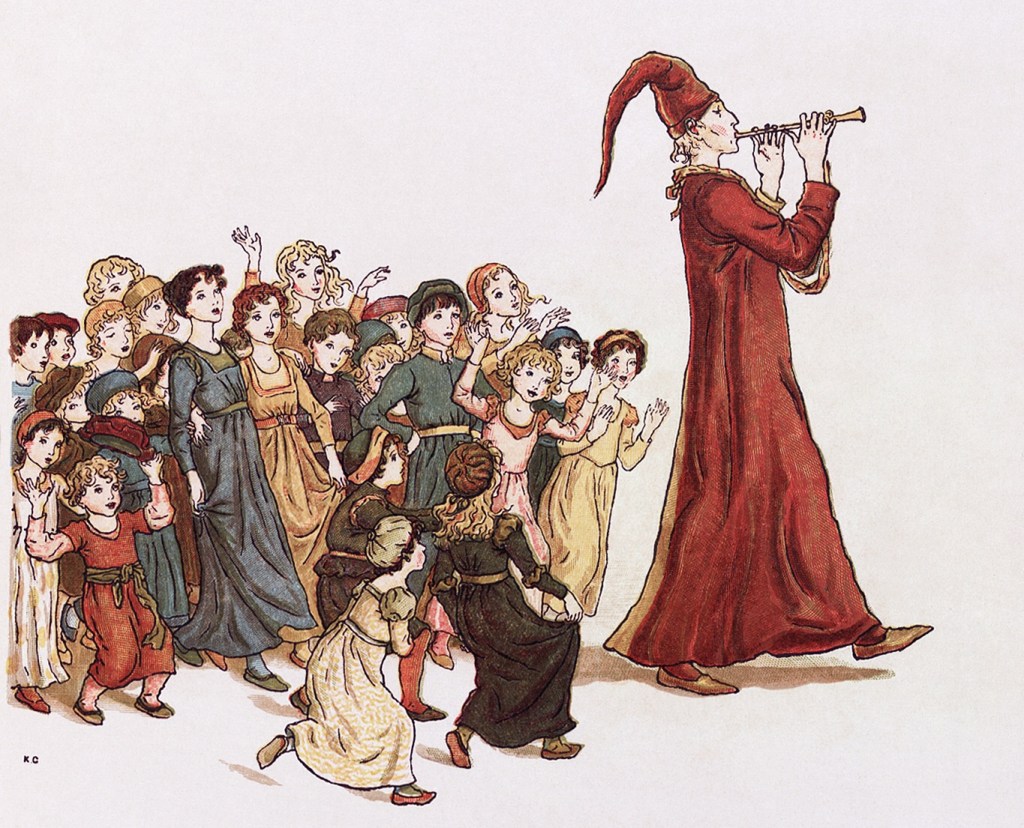
She brought many well-known stories to life, such as Robert Browning’s ‘The Pied Piper of Hamelin’…. Leading art critics around the world praised her work….
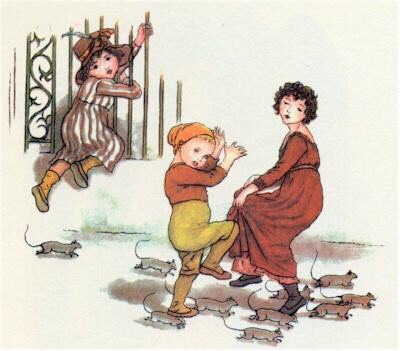
Her own favourite books as a child may have influenced her – Sleeping Beauty, Cinderella, Beauty and the Beast and illustrated editions of Shakespeare…. In her own illustrations she always dressed her children in the Regency fashions of the late 18th Century….smock frocks and skeleton suits for the boys and high-waisted pinafores and dresses with mobcaps and straw bonnets for the girls…. A style which was to catch on….Liberty of London created children’s clothes by adapting her drawings….

Polly from ‘The Queen of the Pirate Isle’ – by Bret Harte – Public domain

In 1890 Kate was elected to the Royal Institute of Painters in Watercolours; she exhibited at the Fine Art Society in 1891, 1894, 1898 and was exhibited posthumously again in 1902…. From 1883-1897 she published Kate Greenaway’s Almanacs…. Kate died of breast cancer at the age of 55 on the 6th of November 1901…. She was buried in Hampstead Cemetery, London….

May Day – Public domain

The Kate Greenaway Medal was established in 1955 in her honour…. It is awarded annually by the Chartered Institute of Library and Information Professionals in the UK to a chosen illustrator of children’s books….
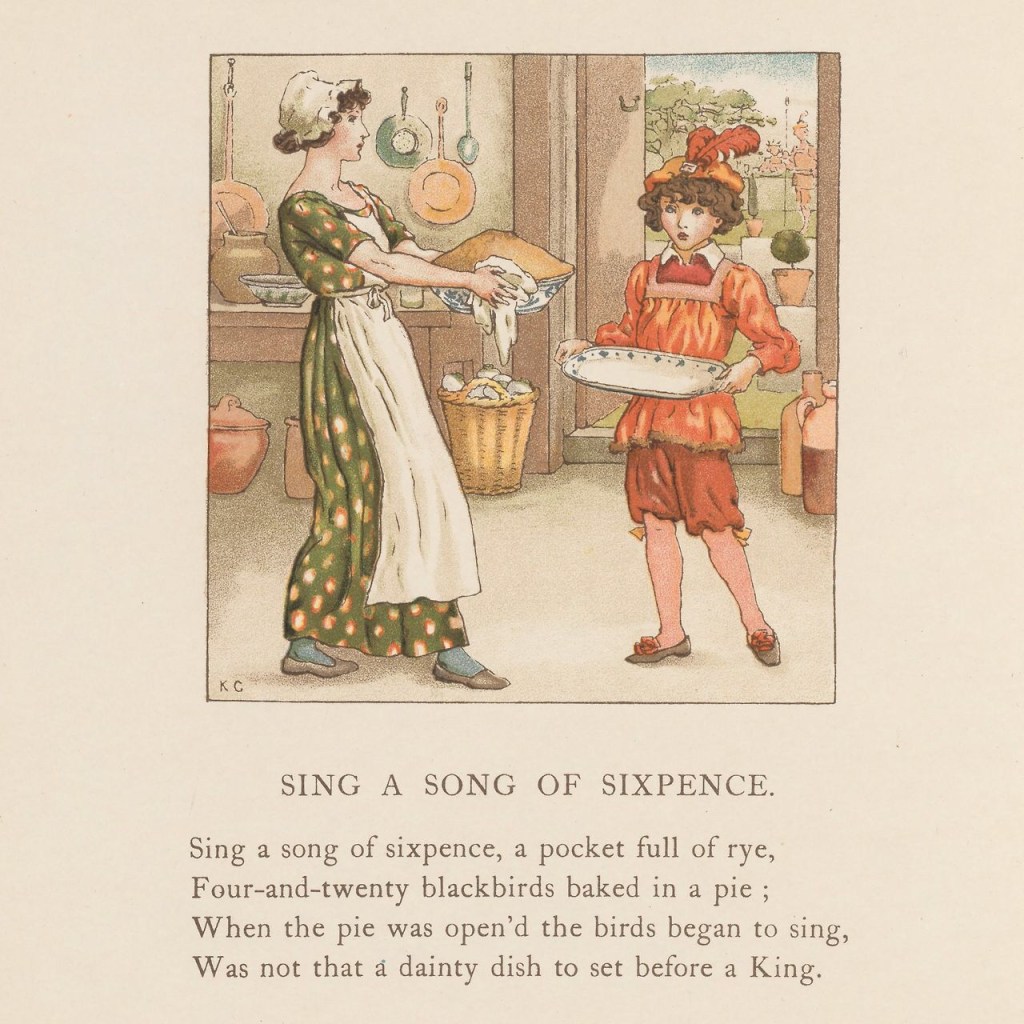
Public domain

On this day in history….25th January 1905

On this day in history : 25th January 1905 – The birth of Margery Sharp – the English author who brought us many novels, including the children’s series ‘The Rescuers’….

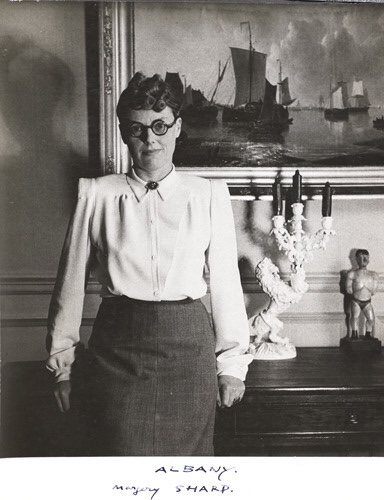
img_5752
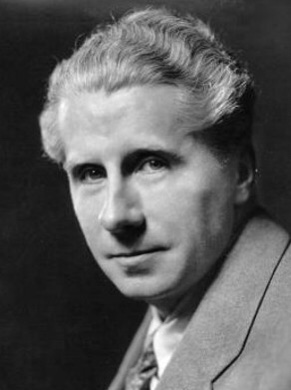
Photo portrait by Bill Brandt, 1945 – Public domain

Sharp was born near to Salisbury in Wiltshire, although her family originally came from Yorkshire…. She then spent part of her childhood in Malta before returning to England in 1914 to study at Streatham High School and then Bedford College, part of the University of London…. She then spent a further year at Westminster Art College….

When she was 21 the satirical magazine ‘Punch’ began to publish her short stories…. She went on to write for several other magazines including ‘Good Housekeeping’, ‘Harper’s Bazaar’ and ‘ The Ladies’ Home Journal’…. Her first novel, ‘Rhododendron Pie’, was published in 1930 – after only taking her a month to write….

In 1938 she married Major Geoffrey Castle, an aeronautical engineer – and during WW2 she worked as an Army Education Lecturer…. All the while she continued with her writing – producing in her writing career 25 novels for adults, 14 for children, numerous short stories and 4 plays….

However the work we undoubtedly know her for best is her series of children’s books telling the stories of a socialite mouse by the name of Miss Bianca – who helped people and animals who found themselves in danger…. The first edition of ‘The Rescuers’ was published in 1959…. The books were illustrated by Gareth Williams, who also illustrated other children’s classics such as ‘Stuart Little’ and ‘Charlotte’s Web’….

img_5753
1st edition – Fair use

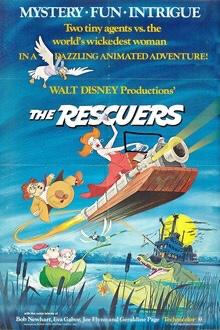
In 1977 Walt Disney released the animated film ‘The Rescuers’, based mainly on the second novel of Sharp’s series – it was an outstanding success…. A sequel ‘The Rescuers Down Under’, set in the Australian Outback, was released in 1990….

img_5754
Original theatrical release poster – Fair use

On this day in history….14th January 1886

On this day in history : 14th January 1886 – The birth, in Maidenhead, Berkshire, of Hugh Lofting – the English author and poet who created Dr. Dolittle….

img_5592
Hugh Lofting – Fair use

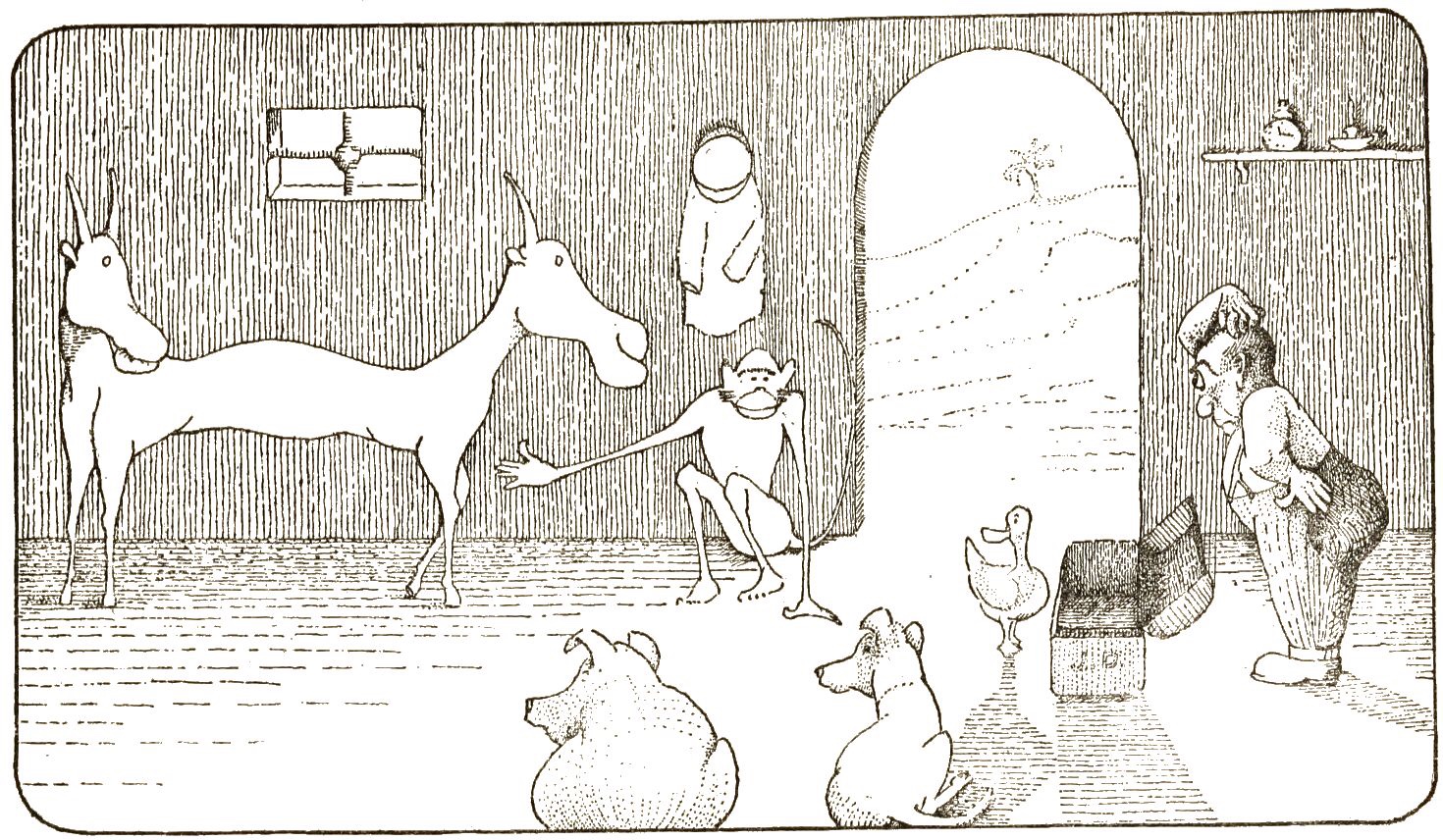
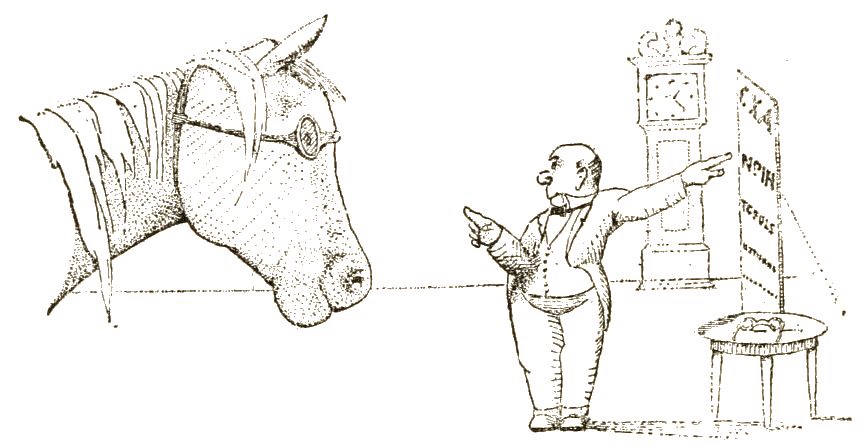
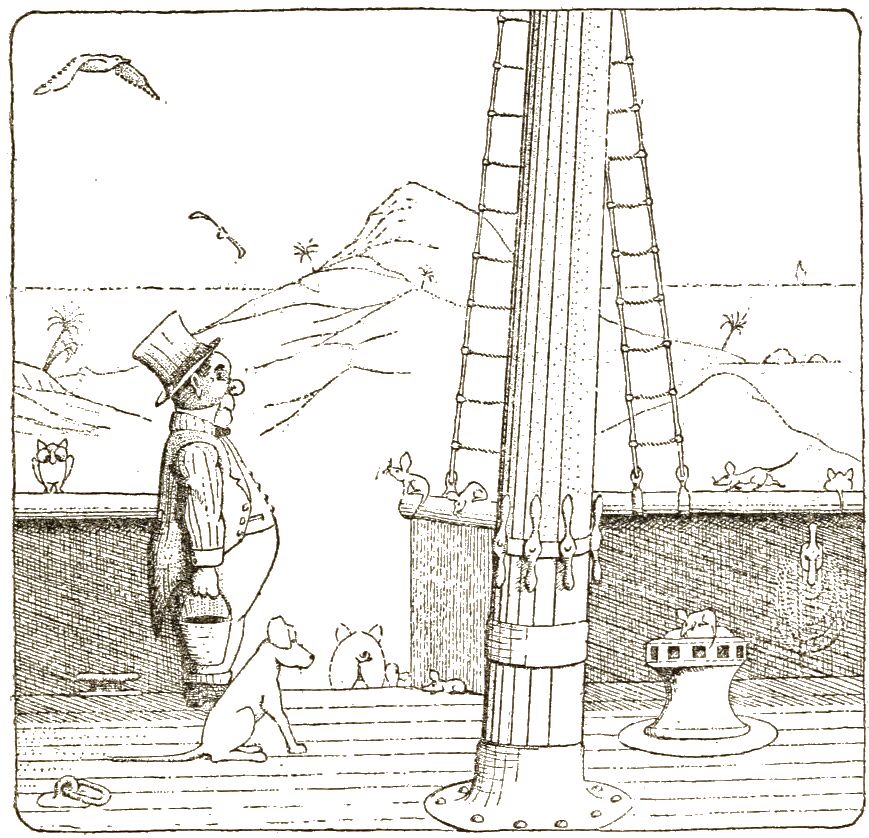
Most of us grew up reading the Dr. Dolittle books – the tales of Dr. John Dolittle, the Victorian doctor who could converse with animals…. Polynesia the parrot, Chee-Chee the monkey, Gub-Gub the pig, Dab-Dab the duck, Too-Too the owl, Jip the dog and Whitey the mouse…. Then there is the Pushmi-Pullyu – a cross between a gazelle and a unicorn, with a head at each end, so it could talk and eat at the same time without seeming rude….img_5593

Hugh Lofting never set out to be a writer…. He studied civil engineering overseas, at the Massachusetts Institute of Technology before returning home to enlist in the Irish Guards to serve in World War 1….

From the trenches Lofting wrote letters home to his children…. Not wanting to write about the horrors of war he created characters and stories – which were later to become the foundation of his Dr. Dolittle tales….img_5594

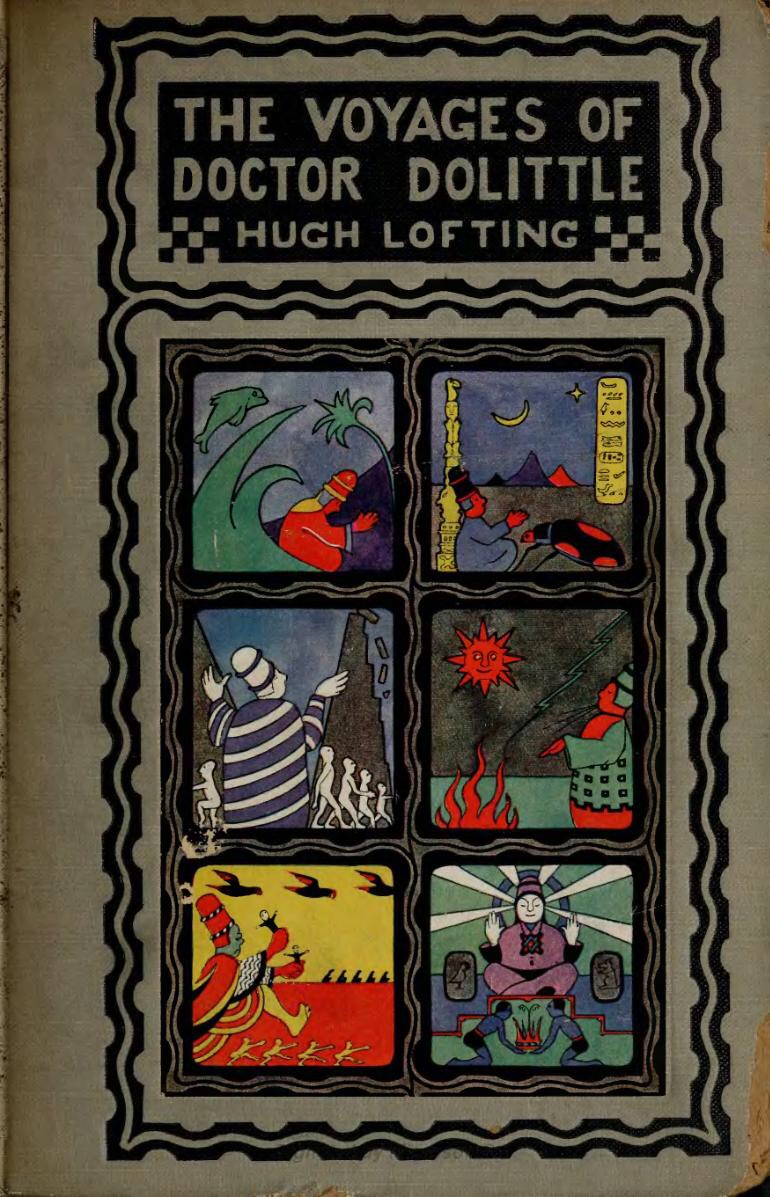
In 1919 Lofting was seriously wounded – it was after this that he moved his family to Connecticut in the United States…. In 1920 his first book was published – ‘The Story of Doctor Dolittle : Being the History of His Peculiar Life at Home and Astonishing Adventures in Foreign Parts Never Before Printed’…. The sequel – ‘The Voyages of Doctor Dolittle’ followed in 1922; there are 10 books in all in the series….img_5596

Other works by Lofting written for children include the ‘Mrs Tubbs’ series of picture books for younger children – ‘Porridge Poetry’ and ‘Noisy Nora’, a story about a little girl who is a very noisy eater…. He also wrote ‘The Twilight of Magic’ for older readers….

‘Victory for the Slain’ was published in 1942 and was Lofting’s only work for an adult audience…. It is a lengthy poem in seven parts, lamenting war and the futility of it…. Victory for the Slain was only ever published in the United Kingdom….img_5595

On this day in history….8th October 1908

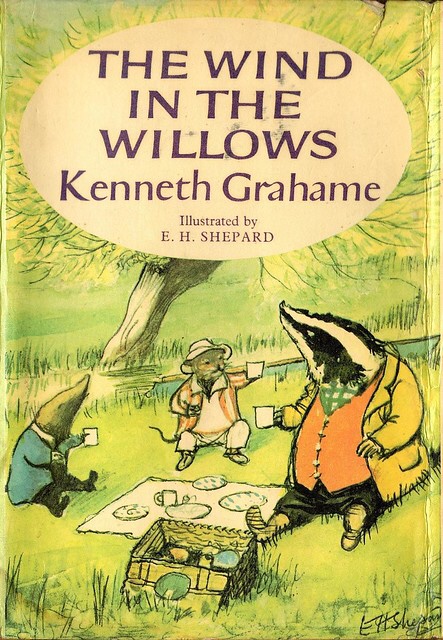
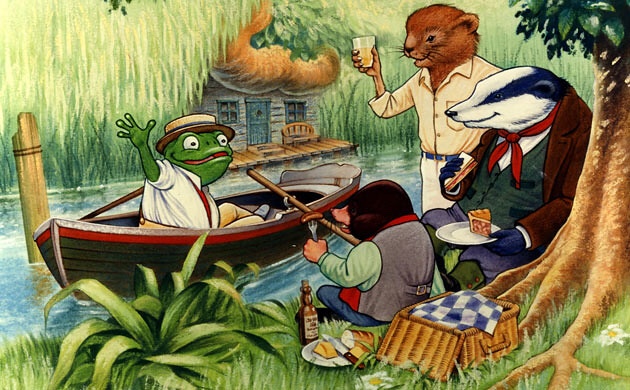
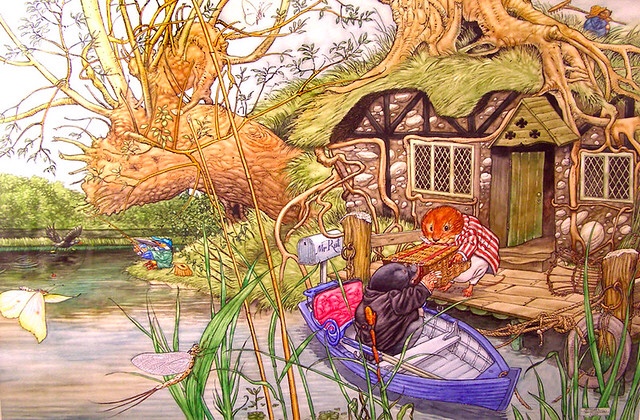
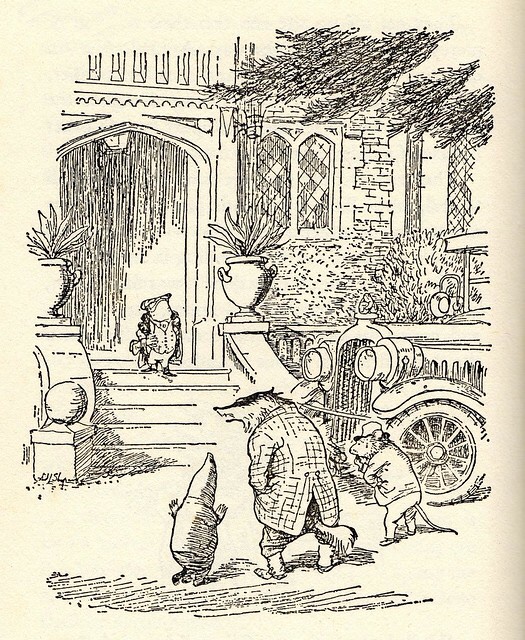
On this day in history : 8th October 1908 – Kenneth Grahame’s classic children’s book ‘The Wind in the Willows’ is published – and has never been out of print since….

img_4188
Image credit : Paul K via Flickr

Kenneth started work at the Bank of England in 1879 – from a junior position he worked his way up through the ranks, eventually to become Secretary of the Bank….

igrahan001p1
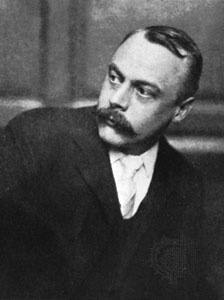
Kenneth Grahame in 1910 – Public domain

In 1899 he married Elspeth Thomson and they had one son, Alistair – a sickly child, born premature, blind in one eye and suffering ill-health all his life…. His parents gave him the affectionate nickname of ‘Mouse’….

When the boy was around 4-years-old his father began to tell him bedtime stories, about four animal friends – Toad, Badger, Ratty and Mole…. When Kenneth was away from home, (often on the boating holidays he enjoyed so much), he would write home to Alistair – his letters full of more tales of the four friends…. The child was quite a headstrong and wayward boy – and Kenneth based the character of Toad on him…. Ratty was based on a good friend of his – fellow writer Sir Arthur Quiller-Couch….

img_4190
Image credit : Julie Sweeney via Flickr

In 1908 Kenneth retired early from the Bank due to ill-health…. The family moved to Crookham in Berkshire – the area where Kenneth had spent much of his childhood…. In his retirement he spent much of his time by the banks of the River Thames…. Having decided to develop his tales of Toad, Badger, Ratty and Mole he no doubt drew much of his inspiration from the river….and giving us the children’s book ‘The Wind in the Willows’ that we all grew up with and loved so much….

img_4189
Ratty and Mole – Image credit : Amber Case via Flickr

Sadly Alistair, who was an under-graduate at Oxford University at the time, committed suicide on a railway track five days before his 20th birthday….

img_4191
Image credit : Paul K via Flickr

On this day in history….15th June 1911

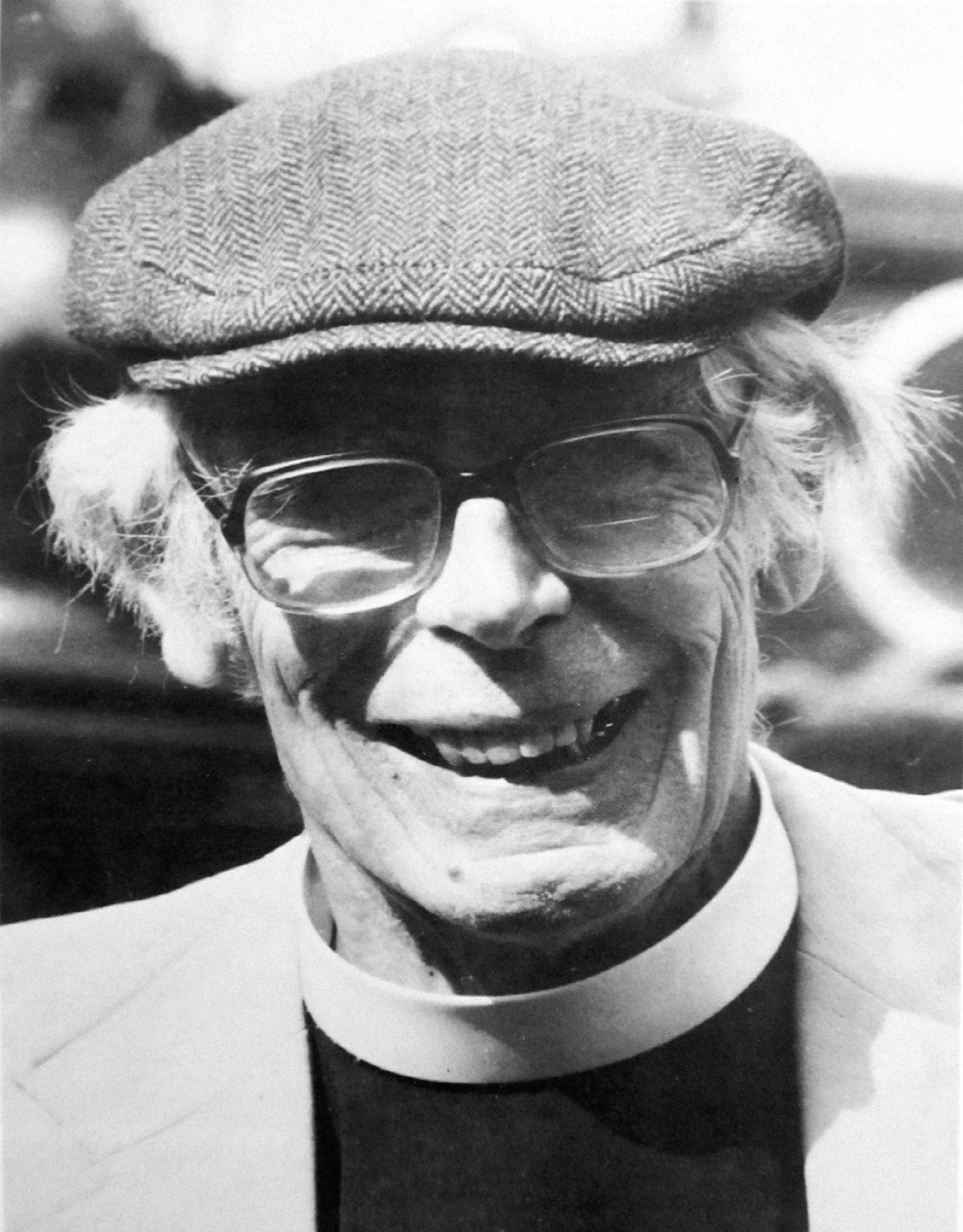
On this day in history : 15th June 1911 – Anglican cleric, railway enthusiast and children’s author – best known for his creation ‘Thomas the Tank Engine’ – the Reverend W. Awdry is born….

img_3372
The Reverend Wilbert Awdry OBE in 1982 : Image credit – Jamie Spilsbury CC BY-SA 4.0

Wilbert Vere Awdry was born at Ampfield Vicarage near to Romsey in Hampshire – his father was the Anglican Vicar of Ampfield…. The family moved to Box in Wiltshire and lived in a house, ‘Journey’s End’, which was just 200yds from Box Tunnel on the Great Western Railway…. Wilbert would lie in his bed at night and listen to the freight trains; he got to know their whistles and felt each engine had its own personality…. He heard them ‘snorting’ up the steep incline and listened for the conversations they held between themselves….

Wilbert was educated at Marlborough House in Kent, Dauntsey’s School in Wiltshire and then attended Oxford…. Afterwards he was to teach for three years before becoming ordained into the Anglican Church…. He became curate for St. Nicholas’ Church, Kings Norton, Birmingham and then Rector at Elmsworth and Knapwell, Cambridgeshire…. After a term as Rural Dean at Bourn he became Vicar of Emneth in Norfolk…. He retired in 1965 and settled in Rodborough, near to Stroud, Gloucestershire….

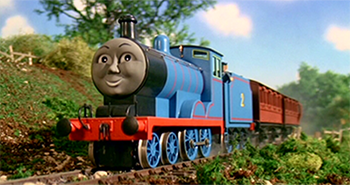
It was when his son, Christopher, caught measles in 1943 that Wilbert began to make up stories about trains to keep the boy amused…. After he had written ‘The Three Railway Engines’, which was published in 1945, he built Christopher a model of ‘Edward’ out of a broomstick and some scraps of wood…. He also added some trucks and carriages….

img_3375
Edward – Reverend Wilbert Awdry – Fair use

img_3377
Gordon – Reverend Wilbert Awdry – Fair use

Christopher was eager to have a model of ‘Gordon’ as well – but this proved difficult because of the size…. So, Wilbert built a smaller model….and ‘Thomas’ came to be…. Christopher wanted more stories about Thomas, which led to ‘Thomas the Tank Engine’ being published in 1946…. By the time Wilbert had stopped writing in 1972 there were 26 books in the Railway series….Christopher went on to add to these books….

img_3374
Thomas the Tank Engine – fair use

Wilbert remained a railway enthusiast; he volunteered as a guard on the Talyllyn Railway in Wales and was involved in railway preservation work…. He was awarded an OBE in 1996 but by now his health was failing and he was unable to make the journey to London to receive it personally…. He died peacefully in Stroud on the 21st of March 1997….

img_3373
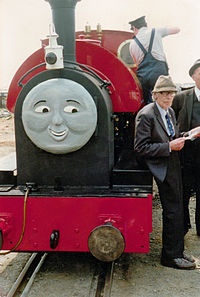
Reverend Awdry in May 1988 on the Talyllyn Railway with ‘Peter Sam’, one of his creations – Photo credit: Voice of Clam CC BY-SA 3.0

Thomas the Tank Engine will bring back memories for so many of us….either from our own childhoods or those of our children…. I, for one, have a son who was absolutely obsessed – we still have many of the books and somewhere in the loft is a huge collection of die-cast models…. In October 1984 a TV series was developed by Britt Allcroft – with the voice of Ringo Starr telling the stories…. Thomas videos seemed to play on a constant loop in our house…. Oh! And that wretched theme tune….I never have quite managed to get it out of my head!