On this day in history : 18th January 1882 – The birth of Alan Alexander Milne….who brought to us that loveable little bear Winnie the Pooh….
Winnie the Pooh Image credit: Paul K via Flickr
A.A. Milne was born in Kilburn, London and attended Westminster School and later Trinity College, Cambridge – graduating with a B.A. in mathematics….
Whilst at University he edited and wrote for a student magazine – and it wasn’t long before he came to the attention of British humour publication ‘Punch’…. A.A. Milne became a contributor to the magazine and went on to become its assistant editor….
A.A. Milne in 1922. Public domain
In 1913, just before the First World War, Milne married Dorothy (Daphne) de Selincourt…. As war broke out he joined the Royal Warwickshire Regiment as an officer – but his suffering of a debilitating illness meant a transfer to the Royal Corps of Signals…. After receiving an injury at the Battle of the Somme he was invalided back to England…. Once he had recovered he spent the remainder of the war in military intelligence, writing propaganda for MI7….
In August 1920 a son, Christopher Robin, was born to the Milnes….and in 1925 the family moved to a new country home – Cotchford Farm, Hartfield, East Sussex. The farm lay adjacent to the northern edge of Five Hundred Acre Wood in Ashdown Forest….which became Milne’s inspiration for his Hundred Acre Wood, the home of Winnie the Pooh and his friends….
Milne and his son Christopher Robin and Pooh Bear, at Cotchford Farm, their home in Sussex. Photo by Howard Coster, 1926. Fair use.
Christopher Robin owned a teddy bear, purchased in Harrods of London – and given to him as a first birthday present in 1921…. Originally the bear was called ‘Edward’….but he underwent a name change…. The Milnes were frequent visitors to London Zoo – and it was there that Christopher Robin fell in love with a certain Canadian black bear – called Winnie….so named for her previous owner….who came from Winnipeg, Canada….
Canadian Lieutenant Harry Colebourn had bought the bear as a cub from a hunter for 20 dollars…. Lt. Colebourn was on route to England during WW1….and the bear cub became the unofficial mascot for the Fort Gary Horse Regiment – a Canadian Army Reserve armoured regiment….
Harry Colebourne and Winnie, 1914
It was whilst the regiment were away in France that Winnie came to be in London Zoo, as she was left there for safe-keeping. Once the war was over she was officially donated to the zoo and became a much-loved attraction….
The other part of Winnie the Pooh’s name came from a swan called Pooh that the Milnes encountered on a family holiday….
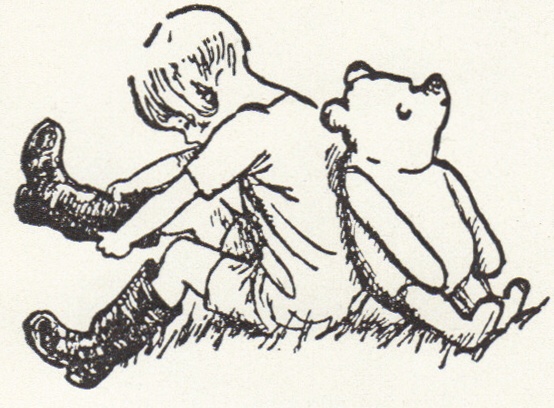
Christopher Robin and Winnie the Pooh Image credit: Thoth God of Knowledge via Flickr
As we know Winnie the Pooh is usually shortened to just ‘Pooh’….and this might be the reason why….
“But his arms are so stiff….they stayed up straight in the air for more than a week, and whenever a fly came and settled on his nose he had to blow it off. And I think – but I am not sure – that that is why he is always called Pooh”…
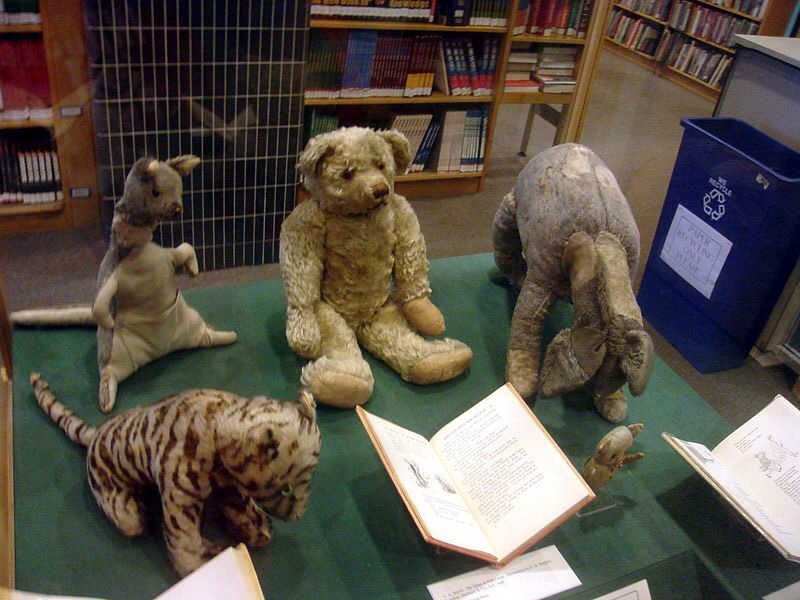
Pooh’s friends – Piglet, Eeyore, Kanga, Roo, and Tigger are all based on Christopher Robin’s other stuffed toy animals….Owl and Rabbit came from Milne’s imagination…. The original toys, Pooh, Eeyore, Piglet, Tigger and Kanga (unfortunately Roo got lost) can be seen at the New York Public Library – as they were gifted to them by American publisher E.P. Dutton in 1987…. They now receive over 750,000 visitors a year….
Original Winnie the Pooh stuffed toys : Clockwise from bottom left : Tigger, Kanga, Edward Bear (a.k.a. Winnie the Pooh), Eeyore and Piglet
On this day in history : 14th January 1898 – the death of Charles Lutwidge Dodgson – who under the pseudonym of Lewis Carroll brought us ‘Alice’s Adventures in Wonderland’ and its sequel ‘Through the Looking-Glass’…
Charles was born on the 27th of January 1832, in Daresbury, Cheshire; the son of a parson, he came from a large family, being the third of eleven children…. The Dodgson family had their roots in Northern England but also had Irish connections….
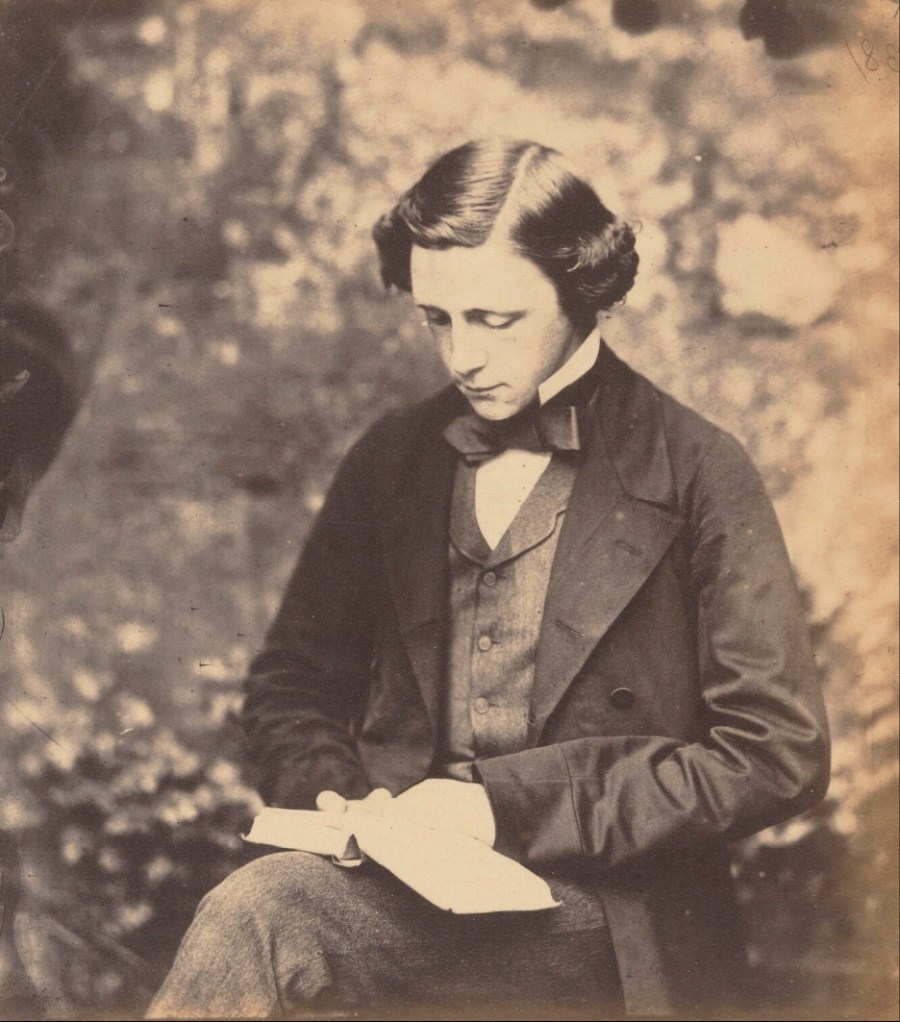
Charles Lutwidge Dodgson – 2nd June 1857
Until the age of 12 Charles was educated at home; he was then sent to Richmond Grammar School and then on to Rugby…. In January 1851 he went into residency at Oxford University – where he was to remain in varying capacities all of his life…. A stained-glass window at Christ Church College can be seen that depicts a White Rabbit and Alice holding a flamingo….
Charles studied mathematics at Oxford – such was his talent that he won the Christ Church Mathematics Lectureship in 1855, which he held on to for 26 years….
Throughout his life Charles did not enjoy the best of health; he was deaf in one ear after a childhood fever – and whooping-cough had left him with a weak chest…. Later in life he suffered debilitating migraines….he also had a life-long stutter….
Although we always associate Lewis Carroll with ‘Alice in Wonderland’, which was published in 1865 and its sequel ‘Through the Looking-Glass, And What Alice Found There’ in 1872 – there was so much more to the man. He wrote twelve works of literary fiction and a further eleven books on mathematics…. He was a poet, philosopher, satirist, inventor and photographer….
Charles Lutwidge Dodgson – self portrait
Charles had written short stories and poetry from an early age….and had successfully had some published in magazines and national publications…. It was in 1856 that he wrote for the first time under the pen name of ‘Lewis Carroll’ – a poem entitled ‘Solitude’…. The pseudonym came from the anglicised ‘Ludovicus’ (which in turn came from the Latin for ‘Lutwidge’) to give ‘Lewis’ – whereas ‘Carroll’ is an Irish surname – similar to the Latin ‘Carolus’ – from which we get ‘Charles’….
Although Charles always claimed his character of Alice was not based on any one particular child – there are many who believe she was a real person….and with good reason…. Charles became close to the Liddell family, Henry Liddell being Dean of the College. Charles was especially good friends with the Dean’s wife, Lorina and their three daughters, Lorina, Edith and ‘Alice’….and it is perhaps ‘she’ who was his influence…. Indeed the poem at the end of ‘Through the Looking-Glass’‘A Boat Beneath a Sunny Sky’ is an acrostic spelling out ‘Alice Pleasance Liddell’….
Alice Liddell – taken by Charles Lutwidge Dodgson circa 1858
Even after his success and his increase in wealth and fame (Alice’s Adventures in Wonderland is translated into over 70 languages) little changed in his life…. He continued to teach at Christ Church and remained in residence until his death ~ although as he got older he did spend more of his time at the house of his six unmarried sisters – ‘The Chestnuts’ in Guildford….
Two weeks before his 66th birthday Charles died from pneumonia after a bout of influenza – at ‘The Chestnuts’…. He is buried at Mount Cemetery, in Guildford….
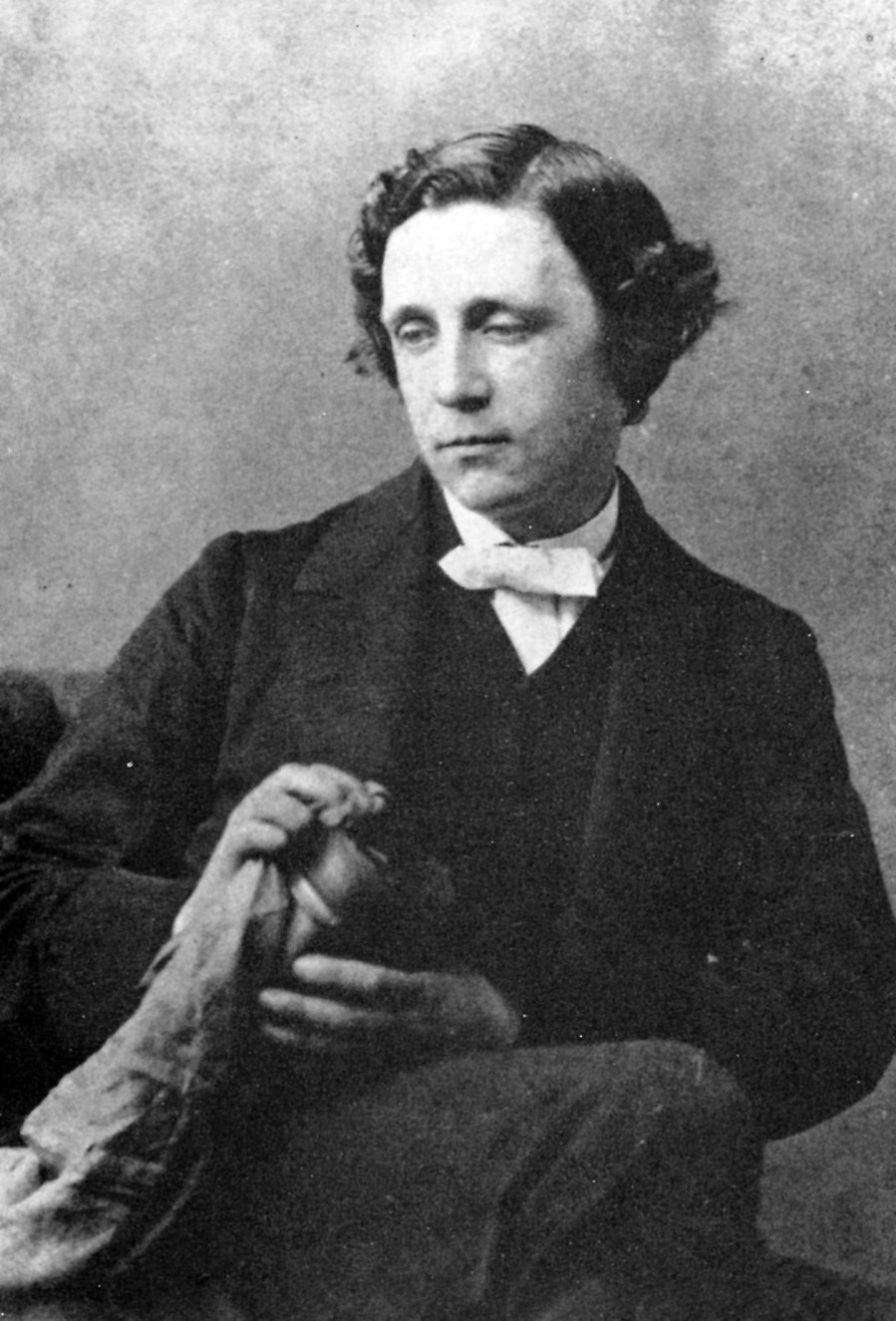
Charles Lutwidge Dodgson taken by Oscar G Rejlander
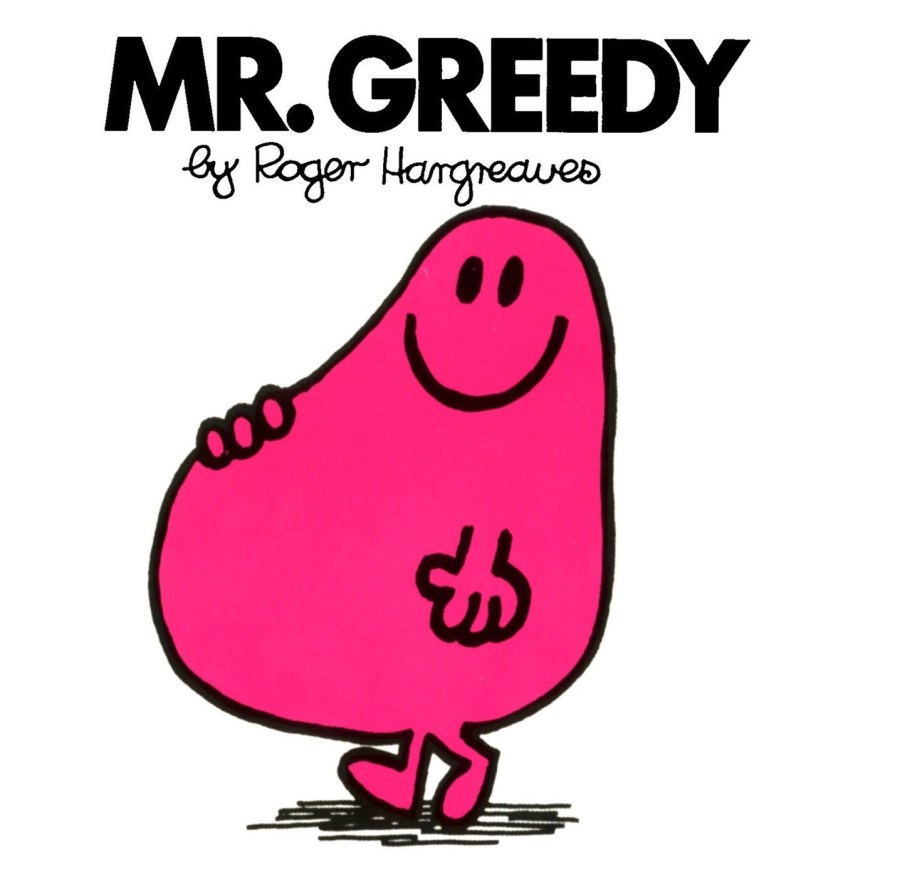
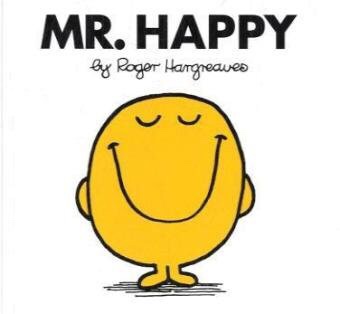
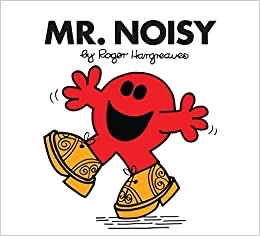
On this day in history : 9th May 1935 – The birth of author and illustrator of children’s books, Roger Hargreaves – best remembered for his much loved Mr Men and Little Miss series of stories….
Fair use
Charles Roger Hargreaves was born in Cleckheaton, West Yorkshire and attended Sowerby Bridge Grammar School…. He then spent a year working in the family laundry and dry cleaning business before going to work in advertising….
Roger wrote his first Mr Men story – ‘Mr Tickle’ – in 1971…. It came about when his 8-year-old son asked him what a tickle looked like…. In response he drew a figure with a round orange body and long bendy arms – and so the first Mr Men character was born….
Fair use
At the time Roger was the Creative Director of a London advertising company…. He had some difficulty in initially finding a publisher for his books but once he did success came quickly…. In three years more than one million copies had sold…. 1974 saw the BBC animated Mr Men series, narrated by Arthur Lowe – and by 1976 Roger had given up his advertising career to concentrate on his writing…. The Little Miss books were launched in 1981 and they too were made into a TV series in 1983 – this time narrated by husband and wife team John Alderton and Pauline Collins….
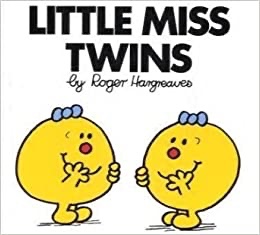
Fair use
In all there were 46 Mr Men and 33 Little Miss books…. With over 100 million books being sold Roger was to become Britain’s third best selling author of all time…. His other works included the 25 book series ‘Timbuctoo’, ‘The Roundy and Squary’ books, ‘John Mouse’, ‘Hippo Potto and Mouse’ and the ‘Veggie Fruits’ – but it is undoubtedly the Mr Men and Little Miss stories that won so many hearts….
Between 1975 and 1982 Roger and his wife Christine lived on Guernsey with their four children – Adam, Giles and twins Sophie and Amelia – upon whom ‘Little Miss Twins’ was based…. The family then moved to Cowden in Kent…. On the 11th of September 1988 Roger was to die suddenly following a stroke – he was aged just 53…. After his death his son, Adam, continued his work – and in April 2004 Christine sold the rights to the characters to the Chorion entertainment group….
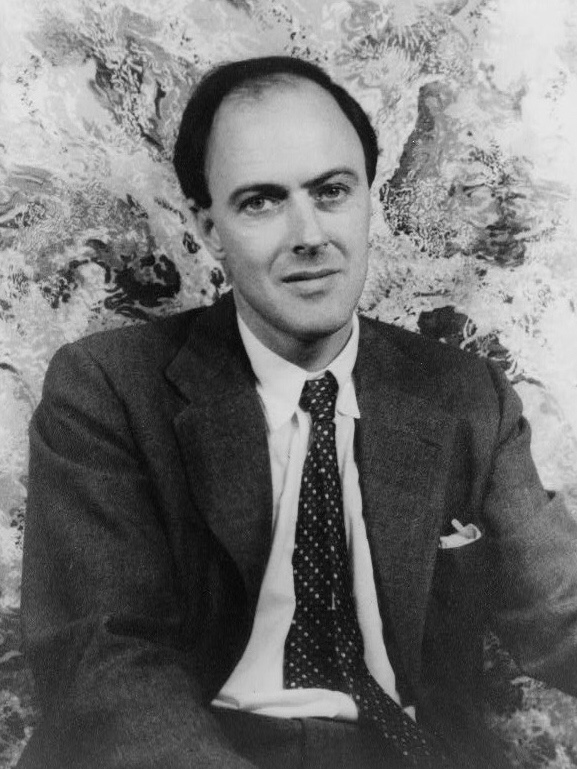
On this day in history : 23rd November 1990 – The death of much-loved children’’s author Roald Dahl…. But did you know he was also an ace fighter pilot, spy, medical inventor and chocolate historian?
Roald Dahl in 1954 – Public domain
Roald was born on the 13th of September 1916 to Norwegian parents living in Llandoff, Wales…. He was named after Roald Amundson, the Norwegian adventurer and explorer who was the first man to reach the South Pole…. Norwegian was Roald’s first language, as this is what the family spoke at home….
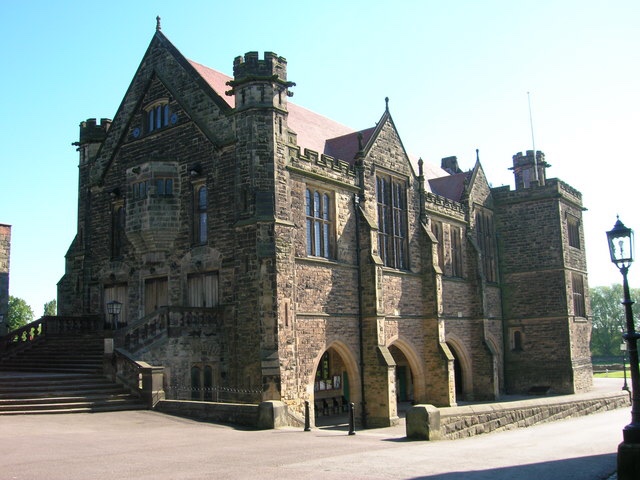
When he was three years old his seven year old sister died from appendicitis – and then just a few weeks after his father succumbed to pneumonia…. Soon after his mother gave birth to another little sister…. His father had always believed that English schools were the best in the world and had wanted his children to be educated in them…. With this in mind his mother chose not to return to Norway but to remain in Wales so she could honour his wish…. Roald first attended Cathedral School in Llandoff before being sent to St. Peter’s Boarding School in Weston-Super-Mare…. He was desperately homesick and wrote to his mother every week – but never let on how unhappy he was…. Then in 1929, at the age of thirteen, he was sent even further away, to Repton School in Derbyshire…. He was even more miserable here; corporal punishment was frequently used – Roald detested the cruelty and found it hard to accept that beating children was permissible….
Repton School – Image credit : J. Thomas CC BY-SA 2.0
Roald’s talent for writing was not recognised during his schooling…. He was seen as an accomplished sportsman though; he was captain of the school’s squash team and was good at cricket, golf and football…. He grew tall, ending up at a height of 6ft 6in….
He had other varied interests; he was keen on photography – and he discovered a love of chocolate…. The Cadbury’s factory was near to the school and occasionally boxes of new chocolates would arrive for the boys to try out…. Roald would daydream about making up a chocolate bar of his own to wow Cadbury’s…. It was his passion for the confection that inspired his third children’s book in 1964 Charlie and the Chocolate Factory…. He would often refer to chocolate in his stories….
Fair use
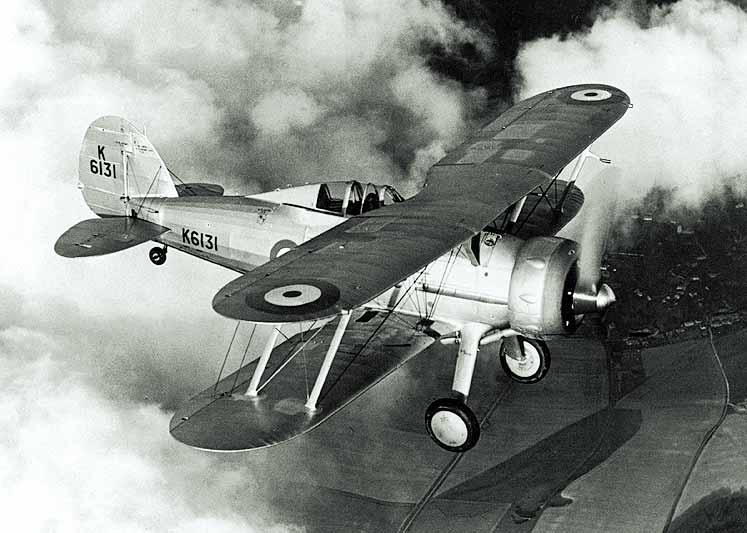
Roald left school in 1934 and started to work for the Shell Petroleum company, being posted to Kenya and Tanzania…. In August 1939, with World War Two approaching, he was still in Tanzania and was draughted as a lieutenant into the King’s African Rifles…. Then in the November of 1939 he joined the RAF to become a pilot…. After completing his training he was assigned to No.80 Squadron, flying the RAF’s last fighter bi-planes, Gloster Gladiators…. It was whilst flying one of these that on the 19th of September 1940 he was forced to make an emergency landing in the desert…. The aircraft crashed – Roald suffered a fractured skull and lost his vision…. He was rescued and taken to a Royal Naval hospital where he eventually regained his sight – and in February 1941 he was declared fit enough to fly again….
Gloster Gladiator – Public domain
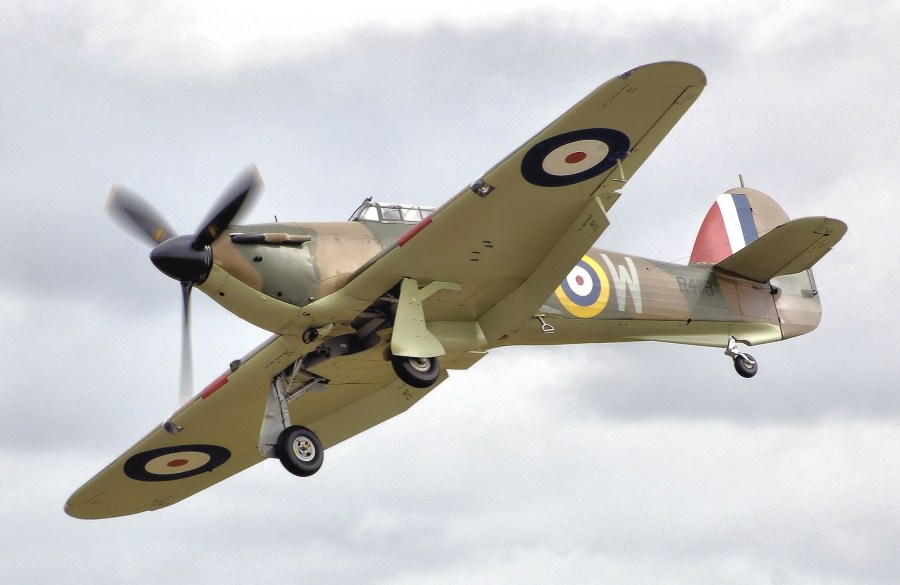
To rejoin his squadron Roald had to travel to Eleusina near to Athens – where they had been transferred to join the Greek Campaign…. This time he was to fly Hawker Hurricane aircraft and on the 15th of April 1941 he was to take part in his first aerial combat and in which he was to shoot down is first plane…. The following day he shot down another…. On the 20th of April he took part in the Battle of Athens….
Hawker Hurricane – Image credit : Arpingstone – own work – Public domain
By May the Germans were advancing and the squadron was evacuated to Egypt…. For over a month Roald was to fly sorties every day but during the second half of June he began to suffer severe headaches causing him to blackout…. He was invalided out of the squadron, returned to Britain and posted to an RAF training base at Uxbridge – with the idea of him becoming an instructor once his health had sufficiently recovered…. It was whilst on a trip to London in the late March of 1942 that he was to meet Major Harold Balfour, Under-Secretary of State for Air…. Balfour was so impressed by Roald that he appointed him assistant air attaché to the British Embassy in Washington DC….
While in the States Roald was to meet the writer C.S.Forester, who had been commissioned by the Saturday Evening Post to write a piece on Roald’s flying experiences…. He asked Roald to jot something down that he could work with…. However, when he received the account he was so impressed that Roald’s story was published exactly as he had written it – this was to be Roald’s first ever published work….
Roald was beginning to move within different circles…. He was to meet and work with British army officer Ian Fleming – author of the James Bond stories…. And he was then introduced to the world of espionage – and to Canadian spymaster William Stephenson, code name Intrepid….. It was Roald’s task to supply intelligence from Washington back to Prime Minister Winston Churchill and to MI6…. By now he had been promoted to Wing Commander and before long he had become Squadron Leader…. But in August 1946 his ongoing injuries from his aircraft crash meant him being invalided out of the RAF – as a flying ace having more than five victories to his name….
On the 2nd of July 1953 Roald married American actress Patricia Neal and they were to have four daughters and one son…. In December 1960 four month old Theo’s pram was struck by a New York taxi cab, leaving him with serious injuries…. Little Theo suffered with Hydrocephalus – an accumulation of cerebrospinal fluid in his brain…. Roald worked with neurosurgeon Kenneth Till from Great Ormond Street Children’s Hospital and hydraulic engineer Stanley Wade to develop a valve – the Wade-Dahl-Till Valve – which was used with a shunt to alleviate the condition…. The valve went on to be used to help nearly 3,000 children all around the world….
Patricia Neal and Roald Dahl – Public domain
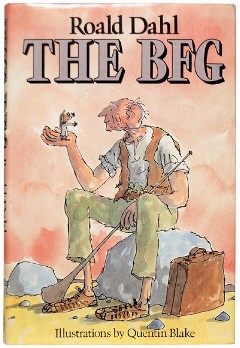
In November 1962 Roald’s eldest daughter, Olivia, died from measles at the age of seven…. He was beside himself with grief and guilt at not being able to help her…. (His 1982 book, The BFG, is dedicated to her)…. Roald became a promoter of immunisation…. Then in 1965 his wife suffered three burst cerebral aneurysms whilst pregnant with their fifth child…. Roald had to help her learn how to walk and talk again – eventually she recovered enough to be able to return to her acting career…. A film was made about their story in 1981 The Patricia Neal Story – starring Glenda Jackson and Dirk Bogarde….
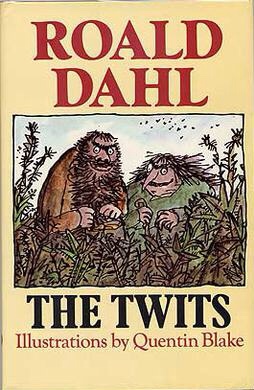
In 1972 Roald began an affair with Felicity d’Abreu Crosland – who he later married after he and Patricia divorced in 1983…. With his new wife he lived at Gypsy House, a home he had owned since 1954 in Great Missenden, Buckinghamshire…. His first children’s book, The Gremlins, had been published in 1943 – and he went on to write some of the best loved children’s stories of all time: Charlie and the Chocolate Factory, James and the Giant Peach, The BFG, Fantastic Mr Fox, Matilda, The Witches, The Twits, Danny Champion of the World and George’s Marvellous Medicine…. He also wrote stories for adults, which were often macabre – and many were adapted for TV and film, such as Tales of the Unexpected and Alfred Hitchcock Presents…. He wrote screenplays and for television…. Roald was a prolific writer – but then with his own life experiences he would never have been short of something to write about…. He has been named one of the 50 greatest British writers since 1945 and it is estimated over 250 million of his books have been sold; he has been published in some 60 different languages….
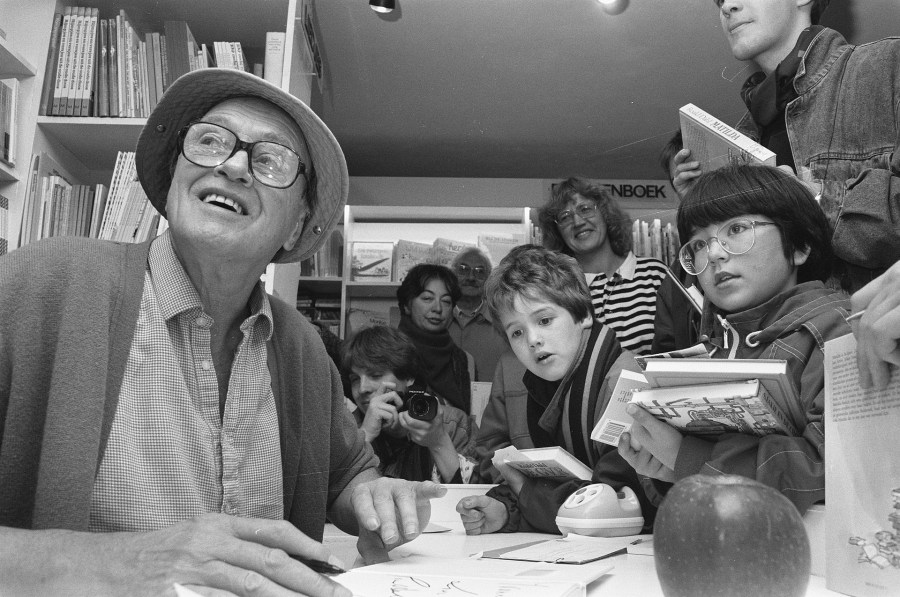
Roald book signing in Amsterdam – Image credit : Bob Bogaerts / Anefo CCO
On the 23rd of November 1990, at the age of 74, Roald died from a rare cancer of the blood…. He was buried at the Church of St. Peter and St. Paul in Great Missenden, Buckinghamshire – along with his snooker cues, a good bottle of Burgundy, some chocolates, HB pencils – and a power saw!
Image credit : MilborneOne – own work – CC BY-SA 3.0

















 Cottage Capers