Agnes Waterhouse ~ the first British hanging for Witchcraft….

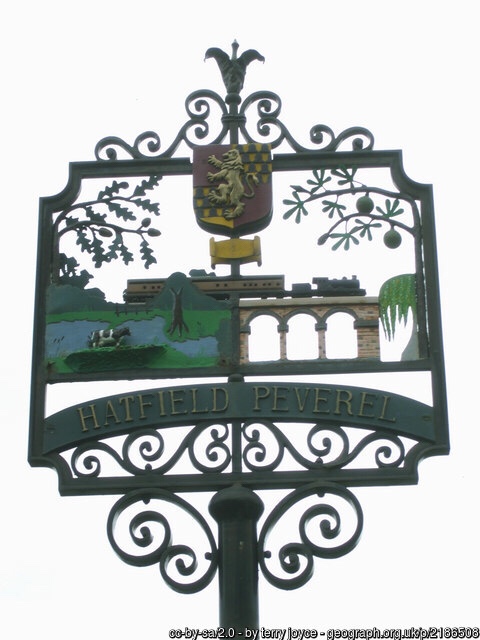
Agnes Waterhouse was born around 1503 and lived in the village of Hatfield Peverel, near to Chelmsford, Essex – and she was the first woman in Britain to be hanged for witchcraft….

img_0342


Agnes was known locally as ‘Mother Waterhouse’, which would suggest she may have been a wise woman and healer. It appears she was rather an argumentative woman, repeatedly falling out with her neighbours…. In July 1566 Agnes was accused of witchcraft – along with Elizabeth Francis (believed to be her sister) and Joan Waterhouse, her 18-year-old daughter….
img_0343


Elizabeth had a cat; a white spotted one called ‘Sathan’ – or Satan – given to her by her grandmother, ‘Eve of Hatfield Peverel’ – who taught her grand-daughter the secrets of witchcraft when she was 12 years old…. Sathan was able to talk; he taught Elizabeth how to make magical potions – and promised her a lifetime of riches – a promise that indeed appeared to have been kept, as she always had sheep in her pasture….

Sathan would do anything for his mistress – all he asked for in return was bread, milk and a drop of blood – her blood – which she provided by pricking herself and allowing him to suck from it….leaving spots on her skin never to disappear….

As a young woman Elizabeth took a fancy to an Andrew Byles – a man of wealth – to be her husband…. Sathan promised to get him for her….but in order for it to be possible she must allow Byles to ‘abuse’ her – which she did. Only things did not quite go to plan – for afterwards Byles refused to marry her. Enraged Elizabeth ordered Sathan to ‘waste his goods’ (destroy his property)…. Still not content she demanded the cat ‘touch his body’ (cause illness) – and so he did…. Byles subsequently died from his illness….img_0353

Soon after Elizabeth discovered she was carrying Byles’s child – so Sathan advised her which herbs to take to cause a termination of the pregnancy….

Elizabeth set her heart upon another man, Francis….although not as rich as Byles she decided she must have him and so set her trap…. After sleeping with him, once again she fell pregnant – they married and a daughter was born to them some three months later….

It was not a happy union, the pair fought constantly – family life was not as Elizabeth had expected; so when the child was just 18 months old she got Sathan to kill her….and inflict a lameness of the leg on to Francis – from which he never recovered….

By now Elizabeth had somewhat tired of it all – and this included Sathan who she’d had for some 15 years…. It so happened that she encountered Agnes one day, who was on her way to the ovens to bake some cakes…. Elizabeth decided to bestow the cat upon her as a gift – telling her that all she needed to do was feed him bread, milk and a drop of blood and he would do anything she wanted….in return Agnes gave Elizabeth a cake….

img_0349

Agnes was eager to try out the cat’s skills…. She asked him to kill one of her pigs – more than willing to prove himself Sathan obliged. Having fallen out with a couple of her neighbours Agnes then got him to kill three hogs belonging to Father Kersey and drown a cow owned by Widow Gooday…. Each time Agnes rewarded Sathan with a chicken and a drop of her own blood. Realising the power at her fingertips Agnes began causing no end of mischief for her neighbours….ruining their brewing and butter making amongst other things…. Sathan taught her the art of witchcraft, how to terminate pregnancies and helped her to kill people…. As she wasn’t getting along with her own husband Agnes arranged his demise too – she spent 9 years as a widow before things finally caught up with her….

Eventually, for whatever reason, Agnes too had had enough of Sathan, he was beginning to cause her problems; so, she turned him into a toad – he was far easier to keep under control this way….

img_0350
Foter.com

It was while she was away one day that her daughter, Joan, decided to amuse herself by playing with him…. Feeling hungry and as her mother had left no food, Joan went to the house of a neighbour to ask for some bread and cheese…. On arriving she encountered the neighbour’s daughter, 12-year-old Agnes Brown – who refused to give her any food. On returning home, Sathan offered her his help….providing she gave him her soul – Joan agreed to this…. Sathan went to visit the young Agnes and found her churning butter. The toad manifested himself into a demon – a black dog with horns – and asked the child for some butter….when she declined he then set about terrorising her….

butter 3
Image from page 10 of “The days of long ago, and Immortality (Antithesis of “The Rubaiyat”)”(1909) Internet Archive Books via Foter.com / No known copyright restrictions Original image source: https://www.flickr.com/photos/internetarchivebookimages/14790395683/

By now people were becoming suspicious of the tragic events and goings-on that seemed to surround Agnes and her cat…. It was after the death of yet another of her neighbours, William Fynne, who died on the 1st of November 1565 having suffered from an illness said to have been caused by her, that the accusations were finally officially made….

Agnes, Elizabeth and Joan were brought to trial in Chelmsford in July 1566, accused of witchcraft…. Agnes was cited as having caused illness that resulted in the deaths of William Fynne and her husband and also the deaths of her neighbours’ livestock…. But the evidence that actually convicted her was when the 12-year-old Agnes Brown testified against her…. Agnes’s first examination was on the 26th July, followed by a second one the following day….at which she confessed and pleaded guilty….

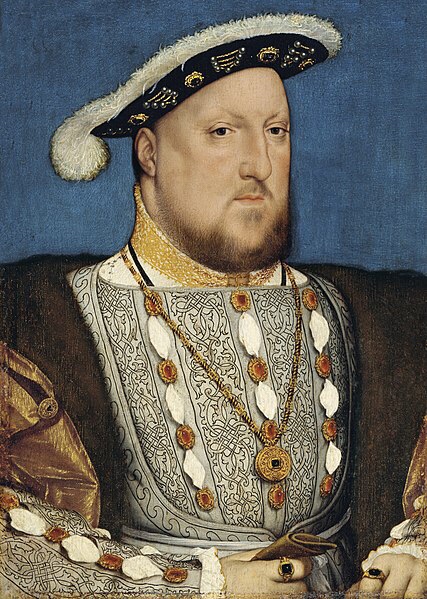
King Henry VIII had made witchcraft a felony punishable by death in 1542; some say he did this as he thought Anne Boleyn was a witch trying to harm him with her craft….img_0354
Agnes was hanged on the 27th July 1566. At her execution she asked God for forgiveness; when asked she said she prayed often but always in Latin to hide her doing so from Sathan, as he would not allow her prayers…. Along with her repentance she also added to the list of accused crimes…. She told of how she had sent Sathan to damage the goods of a tailor named Wardol and to do him harm….but the cat returned to her and said he was unable to do as he had been bade as Wardol’s faith in God was too strong. Agnes also confessed she had been practising witchcraft for 25 years….

Elizabeth was given a lighter sentence – but 13 years later she herself was hanged for a further conviction…. Joan was cleared during the trial; she had testified against her mother and Elizabeth helping to convict them – and so saving her own skin….

Agnes has been an inspiration for many writers and artists since – people remain fascinated by the story…. When we stop to consider what life was like back then it is hard to visualise how it must have truly been. In this modern scientific World that we live in, we know cats can’t talk to us, no matter how it sometimes seems like they can…. They certainly don’t go around killing pigs, cows and people and they definitely can’t turn themselves into demon dogs anymore than we can turn them into toads….

We also now have an understanding of that terrible illness dementia…. Many of us know only too well the heartbreak of having a loved one who suffers from this dreadful disease – the confusion, forgetfulness and sometimes argumentative, aggressive behaviour….

One can’t help wondering if the case of Agnes and Elizabeth centred on mass hysteria, the mischief of a 12-year-old girl, a couple of old ladies suffering from dementia and their obsession with a cat…. How many ‘witches’ hanged were actually people suffering from diseases of the mind? Not having any other means to explain odd, erratic, confused or aggressive behaviour it would not be surprising if people had considered those affected to be under the influence of the Devil himself….

Bring back the stocks…I say!!

There have been a few times in the past, when I have jokingly remarked it would be fun to see a set of stocks on the village green…. I may not have been saying that if I had lived in this house a couple of hundred years ago, even less so if I had been one of its first occupants….

stocks-1
Photo credit: ‘Punishment in 18th century Bristol by John Latimer’ brizzle born and bred via Foter.com / CC BY-ND Original image URL: https://www.flickr.com/photos/brizzlebornandbred/10242020225/

Wind back to when No.3 was first built – England would still have been governed under the Feudal System. Feudalism was introduced when William I took control after the Norman Conquest in the 11th Century; it was to become the way of Mediaeval life. As William was still also the Duke of Normandy he had to divide his time between England and France, so was absent for many weeks at a time. Therefore, he needed people he could trust to run things for him in his absence. In order to do this, he divided the country up into large chunks, similar to the counties we know today. These plots of land were ‘given’ to those he considered the most trustworthy, namely those that had fought with him and were prepared to die for him. The land was not ‘given’ to them unconditionally, they had to swear an oath of loyalty and collect taxes for the King. The noblemen (barons, earls and dukes) were the most important men in their allotted portion of land, they were known as ‘tenants-in-chief’. They in turn divided the land further into smaller pieces, called Manors, which were entrusted to Norman knights, who had also served well in battle. Each also had to swear an oath and it was his duty, as Lord of the Manor, to manage the land and its occupants. He had to collect taxes on behalf of the tenant-in-chief and provide soldiers from amongst the men living within his Manor to fight when ever needed. It was also the lord’s responsibility to ensure law and order was upheld….

stocks-6
Photo credit: Image taken from page 210 of ‘The History of England from the earliest dawn of authentic record…Embellished with…engravings.’ The British Library via Foter.com / No known copyright restrictions Original image URL: https://www.flickr.com/photos/britishlibrary/10999381745/

The Manorial Court dealt with crimes that were of a less serious nature. Courts were held at regular intervals throughout the year and all villagers were required to attend, or face a fine. Trial was by jury, which consisted of twelve men, selected by the villagers. A steward, chosen by the lord, was in charge of the Court. The  community was divided into groups, called tithings, each tithing represented by ten adult (over the age of 12) men, who were then responsible for each other’s behaviour. If one member (or part of his household) broke the law or behaved in an inappropriate way, it was the duty of the other nine tithe members to bring them before the Court.

More serious crimes were referred to the King’s Court; these included murder, treason, heresy and witchcraft. Trial by jury did not come to the King’s Court until 1275. Before this time, trial was by ‘ordeal’; it was believed God would decide whether a person was innocent of the crime he or she had been accused of. There were three types of ordeal used to determine a person’s fate:-

Ordeal by fire: The accused was made to walk a distance of approximately 9 foot holding a red-hot iron bar, (or similarly, picking up a stone from a boiling cauldron of water). The hands would be bandaged. Three days later the bandages would be removed, if the wounds showed no signs of healing, the person would have been pronounced ‘guilty’….

Ordeal by water: The accused would have been thrown into water with their hands and feet bound together; if they floated, they were declared ‘guilty’….

Ordeal by combat: Reserved for noblemen. The accused would fight with his accuser, usually to the death; the victor being considered the one in the ‘right’….

In 1215 the Pope made a ruling that priests must not help with enforcing ordeals (as it was his belief they were wasting too much of God’s time) – as a result the King’s Court also became trial by jury. This was actually not popular with the people, some thought those with a grudge against them may use the system to their own advantage. In 1275 a law was introduced permitting the use of torture if trial by jury was refused. Torture was also used to extract confessions or to get the names of accomplices and other information about the crime in question….

Punishments were issued to fit the crime and reflect the social standing of the person who had been found guilty. The worse the crime, the harsher the punishment. For serious crimes, death was usually inevitable; as well as murder, treason and witchcraft, highway robbery and the stealing of livestock carried death sentences….

Although prisons existed, they were used as a holding place for people awaiting trial rather than as a punishment. They were squalid places, lack of food and disease often meant prisoners died before even coming before the Court. Prison sentences were usually not an option as the money to keep long-term prisoners was not available; it was cheaper to either execute or mutilate them….

Most towns had a gibbet. People were hung on them and their bodies left to rot to act as a deterrent to others. Witches were strangled or in severe cases, burnt. Sometimes beheading was used as a form of execution. Serious theft could result in hands being cut off, branding may have been used, along with other barbaric punishments, such as the poking out of eyes. Punishments and executions were always in public….

stocks-15
Photo credit: ‘Gallows’ Jaime Perez via Foter.com / CC BY-NC Original image URL: https://www.flickr.com/photos/jaimeperez/452796686/

Courts were often biased, the poor discriminated against and judgement would often have been known before the case even came to trial. If somebody did not turn up to attend the Court they were automatically considered to be an outlaw; their possessions would have been seized, becoming the property of the King. Outlaws would often band together and live in hiding; of course, one of the most famous being Robin Hood….

Lesser crimes were dealt with within the community and it was up to the Lord of the Manor to decide a fitting punishment. The Middle Ages had a tendency to use ridicule to punish petty crimes, public humiliation was common practice. Anything from being forced to wear an animal mask to being publicly flogged…. Not working hard enough, cheating on a spouse, blasphemy, not observing the Sabbath and being drunk and disorderly were all punishable crimes in Mediaeval England….

Petty theft could result in being given extra, unpaid work and/or a fine. Slacking at work would warrant a flogging….

Women who nagged, scolded and gossiped could find themselves the centre of the utmost ridicule….by being forced to wear a ‘scold’s’ bridle. Although it looked like a torture contraption it was not really designed as such, more for humiliation. It consisted of a metal bridle that strapped about the head and had ‘bits’ that went into the mouth. Sometimes the bits had spikes to prevent the woman from talking. She would then be paraded through the streets for up to twelve hours; some bridles even had bells attached to them, to add to the indignation….

Another punishment used for women who found themselves fallen from grace was the ducking-stool, popular especially in the 16th and 17th centuries. The offending woman was strapped into a chair on the end of a long pole; she was then repeatedly dropped into a river or lake…. The last recorded ducking in England was in the Herefordshire town of Leominster. Jenny Pipes was a notorious scold and was dunked in 1809. In 1817, Sarah Leeke was found guilty of the same crime; fortunately for her, the water in the ducking pond was too low, instead she was wheeled around the town strapped in the ducking chair, to receive the ridicule of the townsfolk….

stocks-11
Photo credit: ‘The Ducking Stool at Leominster’ copyright John Phillips and licensed for reuse under creative commons license CC SA Wikicommons

Another variation of this was the cucking-stool, in which the guilty person was made to sit, to endure being paraded through the streets….

To us now, the  ducking-stool may conjure up quite a comical image…. However, it was a terrible ordeal for the woman concerned. Deaths did occur, either through drowning or shock. In more severe cases, for example a person accused of witchcraft, the chair would be held under the water for several minutes, repeatedly. If the accused survived it would be assumed they were guilty. If they drowned, the only consolation would be their name was cleared….

stocks-10
Photo credit: Image from page 90 of ‘Essentials of United States history’ (1911) Internet Archive Book Images / No known copyright restrictions Original image URL: https://www.flickr.com/photos/internetarchivebookimages/14756866006

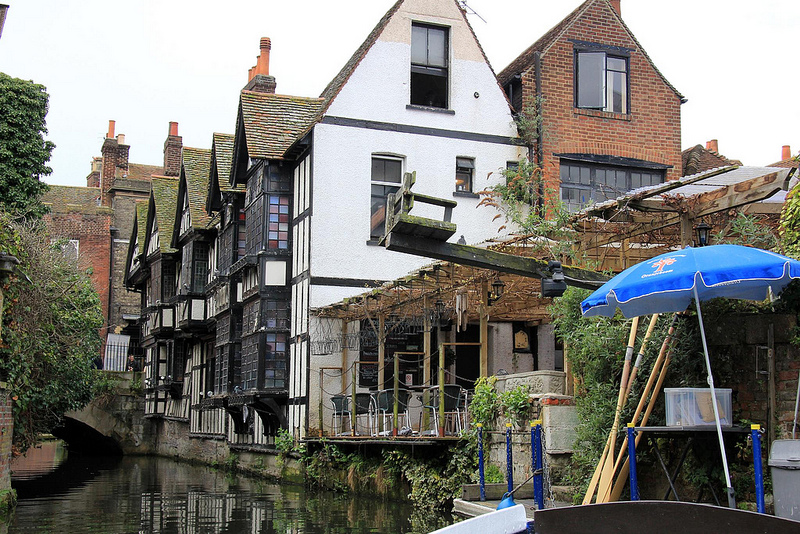
In the City of Canterbury, Kent, the original ducking chair can still be seen in its place at the back of the Weavers House Pub on the banks of the River Stour….

stocks-9
Photo credit: ‘Canterbury Historic River Tours’ Karen Roe via Foter.com / CC BY Original image URL: https://www.flickr.com/photos/karen_roe/7217331258/

Of course, one form of punishment we commonly associate with days gone by is that which got me on to this subject in the first place….the stocks; (and we must also contemplate their cousin, the pillory, too)….

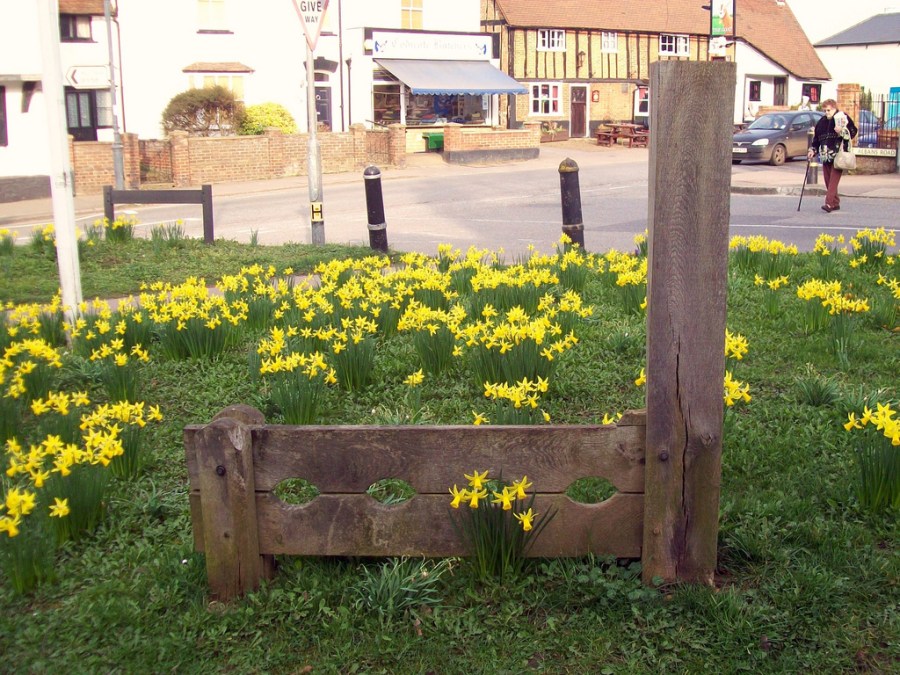
The stocks go back to at least Anglo-Saxon times…. A wooden construction, where the convicted person would sit and have their ankles trapped in holes within the structure and sometimes their hands too.  Occasionally, although not commonplace, even the neck would be entrapped. Most stocks were capable of holding at least two prisoners at one time….

stocks-13
Photo credit: ‘Stocks’ Kasper Veste via Foter.com / CC BY-SA Original image URL: https://www.flickr.com/photos/kasper_veste/4443518243/

In 1351 the parliament of King Edward III passed a law prohibiting labourers from leaving their home Manor to look for better paid work. After the Black Death there was a desperate shortage of labour – workers were in a situation where they could demand better conditions and wage increases…. To curb this the Statute of Labourers was instated….all upstarts were sentenced to the stocks. In 1405 it was made law that every town and village in England should have them….

stocks-4
Photo credit: ‘St Leonard’s Church Shoreditch’ Alan Denney via Foter.com / CC BY-NC-SA Original image URL: https://www.flickr.com/photos/alandenney/14633649205/

A spell in the stocks could last anything from a few hours, to days, even weeks! A part from the obvious discomfort of being pelted with rotten fruit, vegetables, eggs and possibly even worse, the fact the prisoner was unable to shift position in all that time, has to be taken into consideration; that and our great British weather….!!

stocks-14
Photo credit: ‘Stocks, Codicote’ Peter O’Connor aka anemone projectors via Foter.com / CC BY-SA Original image URL: https://www.flickr.com/photos/anemoneprojectors/5545843719/

Stocks and pillories were always positioned in the most prominent place in the town or village….be it the market square, near to the church or on the village green….

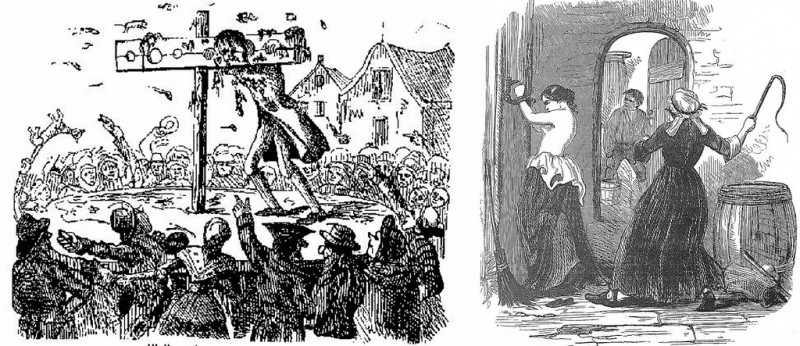
The pillory tended to be used for slightly more serious offences. Similar to the stocks but this time the person was in a standing position with their head and wrists entrapped. A term in the pillory was usually shorter, not normally more than a day. Additional punishments may have been administered, depending on the crime. Sometimes the victim’s ears might be nailed to the pillory, to stop movement of the head. Often, the prisoner’s ears would be ripped off through their struggles; if the ears were still intact at the end of the ordeal, they were more than likely to have been cut off at the time of opening the pillory anyway. Branding the face of the criminal, nose slitting and even boring through the tongue with a red-hot iron were all punishments some prisoners of the pillory had to endure….

stocks-2
Photo credit: ‘laurel & hardy’ pinch of salt via Foter.com / CC BY-NC-ND Original image URL: https://www.flickr.com/photos/pinchofsalt/1623455610/

Being drunk and disorderly, cheating, blaspheming, not observing the Sabbath, or simply being a vagrant could result in a spell in the stocks or pillory. However, it was possible, if a person was well liked in a town or village, that no real hardship was suffered. Some places stipulated only soft missiles could be thrown, to prevent stoning….

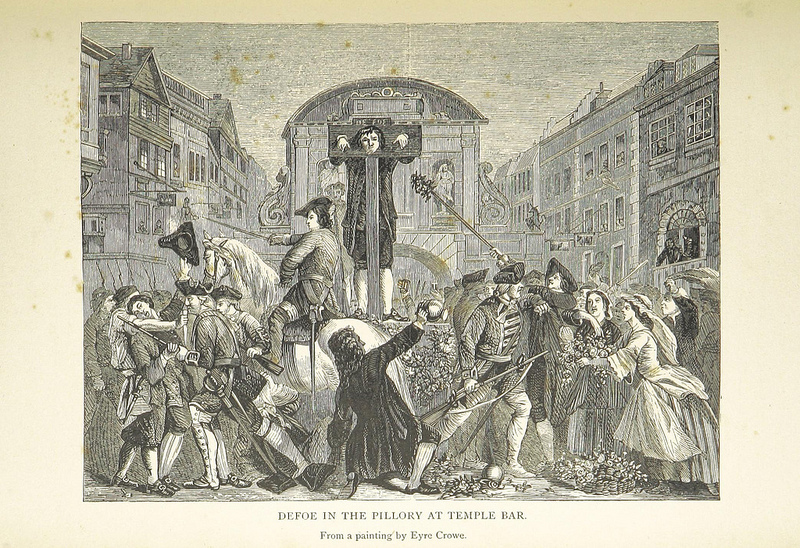
In 1703, Daniel Defoe, a popular writer of the time, was sentenced to the pillory because his work ‘The Shortest Way with the Dissenters’ was considered seditious libel (criticising and discrediting the King and Church). In the July of 1703 he was taken on three consecutive days to some of the busiest parts of London; The Royal Exchange in Cornhill, Cheapside and finally Fleet Street, to spend an hour each time in the pillory. Huge crowds were expected to turn out and mock him and hurl whatever they deemed fitting; however, all that was thrown at Defoe were flowers, whilst his friends read extracts of his work to onlookers….

stocks-5
Photo credit: Image taken from page 146 of ‘Daniel Defoe : his life and recently discovered writings : extending from 1716 to 129. [With plates, including a portrait.]’ The British Library via Foter.com / No known copyright restrictions Original image URL: https://www.flickr.com/photos/britishlibrary/11090698076/
The pillory was abolished in 1837. The stocks, although never officially abolished, began to die out in England in the early 19th Century. The last recorded case of them being used was in Rugby, Warwickshire in 1865.

Most stocks were made of wood (although there have been examples made of iron), so many of the original stocks deteriorated and rotted over time. However, many villages, proud of their old stocks, have managed to preserve them as a reminder of the ‘olden days’. Several villages local to Dunsfold still have theirs, including Chiddingfold and Alfold. Dunfold’s have long gone – and after learning all this, I am not quite so sure now that I would like to see a new set on the green after all….

stocks-12
Photo credit: clare_and_ben via Foter.com / CC BY-NC-ND Original image URL: https://www.flickr.com/photos/benandclare/3710415485/
stocks-3
Photo credit: ‘Pillory’ balaji shankar via Foter.com / CC BY-NC Original image URL: https://www.flickr.com/photos/balaji_shankar/584749163/