Agnes Waterhouse was born around 1503 and lived in the village of Hatfield Peverel, near to Chelmsford, Essex – and she was the first woman in Britain to be hanged for witchcraft….
Agnes was known locally as ‘Mother Waterhouse’, which would suggest she may have been a wise woman and healer. It appears she was rather an argumentative woman, repeatedly falling out with her neighbours…. In July 1566 Agnes was accused of witchcraft – along with Elizabeth Francis (believed to be her sister) and Joan Waterhouse, her 18-year-old daughter….
Elizabeth had a cat; a white spotted one called ‘Sathan’ – or Satan – given to her by her grandmother, ‘Eve of Hatfield Peverel’ – who taught her grand-daughter the secrets of witchcraft when she was 12 years old…. Sathan was able to talk; he taught Elizabeth how to make magical potions – and promised her a lifetime of riches – a promise that indeed appeared to have been kept, as she always had sheep in her pasture….
Sathan would do anything for his mistress – all he asked for in return was bread, milk and a drop of blood – her blood – which she provided by pricking herself and allowing him to suck from it….leaving spots on her skin never to disappear….
As a young woman Elizabeth took a fancy to an Andrew Byles – a man of wealth – to be her husband…. Sathan promised to get him for her….but in order for it to be possible she must allow Byles to ‘abuse’ her – which she did. Only things did not quite go to plan – for afterwards Byles refused to marry her. Enraged Elizabeth ordered Sathan to ‘waste his goods’ (destroy his property)…. Still not content she demanded the cat ‘touch his body’ (cause illness) – and so he did…. Byles subsequently died from his illness….
Soon after Elizabeth discovered she was carrying Byles’s child – so Sathan advised her which herbs to take to cause a termination of the pregnancy….
Elizabeth set her heart upon another man, Francis….although not as rich as Byles she decided she must have him and so set her trap…. After sleeping with him, once again she fell pregnant – they married and a daughter was born to them some three months later….
It was not a happy union, the pair fought constantly – family life was not as Elizabeth had expected; so when the child was just 18 months old she got Sathan to kill her….and inflict a lameness of the leg on to Francis – from which he never recovered….
By now Elizabeth had somewhat tired of it all – and this included Sathan who she’d had for some 15 years…. It so happened that she encountered Agnes one day, who was on her way to the ovens to bake some cakes…. Elizabeth decided to bestow the cat upon her as a gift – telling her that all she needed to do was feed him bread, milk and a drop of blood and he would do anything she wanted….in return Agnes gave Elizabeth a cake….
Agnes was eager to try out the cat’s skills…. She asked him to kill one of her pigs – more than willing to prove himself Sathan obliged. Having fallen out with a couple of her neighbours Agnes then got him to kill three hogs belonging to Father Kersey and drown a cow owned by Widow Gooday…. Each time Agnes rewarded Sathan with a chicken and a drop of her own blood. Realising the power at her fingertips Agnes began causing no end of mischief for her neighbours….ruining their brewing and butter making amongst other things…. Sathan taught her the art of witchcraft, how to terminate pregnancies and helped her to kill people…. As she wasn’t getting along with her own husband Agnes arranged his demise too – she spent 9 years as a widow before things finally caught up with her….
Eventually, for whatever reason, Agnes too had had enough of Sathan, he was beginning to cause her problems; so, she turned him into a toad – he was far easier to keep under control this way….
Foter.com
It was while she was away one day that her daughter, Joan, decided to amuse herself by playing with him…. Feeling hungry and as her mother had left no food, Joan went to the house of a neighbour to ask for some bread and cheese…. On arriving she encountered the neighbour’s daughter, 12-year-old Agnes Brown – who refused to give her any food. On returning home, Sathan offered her his help….providing she gave him her soul – Joan agreed to this…. Sathan went to visit the young Agnes and found her churning butter. The toad manifested himself into a demon – a black dog with horns – and asked the child for some butter….when she declined he then set about terrorising her….
By now people were becoming suspicious of the tragic events and goings-on that seemed to surround Agnes and her cat…. It was after the death of yet another of her neighbours, William Fynne, who died on the 1st of November 1565 having suffered from an illness said to have been caused by her, that the accusations were finally officially made….
Agnes, Elizabeth and Joan were brought to trial in Chelmsford in July 1566, accused of witchcraft…. Agnes was cited as having caused illness that resulted in the deaths of William Fynne and her husband and also the deaths of her neighbours’ livestock…. But the evidence that actually convicted her was when the 12-year-old Agnes Brown testified against her…. Agnes’s first examination was on the 26th July, followed by a second one the following day….at which she confessed and pleaded guilty….
King Henry VIII had made witchcraft a felony punishable by death in 1542; some say he did this as he thought Anne Boleyn was a witch trying to harm him with her craft….
Agnes was hanged on the 27th July 1566. At her execution she asked God for forgiveness; when asked she said she prayed often but always in Latin to hide her doing so from Sathan, as he would not allow her prayers…. Along with her repentance she also added to the list of accused crimes…. She told of how she had sent Sathan to damage the goods of a tailor named Wardol and to do him harm….but the cat returned to her and said he was unable to do as he had been bade as Wardol’s faith in God was too strong. Agnes also confessed she had been practising witchcraft for 25 years….
Elizabeth was given a lighter sentence – but 13 years later she herself was hanged for a further conviction…. Joan was cleared during the trial; she had testified against her mother and Elizabeth helping to convict them – and so saving her own skin….
Agnes has been an inspiration for many writers and artists since – people remain fascinated by the story…. When we stop to consider what life was like back then it is hard to visualise how it must have truly been. In this modern scientific World that we live in, we know cats can’t talk to us, no matter how it sometimes seems like they can…. They certainly don’t go around killing pigs, cows and people and they definitely can’t turn themselves into demon dogs anymore than we can turn them into toads….
We also now have an understanding of that terrible illness dementia…. Many of us know only too well the heartbreak of having a loved one who suffers from this dreadful disease – the confusion, forgetfulness and sometimes argumentative, aggressive behaviour….
One can’t help wondering if the case of Agnes and Elizabeth centred on mass hysteria, the mischief of a 12-year-old girl, a couple of old ladies suffering from dementia and their obsession with a cat…. How many ‘witches’ hanged were actually people suffering from diseases of the mind? Not having any other means to explain odd, erratic, confused or aggressive behaviour it would not be surprising if people had considered those affected to be under the influence of the Devil himself….
John Henry George Lee, also known as John ‘Babbacombe’ Lee or simply as ‘the man they could not hang’ – was born on the 14th of August 1864, in the Devonshire village of Abbotskerswell – and upon leaving school went to work for Miss Emma Keyes, at her home ‘The Glen’, in Babbacombe, a seaside hamlet near to Torquay. Shortly after he joined the Royal Navy – but was discharged for an injury he sustained some three years later….he returned to Torquay and took up a position as footman for a Colonel Brownlow. However, in 1883 Lee was convicted of stealing £20 worth of silverware from his employer and spent 6 months in Exeter Prison doing hard labour….
On his release 19-year-old Lee was fortunate enough to be given work again by his original employer, Emma Keyse; the elderly spinster obviously thought he deserved a second chance and already had his half-sister Elizabeth Harris in her employment, working as a cook. Miss Keyse was a wealthy, respected woman – who had been Maid of Honour to Queen Victoria (who had actually spent a night at the Babbacombe house). It seems Miss Keyse was not a lady to tolerate slovenliness – it was common knowledge she’d had reason to reprimand Lee as she was dissatisfied with his work and as a result had reduced his wages….not something that would have particularly pleased him….
It was during the early hours of the 15th of November 1884 that a female servant found Emma Keyse on the floor of the Pantry; she had been severely beaten and her throat had been cut. In an attempt to dispose of the evidence the perpetrator had saturated the body with oil and it was surrounded by burning paper – presumably with the intention of burning the house down….
Immediately the finger of accusation was pointed at Lee and he was promptly arrested. He had supposedly been the only man in the house at the time, he had a criminal record and he had a motive – having had his wages cut…. He also had an unexplained wound on his arm – claiming this had happened when he broke a window to let out smoke from the fire….and it was his knife that had been used to cut the victim’s throat…. All pretty damning evidence – even if circumstantial….
Lee was meant to be represented in Court by a Reginald Gwynne Templar – a young solicitor acquaintance of Emma Keyse. This in itself is a little odd – what also seems rather strange is the eagerness Templar had to take on the case…. However, two days before Lee’s trial was due to begin Templar was taken ill, an illness he never recovered from. Templar died in December 1886 from Paralysis of the Insane – a polite way of saying Syphilis. Speculation is that he was the lover of Elizabeth Harris (Lee’s half-sister); Elizabeth was pregnant at the time, the father of her child ‘unknown’…. Lee claimed Templar was also present in the house on the night of the murder….
Templar’s younger brother Charles, Liberal MP for St. Ives, took over the role of representation in Court for Lee – despite it being only circumstantial evidence it took the jury just 40 minutes to return a ‘guilty’ verdict….Lee was sentenced to hang…. After sentence was passed Lee was questioned as to his calmness, to which he replied….
“The reason I am so calm is that I trust in the Lord and he knows I am innocent”….
Lee’s execution date was set for February 23rd 1885 at Exeter Prison. It was to be the first time the scaffold was to be used in this location – it had been moved from an old prison hospital building that was due to be demolished and had been re-erected…. After 1868 hangings were no longer public but took place inside prisons. The ‘long-drop’ method was used at the time, taking into consideration the person’s height, weight and the muscular build of the neck to calculate the length of rope needed to prevent decapitation….
On the morning of Saturday 21st of February, Prison Governor Edwin Cowan ordered that the scaffold apparatus be ‘thoroughly overhauled, cleaned and tested by the engineer officer and a warden carpenter’…. During the afternoon the apparatus was tested again by the artisan warden and the appointed executioner, in this case a James Berry. The executioner, after testing the equipment twice, verbally reported back to the Governor that he was satisfied all was in working order…. The execution was to take place on the following Monday at 8am….
Lee was led on to the scaffold, his hands already bound; his legs were then strapped just above the ankles, a hood placed over his head, the noose put around his neck and then adjusted…. James Berry then stepped back and pulled the lever to release the trap doors for Lee to fall through….only it did not happen…. The doors only dropped about quarter of an inch…. The executioner and prison officials stamped on the boards – but nothing budged…. The noose and hood were removed from Lee and he was carried to an adjacent cell….
Berry and the prison officials inspected the apparatus to find out what was wrong – speculating that because it was wet weather the damp had made the wood swell…. A carpenter planed some of the edges and the equipment was tested – this time with a prison officer representing the prisoner by holding on to the rope – everything appeared to be in working order…. Lee was brought back in, the Reverend John Pitkin, Prison Chaplain, once more read the prayers and the process was repeated….once again the trap doors refused to open….
Chief Constable for Devon, Gerald de Courcy Hamilton was present that day….he described how Lee was then subjected to a third attempt (possibly even a fourth – although this was disputed at the time)…. It was the prison’s Medical Officer who intervened, ordering for Lee to be removed to a cell….saying the officials could carry on practicing with a sack of flour, they were not going to experiment on this man any longer….
The Governor postponed the execution and the Home Secretary, Sir William Harcourt, was informed….who commuted Lee’s sentence to life imprisonment – his view being that it would be inhuman to put the man through all that again. An investigation was launched to discover the reason for the equipment malfunction….
The trap door of the scaffold had two halves and two sets of hinges….the ones at the outer edges of the door allow the halves to swing downwards. Another hinge was situated along the entire length where the halves met in the middle and were secured by draw bolts – when the lever was pulled these were released. In this instance the scaffold had not been re-erected correctly; the end of the long central hinge was resting on about an eighth of an inch of the draw bolt….combined with Lee’s weight pressing down, the doors were prevented from opening to the pit below….
The Home Office report prompted an inquiry into how all future executions were to be conducted and a redesign of the gallows to stop it from ever happening again….
John Lee continued to protest his innocence….in 1907 – after 22 years of imprisonment – he was released…. For a while he became a minor celebrity, giving talks on his experience…. A silent film was made relating the story. Lee married a local woman called Jessie and he became a father….but then deserted his family to take off with another woman, Adelina Gibbs – a barmaid in the public house he was working in at the time. In February 1911 they set sail from Southampton bound for New York to begin a new life in the United States…. Lee died of a heart attack, March 19th 1945 in Milwaukee, Wisconsin, aged 80…. It could be said it is a miracle he didn’t have a heart attack on that fateful day in February 1885…. Perhaps it was Divine Intervention – there was talk that Reginald Templar had confessed to the murder of Emma Keyse on his death-bed….
At risk of putting myself in the direct firing line – I am going to ask a question…. Has feminism in Western society become obsolete? I ask this purely as a lay person – I am certainly no expert on the subject – but it is something that has had me pondering recently….
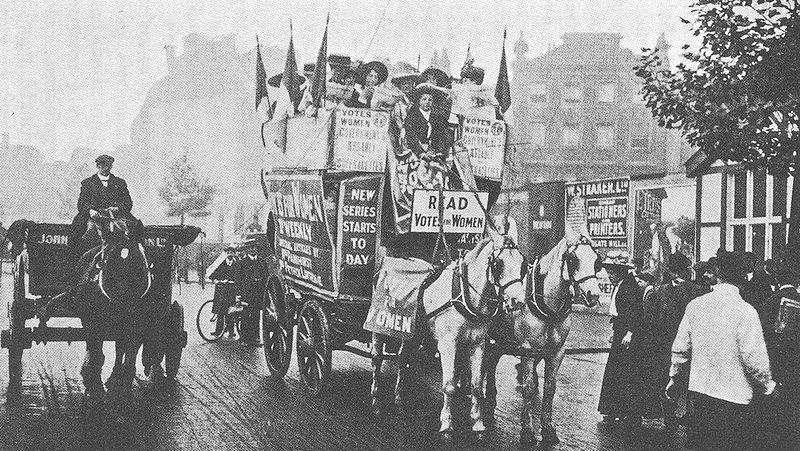
Before even beginning to try to make sense of what is going on in the Western world of feminism at this present time….it would perhaps be useful to remind ourselves why the feminist movement was even necessary in the first place…. Would the Suffragettes and Suffragists – those brave women of the late 1800s and early 1900s – be raising an eyebrow at what feminism has become? Would they be horrified that women are still struggling to achieve equality in so many areas of life – or would they shake their heads in disbelief that we appear never to be satisfied…?
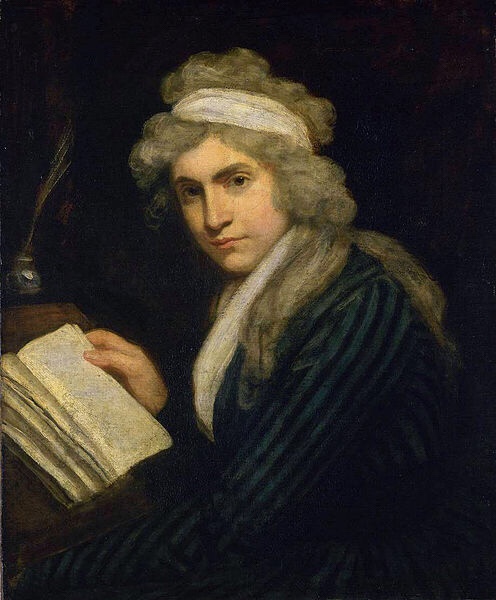
Perhaps the earliest feminist in Britain was the woman now referred to as ‘the grandmother of feminism’, Mary Wollstonecraft – with her book The vindication of the Rights of Woman in 1792…. A publication that was actually very well received in its time – but it was another century before women really began to fight for the Cause. After centuries of oppression and the ownership of women….it was the dawning of a new era….
Wikimedia commons Mary Wollstonecraft – oil on canvas
Right up to the 20th Century there were three little words that sealed a woman’s fate – (or at least if she was married in the Church of England) – the moment she uttered ‘love, honour, obey’…. It is interesting to note the Catholic Church has never had ‘obey’ in its marriage service….
To ‘obey’ probably originated in Roman times, when daughters were the property of their fathers and then later the ownership passing to her husband – a practice to remain right up to the time of Women’s Suffrage…. For the lower Roman classes is was a case of ‘free marriages’ – the father giving his daughter to the groom…. Whereas, wealthy Romans would have had a contract, outlining property etc to be part of the dowry; this was the beginnings of legalised marriage….
The word ‘obey’ was introduced to the Church of England wedding service in 1549, when the first Book of Common Prayer was authorised by King Henry VIII. In biblical origins the wife should submit to the husband – just as the Church should submit to Christ…. Obey was taken literally within marriage – the wife and any children being the property of the man – his word was law…. Everything she owned belonged to her husband, everything she earned if she was working and any inheritance she was due….
If she were to disobey she could expect to be punished – a good beating was often meted out….and was perfectly legal and accepted within a marriage…. Only when a woman’s life was endangered could a case be brought before the Courts – even then the sentences were often lenient. As only the most brutal cases made it as far as Court, so recorded trials of the time were just the very tip of the iceberg….
Edward Doyle murdered his wife…. He broke her ribs, beat her, scolded her with boiling water, thrust a red-hot poker into her abdomen – and then left her to die for two days; he got 15 years for man slaughter. Bearing in mind this was at a time when the sentence for stealing a sheep was 10 years transportation….and if he had killed a man he would have gone to the gallows….
Much domestic violence was fuelled by alcohol; lower classes tended to be more openly violent towards each other. Neighbours would seldom intervene, as it was seen as an everyday part of marriage. The middle classes had their share too, although in the face of respectability it more often happened behind closed doors. If a man was violent towards his wife, he was likely to be towards his children too….
A judge in the 19th Century actually deemed it was perfectly permissible for a man to beat his wife providing the stick he used was no thicker than his thumb…. Hence the saying ‘rule of thumb’….
So, a man could beat his wife senseless on a regular basis – but she was not at liberty to divorce him…. Marriage, being the ‘glue of society’ was to be preserved at all costs…. A wealthy woman, who could prove her spouse’s abuse or infidelity may have been able to obtain a legal separation (at a hefty cost, approx £1,500 – equate that to modern-day terms)….but neither would have been permitted to remarry. However, one little dalliance on her part and her husband could divorce her immediately – keeping any money, property or possessions she brought with her to the marriage – and stopping her from ever seeing her children again…. In any divorce case the children automatically stayed with the father….
In 1853 the Aggravated Assaults Act was passed in Parliament – after Mr Fitzroy, the MP for Lewes, pushed against inadequate penalties handed out to perpetrators…. Sentences and fines were increased but still after 1853 newspapers were full of reports of wife-beating….
In 1857 the Divorce and Matrimonial Clauses Act was passed – giving women the option of divorce on the grounds of cruelty…. In 1870 the Married Women’s Property Act gave women the right to the possession of their own earnings…. In 1882 married women were given the same rights as unmarried women with regards to property – meaning any possessions, money, land or property she owned before marriage did not automatically pass to her husband…. A further Act in 1893 gave married women control over any property acquired during the marriage; for example, an inheritance….
It was a start but there was still a long way to go…. It was no wonder women often regarded marriage as slavery…. By the late 1800s the situation was becoming a lot less tolerated and at the tail end of the Victorian era the Women’s Suffrage Movement began….
Feminism is often divided into three ‘waves’…. The definition of feminism – ‘the advocacy of women’s rights on the grounds of the equality of the sexes’ – is exactly what the Women’s Suffrage Movement was all about….equality. The Victorian idea of women, in the home bringing up the children – whilst the men got on with earning the money and running the Country….did not sit well with all…. Women were no longer content to remain silent and let the menfolk decide what was right for them, their lives and the rules and regulations they had to live by….they wanted their say….they wanted a part in the decision making….they wanted the Vote….
Finally, in 1918 women over the age of 30 and who were property owners were granted the Vote…. In 1928 women got the Vote at the age of 21 – the same age as men…. Equality, at least on this score, had been won…. Incidentally, it was also in 1928 that, prompted by the Suffrage Movement, the Church of England began to offer an alternative option in the marriage ceremony…. No longer was the bride required to promise to obey – both she and the groom could vow to love and cherish one another….
The 1930s was an era of progression for women – but it was the arrival of World War 2 that brought real employment opportunities for women….with so many men away fighting, jobs had to be filled.
However, once the war years were over women were expected to beat a hasty retreat back to the kitchen to make way for their returning menfolk. Having had a taste of freedom and independence, understandably many were not willing to become submissive and reliant once again….
We Can Do It! The U.S. National Archives via Foter.com / No known copyright restrictions Original image URL: https://www.flickr.com/photos/us national archives/3678696585/
So, in the 1950s a second wave of feminism ensued – the battle for equal rights in the form of the Women’s Liberation Movement (Women’s Lib for short). This wave lasted through to the 1980s; its focus being on equality in marriage, sex and sexuality and the workplace…. Equal pay and control over their own bodies….
It was during the 1960s and 70s that the Movement splintered into two groups; the equal rights feminism wanting equality with men on a political/social front and then the radical feminist – who wanted even bigger changes. Radical feminism tended to be advocated by younger women who wanted change to attitudes surrounding gender, race, sexuality and class…. The 1960s saw the sexual revolution – starting with the arrival of the contraceptive pill in 1961 – (in the beginning only available to married women)….
1964 saw a revision to the Married Women’s Property Act; allowing women to keep half of any savings made as a couple should the marriage break up….
In 1967 the Abortion Act legalised abortion for a pregnancy of up to 24 weeks. Available only to married women, two doctors had to consent that the pregnancy would be harmful to the mother’s physical or mental health – or that of her unborn child’s….
Women continued to make progress in politics; Barbara Castle became the first female Secretary of State in 1968 – meanwhile women were striking for equal pay…. 850 women machinists working for Ford in Dagenham walked out – disputing that their work was defined as ‘unskilled’ – they demanded the same pay as their ‘skilled’ male colleagues…. (Bearing in mind it was still perfectly legal when advertising a job to state whether the position was open to specifically male or female – women were often required to do ‘unskilled’ work)….
More radical feminists were turning their attention to events objectifying women – such as the Miss World Beauty Contest, which was first held in 1951. Stating that they found it ‘insulting and undermining that women were judged solely on looks’ – activists threw flour bombs at the 1970 contest being held at the Royal Albert Hall, London….
1975 was the United Nations International Year of Women – to raise global awareness of Women’s Rights. Since that year International Women’s Day has been celebrated every year on March the 8th by countries all around the World….
1975 also saw the formation of the National Abortion Campaign – defending women’s rights to make decisions about their own bodies….and the Sex Discrimination Act was passed in Parliament – protecting women (and men) from discrimination on the grounds of their sex and marital status in areas such as education, training and employment….
Margaret Thatcher became Britain’s first female Prime Minister in 1979 – to become known as the ‘Iron Lady’…. Eight years later Diane Abbott became the first black woman to be elected to the House of Commons….
Although the Women’s Rights Cause was heading in the right direction alarmingly one very sensitive and emotive area was slow to change – the matter of domestic violence, particularly the definition of rape within marriage….
“But the husband cannot be guilty of Rape committed by himself upon his lawful wife, for by their mutual matrimonial consent and contract the wife hath given herself up in this kind unto her husband which she cannot retract” – A principle which was established in 1736 by Chief Justice Hale….
No challenge to this was made in Court until 1949…. A woman had obtained a Separation Order from the Magistrates – after which she was assaulted by her husband – it was decided he could be charged with rape as she had in fact revoked her consent…. However, in 1954 another woman had petitioned for divorce but shortly afterwards was attacked and raped by her estranged husband, causing her actual bodily harm…. The Court refused to charge her husband – saying that by petitioning for divorce she had not revoked her consent…. It took until 1991 for rape within marriage to become a crime….
The first women’s refuge opened in Chiswick, West London in 1971 – providing a safe place for women and children who had been abused by husbands….
In 1981 Princess Diana married Prince Charles, bucking the trend and breaking the Royal precedent by not agreeing to obey in their wedding vows; instead she promised to ‘love, comfort, honour and keep’….
In 2006 a Church of England report said traditional vows with obey were being used by some men to justify domestic violence…. The report urged Church ministers to emphasise to couples about to marry that men and women were equal in the eyes of God…. Part of the worry being that victims of domestic violence could blame themselves, thinking they were deserving of the abuse….
It could be said the 1980s were the turning point with regards to the attitude surrounding sexism in the workplace. No longer were women willing to tolerate being held back from advancing in their careers, any more than they were going to continue putting up with the stereotypical office ‘perv’, with his lecherous remarks and bottom pinching…. It was the dawning of political correctness as we know it now; women were becoming empowered in the workplace, more and more senior positions were being filled by females…. By venturing deeper into what had predominantly been a male World, women started to ‘play’ harder too…. The ‘ladette’ culture started to emerge – rowdy hen parties to rival the most raucous stag-dos…. Ladies Nights – screaming, laughing and heckling at the evening’s entertainment – often comprising of groups of oiled, well-toned young men, such as the Chippendales…. The role being reversed – women objectifying men…. After thousands of years of male dominance – the girls were letting their hair down and having fun….
Still the fight for women’s equality went on…. Challenging gender roles, highlighting freedom of choice over reproductive rights; birth control, abortion, and to choose when or even if to have a family…. Raising awareness of rape and violence towards women; seeking a way to stop oppression….stopping the sexual objectification of women….
When we look at our lives as we lead them today and compare them to those lives of women only 100 years ago – we realise what a long way we have come…. Of course, there are those who would argue it has taken too long and we still have a long way to go…. We are now in a third wave of feminism; one that is more radical….
It seems every time the radio or TV is turned on, a newspaper opened or the internet logged on to, there is at least one story hitting the headlines…. Sexual harassment and bullying in Westminster – Harvey Weinstein – Oxfam…. Women groped at a men-only charity event at the Dorchester by senior figures from politics and business…. Formula 1 to drop grid girls as from this coming season, as the image no longer fits in with modern-day society….
A previous example of this: The Sun had topless Page 3 girls in its newspaper for 44 years – this stopped in 2015…. No more pictures of bare boobs at the breakfast table (yet women shunned for breast-feeding in public)….this must have been viewed as a victory by radical feminists…. On the other hand though – could it be said this was actually removing choice for women? What about those who choose to make a career from glamour modelling or other related work….is it the aim that this option be denied to them….?
Then there is the issue of the gender pay gap…. For nearly 50 years it has been law that men and women doing the same job should be paid the same…. The gender pay gap and equal pay are not the same thing…. The gender gap looks at the average hourly earnings between men and women. Figures released in April 2017 by the Office of National Statistics revealed across the UK men earned 18.4% more than women (this is down from 27.5% in 1997). Of those earning less than the living wage, 62% are women…. UK companies with 250 or more employees have to publish their gender pay gap by April 2018…this will effect about 9,000 companies, who will have to publish this information on a government website….
Of course, two people doing the same job, regardless of gender, should be paid the same hourly rate – there is no question about that….but there are other factors that should be taken into consideration…. There are fewer women in senior roles, most top jobs are still taken by men. Taking time out to have children often means women are slower to advance in their careers. Women are more likely to do part-time jobs, which are often lower paid…. These facts are going to have an impact on the average figures….
Image via Pixabay
Tesco is at the moment facing a £4bn equal pay claim; a legal challenge by women working in Tesco stores, earning less than their male colleagues working in the warehouses. Their argument being the value of their work is comparable…. Also currently under the spotlight on equal pay is the BBC. A news correspondent having a salary some £10,000pa below that of her male colleagues doing the same job…. A National radio presenter paid one-third that of her male co-host…. Another BBC local radio station co-host breakfast presenter, paid half the salary her male counterpart receives….and the award-winning National radio presenter being told ‘the BBC doesn’t do equal pay’….
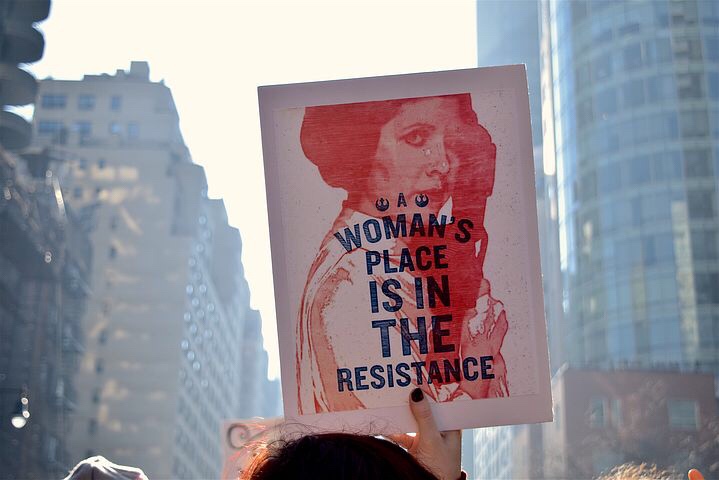
There is no denying that there are still many examples of women being discriminated against….and it’s only right each case is individually addressed. There is also no doubt feminism is doing a great job in raising awareness of rape, domestic violence and sexual harassment…. However, is there a danger of modern feminism becoming negative? Could it not be said we already have equality? What exactly is it we want….complete role reversal….supremacy in a unisex World? Are we becoming the gender of ball-breakers…? That’s a lot of questions, I know – but ones that will hopefully make us consider if what we are actually fighting for is actually now an outdated cause….
It would be a very under-educated view that feminists hate men; a real feminist cares just as much about men’s rights. Equality should be for all, regardless of gender, sexual preference or race…. What we should be focusing on is not just women’s rights – but human rights….
Image via Pixabay
We owe so much to the Suffragettes and Suffragists – but their work is now done. Of course there are still sexist men out there – (sexist women too) – but they are a minority….most men abhor sexism and thoroughly support equality – they have proved that time and time again. It’s now time to move on; there is no getting away from the fact men and women are not the same….women bear the responsibility of childbirth – nothing is going to change that – it is what Nature intended…. For nearly every woman who decides to have a family this is going to have an impact on her career – what is important though, is this is not set in stone – at least in this day and age we have choices….
Image via Pixabay
There is no doubt that men are, on the whole, physically stronger; there will always be jobs that are more suited to them….women just need to accept that – if she can demonstrate an ability to do the job just as well, then there is nothing stopping her…. The same goes for men choosing to do what in the past would have been viewed as a more feminine profession….there are fewer and fewer boundaries….. It’s about equality and getting on with doing what each and every one of us are individually best at….and as a united front….
Image via Pixabay
Women are generally now no more oppressed than anybody else in Western every day modern society; opportunities are open to all…. One issue that does still keep rearing its ugly head is the sexual exploitation we are hearing so much about currently….it is dominating our news headlines…. Whilst it would be insensitive to generalise, as this is such a serious matter, it does have to be filtered…. Many historic accusations have been made – some appear to be quite insignificant and almost petty….the workplace 30 years ago was a very different place to now; a sleazy remark, a pat on the knee was quite normal behaviour back then….not right by today’s standards – but that’s how it was…. Of course more serious incidents did happen and those need to be dealt with – that said though, we have to let go of the past and move forward, looking after each other and fighting for equal rights for everyone…. We need to look to the future…. I personally am heartened, as I think this really is beginning to happen….
I have always assumed that Witch Hazel (Hamamelis) earned its name because of its remarkable healing properties and its use by the wise-women of the Middle Ages – it appears I couldn’t have been more wrong….
Boston Library Public Domain
Image pixabay.com
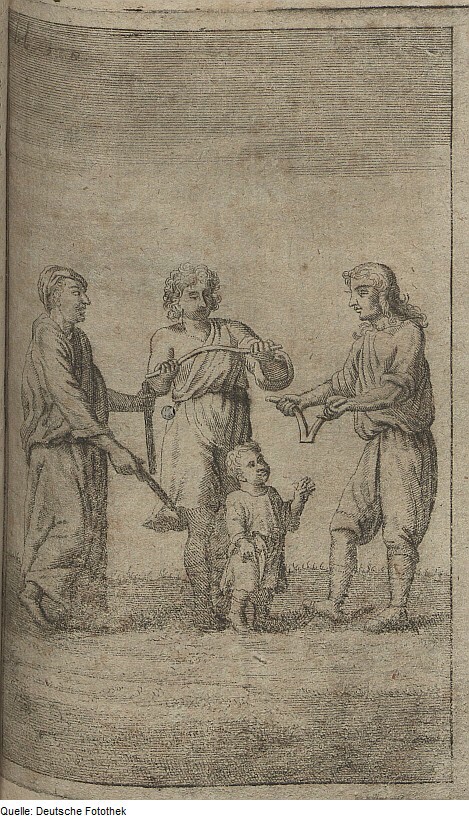
Four native species of Witch Hazel are to be found in North America: Hamamelis mexicana, H. virginiana, H. vernalis and H. ovalis; another is to be found in China, H. mollis and a further one in Japan, H. japonica….. It was the Native American Indian people who taught early settlers how to use the twigs of Witch Hazel as divining rods, providing an alternative to the Hazel and Wych Elm they were more familiar with back in the UK and Europe…. The name Witch Hazel derives from that connection; ‘wych’, an old Anglo Saxon word, meaning ‘to bend’ – and also from the Middle English word ‘wiche’ (that in turn coming from the Old English ‘wice’) – both meaning ‘bendable’ or ‘pliable’….
Image pixabay.com
Divining or dowsing (water witching in the US) is a way of detecting underground water…. However, dowsing is not just restricted to locating water; it can be used to search for metal ores, oil, gemstones….ley lines, archaeological remains – even missing persons….pretty much anything with an ‘energy’ source. Sometimes it is also used to diagnose certain medical ailments; (this is permitted in the UK and Europe – but not in the United States)….
Image Wikimedia Commons
Image Wikimedia Commons
Dowsing, in one form or another, has been used for thousands of years – from time before written history. Perhaps the oldest reference to it discovered so far is from a cave drawing found in Tassili, Algeria – which is over 8,000 years old. The oldest known written record comes from China, 2205 BC….
Even the Christian Bible could be said to have interpretations: Moses striking the rock and releasing water (Exodus 17) or the Magi could be argued to have practised a form by their use of astrology as an aid to navigation…. Ironically, it is the Christian Church that in Medieval times declared dowsing as breaking the 1st Commandment ~ “I am the Lord thy God, thou shalt not have any strange gods afore Me”…. The Church believed dowsing was practising superstition, one of the deadly sins….it became associated with the Devil – his powers believed to control the divining rods….
Image Wikimedia Commons
Certainly we know dowsing was used by the Ancient Egyptians and Chinese…. Possibly the original purpose was for predicting the future or determining if an accused person was guilty of a crime…. However, dowsing as we know it today seems to have originated in Germany, particularly in the Harz mountain area (incidentally thought of as a stronghold of Paganism), where it was used to locate metal ores underground for the mining industry…. Coins discovered in the region, dating to the 10th Century, appear to have been produced to celebrate the founding of a silver mine – the image depicted upon them being that of a dowser – proving the skill to have been very valuable in Germany at the time…. It was during the 15th Century that dowsing was introduced to the UK – when it came with German miners coming to work in British mines….
Image Wikimedia Commons
In 1518 Martin Luther, a German professor, priest, composer and key figure in the Protestant reformation in the 1500s, condemned dowsing as witchcraft- it was he who claimed it broke the 1st Commandment….
Martin Luther – Image Wikimedia Commons
Strangely, only twelve years after Luther’s condemnation, Georg Bauer, a German physician and mining expert, wrote a paper and it was to become one of the most important works on the subject of mining (and the use of dowsing was included within it) of the time…. Nobody condemned him….raising the question as to whether the Medieval Church had more of a problem with authority rather than the actual act of divining itself….
In 1659 Jesuit Gaspar Schott, a German scientist specialising in physics, mathematics and natural philosophy – and one of the most learned and knowledgeable men of his time – declared dowsing as satanic….
Despite opposition from the Church dowsing was still used up to the 19th Century as a way of finding metal, coal and water…. It was Victorian scientists who claimed it was an invalid method – and having no place in a world where science was coming along in leaps and bounds….
However, even in these present days of scientific knowledge – where dowsing is still treated with skepticism – there are a surprising number of professionals who use the method; surveyors, architects, engineers….to name just a few….
Image Wikimedia Commons
It is thought just about anyone can dowse…. May be it is a natural instinct we have inherited from our ancient ancestors – after all animals can detect water from miles away, so once upon a time, did we possess a natural ability to do the same? Children especially are thought to have a natural flair….
Image Wikimedia Commons
Traditionally – as mentioned before – Hazel or Wych Elm are the preferred choice of divining rod…. Elm and Hazel – along with Ash, Rowan and Willow – are thought to have magical powers…. Nowadays metals are often used, such as copper or aluminium – even wire coat hangers bent to shape have been proven to work…. (Occasionally a dowser may choose to work with a pendulum rather than rods)…. The idea is, when the rods are held in the correct way and the dowser moves slowly around the area he is searching if the source is found the tips of the rods may twitch, point down or cross over….
Image Wikimedia Commons
Image Wikimedia Commons
Image Wikimedia Commons
Of course there are the skeptics among us who will say it is because the dowser is so mentally in-tune with what they are looking for that they will involuntarily move the rods themselves…. Or perhaps the energy from the source stimulates the muscles in the nervous system – some sort of electro-magnetic impulse…. There are others who just ‘poo-poo’ the whole idea….
If you do happen to witness a dowser at work it can be quite an incredible thing to see….
Personally, I am very open-minded about the subject, being fortunate enough to have had some first-hand experience. It was during the early stages of the restoration work we undertook on the cottage….we were in the process of trying to work out where the underground LPG tank should be buried in the front garden – realising that one part of the garden seemed prone to ‘sinking’…. Being in direct line with the back door, one thought was that perhaps it was the site of a disused well…. A digger-driver friend, with us at the time to help with the groundworks, suddenly surprised us by whipping out a pair of divining rods…. He then proceeded to slowly cover the area, holding the rods out in front of him….and sure enough when he came to the sunken part the rods sprang to life…. We were amazed…. Unable to resist having a go myself, Colin showed me how to hold the rods correctly and I had a try….and no word of a lie – it worked! The rods, completely independently, dipped down and crossed at the tips – as if they had a mind of their own….
Sadly, even after digging quite a way down, no water was to be found at that particular spot…. Nowadays a flower bed lies there, although nothing really successfully grows in it as the ground continues to sink away – countless barrows of soil have been used over the years to top it up – so we are not entirely convinced there is nothing there to be found….We are planning to redesign that part of the garden this coming Spring – perhaps a little more investigation work is required….
Having recently read a few books set in the Victorian era, I happened across a custom that I had not heard of before – the ‘Churching’ of women after childbirth. Doing a quick search I discovered it had connections to Candlemas; being so close to February 2nd, it seemed an appropriate time to find out more….
‘Candlemas’ – ‘Feast of the Presentation of Our Lord Jesus’ and ‘Feast of the Purification of the Blessed Virgin Mary’…. The 2nd of February being the day the Virgin Mary attended the Temple after the birth of Jesus, to be purified; Luke (2:22) – a Jewish rite, washing the sin of childbirth away. There were some who thought a woman to be ‘unclean’ and ‘unholy’, as she had engaged in sexual activity; holiness being virginity and celibacy – she required purification to be accepted back into society….
There is no evidence to say women were thought to be unclean after giving birth at the beginning of Christianity – that was a notion to arrive later on. Indeed, at first it appears to be quite to the contrary, the Churching ceremony began purely as a blessing of thanksgiving that the woman had survived the ordeal of childbirth – for until the beginning of the 20th Century giving birth was the single most common cause of death amongst women….
Because of high infant mortality it became practice to baptise babies as soon as possible after birth. Statistics from the 1700s alone show two-thirds of children in London died before they were 5 years old, many of these failing to reach their second birthday. Starvation and disease among the poor claimed many lives; affluent mothers did not feed their own babies, employing a wet-nurse instead – this in itself could easily pass on infection….
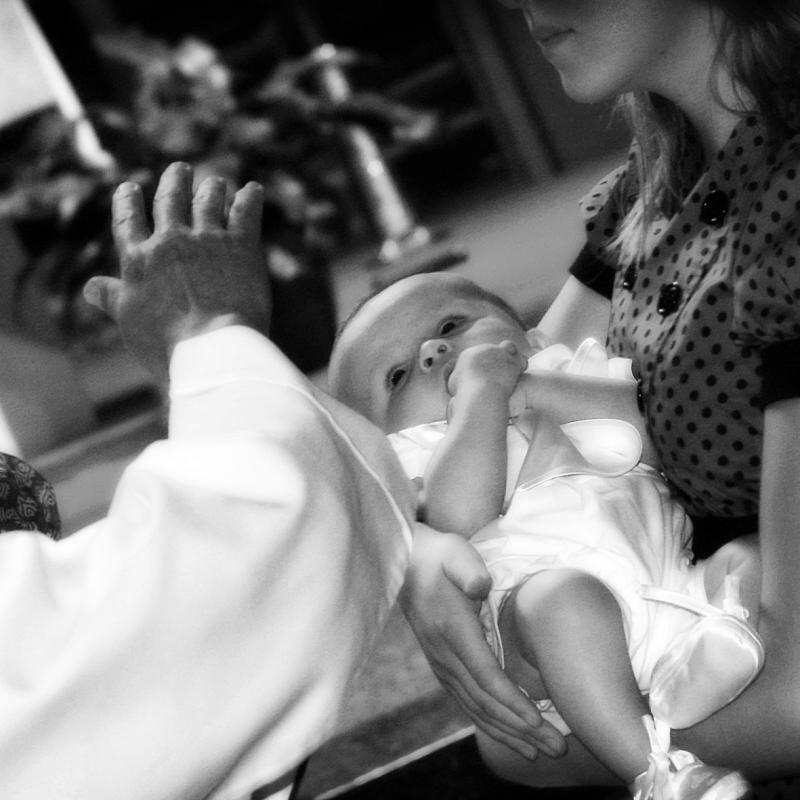
Very often, due to still being in recovery, the mother would miss the baptism of her newborn – during which would be a blessing for the new parents. So a second blessing for the mother began to establish; a simple ceremony…. The woman would come to the church entrance and kneel with a lighted candle – (an acknowledgement to the Feast of the Presentation; the candle would be blessed and then used in the home). The priest, wearing a stole, would then bless her with Holy water; she would then take the edge of his stole and he would lead her into the church and to the altar, where she would once again be blessed with Holy water…. She had been welcomed back into the church after her period of absence whilst she recovered….To me this sounds like a gentle, caring ceremony….
“Benedictio mulieris post partum” ~ (The blessing of a woman after giving birth)….
The problems began to arise during the Middle Ages; some preachers began to link the mother’s absence from the church and the baptism, with her ‘impurity’. The link to being unclean comes from the Book of Leviticus (12:1-8), which pronounces women as being unclean for one week after giving birth to a son and two weeks for a daughter. The mother was then to wait for between 1-2 months before she could be purified…. (The 40 days of the Leviticus law for purification)….
It wasn’t until the 4th and 5th Centuries that women began to be separated from the rest of society at the time of childbirth…. Indeed Pope Gregory the Great condemned the separation – deeming it would appear like a punishment to women – but gradually the practice was to become the ‘norm’….
Nowadays we often give birth in hospital and come home the same day…. Up to the middle of the 20th Century we could expect to stay in hospital for up to 10 days…. Before 1900 it wasn’t unusual for a woman to be bedridden for up to 6 weeks after childbirth….
During the time leading up to the 17th Century wealthy European women were cut off from the outside World at the time coming up to the birth and then for a considerable period after; kept away from husbands and older children – to be attended by midwives, ladies-in-waiting and female relatives…. This term was referred to as ‘lying-in’….or ‘confinement’ as it later became commonly known as…. The room would be specially prepared; it had to be sealed from all outside influences – heavy drapes at the windows – in some cases even to the extremes of blocking up keyholes! Most probably in an attempt to keep out evil spirits. A fire would be kept burning in the hearth – very often the room would have been stifling – and with the lack of fresh air – foul-smelling too….
It is debatable as to whether all Victorian women went into confinement before birth. For the lower classes this is an improbability as they would have had the need to continue working and looking after the family for as long as possible. Certainly though, for the richer classes, this may well have been the case…. In a time of prim and proper morals – but also rather a lot of vanity – baby bumps were not aesthetically pleasing. Pregnancy would have been concealed for as long as possible; in fact until 1860 there were no scientific tests available to determine pregnancy – women generally waited 5 months to make sure…. At a time when fashion dictated the wearing of tight corsets it was probably when this became an impossibility that the woman went into ‘hiding’. Special corsets for expectant mothers were designed, with expandable laces to accommodate the growing belly – but the wearing of corsets during pregnancy began to disappear in the 1840s….
As advertising the fact one was pregnant was not the ‘done thing’ certain terms to describe the condition came into vocabulary: ‘in the family way’, ‘with child’, ‘in a delicate condition’ or for those who wanted to put it more crudely ‘in the pudding club’ – terms that have somewhat stayed with us….
As for all the women before them, giving birth for a Victorian woman was a critical time; statistics show in 1876 the mother’s death rate was 1 in 200. Before the 1840s it was considerably higher than that; for before that time it wasn’t considered necessary for those in attendance at the birth to even wash their hands! Hygiene was simply not on the agenda…. It was Dr. Ignaz Philipp Semmelweis, a Hungarian doctor, who became known as ‘The Saviour of Mothers’ – after he ordered all his students to wash their hands in a solution of chlorinated water and lime before examining mothers…. The idea caught on and after that the infant mortality rate fell from 18% to 6%….
Ignaz Philipp Semmelweis – Public Domain
Malnutrition meant poorer women were often anaemic and in poor health – which meant the expectant mother and unborn child were at risk from the onset. Lack of Vitamin D and calcium could lead to rickets in the woman – giving the possibility of a contracted pelvis – making birth even more difficult. If problems did arise, few options were available. Before the sterilisation of equipment almost all caesarean sections proved fatal for the mother and were only ever performed to try and save the child if there was no hope for her – (without any anaesthetic of course)….
If the actual birth didn’t kill, then there was the risk of blood poisoning afterwards. Often a piece of the placenta would be left behind and gangrene would set in….
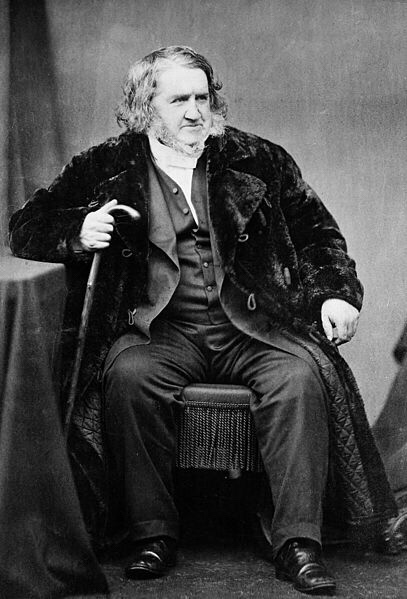
Obviously, there were no antibiotics available at the time; just as there was no pain relief until the mid 1800s. Chloroform or ether was the first anaesthetic to be used in a difficult birth, in January 1847 by Scottish physician James Simpson. It was he who attended Queen Victoria after she was persuaded to use anaesthetic for the birth of Prince Leopold in 1853 – so pleased was she that she made the physician a Baron.
James Young Simpson – Public DomainQueen Victoria, Prince Albert and their nine children – 26th May 1857…. Public Domain
After the Queen had used anaesthetic it became more accepted; up until that point the Church had disapproved of the use of pain relief, saying it was a sin to intervene, God had not wished the process to be painless. Some went as far to say it was a punishment for womankind, for Eve’s temptation of Adam….
Pexels.com
Of course, even if mother and child survived the birth, infant mortality remained high. Families tended to be large (in 1800 the average family had 7 children); richer classes wanted a son and heir and would carry on producing until one arrived. Whereas, poorer families needed lots of children to work and help support the family. Most women would be giving birth every 18-24 months – each time putting her own and that of her child’s life at risk…. There was little option in the way of birth control and any that did exist was frowned upon by the Church….
There was no hard, fast rule as to how long a woman should be confined to bed after childbirth. Doctors often advised at least 9 days but anywhere between 5-15 days was considered normal. For some women it was a welcome rest (one thought is it was introduced to stop women being forced back to work straight away); for others confinement literally meant imprisonment….
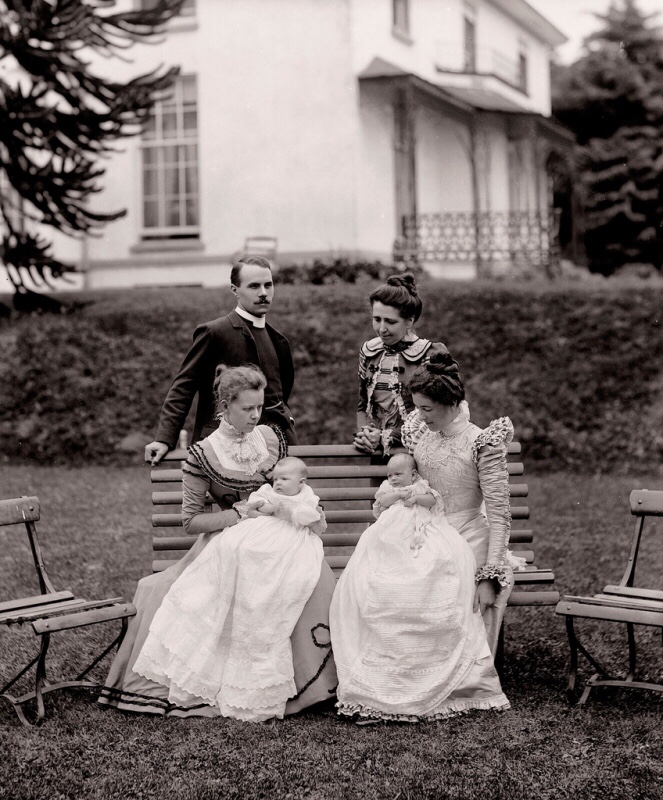
For many of these women the ceremony of Churching was a time to rejoice – it marked the end of their confinement – they could once again get together with family and friends and celebrate their new-born child…. For some, especially those living in villages, social life revolved around the church – the choir, Sunday school, church outings and events….many knew little of life beyond the village…. Victorians were God-fearing and the parson would dominate the village – so it was very often his views that dictated those of his flock – therefore, although for many the ritual of Churching was a joyous occasion for others is was a matter of needing to be ‘purified’ before being accepted back into the church and society…. It was perhaps ‘pot-luck’ as to the view-point the parson concerned took on the matter – was it a blessing and giving of thanks to “the safe deliverance and preservation from the great dangers of childbirth” (from the Church of England Blessing) or indeed a cleansing of her sins…?
Pexels.com
Towards the end of the Victorian era, due to advancement in science, people began to question the old religious beliefs; the likes of Charles Darwin were partly responsible for this. His ‘Origin of the Species’ – the theory mankind was not created by God but had evolved just like any other species, caused many attitudes to change – but obviously this did not happen over night….
There were still plenty who were of the opinion if a woman was unchurched after giving birth she was unclean…. They would be offended if they came across her in the street; if she were to enter another’s household she would be certain to bring bad luck – for some it was taken to the extreme that she was unable to prepare food even in her own home in case she should taint it….
By the early 1900s many women were beginning to feel aggrieved about being labelled ‘unclean’ – but ‘old school’ mothers and grandmothers could be very persuasive; so for many the rite continued…. It was eventually officially dropped by the Catholic Church in the mid 1960s but in some communities it still, to some degree, carried on right up to the 1980s…. Today Western Christianity no longer observes it (although it is still retained in Orthodox churches). Nowadays the mother is blessed as part of the child’s baptism ceremony….
I was quite surprised, on reading through the comments on a couple of on-line forums covering the subject – at just how much effect Churching has had on some women even now…. Women who had been Churched in the 50s/60s/70s often express how angry and bitter they feel at the demeaning treatment they received – some even said it turned them away from the religion they had grown up with…. That is such a shame – but just goes to show how interpretation can influence opinion…. One thing I am sure we’re all agreed on now – bringing a child into the World is a wondrous miracle; one that should be celebrated not repented for…. Whether we are religious or not – we should all give thanks that we live in the times that we do – childbirth will never be easy – there will always be risks – but it’s nothing compared to what womankind had to go through before us….







































 Cottage Capers
