On this day in history….25th October 2004

On this day in history : 25th October 2004 – The world of radio and music is left shocked and in mourning following the sudden death of DJ, record producer and journalist John Peel….
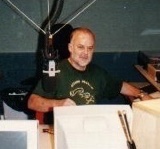
John Peel – Public domain

Revered in the broadcasting and music industry John had been the longest serving of the original Radio disc jockeys…. He had died at the age of 65 of a heart attack with his wife, Sheila, at his side, while on a working holiday in Cuzco, Peru…. The death of this broadcasting legend was to hit so many, not least those at Radio 1, the BBC station to which he had devoted so much of his working life….

John Robert Parker Ravenscroft was born on the 30th of August 1939 in a nursing home on the Wirral, Liverpool and he grew up in the Cheshire village of Burton…. His father was a successful cotton merchant; John had a middle-classed upbringing and attended boarding school….

From an early age he loved to listen to the radio, the likes of Radio Luxembourg and American Forces Radio; he was also an avid collector of records…. He completed his National Service in 1959, then worked in a Rochdale mill for a while before travelling to the United States in 1960, where he had a variety of jobs…. One of these was at ‘KLIF’ – a Dallas radio station – being a ‘fellow’ Liverpudlian he became their official Beatles correspondent…. It was also during this time in the States that John got married for the first time; although his wife returned to England with him it was to be a short-lived marriage, ending in divorce….

John returned to the UK in 1967 and began to work for the pirate radio station Radio London…. He hosted a late night programme that became called The Perfumed Garden – playing music emerging from the hippie scene of California, blues, folk and psychedelic rock…. He adopted the name ‘John Peel’ at the suggestion of a work colleague at the station – and his distinctive radio voice began to become recognisable to many – as it would to so many more over the years to come….

Pirate radio station Radio London’s transmitter ship the MV Galaxy – Fair use

Radio London closed on the 14th of August 1967 and Radio 1, in an embryonic state, launched – with its first programme, hosted by Tony Blackburn, going out an air at 7am on Saturday the 30th of September 1967…. John’s first programme for the new station was called Top Gear…. The BBC were at a bit of a loss at how to sail such a modern ‘ship’…. They were still at the time airing a mixture of recorded music and live studio orchestra…. With Radio 1 being conceived through the popularity of stations such as Radio London and Radio Caroline they needed a few ‘pirates’ onboard to show them how it was done….

John was to go on to host Night Ride – a programme of words and music, featuring guests…. His personal friend Marc Bolan appeared on it, as did The Byrds, John Lennon and Yoko Ono – to name but a few…. After 18 months the show ended – the BBC still hadn’t quite caught up with how society was moving and the bosses did not approve of the unpredictability of a real-life show…. But John’s characteristic broadcasting style had been unleashed, with a formula of live music, chat and records that would stay with him….

Then along came punk…. The BBC boffins were keen to exclude any undesirable music genre – and punk in their eyes represented the most unpalatable of the unsavoury…. But with John’s keenness for new music they had voiced their concerns too late, as he had in fact been playing little else…. He was the saviour of many an unsigned act – helping to launch thousands of careers by giving them airplay…. He was the first to introduce The Ramones, The Sex Pistols, The Smiths, Roxy Music, Rod Stewart and Blur – the list is almost endless…. There are so many bands and artists we would never have heard of if it hadn’t been for John Peel….

He could often be seen presenting BBC One’s Top of the Pops – and he also broadcasted on the BBC’s World Service…. His independent overseas work included broadcasting in Holland, Germany, Austria and Finland….
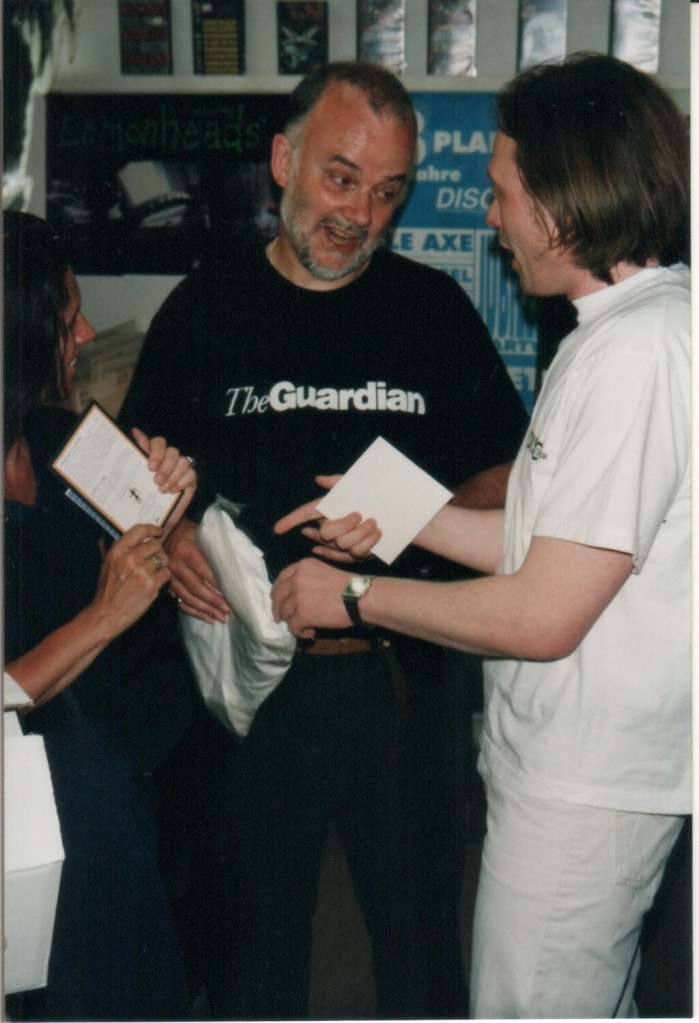
John Peel in a record shop in Bochum, Germany – Image credit : Zetkin – own work CC BY SA 3.0

On the 31st of August 1974 John married Sheila…. He had been working on a television show when he spotted her in the audience…. Feeling a little shy he had a note delivered to her; three years later they had bought a country home in Great Finborough near to Stowmarket, in Suffolk…. They went on to have four children, William, Danda, Tom and Flossie…. Tom now has his own radio shows on the BBC….

Suffolk was a good retreat for John – an escape from the busy city life of London…. He came to realise he did not care much for the hustle and bustle…. Becoming involved in his local community in Suffolk he began to run a youth group….

John’s studio at his home – Image credit : Arno Matthias – own work – Public domain

In 1998 John was awarded with an OBE for his services to broadcasting…. Although he was diagnosed with diabetes at the age of 61 it looked as if the new approaching millennium was going to be rosy for him…. He was still at the top of his game and as popular as ever…. He had just become a grandad and after a trip to New Zealand had caught the travel bug…. He began doing some work for the Daily Telegraph as a musical travel writer….

And so it came to be that whilst on his travels he was to suffer a fatal heart attack…. Over a thousand people attended his funeral, tributes poured in from across the globe…. Radio had lost one of its heroes…. When his death was announced on Radio 1 it was followed by his favourite song, Teenage Kicks by the Undertones….
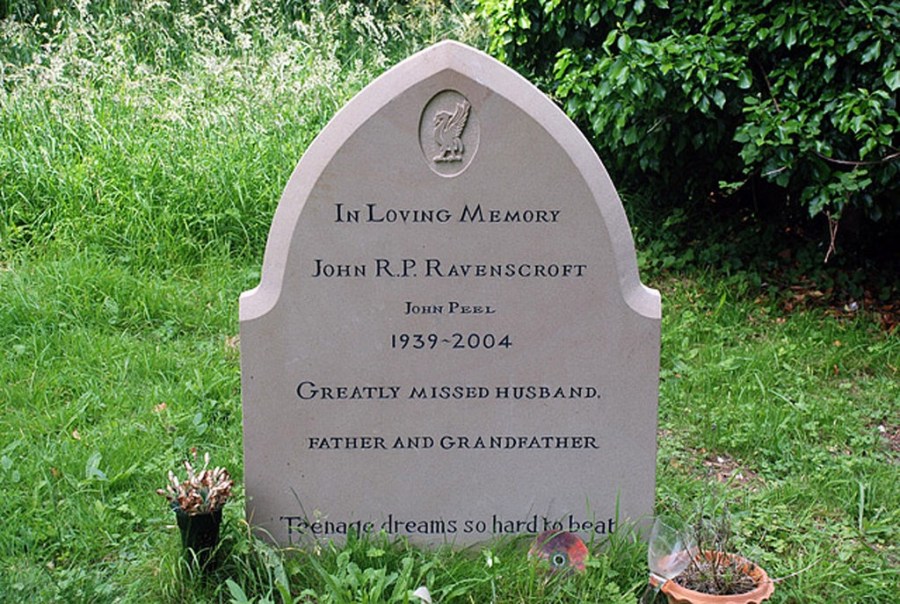

Image credit : Peter Tarleton CC BY-SA 2.0

On this day in history….24th October 1983

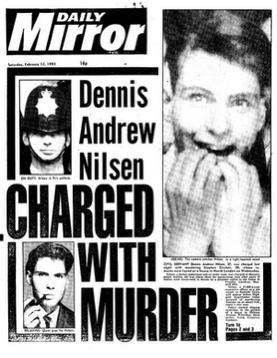
On this day in history : 24th October 1983 – Dennis Nilsen, a civil servant from North London, goes on trial at the Old Bailey – accused of six murders and two attempted murders….

Mug shot of Nilsen – Full Sutton Prison – Fair use

37-year-old Nilsen had been arrested after human remains were found in a blocked drain at his home in Muswell Hill…. The tenants at the flats had complained to the landlord about the drains smelling – it was a plumber who made the grisly discovery….

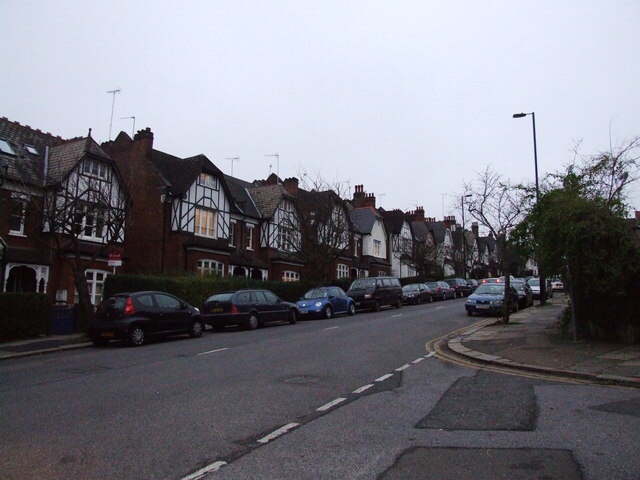
Cranley Gardens, Muswell Hill – where Nilsen occupied an attic flat – Image credit : Chris Whippet CC BY-SA 2.0

After a search of Nilsen’s flat the remains of three bodies were found; the bones from at least eight others were discovered at his former home in Cricklewood, Northwest London…. Nilsen admitted to further murders, telling police he had killed fifteen or sixteen….

Nilsen would meet his victims in pubs; they were always male – some were homeless, some were homosexual and some were prostitutes…. He would invite them back to his flat for a drink – and would then strangle them using a tie or electrical cable…. He would usually spend the night lying in bed beside the corpse and would invariably have, or attempt to have, sex with it….

He disposed of the bodies in a variety of ways…. He hid them under floorboards, in a wardrobe, in suitcases and even under the sink…. Having spent eleven years in the Army he had learned butchery skills in the Catering Corps…. He cut up many of his victims, burying limbs in the garden – or burning body parts on a bonfire…. He even flushed remains down the toilet….

Fair use

When Nilsen came to trial he pleaded not guilty to all charges, citing diminished responsibility due to a mental defect…. The jury retired on the 3rd of November to deliberate but were unable to reach a unanimous verdict…. The next day the judge agreed to accept a majority verdict and at 4.25pm on the 4th of November a guilty verdict was delivered an all six counts of murder…. Nielsen was sentenced to life in prison and it was ordered that he should not be eligible for parole for 25 years….

During his time in prison Nilsen wrote his autobiography History of the Drowning Man – but this was denied publication…. On the 12th of May 2018 he died of a pulmonary embolism (a blockage in an artery of the lungs)….

On this day in history….23rd October 1922

On this day in history : 23rd October 1922 – Andrew Bonar Law becomes the British Prime Minister – with a tenure of just 209 days it is the shortest of the twentieth century….

Andrew Bonar Law – Bain News Service – Public domain

Canadian born Bonar Law, who was of Scottish descent, was the first British Prime Minister to be born outside of the British Isles…. He was born on the 16th of September 1858 and the family moved back to Scotland in 1870…. After leaving school at 16 he initially worked in the iron industry before entering the House of Commons after the 1900 General Election….

When Herbert Asquith formed his coalition government in May 1915 Bonar Law was made Secretary of State for the Colonies and was a member of the War Committee…. After David Lloyd George replaced Asquith in 1916 he became Chancellor of the Exchequer and then Leader of the House of Commons….

Andrew Bonar Law – Bain Collection, Library of Congress – Public domain

Bonar Law retired as Leader of the House of Commons in March 1921, due to ill health…. However, when Lloyd George was removed from office in October 1922 he agreed to become Prime Minister and formed his own Conservative government…. But his health continued to deteriorate and on the 20th of May 1923 he resigned…. Bonar Law died of throat cancer on the 30th of October 1923; his funeral was held at Westminster Abbey…. He is often referred to as ‘the unknown Prime Minister’….

Andrew Bonar Law by James Guthrie – Public domain

On this day in history….22nd October 1707

On this day in history : 22nd October 1707 – Four Royal Navy ships run aground near the Isles of Scilly – over 2,000 sailors are lost, resulting in the Longitude Act 1714 and the invention of the Marine Chronometer….

Harrison’s Chronometer, on display at the Science Museum, London – Image credit : Rocklever at English Wikipedia CC BY 2.5

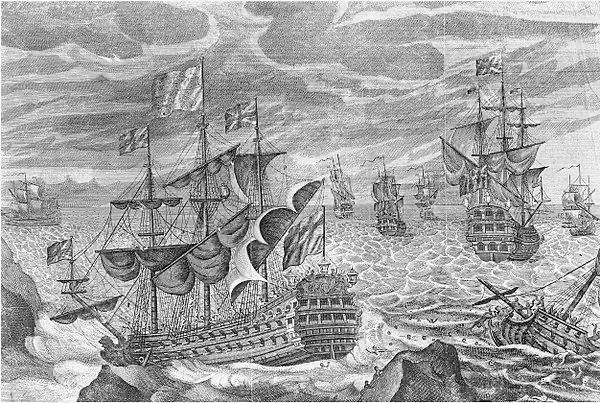
The fleet of 21 ships entered the English Channel during a storm and were heading for home from the Mediterranean…. They sailed under the command of Sir Cloudesley Shovell, who was onboard his flagship Association…. He consulted with his navigator and it was determined that they had arrived at Ushant, off the French coast near to Brittany…. Whereas, they were in fact near to the Isles of Scilly – much further north…. The next night Association, along with Fireband, Romney and Eagle smashed on the rocks off of the west of Scilly…. Only 25 sailors survived – over 2,000 were lost….

18th Century engraving of the Scilly naval disaster with HMS Association at the centre front – Public domain

The problem at the time was that navigators could only find accurate Latitude…. By using the sun they could determine north to south…. But when it came to Longitude, east to west, this was a more difficult proposition and open to error…. It had to be calculated by an estimation of speed between one point and another – a method known as ‘dead-reckoning’…. Factors such as wind, tide and current had to be taken into account….

After the catastrophic disaster off of the Scilly Isles the government realised something had to be done…. This resulted in the Longitude Act 1714…. A prize of £20K was offered to the person who came up with the means of determining an accurate Longitude measurement….

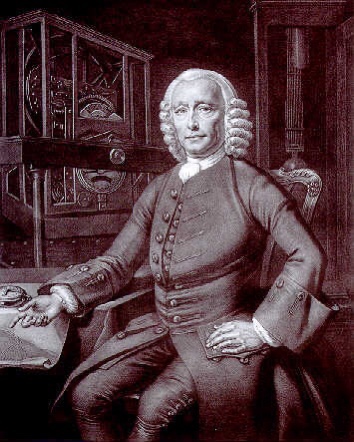
It took years but eventually in 1773 clockmaker John Harrison presented his Marine Chronometer as the solution…. For whatever reason he only ever received £8,750 of the prize money….

The remains of Association and the other ships still lay scattered across the sea bed off of the rocks of Scilly – and will remain so under the Protection of Wrecks Act 1973….

Portrait of John Harrison by Phillippe Joseph Tassaert – Public domain

On this day in history….21st October 1966

On this day in history : 21st October 1966 – A coal-slag heap slides downhill and engulfs the Welsh mining village of Aberfan, including the village school…. 144 people are killed, 116 of whom are children….

Aerial photograph of Aberfan following the disaster – Fair use

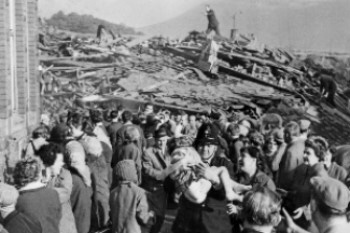
It was a Friday and the last morning before the school broke up for half term…. It was raining, hard and relentlessly, as it had been for days and days before…. At 9.10am the 240 children of Pantglas Junior School, who had been gathered for morning assembly, filed into their classrooms – a few late stragglers were still in the playground…. At 9.15am a large section of the coal spoil heap, that towered domineeringly on the hillside above, broke away and began to avalanche towards the village beneath…. Tons and tons of black sludge engulfed the school, along with a row of terraced cottages and a farm….

Numerous complaints had been made regarding the safety of the seven gigantic coal spoil heaps over the years – including a petition from the school itself in 1963…. But the National Coal Board took no notice…. Matters were not helped by the quarter-of-a-mile high heaps being built on ground riddled with natural springs…. With the constant rain the heaps had become completely saturated….

At first the rescue operation was hampered by thick fog…. Eventually though there were some 2,000 rescuers, many of them local miners, working non-stop to free survivors…. All the while the slag heap was still shifting…. In one classroom 14 bodies were found; in another the school dinner lady was discovered, clutching 5 children to her, trying to protect them – all had perished…. In all 116 children aged between 7 and 10 years old had died; 28 adults were also killed, 5 of them teachers at the school…. Many of the dead had died from suffocation; it was a week before the last body was recovered….

The rescue operation – Fair use

The National Coal Board blamed the abnormal rainfall, claiming it had caused the coal waste to move…. A later inquiry found the NCB solely to blame – and ordered that compensation should be paid…. However, the NCB refused to accept full financial responsibility – and would only do the minimum to make the remaining slag-heaps safe…. It was only after an additional grant from the government and a contribution of £150,000 (almost 10% of the value) from the relief fund that had been raised by the public, that the heaps were finally removed…. The enforced use of the relief fund money caused national outrage…. In comparison the NCB paid out compensation equating to just £500 per child’s life lost – for what had been a totally preventable tragedy….

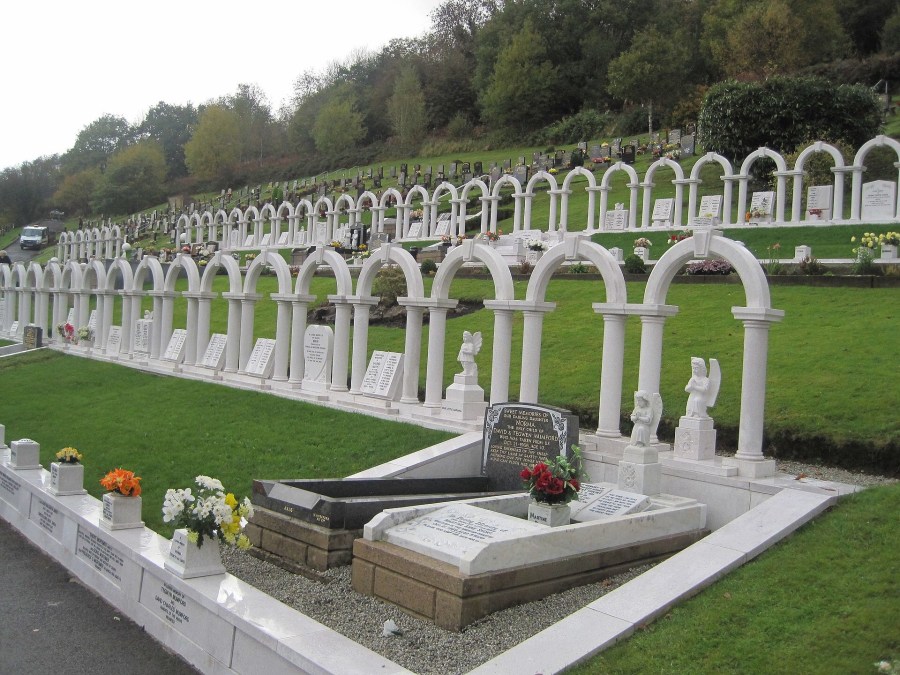
Queen Elizabeth and Prince Philip travelled to Aberfan on the 29th of October, to pay their respects – the Queen visited four times altogether…. In May 1997 Her Majesty and the Duke planted a tree in Aberfan Memorial Garden…. The children are buried high on the hillside in Aberfan Cemetery….

Image credit – Llywelyn2000 at Welsh Wikipedia CC BY 3.0